Ranking the 10 Most Iconic Bouts in Boxing History
A ranking of the 10 most iconic boxing matches of all time is not the same as a roll call of the 10 greatest. Some of the fights on this list were not even particularly good, let alone great.
But they were all perfectly iconic and emblematic of the sport during their era, and often symbolic of the era during which they occurred beyond boxing.
This is a list dominated by heavyweight tilts. Beyond that, it is a list dominated by Muhammad Ali. I can't apologize for either fact.
As the "biggest championship in professional sports," the heavyweight belt has traditionally had an iconic resonance beyond that of any other sports title. And no heavyweight champion had as many epic clashes as Ali.
10. Floyd Mayweather Jr. UD 12 Manny Pacquiao, May 2, 2015
1 of 10
It almost pains me to include this fight from May. After a half-decade of delay, this so-called "Fight of the Century" was much more of a dud than a bang.
Still, it was the most-watched and lucrative boxing match in history, and for better or worse, it's emblematic of this current era of the "1 percent" vs. "the 99."
In Las Vegas, the private jets of the rich and famous packed McCarran International Airport. Inside the MGM Grand, an endless stream of celebrities filed past the cameras.
Meanwhile in the Philippines, the poor crowded close together to watch the satellite feed on outdoor screens.
And even if the fight itself lacked drama, the pageantry surrounding it was clearly iconic. For younger fans, it was a moment of edification, and for older fans, it was a welcome reminder that no other cultural event can rival a big-time prizefight when it comes to making the entire world stop and pay attention.
For the first time in a generation, the Mayweather-Pacquiao clash raised the Sweet Science back to the glamour it deserves.
9. Roberto Duran UD 15 Sugar Ray Leonard, June 20, 1980: "The Brawl in Montreal"
2 of 10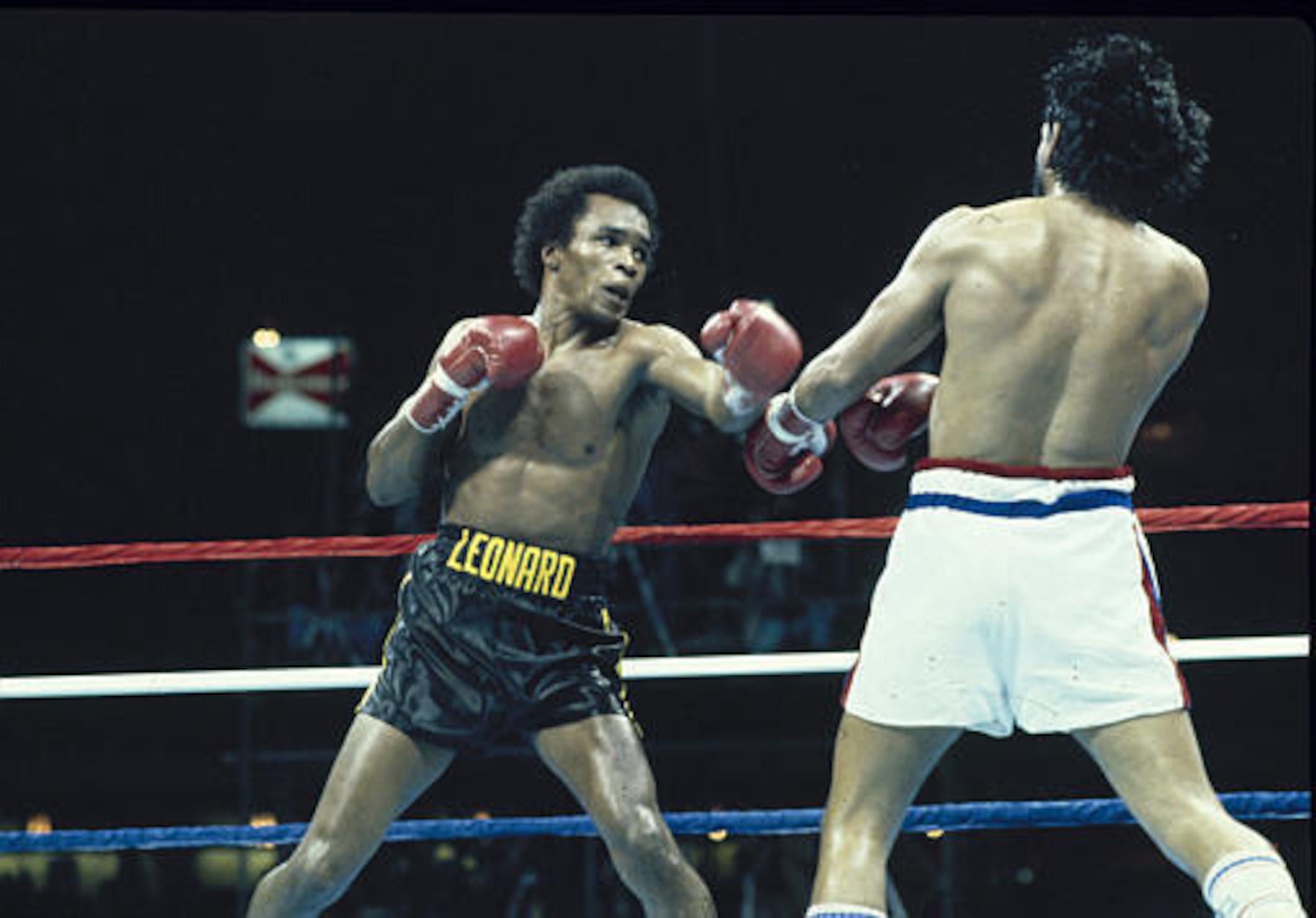
This was the fight that kicked off one of boxing's greatest eras, the age of "The Four Kings," the nickname collectively assigned to Sugar Ray Leonard, Roberto Duran, Thomas Hearns and Marvelous Marvin Hagler by sports writer George Kimball, in his book of the same name.
Leonard was sport's emerging golden child, taking over for the retired Muhammad Ali as the face of boxing. He even shared Ali's trainer, Angelo Dundee. After establishing himself as a household name by winning gold in the 1976 Olympics, Leonard had cruised through the professional ranks, winning the WBC welterweight belt from the great Wilfred Benitez in 1979.
Duran was already a living legend when he moved up in weight to challenge Leonard. Throughout the 1970s, he had compiled a record of 71-1 and established himself as arguably the greatest lightweight in history.
While Leonard's was the face that graced boxes of Wheaties and hawked soda pop on television, Duran was a beloved icon of the hardcore fans: a ferocious, highly skilled assassin.
For this bout, Leonard returned to Montreal, the site of his Olympic glory. Duran managed to lure the younger fighter into a test of machismo, getting Leonard to engage in the sort of brawl that favored the Panamanian.
After 15 extremely competitive rounds, Leonard had his first professional loss, although he had also demonstrated that he had a true warrior's heart. Duran had his second world title in as many divisions.
8. Mike Tyson KO 1 Michael Spinks, June 27, 1988
3 of 10
More than 30 years after he exploded onto the scene as a teenage wrecking ball, Mike Tyson is still one of the most high-profile boxing figures in the world, appearing in movies and starring in his own one-man show on Broadway.
Tyson's campaign to become the youngest heavyweight champion in history remains one of the most exciting times in the history of the sport. In the late 1980s, Iron Mike's swath of destruction in the ring made him a mainstream star.
No single fight more perfectly symbolizes that era than Tyson's 91-second destruction of Michael Spinks.
Spinks had won a gold medal as part of the legendary 1976 Olympic team. He had conquered the light heavyweight division during one of its most competitive eras before jumping to heavyweight and handing the great Larry Holmes his first loss.
By the time Tyson fought Spinks, he had collected all three alphabet soup belts, but Spinks remained the lineal champion. Both fighters were unbeaten.
But the Tyson of this era was a force of nature who defeated opponents before they even got into the ring through sheer terror and intimidation. Spinks, despite his stellar resume, was no different, lasting barely half a round.
This would be Spinks' last fight. Given his great career, I've always felt a slight sense of disappointment that this fight provided his most lasting image in boxing lore.
.jpg?w=2560 "Texans Titans Football")
.jpg?w=2560)
.jpg?w=2560 "Cardinals Giants Football")
7. Gene Tunney UD 10 Jack Dempsey, September 22, 1927: "The Long-Count Fight"
4 of 10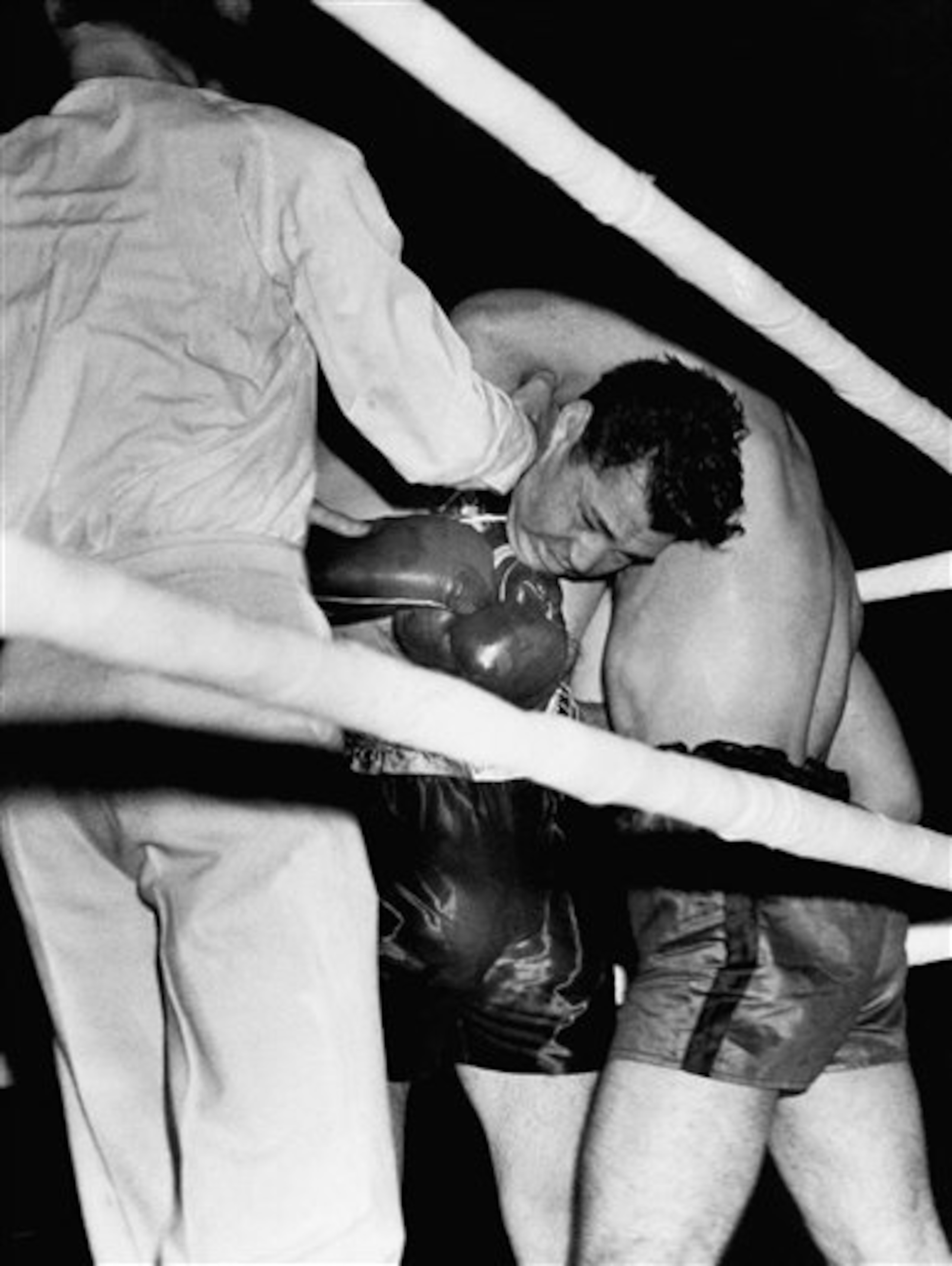
Few champions in history have known the kind of adulation Jack Dempsey enjoyed. The Manassa Mauler won the heavyweight belt from the Jess Willard in 1919, a giant of more than 6'6 ½", who Dempsey dropped seven times in the first round.
That title win by Dempsey launched the first "Golden Age" of the sport. Dempsey was rivaled only by Babe Ruth in terms of mainstream popularity during the 1920s.
His 1921 knockout of the French World War I hero Georges Carpentier was boxing's first million-dollar gate, as more than 90,000 fans paid their way into Boyle's Thirty Acres in Jersey City, New Jersey. It was also history's first coast-to-coast radio broadcast.
For Dempsey's 1923 battle with Luis Angel Firpo, 85,000 fans crowded into the old Polo Grounds in New York City, with 20,000 more turned away. Dempsey was knocked down twice, once clear out of the ring. He dropped Firpo nine times in return, putting him down for good less than a minute into Round 2.
Known as The Fighting Marine, Gene Tunney was a tough but highly scientific fighter. It shocked the world when Tunney was able to use his superb jab and lateral movement to unseat Dempsey in 1926.
For seven rounds, their 1927 rematch went mostly the same way. But then, Dempsey finally caught up to Tunney, dropping the champion to the canvas.
Dempsey continued to loom over the downed Tunney, in violation of a newly instituted rule requiring a fighter to retire to a neutral corner when his opponent went down. The referee delayed the count as a result.
There is no question that Tunney was down for longer than 10 seconds. At the same time, in the existing footage, Tunney does seem to be following the referee's count, indicating he probably could have risen more quickly if necessary.
6. Muhammad Ali KO 8 George Foreman, October 30, 1974: "The Rumble in the Jungle"
5 of 10
With his stunning, come-from-behind knockout of the fearsome George Foreman, Muhammad Ali proved to the world that he was, indeed, the greatest. The fight echoed Ali's stoppage of Sonny Liston a decade earlier, as Ali once again defeated a heavyweight champion widely viewed as unbeatable.
As an event, the Ali-Foreman clash resonated far beyond sports. In his debut as a major boxing promoter, Don King built an entire cultural festival around the big fight, featuring the Godfather of Soul James Brown and blues legend B.B. King, among others.
The fight's location itself was iconic, as it took place in a soccer stadium in Zaire (now known as the Democratic Republic of the Congo). An international hero, Ali was the favorite of the local fans, who famously chanted "Ali, Bomaye!" ("Ali, Kill Him!") throughout the fight.
The iconic quality of this fight can best be demonstrated by the fact that it provided the subject for an Oscar-winning documentary, "When We Were Kings," over 20 years later.
5. Muhammad Ali TKO 14 Joe Frazier, October 1, 1975: "The Thrilla in Manila"
6 of 10
This was another iconic international heavyweight clash during the 1970s, as Muhammad Ali and Joe Frazier traveled to the Philippines for the rubber match of their classic, three-fight rivalry.
Compared to the first bout between Ali and Frazier, or Ali's challenge of George Foreman the previous year, this fight was somewhat under the radar. Frazier had been smashed in just two rounds by Foreman in 1973, and the second fight between Ali and Frazier, in 1974, had lacked the grand drama of their first meeting, in 1971.
But once the bell rang, Ali and Frazier combined to turn in the greatest heavyweight fight in history. They set a record for punches thrown in a heavyweight bout and both pushed themselves well beyond the limits of endurance for normal men.
Ali built an early lead behind his jab and movement, but the relentless Frazier kept coming and delivered body-shaking blows with his lead hook and compact straight right. Ali had to be convinced by his trainer Angelo Dundee to keep fighting late in the bout. By Round 14, Frazier was fighting nearly blind, as both of his eyes had swollen almost completely shut.
In the 14th, Frazier made a heroic last stand, but took a brutal beating. Frazier's trainer, Eddie Futch, refused to let him go out to absorb more punishment in Round 15 and threw in the towel. In his corner, Ali exploded to his feet to raise his hands in victory, then collapsed on his stool in exhaustion. In the years since, he has said many times that it was the closest to death he ever came in a ring.
4. James J. Corbett KO 21 John L. Sullivan, September 7, 1892
7 of 10
The first heavyweight championship fight of the gloved era, this battle between James J. Corbett and John L. Sullivan perfectly fit the archetype of the legendary, but aging, warrior vs. the hungry young challenger.
During the 1880s, Sullivan had become America's first sports superstar and its first pop culture icon. He was an explosively powerful athlete who demolished the toughest men in the world with ease. After capturing the bare-knuckle championship of the world from Paddy Ryan, he traveled the country, offering $500 to any man who could last four rounds with him in gloved exhibitions.
Sullivan made a fortune appearing on stage and traveled to Europe, where he consorted with royalty. But along with being the premier athletic specimen of his age, he was also the premier drunk.
In 1889, the great wrestling champion William Muldoon had taken Sullivan from a wretched physical condition and trained him back into fighting shape to defeat Jake Kilrain in history's last bare-knuckle championship fight. In 1892, Sullivan tried once more to come back from years of physical debauchery to face the rising contender Corbett.
While he was once more able to get into good physical condition, he no longer had enough power to overwhelm a technical wizard like Corbett, who methodically took Sullivan apart and brought his legendary career to a grinding halt in 21 rounds.
3. Jack Johnson KO 15 James Jeffries, July 4, 1910: "The Fight of the Century"
8 of 10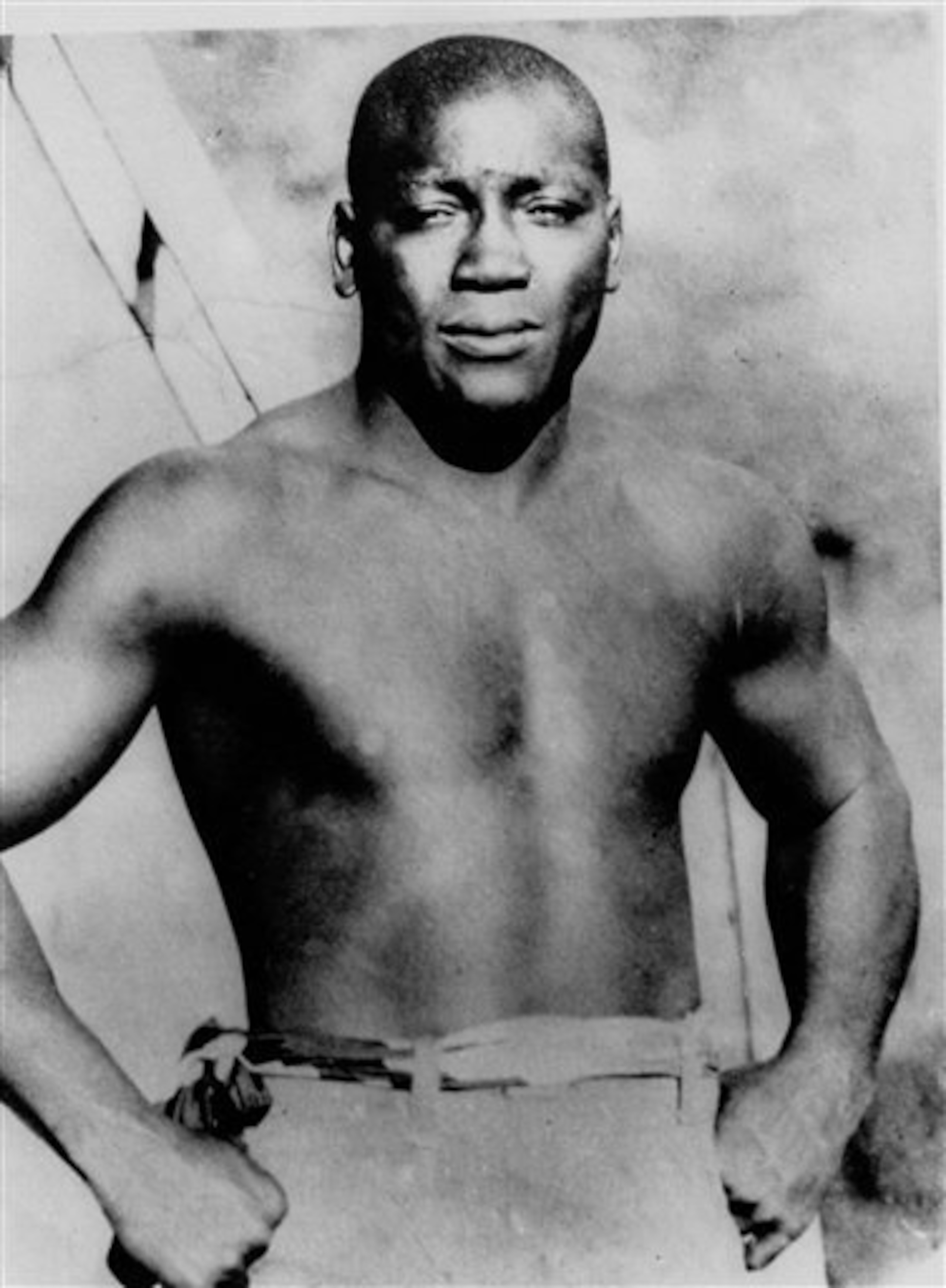
This classic prizefight between Jack Johnson and James Jeffries was perfectly emblematic of the sorry state of race relations at the turn of the 20th century, within the living memory of slavery.
Johnson was the first man of African heritage to win the heavyweight championship of the world, when he thoroughly outclassed Tommy Burns in 1908. White America reacted to his ascendancy with horror, and the bold Johnson did nothing to placate their fears. He was a proud and exceptionally intelligent man who took pleasure in poking at the angry wound felt by racist America.
A great search began for a "great white hope" to unseat Johnson. Unfortunately for the racists, the only credible contenders in existence for Johnson at the time were fellow black fighters, such as Sam Langford, Joe Jeannette and Sam McVea.
Eventually, the situation got desperate enough for the racists that they cajoled Jeffries to return to the ring. He had retired undefeated in 1904 and was definitely one of the great heavyweights of the early years of boxing. He was an excellent athlete with size comparable to a modern heavyweight.
But by 1910, he had ballooned to 300 pounds while living a pastoral life on his farm. He was able to train himself back down to a credible weight, but once the bell rang on that hot July afternoon, it quickly became clear that he was in no condition to handle the best heavyweight on the planet.
Johnson punished him for 15 rounds of a scheduled 45 before the fight was finally stopped at 2:20 of Round 15.
2. Joe Louis KO 1 Max Schmeling, June 22, 1938
9 of 10
While the Jack Johnson-James Jeffries fight was emblematic of an era marred by racial oppression, Joe Louis' 1938 demolition of Max Schmeling was an iconic moment in the country's movement toward becoming a genuine melting pot.
Louis exploded onto the heavyweight scene in the mid 1930s. Under the tutelage of former lightweight contender Jack Blackburn, his raw physical gifts were transformed into a near-perfect heavyweight boxer.
In 1935, he had knocked out former heavyweight champions Primo Carnera and Max Baer. In his first meeting with Schmeling in 1936, he was expected to add a third former champion to his list of victims.
But the crafty German had noticed a tendency of Louis to drop his lead hand when returning his jab. He exploited the hole to connect with a staggering right early in the fight and had Louis in trouble the rest of the way before finally knocking him out in Round 12.
The win made Schmeling the instant darling of Hitler's Third Reich. By the time the two rematched in 1938, Louis had captured the world title from Jim Braddock and World War II was approaching fast.
For the first time in history, an African American was cast in the role of national hero. When Louis visited the White House, President Roosevelt told him, "Joe, we need muscles like yours to beat Germany."
The fight itself was over almost before it began, as Louis jumped all over Schmeling from the opening bell, landing 31 of 41 punches and knocking the challenger down three times before the fight was waved off at 2:04 of Round 1.
1. Joe Frazier UD 15 Muhammad Ali, March 8, 1971: "The Fight of the Century"
10 of 10
No sporting event in history has had the kind of anticipatory buildup, popular culture significance and lasting iconic resonance that the first fight between Joe Frazier and Muhammad Ali generated. This was a clash between two dominant and undefeated heavyweight champions.
Beyond that, each fighter was assigned an emblematic role representing opposing sides in the political and cultural conflicts tearing apart the nation.
Ali had spent the 1960s transforming himself from an Olympic hero to a controversial symbol for the most radical elements of the civil rights and anti-war movements. In 1967, he was stripped of the heavyweight title for refusing induction into the United States Army.
For three years, he was exiled from the sport while awaiting his fate in the legal system. By the time he was finally allowed to return in 1970, Joe Frazier had emerged as a new force in the heavyweight division.
It was unfair that Frazier was cast as the dramatic foil to Ali. Like any intelligent black person living in America in the 1960s, Frazier knew a change had to come. But he was of a naturally conservative temperament, and in his public behavior, he was a throwback to the generation of Joe Louis and Jackie Robinson.
The fight itself surpassed the hype and provided Frazier's finest moment as a boxer. Ali carried the first three rounds with his jab and straight rights, bruising Frazier's face. But in Round 4, Frazier rocked Ali with his legendary left hook and followed up with a brutal assault to the body.
Ali fought gamely throughout all 15 rounds, but it was Frazier's night. He hammered Ali with a hook in Round 11, and Ali should have been ruled knocked down when both his gloves touched the canvas.
In the 15th and final round, Ali went down flat on his back when Frazier landed another hook, securing the victory and title.
.jpg?w=2560 "Broncos Chargers Football")

.jpg?w=2560 "MHJ Bought Own Jugs Machine")