America's New Hockeytown: How the Blackhawks Won Over Chicago
CHICAGO — David Strauss has been in the sports bar business since 1985. Whether he was selling T-shirts as a kid for his dad or managing the place with his two brothers today, Strauss has seen his share of Chicago sports history inside Sluggers, a spacious establishment on Clark Street in the shadow of Wrigley Field.
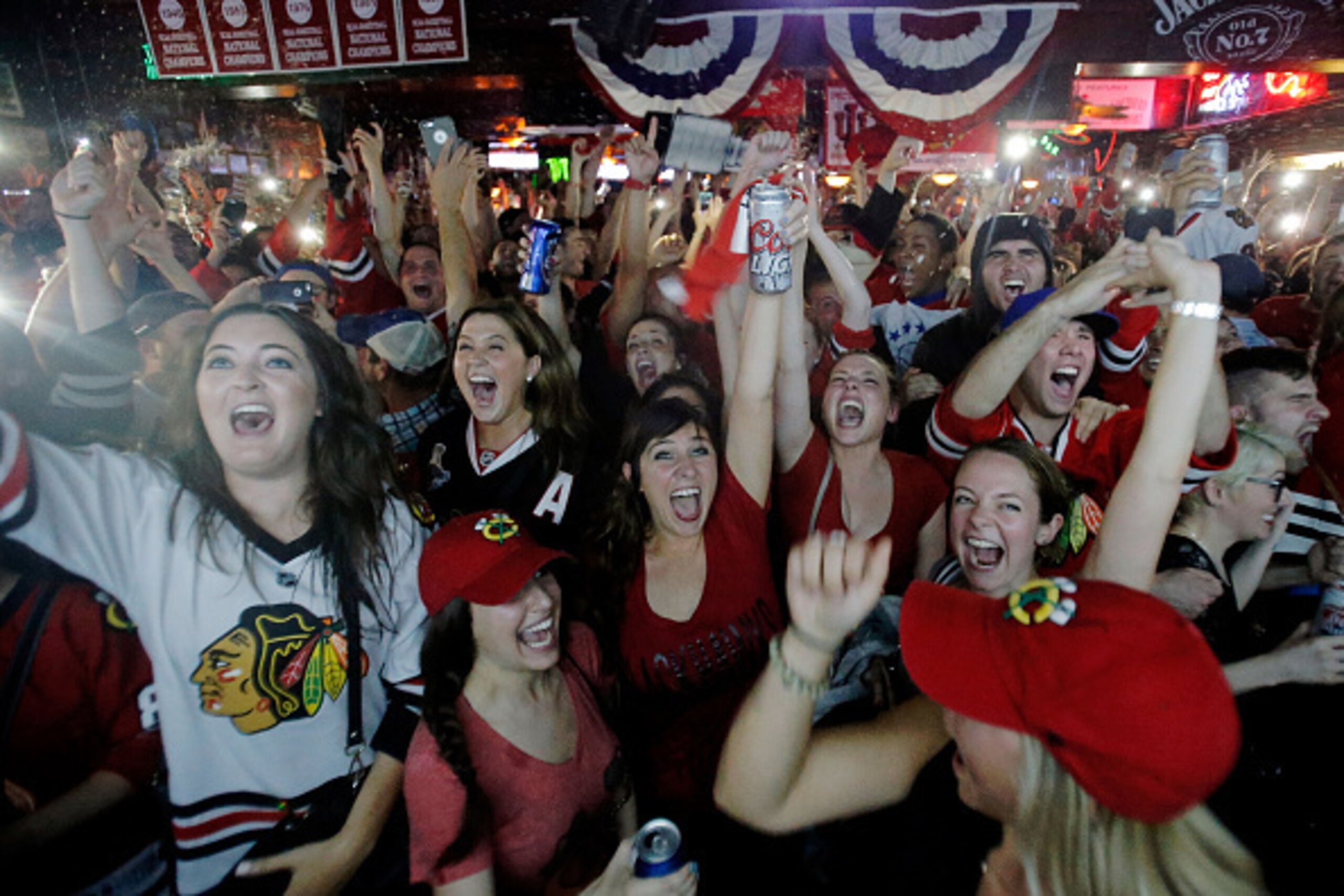
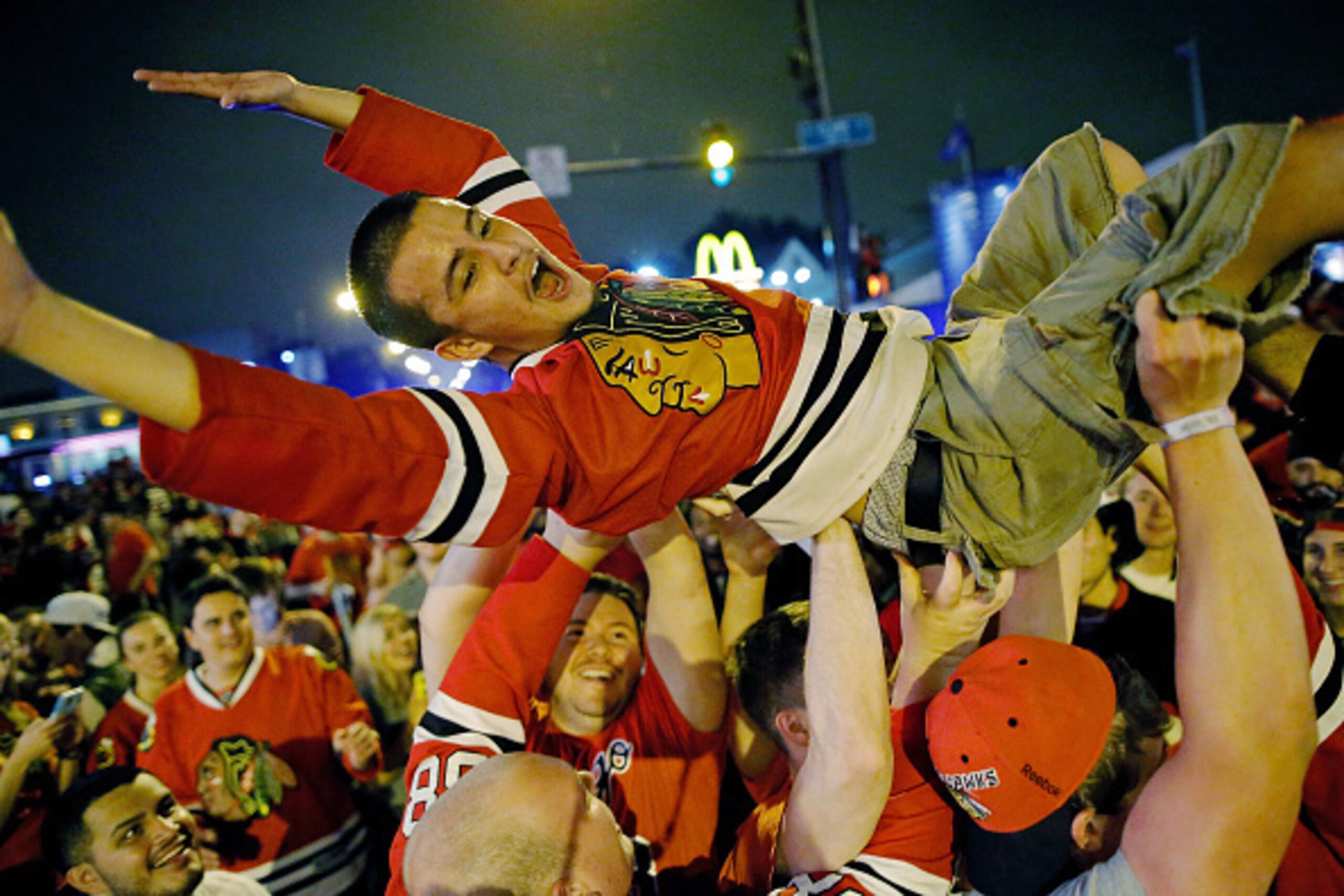
His place was packed Monday night as the Blackhawks won their third Stanley Cup in six seasons over at United Center. The beer was flowing and Chelsea Dagger was blaring on the televisions when Strauss had a thought he had never had before.
“I was so thankful the Cubs game got rained out,” he said.
TOP NEWS
.jpg?w=2560 "Simon Edvisson Landing Spots")
Trade Landing Spots for Edvinsson 📍
Players That Will Dominate the Rumor Mill
3-Way Hellebuyck Trade Ideas 💡
Downpours, a tornado warning and a Cubs postponement would have hurt business at Sluggers in years past. But with the Blackhawks ascending to the top of the NHL over the past seven seasons—after years of existing as an afterthought in town—bars in Wrigleyville that generate most of their revenue from the Cubs are now flush with customers wanting to see hockey.
It wasn’t all that long ago that Blackhawks games weren’t even on local television; now the team’s unrivaled success since 2009 has transformed the city into a true hockey destination for fans and players, a true hockey town.
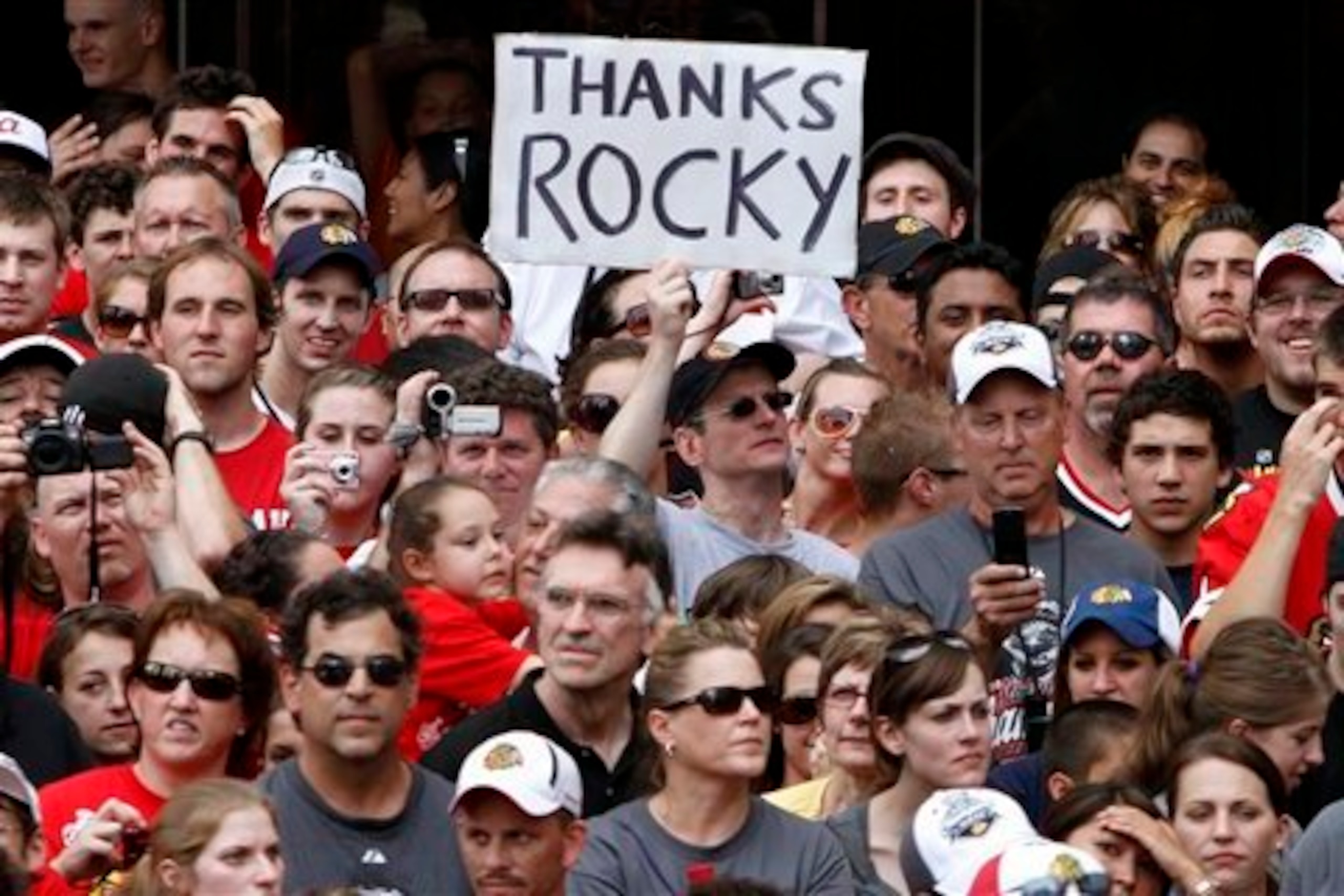
It’s as if Blackhawks fandom lied dormant for years and was awakened by owner Rocky Wirtz, team president John McDonough and a core of players the city has watched grow and win together.
“When you’ve got a team that’s as good as they’ve been,” Strauss said, “you can see the drastic upswing in popularity and more people coming out. That’s what happens when you win. People want to go out. For business, we’ve seen more and more people come out on weeknights.
“Before 2009, nobody cared.”
A decade ago, it was impossible to watch a Blackhawks home game on television. Not that there was clamoring for it, with zero playoff series wins and nine postseason misses from 1997 to 2008.
Owner Bill Wirtz, along with most of his policies about broadcasting games, died in 2007. His son Rocky assumed ownership and worked with local television networks to air a handful of games during the 2007-08 season. The following season, all regular-season games were available in Chicago for the first time in franchise history.
It was a ballyhooed moment for the club, and understandably so, though in today's world it would be like a team patting itself on the back by announcing the creation of a team website.
But the timing could not have been better, because the 2008-09 Blackhawks finished with 104 points and reached the conference finals. It was as if a new television show began airing in Chicago that season, and it did nothing but provide joy and thrills.
The combination of a quality product and a medium through which to experience it tapped into old fans who had all but abandoned the team and new ones who couldn’t pick Glenn Hall out of a lineup or pronounce Toews properly.
“As a fan growing up, it wasn’t on TV; we had to wait for the playoffs to buy a game on Hawkvision,” said 31-year-old Pete Johnson, general manager at Johnny’s IceHouse in Chicago, a public rink that also serves as the Blackhawks' practice facility. “Going to games was pretty accessible. We could go to Hawks games whenever. When I was in high school, a student ID got you in for eight bucks.
“I went to one game this year. I used to go to 30-plus games per year cheap. We always b---h about that. Pick your poison: Do you want to suck and go? Or do you want to win and not go?
“I miss those experiences, but you have to take the winning.”
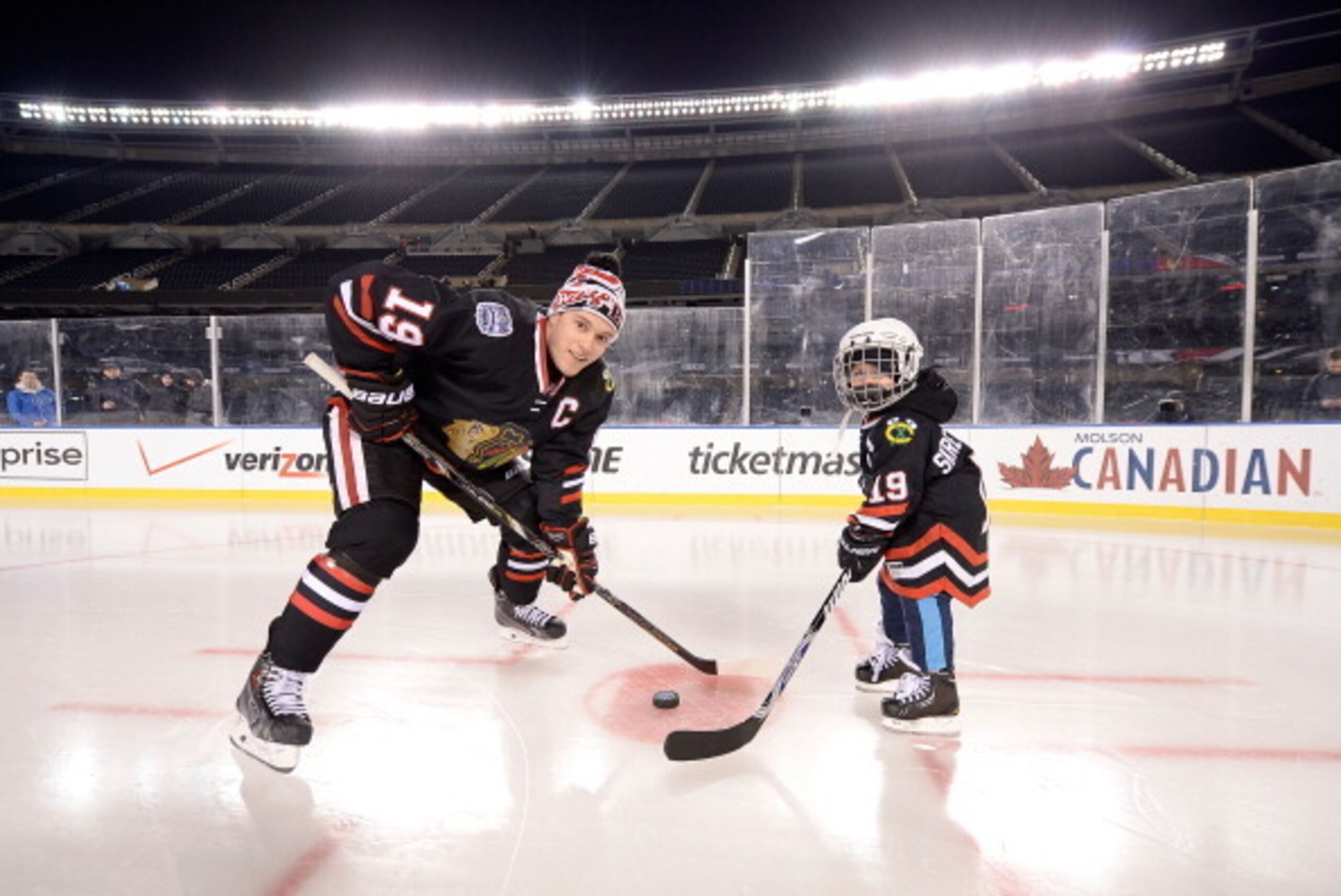
The winning hasn’t just been good for the bottom line of sports bars—it’s led to more people of all ages picking up the game on recreational and youth levels.
Johnson has held his position at Johnny’s for only a couple months but has been part of the hockey culture in Chicago his whole life. He started playing at the age of five and served as a high school coach before taking this job with Johnny's IceHouse.
Johnny’s West is an offshoot of Johnny’s East, a newer, more modern building that isn’t necessarily part of the hockey boom in Chicago but is at the very least an additional rink for people to frequent for men’s leagues, youth leagues and instructional courses.
Johnny’s was never hurting for business when the Blackhawks were a disaster, but Johnson says the interest has grown among mostly adults since the team started to become a powerhouse in 2009.
“At Johnny’s in particular, there’s been a huge spike in adults getting the hockey bug and wanting to learn and play,” Johnson said. “We’ve been accommodating with our programming here to help adults who are essentially picking up the game for the first time in their 40s-plus to learn the fundamentals.
“I don’t think people understand that a big part of our rink is the adult league. There’s a waiting list to get here and that waiting list is growing. I’ve got a folder full of people just begging to get in.”
| 2002-03 | 21,067 |
| 2008-09 | 21,954 |
| 2013 | 27,638 |
That’s the case throughout Illinois.
According to 2013 numbers culled by The United States of Hockey, the state had around 22,000 registered hockey players per year between 2002 and 2009. In 2012-13, before the Blackhawks won their second Cup in four years, that number had jumped to nearly 28,000 players. No state had grown as much between 2009 and 2013 as Illinois, according to the site.
“It’s a response to the Hawks winning,” Johnson said. “Hockey’s not the most successful sport, but people are definitely taking an interest from the youth level to the adult beginners.”
Call them bandwagon fans latching on to a winning program if you want, but they are everywhere now in Chicago, and their money and support are just as valuable as anyone else’s.
McDonough was hired to be the marketing arm of the Blackhawks in 2007, a role he held for two decades with the Cubs. The challenge for McDonough was immense—figure out a way to connect older fans with a young team in its larvae stage while tapping into a market that perhaps didn’t know they were Blackhawks fans yet.
Bobby Hull, Stan Mikita, Tony Esposito and Denis Savard were tabbed as team ambassadors. If you take games on television for granted in the 21st century, the concept of a fan fest probably isn’t that far behind, although it was McDonough who was the first to use the idea in the NHL.
He literally brought players and fans together in Chicago.
It’s impossible to get through a day on Twitter without hearing about brand management or engagement metrics or synergy across platforms designed to activate casual consumers. That marketing lingo may not mean much to the average fan, but McDonough’s tactics changed the way fans perceived the team perhaps almost as much as all the winning that coincided with it.
In the aftermath of a third Cup, McDonough said, “Our goal was to get one and try to get the franchise on the right track and get this orchestrated and the process and the system and everything together and hire the right people. Apparently we have. What a reward for the city of Chicago.”
“I think we're very, very fortunate,” Wirtz said. “If you could have said we could be here from '07 to today, three times in the Finals, yeah I am very surprised. But it's a credit to the organization, credit to John McDonough and the team he's built.”
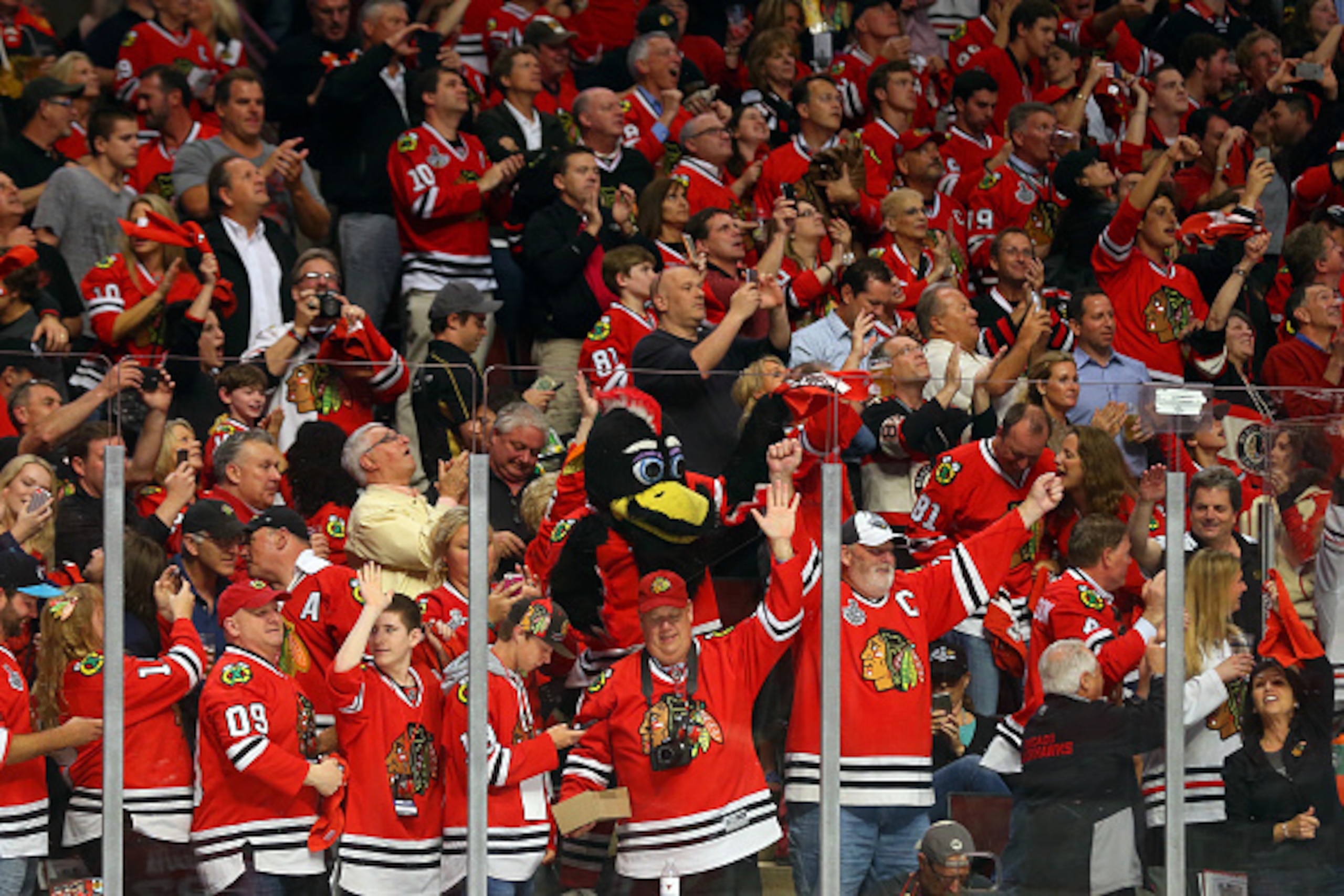
There were 22,424 fans at United Center watching Jonathan Toews lift the Stanley Cup and pass it to Kimmo Timonen. The Madhouse on Madison also could be called the Packed House on Madison, as it is routinely sold above capacity and one of the nuttier environments in the NHL.
While that’s the norm today, it wasn’t that long ago when attending a Blackhawks game looked a lot like a crowd at a game in Arizona.
Since 2008-09, the Blackhawks have been atop the league in attendance in every season, averaging no fewer than 21,350 fans per game.
In 2006-07, the Blackhawks were 29th in attendance at 12,727 fans per game, about 600 fewer than the Coyotes averaged this season. That was common before Wirtz and McDonough took the reins. The only way to go from 12,000 per game to 22,000 per game is by connecting with new fans, resurrecting older ones and giving them a winning product.
| 2005-06 | 13,318 | 29th |
| 2006-07 | 12,727 | 29th |
| 2007-08 | 16,814 | 19th |
| 2008-09 | 22,247 | 1st |
| 2009-10 | 21,356 | 1st |
| 2010-11 | 21,423 | 1st |
| 2011-12 | 21,533 | 1st |
| 2013 | 21,775 | 1st |
| 2013-14 | 22,623 | 1st |
| 2014-15 | 21,769 | 1st |
All that happened at once. Toews, Patrick Kane, Duncan Keith and Brent Seabrook began to establish themselves as the heart of a perennial championship team, drawing new fans to United Center and any place in Chicago that serves a beer.
“I kind of jumped on the Blackhawks bandwagon in 2008,” said 21-year-old Adam Hess. “I was in my freshman year of high school and they had just barely missed the playoffs the year before, the first with Toews and Kane and Keith all as a unit. Toews had just been named captain, and things were looking good for them. I got behind them and watched every game of the playoff run that I could that year. I was pretty much hooked.
“I'm still a White Sox and Bears fan but don't care nearly as much about them as the Blackhawks.”
That’s the story for a lot of Blackhawks fans, which speaks volumes about how downtrodden the classic franchise had become and where this team is now.
“In 2009, my uncle told me I needed to start watching hockey and to follow the Blackhawks,” said 42-year-old Brian Varley. “My first response was, ‘Why, don't they suck real bad?’ I followed his advice anyway and began watching them just as Detroit beat them in the playoffs.
“In 2010 I watched more games towards the end of the regular season and followed them through to their first Stanley Cup. I was excited for them, but still felt like an outsider. At this time, I still didn't understand the ‘last change’ concept. From 2011 until now I watch hockey all the time whether the Hawks are playing or not.”
Finances are improving. Fans are growing. That’s to be expected when a team in a major market begins to create talk of a dynasty.
But can the Blackhawks create a championship...at the high school level?
Johnson spent four years in Wilmette coaching the Loyola Academy hockey team, which captured a state championship in 2014. How in the world can the Blackhawks take any credit for it?
Before Johnson became a general manager at Johnny’s IceHouse, he would attend the Blackhawks open practices there not as a fan, but as a coach looking for an edge.
He found it.
“I would literally film their practices on my iPad,” he said. “One example was how crisp these guys move the puck at practice. I would film it, take it to the rink and stream it for our team in the locker room. The kids don’t get to see that because they’re in school.
“I’m like, ‘Here’s a drill we’re going to do’ and we’re working on these concepts. It’s just the visual of seeing the best team in the world and what they do and the little things they focus on. I think it definitely had an impact on our attitude about practice.”
It’s not that teenagers can’t learn from bad professionals—after all, they are still professionals—but as Johnson said, “I just loved watching the game when I was playing the game but I wasn’t necessarily learning from them; they were losing.”
The Blackhawks aren't just making fans appreciate hockey again; they are serving as a teaching tool for kids, too.

Winning also begets winning.
Chicago is a destination city for fans and would be for players, too, if not for the team having little need to pursue expensive free agents. Marian Hossa was brought into the fold just before the team took off completely in 2010 when he signed a 12-year deal the previous summer to supplement a team built almost entirely through the draft.
Toews, Kane, Keith, Seabrook, Niklas Hjalmarsson, Brandon Saad and Corey Crawford were all draft picks. Patrick Sharp was acquired in a trade in 2005, which makes him part of the homegrown family by default.
The Blackhawks are like an exclusive club filled with beautiful people. There’s a line around the block to get inside. The bouncer at the door will check the list. Chances are, your name is not on it. Sorry.
There was one name on the list this past offseason—Brad Richards.
A second-line center was a glaring need for the Blackhawks. Richards just had his nine-year, $60 million contract bought out by the Rangers, making him a target by quite a few teams, even if his game looked like it took a dip in 2013-14. Richards had 20 goals last season and enough playoff experience to make him valuable on the open market.
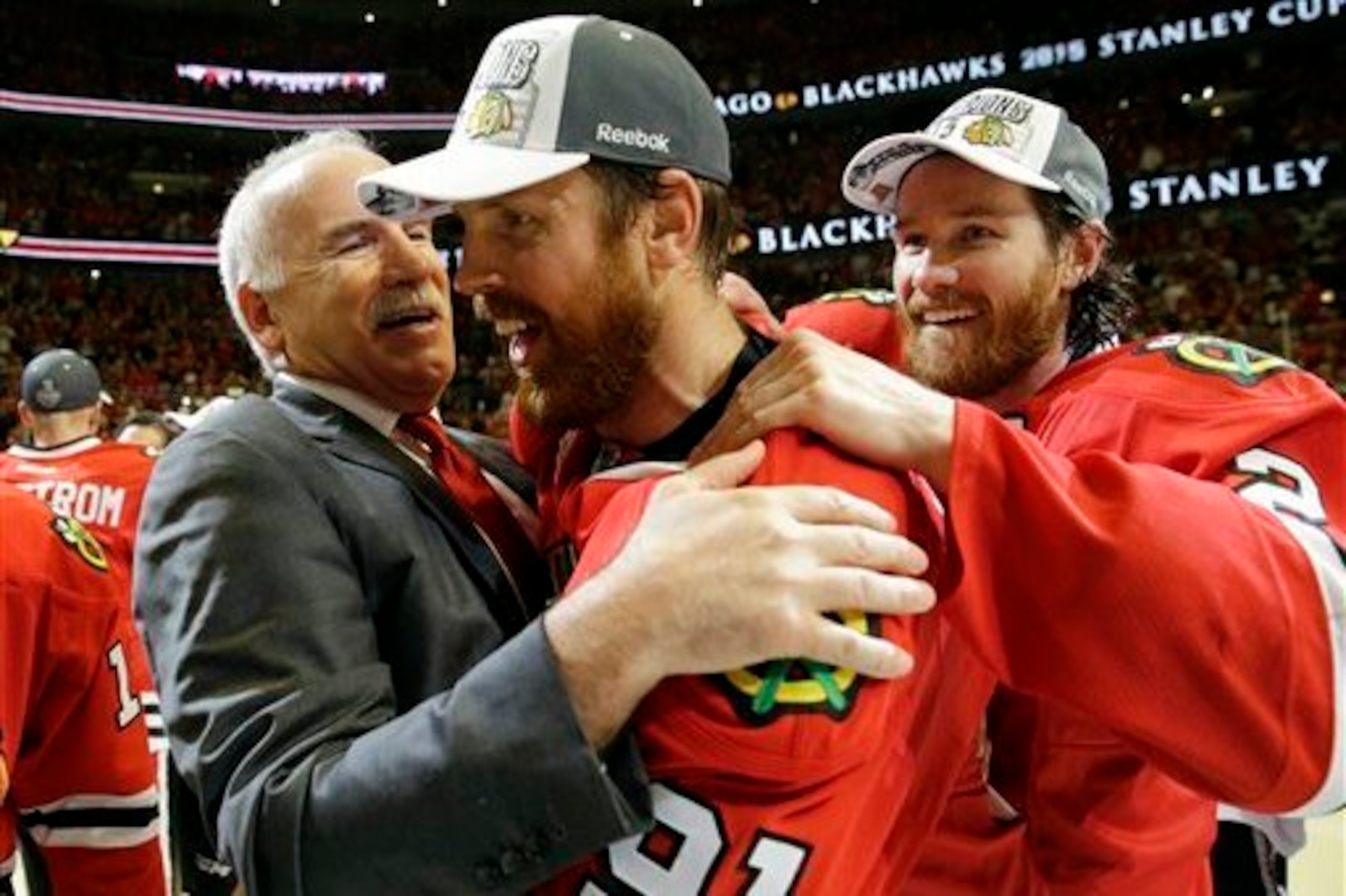
Richards could have taken more money and more years elsewhere, but he chose to sign a cap friendly, one-year, $2 million deal because he believed this was an incredible chance to win a Cup one year after losing in the Final with the Rangers. Coach Joel Quenneville—maybe the most underrated three-time Stanley Cup winner in NHL history—let it be known during the courtship that Chicago was the place for Richards.
“The last thing Joel said when I hung up on (July 1) was, ‘Come to Chicago. We’ll win a Cup,’” Richards said. “He said it like three times in that conversation. He kept interrupting me, kept saying that, and I kept hearing that thinking, ‘How does he know that?’
“I don’t know how he knew, but he knew we had a chance and here we are.”
The city had forgotten it had an NHL team 10 years ago. Today, the Blackhawks are a juggernaut, the class of the league, arguably a dynasty.
Players are reaping the benefits. Businesses are reaping the benefits. Fans are reaping the benefits.
As Strauss said while sitting on a barstool, a few Blackhawks jerseys peppering his bar in the middle of the day, “What’s that saying? A rising tide lifts all ships? It’s true.”
All statistics via NHL.com.
Dave Lozo covers the NHL for Bleacher Report. You can follow him on Twitter @DaveLozo.

.jpg?w=2560 "Terrell Owens Being Sued for Defamation")
.jpg?w=2560 "CJGJ Shares Cryptic Post 🤔")