
The 2015 Stanley Cup Playoff All-Postseason Team
The summer sun of July and August looms, which means it's time to tuck this hockey season to bed, turn out the lights and say, "See you in September." Except...there's still the draft, free agency, rookie camps and...yes, this has pretty much become a 12-months-a-year sport.
Depending on whom you ask, this was either a great NHL season or a step back.
The former cite the continued parity among the 30 teams; the latter complain that Jamie Benn was the league-scoring leader with 87 points. That tied Stan Mikita for the lowest-scoring non-strike season, when he posted 87 points for Chicago in 1967-68. Thing is, the NHL regular season in 1967-68 consisted of 74 games per team, not 82 like today.
The playoffs weren't much more flashy in terms of scoring. Three of the first five games of the Stanley Cup Final finished 2-1, a score that is becoming as common again as the maligned "Dead Puck" era of the late 1990s and early aughts.
If all-star teams could be selected based on tangible results, the following slideshow would consist of more defensemen and goaltenders than forwards. But tradition holds that we must name three forwards, two D-men and one goalie for each team.
Hence, the following slideshow for our postseason first-, second- and third-team postseason all-star slideshow.
Criteria and Honorable Mentions
1 of 14
The criteria for selection: The longer you played, the better your chances of inclusion on the top two teams. That's only fair. Beyond that: statistics, strength of competition and arbitrary, subjective whimsy.
One other thing: Instead of selecting wingers from just the left or right side, we decided to just go with the two best for each team, regardless of the side they skate on. Lots of wingers switch back and forth anyway, but there tends to be more quality right wings than the left, and it would be tough to leave some off because of that.
Apologies to the following players not on these teams. Consider this the honorable mention category:
- Patrick Sharp, Chicago Blackhawks
- Andrew Shaw, Chicago Blackhawks
- Jakob Silfverberg, Anaheim Ducks
- Brandon Saad, Chicago Blackhawks
- Zach Parise, Minnesota Wild
- Ryan McDonagh, New York Rangers
- Derick Brassard, New York Rangers
- Frederik Andersen, Anaheim Ducks
- Francois Beauchemin, Anaheim Ducks
- Johnny Gaudreau, Calgary Flames
- Braden Holtby, Washington Capitals
- Ryan Kesler, Anaheim Ducks
Third-Team Selections
2 of 14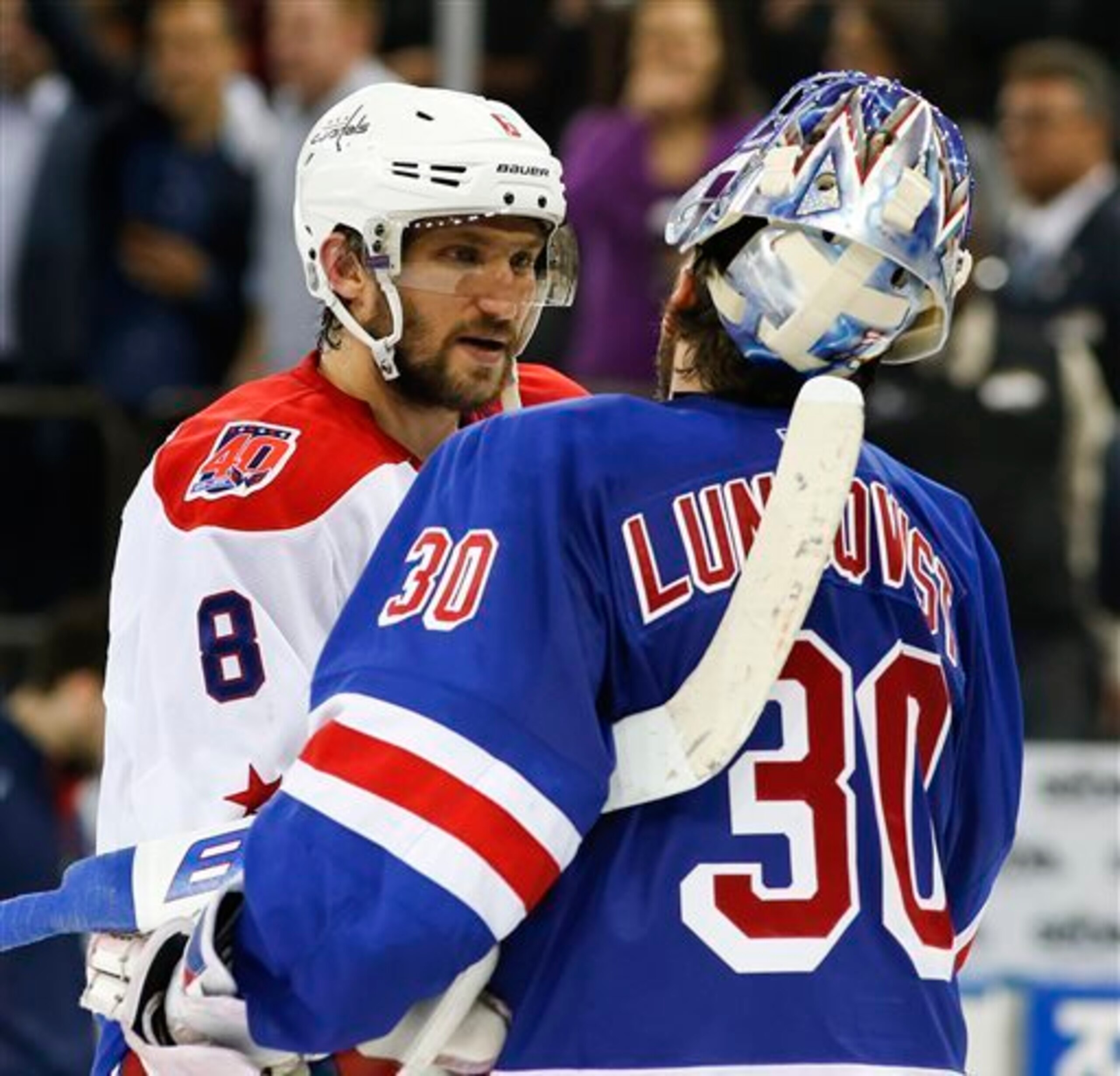
Winger: Alex Ovechkin, Washington Capitals
The numbers weren't all that Ovech-kian: five goals, four assists in 14 games, for a team that lost in the second round after blowing a 3-2 lead. Except Ovechkin posted 61 shots on goal in the 14 games (tied for ninth overall), with everyone ahead of him having played at least three rounds.
No, technically he didn't come through in the clutch of another Game 7. Hence, that's why he's on the third team. It was still a better playoff showing than recent years for the Russian.
Center: Ryan Getzlaf, Anaheim Ducks
He posted two goals and 18 assists in 16 games and won 51.2 percent of his faceoffs as the Ducks' top center. The playoffs ended badly for "Getzy," however, with just one assist in the final two losing games in a seven-game Western Conference Final loss to Chicago.
That aside, it was a fine playoff showing for Getzlaf. He set an Anaheim team record for most assists in the playoffs, so there's that too.
Winger: Ondrej Palat, Tampa Bay Lightning
As one third of the "Triplets" line with Tyler Johnson and Nikita Kucherov, Palat more than did his share. He posted eight goals and 16 points in 26 playoff games, scoring on 18.6 percent of his 43 shots.
Palat scored on 11.5 percent of his 139 regular-season shots, so the playoff numbers proved he knew how to elevate his game.
Defenseman: Brent Seabrook, Chicago Blackhawks
His deflection of Steven Stamkos' potential tying goal in the waning minutes of Game 4 of the Cup Final will rightly go down in Blackhawks lore.
Seabrook also scored some big goals. He's already established a new Chicago defenseman record for most goals in the playoffs (seven), one ahead of Chris Chelios. For an Original Six franchise, that is saying something.
Defenseman: Keith Yandle, New York Rangers
He posted two goals and nine assists in 19 games, with a plus-seven. Yeah, the Rangers wanted more from him offensively—no doubt. But for a guy who came over from a different conference at the trade deadline, Yandle played pretty well for a team that was one win away from going to the Cup Final for a second straight year.
Goaltender: Ben Bishop, Tampa Bay Lightning
It is a shame he got hurt early in the Stanley Cup Final, because it no doubt inhibited the 6'7" Tampa Bay netminder the rest of the way. In fact, Bishop revealed he had been playing on a torn groin since Game 2. Still, he gave his team chances to win in Games 5 and 6, but his dormant offense couldn't get it done.
Bishop has a nice statistic: the first goalie in NHL history to record shutouts in the first two Game 7s he ever played. He didn't win a Cup, but that's something nobody can take away from him.
Second-Team Winger: Marian Hossa, Chicago Blackhawks
3 of 14
By the numbers: Marian Hossa never quite seems to get the credit he deserves. He just quietly goes out and plays great hockey, year after year. This one was no exception. Although he didn't score goals at the pace he's accustomed to (four in 23 games), he had 13 assists.
With as much postseason success as he's had the last nine years and needing just 14 more goals for 500 in his regular-season career, Hossa is more than just an excellent player now. He's a likely Hall of Famer.
Why he's here: People forget how long this guy has been around. He was a rookie in 1997-98 with Ottawa and is a former Atlanta Thrasher. He definitely plays younger than a 36-year-old, still a danger every time he's got the puck.
Once labeled as something of a "soft" player, Hossa shed that a long time ago.

Second-Team Center: Tyler Johnson, Tampa Bay Lightning
4 of 14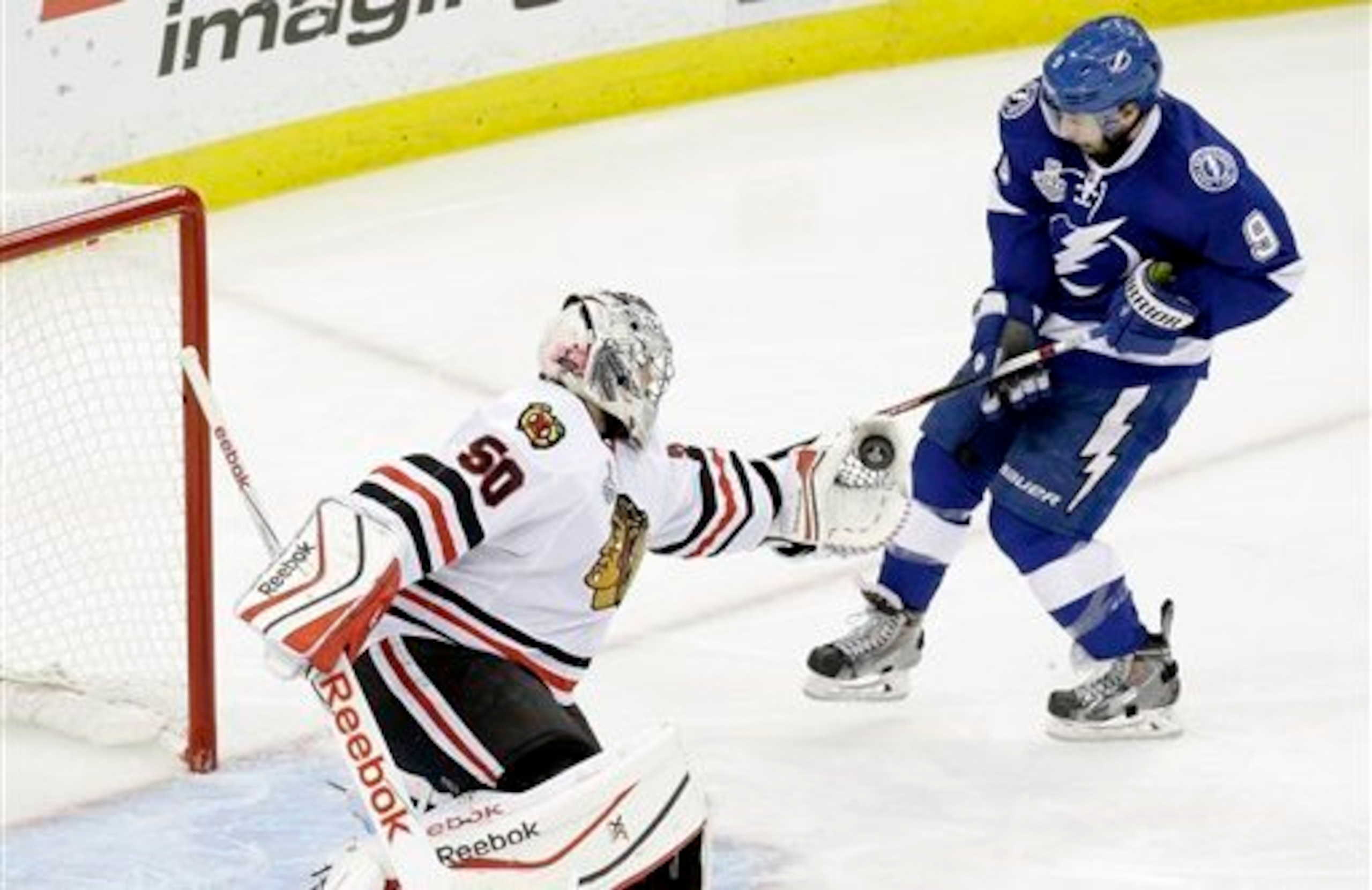
By the numbers: Entering Game 6 of the Cup Final, the 5'9" forward remained the league-scoring leader (13 goals, 10 assists). Unfortunately for him, those numbers stayed the same. A suspected hand injury in Game 1 against Chicago may have limited his effectiveness after that (one assist and zero faceoffs taken in Games 3-5).
All his effectiveness before that point makes him a deserving second-team selection at center.
Why he's here: Without Tyler Johnson, the Lightning never would have gotten out of the first round. While captain Steven Stamkos struggled, Johnson scored six goals in the seven-game series, including two in a Game 6 win at Joe Louis Arena.
In Game 2 of the Eastern Conference Final, Johnson scored a hat trick on Henrik Lundqvist to even that series and assisted on a goal in the 2-0 Game 7 win at Madison Square Garden.
Second-Team Winger: Corey Perry, Anaheim Ducks
5 of 14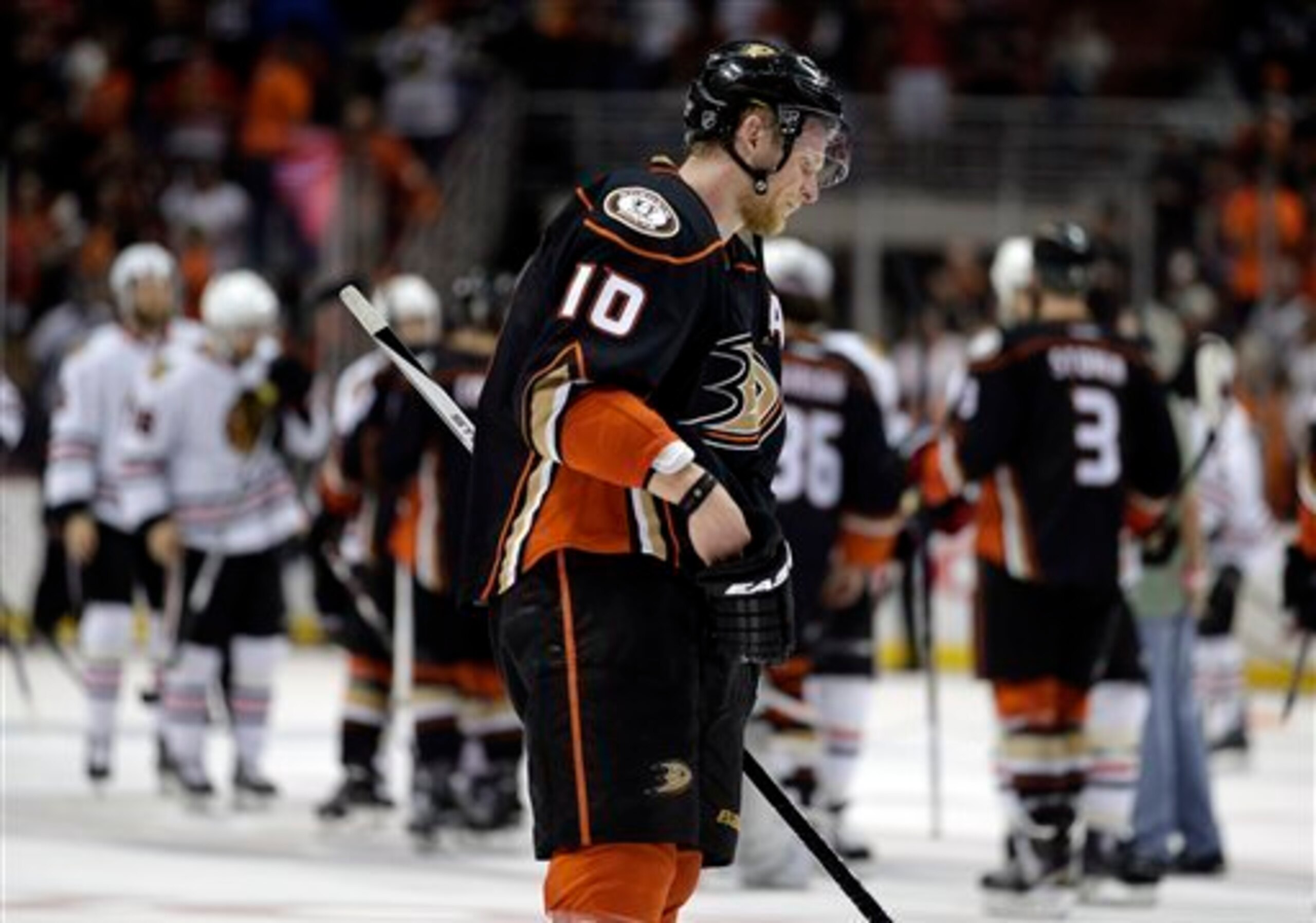
By the numbers: You have to think that the knee injury Corey Perry suffered in the second round hurt his production some. He still gutted out three points in seven games (all goals), but you had the feeling the veteran right winger was playing in pain.
He still finished the playoffs with 10 goals and eight assists in 16 games, with a plus-six. He posted 64 shots on net, too, and was robbed at least a half-dozen times on great scoring bids.
Why he's here: Until he got hurt, he was the best player in the playoffs. He was always around the net, always a pain in the opposition's side when it came to the physical part of the game. It's a shame he was slowed some by that knee injury in Game 5 of the second round against the Flames. Until then, he was on quite a roll.
Second-Team Defenseman: Niklas Hjalmarsson, Chicago Blackhawks
6 of 14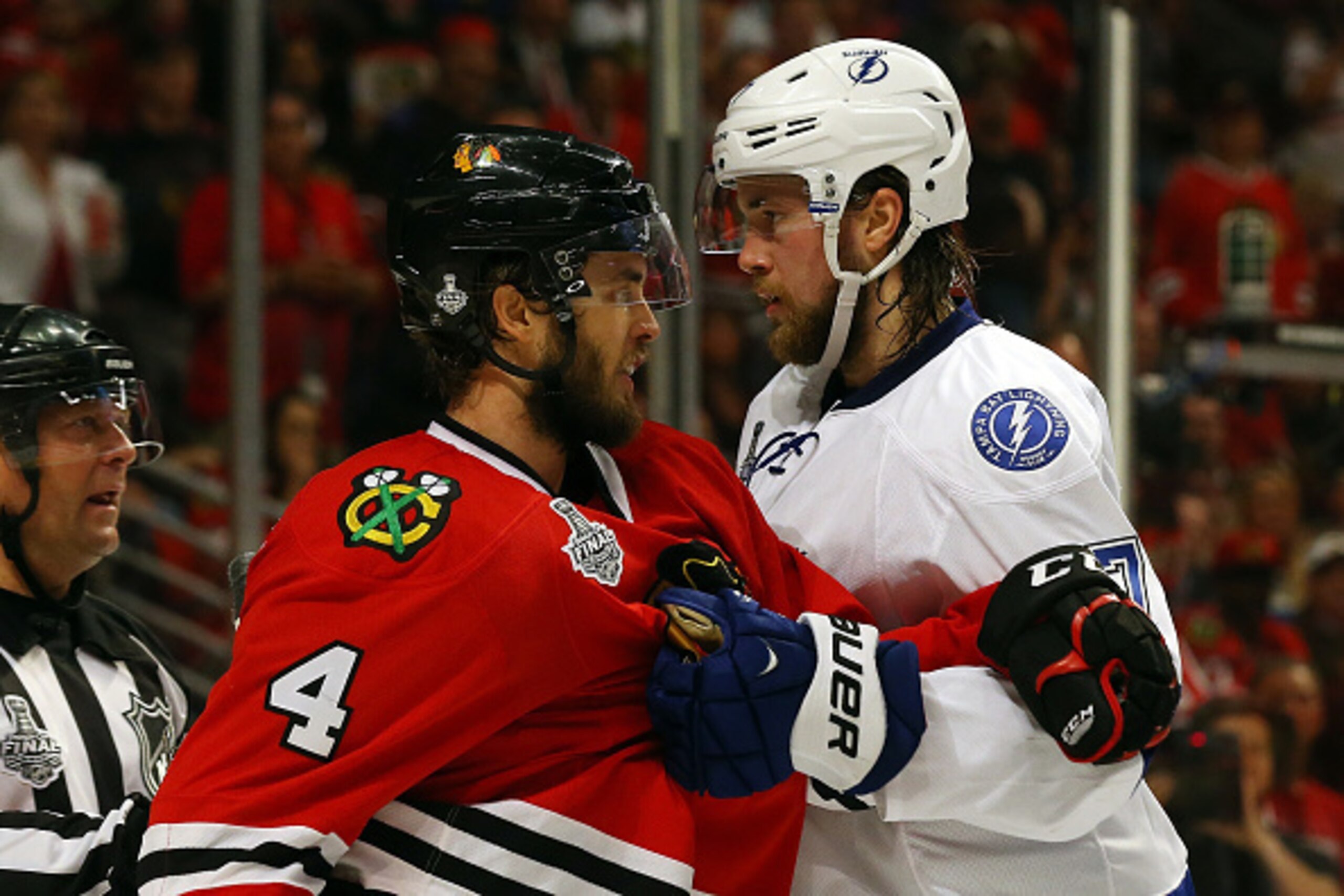
By the numbers: As Duncan Keith and Brent Seabrook got most of the ink, Niklas Hjalmarsson quietly had one heck of a playoffs for the Blackhawks. Take Game 5 of the Cup Final, for instance: He blocked a game-high seven shots and played 28 minutes, 19 seconds. That was second only to the indefatigable Keith, who played a little more than 29 minutes.
Michal Rozsival was lost before the playoffs to an injury and Kimmo Timomen struggled, so Hjalmarsson answered the challenge for coach Joel Quenneville. He was part of a four-man rotation that played most of the minutes from there, but he never seemed to tire.
Why he's here: He made the safe, simple plays in his own end throughout the playoffs. Earlier in his career, Hjalmarsson was more turnover-prone. The fact that he was given 28 minutes in regulation of a Cup Final game was proof positive he had earned Quenneville's trust from those earlier days.
Second-Team Defenseman: Johnny Oduya, Chicago Blackhawks
7 of 14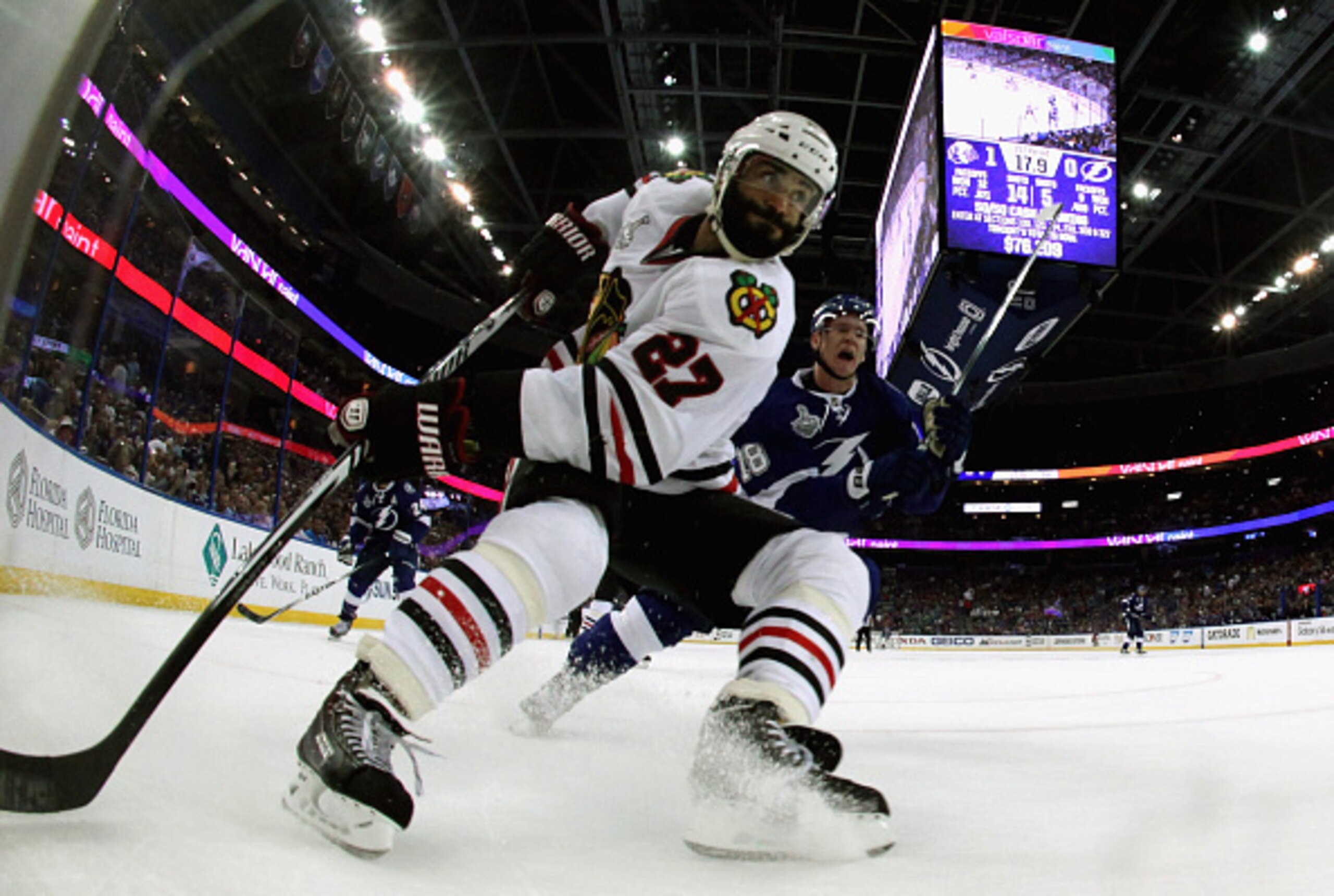
By the numbers: He got little publicity, which is too bad because he was tremendous for Chicago as the games got bigger in the playoffs.
Aside from a bad showing in Game 3 of the Cup Final, where he was a minus-two, Johnny Oduya was steady as she goes throughout the postseason. He played with a suspected hand injury in the final games against the Lightning, but he never let it show. He logged 25-plus minutes in Game 4 and 24-plus minutes in Games 5 and 6.
Why he's here: When Michal Rozsival went down before the playoffs and others faltered in the fifth and sixth D-men roles, it could have been easy for guys like Oduya to crumble under the added responsibility. Instead, he elevated his game and now should command quite a nice dollar on the free-agent market next month.
Second-Team Goaltender: Henrik Lundqvist, New York Rangers
8 of 14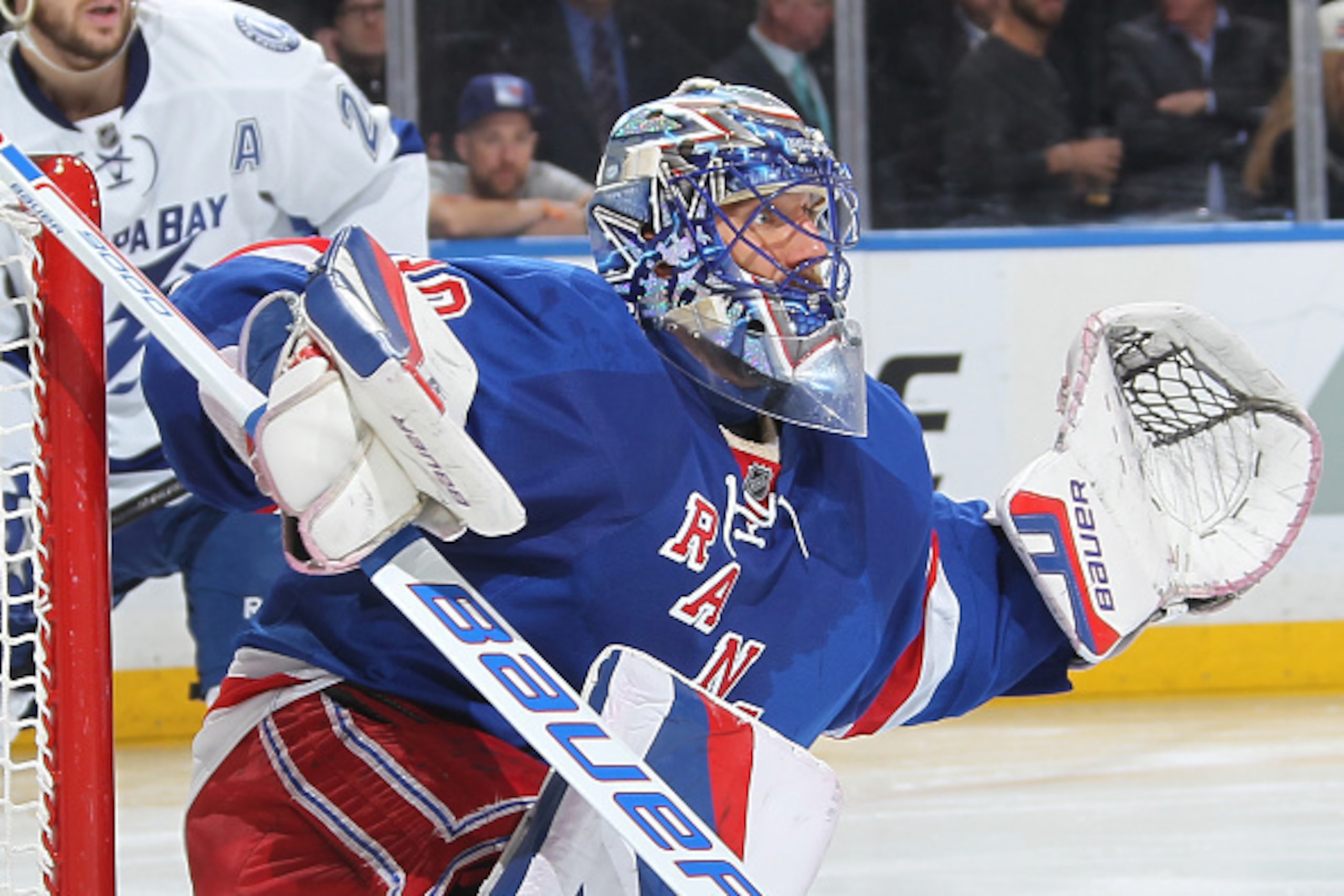
By the numbers: As usual, it wasn't his fault.
Well, aside from a poor Game 3 of the Eastern Final, it wasn't. Henrik Lundqvist allowed six goals in that key 6-5 overtime loss in Tampa. Yet, when the playoffs were over, Lundqvist's 2.11 goals-against average was the lowest of any netminder who played more than six games, as was his .928 saves percentage.
Why he's here: Lundqvist never seems to get any offensive support when he needs it most. The New York Rangers scored seven goals in a Game 6 victory in Tampa Bay, only to come home and get shut out in Game 7. The veteran goalie had a fine playoff run again otherwise. Game 3 will probably haunt his summer, but overall the truth remains: It wasn't his fault the Rangers didn't win a Cup.
First-Team Winger: Nikita Kucherov, Tampa Bay Lightning
9 of 14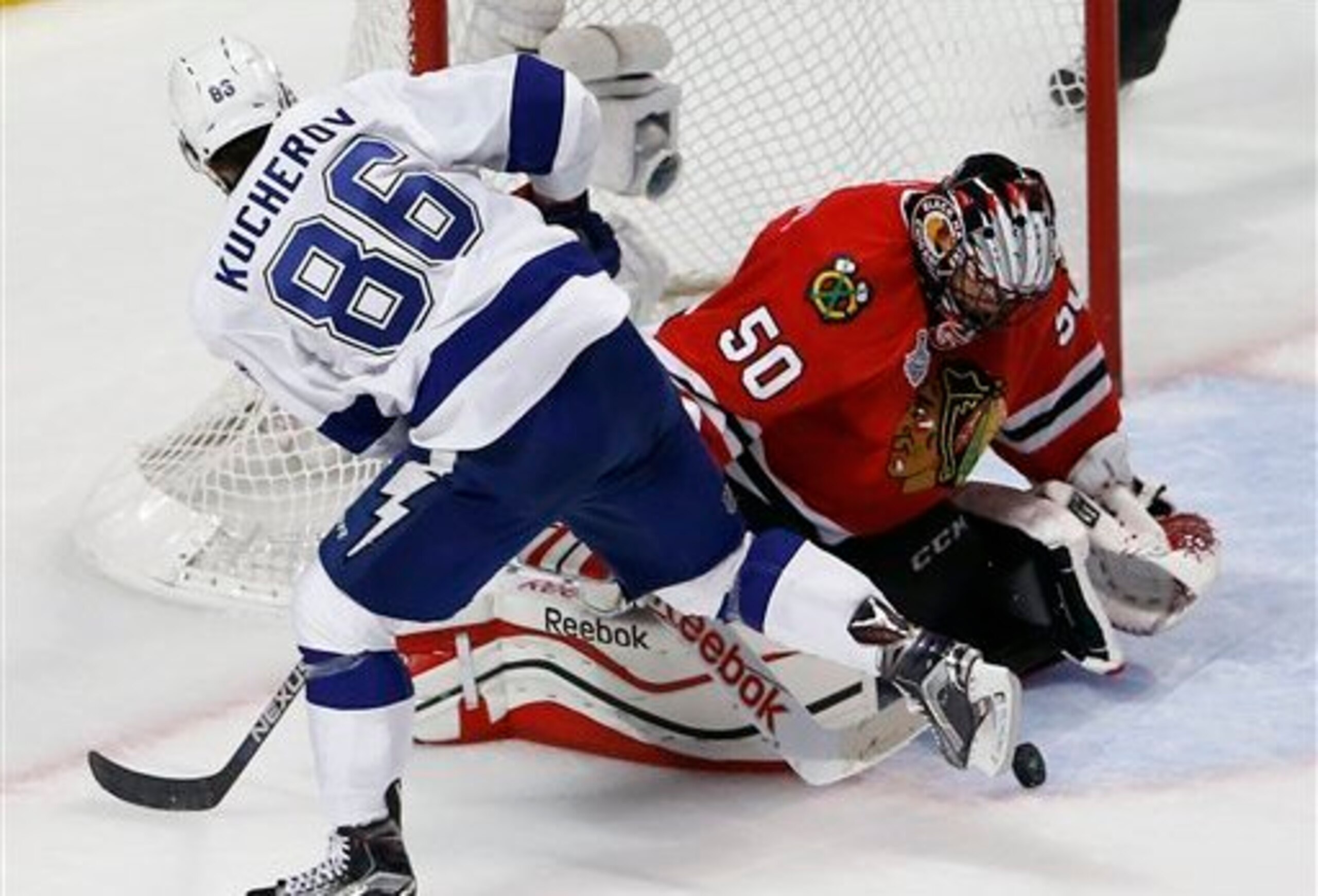
By the numbers: He posted 10 goals and 12 assists in his first 25 games, before getting hurt in Game 5 of the Cup Final. That was good enough for second in NHL postseason scoring, just behind Triplets linemate Tyler Johnson. He played in Game 6 but looked too banged up to be effective.
After a so-so rookie season (nine goals, 18 points in 52 games), Nikita Kucherov really came on as a sophomore, with 28 regular-season goals. Nobody quite expected him to be so good in the playoffs, but he was dangerous almost every night.
Why he's here: Among Kucherov's 10 goals were three game-winners, including an OT score in Game 3 of the Eastern Final against the Rangers. He didn't just put up points; he put up important ones. He only turned 21 on June 17 too. The Lightning have a top top-line winger for many years to come.
First-Team Center: Jonathan Toews, Chicago Blackhawks
10 of 14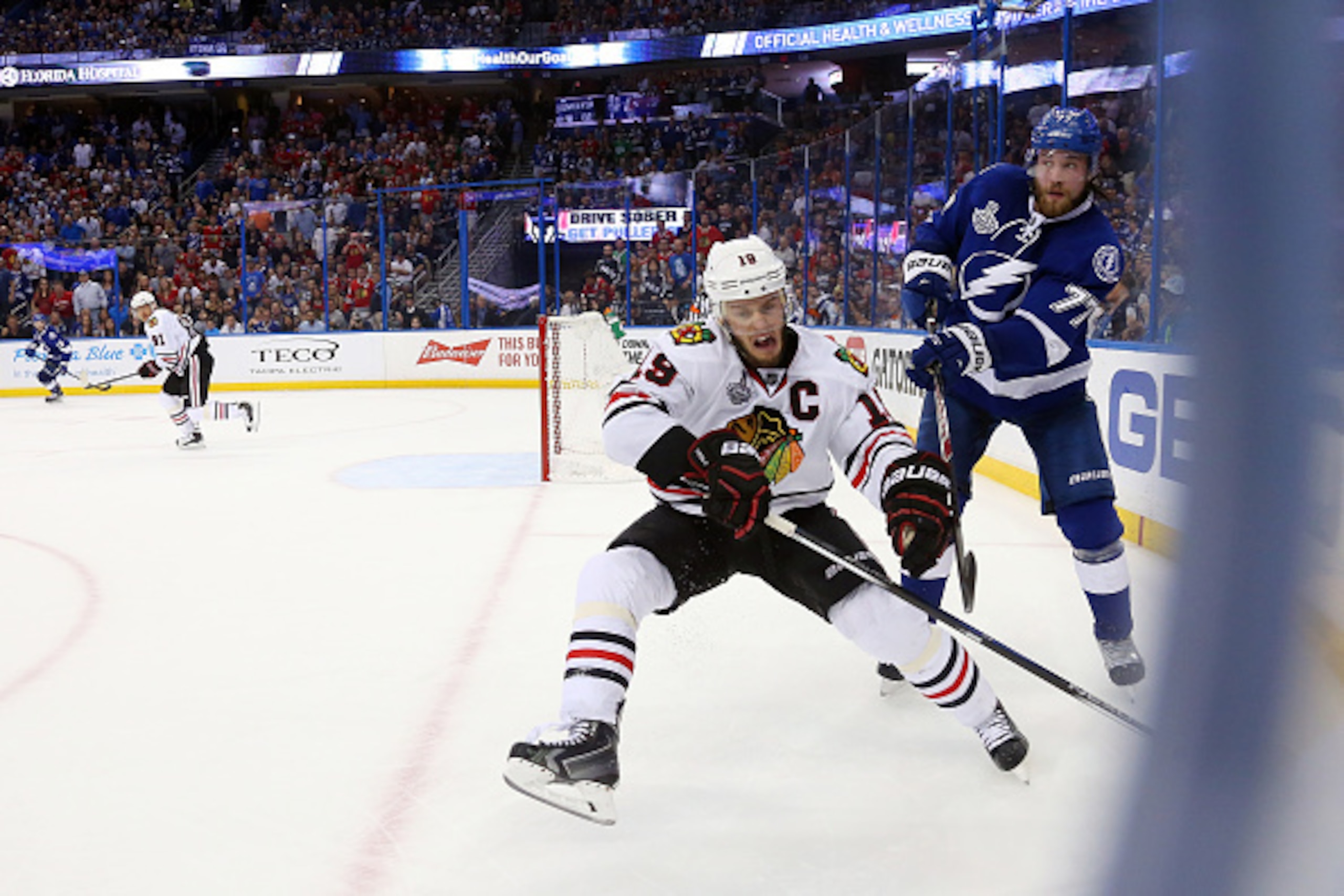
By the numbers: A point a game on offense, great defense, clutch play in the toughest moments. Just another playoff showing for Chicago's Mr. Perfect.
Jonathan Toews had 21 points overall, including those two late third-period goals in Game 5 against Anaheim (in a losing cause) and the first two goals of Game 7 at the Honda Center. He struggled to score through the first five games of the Cup Final, but he never let it affect his defensive game. He was even or better in all those games.
Why he's here: Game 7 in Anaheim almost warrants inclusion by itself. What a performance! Not only did he score those first two goals, but he also was terrific against Ducks center Ryan Getzlaf. Toews just does what's needed to win hockey games.
He is the most complete player of the last seven years in this writer's book. Winning just never gets old to the 27-year-old.
First-Team Winger: Patrick Kane, Chicago Blackhawks
11 of 14
By the numbers: A broken collarbone suffered late in the regular season did not hinder the uber-talented Patrick Kane much in the postseason. He struggled to score in the Cup Final (except Game 6), but he scored plenty before that (10 goals in his first 17 games).
Included was a tremendous Game 7 of the Western Conference Final in Anaheim, where he assisted on three goals. That's the under-appreciated aspect of Kane's game; he's a better passer than many think. He looks for the pass usually before the shot. When he shoots, he's deadly.
Why he's here: Because he's "Showtime," of course. Kane's always there in the big moments. He's had 114 points in 116 career playoff games, the most of any player in the last seven years. He assisted on Duncan Keith's winning goal in Game 6 and scored one himself.
And to think: He's still only 26.
First-Team Defenseman: Duncan Keith, Chicago Blackhawks
12 of 14
By the numbers: Well, we can start with those ice-time averages. He averaged 31:07 in the postseason, exactly four minutes better than the nearest player with at least 10 games played. Some defensemen who play that much (Ryan Suter, for instance) don't always do much at the offensive end, but Duncan Keith was great no matter where the puck was in these playoffs.
He had 21 points (18 assists) and made countless superb plays in his own end. Remember that time he saved the puck from going in at the goal line after a Corey Perry scoring bid in the Western final? The picture above is a nice reminder.
Then, of course, was his goal in the second period of Game 6 that broke a scoreless tie. He followed up his own rebound, beating Lightning center Cedric Paquette to the puck.
Why he's here: The number-crunchers and other historians need to go over this more thoroughly, probably, but Keith's 2015 postseason has to go down as one of the best in hockey history for a defenseman. His stamina was unbelievable. He seemed to get stronger as the games went on.
Averaging 31 minutes a game, and still playing at the level he did, just isn't normal.
First-Team Defenseman: Victor Hedman, Tampa Bay Lightning
13 of 14
By the numbers: Lightning coach Jon Cooper said it best after Game 3 of the Cup Final: These playoffs were something of a "coming-out party" for the young Swede, drafted second overall in 2009.
Victor Hedman played minutes in the upper 20s much of the playoffs and set a team record for most points by a defenseman. Some wondered after his first couple of years in the league if the Lightning made a mistake with that second pick, but the answer has been answered this past year: No.
Hedman's Game 3 against Chicago (two assists, superb play in his end) was his marquee showing. It's hard to believe he won't have many more.
Why he's here: Hedman was out there against everyone's top line, playing major minutes. He showed real leadership qualities in the biggest games, at both ends. He's only 24, still, so there's a lot to get excited about for Bolts fans in the future.
Big, two-way D-men like him are at the highest premiums in the league. He could break the bank when he's eligible to become an unrestricted free agent after the 2016-17 season.
First-Team Goaltender: Corey Crawford, Chicago Blackhawks
14 of 14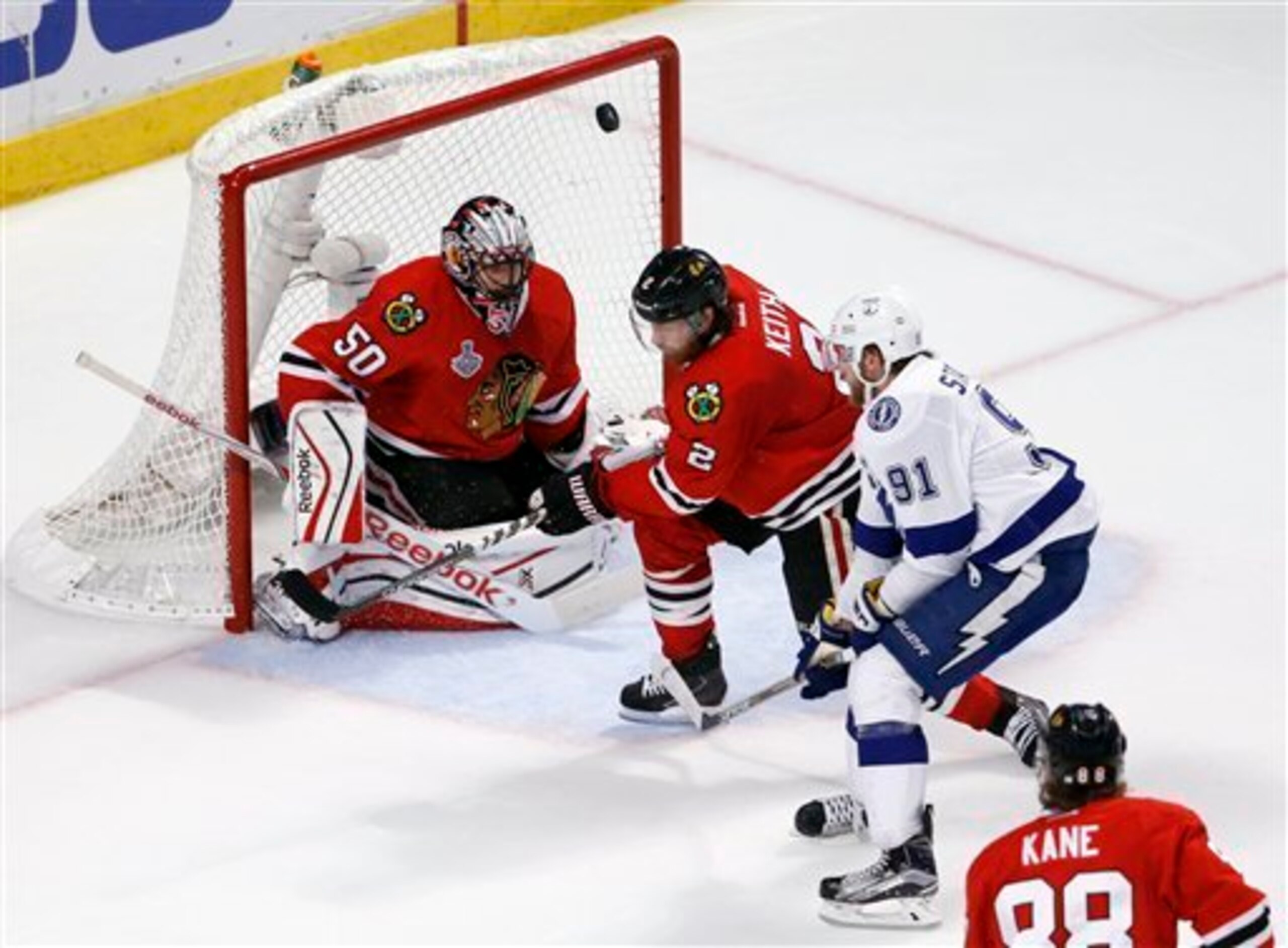
By the numbers: It's hard to believe there was a time in the postseason when Corey Crawford was not the No. 1 Blackhawks goalie. Such is life sometimes under Captain Hook-ish Joel Quenneville, who has always been known for impatience with goalies.
After Scott Darling faltered in the first round against Nashville, Crawford played like he wanted to embarrass Quenneville for ever losing faith in him. Which, of course, is just the kind of result Coach Q wanted.
Crawford's saves percentage after two games was barely over .800, which earned him a seat on the pine. When he returned, he posted shutouts in two of his first five starts and saves percentage of .900 or higher in four of the next five starts after that.
He was strong for Chicago in Games 4 and 5 against the Lightning, when the Blackhawks didn't give him a whole lot of offensive support (two goals in each game). He didn't have to do a lot in Game 6, but that shouldn't take away from his getting a third shutout of the postseason.
Why he's here: Crawford could have pouted and let the first-round benching affect his play. He could have wanted away from a coach who already had one Stanley Cup ring on his finger, thanks to his play in the 2013 playoffs.
Instead, he showed tremendous maturity in rebounding with a fine postseason. There should be no more questioning his big-game credentials or his status as the top guy in Chicago. Well, until his next slump, anyway.
.jpg?w=2560 "NHL Trade Grades Connor Hellebuyck")


.jpg?w=2560 "Chiefs, Steelers Eye WR Trades")



.jpg?w=2560 "Latest Peyton-Colts Rumors")