Barcelona, Undisputed Kings of Europe, so Good Manager Situation Is No Worry
OLYMPIASTADION, BERLIN — As Barcelona’s jubilant players danced under the winner’s arch that had been erected for them in the middle of the Olympiastadion pitch, a lone Catalan flag stood behind, fluttering slightly in the gentle breeze created by those energetic celebrations.
Gerard Pique, the defender born and bred in the region, had placed it—well, planted it—out there in the centre circle, a Souness-esque statement of intent, as well as a marking of territory.
It was hard to avoid the political message, a public reminder from one of Catalonia’s most famous sons that the region still wants independence from Spain. But perhaps it was also sporting one—a demand that Barcelona’s current dominance of European football should not be overlooked.

.jpg?w=2560 "Seahawks Chiefs Football")
That was certainly the message from head coach Luis Enrique, who at one point lifted the flag and waved it toward the cheering Barcelona supporters.
“Over the last 10 years, you can see that without a doubt Barcelona has been the best club in Europe,” he said afterward. "We want to keep going along this road."
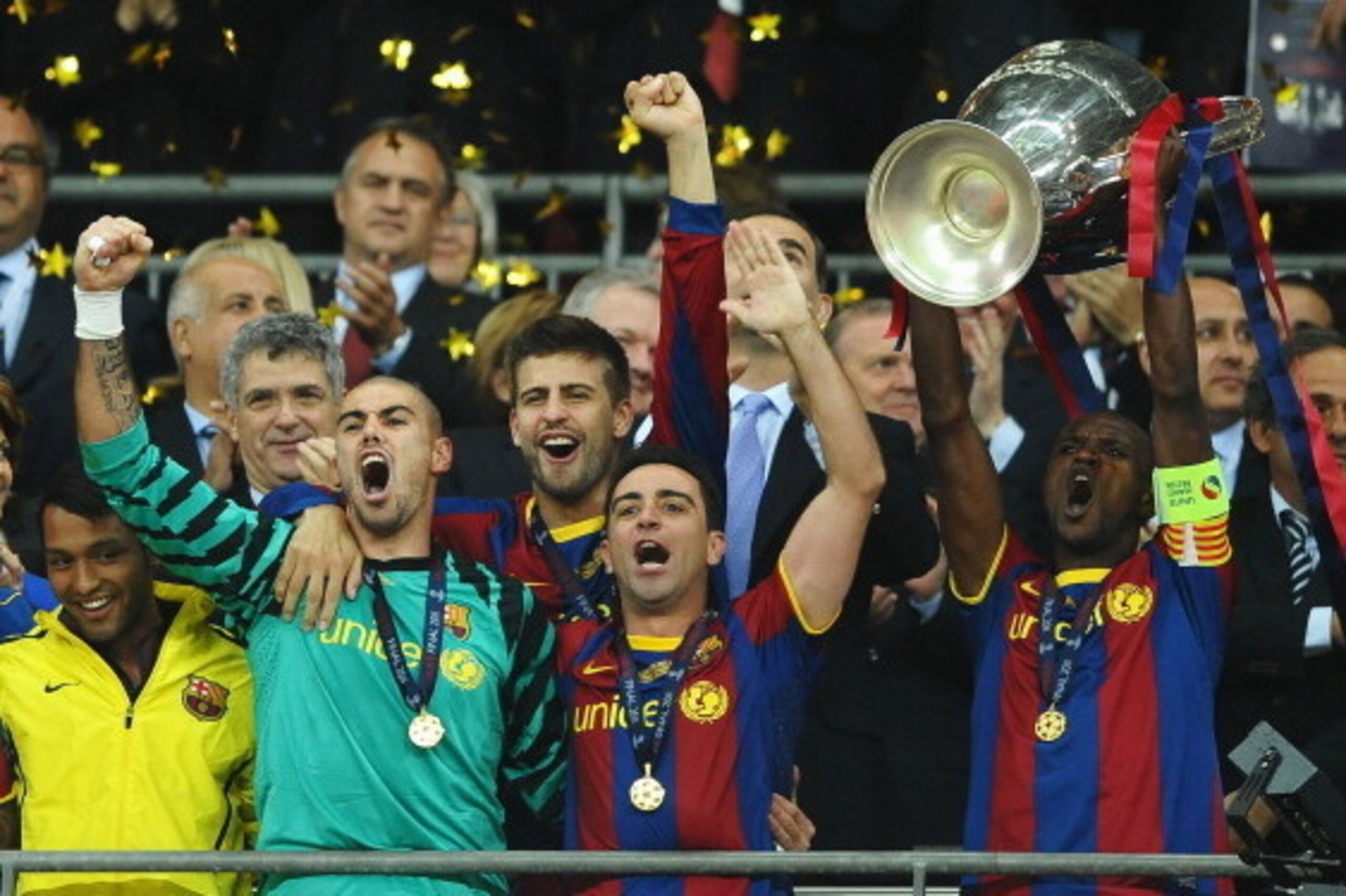
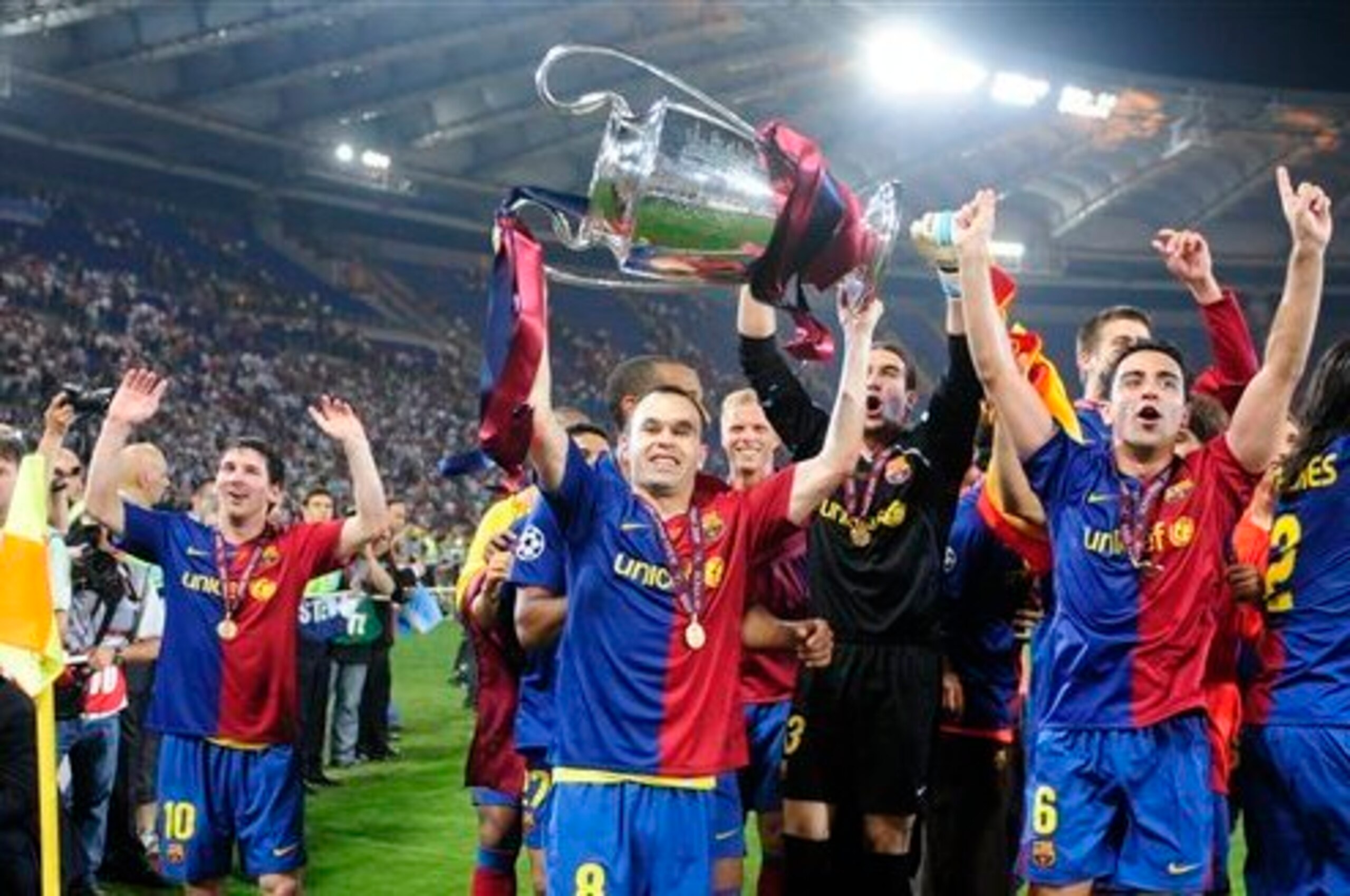
Saturday’s 3-1 win over Juventus clinched a fourth Champions League title in 10 seasons for the Blaugrana, a run of dominance comparable with only Real Madrid's victories in the competition’s first five iterations and Liverpool's lifting four titles between 1977 and 1984—dynasties that took place so long ago, and in such different circumstances, they could almost have been different sports.
In the modern era, no team has ever won back-to-back titles, an indication of the great difficulty it now takes to even win it at all. Yet Barcelona are still finding a way to smash records: Having become just the fifth side in history to win the treble (domestic league, domestic cup, European Cup) when they swept all before them back in 2009, they have now become the first club to achieve such a feat twice.
“When we did this six years ago, we thought we would never do it again,” midfielder Andres Iniesta, the Man of the Match in this latest triumph, reflected. “It makes my hair stand on end to look back and realise how fortunate I have been to play with Barcelona and achieve such great success.
“But there will always be challenges, and next year, we will try to do it again. We always have to have new challenges so you can make progress and be better.”

If Barcelona are to pursue an unprecedented third treble next season, then it may yet be without the man who guided them to their second. Luis Enrique has overseen the perfect campaign in his first season as coach of the club to whom he dedicated the best years of his playing career, but even in the aftermath of surely his greatest achievement, he refused to confirm whether he will stay on for a second term.
“The time will come when a decision will have to be made, but at this point, we have to celebrate,” he deflected, when asked about his status.
It seems other issues have yet to be resolved. His relationship with the board, particularly after sporting director Andoni Zubizarreta was dismissed so ruthlessly earlier in the season—at a point when it looked unlikely things would end so well—appears to be the major problem still at hand.
“It has been a difficult year, but I have to thank all those who trusted me,” the 45-year-old added, somewhat pointedly. “When I worked at Celta Vigo, Zubi [Zubizarreta] and others thought I was the best person to lead Barcelona, so I am very happy with the results for myself and my staff.”
If Luis Enrique does now walk off into the sunset, either unwilling or unable to resolve whatever lingering grievances he holds with the board, it is tempting to wonder how much of a blow it will really be to this Barcelona team. The victory on Saturday will invite inevitable, earnest comparisons between this Barcelona vintage and those of previous winning years, often through the prism of the manager who was in charge at the time.
Some will always prefer the elegant dominance of Pep Guardiola’s passing sides, as slick as they were both in 2009 and then 2011. Others may extol the virtues of this year’s team, which has a spikier, more improvisational attacking nature that makes them more gloriously unpredictable to defend against. Perhaps, however, the focus on the manager’s influence merely distracts from the supreme quality of the players themselves—many of whom are the common link between all the European wins.
“Players are the most important factor,” as Juventus boss Massimiliano Allegri said prior to the final. “But managers may be able to improve them.”
It may have suited Allegri’s situation to make such a point, considering his team was about to go up against three of the finest attacking players in the world—with Lionel Messi king among them. The Argentinian did not score in the final, but as Luis Enrique noted, all three Barcelona goals were “born in his boots” in some way.
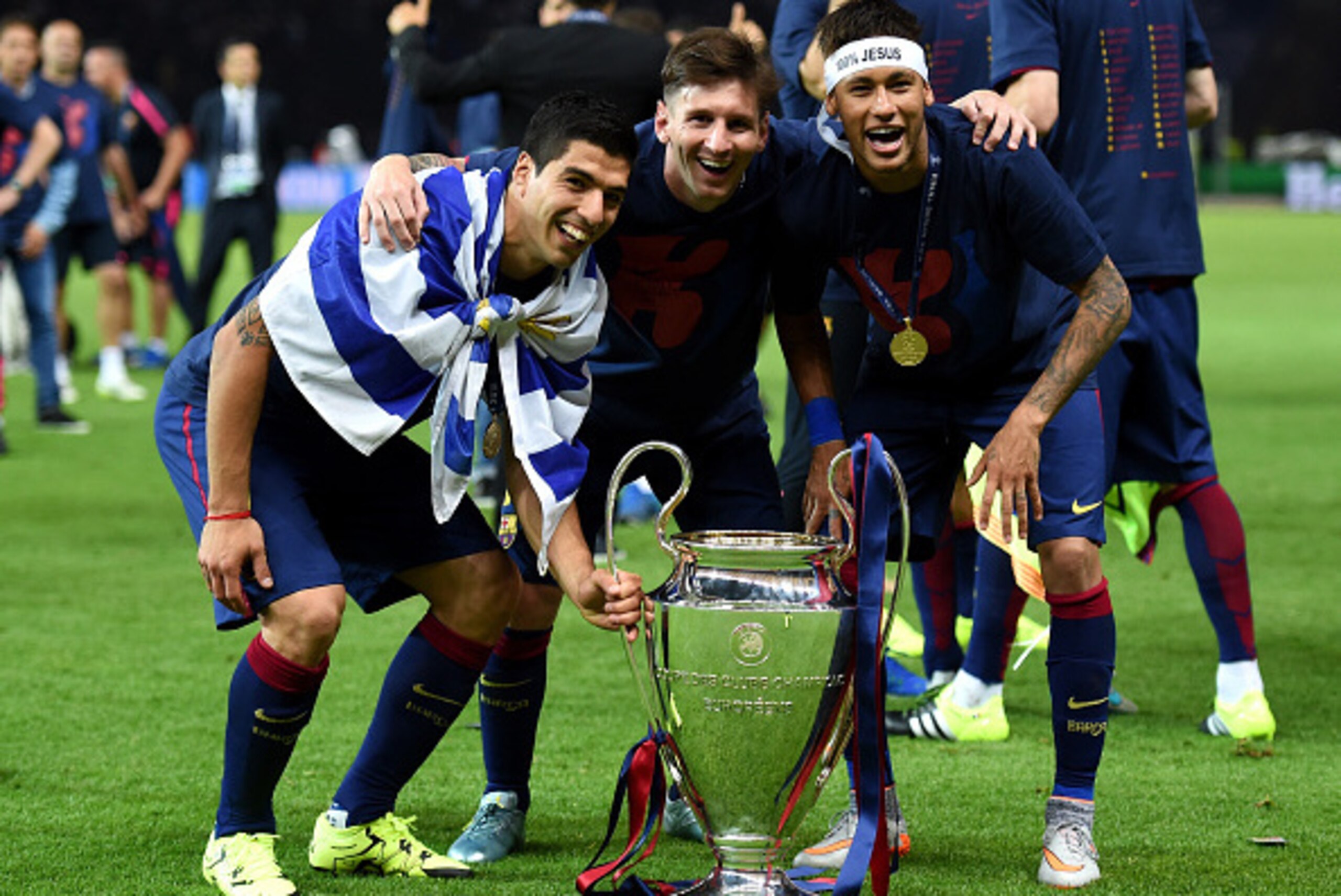
Instead, it fell to Luis Suarez and Neymar to apply the finishing touches to the match, after Alvaro Morata’s strike had briefly clawed La Vecchia Signora back into the game. This was modern football in its most distilled form: Two forwards, acquired in successive seasons at vast expense by one of the richest teams around, thoroughly justifying their respective acquisitions.
“When we thought about Luis Suarez, and considered him to reinforce the team, we knew of his great quality and his tremendous statistics,” Luis Enrique reflected. “But of course, we had our doubts over whether he’d adapt to new team-mates, a new club and a new philosophy.
“He cost a lot of money...but I think we can now say he is one of the best players we have signed. It was a good decision.”
And Neymar?
“Last year was very good. This season has been spectacular. Neymar has grown tremendously, and he is confirming that he is one of the best players in world football.”
That trio has propelled Barcelona all season—in fact, Ivan Rakitic’s fourth-minute opener, laid on by Iniesta, was the first Barcelona goal not directly involving one of MSN since the end of February.
Luis Enrique certainly deserves some credit for that prolific record, with his side using longer passes and counter-attacks to break defensive lines and release those individual stars into space with far greater regularity than previous bosses, but there remains a nagging feeling that the three players are of such outstanding quality that they would find a way to make an impact regardless of the tactical setup.
Certainly, their friendship—“an extra factor...it helps a lot,” as Neymar said on Friday—seems to infuse their play with an additional spice for which a manager can hardly take credit.
After all, there were cracks in the Barca armour on the way to this latest victory—no more so than in the five minutes after Morata had grabbed an equaliser Juventus scarcely warranted. For a moment, the Spanish champions were worried before individual class told once again.
“I thought we could win it,” Allegri admitted afterward. “Unfortunately, when you play against great players, you think you have things under control and then one of those players gets away from us. They managed to do that at a time when we were controlling the match and were about to score I think.”
It was not an unreasonable assessment. In the minutes prior to Suarez’s crucial strike, it was the Italians who appeared to be knocking on the door. After Paul Pogba nodded over from a set piece, the latest in a string of half-chances, it was illuminating to see Iniesta berating Sergio Busquets and Jordi Alba offering instruction to his attackers as the players prepared for the restart.
Prior to his goal, Suarez had repeatedly asked Neymar to try swapping positions with him for a spell—the Brazilian was not interested. In the midst of battle, there was not always the composure you might expect of a side fully confident in its game plan.
“We dominated the first half and had opportunities to score more goals,” Luis Enrique said. “[Gianluigi] Buffon was at his top level, as usual. Then Juventus started to press stronger and it got more difficult for us. For about 10 minutes we had an uphill struggle. But I think over the course of the match, we were superior, and we deserved to win.”
Over the course of the season too. Since the debacle at Real Sociedad, when the season resumed in January—Messi was benched, La Real won and the Argentinian skipped training the next day—Barca have been an irresistible attacking side, sweeping all before them in a way that has often been delightful to watch.
If Messi won the power struggle that took place that month, and many outside the club believe he did, then it was perhaps in everyone’s best interests; the Argentinian has since roamed deeper on the pitch and found new and imaginative ways to break defences open, something he continued against a Juventus defence that could not handle him as he pulled them in all different directions.
Somehow, by becoming more selfless, Messi has only further underlined his peerless quality and unrivalled importance to a team. With him in the side, in this sort of form, how could Barcelona not be challenging for European titles ever year and winning them as often as not? “Our benchmark player,” Luis Enrique said, perhaps in deference as much as admiration.
Messi, along with Iniesta and Xavi, has been a constant presence in all four of Barcelona’s recent triumphs—although he actually missed the 2006 final because of injury. Many others—such as Pique, Dani Alves and Sergio Busquets—have been around for the last three. The tactical styles may have varied slightly, but the personnel has been consistently similar.
When you add at least one world-class player to an already successful recipe every summer, it is suddenly less difficult to see how this dynasty has come about.
“This is our 60th match,” Luis Enrique concluded. “We’ve lost six games [and had] four draws. I think the figures show it is one of the best seasons for Barcelona.”
This summer will not see that evolution continue in terms of personnel, with Barcelona banned from making any transfers until January 2016.
That may cost them their shot at Paul Pogba—one of the few Juventus players to emerge with real credit for his display on Saturday—and as a result, means the gap left by Xavi’s fairy-tale departure still needs to be filled by another player. Yet in Rafinha, the brother of Bayern Munich’s Thiago Alcantara, the club may well already have another Masia graduate of prodigious talent to do exactly that.
If so, that would perhaps leave only the managerial quandary to be solved, although another defender would not go amiss, especially if Dani Alves departs. Still, this Barcelona squad figures to always be a real threat in Europe with the quality of players at the disposal of whomever is their manager.
“He has not said anything, but I hope he stays at the club next season,” Iniesta said of his coach. “I hope we can repeat this victory again.”
They will surely have that opportunity, though, regardless of who is in charge.
Quotes obtained firsthand.