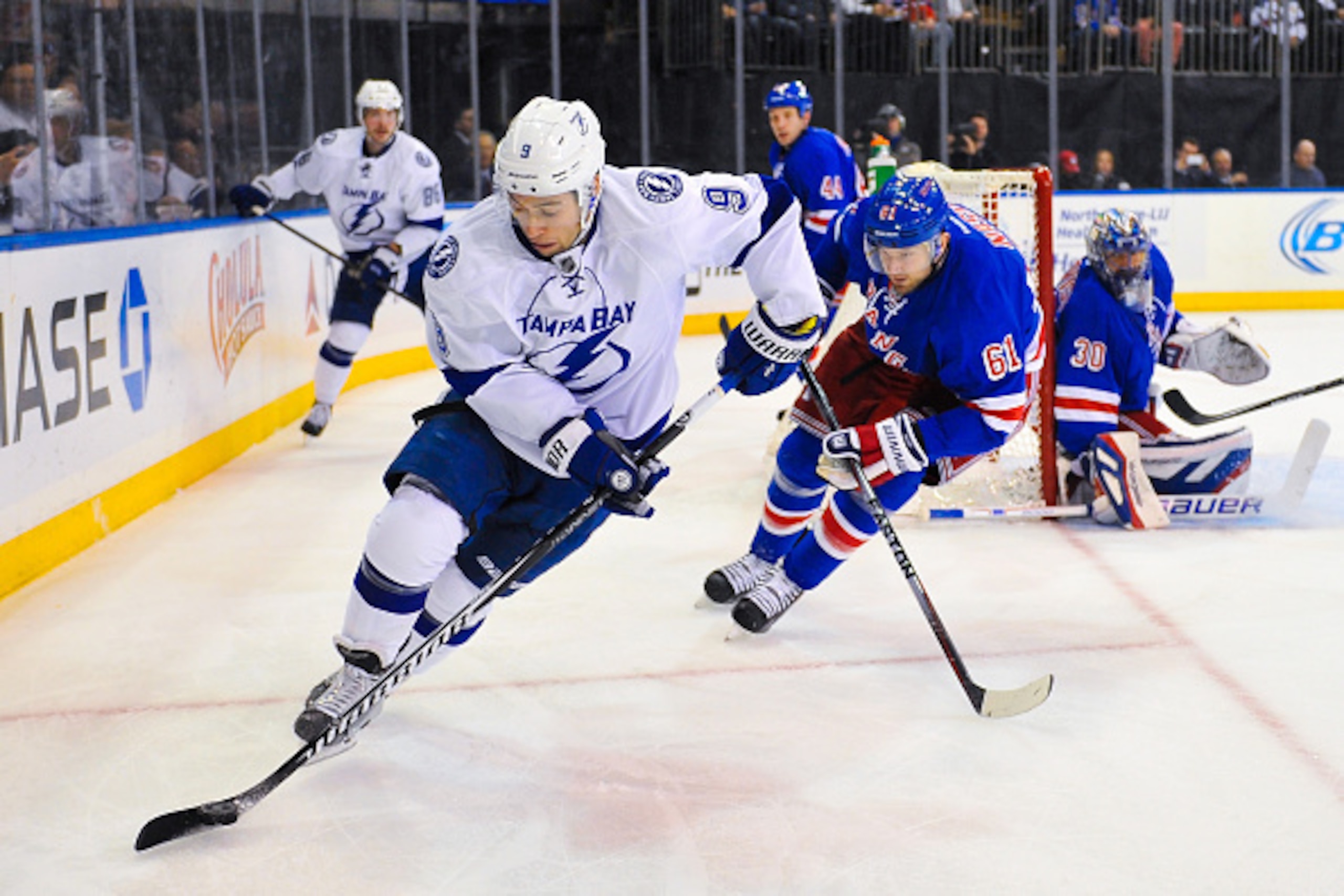

Lightning vs. Rangers: Line-by-Line Breakdown of 2015 Eastern Conference Final
Yesterday, we considered the line-by-line battle in the Western Conference Final. Here, we turn our focus to the compelling contest in the East between the New York Rangers and Tampa Bay Lightning.
Tampa Bay emerged triumphant after two close series in the Atlantic. The Detroit Red Wings leaned hard on veteran pivot Pavel Datsyuk and young goalie Petr Mrazek, forcing seven games before bowing out. A series against Montreal ended in six games, despite an exceptional performance from the Habs defence and all-world goalie Carey Price. In both cases, the Lightning were tested thoroughly and passed.
The Metropolitan was no less competitive, and the Rangers ground their way past opposition superstars. A wounded Penguins team still featured Sidney Crosby and Evgeni Malkin but failed to penetrate New York's defence and was consequently dispatched with relative ease.
Washington was a tougher challenge but after a tough seven-game series against the Isles fell just short in a 2-1 overtime decision in Game 7 vs. the Rangers.
How do these two worthy clubs stack up against each other? The following slideshow goes through the rosters on each side, based on their most recent line combinations, and compares the players who will meet Saturday for Game 1. Read on to go through their respective depth charts and see how they compare.
First Line
1 of 9
LW Rick Nash, C Derick Brassard, RW Martin St. Louis
Outside of Brasssard (five goals), New York's top line has struggled to score in the postseason, with Nash and St. Louis totaling just two combined goals through 12 games. Rangers head coach Alain Vigneault had praised the unit in a Friday press conference, the transcript of which is available at SNY Rangers Blog, but suggested it could do more:
"That line has had some good looks. They’ve been able to get on the score sheet. Defensively they’ve been very responsible. Obviously, when you talk about Martin St. Louis, Rick Nash, and Derick Brassard, you’re taking three strong offensive players and can we get a little more out of them? I think we need a little more out of our whole group.
"
The truth is it hasn't been good. Vigneault has given this line a ton of offensive zone starts, and yet both Nash and St. Louis are struggling badly in terms of shot metrics (they're just back of Tanner Glass in Fenwick ranking) and aren't generating much offence.
LW Ondrej Palat, C Tyler Johnson, RW Nikita Kucherov
Tampa Bay's less famous (though that's changing in a hurry) "Triplets" line has been lethal in the postseason. The group is just about average in terms of shot metrics, but it has finished on a ridiculous percentage of its chances, with all three forwards boasting a shooting percentage north of 20 percent.
"I've never seen a line with that much chemistry," Lighnting defenceman Anton Stralman told the Tampa Bay Times' Matt Baker.
The trio has been joined at the hip for better than a season now, and the results in both the regular season and the playoffs have been compelling.
Advantage: Tampa Bay
Second Line
2 of 9
LW Chris Kreider, C Derek Stepan, RW Jesper Fast
This unit has taken on some tough minutes for New York. Vigneault has deployed Stepan in much the way he used to run Ryan Kesler, playing him against good opponents and with a significant disadvantage in terms of starting in his own end of the rink.
SNY Rangers Blog reports that he's been happy with the results.
"[Fast has] got two very young players that are a little bit like him on the upswing of their careers, two guys that love being on the ice and want responsibility," Vigneault said. "So there is no doubt that since I’ve put that line together, they’ve been very good against other players."
Stepan, a clever two-way pivot, is tied for the team lead in points with eight. Kreider, an emerging power forward, has five goals, which is tied for the team lead in that department. Fast has improved lately, with two points and eight shots in his last four games.
LW Alex Killorn, C Valtteri Filppula, C/RW Steven Stamkos
A lot rides on Stamkos, who is the most talented forward on either team in this series.
After an extremely tough first round, he seems to have found his game; he scored his first goal in Game 2 of the Montreal series, and it was like the floodgates had opened; he tallied three goals and seven points in the final five games of the series (though the fly in the ointment is that he was also held shot-less in two of those games).
His running mates are pretty solid, too. Killorn adds size and a bit of an edge to the unit, while Filppula has been trusted with heavy defensive zone responsibilities and is an intelligent playmaker (and a solid complement for a pure goal scorer and a grinding winger).
Advantage: Tampa Bay
Third Line
3 of 9
LW Carl Hagelin, C Dominic Moore, RW Kevin Hayes
Dominic Moore has been New York's primary defensive zone pivot for ages now, playing the same role for Vigneault that Manny Malhotra once did in Vancouver. He's been a good fit in the role; he's smart, has a range of skills and wins a lot of draws.
Hayes and Hagelin are not longtime running mates, but they've been effective since being united midway through the second round. Hagelin is an obvious complement for Moore; he's an exceptional skater, extremely competitive and smart defensively; they generally head out for defensive draws together, with the rookie Hayes sometimes switching off and joining them only after they've cleared the defensive zone.
NHL.com was particularly impressed with the unit's performance in the deciding game of the second round.
"The third line of Dominic Moore, Kevin Hayes and Carl Hagelin arguably was New York's best in Game 7," the website writes. "They provide a combination of speed, power and strong forechecking."
LW/C Cedric Paquette, C Brian Boyle, RW Ryan Callahan
Callahan, the former Ranger, is a bit of a question mark for Game 1 after an emergency appendectomy cost him Game 6 against Montreal, but he has a history of playing through trying circumstances, and he could well be in the lineup for Tampa Bay. At his best he's a grinding two-way forward who can contribute at either end.
His centre, another ex-Ranger, is a 6'7", 244-pound faceoff-winning monster. Boyle has been tasked with being Tampa Bay's primary defensive zone faceoff man (often he and Valtteri Filppula head out together for these draws), and he's done that job well. He's a disciplined defensive specialist and an imposing physical presence.
Paquette fits into the same mould. The rookie forward plays an abrasive, energetic game and is at home on this unit.
Advantage: Tampa Bay, narrowly
Depth Forwards
4 of 9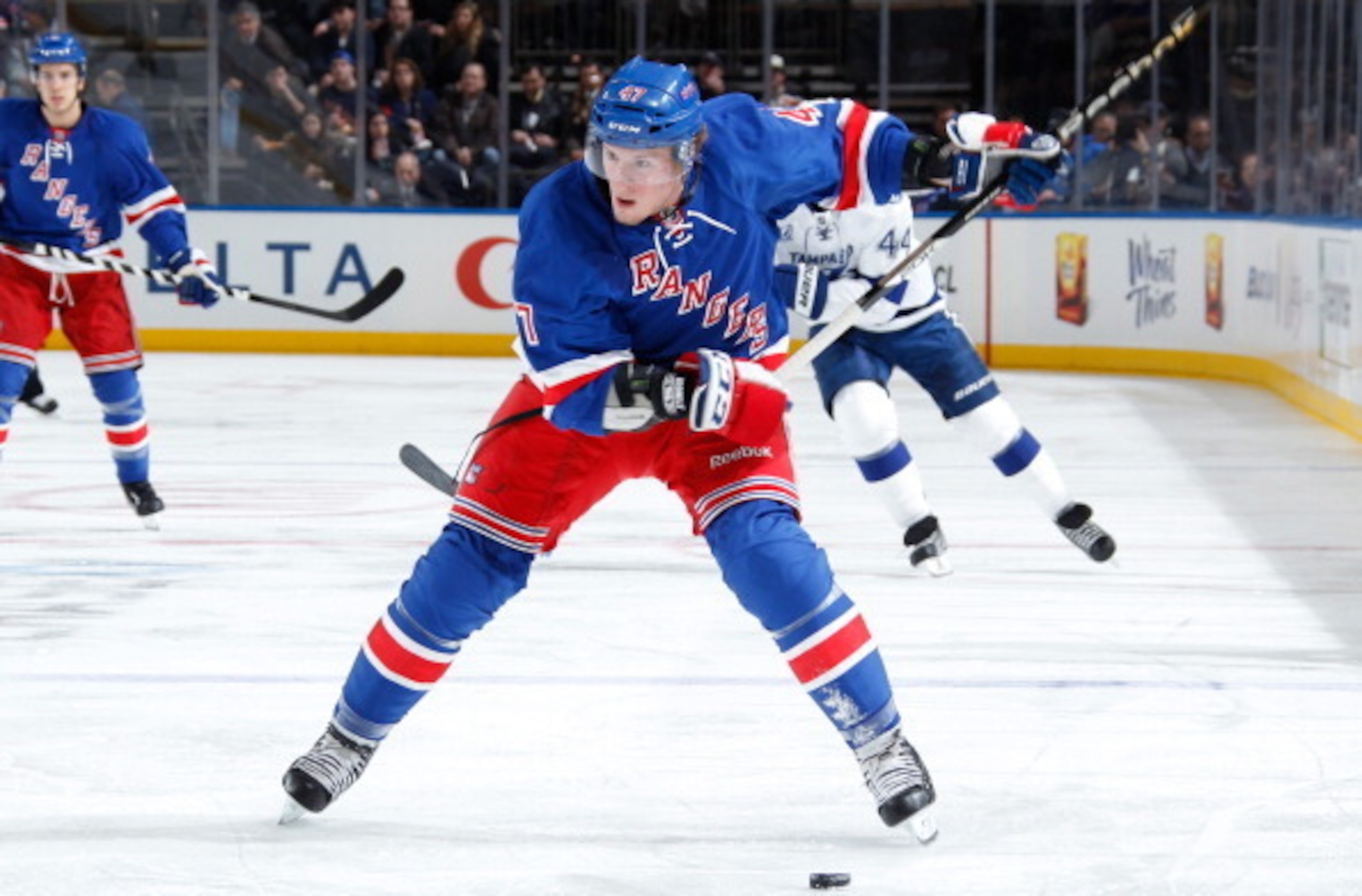
LW Tanner Glass, C James Sheppard, C/RW J.T. Miller (Spare: LW Ryan Bourque; Injured: RW Mats Zuccarello)
Before getting into the fourth line, it's worth noting Zuccarello's status. He's a vital piece of the New York attack when healthy, but unfortunately he doesn't seem like he'll be ready to go for the start of the third round.
"There's always hope," Vigneault said when asked about the potential of Zuccarello playing, before acknowledging that he had yet to start skating.
Glass and Sheppard have fared reasonably well with a steady diet of defensive zone starts, keeping damage to a minimum even as they've failed to generate much offensively. Miller has been excellent at points throughout the playoffs and is an odd fit here; one expects he'll be spotted on other lines over the course of this series as he has been throughout the postseason.
LW Brendan Morrow, C Vladislav Namestnikov, RW J.T. Brown (Spare: LW Jonathan Drouin, C/RW Jonathan Marchessault, LW Mike Angelidis)
Jon Cooper's fourth line hasn't been used much, and on a lot of nights he's gone with just 11 forwards to dress a spare defenceman. Kyle Alexander of RawCharge.com had an interesting piece on this group a couple of weeks ago, wondering specifically why Drouin hasn't been given a shot:
"The frustrating thing is to look at the guys that are getting into the lineup—particularly the 4th line—and try to build an argument that Cooper somehow trusts them. Brenden Morrow, who skated north of 9 minutes a game in the regular season, is under 8 in the playoffs. So are his regular linemates Vlad Namestnikov and J.T. Brown.
Cooper has shifted his forward group either to an 11F-7D formation or switched to a three-line team if he's using 12 forwards ... If all you're replacing is some spare even strength minutes -- no penalty kill time, no faceoffs, no pugilism, no line-matching or shutdown duties -- why not give them to a guy who can actually do something with them?
"
There are some decent options at the Bolts' disposal here, but this is not a unit that has had any real impact in the postseason.
Advantage: New York, narrowly
First Pairing
5 of 9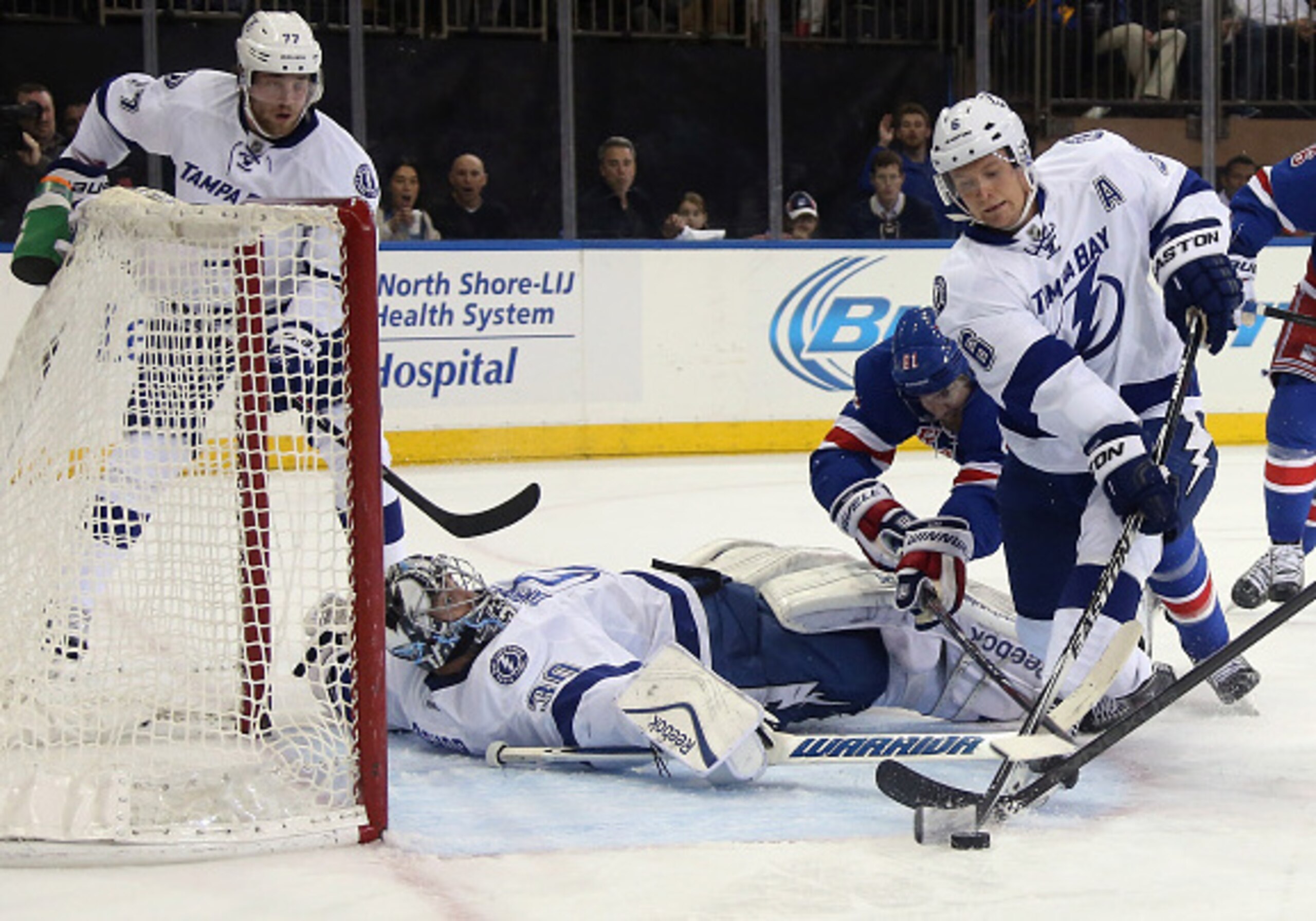
LD Ryan McDonagh, RD Dan Girardi
McDonagh is one of the best young defencemen in the NHL. He has no obvious flaws. He's big, mobile, smart, competitive and skilled with the puck. He has been an all-situations workhorse for New York, filling the role of both top shutdown defenceman and offensive catalyst.
Girardi has been McDonagh's regular partner for several years now and has some significant strengths. He's a solid option in his one end of the rink and has generally held his own against top-end competition over the years. He had a difficult regular season but has rebounded significantly in brutal minutes in the playoffs.
LD Victor Hedman, RD Anton Stralman
Like McDonagh, Hedman is also one of the best young defencemen in the NHL and is similarly lacking in obvious flaws. At 6'6", 230 pounds he's a mammoth defender, and to that he adds speed, intelligence, offensive ability and a sound positional game. He is both a solid shutdown option and Tampa Bay's primary offensive weapon from the back end.
Stralman has been an underrated player for years and has been a nice complement to Hedman. He is an extremely capable puck-mover and offensive weapon, and he doesn't get enough credit for playing a physical defensive game despite being undersized.
Advantage: Tampa Bay, by the thinnest of margins
Second Pairing
6 of 9
LD Marc Staal, RD Dan Boyle
Boyle and Staal are a weird pairing. Staal is Vigneault's top choice for faceoffs starting in the defensive end; Boyle is his top choice for faceoffs in the offensive zone. Both players frequently switch partners, with Staal often collaborating with Kevin Klein and Boyle joining Keith Yandle.
But these two have spent more time with each other than with others lately, and it's easy to understand why. Staal is a big, defensive defenceman with some offensive ability; Boyle is an undersized puck-mover who has spent more than 1,000 games in the NHL and can be trusted to make smart decisions. They complement each other well and provide New York with a versatile second pairing.
LD Braydon Coburn, RD Jason Garrison
Coburn and Garrison combine to give the Lightning a second pairing that can be trusted against anyone. While Hedman and Stralman play tough competition, it is Coburn and Garrison who are the team's first choice for defensive zone assignments and the opposition's first line.
Both are big, physical defencemen and reasonably good puck-movers; both have long experience in tough assignments. Garrison has been a better fit for this role than Matt Carle, who along with Coburn had some tough moments in Round 1.
Advantage: New York, narrowly
Depth Defencemen
7 of 9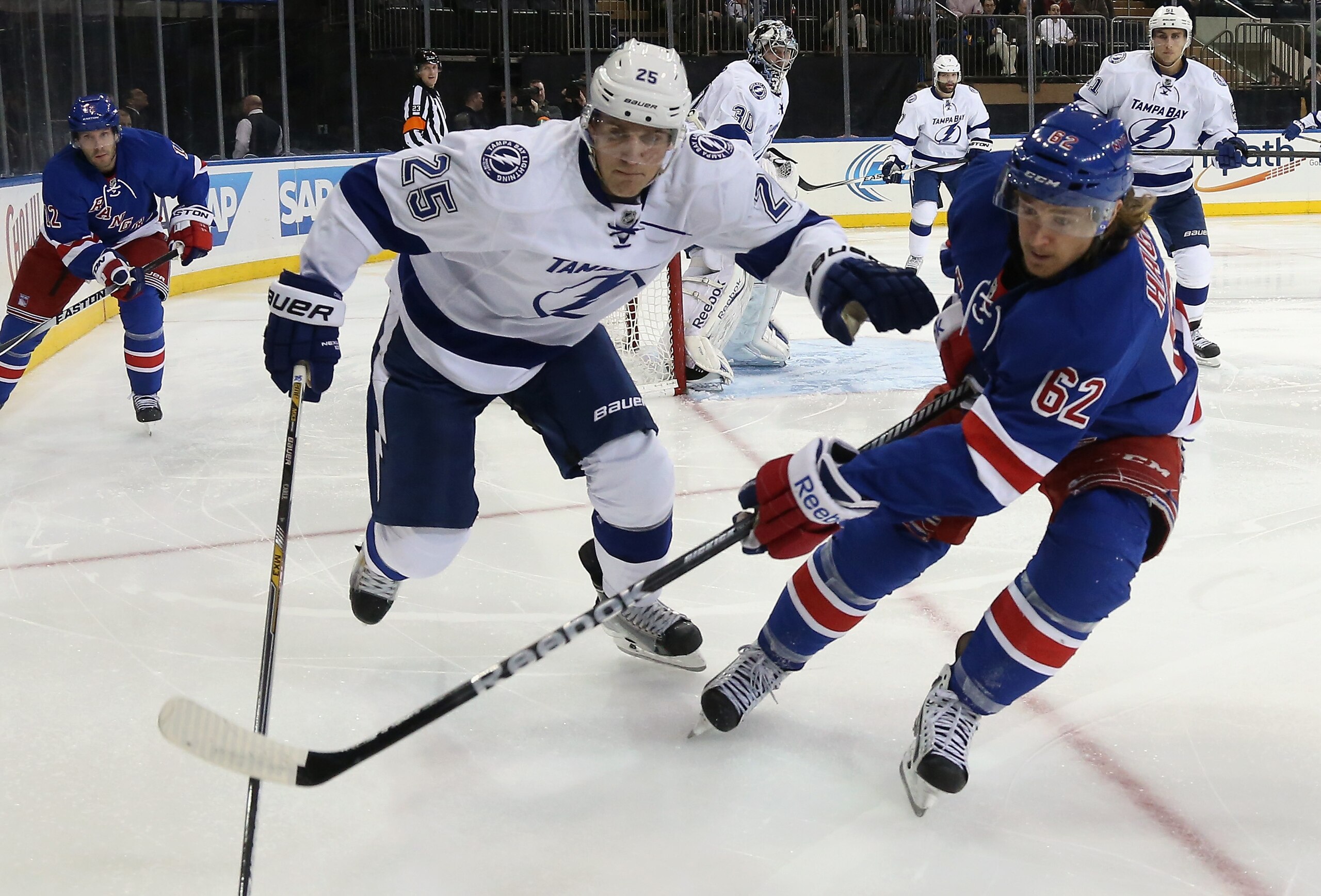
LD Keith Yandle, RD Kevin Klein (Spare: LD Matt Hunwick, LD Chris Summers)
Yandle probably wasn't expected to be New York's No. 6 defensive option when the Rangers brought him over from Arizona at a high price; after averaging 23:54 per night for the Coyotes he's down to just 17:23 in the postseason for New York. He's a bit of a luxury, but he gives the Rangers a puck-mover on the third pairing and some offensive punch; he can be elevated up the depth chart when a goal is needed.
Klein is precisely the opposite, a tough defensive specialist who acts as a safety net for Yandle and can in turn be elevated up the depth chart when the primary focus is on preventing a goal against. Together, they're decent complements for each other, and apart they're specialists whom Vigneault doesn't hesitate to use in specific roles if that seems warranted.
Hunwick was a regular prior to the addition of Yandle, and, though undersized, he plays an intelligent game and moves the puck well.
LD Matt Carle, RD Andrej Sustr (Spare: LD Nikita Nesterov, LD Mark Barberio, RD Luke Witkowski)
Carle is No. 5 on this list with a bullet; he's a good overall defenceman who plays a sound enough positional game to be used in a shutdown role at times but also has enough of an offensive touch to have recorded multiple 40-point seasons in the NHL.
Massive (6'7", 220 lbs) Sustr is something of a gentle giant; the 24-year-old prefers a positional style of defence and relies on strong mobility and a wide wingspan more than he does heavy hits. He's intelligent and a decent puck-mover and is still developing as an NHL defenceman.
Nesterov has been used a fair bit, mostly as an offensive specialist, because Cooper likes the 11-forward/seven-defenceman approach and goes with it often. He's intelligent, competitive and moves the puck well, though he lacks ideal size and is definitely still on the raw side.
Advantage: New York
Goaltenders
8 of 9
Starter Henrik Lundqvist, Backup Cam Talbot
New York's Stanley Cup hopes rest heavily on the shoulders of franchise goaltender Henrik Lundqvist. Lundqvist has been the NHL's most dominant goalie of the last decade, consistently providing his team with above-average goaltending. He's calm, collected and experienced and the biggest obstacle to Tampa Bay's advance.
Talbot isn't likely to find his way into the New York net, but he's filled in ably for Lundqvist over the last two seasons and is likely to be an NHL starter somewhere next year.
Starter Ben Bishop, Backup Andrei Vasilevskiy
Bishop has had his weak moments, but on the whole he has given Tampa Bay all it could expect from its starter. The 6'7" goalie has a 0.931 save percentage through the postseason and fared pretty well in a head-to-head matchup with Hart Trophy finalist Carey Price in the second round. He's improved over the course of his first playoff run and gives the Lightning the established No. 1 it lacked last spring.
Vasilevskiy is a rookie, but he's regarded as one of the top goaltending prospects in all of hockey, and with his strong play, he managed to displace veteran Evgeni Nabokov at midseason in the backup role.
Advantage: New York
Summary
9 of 9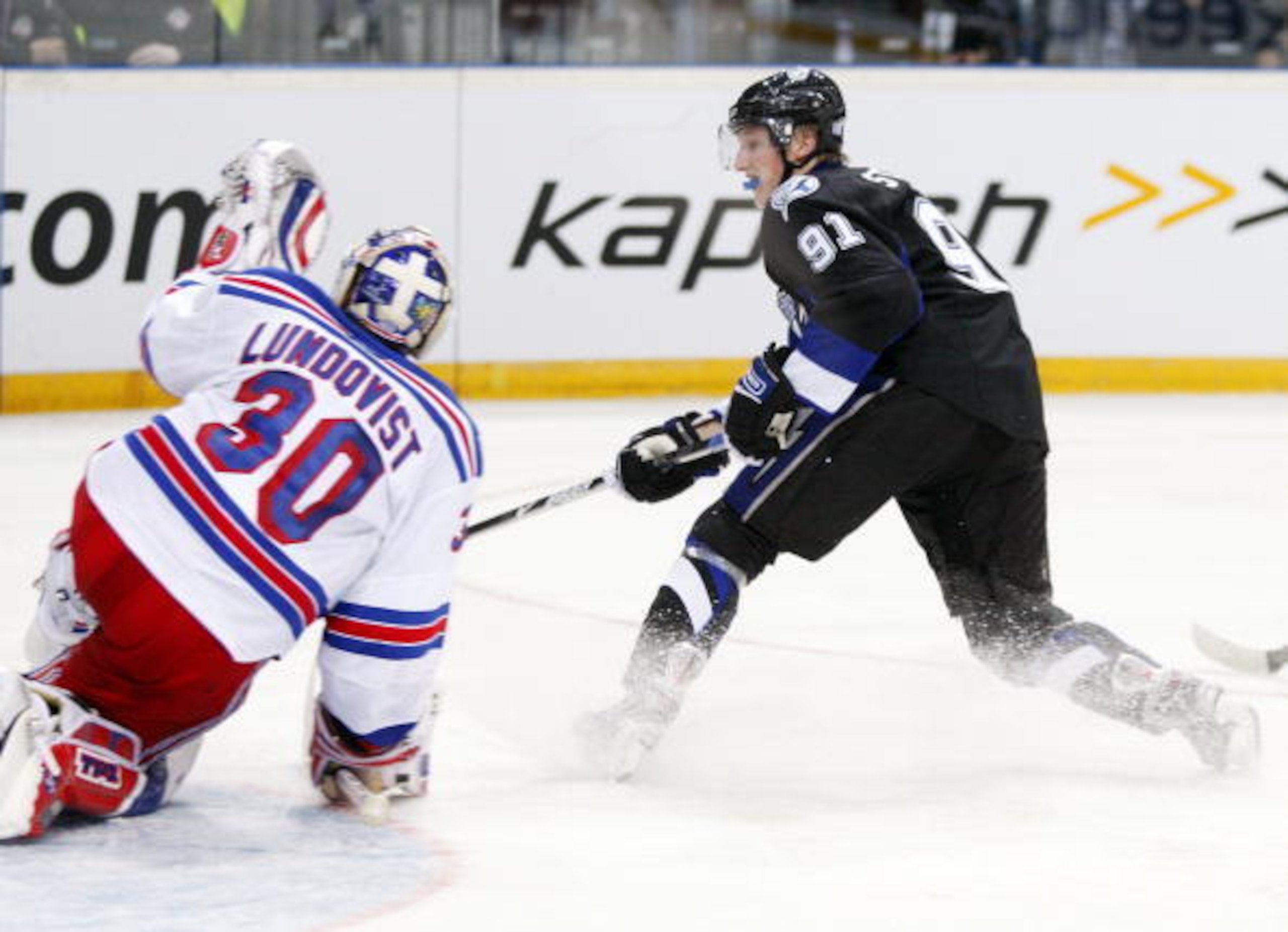
- First Line: Tampa Bay
- Second Line: Tampa Bay
- Third Line: Tampa Bay
- Depth Forwards: New York
- First Pair: Tampa Bay
- Second Pair: New York
- Depth Defencemen: New York
- Goalies: New York
It's a classic case of an unstoppable force meeting an immovable object.
New York's primary strengths are on defence and in net. Its depth forward lines match up pretty well against the Lightning, but in terms of pure firepower at the top of the lineup, the Rangers can't compete with their third-round opponent.
The Lightning in turn will find it extremely challenging to score on the Rangers. Tampa Bay boasts high-end firepower but is coming up against what might be the best combination of defence and goaltending in the NHL.
The team had a touch challenge in those departments in the second round, but New York is also capable of generating offence at a level that Montreal simply wasn't. Outscoring the Rangers is going to be quite difficult.
There isn't a clear favourite here; it's going to be a tight series between the reigning power in the East and one of the league's best up-and-coming teams.
Statistics courtesy of NHL.com, War-on-Ice.com and NaturalStatTrick.com.
Jonathan Willis covers the NHL for Bleacher Report. Follow him on Twitter for more of his work.
.jpg?w=2560 "NHL Trade Grades Connor Hellebuyck")

.jpg?w=2560 "Raiders Could Start Mendoza")



.jpg?w=2560 "Rodgers Iced Out on Plane 💎")

.jpg?w=2560 "🚨 Week 8 AP Top 25 Poll")