
Best- and Worst-Case Scenarios for Each Baltimore Ravens Rookie
The Baltimore Ravens have added nine draft picks to the 2015 roster.
Though each player will have different expectations placed on him, it's possible all nine players make an impact as rookies.
It's also possible but unlikely that all nine guys struggle their rookie year to even make it onto the field, let alone make a positive impact when they are there.
If each player reaches his own personal best-case scenario, the Ravens will not only be right back in the playoffs but should make a deeper run that could end in the Super Bowl.
However, if these rookies endure their own worst-case scenarios, Baltimore will have a tough time just making it to the postseason.
This slideshow will explore both possibilities for each Ravens draft pick.
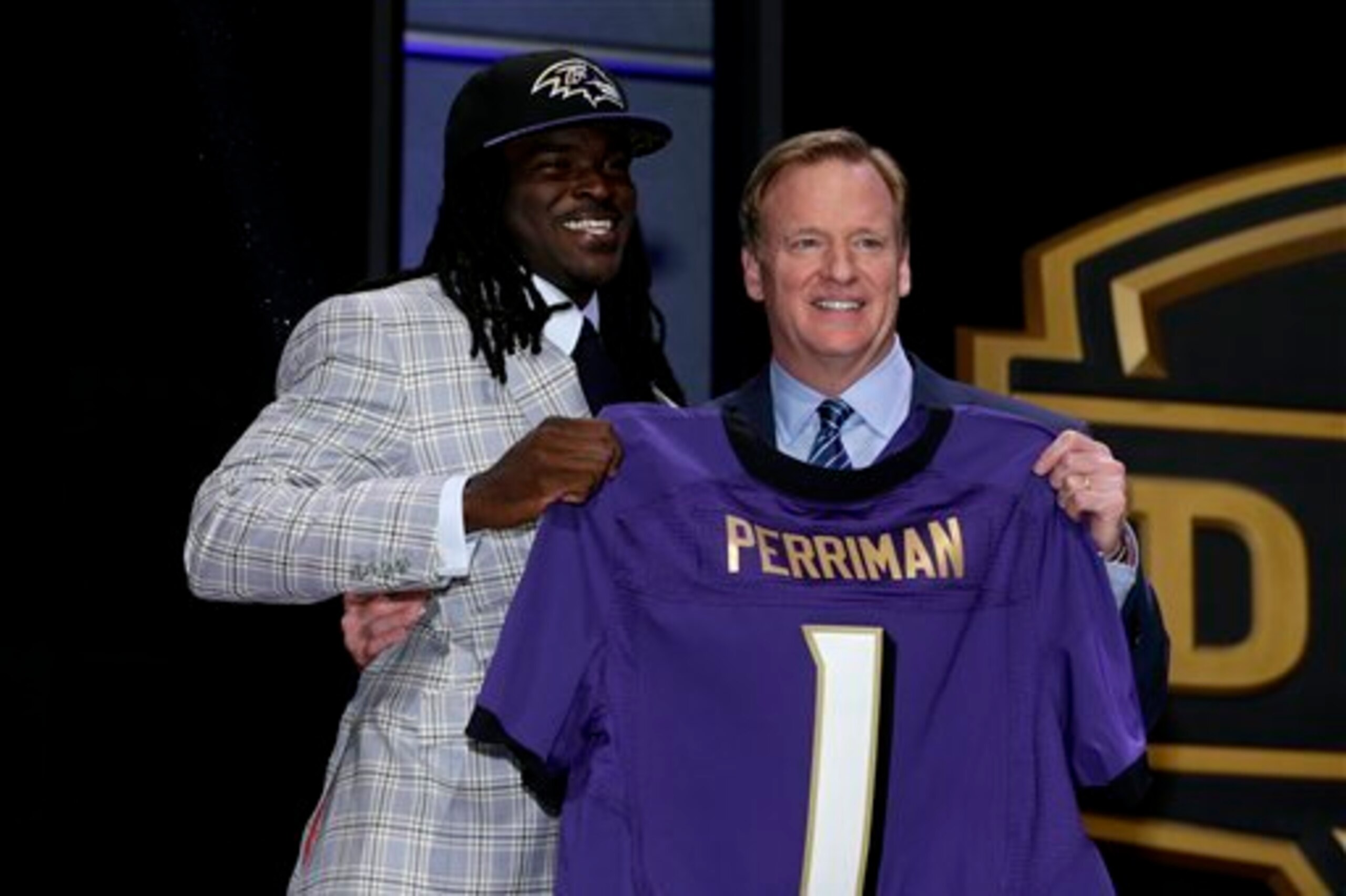
WR Breshad Perriman
1 of 9With the 26th overall pick in the 2015 draft, the Ravens addressed their biggest need by taking UCF wide receiver Breshad Perriman.
Receiver was the biggest weakness heading into the draft, and Baltimore addressed it with its first pick. Perriman will be given a chance to start from day one, and it will be up to him to take this opportunity and run with it.
Best-Case Scenario
Perriman comes in and starts from day one with the receiving corps so thin. He hauled in 115 passes for 2,243 yards (19.5 avg.) and 16 scores over his three years in college.
His deep-threat ability combined with Joe Flacco's big arm makes this the perfect QB-to-WR connection. Those two hook up early and often while Perriman has the best year of any rookie receiver.
Worst-Case Scenario
Perriman gets exposed as a one-trick pony who can't do anything well outside of using his speed to get open deep.
Cornerbacks learn to press him at the line and not give up a clear run off the line of scrimmage. Perriman struggles to get open and proves to be more of a liability than an asset to the offense.
Perriman's rookie year ends up being more of a redshirt season as he has a lot of development to do before he's ready to make an impact at the NFL level.
TE Maxx Williams
2 of 9With the Ravens holding the 58th pick in Round 2, they struck a deal with the Arizona Cardinals to move up to No. 53 to get who they viewed as the draft's best tight end.
That man was Minnesota's Maxx Williams, who now has a great shot at being the Ravens' No. 1 tight end when the regular season opens.
Best-Case Scenario
Williams wins the starting job and opens the season as the No. 1 tight end in an offense that loves featuring that position.
The 6'4", 249-pound Williams led Minnesota in receptions (36), yards (569) and receiving touchdowns (eight) this past season.
With Dennis Pitta contemplating retirement and no other clear-cut tight end on the roster, Williams takes this position over for the short and long term for Baltimore.
Worst-Case Scenario
Williams struggles to adjust to the NFL game while his weaknesses are exposed.
One of the knocks on Williams in the draft process was that he was nothing more than a big receiver playing tight end. He can't block well, and teams realize that and treat him like a receiver.
He can't adjust to facing bigger NFL defensive backs who are capable of covering him, and he doesn't offer anything as a run- or pass-blocker.
Williams becomes nothing more than an oversized receiver who can't block and doesn't offer anything outside of the short-intermediate routes.
DL Carl Davis
3 of 9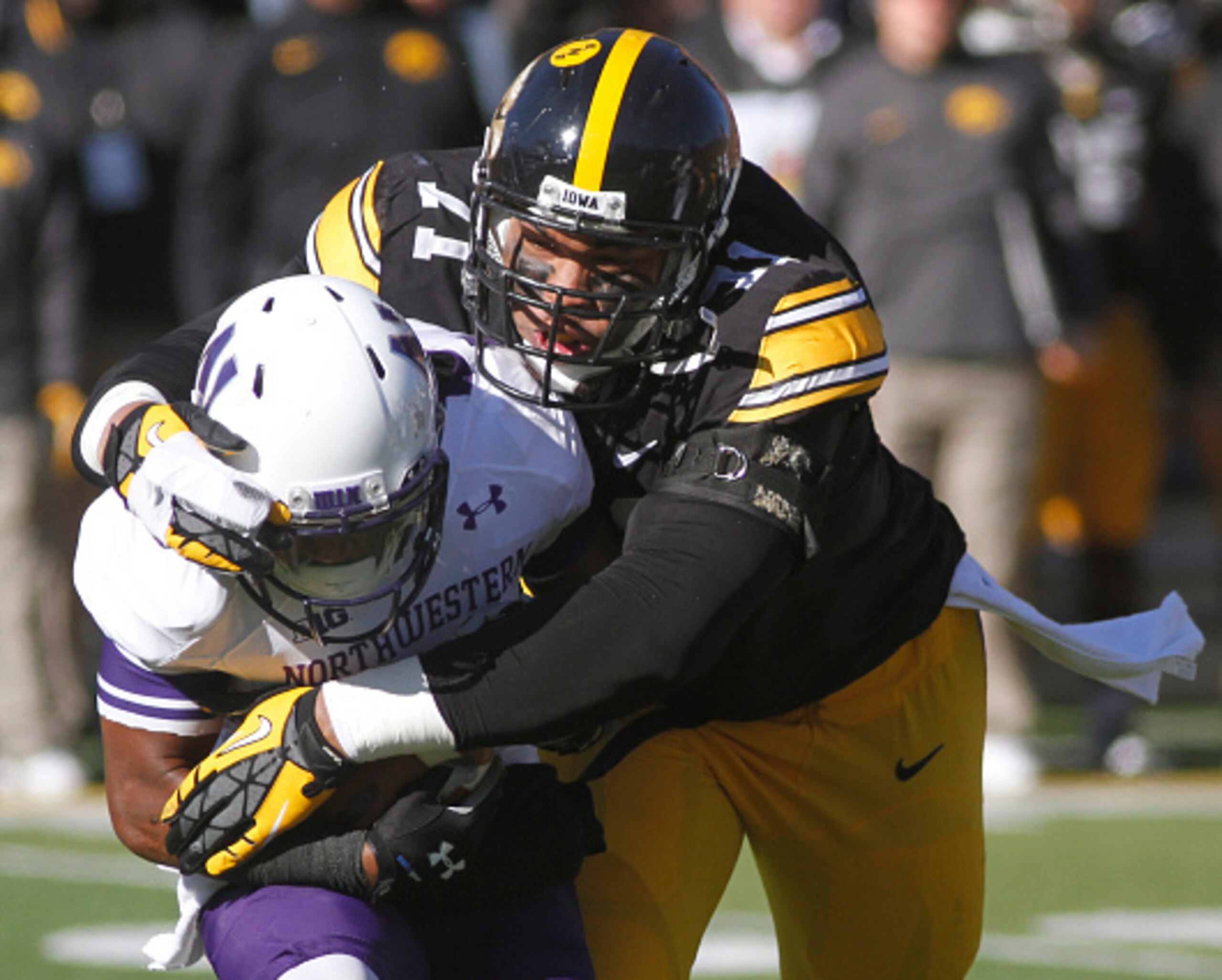
With the 90th overall pick, Baltimore drafted Iowa defensive tackle Carl Davis.
This wasn't a position of need, but Davis was too good of a prospect to pass up at this point. The Ravens needed to add some depth to their defensive line after trading Haloti Ngata to the Detroit Lions this offseason.
Going into the draft, Davis was one of the best defensive linemen overall and someone who was mentioned as a possible late first-round pick.
Best-Case Scenario
Davis, a 6'2", 320-pound lineman, manages to get playing time as a 3-technique defensive tackle and an 0-technique nose tackle in Baltimore's 3-4 defense.
He's strong and big enough to play nose behind Brandon Williams and maintain his gap well. He is also agile and quick enough to play at the 3 behind Timmy Jernigan.
Davis is able to play both spots at a high level, which earns him a lot of playing time as a rookie.
Worst-Case Scenario
Davis is nothing more than a nose tackle and backs up Williams at that spot.
Because Williams is so consistent and plays so often, Davis rarely sees the field as a rookie. He doesn't offer anything as a pass-rusher, and his conditioning isn't up to NFL standards.
Davis ends up sitting and watching for most of 2015 in hopes he can earn more playing time next year.
.jpg?w=2560 "Rams Raiders Football")

.jpg?w=2560 "Steelers Saints Football")
DE/OLB Za'Darius Smith
4 of 9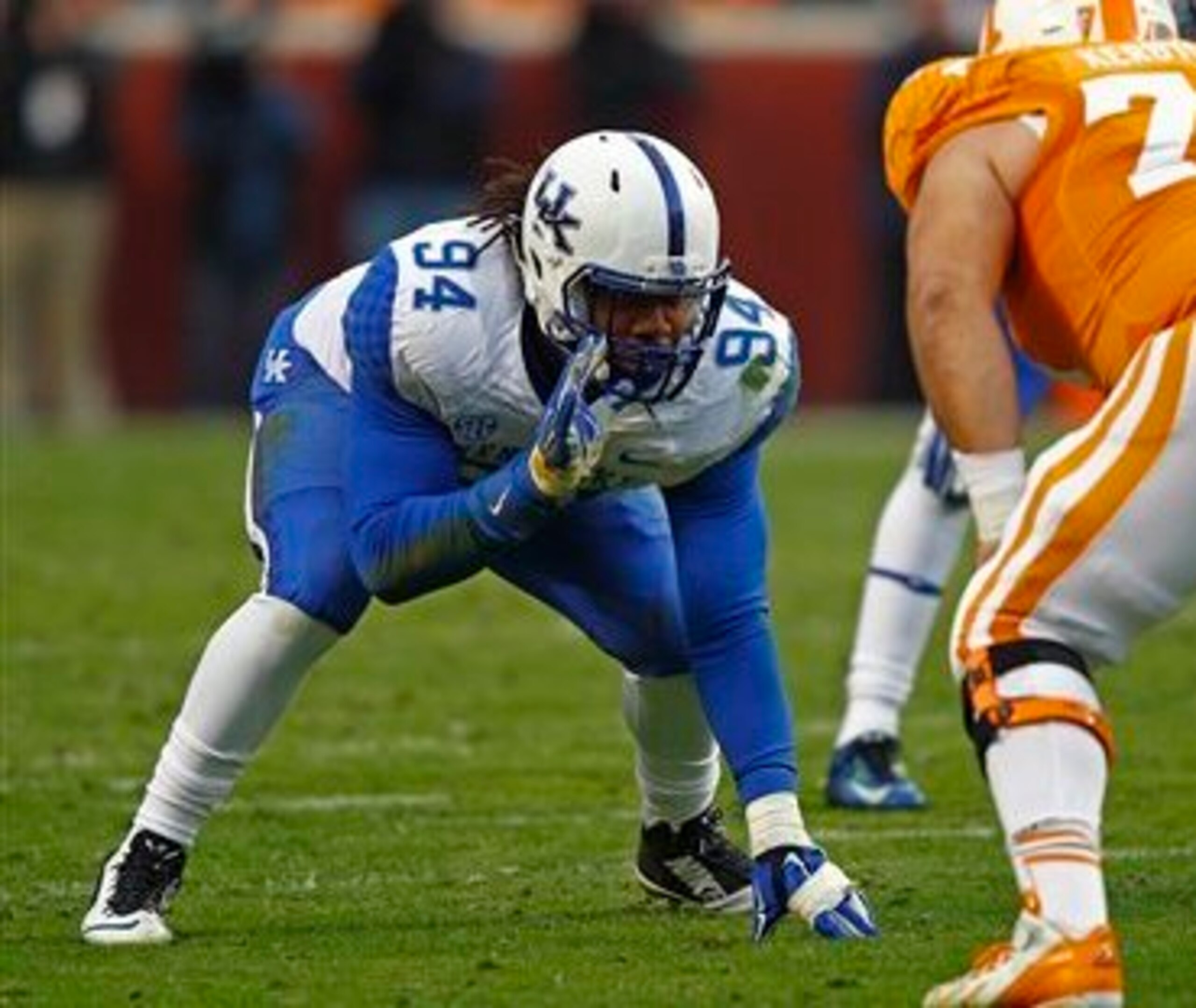
Baltimore grabbed Kentucky's Za'Darius Smith in the fourth round with the 122nd overall pick.
Smith played in a hybrid 4-3/3-4 defense in college, where he was more like a 3-4 defensive end, but may move to outside linebacker in the NFL.
Whatever position Smith plays, he's a talented prospect who should find a way to make an impact at the NFL level.
Best-Case Scenario
Smith sticks to defensive end in Baltimore's 3-4 defense, which is probably the best position for him to play if he wants to play as a rookie.
This past season, Smith notched 61 tackles, 4.5 sacks and 7.5 tackles for loss in 12 games. In 2013, Smith also started every game while notching 59 tackles, 6.5 tackles for loss and six more sacks.
He does a great job of setting the edge and holding his gap, something an end must be able to do in a 3-4 defense. However, he also can make an impact rushing the passer and getting from sideline to sideline to rack up tackles.
This all leads to Smith overtaking the 32-year-old Chris Canty for his starting end job as a rookie.
Worse-Case Scenario
Smith is moved to outside linebacker, where he's not getting much (if any) playing time as a rookie.
He won't see the field much so long as Elvis Dumervil and Terrell Suggs continue to form one of the best outside linebacker tandems in football.
Those two are simply on a level Smith will probably never reach. It doesn't help that Courtney Upshaw gets a lot of snaps at this position too.
If Smith gets moved to outside linebacker, it likely leads to him rarely seeing the field as a rookie.
RB Buck Allen
5 of 9Baltimore bolstered its running back depth in the fourth round with its selection of USC's Javorius "Buck" Allen.
Even though the Ravens re-signed Justin Forsett this offseason, there was no clear-cut backup behind him to rely on if Forsett were injured.
Allen, a 6'0", 221-pound back, is someone who could give Baltimore that solid backup it desires.
Bast-Case Scenario
Allen is a change-of-pace back who wins the No. 1 job behind Forsett and plays a lot as a rookie.
This past season, Allen rushed for 1,489 yards and 11 touchdowns as USC's' No. 1 back. He was also a solid pass-catcher, notching 41 receptions for 458 yards and one score last season.
In 2013, Allen totaled 1,037 all-purpose yards and 15 scores while working in more of a committee role. He's a more versatile back than Forsett, which leads to them working more as a committee than Allen simply the backup.
Worst-Case Scenario
Allen struggles to adjust to the NFL and falls down the depth chart.
Backups Lorenzo Taliaferro and Fitzgerald Toussaint improve in their second NFL seasons and push Allen down to the fourth-string spot.
This leads to Allen being a game-day inactive for most of his games as a rookie.
CB Tray Walker
6 of 9Baltimore went into the FCS ranks to bolster its defensive backfield with Texas Southern's Tray Walker with pick No. 136.
Because the Ravens are still thin at cornerback, Walker has a good chance of making the final 53-man roster and competing for playing time.
Best-Case Scenario
Walker is the kind of defensive back Baltimore needs, and he claws his way onto the final 53-man roster because of his ball-hawking skills.
The 6'2", 180-pound Walker notched 41 tackles and four interceptions this past year while finishing his college career with 10 picks.
That's what Baltimore needs more of, as its corners combined for just three interceptions in 2014. The entire secondary had just six picks last year, and having Walker improves that number in 2015.
Worst-Case Scenario
Going from the FCS to the NFL is too big of a jump for Walker to make in just one year.
He struggles to adjust to pro football and ultimately ends up being waived during final cuts. Walker is later signed to the practice squad, but his NFL future is cloudy after failing to make the final roster.
It doesn't help that Baltimore just signed cornerback Kyle Arrington to a three-year deal, per Aaron Wilson of the Baltimore Sun. That leaves Lardarius Webb, Asa Jackson, Jim Smith and Arrington on the roster, leaving just one or two more spots for a corner.
That makes it harder for Walker to crack the 53-man roster, which he ultimately fails to do.
TE Nick Boyle
7 of 9
With the 171st pick of the NFL draft, Baltimore drafted tight end Nick Boyle out of Delaware.
Even though it drafted one tight end in Maxx Williams in Round 2, adding another was a good move with so much uncertainty at the position.
Dennis Pitta might retire, and Crockett Gillmore is a big unknown. It's possible Boyle not only makes the 53-man roster but manages to earn playing time behind Williams and/or Pitta.
Best-Case Scenario
Pitta ends up retiring, leaving Boyle to fight Gilmore for the backup spot behind Williams. It's unfortunate to see Pitta go, but life goes on.
Thanks to Boyle's emergence, Baltimore is able to overcome the loss of Pitta. Despite playing in the FCS ranks, Boyle emerges as a legitimate pass-catcher Baltimore can rely on.
He catches 15-20 passes as a rookie and is a solid blocker in pass protection and in the run game.
Worst-Case Scenario
Boyle is unable to adjust to the NFL game, and he needs a year to sit and develop.
Pitta ends up playing, and Boyle isn't even able to pass Gilmore on the depth chart. The Ravens opt to keep just three tight ends, making Boyle the odd man out.
He ends up on the practice squad as a rookie with a murky NFL future.
OL Robert Myers
8 of 9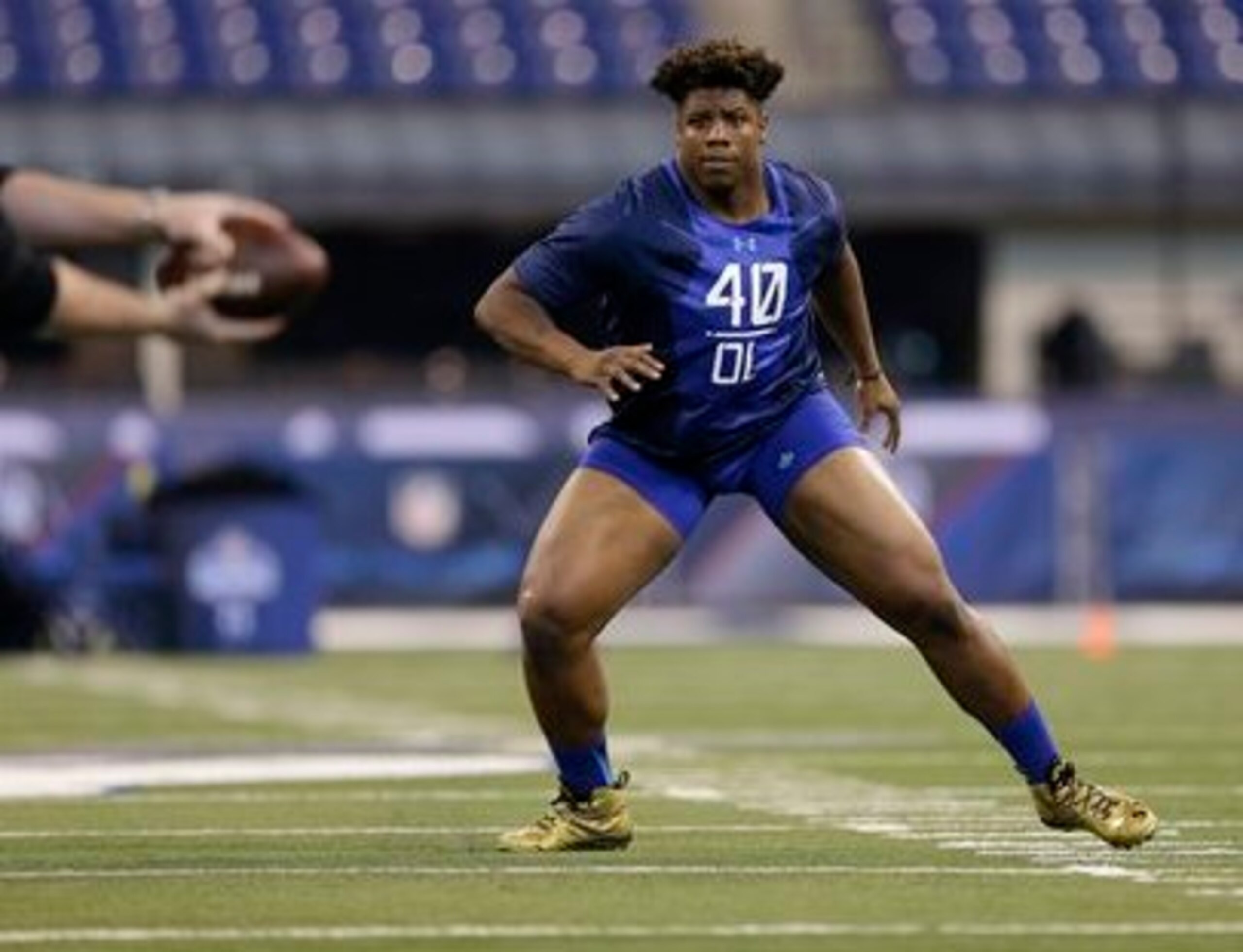
Baltimore's string of drafting FCS players continued with Tennessee State lineman Robert Myers in the fifth round.
The Ravens don't have much room on their offensive line, but Myers may be able to make the final roster as a backup guard.
Best-Case Scenario
Despite playing at the FCS level, Myers turns out to be a quality guard who's able to make the 53-man roster.
The 6'5", 326-pounder started 35 games at guard for the Tigers over his career. He was a second-team All-Ohio Valley selection as a junior and senior.
The Ravens need more depth at guard, and Myers gives them that. He ends up being active on most game days and even gets to play on special teams.
Though Myers doesn't play much, he does get to watch and develop more behind two great guards in Marshal Yanda and Kelechi Osemele.
Worse-Case Scenario
Myers is not an NFL-caliber player, and he's among the final cuts during the preseason.
This isn't the greatest of situations for Myers in Baltimore, where its line is stacked at all five spots. Myers ends up being waived and signed to someone else's practice squad.
There, he hopes to find a better chance of playing, but the reality is Myers simply isn't good enough for the NFL.
WR Darren Waller
9 of 9
Baltimore grabbed its second receiver of this draft with Georgia Tech's Darren Waller at pick No. 204.
Waller isn't quite as talented as Breshad Perriman, who went in Round 1, but he's capable of making an impact for a thin Ravens receiving unit.
Even as a sixth-round pick, Waller is in a great position to make the 53-man roster and contribute as a rookie. Whether or not he makes the most of the opportunity is another question.
Best-Case Scenario
Waller's size, skills and talent are too much for him not to be on the final roster.
The 6'6", 238-pounder is a beast with speed who will also be a great red-zone target. His 4.46-second 40-yard dash at that size makes him a very imposing receiver, even as a rookie.
He catches 25 to 35 passes as a rookie, but more importantly, he catches four to five touchdowns as a red-zone option. That's his speciality as a rookie, but he'll eventually develop into a more complete receiver.
Worse-Case Scenario
Waller isn't ready to be an NFL receiver, which leads to his being waived during final cuts.
At Georgia Tech, Waller was asked to block a ton in the Yellow Jackets' triple-option offense. That led to his having limited production with just 51 career receptions for 971 yards (19 avg.) and nine touchdowns.
He simply can't grasp the playbook or adjust to being a full-time receiver instead of a part-time one in college. Waller is waived and signed to the practice squad, where he spends his entire rookie season.
.jpg?w=2560 "Cowboys Packers Football")




.jpg?w=2560 "🚨 Week 8 AP Top 25 Poll")