
Breaking Down Expectations for Top Rookie Pass Rushers
Now that the draft is written in dried ink, it's finally time to look at where some of the pieces have landed. The hottest topic regarding draft weekend is always the quarterbacks, as they're the most important position in the sport, but only two were drafted in the first two rounds of this class. If you haven't heard hours of discussion about Jameis Winston and Marcus Mariota at this point, you've been living under a rock.
The second-most important position in the sport, one which is vastly underrated, is the category of pass-rushers. There are edge players in every defense. For 4-3 squads, they're defensive ends; for 3-4 teams, they're outside linebackers.
In the first two rounds of the 2015 draft, there were 11 of them drafted, dwarfing the number of quarterbacks taken. Still, they're barely mentioned during national discussions of the weekend. We'll have that covered, breaking down the skill set, fit, rookie and long-term projections of all of those 11 individuals, giving you a better overall grasp of the chaos that was draft week.
Dante Fowler, Jacksonville Jaguars
1 of 11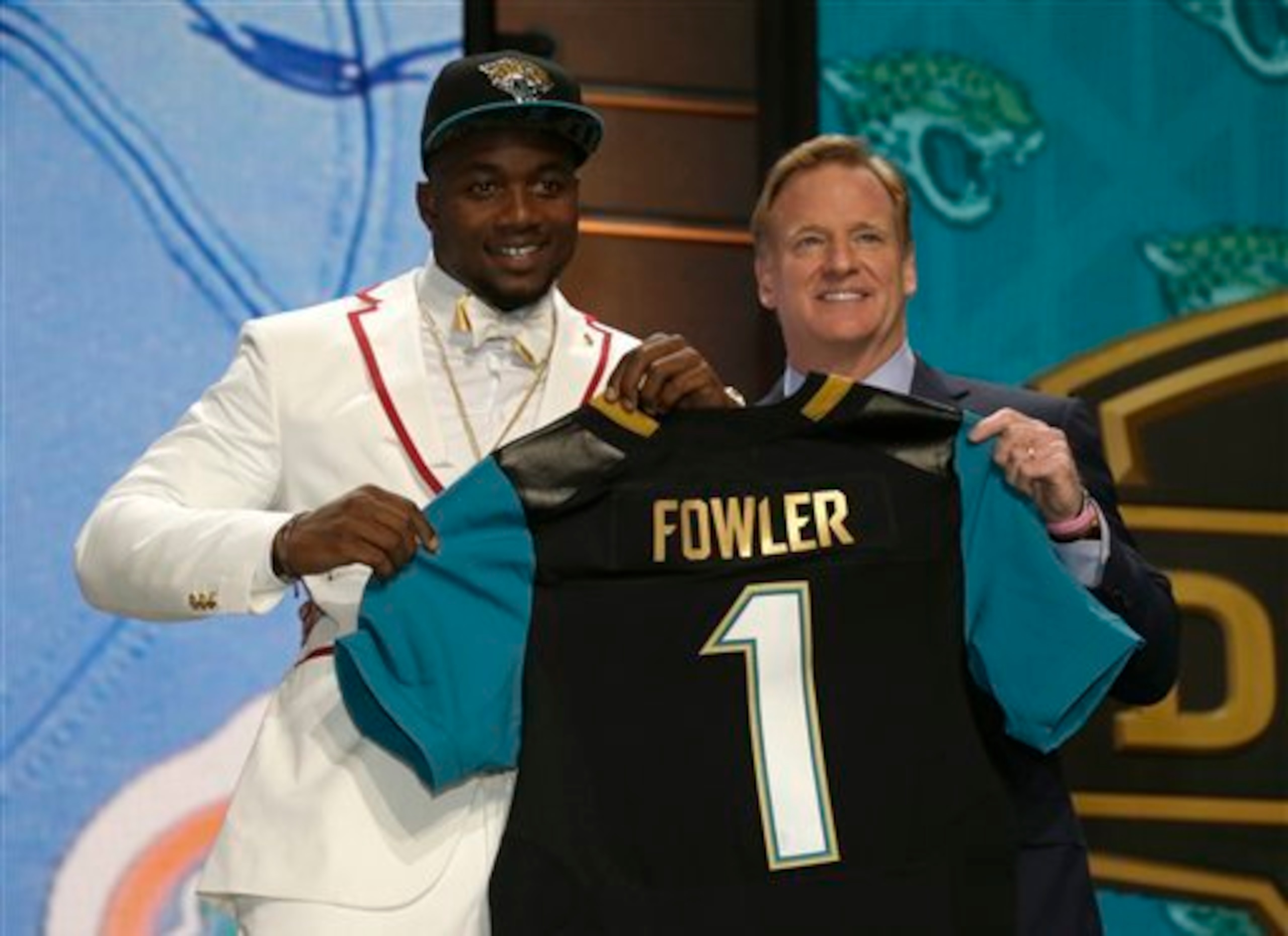
The first edge-rusher taken off the board in the 2015 NFL draft will start his career out on a bad note. According to ESPN's Adam Schefter, whose word is bond, Dante Fowler, the third overall pick of this most recent class, tore his ACL in rookie camp. Less than two full weeks after he was the first player to hug Roger Goodell in Chicago on draft night, his rookie season is over.
In the long run, though, this shouldn't hinder his career. By all accounts, he's a highly motivated player, and with modern technology, he could be 100 percent by the 2016 season. Still, there are concerns with Fowler's game on tape.
At the University of Florida, he proved to be a high-effort player, one which was a factor in the run game often, but his ability to get after the passer wasn't great. Fowler only totaled 5.5 sacks against SEC opponents in 2014. Even his 8.5-sack season seems low, but when accounting for his three-sack performance in the bowl game against mid-major East Carolina, one is less than enthused with his production.
He doesn't have the flexibility to bend the edge through contact on a consistent basis, instead winning with heavy hands like an interior defensive lineman. He's not going to be able to contribute in 2015, but his ideal fit might be as a player like Chandler Jones, a base end who has gained 23.5 sacks over 40 games for the New England Patriots.
To be that, though, he would need to gain enough girth to hold his own at the line of scrimmage for 60 minutes. It might not be the worst idea in the world for him to add back the weight he lost between his sophomore and junior seasons, playing again in the range of 275 pounds, not 261 pounds, which he's currently listed as.
Vic Beasley, Atlanta Falcons
2 of 11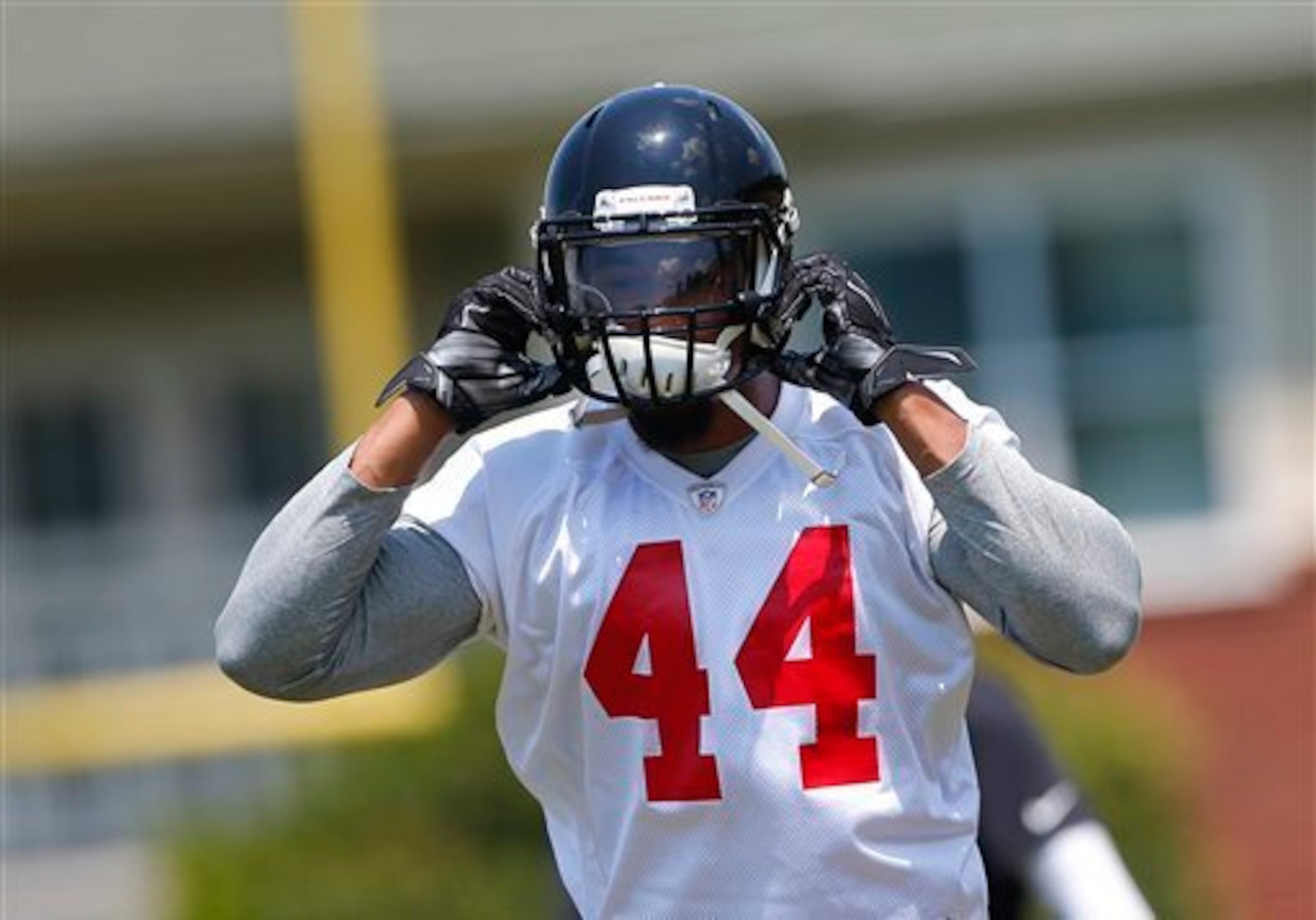
Vaughn McClure of ESPN wrote an interesting piece regarding the potential of Vic Beasley, the former defensive end of the Clemson Tigers who landed with the Atlanta Falcons, just about a week before the draft. In it, McClure questioned if the Falcons would truly be in a position to pass up the edge-rusher, who his co-workers, Mel Kiper and Todd McShay, had falling out of the first round around the same time in a joint mock draft.
McClure was proven to be right, as the team took Beasley with the eighth overall selection. The knocks on Beasley are clear. He's small, and he doesn't have a mean streak. He's a freak of nature, but he's not going to be able to put his hand in the dirt and play solid run defense as a 246-pounder. In the Falcons scheme, the top pass-rusher is the 4-3 weak-side defensive end, who is tabbed "Leo."
Interestingly enough, D. Orlando Ledbetter of the Atlanta Journal-Constitution tweeted out a picture of the Atlanta rookie camp roster, which listed Beasley as an outside linebacker. This is of note as the team just signed two starting-caliber outside linebackers this offseason in Brooks Reed and Justin Durant. More specifically, Reed, who signed a five-year contract in the spring, plays the strong-side "Sam" linebacker position, which is where Beasley would project off the ball.
I think the most likely outcome for Beasley is that he moves into a full-time Sam role in base defense around 2017, when the team can shed Reed's contract. Until then, he'll be a nickel Leo, with Adrian Clayborn bumping from the Leo position to an inside penetration role in passing situations.
The Seattle Seahawks went the same route with Bruce Irvin, their first round pick from 2012, who had eight sacks off the bench during his rookie year. After missing time due to suspension in 2013, Irvin was a Sam pressure linebacker in 2014 and posted 6.5 sacks.
Atlanta's head coach, Dan Quinn, was the defensive coordinator for the Seahawks in 2013 and 2014, and should be able to replicate Irvin's production with Beasley out of the gate. I would predict at least eight sacks from the former Clemson Tiger, potentially pushing his total into the double-digit range as a nickel defender.
Alvin "Bud" Dupree, Pittsburgh Steelers
3 of 11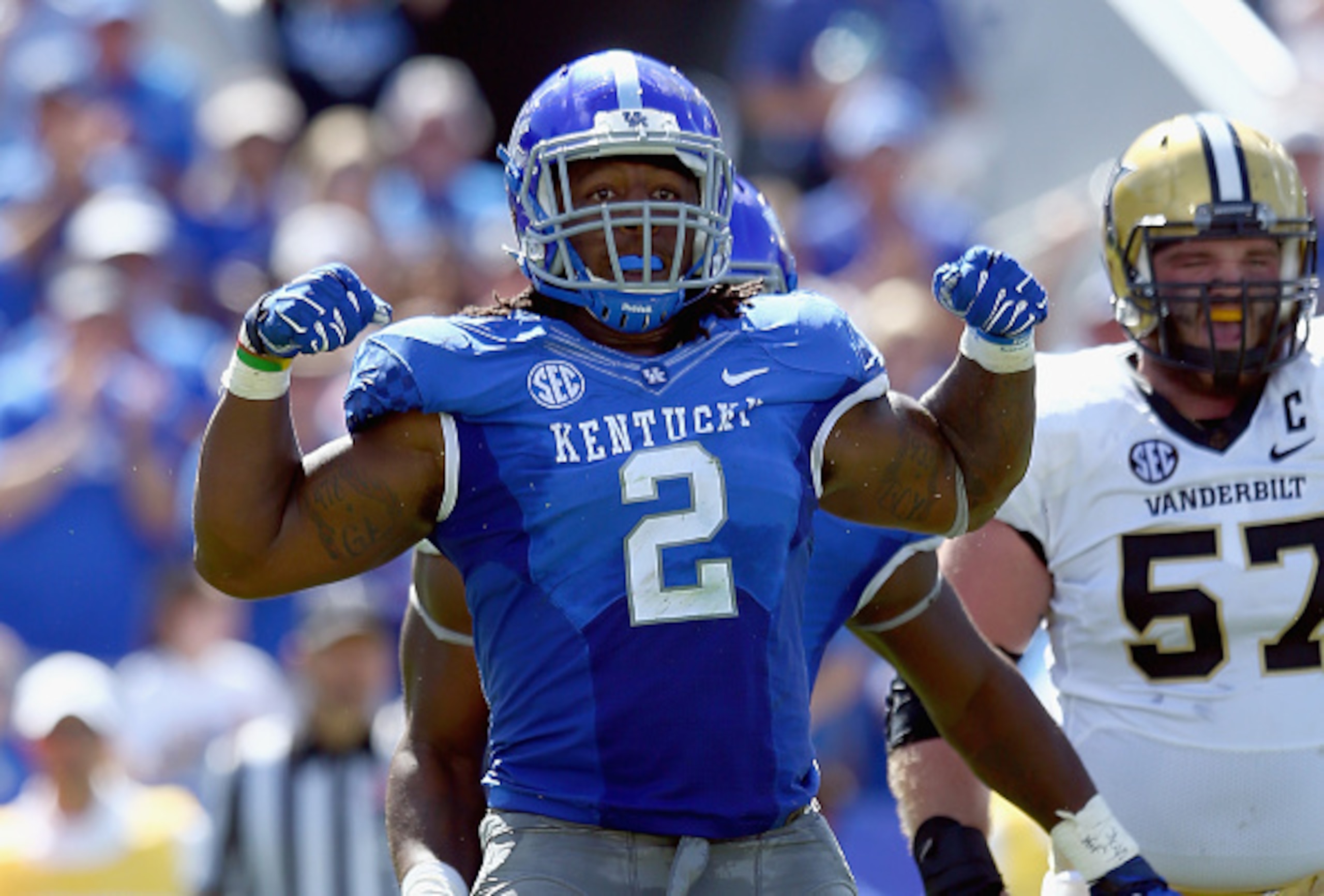
In 2014, the Jacksonville Jaguars shocked the draft world by taking Blake Bortles, a quarterback from Central Florida, third overall. Many had already locked up the selection of Sammy Watkins to the team in mock drafts. Watkins went one pick after Bortles, as the Bills sent two first-round choices to the Cleveland Browns for the opportunity to sign him.
Using the logic that the Jaguars play the draft close to the chest and were capable of making surprise selections, some thought that Alvin Dupree of Kentucky was in play for the squad with this year's third overall choice. Jacksonville badly needed a weak-side 4-3 defensive end, and Dupree had upside and instant start ability there. Dante Fowler lacked the upside for some evaluators, while Vic Beasley was too small for a three-down role, and Shane Ray and Randy Gregory had their share of off-field issues.
The Jaguars would eventually take Fowler, keeping the Florida Gator in-state. There were also other potential top-10 landing spots for Dupree. One was the New York Jets, who are coached by former Arizona Cardinals defensive coordinator Todd Bowles, who seemed to like bigger pass-rushers during his time in Glendale. The Falcons were also sitting in the eighth overall slot waiting for a pass-rusher to fall.
Inexplicably, Dupree, who at 6'4" and 269 pounds had vertical and broad jumps in the top percentile according to Mock Draftable for defensive ends since 1999, dropped into the lap of the Pittsburgh Steelers at No. 22. This, in my opinion, is one of the best fits in the draft and one of the top "steals."
In 2013, the Steelers drafted outside linebacker Jarvis Jones in the first round. He's posted three sacks in his short NFL career, and last season, he only started three games. Jones' lack of progression led to the team transition tagging Jason Worilds last year, giving him just under $10 million for a one-year contract worth 7.5 sacks. The Steelers also continue to bring back James Harrison, who is a 37-year-old, to plug the hole they've had on the edge.
Worilds retired this offseason and Harrison isn't getting any younger. If Jones isn't the future of the team at the position, Dupree can be. He has amazing speed to power transition and can develop into a Cameron Wake type of player in the future. Some, like Jayson Braddock of ESPN 97.5 in Houston, suspect that Dupree might be the leader for Defensive Rookie of the Year honors.
I think there's a good chance that Dupree walks away with the award. His issue is that he needs to make a switch flip mentally to allow him to make plays on the move, rather than blowing up lanes based on pre-snap formations. Jamie Collins of the Patriots had the same issue coming out of college in 2013. It took a season, but Collins is now one of the best linebackers in the sport. If Dupree can make that transition quicker, he could be, too, as soon as midseason.
.jpg?w=2560 "Rams Raiders Football")

.jpg?w=2560 "Steelers Saints Football")
Shane Ray, Denver Broncos
4 of 11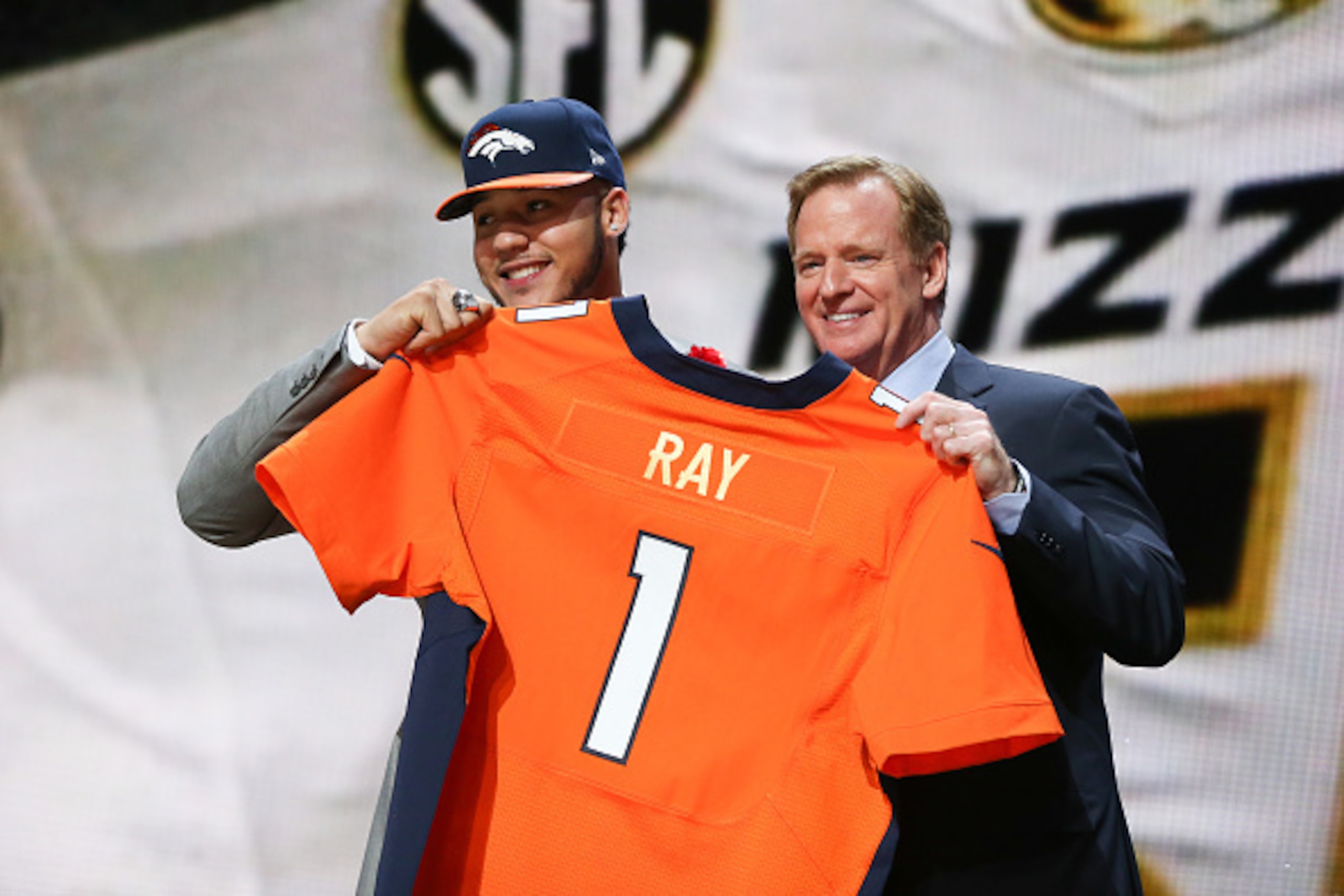
Shane Ray is going to be an interesting test case for which traits translate to the NFL. For the most part, people look at edge-bending and speed-to-power conversion as the top traits which you'd want pass-rushers to possess as prospects. Unless you're a Mario Williams or Jadeveon Clowney, you rarely have both.
Ray doesn't really have either. He had massive production at Missouri, leading the SEC with 14.5 sacks in 2014, despite missing time during the SEC Championship due to an ejection. He was a bit of a one-year wonder in Columbia, only totaling 4.5 sacks in his two previous years as an active player. During those seasons, he was buried on the depth chart behind defensive ends like Michael Sam and Kony Ealy.
Sam bounced around the practice squads of the Dallas Cowboys and St. Louis Rams as a seventh-round rookie in 2014, while Ealy was a second-round pick and netted four sacks off the bench with the Panthers. The players ahead of Ray didn't produce much during their first seasons as professionals, so why would Ray, who is going to have to fight for playing time with two All-Pros in DeMarcus Ware and Von Miller?
The Denver Broncos drafted Ray by trading up to the 23rd selection, one pick after Alvin Dupree went off the board to the Steelers. To me, that's too rich. Ray has burst off the line of scrimmage, but he can't bend or convert power, which, as mentioned before, are the premier traits for a 3-4 outside linebacker.
At the NFL level, he won't be able to anticipate a snap count and use his speed to exploit offensive tackles in the same way he did in college. One example of a player in that same mold is Jerel Worthy. Worthy was a second-round pick out of Michigan State in 2012. He was a penetrating defensive tackle who based a lot of his game on jumping just a second before the ball was snapped, allowing him to nail offensive linemen before they were ready.
The NFL is more sophisticated than the college game in just about every way, and that includes cadence calls. Worthy went from being the 51st overall pick to being on his third team, the Kansas City Chiefs' practice squad, in about two and a half years.
His "edge" couldn't be exploited at the NFL level, and the Packers learned the hard way how much that one trait has value. If I were a Broncos fan, I'd be worried about Ray proving the same thing to my favorite team's front office. On top of that, Ray is already in the NFL's drug program and is still fighting off a toe injury, per Mike Klis of 9News in Denver.
There are just so many red flags regarding Ray that it doesn't surprise me he "dropped" in the draft. What does surprise me is that the Broncos took the tweener so early, and that many in the media assume instant production from a player who has the makings of someone who might not be worthy of a fifth-year option.
Mario Edwards Jr., Oakland Raiders
5 of 11
The Oakland Raiders were in a weird spot heading into the draft. It seemed like a virtual lock that the quarterbacks, Jameis Winston and Marcus Mariota, were going to be the top two selections of the day. The Jaguars were known to make shocking choices and held the third overall pick, just one slot before the Raiders went on the clock.
Many said that Leonard Williams of USC, a five-technique defensive end, was the top player in the class, but Jacksonville, like Tampa Bay and Tennessee before them, passed on the lineman. Instead, they took Dante Fowler, a pass-rusher from Florida. On paper, Oakland was badly in need of a pass-rushing 4-3 defensive end. Outside of Justin Tuck, who is 32 years old, the cupboard was bare.
The only other edge-rusher who was drafted in the top 20 was Vic Beasley of Clemson, the Falcons' eighth overall selection. Beasley is already being moved to outside linebacker in Atlanta's 4-3 scheme, though, leaving no realistic possibilities for the black and silver to make a selection at the position early on.
In the second round, they addressed defensive end by picking up Mario Edwards Jr. of Florida State early on Day 2. Edwards was known best for beating down Greg Robinson, 2014's second overall choice, in the national championship game. During his last year in Tallahassee, though, he proceeded to balloon to 294 pounds, looking more like a defensive tackle than a defensive end.
He's since dropped down to 279 pounds, which is what he was measured in at the combine, but his overall athleticism isn't what it's being billed as. Many talk about Edwards like he's a freak who has untapped potential, but when you look at his combine scores, he ranks at or below the 50th percentile in the speed and agility portions, plus the vertical jump, according to Mock Draftable.
On the site, if you list him as a defensive end, his top athletic match is C.J. Wilson, who the Raiders have on their roster, and that general manager Reggie McKenzie helped draft while with the Green Bay Packers. There's familiarity with the body type, but here's the issue: They need a replacement for Wilson, not a clone.
If you flip the position comparisons to defensive tackle, the top hit is Mike Neal, once more a Packer who was drafted under McKenzie's watch in Wisconsin. That's a fairly good comparison, as Neal was a 4-3 defensive tackle in college, similar to Edwards' 294-pound self, who first was transitioned to 3-4 defensive end and later 3-4 outside linebacker, an edge position similar to what Edwards will be.
Neal has pieced together 15 sacks in five years in the NFL, including 14 starts. I'm sure the Raiders will want more from their second-rounder, but that seems like a real possibility when taking into account all the moving parts which will make the former Seminole's NFL transition harder on him.
I think he'll notch somewhere around four sacks if he starts every game this season. Oakland might look back at this selection and wonder if it did the right thing by keeping him as an edge defender, as opposed to kicking him inside to 3-technique.
Preston Smith, Washington Redskins
6 of 11
On film, Preston Smith is a Justin Tuck clone. He's a solid edge-rusher, which is no knock, but his bread and butter comes from interior pressure when he lines up between the guards. In some ways, he's similar to Scott Crichton, Minnesota's 2014 third-round choice, but more efficient and in a longer body.
Against Cedric Ogbuehi of Texas A&M, who tore his ACL and was still deemed worthy of a first-round selection by the Cincinnati Bengals, Smith was able to bend the edge in a way I've only truly seen Robert Quinn do in recent years with a similar frame. Quinn led the NFL in sacks in 2013.
Smith will be an interesting fit with the Redskins, though, as he's going to be a base 3-4 outside linebacker, where his pressure creation works better closer to the ball, not farther. Ryan Kerrigan is going to be one of the starting edge defenders, but Brian Orakpo, a Pro Bowler, left the team as a free agent for Tennessee.
The squad just drafted Trent Murphy of Stanford last season in the second round, but he's limited athletically, and playing him in space isn't ideal. Washington also has a new front office staff, meaning those who went to bat for Murphy on draft day might not be there in-season in 2015.
Murphy and Smith should battle for the spot opposite of Kerrigan this summer. If Smith should win it, I believe he'll kick down as an interior player during passing situations with Murphy replacing his role on the edge. In that look, I see more success with Smith.
When fully recovered from the injury which held him back in college, Tuck was able to post a 10-sack season off the bench for the New York Giants. I don't think Smith quite reaches that during his rookie year, but something like six sacks is absolutely a possibility for him.
Hau'oli Kikaha, New Orleans Saints
7 of 11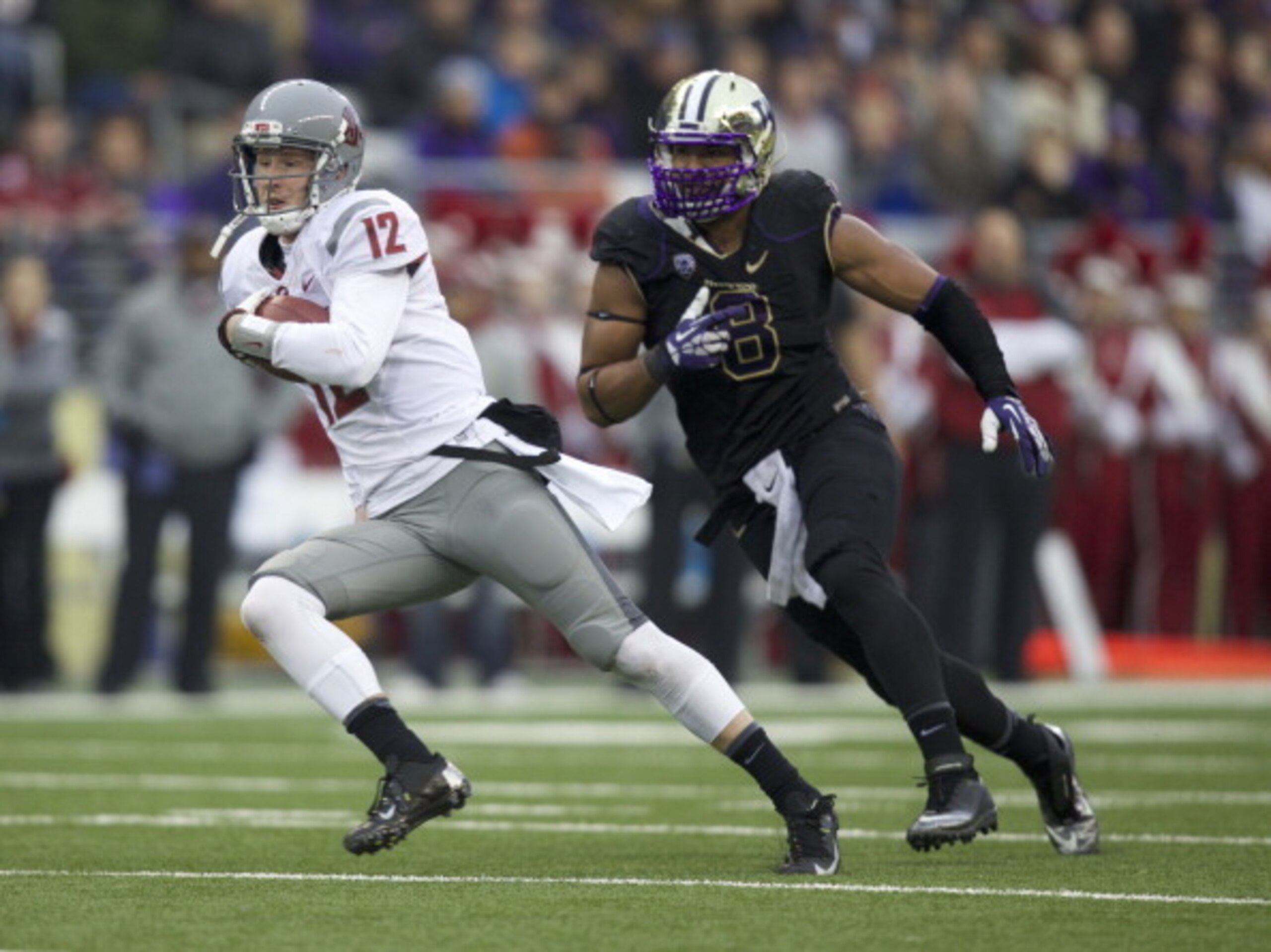
Hau'oli Kikaha was one of the most productive pass-rushers in 2014. Along with 12th overall pick Danny Shelton, 18th overall pick Marcus Peters and 25th overall pick Shaq Thompson, he gave the rebuilding Washington Huskies base talent to grow around.
His positives and negatives are very black and white, though, and at the NFL level, that means he's a player who can easily be manipulated with a game plan. He's a great technician, with rapid, strong hands which come from his judo background. Without them, he wouldn't have come close to reaching his 19-sack total in 2014.
On the other side, he's not big at just 6'2" and 253 pounds, so he's not going to contribute much in the run game. He's also going to enter the NFL as one of the slowest edge-rushers in the league with a 40-yard dash time of 4.9 seconds. When you take into account his two knee surgeries, you really begin to question why the New Orleans Saints drafted him in the second round.
On the surface, he's a one-down contributor in passing situations who can get clean-up sacks if he can overcome his health and athletic speed bumps. That's a lot to ask from a player who is already going to have to transition from facing spread-heavy offenses each week to a more physical-style game. How much of his production was his talent, and how much of it was facing poor competition with three first-rounders next to him?
I get that the Saints badly needed to improve their passing defense and did so in free agency by signing cornerbacks, but Kikaha should have been drafted two rounds after the 44th overall pick. Davis Tull, the team's fifth-round pick from Tennessee-Chattanooga, might have a better pro career than Kikaha. I wouldn't suspect more than a couple clean-up sacks for the Husky this season.
Nate Orchard, Cleveland Browns
8 of 11
This offseason, former second-round pick Jabaal Sheard left in free agency from Cleveland to join the Super Bowl champion New England Patriots. After early success, Sheard was hindered by constantly changing defensive coordinators with the Browns. During that process, Cleveland did add two long-term options at 3-4 outside linebacker.
The first was Paul Kruger, a run-first edge defender who had success with the Browns' in-division rival Baltimore Ravens. In the same offseason of 2013, the team also drafted a high-upside outside linebacker, Barkevious Mingo of LSU, with its first-round pick.
Mingo has been hindered early in his career by injury but is very good in the run game and in coverage at this point. The issue is that the team used assets on him to be a premier pass-rusher. I believe the Browns taking Nate Orchard of Utah in the second round of this draft is a bit of an insurance policy. Kruger is reaching the 30-year mark and Mingo is halfway through his rookie contract without displaying flashes of Pro Bowl caliber.
Orchard is much better suited to replace Kruger in the long run, though. Orchard has a good motor and has decent length, but I would be shocked if he ever puts together a double-digit sack season. His hips and ankles are so stiff that he basically has to run straight up while attempting to bend around an offensive tackle.
Exposing that much of his chest, I think he's going to have to be a wide-9 player if he's going to play on the right side. He'll have to be a crash player who needs to be given the opportunity to build up his speed-to-power transition. In a lot of ways, he's very similar to the Green Bay Packers' first-round pick of 2012, Nick Perry, who has nine sacks going into his fourth year as a professional.
If you're betting on the over/under of Orchard's sacks in his first year, with him more than likely coming off the bench, 2.5 sounds like a fair rate.
Markus Golden, Arizona Cardinals
9 of 11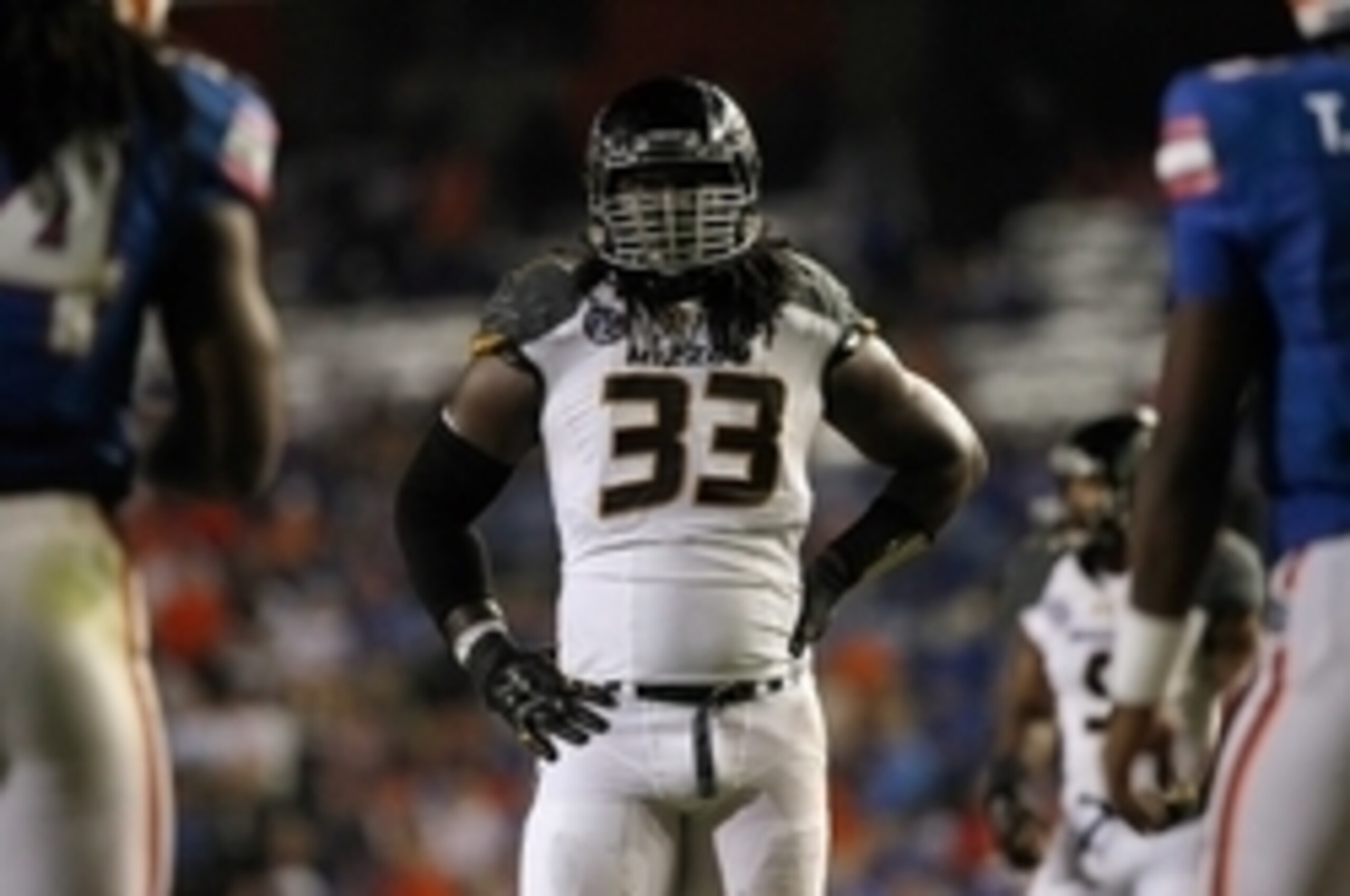
Markus Golden is a high-effort player out of the University of Missouri who was drafted in the second round by the Arizona Cardinals. Like Shane Ray, Golden was buried on the Tigers' depth chart behind Kony Ealy and Michael Sam before last season. Golden only spent three years in Columbia, as he was a junior college athlete for the first two seasons of his college career.
While Ray had great snap anticipation and a good first step to go along with his clean-up effort ability, Golden isn't truly physically imposing in any way. At the most athletically demanding position in the sport, edge-rusher, Golden was measured in at 6'2" and 260 pounds with a 4.9 40-yard dash at the combine. At his pro day, according to NFL Draft Scout, he posted a 28.5" vertical jump, a 9'2" broad jump, a 7.39 three-cone and a 4.59 short shuttle, all well below average for the position.
I don't think that Golden is a player who doesn't belong in the league, I'm just not sure how he keeps a starting job. He's not going to be out of the NFL in three years, but he also just doesn't have the baseline talent needed to contribute as a full-time player, despite his motor.
Ideally, I think he's a third pass-rusher in a rotation. Picked 58th overall, that's too high for my taste for a player in that mold. For now, that's the role he'll perform in, and the Cardinals hope to develop him into something more, but I think their fifth-round pick, Shaquille Riddick, has a better shot of being a 16-game starter long-term than Golden.
Randy Gregory, Dallas Cowboys
10 of 11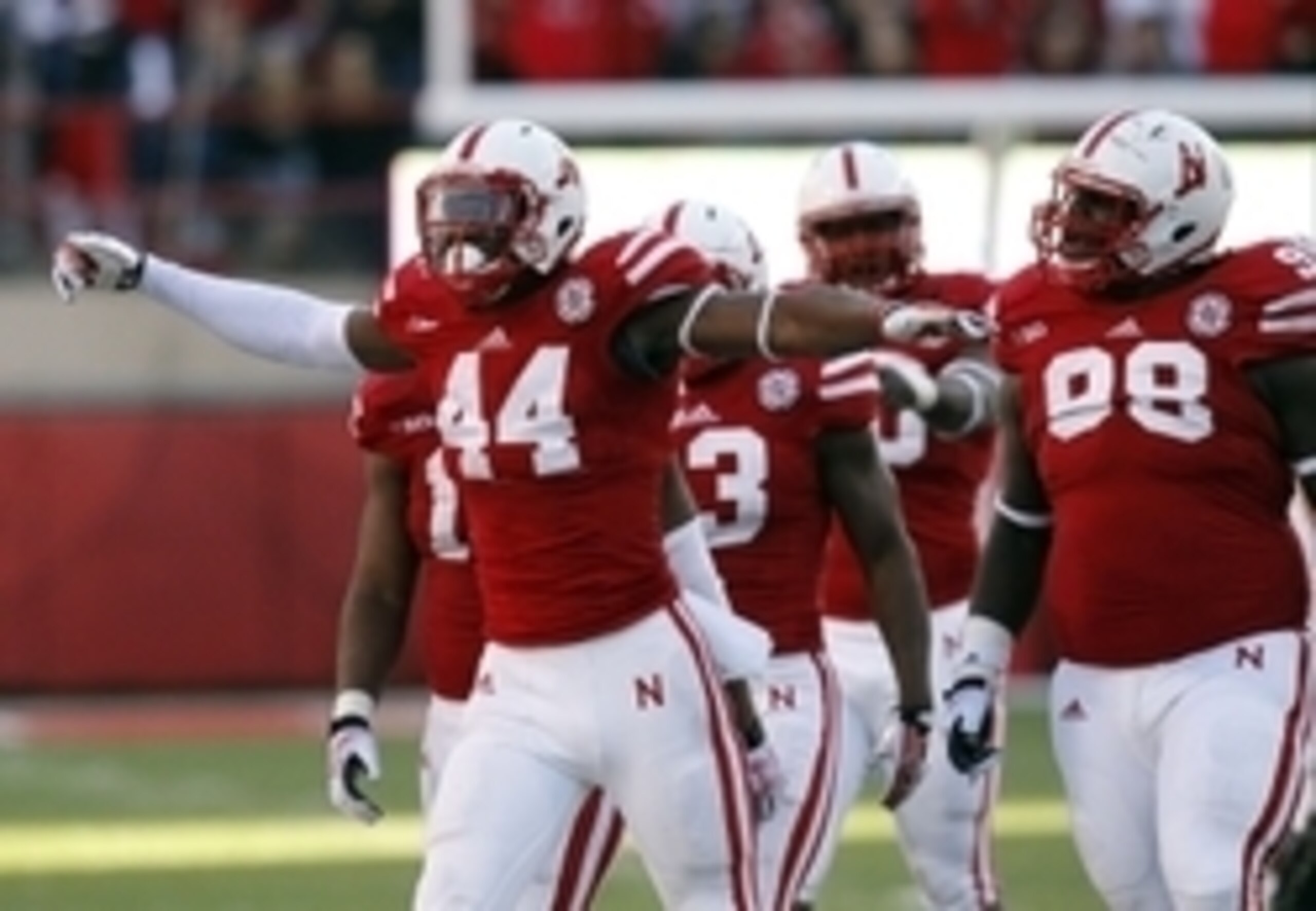
This is one of the biggest "boom or bust" selections of the class. For the most part, pass-rushers should be held to the draft standard of quarterbacks. Because the demand for them is so high, nearly all of the elite pass-rushers are drafted in the early first round, whereas the "hit rate" greatly diminishes after the top 20 selections.
Randy Gregory was selected with the 60th overall pick by the Dallas Cowboys, but, along with Vic Beasley, who went off the board with the eighth overall choice, he's the top pass-rusher in the draft. Greg Hardy was signed by the team this offseason, a desperation move by a squad which badly needed to generate pressure. Hardy will be suspended for 10 games due to an alleged domestic violence issue.
Hardy is also only on a one-year deal, so Gregory may be a short-term starter in 2015 until Hardy is allowed to once more suit up in the NFL, but the Nebraska pass-rusher also could move into a full-time starting role by 2016. Gregory has long arms and amazing athleticism, but he needs to put on some weight to be a three-down defensive end in Rod Marinelli's 4-3 scheme.
If he can do so, he might be able to develop into an Aldon Smith talent. A perennial Pro Bowler when his head is on straight, he could post double-digit sack seasons which breathe down the neck of the 20-sack mark. Jerry Jones, the Cowboys owner, has a heart of gold to take in Gregory, who failed the combine drug test in the winter, but he's made similar characters Super Bowl champions in the past, and the window in Dallas is wide open right now.
Frank Clark, Seattle Seahawks
11 of 11
The selection of Frank Clark in the second round is one of the more questionable ones from this past draft. He was a second-round talent on film, something I've said since 2013, but his recent past made it nearly impossible to envision him in this situation.
Clark was kicked off the University of Michigan football team after involving himself in an alleged domestic violence issue in an Ohio hotel with his then-girlfriend. He was then cleared of charges, but there were multiple witnesses' accounts from strangers in the hotel which have been well-documented, stating an incident did occur involving Clark.
Just days before the draft, Tony Pauline of Draft Insider and formerly of Sports Illustrated stated that Clark would go higher than expected, but noted that as a top-125 selection. The difference between the 125th pick, a late-fourth round selection, and the 63rd, where Clark was chosen by the Seahawks, is giant. The famous draft value chart isn't perfect, but it's an easy way to get a feel for how draft picks are generally valued. Draft Countdown's account of the board states that the 63rd pick is worth 276 points while the 125th pick is only worth 47 points.
Basically, on paper, the 63rd choice is worth six late-fourth round picks. I don't think a soul outside of Seattle saw this selection coming, considering how large the Ray Rice scandal was for the league. Maybe Clark really is innocent. Whatever he is, he'll be a Seahawk this fall.
He's extremely athletic, so there's no question if he's a fit in the Seattle defense in that aspect. Cliff Avril and Michael Bennett are going to be the base rushers for the squad, while Bruce Irvin rotates in for nickel reps, but I think Clark takes the lead over players like Cassius Marsh for a developmental and future starting role for the team. I'm not sure he gets more than two or three sacks in 2015, but he's got the talent to provide quality play on the edge for more than a half-dozen years.
.jpg?w=2560 "Cowboys Packers Football")




.jpg?w=2560 "🚨 Week 8 AP Top 25 Poll")