
In a series featuring a pair of power plays drowning under the weight of enormous slumps, the unit that is least inefficient could produce a winner.
The Montreal Canadiens and Tampa Bay Lightning combined to go 0-for-7 on their power play opportunities during Tampa Bay's 2-1 double overtime Game 1 win on Friday. The two units entered the game without a conversion in their last 17 and 19 consecutive opportunities, respectively. They finished the game on streaks of 20 and 23 and were just as frustrated as ever.
TOP NEWS

Best NHL Heritage Classic Jerseys 📋
Teams That Need Goalie Trade💡

Hellebuyck Trade Takeaways 📊
Offensive zone entries proved to be difficult for both sides—most likely the source of the struggles for both sides. Montreal maintained possession (completed at least one pass within the zone) following just five of 14 attempted tries, while Tampa Bay did so on only 10 of 20.
The three-man trap instituted just inside the defensive blue line seemed arguably impenetrable for both teams at times. Too often, the power play unit was forced to dump in the puck without any chasers entering the zone with a head of speed, or a single man attempted to cutely break in himself and experienced equally little success.
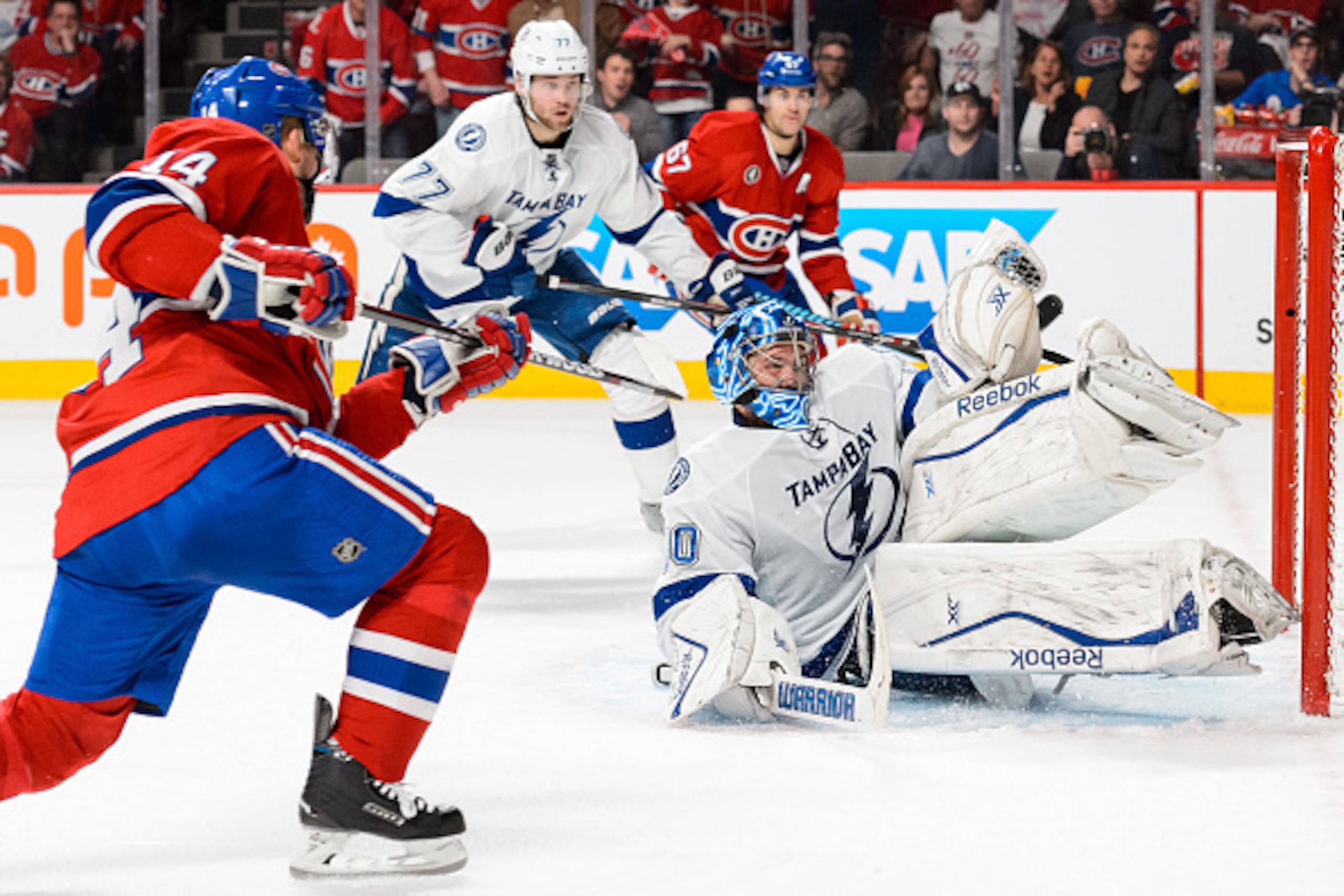
Both teams did have chances. A goal-mouth scramble on Montreal's first opportunity resulted in a very close call for Tampa Bay goalie Ben Bishop—and gave Montreal coach Michel Therrien an excuse to defend his power play in the postgame press conference—and Tampa's lone regulation goal did come on a possession created by a successful zone entry late in its fourth power play opportunity.
But the units were hardly dominant either.
Montreal's best scoring chance up until its late third-period goal was Tomas Plekanec's shot on a shorthanded 2-on-1 rush, which came after Tampa Bay failed to corral a lackluster dump-and-chase effort seconds before.
The Canadiens power play, moreover, entered the game vowing to not force the puck to P.K. Subban and thus appeared hesitant about when to shoot without Subban (albeit a tightly covered Subban) blasting away.
| Montreal Canadiens | 1 | 23 | 4.4% |
| Tampa Bay Lightning | 2 | 34 | 5.9% |
| Other playoff teams | 50 | 251 | 19.9% |
So the teams enter Sunday's Game 2 boasting a combined 5.3 percent conversion rate in the playoffs while the rest of the league sports a 19.9 percent rate.
During the first round, the team with more power play goals in any given game went 18-7. With teams averaging just 2.49 goals per game so far this postseason, a full- or multi-goal advantage in the power play category is undoubtedly a big advantage.
And it's not as though either team lacks the firepower to create a productive man-advantage unit. Plenty of weapons are available on both benches—Subban ranked second among all league defensemen with eight power play strikes during the regular season, while Steven Stamkos tied for sixth overall with 13 PP tallies. Available talent is not the problem, but tactics and confidence are.
Each power play is suffering just as much as the other.
Both also correctly realize that the first one to find the ladder out of the basement could instantly become the overall winner of the series.

.jpg?w=2560 "NHL Trade Grades Connor Hellebuyck")

.jpg?w=2560 "Raiders Could Start Mendoza")


.jpg?w=2560 "Rodgers Iced Out on Plane 💎")

.jpg?w=2560 "Packers Safety Slams Refs 🤬")
.jpg?w=2560 "🚨 Week 8 AP Top 25 Poll")