

B/R NFL Draft 400: Top Quarterbacks for 2015
Each spring, 256 players are drafted into the NFL, with roughly another 100 added as undrafted free agents. With close to 350 players joining the pros each year, it's tough to keep track of them.
Everyone knows who Jameis Winston, Marcus Mariota and Amari Cooper are. But what about the rest of the class? At Bleacher Report, our aim is to thoroughly cover the draft unlike any other outlet, so we're not stopping with coverage of the top 32 picks or even the top 200 picks. We're covering the top 400 draft-eligible players, with a full scouting report on each one.
The top 400 players have been tracked, scouted, graded and ranked by myself and my scouting assistants, Marshal Miller and Dan Bazal. Together, we have viewed a minimum of three games per player (the same standard NFL teams use), and oftentimes we've seen every play from a player over the last two years. That's led to the grades, rankings and scouting reports you see here.
Players are graded on strengths and weaknesses, with a pro-player comparison added that matches the player's style or fit in the pros. Position by position, the top 400 players are broken down for easy viewing before the final release of a top-400 big board prior to the draft.
In the case of a tie, players were ranked based on their overall grade in our top 400.
The Grading Scale
1 of 18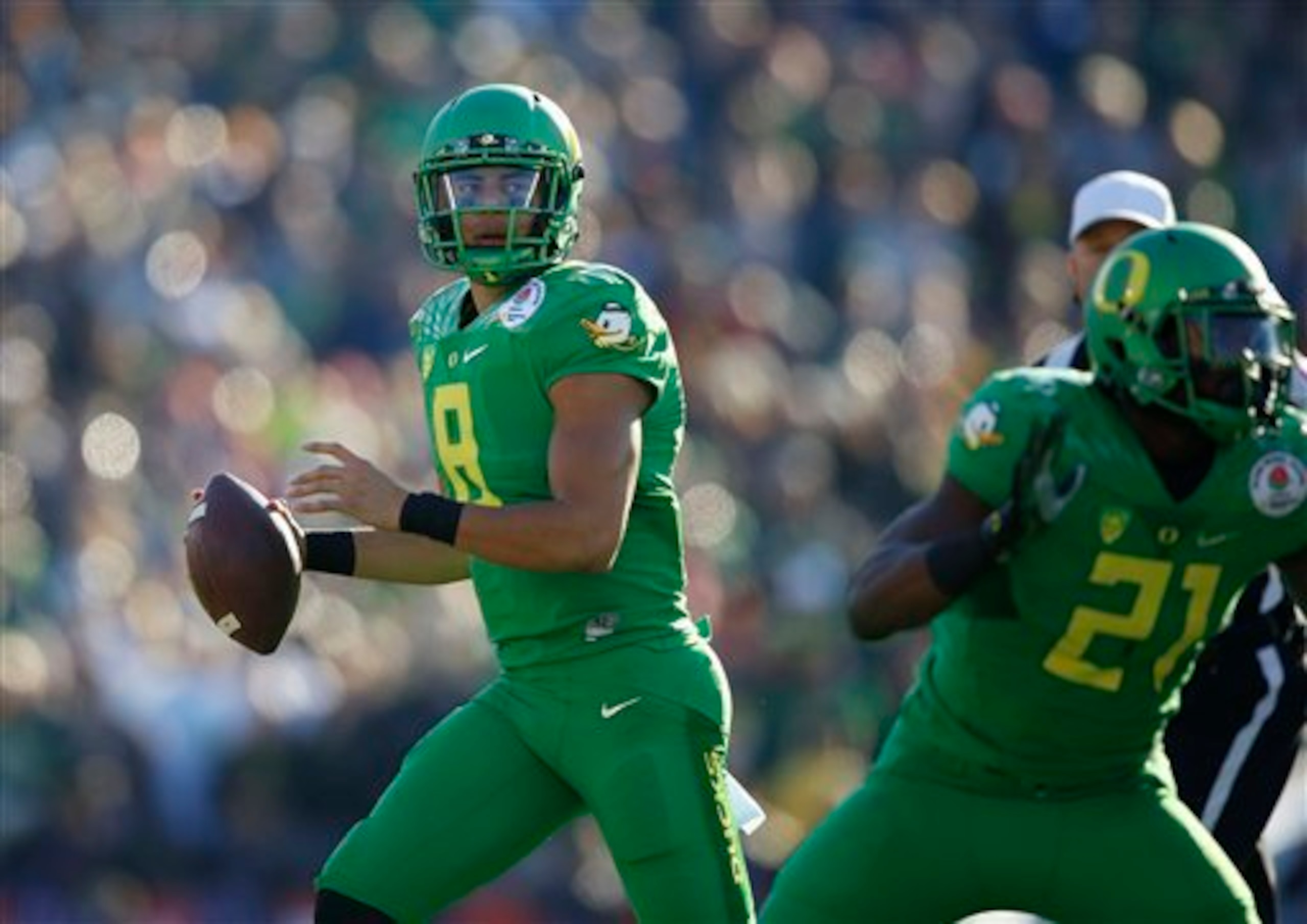
At the end of each scouting report, you'll see a final grade that falls somewhere between 4.00 and 9.00 on a unique grading scale. This scale comes from the teaching I received from Charley Casserly, Michael Lombardi and other former and current front-office personnel in the NFL. I've tweaked it this year to be more transparent, and the result is each player receiving a number grade as well as his ranking.
This applies to all positions across the board.
| Grade | Label |
| 9.00 | Elite, No. 1 pick |
| 8.00-8.99 | All-Pro Potential |
| 7.50-7.99 | Pro Bowl Potential |
| 7.00-7.49 | Top-15-Player Potential |
| 6.50-6.99 | Rookie Impact/Future Starter |
| 6.00-6.49 | Rookie Impact/Future Starter |
| 5.50-5.99 | Future Starter |
| 5.10-5.49 | Quality Backup |
| 5.01-5.09 | Backup Caliber |
| 5.00 | Draftable Player Cutoff |
| 4.75-4.99 | Priority Free Agent |
| 4.50-4.74 | Camp Player |
| 4.00-4.49 | Not NFL Caliber |
17. Anthony Boone, Duke
2 of 18
| Height | Weight | Hand Size | 40 Time |
| 6'0" | 231 lbs | 9 5/8" | 5.03s |
STRENGTHS
A smart, athletic quarterback coming out of a great system at Duke, Anthony Boone was invited to the combine as a “throwing quarterback” for drills. He’s an impressive read-and-react quarterback and processes what’s in front of him.
Boone’s arm strength shows some pop, and he can generate velocity on underneath routes and to the sideline. As a runner Boone can pick up tough yards and could even be used on designed runs in short-yardage situations. He’ll put his head down and break tackles both as a runner and in the pocket, showing the play strength to slip tacklers. He’s a tough, no-nonsense player with good experience.
WEAKNESSES
Boone is shorter than you’d like and struggles to get his eyes downfield when in the pocket. Boone’s accuracy can be all over the place, and he’s too inconsistent with ball placement to consider as a draftable quarterback.
Even on underneath or intermediate throws, Boone struggles to put the ball in the right spot and would be a turnover machine in the NFL given his quick-trigger mechanism and poor placement underneath. His lack of downfield arm strength is an issue, and he’s limited to making short, quick throws.
2014 STATISTICS
| Passing Yards | Touchdowns | Interceptions |
| 2,700 | 19 | 8 |
FINAL GRADE: 4.90/9.00 (Priority Free Agent)
16. Jerry Lovelocke, Prairie View A&M
3 of 18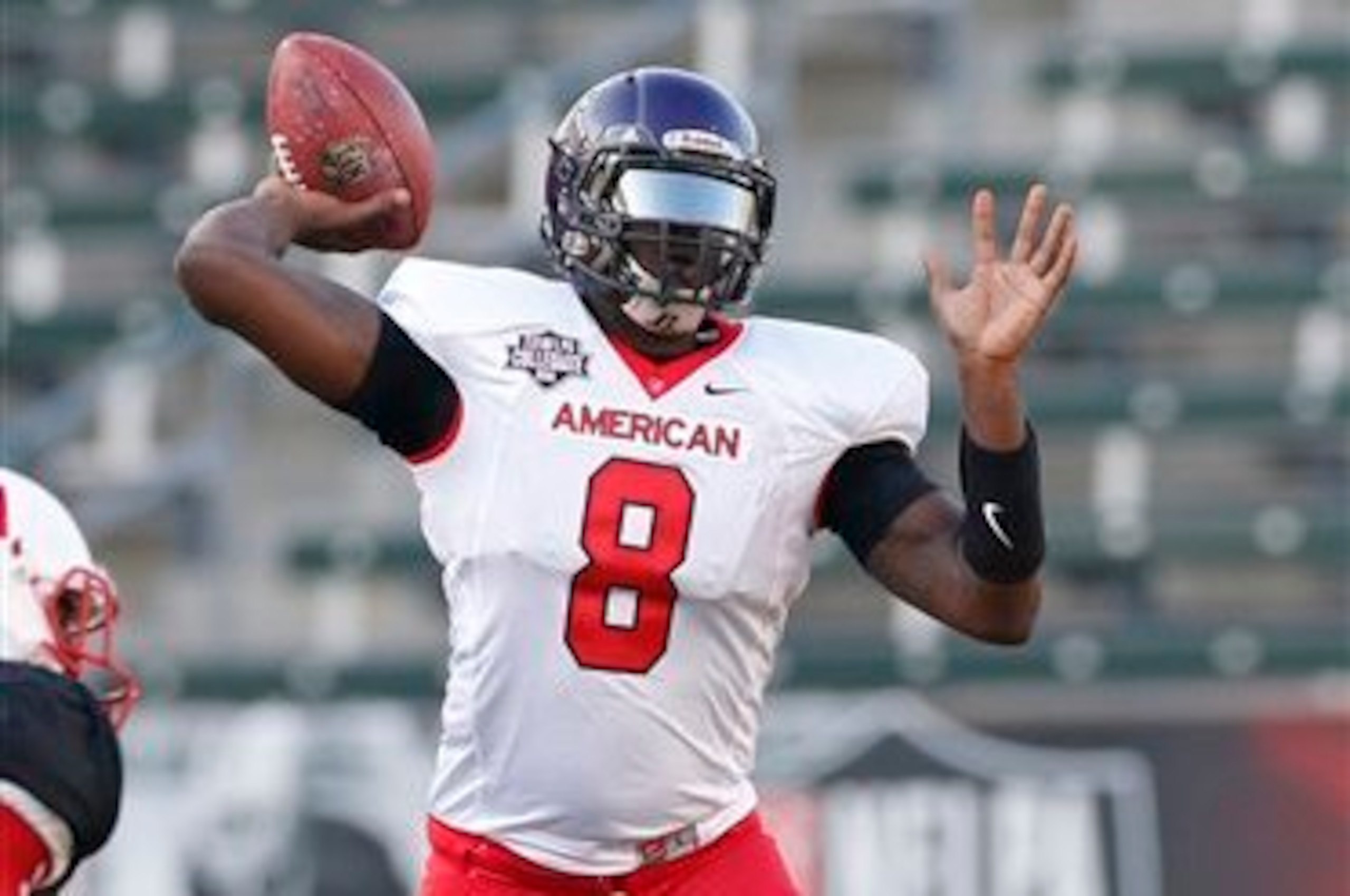
| Height | Weight | Hand Size | 40 Time |
| 6'4" | 248 lbs | 10 1/2" | 4.99s |
STRENGTHS
Jerry Lovelocke was invited to the combine as a “throwing quarterback” to work out players in drills. He’s a four-year player with great experience and good overall poise. Lovelocke is a big, thick, grown man at quarterback, and his hand size (10 ½”) is remarkable.
On pure arm strength Lovelocke should get a shot in the NFL. He’s able to make every throw with zip, and you don’t see any wobble or unneeded arc on deep throws. Lovelocke is poised in the pocket and confident as a runner.
He’s big enough to break tackles and be strong in the pocket and was the FCS version of Ben Roethlisberger as smaller defenders tried to bring him down. He has value picking up yards on quarterback sneaks or when the pocket breaks down.
WEAKNESSES
Lovelocke lacks the accuracy to be more than a camp body in the NFL. He’s erratic even when attempting the same pass at different points in a game. He lacks the ball placement to lead receivers to yards after the catch and too often leads his men into traffic.
Lovelocke doesn’t work through progressions well and tends to be a one-read player before looking to run the ball. He doesn’t hold defenders with his eyes in the pocket and would be easy for a single-high NFL safety to read. He’ll tip his passes with his eyes and also with his shoulders, as he likes to turn and pause before releasing the ball.
2014 STATISTICS
| Passing Yards | Touchdowns | Interceptions |
| 2,473 | 16 | 9 |
FINAL GRADE: 4.90/9.00 (Priority Free Agent)
.jpg?w=2560 "Chiefs Giants Football")
.jpg?w=2560 "Colts Football")
.jpg?w=2560 "Titans Colts Football")
15. Chris Bonner, Colorado State-Pueblo
4 of 18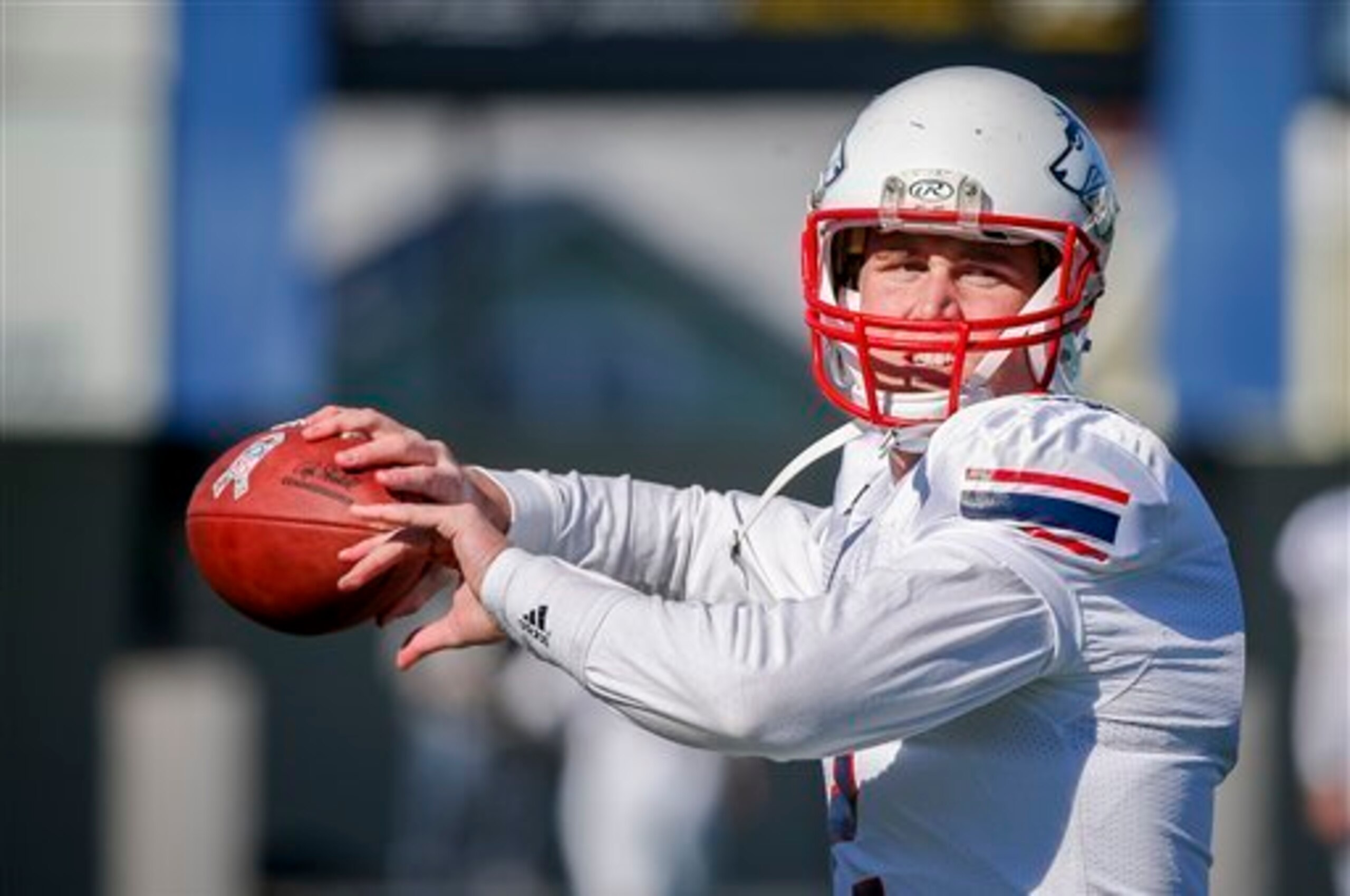
| Height | Weight | Hand Size | 40 Time |
| 6'7" | 225 lbs | - | 5.06s |
STRENGTHS
A big, tall quarterback with an impressive record, Chris Bonner had 33 touchdown passes and just nine interceptions while winning a national championship at Colorado State-Pueblo. Bonner is poised, smart and shows a good understanding for how offense works. He can identify blitzes pre-snap and will adjust the line and slide protections. Bonner has an NFL arm and doesn’t shy away from throws. His accuracy is ideal when on time, and he shows surprising ability to put the ball on target when on the move. Bonner is good in the pocket and will slide to miss pass-rushers and can step up to deliver strikes down field.
WEAKNESSES
Bonner has not seen NFL competition, and the history of Division II passers making it in the NFL is very small. You expect more zip from Bonner’s passes given his size, but his arm strength is just average for NFL standards and gets inconsistent if his footwork is thrown off. He has a rail-thin frame that must be filled out, or he’ll never survive against pro-level pass-rushers no matter how tough he is. When looking at primary aspects of quarterbacking—accuracy, poise, toughness and baseline arm strength—Bonner scores poorly in accuracy and arm strength. He leads receivers into traffic too often and puts the ball on the wrong shoulder/hip when receivers are on the move.
2014 STATISTICS
| Passing Yards | Touchdowns | Interceptions |
| 3,291 | 30 | 8 |
FINAL GRADE: 4.90/9.00 (Priority Free Agent)
14. Blake Sims, Alabama
5 of 18
| Height | Weight | Hand Size | 40 Time |
| 5'11" | 218 lbs | 9" | 4.57s |
STRENGTHS
A one-year starter at Alabama after AJ McCarron graduated, Blake Sims is able to take defenses apart underneath and with his legs. Sims can make NFL throws from the pocket and has good velocity on outside throws. He can push the ball deep and place passes over the shoulder of receivers.
Sims is poised under pressure and confident in his ability to slide in the pocket to find passing or running lanes. He’s not afraid of contact and will stand in under pressure. Sims plays with anticipation and timing and can get on a hot streak when he’s in a rhythm.
WEAKNESSES
In a stronger quarterback class, Sims wouldn’t be considered an NFL possibility. He’s an undersized quarterback with average arm strength but good potential to be coached up. Without great height, Sims has to learn to step up in the pocket.
Unlike a Drew Brees or Russell Wilson, Sims’ lack of height prevents him from seeing options over the middle, and that causes him to lock on to targets too often. Sims runs hot-and-cold and from throw to throw.
Sims plays like he’s trying to be perfect and limits himself because of it. He produced in a system loaded with NFL talent and under an offensive coordinator (Lane Kiffin) with a poor track record of producing NFL talent.
2014 STATISTICS
| Passing Yards | Touchdowns | Interceptions |
| 3,487 | 28 | 10 |
FINAL GRADE: 4.90/9.00 (Priority Free Agent)
13. Cody Fajardo, Nevada
6 of 18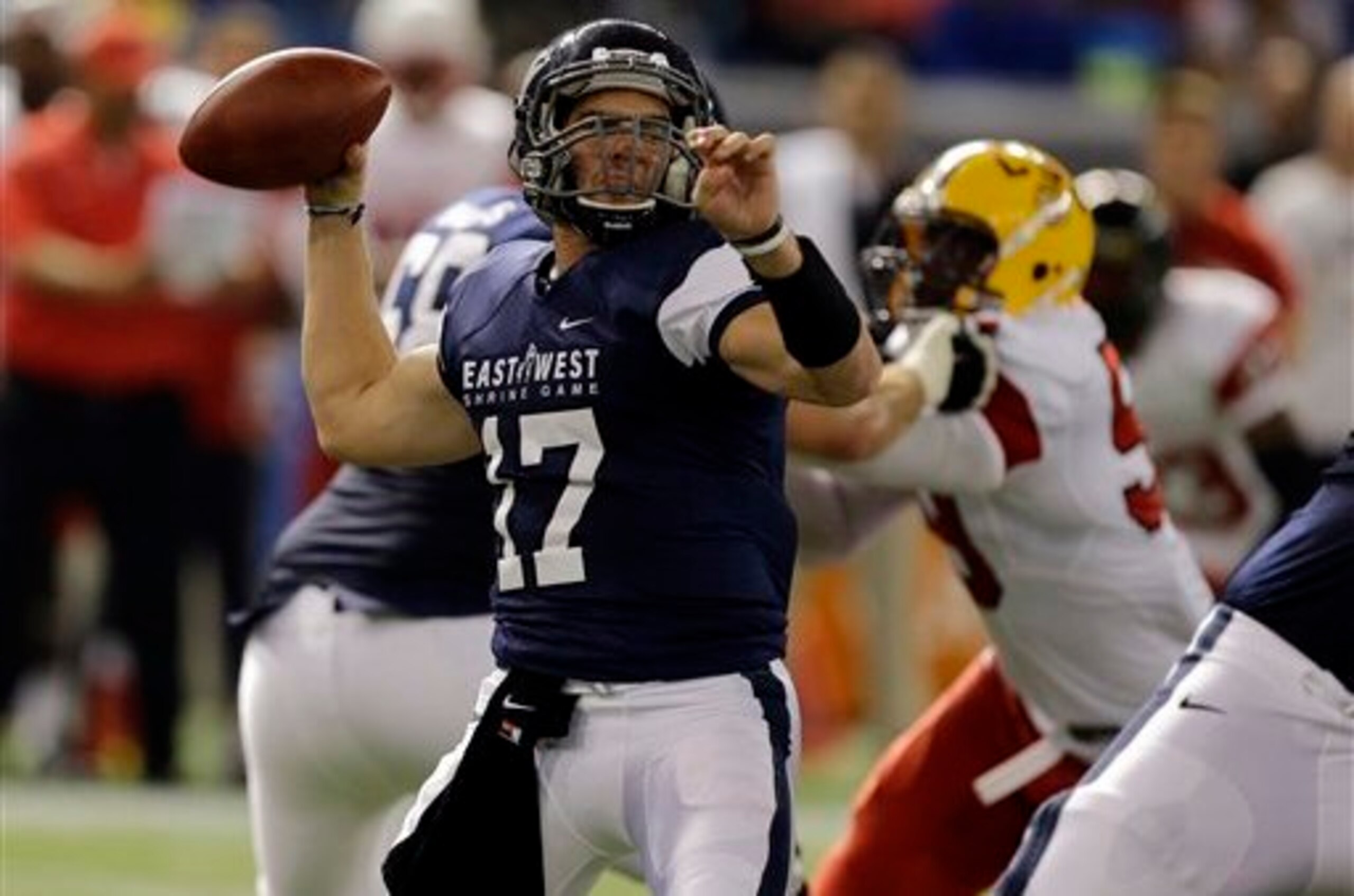
| Height | Weight | Hand Size | 40 Time |
| 6'1" | 223 lbs | 9 1/2" | 4.63s |
STRENGTHS
Cody Fajardo is a top-tier athlete with impressive workout numbers and a dangerous track record as a runner. He comes from the same offense that produced Colin Kaepernick at Nevada. He is an experienced read-option runner and can be a scrambler on passing plays.
Fajardo can beat teams with his arm or legs and was at times the only weapon the Nevada offense had. He is aggressive as a passer and will try to make any throw. When on the move he’s a better passer (more accurate, better mechanics) than what he shows from the pocket. Fajardo can hit timing routes underneath and up the seam. He’s a coachable player who puts in the time to get better.
WEAKNESSES
Fajardo is a shorter quarterback who lacks the size and strength to be a running quarterback against NFL-level tacklers. It’s a concern that Fajardo regressed in 2014 and didn’t have the same confidence and aggressiveness he showed previously—as a runner and passer.
Throughout his Nevada career, Fajardo didn’t show the footwork to be an on schedule passer. His accuracy is scattershot, and too often passes wind up high or way wide due to inconsistent footwork. Fajardo struggles with pressure in his face as a passer and doesn’t have the height to see over tall defenders who get in his face. With below-average arm strength, Fajardo lacks the tools of a NFL-caliber quarterback.
2014 STATISTICS
| Passing Yards | Touchdowns | Interceptions |
| 2,498 | 18 | 11 |
FINAL GRADE: 4.90/9.00 (Priority Free Agent)
12. Bryan Bennett, Southeastern Louisiana
7 of 18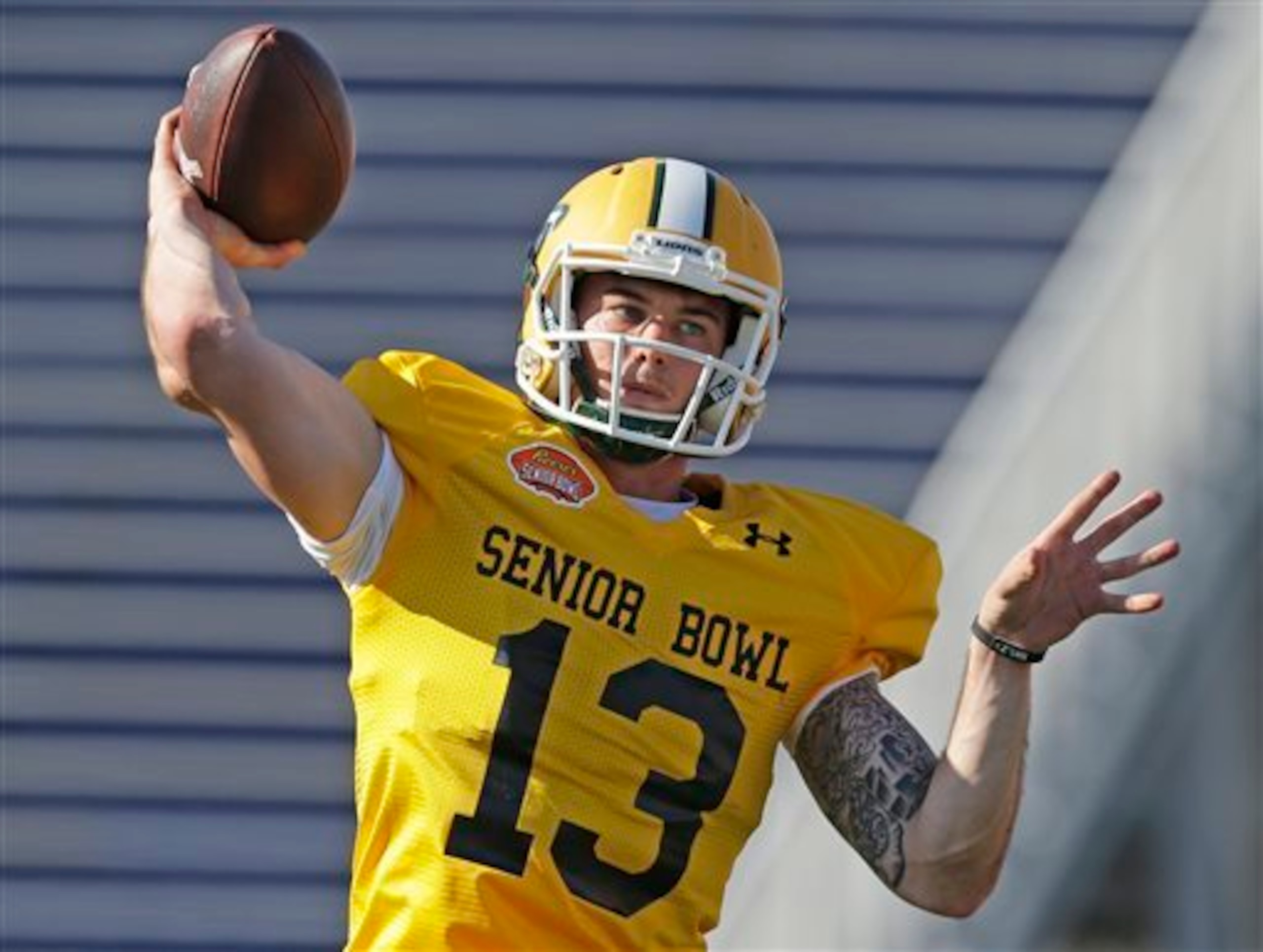
| Height | Weight | Hand Size | 40 Time |
| 6'2" | 211 lbs | 9 1/2" | 4.81s |
STRENGTHS
The strongest arm in this draft class belongs to Bryan Bennett, and the Southeastern Louisiana product is one heck of an athlete too.
Originally recruited and signed at Oregon, Bennett lost the starting job to Marcus Mariota and transferred to Southeast Louisiana. Bennett has the arm to make every throw. He’s athletic enough to roll right or left and has the arm strength to make tough throws on the go. He can throw across his body, and his smooth, easy release can be adjusted as he rolls out.
Bennett’s feet are very good and dangerous in the open field. If there’s a seam to run through, he’ll attack it and pick up plus yards. Bennett is still a raw player with room to be coached up. It’s a positive that his weaknesses are all coachable and not physical.
WEAKNESSES
Bennett is all arm and relies too much on his strength to bail him out. Even against lower-level competition, he struggled to place the ball accurately and wanted to throw the ball at 100 percent on every route instead of relying on touch. Bennett isn’t ready for the NFL in terms of reading a defense, making a solid drop in the pocket and throwing with anticipation or timing.
His footwork is very raw when asked to step up or slide in the pocket—he’ll pull the ball down and run before climbing the pocket. His overall accuracy is not good, and that stems from improper and unbalanced footwork. If he learns to step into throws, the accuracy issues underneath and on intermediate passes could be improved dramatically.
2014 STATISTICS
| Passing Yards | Touchdowns | Interceptions |
| 2,357 | 18 | 8 |
FINAL GRADE: 5.00/9.00 (Backup)
11. Taylor Heinicke, Old Dominion
8 of 18
| Height | Weight | Hand Size | 40 Time |
| 6'1" | 213 lbs | - | 4.6s |
STRENGTHS
Taylor Heinicke started for three-and-a-half seasons at Old Dominion and notched over 10,000 passing yards and 1,000 rushing yards in his career. Heinicke has enough arm strength to make underneath throws inside the hashes. His accuracy underneath and in the intermediate area is good, and he throws with route anticipation and great timing.
Heinicke knows his receivers and will put the ball on their chest—but unfortunately for him his receivers in 2014 were not very good and dropped many catchable passes. He’s a touch passer who can get hot, and when he’s in rhythm, Heinicke can tear apart defenses.
In the pocket Heinicke has short, choppy steps and will climb the pocket to make throws between the A- and B-gaps. He’s poised and patient and won’t panic if his first target isn’t open.
WEAKNESSES
Heinicke has a below-average arm for NFL standards. His release and setup are slow, and NFL speed could give him major headaches. Heinicke has to win with anticipation and perfect timing on routes, as his delivery isn’t fast enough and his arm isn’t strong enough to overcome a poor read. Heinicke’s deep-ball accuracy is poor, and he often underthrows targets down the field.
While he is poised in the pocket, his foot speed when asked to slide or step up in the pocket is average and will get him in trouble. Heinicke cannot be asked to move off his spot and make throws. Tunnel vision is a common issue on his film. Heinicke projects as a backup quarterback, but unless his pocket poise improves, he could have a short NFL career.
2014 STATISTICS
| Passing Yards | Touchdowns | Interceptions |
| 3,476 | 30 | 16 |
FINAL GRADE: 5.00/9.00 (Backup)
10. Hutson Mason, Georgia
9 of 18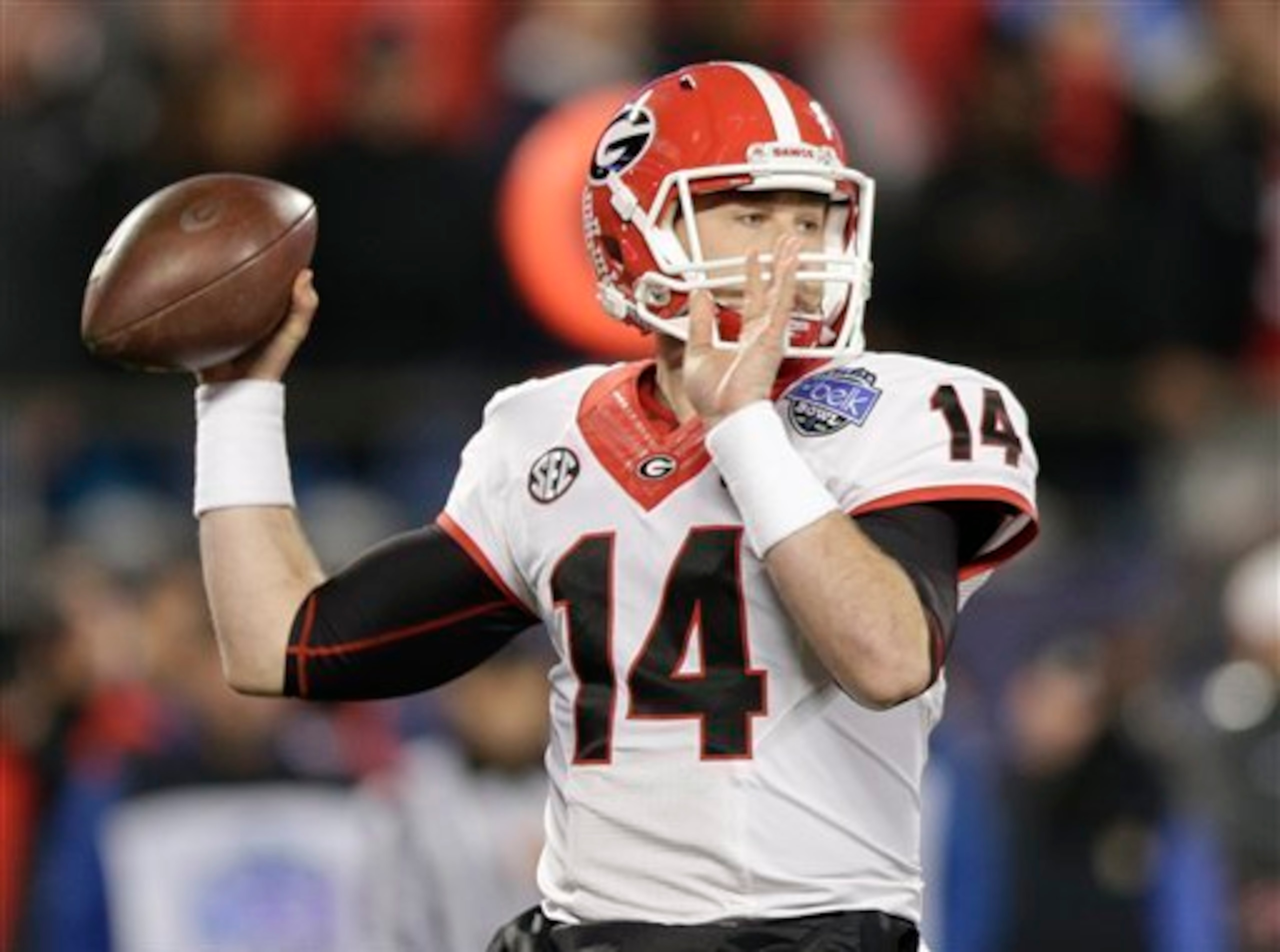
| Height | Weight | Hand Size | 40 Time |
| 6'3" | 209 lbs | - | - |
STRENGTHS
Just a one-year starter at Georgia after playing behind Aaron Murray, Hutson Mason is a smart, NFL-capable quarterback. Mason’s accuracy jumps off the screen to all levels of the field. When throwing down the field, Mason has very good accuracy—perhaps the best in the class.
Mason was asked to lead his receivers to daylight and did so, throwing with ideal ball placement and knowing how to create separation for his receivers. The Georgia offense is pro-style, and Mason was asked to pick up defensive keys pre-snap and make audibles and line calls.
Mason is capable of playing in the shotgun or under center and has impressive poise given his limited experience. He gets the ball out of his hand in a hurry once he finds his man.
WEAKNESSES
Mason only attempted 434 passes in college, and in his 16 starts over the last two seasons, he threw for over 200 yards just three times—and only once in 2014. Mason’s lack of ideal build (6’3”, 209 lbs) and arm strength holds him back from being projected to start.
Mason’s technique needs work, as he doesn’t use his lower body or core to power throws. Mason’s foundation is weak when throwing, and he has to learn to step into throws and generate torque on the ball with his hips and core strength.
Mason is an arm thrower but isn’t strong enough for that game. It can be chalked up to inexperience, but Mason gets tunnel vision and has to learn to hold safeties with his eyes. In a West Coast offense, Mason projects as a backup with some potential to be a sleeper starter.
PRO COMPARISON: Colt McCoy, Washington
Mason’s downfield game is much better than Colt McCoy’s, but both are undersized quarterbacks who win with accuracy and poise.
2014 STATISTICS
| Passing Yards | Touchdowns | Interceptions |
| 2,168 | 21 | 4 |
FINAL GRADE: 5.00/9.00 (Backup)
9. Shane Carden, East Carolina
10 of 18
| Height | Weight | Hand Size | 40 Time |
| 6'2" | 218 lbs | 9 3/4" | 4.94s |
STRENGTHS
A Senior Bowl quarterback in 2015, Shane Carden has impressive experience as a three-year starter and a calm, analytical approach to the game. Carden operates well from the pocket and has the poise to move the chains with pressure in his face. He stands tall, diagnoses the defense and has the intelligence to process what he’s seeing and make decisions.
He’s a worker bee with great off-field and football character. Carden throws a catchable ball with good placement and has the ability to lead receivers into space. His timing and anticipation are top-level.
WEAKNESSES
A lack of NFL-caliber arm strength is Carden's biggest obstacle. His throwing motion isn’t fluid. Carden’s lack of arm strength can be attributed to his size but also to his throwing mechanics, so there’s room for improvement.
His downfield accuracy was not good in the East Carolina offense, and it’s worth noting that his receivers are also considered draftable prospects, so you run the risk of Carden’s production being a product of the system and the talent around him.
Carden isn’t a great athlete and will struggle to move in the pocket against NFL pass-rushers. His ability to translate to NFL speed—in coverage and the pass rush—isn’t great with his limited foot speed and below-average arm strength. Carden projects as a career backup in an offense that doesn’t value the deep ball. He does not have starter upside.
PRO COMPARISON: Kellen Moore, Detroit Lions
Carden lacks the arm strength to be more than a backup quarterback in the NFL, but his intelligence and accuracy project well to a Kellen Moore-style reserve.
2014 STATISTICS
| Passing Yards | Touchdowns | Interceptions |
| 4,736 | 30 | 10 |
FINAL GRADE: 5.00/9.00 (Backup)
8. Brandon Bridge, South Alabama
11 of 18
| Height | Weight | Hand Size | 40 Time |
| 6'4" | 229 lbs | 9 1/4" | 4.72s |
STRENGTHS
A big-armed, athletic passer with a lot of developmental upside, Brandon Bridge is a sleeper pick at quarterback. Playing at South Alabama, Bridge needed to dominate the competition, and he did.
Bridge has the arm to make every throw in the playbook. He can rifle passes into tight windows, air it out down the field and easily connect on throws outside the hashes. The deep comeback and 20-yard-cross are easy throws for him from an arm-strength perspective.
Bridge has a quick release with a clean, smooth delivery. He’s athletic enough to execute throws on the run to his left or right, and when he gets outside the pocket, he’s a dangerous runner with speed and power.
WEAKNESSES
The biggest issue with Bridge isn’t the level of competition he faced, but the lack of accuracy. Arm strength can be improved, and footwork can be coached, but accuracy rarely changes.
One thing that may help is working on his footwork in the pocket. Bridge too often throws off his back foot with no foundation, and he’s able to do this because of how strong his arm is, but it doesn’t allow him to place the ball accurately. Learning to step into each throw will help him get the ball down and limit his overthrows.
Bridge has one speed when throwing the ball and must learn to vary his velocity. Instead of throwing the ball through the receiver on an underneath route, he has to learn to lead him with velocity and touch so the ball is both catchable and in a spot where there can be yards after the catch. Bridge can get a little panicked in the pocket and looks to run at first pressure.
Bridge projects as a backup in the NFL, but with good coaching and work ethic, he could become a starter in an offense that values arm strength and running ability.
PRO COMPARISON: Terrelle Pryor, Kansas City Chiefs
Bridge has the arm and athleticism to wow teams, but he needs a heavy dose of quarterback school. That’s the same scouting report we had on Terrelle Pryor when he left Ohio State.
2014 STATISTICS
| Passing Yards | Touchdowns | Interceptions |
| 1,927 | 15 | 8 |
FINAL GRADE: 5.05/9.00 (Backup)
7. Connor Halliday, Washington State
12 of 18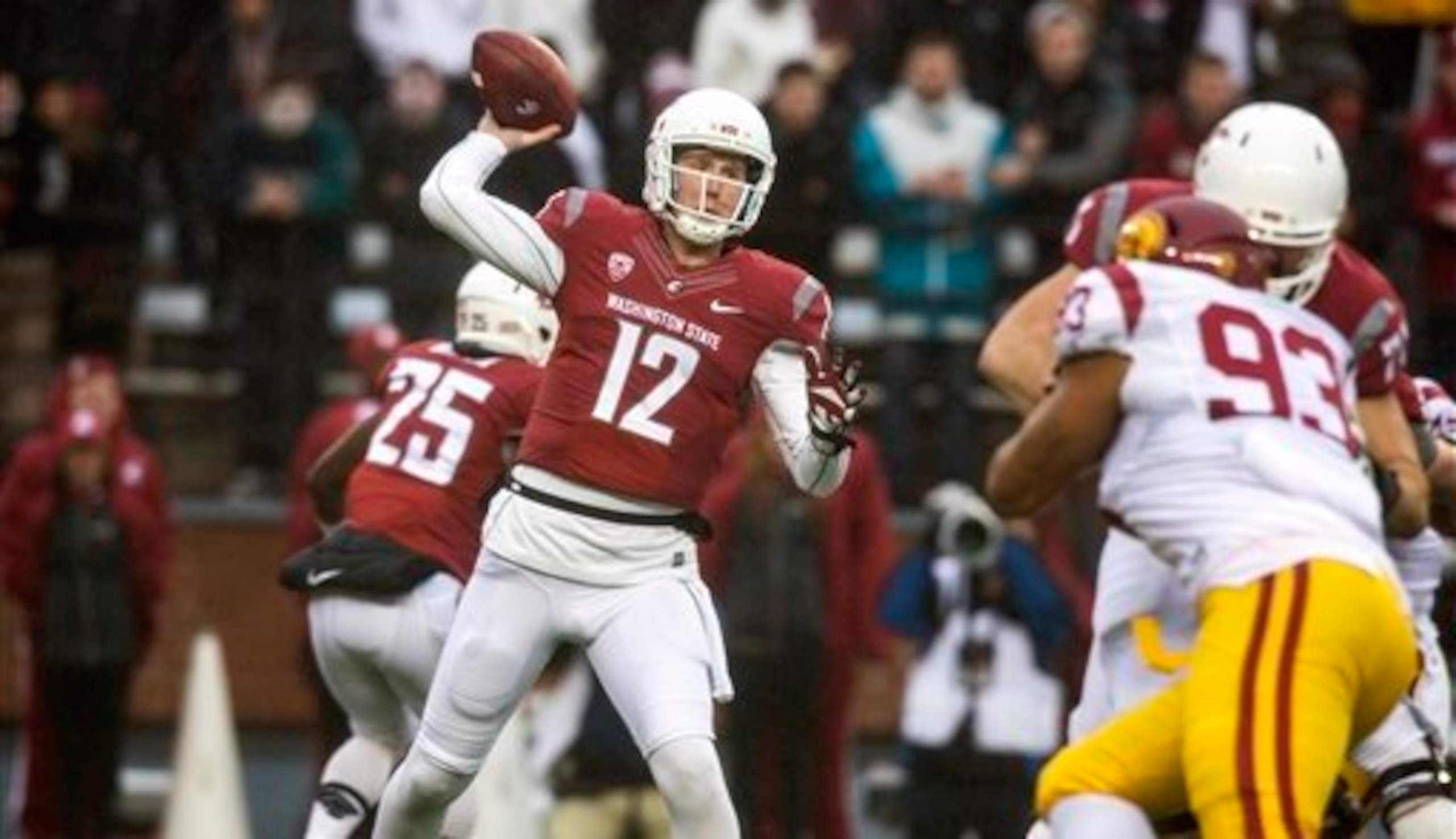
| Height | Weight | Hand Size | 40 Time |
| 6'3" | 196 lbs | 8 3/8" | - |
STRENGTHS
A highly productive quarterback coming from a wide-open offense that featured 64 pass attempts per game in 2014, Connor Halliday has the numbers to impress teams. He threw for more than 3,800 yards in his eight full games and attempted 79 passes (completing 56 of them) in a loss to Arizona.
Arm strength isn’t a positive for Halliday, but his ability to work with what he has is. He shows remarkable touch and can get the ball into tight windows with anticipation and timing. Halliday’s mechanics allow him to throw with power, and when he can step into the pass and nail his timing, he’ll hit the deep balls with a tight spiral and low arc.
Halliday puts a beautiful spin on the ball and can drop it in the bucket over the top. Pre-injury he was agile enough to slide in the pocket, and he doesn’t get scared with pressure in his face. He’s a smart quarterback who was asked to truly read the defense and work through progressions.
WEAKNESSES
Halliday broke his tibia and fibula in the ninth game of the season and wasn’t ready to work out at the combine. It’s not known yet when he will be field-ready. Halliday has a slim frame (196 lbs) and will have to work to add strength and bulk in the NFL. That will increase his arm strength and allow him to better withstand NFL hits.
Halliday is inexperienced coming out of center and when asked to take a drop step. He’ll have to learn to master timing, balance and rhythm on 3-, 5- and 7-step drops. It’s fair to call Halliday a system quarterback, and he’ll have to be reprogrammed to operate in a pro-style offense geared toward yardage and not the college scheme that puts so much emphasis on a quick throw.
Halliday projects as a backup or low-level starter. If he can improve his arm strength through weight training, he could be a scheme-versatile passer, but now he looks like a classic West Coast offense player.
PRO COMPARISON: Ryan Fitzpatrick, New York Jets
Halliday doesn’t have the biggest arm or best frame, but he’s smart and tough and could be a longtime NFL quarterback very similar to Ryan Fitzpatrick.
2014 STATISTICS
| Passing Yards | Touchdowns | Interceptions |
| 3,873 | 32 | 11 |
FINAL GRADE: 5.09/9.00 (Backup)
6. Sean Mannion, Oregon State
13 of 18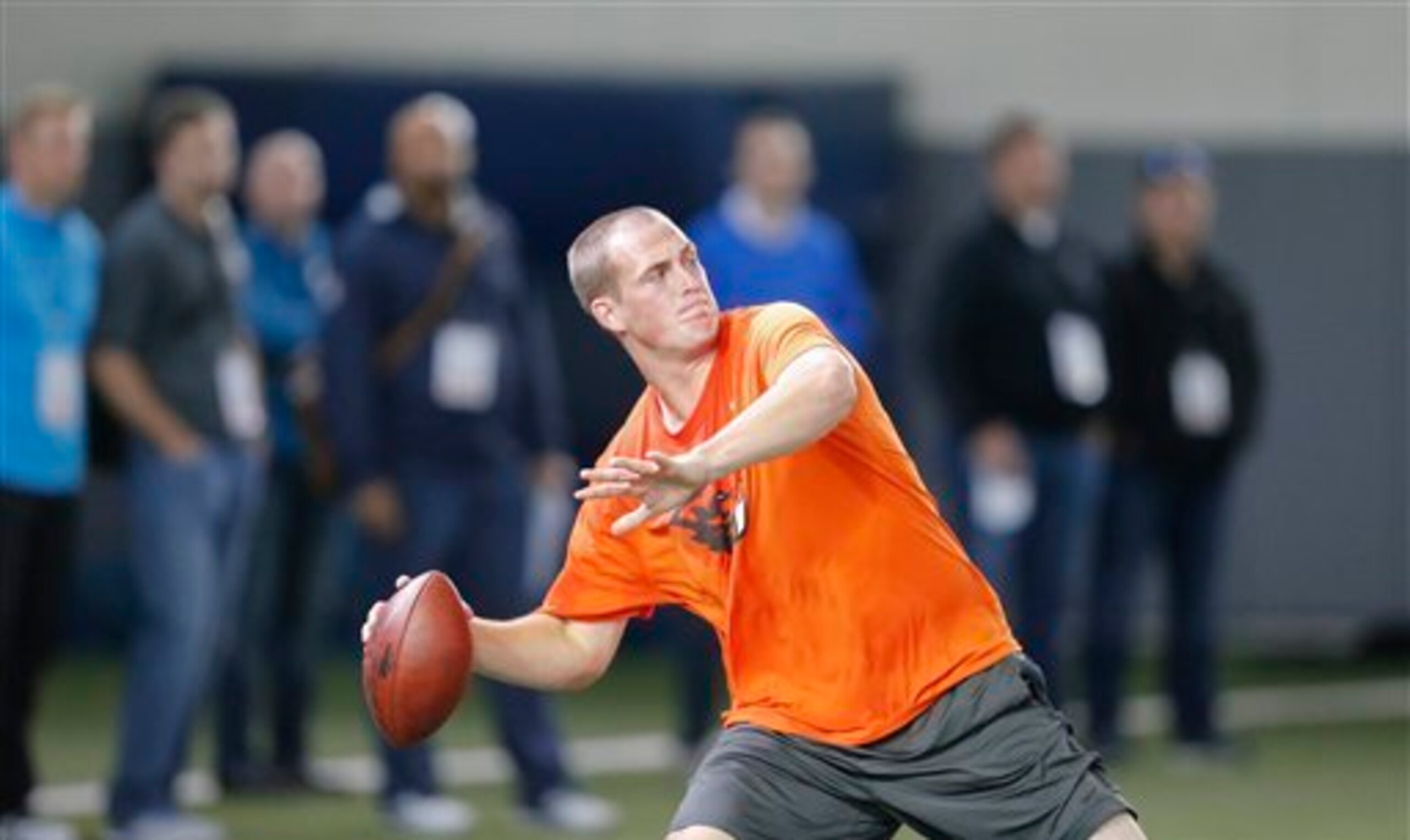
| Height | Weight | Hand Size | 40 Time |
| 6'6" | 229 lbs | 9" | 5.14s |
STRENGTHS
Sean Mannion brings size, experience and production to the table, and for some scouts and general managers, those are three of the most important factors to quarterback play. Mannion is a smart passer who can get hot once he settles into a rhythm. When he’s on his game, he can thread the ball into tight spots and make NFL-level throws look easy.
Mannion doesn’t have an elite arm, but he’s able to make most NFL throws and has good velocity when he needs to put heat passes. Mannion plays well from the pocket and is one of the few quarterbacks in this class to have experience under center and working with drop steps. He was asked to handle reading the defense pre-snap at Oregon State.
WEAKNESSES
Mannion’s film (and numbers) showed regression in 2014. Mannion shows flaws when pressured and needs a big, comfortable pocket to produce at his best. Mannion isn’t agile enough to slide in the pocket or move laterally to avoid a pass rush. He’s a heavy-footed mover away from center or when trying to slide the rush.
Turnovers were a big issue for Mannion (54 interceptions), and his hand size of nine inches plus 30 career fumbles will raise a major red flag. Mannion has to be comfortable to be accurate, and when he’s moved off his spot his velocity and touch fall apart. Manning projects as a backup with starter potential, and his size and ability to throw down the field makes him valuable for all offenses.
PRO COMPARISON: Mike Glennon, Tampa Bay Buccaneers
A big, tall quarterback who looks the part but lacks the arm strength and pocket presence of an NFL starter, Mannion is another Mike Glennon.
2014 STATISTICS
| Passing Yards | Touchdowns | Interceptions |
| 3,164 | 15 | 8 |
FINAL GRADE: 5.20/9.00 (Quality Backup)
5. Garrett Grayson, Colorado State
14 of 18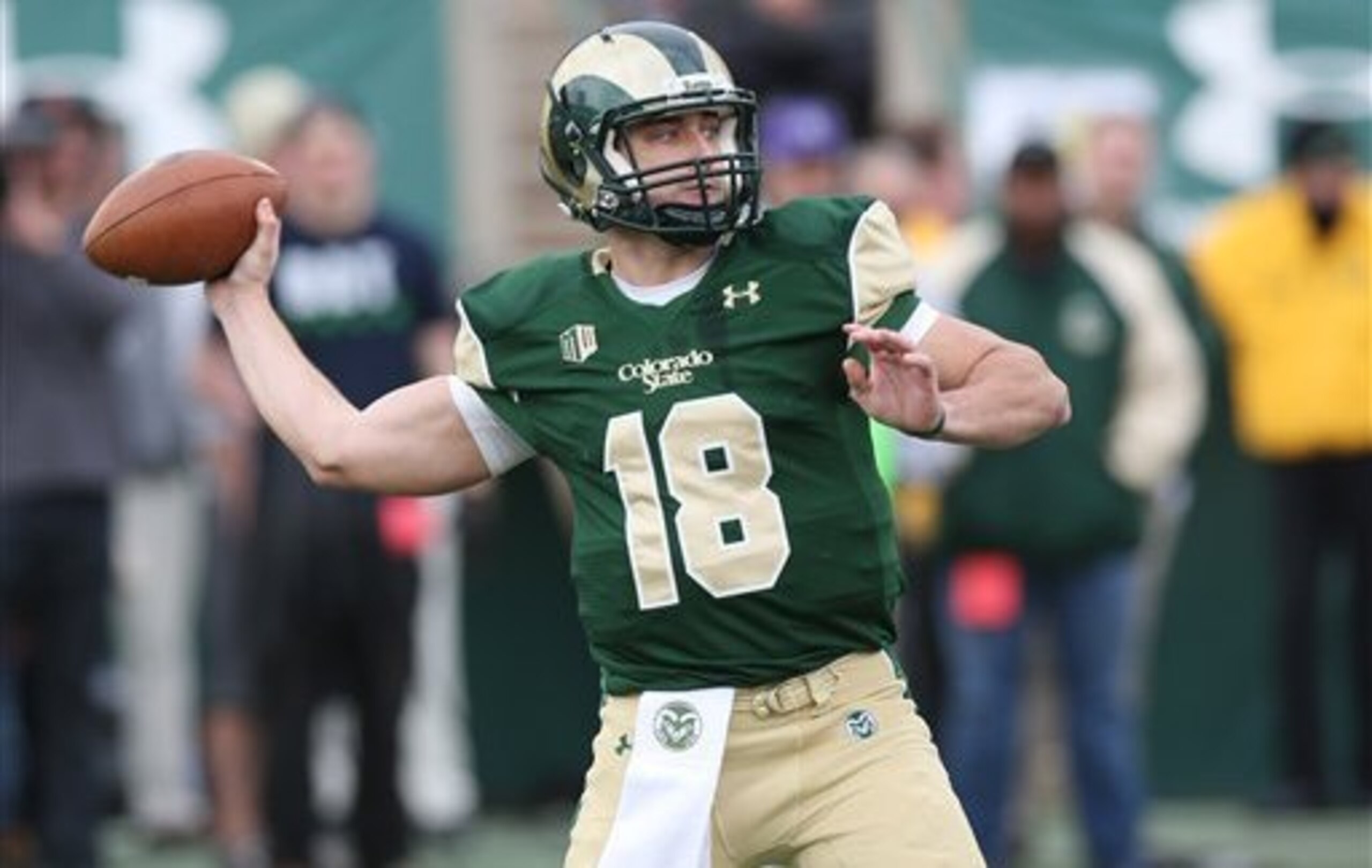
| Height | Weight | Hand Size | 40 Time |
| 6'2" | 213 lbs | 10" | 4.72s |
STRENGTHS
A high-riser during his senior season, Garrett Grayson has the touch, accuracy and football intelligence to be worth a mid-round draft pick. Grayson’s arm isn’t great, but he has a good range of velocity and touch and can thread the ball into tight spots underneath and over the middle. His deep-ball arc and placement are very good, and he shows nice timing to drop the ball in over a running wide receiver.
Grayson will mix up his velocity but is more of a touch passer, which does make his passes very catchable. Mechanically, Grayson has a solid foundation and shows balance in his feet. He’ll plant and throw and uses his lower body and core to generate power. His ability to slide and shuffle in the pocket makes his pocket presence a plus, and he’s not afraid of contact or pressure in his face.
Grayson is agile enough to pick up yards with his feet if the pocket breaks down. He showed consistent improvement throughout his career.
WEAKNESSES
Grayson didn’t impress during the week of live viewing at the Senior Bowl. He has an awkward throwing motion and keeps the ball far from his body during his release, with added pressure on the elbow throughout his delivery. A lack of velocity on underneath throws is more of a concern than his overall lack of arm strength, but Grayson doesn’t meet the NFL threshold for a strong arm.
Grayson was helped by the scheme, which allowed him to make a large number of throws underneath coverage and set up his receivers for yards after the catch. It was rare to see Grayson work off his first option in the route tree. Despite good agility and quickness, Grayson isn’t fluid in his drop steps.
A lack of arm strength to make routine NFL throws is the primary issue here, but Grayson doesn’t show up well as a read-and-react quarterback. He needs developmental time before he’s ready to diagnose a defense and make plays. Grayson is a backup projection with starter potential, but he’s a better fit in a West Coast offense that doesn’t value the deep ball.
PRO COMPARISON: Shaun Hill, Minnesota Vikings
Grayson’s lack of great arm strength and his awkward throwing motion may never make him a long-term starter, but he has the tools to be a very good backup in the NFL.
2014 STATISTICS
| Passing Yards | Touchdowns | Interceptions |
| 4,006 | 32 | 7 |
FINAL GRADE: 5.49/9.00 (Quality Backup)
4. Brett Hundley, UCLA
15 of 18
| Height | Weight | Hand Size | 40 Time |
| 6'3" | 226 lbs | 10 1/2" | 4.63s |
STRENGTHS
Heading into the 2014 season, Brett Hundley was in the running with Jameis Winston and Marcus Mariota to be the top quarterback drafted.
Athletically, he’s very gifted and has the tools to convince scouts and coaches he’s a project worth taking on. Hundley looks the part on the hoof and will wow you with his speed and strength. Two years ago, when the zone-read craze hit, he would have been a favorite of NFL scouts.
Hundley is fearless in the pocket and will stand in and take hits waiting for a route to develop. He throws the ball with a quick, clean release and has the power to push the ball to every level of the field.
He flashes the ability to throw with pretty touch over the top and understands when to throw fastballs and when to drop them in the bucket. When the pocket breaks down and Hundley commits to running, he can be scary for the defense with speed, agility to change direction and the size to break tackles.
WEAKNESSES
Hundley never took the next step in his development at UCLA. Instead he took a big leap backward as he tried to be more pro-style in 2014. Playing from the pocket caused him to panic too often when pressured, and it severely affected his accuracy.
Hundley didn’t show the ability in college to read a defense and get the ball in the right spot consistently. He was most productive when the play created one-on-one matchups he could get to off one read. Hundley played behind a poor offensive line, but he consistently held the ball too long trying to win from the pocket. That poor decision-making plagued his final season.
Mechanically, Hundley is solid but needs work. His weight transfer is very bad at times, and he looks lackadaisical when the throw is easy. Hundley needs a great quarterback coach to push him to master his footwork and teach him to slide up and over in the pocket.
For all his athleticism, Hundley didn’t impress as a thrower on the run, as his accuracy fell off big time when asked to move his feet. Hundley has starter potential if he can be coached up. Teams valuing arm strength and athleticism will like him more than those that want true accuracy and poise.
PRO COMPARISON: EJ Manuel, Buffalo Bills
A solid athlete with great character and intangibles, Hundley and Manuel are carbon copies in that regard. And like Manuel, the best thing for Hundley is sitting and learning behind an established NFL quarterback.
2014 STATISTICS
| Passing Yards | Touchdowns | Interceptions |
| 3,155 | 22 | 5 |
FINAL GRADE: 5.75/9.00 (Future Starter)
3. Bryce Petty, Baylor
16 of 18
| Height | Weight | Hand Size | 40 |
| 6'3" | 230 lbs | 10" | 4.87s |
STRENGTHS
A productive, athletic passer with a huge arm, Bryce Petty has a chance to develop into an NFL starter. Petty’s arm strength jumps off the film, and he throws one of the prettiest deep balls in college football. Petty has the strength to push the ball deep and understands touch and how to lead receivers down the field. His deep accuracy got better in 2014, and he has room to keep improving there. Petty has pretty mechanics with quick, balanced feet and a fast delivery. The ball comes out cleanly, and he’s able to vary speeds to throw with heat or touch depending on what the play calls for.
Athletically, Petty is very good. He may not outrun every defender, but he’s strong, elusive and able to slide in the pocket to evade pass-rushers. Petty will tuck-and-run when there is an opening, but he isn’t impatient in the pocket. Petty is unquestionably tough and played through a back injury throughout his senior year.
WEAKNESSES
The two big question marks on Petty are big. The first is the back injury he played through and whether it will be a lingering issue. The second is the Baylor scheme and whether he’s a product of the system. Looking at Petty’s film, his underneath accuracy can get a bit scattershot at times and he’ll overthrow routine passes underneath. Recognizing underneath coverage and throwing with timing are issues for him. Petty was much better when he drove through throws with his legs and core, but there are times when he doesn’t step into passes and the ball dives on him. Petty was invited to the Senior Bowl and did nothing to impress in three days of live viewing. There will be an adjustment period for Petty in the NFL, and, at a month away from being 24 years old, he’s already an older prospect.
PRO COMPARISON: Ryan Tannehill, Miami Dolphins
Tannehill was just a two-year starting quarterback at A&M and needed time to grow in the NFL. Petty is a similar passer and also needs time to get coached up in the pros.
2014 STATISTICS
| Passing Yards | Touchdowns | Interceptions |
| 3.855 | 29 | 7 |
FINAL GRADE: 6.00/9.00 (Future Starter)
2. Marcus Mariota, Oregon
17 of 18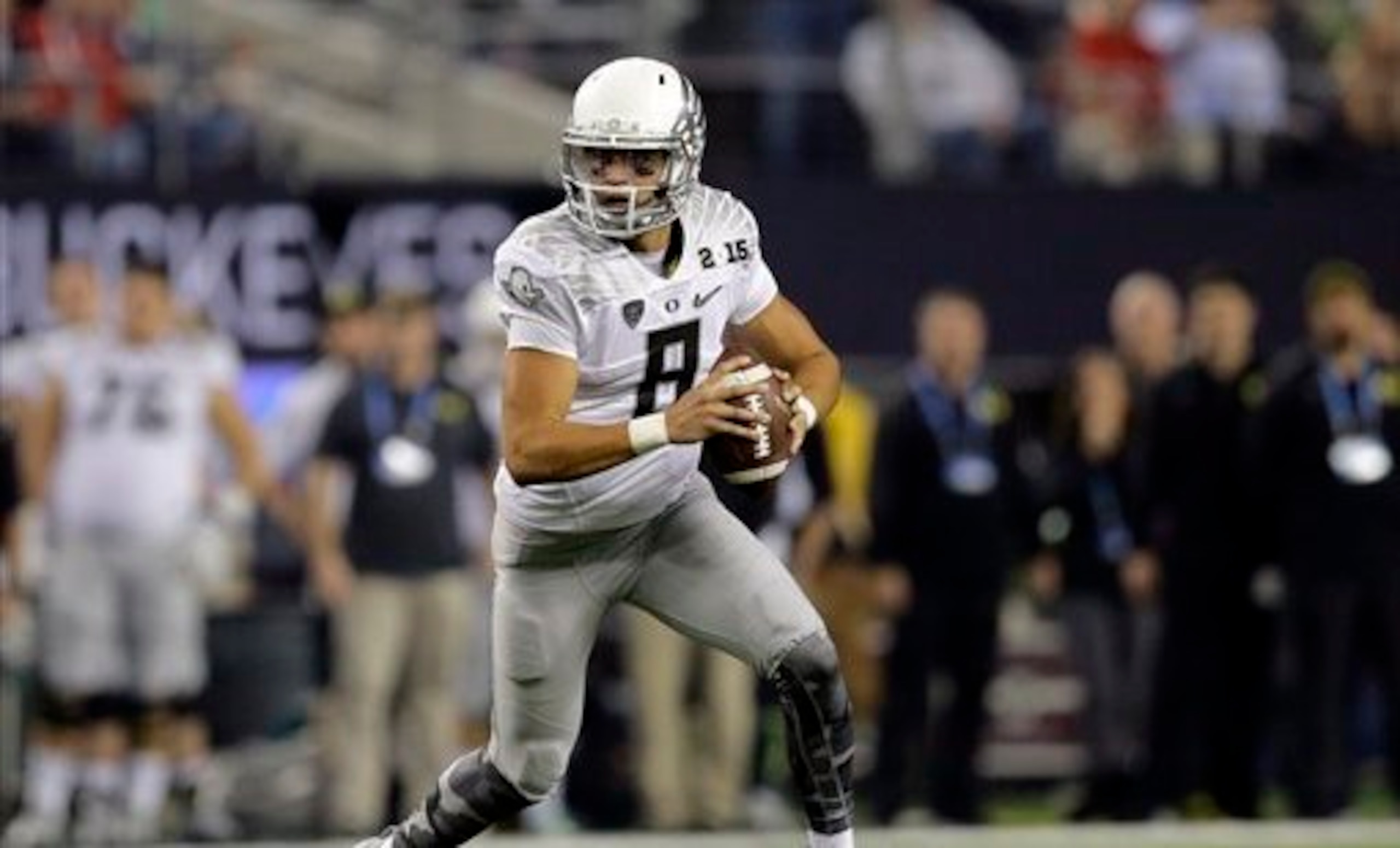
| Height | Weight | Hand Size | 40 Time |
| 6'4" | 222 lbs | 9 7/8" | 4.52s |
STRENGTHS
The 2014 Heisman Trophy winner, Marcus Mariota leaves college highly decorated and with outstanding numbers.
After the 2014 season he took home every major quarterback award (Heisman, Maxwell Award, Johnny Unitas Golden Arm and Davey O’Brien National QB Award), while being named a first-team All-American and Walter Camp Player of the Year. Mariota was a three-year graduate at Oregon with a degree in general science.
Mariota has the overall athleticism to scare defenses. He’s a true speed threat at quarterback and can pick up yards as a runner on both designed plays and when the pocket breaks down. He uses that athleticism to slide in the pocket when needed and is a dangerous thrower on the run.
Mariota has above-average arm strength and can generate velocity or deep touch as needed. He has a clean, crisp delivery with a fast strike at the end of his release. He’s athletic enough to make throws off balance, off his back foot and on the run. Mariota’s accuracy is very good to all levels of the field. He throws to every level with varied touch and understands how to put the ball in a catchable location.
Mariota protected the ball well as a passer, throwing just 14 interceptions in three years of starts. In that same time he amassed 105 touchdown passes and a 66.8 completion percentage.
A quiet player with great character and intelligence, Mariota is a lead-by-example type whom coaches and teammates love.
WEAKNESSES
Mariota is a project, more so than a regular draft prospect. The things he did in the Oregon offense do not translate well to the majority of NFL offenses. He took just five snaps from center in 2014 and has little-to-no experience taking a 3- or 5-step drop after receiving the snap.
The Oregon offense allowed Mariota to throw to spots, and rarely did he have to challenge defenders by throwing his receivers open. The offense relies on speed and misdirection to get a matchup in space, and Mariota was asked to find this spot (basically one read) and throw to the open player.
Fumbles were an issue throughout his career (27 total), and he takes unnecessary hits in the pocket if he’s asked to wait for the play to develop in front of him. If asked to sit in the pocket and read the defense before making a throw, it would be new territory. Mariota did not call plays in the huddle at Oregon or audible on his own accord pre-snap and must learn both things.
Mariota has a great ceiling but a very low floor. Depending on the type of offense he’s drafted into, a steep learning curve should be expected.
PRO COMPARISON: Russell Wilson, Seattle Seahawks
Mariota doesn’t have Wilson’s arm strength—and Wilson doesn’t have his height—but they are similar athletes who play the position with the same intelligent, low-turnover mentality.
2014 STATISTICS
| Passing Yards | Touchdowns | Interceptions |
| 4,454 | 42 | 4 |
FINAL GRADE: 7.20/9.00 (Top-15-Player Potential)
1. Jameis Winston, Florida State
18 of 18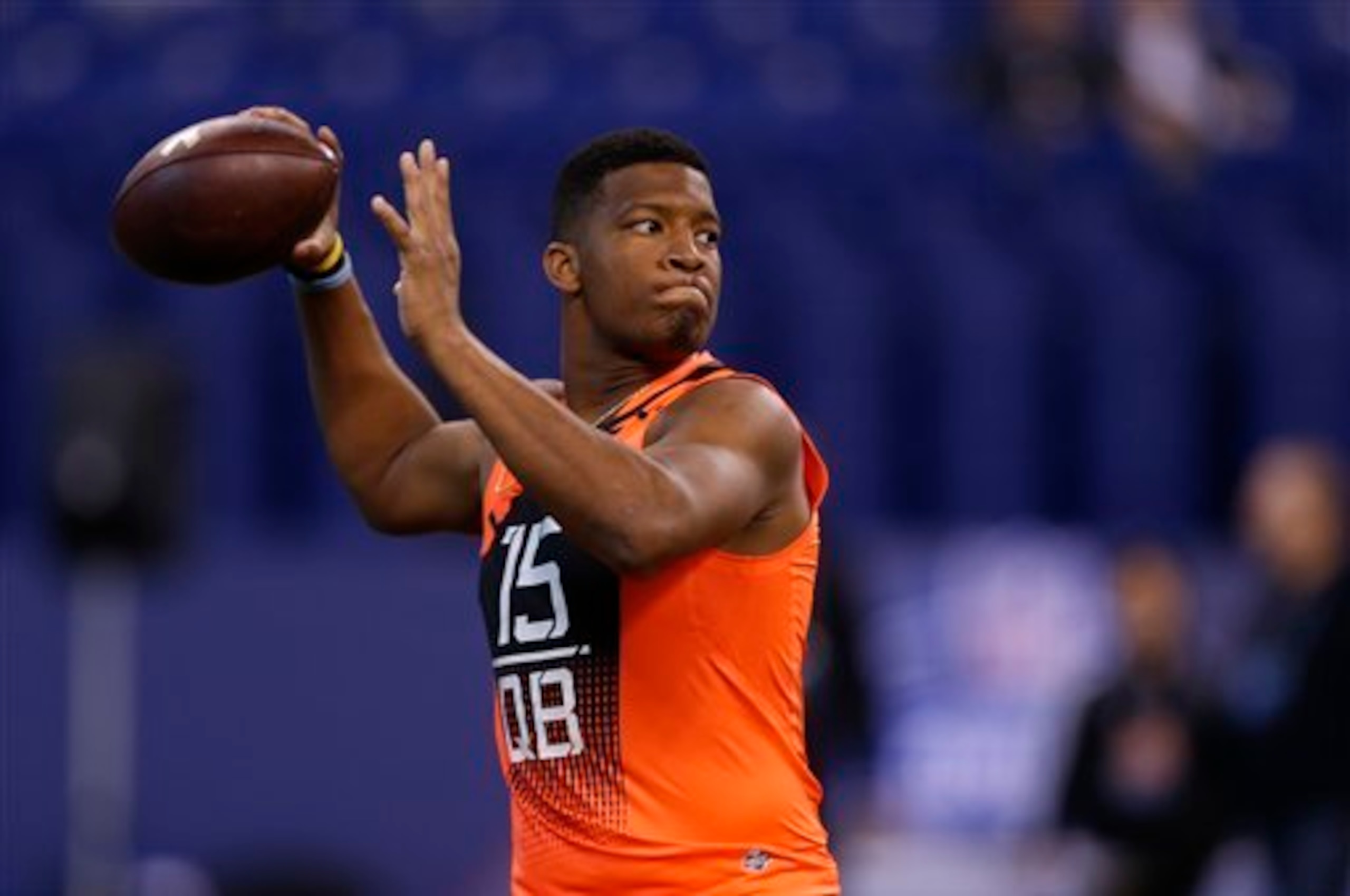
| Height | Weight | Hand Size | 40 Time |
| 6'4" | 231 lbs | 9 3/8" | 4.97s |
STRENGTHS
A two-year starter at Florida State, Jameis Winston won a national championship (2013), a Heisman Trophy (2013) and his teams lost just one game during that time—in the 2014 playoffs to Oregon.
Winston is a smart, instinctive, tough quarterback. He has the arm strength to make every throw at a high level, showing enough depth and velocity to hit deep outs and throw a 20-yard-crosser on a line. Winston anticipates routes well and is confident to throw the ball before his receiver breaks off the route.
He’s been asked to throw through tight windows and executes with accuracy and touch. He understands how to vary the speed on his passes as needed. When throwing at every level, he’s shown the arm strength and accuracy needed to excel in the NFL. The FSU offense asked Winston to make NFL-style throws, and he produced.
Winston is great under pressure and consistently led FSU back from halftime deficits in 2014. His ability to process halftime adjustments and produce in the second half is among his most impressive feats. Winston has enough agility to move in the pocket, and while he won’t win any races, he’s quicker than fast and can move to avoid rushers. Teammates and coaches rave about his leadership.
Winston is just 21 years old and will be throughout his rookie year.
WEAKNESSES
Winston tries to do too much at times, which is what led to his 18 interceptions as a redshirt sophomore. He struggles to adapt to underneath coverage and was baited into turnovers there, throwing six interceptions on poor decisions. Winston isn’t a great athlete and can get caught in the pocket. He has a throwing motion—albeit improved—that can get a little long.
A loss of talent on the FSU offense—notably Kelvin Benjamin, Devonta Freeman and Bryan Stork—led to Winston trying to do too much with the ball. Once the offense settled down with Cam Erving at center and Dalvin Cook at running back, his play improved.
Off the field, Winston has issues to work through.
He was accused of sexual assault in 2012 but was never charged by Tallahassee police or punished by the school after an internal review. In 2012 Winston was handcuffed at gunpoint and interviewed by police after being implicated in a BB gun fight that damaged an apartment complex. In 2014 he was cited for shoplifting after stealing from a Publix grocery store. FSU suspended Winston for the Clemson game in 2014 after he yelled an obscene phrase inside the student union.
PRO COMPARISON: Ben Roethlisberger, Pittsburgh Steelers
Big, strong quarterbacks who gamble with the ball a bit but have amazing toughness and leadership skills, Winston and Ben Roethlisberger play the position similarly. This is a best-case scenario comparison, but the potential is there for Winston to have a career like Big Ben.
2014 STATISTICS
| Passing Yards | Touchdowns | Interceptions |
| 3,907 | 25 | 18 |
FINAL GRADE: 7.50/9.00 (Pro Bowl Potential)
Pro-day results via NFL.com.
.jpg?w=2560)
.jpg?w=2560 "Cardinals Giants Football")






