
Best- and Worst-Case Scenarios for Baltimore Ravens' Top 3 Picks
The top three picks are typically the most important on a team's draft board.
The Baltimore Ravens are no exception to this, as many of their best players routinely come within Rounds 1-3, where teams can regularly find potential starters and instant-impact players.
Just looking at last year's team, Joe Flacco, Torrey Smith, Haloti Ngata, Terrell Suggs, Marshal Yanda, Lardarius Webb, Jimmy Smith, Kelechi Osemele, C.J. Mosley and Timmy Jernigan were all drafted within the first three rounds of their respective drafts.
Needless to say, the first two days of the draft can be instrumental to a team's future success. That said, let's take a look at the best- and worst-case scenarios for the Ravens' top three picks.
Round 1, No. 26 Pick: Worst Case
1 of 6
Wide receiver is the biggest need for Baltimore, but there may not be one worth taking in the first round when it's on the clock.
The four wideouts who are consensus first-round prospects are West Virginia's Kevin White, Louisville's DeVante Parker, Alabama's Amari Cooper and Arizona State's Jaelen Strong.
The first three should be long gone by the time Baltimore is up, and there's a good chance Strong is also off the board. The Ravens need to add an impact receiver in the first round, but in order to do so, they may have to reach for a player who may otherwise fall into the early part of the second round.
Miami's Phillip Dorsett, Ohio State's Devin Smith and USC's Nelson Aguilar are the next-best receiver prospects, but they'd all be reaches if the Ravens use the 26th pick on any of them.
Round 1, No. 26 Pick: Best Case
2 of 6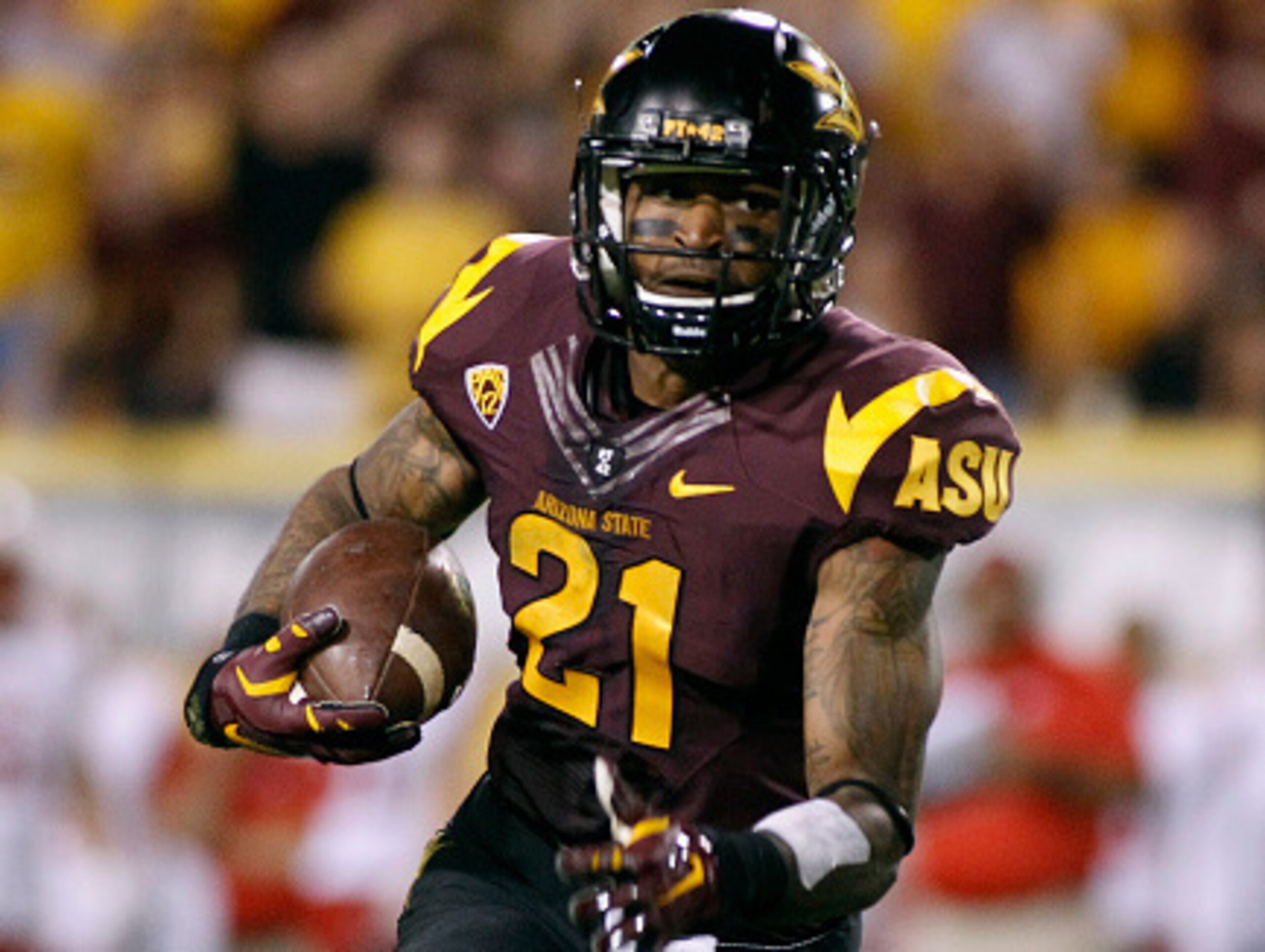
The best-case scenario for the Ravens in the first round is one of the upper-echelon receivers either falls to them at No. 26 or they trade up to make sure they get one.
In either case, the likeliest receiver for Baltimore to get is Arizona State's Jaelen Strong. He's projected in most mock drafts to go somewhere between 14th and 26th overall.
Few see Strong making it past the receiver-needy Ravens in the first round, but Baltimore may need to trade up to secure his services.
It's also possible a guy like Louisville's DeVante Parker falls far enough into the middle of the first round that Baltimore trades up to get him, but there's no way he falls to No. 26.
If the Ravens draft a receiver in Round 1, the best-case scenario is getting Strong one way or another. B/R's own Matt Miller has Strong falling to Baltimore at No. 26, so it's possible the Ravens can stay put and get the game-changing receiver they need.
Round 2, No. 58 Pick: Worst Case
3 of 6
The Ravens may be without Dennis Pitta in 2015, leaving Crockett Gillmore as the only tight end on the roster.
Baltimore seldomly used Gillmore in 2014 even after he was a third-round pick in last year's draft. It needs to add a tight end early in the draft, preferably in the second round.
That's because this isn't a deep class at that position after Minnesota's Maxx Williams and Miami's Clive Walford go off the board.
Those are the consensus top two tight end prospects, but after them, it's a steep drop-off. CBS Sports has Ohio State's Jeff Heuerman as the third-best tight end prospect, but he caught just seven passes for 207 yards and two touchdowns in 2014.
Heuerman is also a third-round prospect who should not be taken in the second round, but if Baltimore wants to add a tight end, it may be forced to reach on a guy like him.

.jpg?w=2560 "Cardinals Giants Football")
Round 2, No. 58 Pick: Best Case
4 of 6
As mentioned earlier with receiver, the best-case scenario for the Ravens in this round may be to hope a guy they like falls to them or trade up to ensure they get who they want.
There could be a number of players at different positions Baltimore wants, but getting a tight end here would be ideal. It's just not a deep class, and waiting until later could result in the Ravens not getting a guy who can contribute immediately.
Miami's Clive Walford is a guy who could start as a rookie. He's a solid run-blocker who's also a big target at 6'4" and 251 pounds. This past season, Walford grabbed a team-high 44 receptions for 676 yards and seven touchdowns.
He should be an ideal target for the Ravens in Round 2. Getting him would be the best-case scenario for this round.
Round 3, No. 90 Pick: Worst Case
5 of 6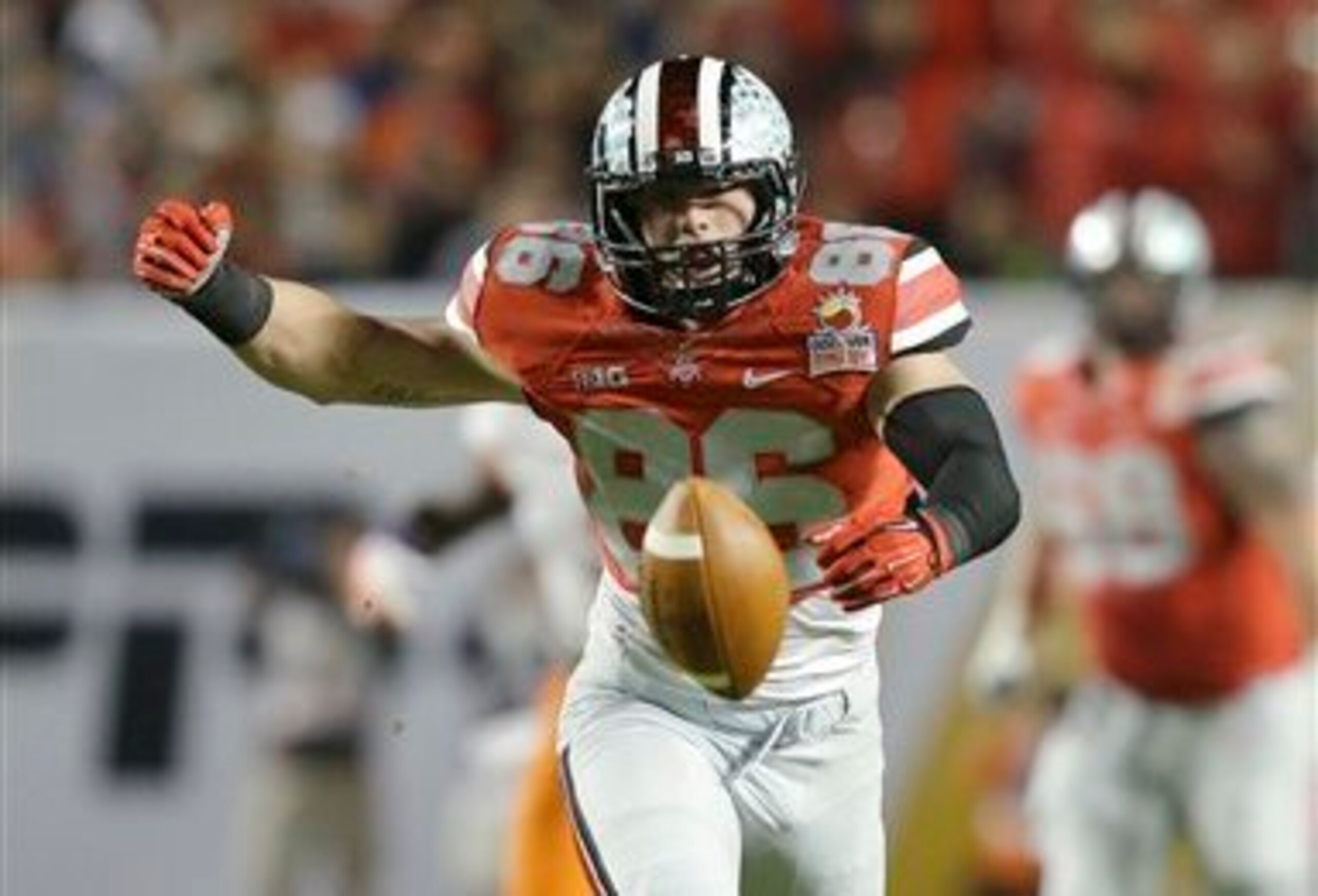
If the Ravens miss out on getting a receiver or tight end in the first two rounds, settling for one in the third round would be the worst-case scenario.
At tight end, there's not going to be a guy at this point capable of making a big impact as a rookie. Ohio State's Jeff Heuerman will likely be the best tight end on the board, but settling on him would not be ideal.
At receiver, someone like ECU's Justin Hardy or Michigan State's Tony Lippett will probably be the best on the board. They may become quality NFL players but probably won't make big impacts as rookies.
That's what Baltimore needs at both receiver and tight end, as those positions are lacking impact players. The worst-case scenario for Round 3 is having to address one of those positions with a guy not ready to make an impact as a rookie.
Round 3, No. 90 Pick: Best Case
6 of 6
The best-case scenario for the Ravens in Round 3 would be getting the best player available at a position of relative need.
Baltimore typically gets two to three starting-caliber players in every draft, and a big reason why is it often takes the BPA. That's how the Ravens landed C.J. Mosley last year, even though linebacker wasn't the biggest need but still a position that could use an upgrade.
At this point, cornerback, safety and defensive line are three positions that need addressing at some point, so taking the BPA among those three positions would be ideal.
That's assuming, though, the best-case scenarios for Rounds 1 and 2 go through and that Baltimore has already addressed its needs at tight end and receiver.
It's too hard to project who that best player available will be at this point, but whomever it is, the best-case scenario for Round 3 is Baltimore lands the BPA after filling more immediate needs in the earlier rounds.
.jpg?w=2560 "Cardinals Giants Football")
.jpg?w=2560 "Titans Giants Football")

.jpg?w=2560 "Ward Nearly Walks Out of Presser ▶️")