


Diego Simeone didn't want to shirk the issue.
"It's obvious that I'm very happy at this club, that I love Atleti very much and we're trying to continue this project that we started three years ago," the Atletico Madrid manager told a news conference in February, confirming, when asked, that he was in negotiations with the Spanish champions regarding a contract extension.
At most clubs around Europe, re-signing—or just signing—the game's brightest stars is the best possible news. But not at Atletico Madrid. Not at the Vicente Calderon.
TOP NEWS

Final Men's Ballon d'Or Rankings 📊
Highlights and Viral Moments 🍿

J-Dub Suffers Gruesome Injury
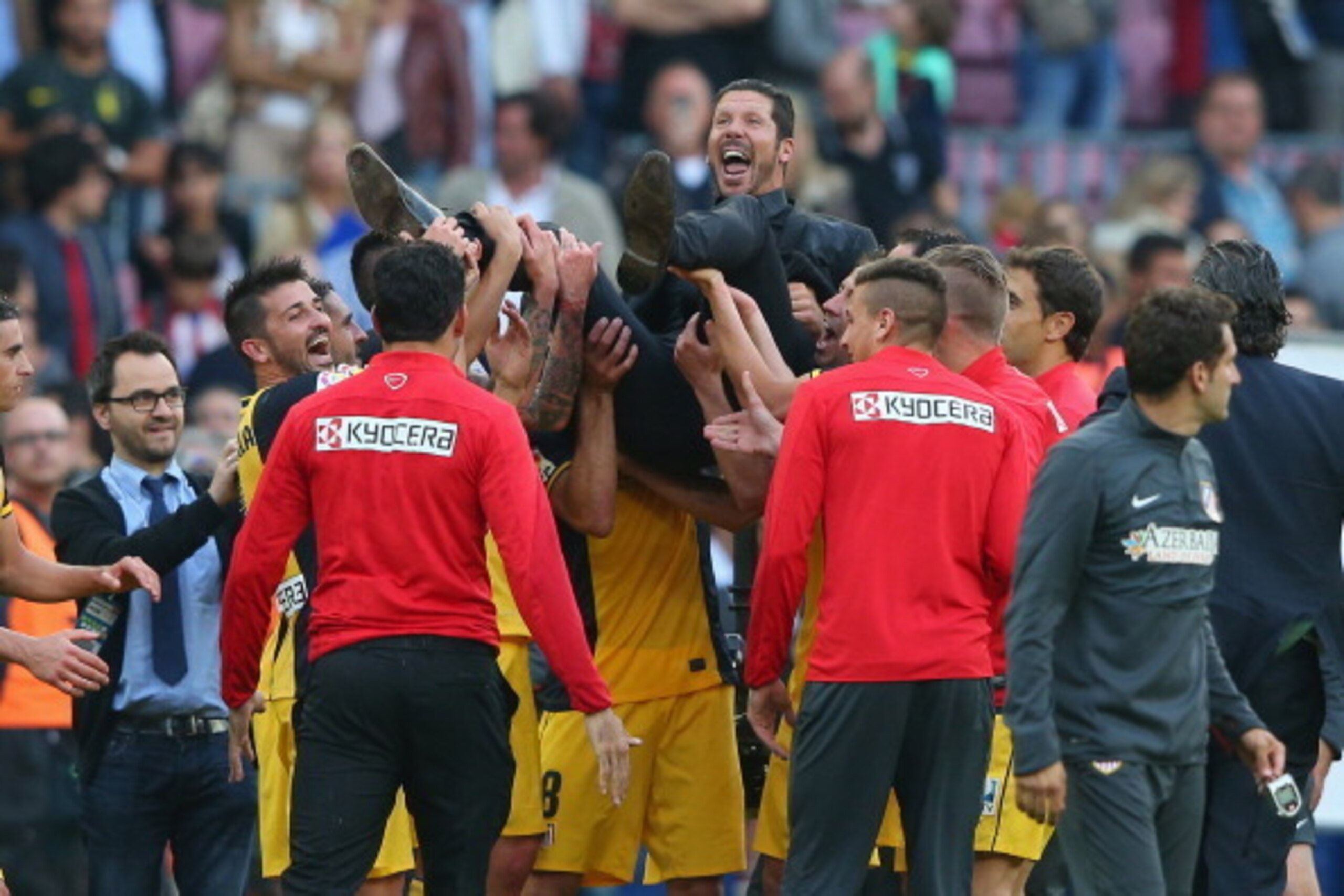
No, instead, it's the manager who's the biggest attraction down on the banks of the river Manzanares. Specifically, Simeone—the man who's led a revolution at Atletico. A leader of intoxicating charisma, a club icon possessing a staggering aura and popularity at the Calderon who's not only transformed a club, but who's also toppled Spain's—and Europe's—footballing aristocracy.
Simeone, incredibly, has done what many had concluded was no longer possible.
Naturally, football's fiscal elite have taken notice. Last month, Manchester City were reported to be interested in Simeone. Other English clubs were also suggested to be monitoring the situation. Across in France, Paris Saint-Germain were reported as doing the same.
In these pages, Guillem Balague reported that the Atleti boss was learning English and suggested that Simeone might replicate Pep Guardiola's one-year sabbatical in the United States, all, possibly, with the intention of taking his rapidly growing reputation to the Premier League.
For Atletico fans, therefore, the confirmation of contract negotiations in the Spanish capital was news as good as it comes. An indication that the club's most influential figure intends to extend his tenure.
"We both value each other with the same enthusiasm and willingness," Simeone added. "I hope, like always until today, that we find a way keeping Atletico a very important club."
Simeone is the man who can.
And he's also the man who should.
Getting to the Top Is One Thing...
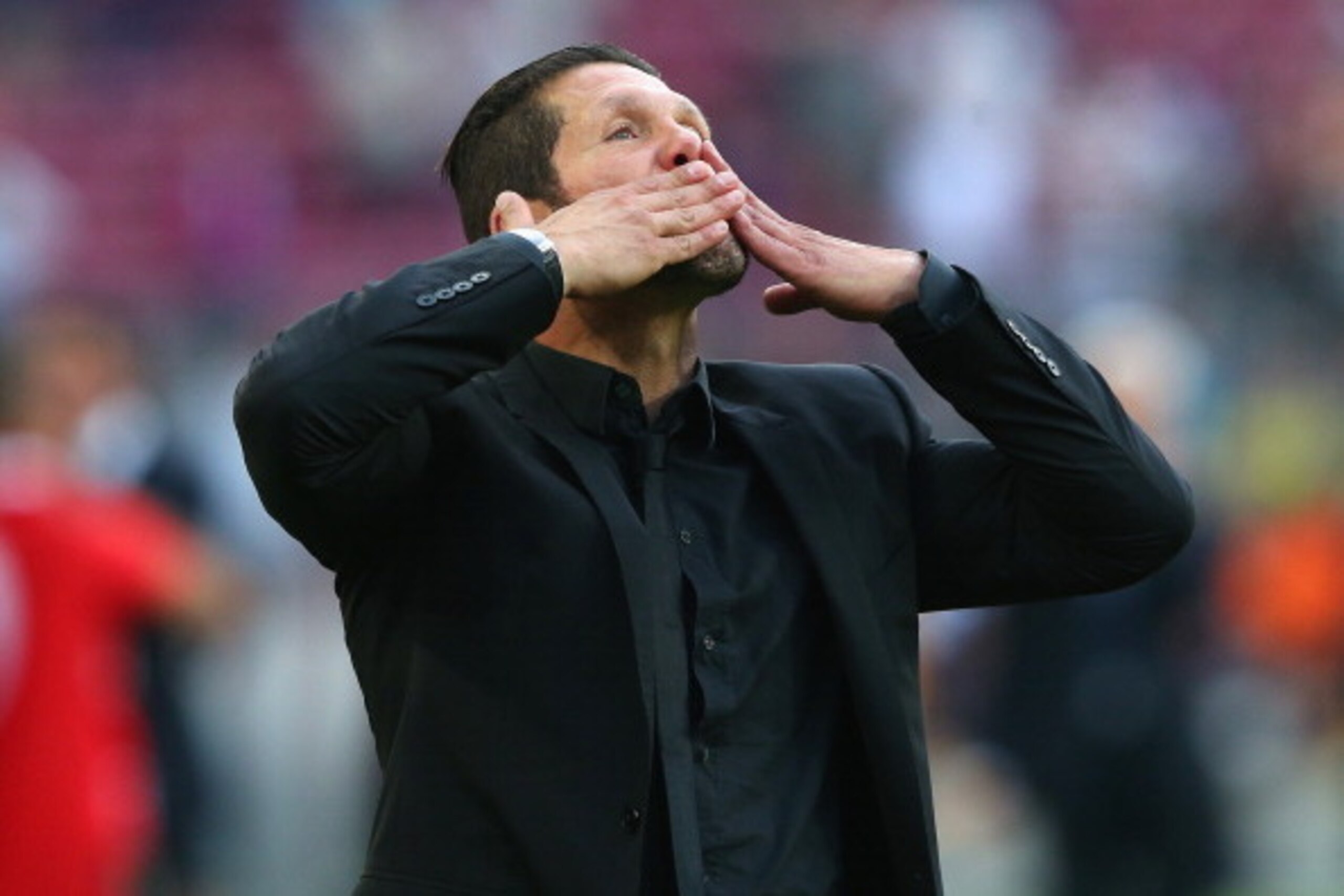
David Villa knows what winning is like. La Liga titles, Champions League crowns, World Cup triumphs, European Championship successes: Villa has done it all.
As you'd expect, the Spaniard has the mentality of a winner.
"We have to celebrate this Liga title," the former Atletico striker remarked in the immediate aftermath of Atleti's capture of the Primera Division last year, before adding: "There is time to prepare for the final. There is still the desire to keep going."
Of course, Villa was referring to Los Colchoneros' meeting with Real Madrid in the Champions League final in Lisbon.
But the message, the mentality, was also extremely clear: Always look forward, never back. Victory is only ever ahead.
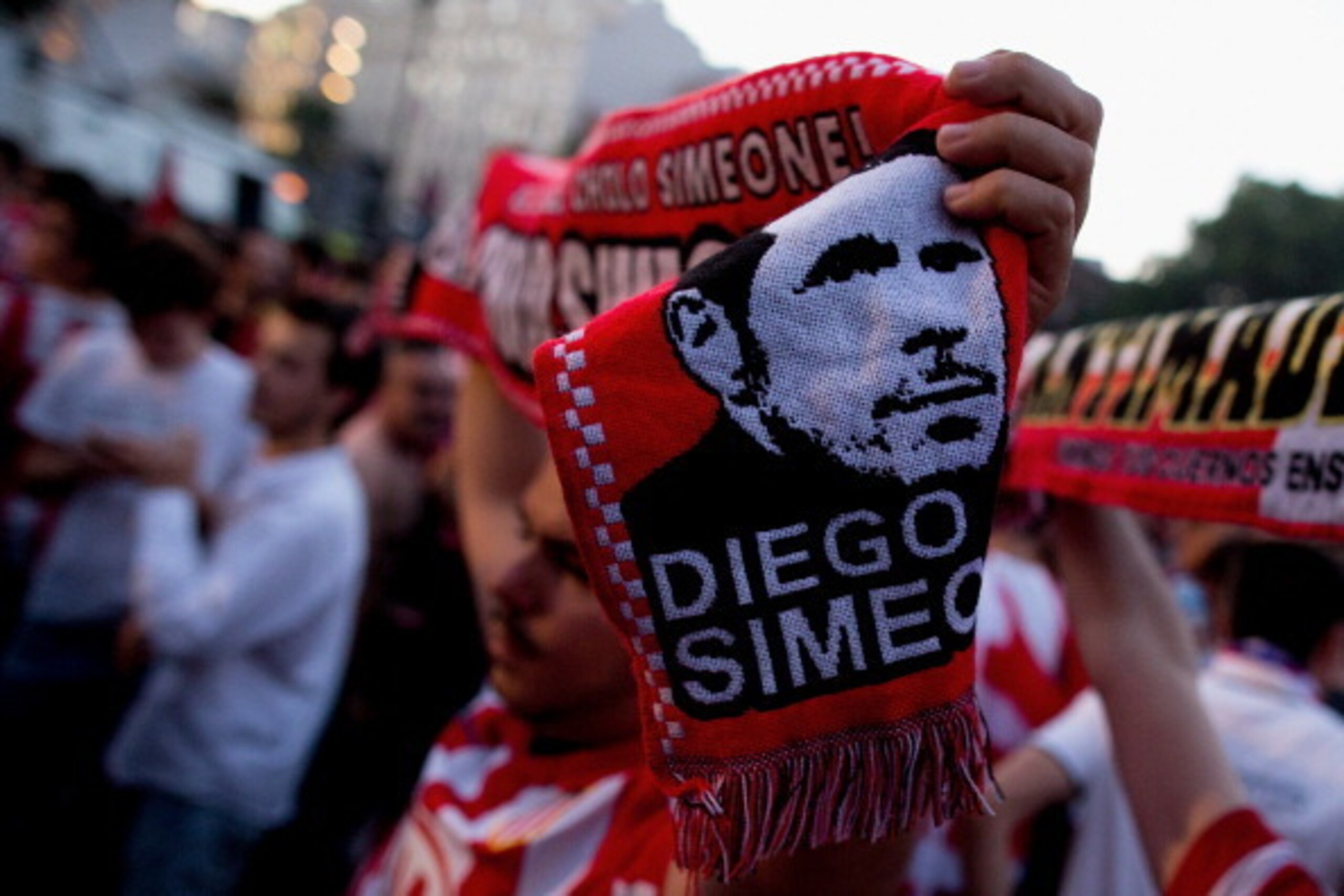
Such a mindset has always been exhibited by Simeone, too. Indeed, he's the one who's instilled it in Madrid.
"All I am thinking about is Malaga," the Argentinian said when he was unveiled as Atletico's manager in December 2011, referring to, and only to, the club's next match in La Liga.
One task. One challenge. One goal.
Since returning to the Vicente Calderon, Simeone has only ever attempted to tackle what's next. One step at a time.
But the next genuine step, aside from Valencia this weekend? The wider goal? Sustaining the success that's already been achieved.
Getting there, as they say, is the easy part; staying there is the real challenge, the one Simeone can really sink his teeth into.
And Real Madrid and Barcelona aren't in the Premier League.
A Matter of Style
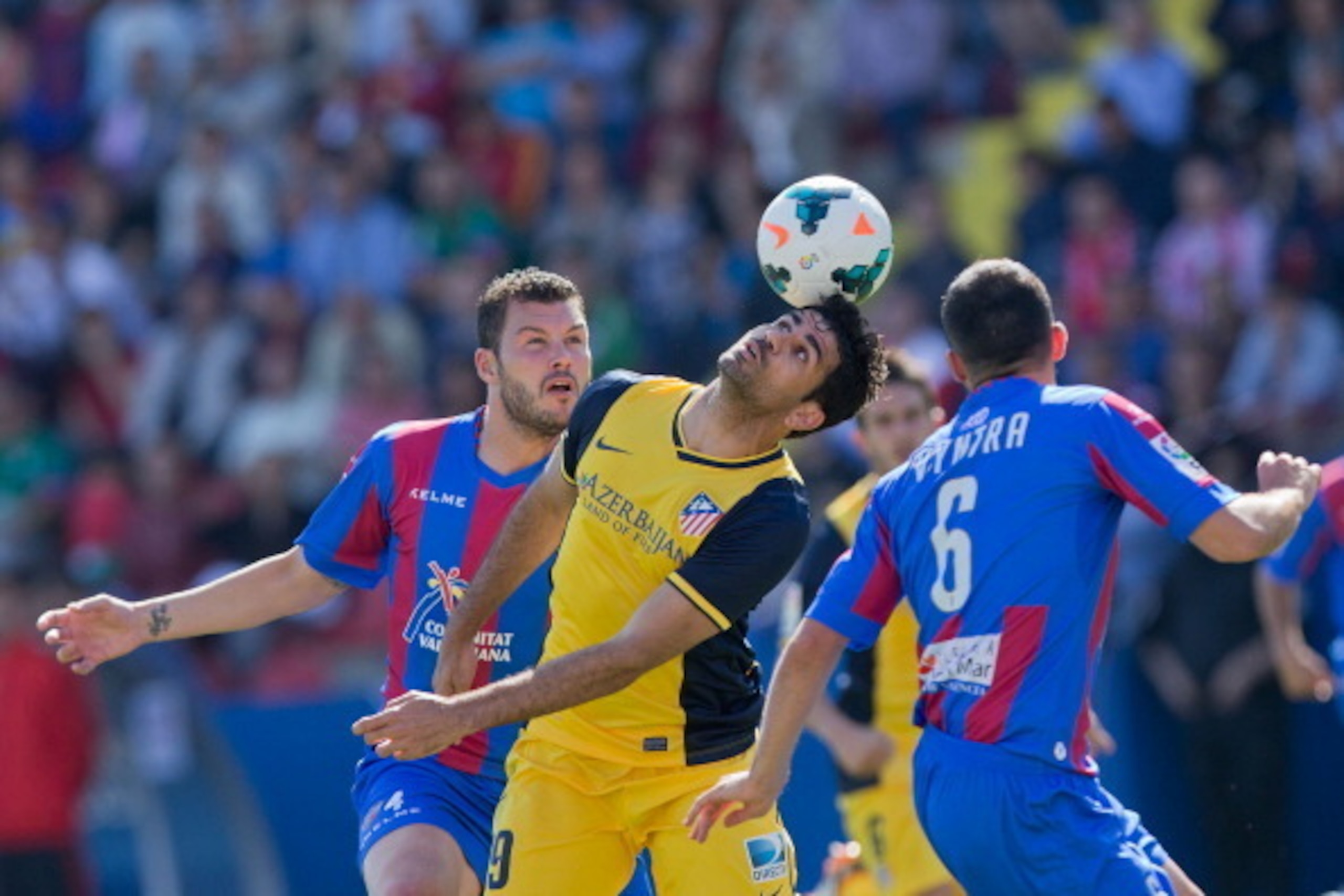
When Simeone was unveiled as Atletico's manager in late 2011, he quickly spelled out his vision for his new side.
"I like an aggressive team," he told the waiting media. "I want to see a team that is strong, committed and quick on the break."
He also added: "'These are things which Atletico fans have always liked, it helps them identify with and love this shirt."
Two things are important here: Simeone had identified a method for success, but also greatly understood the essence of the institution he was returning to. He knew Atletico. He is Atletico.
That won't be the case elsewhere.
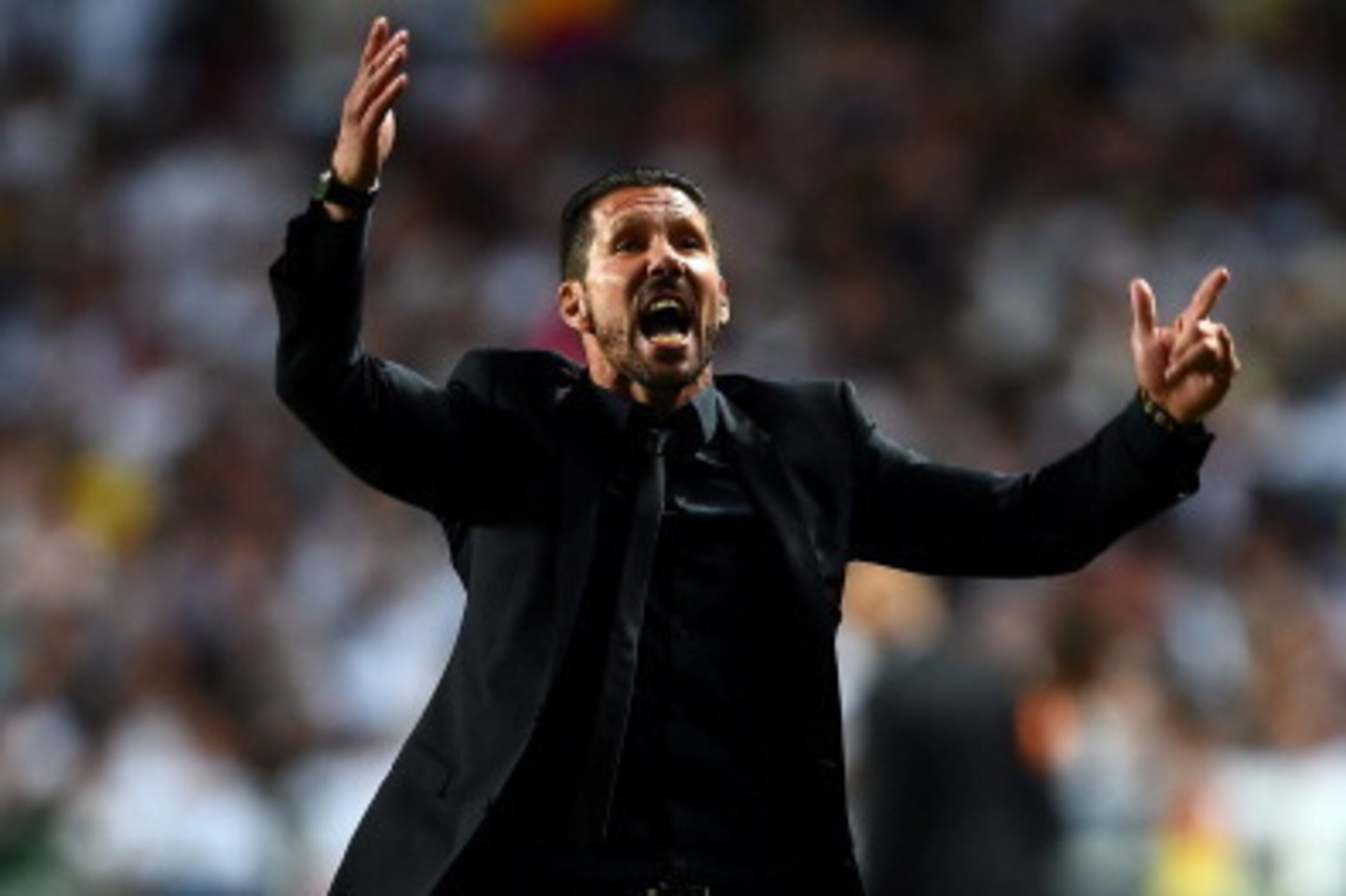
Take Louis van Gaal for example. With a glittering CV, the Dutchman has taken the reins at Manchester United amid arguably the club's first genuine slump in the Premier League era.
In 2014-15, Van Gaal's team is currently residing in the top four in England, is still in the FA Cup and is still on track for Champions League qualification. From a results perspective in an awkward time, he's ticking the boxes.
But, as neatly highlighted here at Bleacher Report by Rob Dawson, under Van Gaal, "every positive result, it seems, comes with a 'but.'"
Basically, United's style under the Dutchman isn't pleasing anyone. And that's relevant for Simeone.
At Atletico, being "strong, committed and quick on the break," is accepted—and, in fact, celebrated—because of the club's underdog status in Spain. Trying to match Barcelona's possession-based style is pointless; so too is attempting to replicate Real Madrid's top-heavy method.

Under Simeone, Atletico's identity is abundantly clear. But if he were to head elsewhere, particularly to one of England's top clubs or the French capital, he wouldn't have the same luxuries—he wouldn't enjoy the same immediate connection with the fans due to his playing history, the same widespread adulation founded upon his results and mentality.
At Manchester City, for instance, style counts. And with David Silva, Samir Nasri, Yaya Toure and Sergio Aguero in the lineup, being "quick on the break" isn't enough. Winning in a rugged fashion isn't either.
Among Europe's financial elite, whether it's right or wrong, winning attractively matters. Winning, on its own, isn't enough.
To shoulder that burden, Simeone would have to lose part of what makes him unique.
Silly-Season Indifference

When Atletico Madrid clinched the league title at the Camp Nou last May, Simeone's XI read: Thibaut Courtois, Juanfran, Miranda, Diego Godin, Filipe Luis, Arda Turan, Gabi, Tiago, Koke, David Villa and Diego Costa.
Of those 11 players, 10 were already at Atletico when Simeone arrived.
In his first summer-transfer window at the club, Simeone's Atletico signed Cristian Rodriguez, Cata Diaz and Emre Belozoglu. Next time around, Atleti signed Villa, Dani Aranzubia, Toby Alderweireld, Josuha Guilavogui, Leo Baptistao and Jose Gimenez. The following winter, Diego Ribas and Jose Sosa came in.
How many of that group are either, (a) currently playing a significant role for Atletico or, (b) still at the club at all?
In 2014-15, the club has made some great signings, but it's still been very hit and miss. At one end of the spectrum are Mario Mandzukic and Antoine Greizmann; at the other are Alessio Cerci and Raul Jimenez.
Somewhere in between are Jan Oblak, Guilherme Siqueira and Jesus Gamez.

The point here is that transfer-market activity is still one area where Simeone hasn't proven himself as excellent—even if, as Sid Lowe of ESPN FC explains, "At Atletico, signings are theoretically made by the sporting director, not the coach."
But, whatever the situation, Simeone has an influence. Fernando Torres is evidence of that.
And at present, despite his outstanding skills in coaching, player development and game-day tactics, the jury is still out on the Argentinian's talent spotting.
That's vitally important to consider before jumping into cash-rich managerial posts at Manchester City or Paris Saint-Germain. In such locations, instilling the us-against-the-world mentality that's evident at Atletico will be harder to achieve—they're not the underdogs.
What's underpinned Simeone's staggering success at the Vicente Calderon is how the club and its environment suit his methods so perfectly. He's been able to plant an idea in a squad and build an admired identity from it.
Yet, that might be harder to manufacture amid the millions provided by the Abu Dhabi United Group or Qatar Sports Investment.
And that begs the question: Would making the switch to a truly wealthy outfit negate Simeone's strengths (player development, coaching, instilling a culture) and place an emphasis on the one thing he's still somewhat unproven at—signings?
The Show Has Only Just Begun
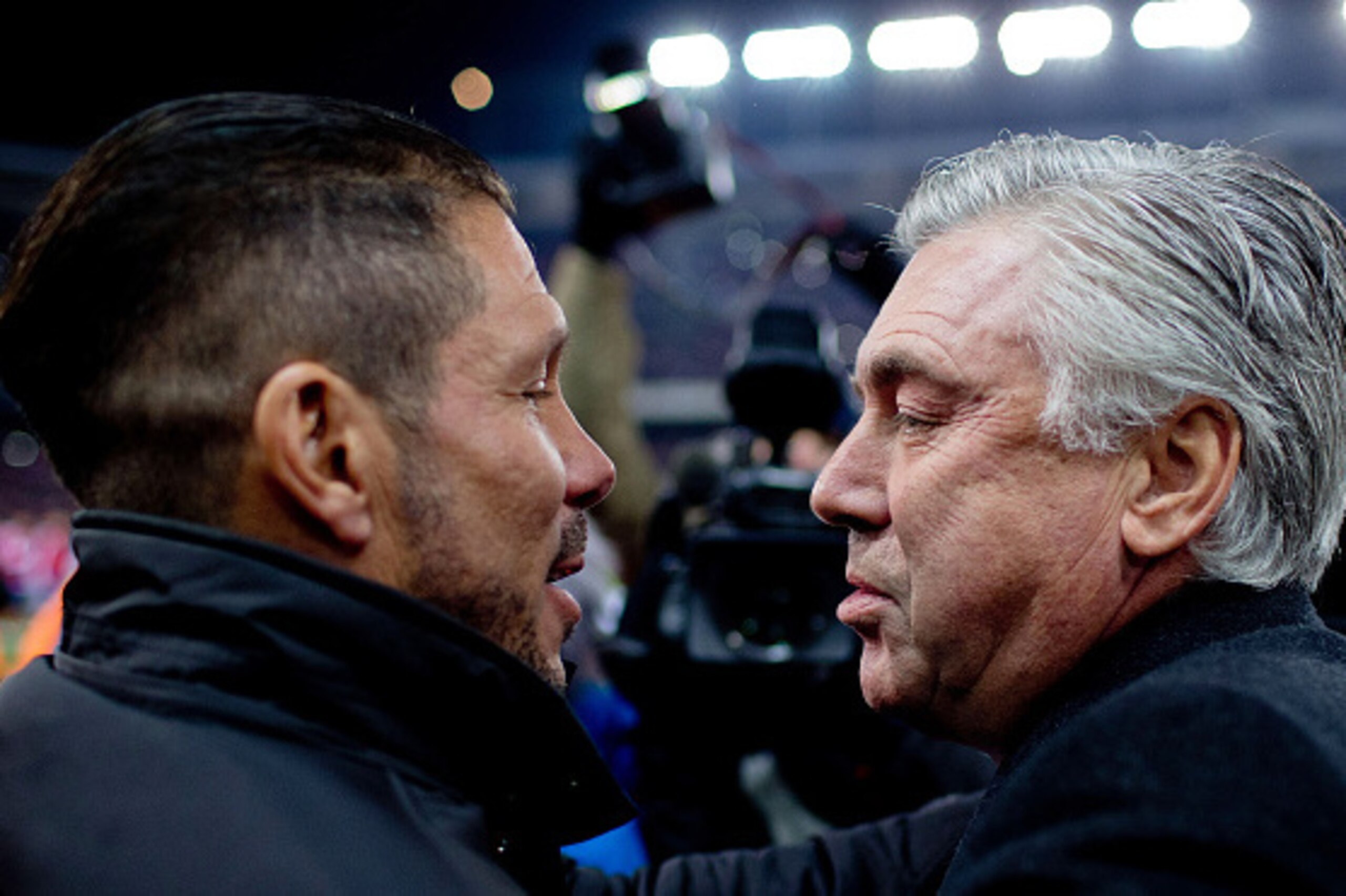
Last week, in the lead-up to Atletico's clash with Sevilla just days after suffering defeat to Bayer Leverkusen, Simeone made an important remark regarding his club's progress.
"There are always extremes of opinion. It's normal that after a defeat or a bad game we get torn apart," he said of the scrutiny following the midweek Champions League loss. "We have earned the position that every loss or poor performance is strongly criticised after our three years of success."
His point was simple: Three years ago, no one outside the club cared; now, in 2014-15, Atletico's performances are evaluated and discussed like those of Real Madrid and Barcelona.
Progress.
But ascending to, and then staying at, the top of the European game isn't a three-year process. Atletico know that. Simeone will know that.
Thus, what's occurred so far in Simeone's tenure is only just the beginning. And things are changing at Atletico.
Though the project has been dogged by setbacks, Atletico's new 69,000-seat La Peineta stadium is currently due to be completed by 2017, meaning the club is in its final years at the outdated Vicente Calderon.
The looming move to the new venue has seen Atletico secure a stadium-management deal with CenterplateISG—a company that's worked on Super Bowls, World Series and plethora of new arenas including London's Wembley—to help boost matchday revenue.
Additionally, in January, Atletico announced that Chinese conglomerate Wanda Group had purchased a 20 percent stake in the club for £34.5 million, a move designed to expand the club's global brand.
Throw in the push—though that's all it is at this stage, a push—from the Liga de Futbol Profesional to reduce the inequalities in TV revenue in Spain through a centralised TV-rights model like the one in existence in the Premier League, and Atletico are gradually edging closer and closer to financial competitiveness.
Of course, after highlighting earlier how cash resources might affect Simeone's success in other locations, it's natural to wonder what the difference is here.
But it's actually relatively simple: Elsewhere, the Argentinian would be dropped into an environment he didn't himself create; at Atletico, the club and manager can grow together.
And more importantly, grow together in Simeone's image. Under his principles. Using his ethos.
He's already the brand, the face of a club. A messiah at the Vicente Calderon after just three years.
With Atletico Madrid growing, the show might be just getting started.

.jpg?w=2560 "Rams Raiders Football")



.jpg?w=2560 "Rodgers Iced Out on Plane 💎")

.jpg?w=2560 "🚨 Week 8 AP Top 25 Poll")