

NFL Relocation Will Be a Test Among Rights of Owners, Fans and League
Who's in charge around here?
There's a delicate balance in the NFL between the rights of an owner and the will of the owners. It comes up at various times, like when Commissioner Roger Goodell imposed punishment on Indianapolis Colts owner Jim Irsay.
In a similar vein, The New York Times's Ken Belson reported that Goodell formed a committee to help manage any potential relocation to Los Angeles. St. Louis Rams owner Stan Kroenke is planning on building a massive stadium in the area, while the Oakland Raiders and San Diego Chargers have started working with nearby Carson on a home of their own.

.jpg?w=2560 "Rams Eagles Football")
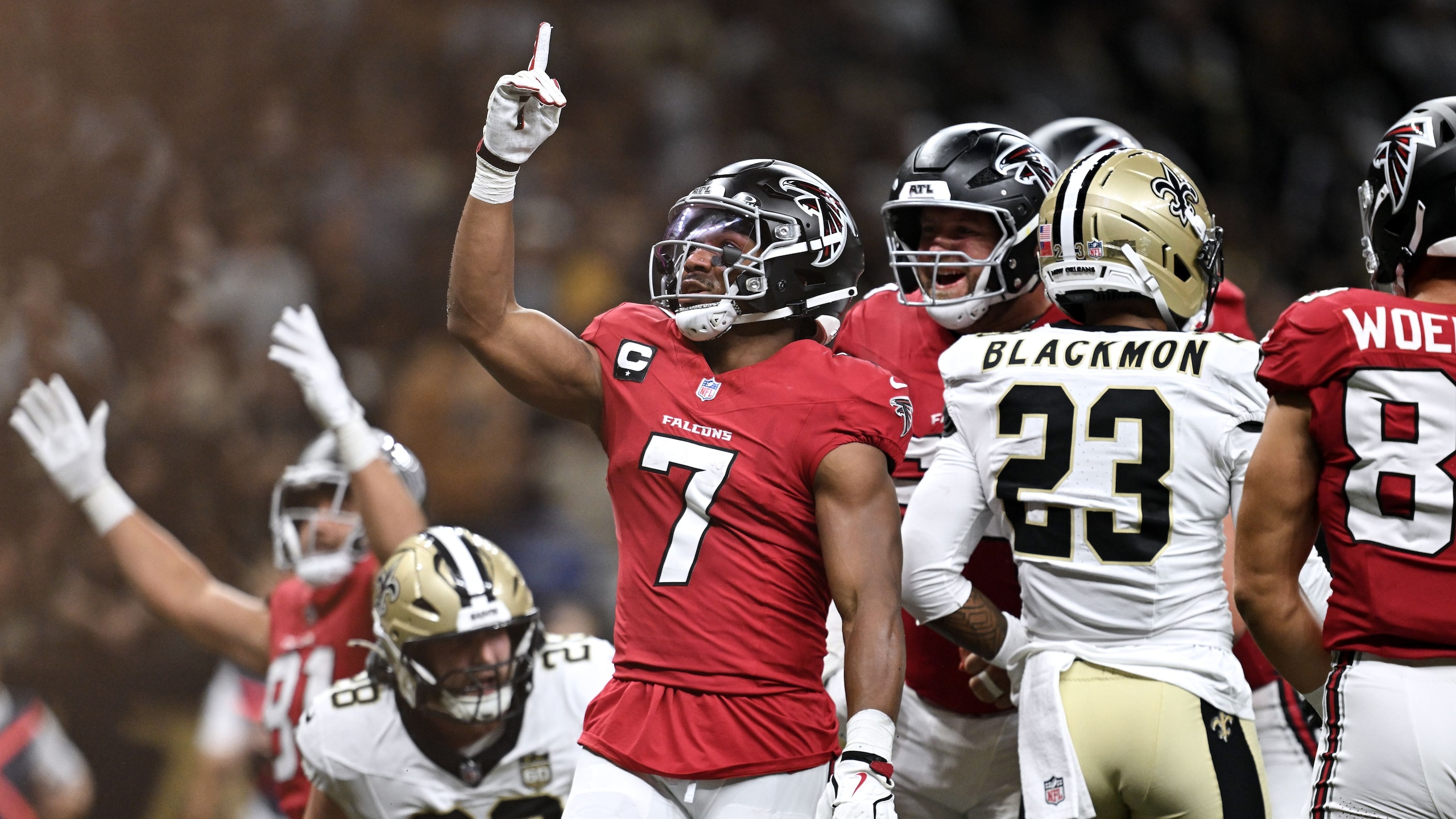
The NFL Network's Albert Breer shared some words on the issue from Goodell prior to the 2015 Super Bowl:
The only thing that's missing is the Mayflower trucks.
The relocation process is full of nuances. Each individual owner manages his own team, yes, but the long-term prosperity of the league and potentially massive revenue-altering issues need to be approved by the entire league, not just a single owner.
So while Irsay and Kroenke are Goodell's bosses as part of the consortium of NFL owners, they are also beneath him on the grand metaphorical organizational chart as the power of the owners are funneled through him in terms of discipline and daily management.
This means that any team could theoretically move to Los Angeles, London, Toronto, Portland, Kalamazoo or the moon if it truly wanted. It would just be awkward when it sat in its empty stadium and never actually played any football against NFL opponents.
See, the NFL is a different animal than it was decades ago. It is a monolith, with centralized authority backed by government-approved monopolization and tax breaks to boot. Once upon a time, owners had far more autonomy in much the same way as ranchers used to rule the roost in the Wild West.
Those days are over.
What happens, time and again, when the owners have an issue among themselves in terms of total revenue or revenue sharing? They find a way to compromise. The large-market owners and small-market owners are entirely different animals and often disagree, but both are predators in the grand scheme of things and will always find prey to satiate their needs.
Sadly, that can leave fans out in the cold—waving goodbye to those trucks as they pull away.

One of the common arguments in American-style capitalism is the rights of the consumer. We vote with our pocketbooks and cards each and every day from the flavors of Greek yogurt we buy to the movies and TV shows we stream.
The theory goes: If the fans all turned off NFL Network, ESPN and never again opened the NFL stream on their Team Stream app (note: don't do that), the NFL would simply fade away. It's the entertainment business, right? It needs eyeballs on it to succeed.
Well, kinda.
Here's where the power of the NFL truly sits: over its fans.
The grand irony of today's NFL is that many fans view the organization itself (the building, the mascot, the brand or even the owner) as the purest form of what they're rooting for. Players come and go thanks to short careers and free agency. Moreover, the simulation era of Madden and fantasy football allows fans to self-stylize as owners themselves.
In essence, fans tend to believe that owners are the last line of defense in terms of serving the fans the kind of winning football they want from their favorite football team.
The feeling, however, is anything but mutual.
Football is a business.
If you don't get that fact, meet me after school, and you can write it a few thousand times on the chalkboard, and clap the erasers when you're done. The owners do have their fans' backs, insofar as it is good for profits. Happy customers are paying customers, and there is no better way to protect one's profits than creating all sorts of warm fuzzies in the people who watch on TV and purchase personal seat licenses.
That's how businesses work.
That's how brands are built.
Heck, that's how empires are built.
When the rubber truly meets the road, though, pleasing and placating the fanbase isn't the goal; it's the means to the end—namely, money, coin, cheddar, greenbacks, skrilla, dolla-dolla bills, y'all.
It's jaded. It's cynical. It cheapens and poisons the "purity" of the game we love. But it's also reality.
Stadiums are quickly going the way of just about everything else in the new millennium. We are trading quality for shelf life. Just like how the organic, non-processed, artisanal whatever you bought down at the farmer's market doesn't keep as long as the preservative-packed version from a few decades ago, stadiums are built cutting edge with bells and whistles like never before.
It's not about pouring some concrete and adding some benches. It's about massive video screens that will be out of date just as soon as the next stadium builds a better one. It's about building a stadium one year and then planning the first massive renovation for just a few years down the road.
Quickly, it becomes about bilking the local governments and taxpayers for funding. If there's pushback—even in the slightest—all the cards quickly get laid upon the table. It happened in Atlanta, when owner Arthur Blank and the Falcons were worried about getting their new home. It happened in Miami, when owner Stephen Ross and the Dolphins weren't sure they would get their desired renovations.
In the most pure capitalistic terms, this is the free market at work.
This doesn't impugn the owners as bad guys for doing what they need to do to leverage their assets against market forces. Not in the slightest! No, they are behaving exactly as they should act and exactly how their peers in the NFL want them to act.
This sort of argument came up recently when the Buffalo Bills and Jacksonville Jaguars were searching for new ownership. The bona fides of a good owner in those searches would be a man or woman who would stand up and promise not to move the team from those smaller, sometimes struggling markets.
Both Terry Pegula and Shad Khan passed that litmus test with flying colors.
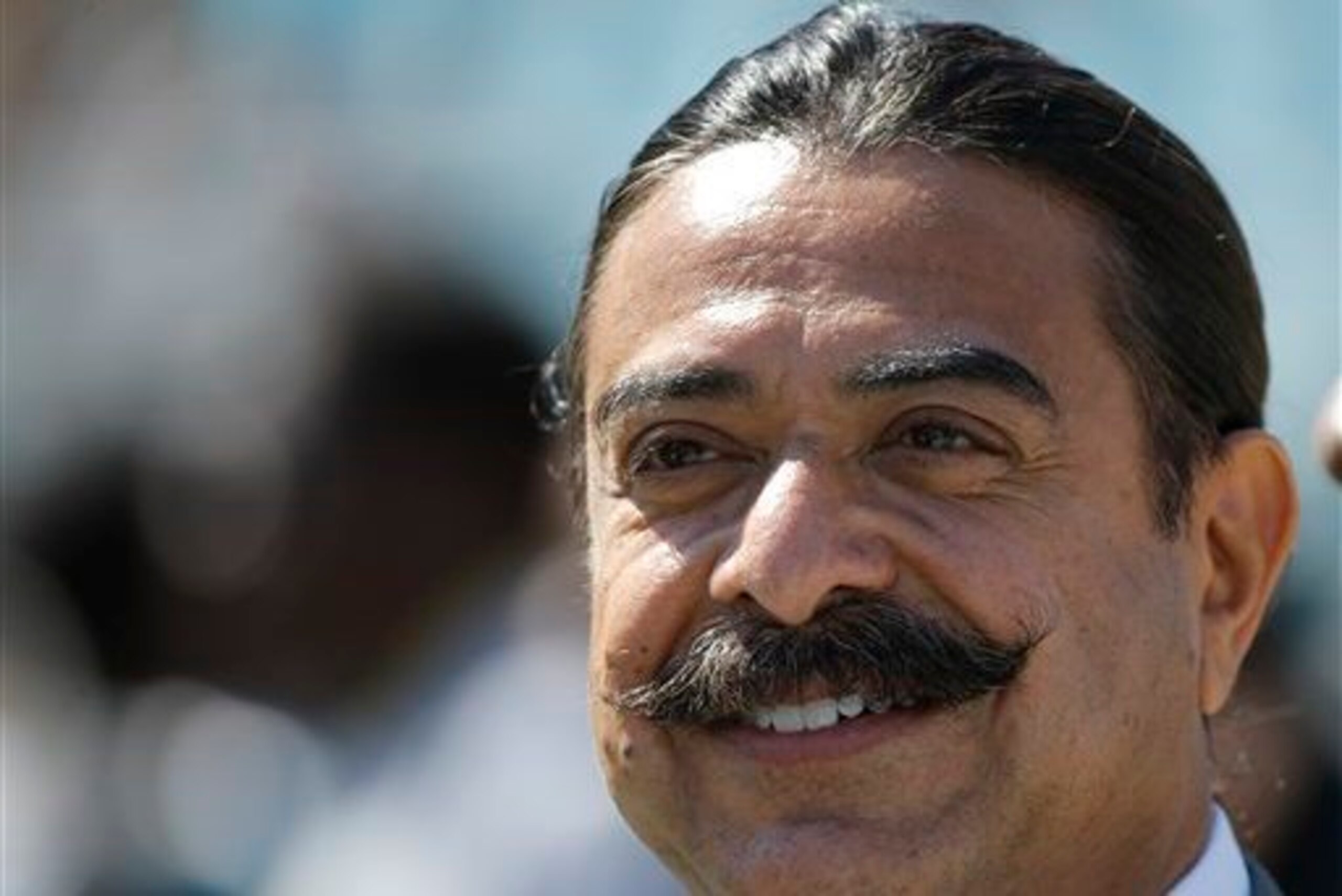
Yet the irony is that both the Bills and the Jaguars have rock-solid lease agreements with their respective homes at the moment. It would be bad business to move the teams because of the contractual obligations. Thus, it's bad business to even talk about moving the teams.
This is not saying (in any way) that Pegula or Khan want to move the teams. As much as Toronto and London have been discussed at times for both of those franchises, all of the tea leaves at the moment say they're staying put, and bully for those fans.
Still, when the time comes and those leases are up, how do you expect those billionaires to act?
They're going to act in the same sort of self-interest that built their empires and made them able to purchase the teams in the first place. Pros and cons will be weighed. Projections will be levied against one another. Talks will be had with multiple suitors, and I promise you with every fiber of my being that potential moves will be whispered if those cities don't pony up the tax dollars for renovations or building projects.
This is how the relationship works.
As mentioned earlier, the owners could work this out among themselves, but they won't. They could put processes in place to artificially protect smaller or less affluent markets like St. Louis, Oakland, Buffalo, Jacksonville, etc.
They won't—not when big-market owners like Jerry Jones of the Dallas Cowboys and Robert Kraft of the New England Patriots already balk at the terms of revenue sharing. Why quibble about how the pie is divvied up when the pie can simply grow larger?
It would be downright easy for the owners to get together tomorrow and say something along the lines of "St. Louis is a historical NFL city that deserves a team. Here, Mr. Kroenke and all other small-market owners, here's an extra lump sum of money every year to make staying in those cities worth your while."
There are tremendous arguments to be made in favor of this sort of thing. If you don't believe me, go cross-sport and read all of the pages and pages of feverish pleas made on behalf of the Seattle SuperSonics. Heck, just go back a couple of decades and talk to some of the people who made the same arguments when teams left Los Angeles.
Fans who grow up with a team are going to be more loyal. Fans who grow up as second- or third-generation fans of a team are going to be more loyal still. Take the whole relocation to its logical end, and we're going to have a bunch of fair-weather fans who give up their season tickets at the first sign of trouble.
Or at least, that's what they say. ("They" being the sort of people who will say anything to argue that their favorite team shouldn't leave.)
Shouldn't the NFL save its historical fanbases whether or not they're in the most lucrative locations?
Nope, not going to happen.
It won't happen when a smaller market moving to Los Angeles could raise the value of the organization up to 150 percent of its current value. That's growing the pie rather than giving a few owners a bigger slice at the expense of the others.
Relocation will happen soon.
Expansion is extremely likely to happen in the not-too-distant future.
Today, it's Los Angeles. Tomorrow, it might be London, San Antonio, Toronto or Portland. By the end of this generation, in ever-shifting demographics, it could be any number of cities both inside the American borders and certainly overseas.
The NFL will no longer move and operate at the will of individual owners, and the fans have lost any leverage they might have once had. The NFL is too powerful to kowtow to either of those groups. Rather, the NFL will move in smooth, measured paces at the direction of the owners as an entire group and always toward areas it believes will lead to greater revenue.
What will we do?
We'll keep watching, of course.
Michael Schottey is an NFL National Lead Writer for Bleacher Report, a writer for Football Insiders and an award-winning member of the Pro Football Writers of America. Find more of his stuff on his archive page and follow him on Twitter.

.jpg?w=2560 "Grading WWE Raw 🔠")

.jpg?w=2560 "Injury-stricken Seahawks signing veteran RB")

