

The Biggest Questions Leading Up to the 2015 NHL Trade Deadline
The clock is ticking toward the National Hockey League's annual trade deadline. For the 2014-15 season, the end of the road will come on Monday, March 2 at 3 p.m. ET.
The lead-up to the deadline is always exciting.
Playoff contenders make moves to try to stock up for a long postseason run or improve perceived deficiencies in their rosters. For the non-playoff teams, the deadline is their best chance of the year to trade away quality talent, often on expiring contracts, in exchange for pieces that will help them improve in the future.
Plenty of uncertainty surrounds this year's deadline—the usual cloak-and-dagger negotiations, but also the economic issues affecting the league and its teams as well as a murky picture of which teams are buyers and which are sellers.
With less than two weeks to go, here are the biggest questions swirling around as we count down to this season's trade deadline.
Who's Making the Playoffs?
1 of 6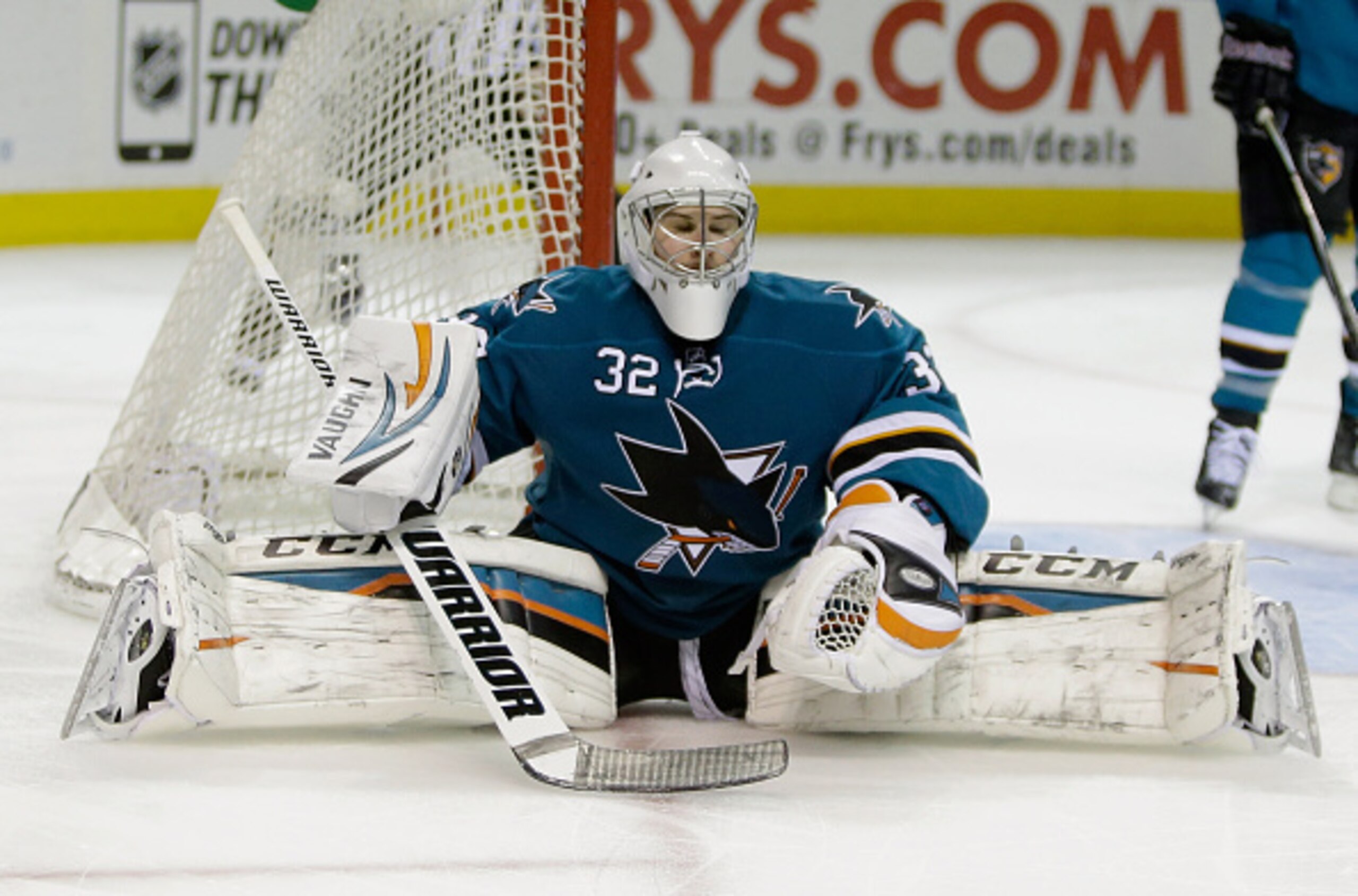
According to Sports Club Stats, a good chunk of the NHL playoff picture is set. Eleven teams have at least a 99 percent chance of playing in the postseason.
In the Eastern Conference, the last spot is down to a battle between the esteemed Boston Bruins and the plucky Florida Panthers. Just two points apart heading into games Feb. 18, does the close race increase the likelihood that either team might overspend to acquire short-term tools to help down the stretch run?
The situation is hairier in the West. The Vancouver Canucks and Calgary Flames look secure for now, while the Winnipeg Jets and San Jose Sharks hold on to wild-card spots by their fingernails—the Los Angeles Kings, Minnesota Wild and Dallas Stars are all surging beneath them.
Just five points separate sixth place from 11th in the Western Conference.
A team like the Sharks should be ready to blow itself up if it misses the playoffs this year after 10 straight postseason appearances. But will general manager Doug Wilson know if he should be a buyer or a seller in time to make the appropriate moves for his situation by March 2?
How Will the Salary Cap Factor In?
2 of 6
A weak Canadian dollar has created a downward pull on NHL revenue this season, which is measured in U.S. currency. That slows the growth of the league's salary cap.
Additionally, TSN's Rick Westhead reported in January that NHL players could vote to withdraw a five percent cap "escalator" in an effort to reduce the slice of their salaries that the league holds back in its escrow fund during the season.
Westhead suggests that if the escalator is withdrawn and the Canadian dollar hovers near its current level of 80 cents U.S., next season could see "a salary cap that peaks at closer to $70 million."
Heading into the trade deadline, general managers will need to decide where they think the cap ceiling will land in 2015-16 and make their player personnel decisions accordingly. Cautious managers could be willing to unload high-end players with big contracts at bargain prices, while the swashbucklers will have a chance to acquire good talent with higher cap hits at the risk of crippling their team's long-term flexibility.
My colleague Lyle Richardson named the Chicago Blackhawks as the team with the biggest cap issues going forward. Even as they head into the playoffs, would they be willing to move a cap hit like Brent Seabrook's $5.8 million or Patrick Sharp's $5.9 million—perhaps to an Eastern Conference club willing to give up a cap-lite package of picks and prospects?
Which Teams Will Plug Injury Holes?
3 of 6
Another challenging part of every general manager's job is the fluid nature of his team's roster.
Just when he assembles all of the pieces he wants, one—or more—key injuries can send him right back to the drawing board.
"We’re not going to sacrifice our young players and prospects and draft picks," Vancouver's rookie president Trevor Linden told Iain MacIntyre of the Vancouver Sun at the All-Star break. Three weeks later, his team finds itself missing three of its top four defensemen—Kevin Bieksa, Alex Edler and Chris Tanev—as it makes the final push to erase the memory of a terrible 2013-14 season.
Throughout the league, the injury landscape is ever-changing. The Anaheim Ducks are missing Sami Vatanen and Matt Beleskey while Hampus Lindholm has been in and out of the lineup. Winnipeg has lost Mathieu Perreault and the Montreal Canadiens are without Sergei Gonchar and now Alexei Emelin on their blue line.
The list goes on. Depending on the severity of the injuries in question, the idea of giving up a slice of the future for some immediate help could suddenly be looking a lot more tempting.



What's the Going Rate for Rentals?
4 of 6
The surprising Nashville Predators are heading into the home stretch of the 2014-15 season perched comfortably at the top of the NHL standings, but general manager David Poile is still working to make his club better.
On Feb. 15, he pulled the trigger on a pre-deadline deal, acquiring pending unrestricted free agents Cody Franson and Mike Santorelli from the Toronto Maple Leafs in exchange for veteran Olli Jokinen, prospect Brendan Leipsic and a first-round draft pick.
Thus, the standard is set. Poile picked up two useful players—but only for a few months. It took a first-round pick to seal the deal before a bidding war could ensue, particularly for Franson's playoff services.
Other players with expiring contracts who could be on the move from non-playoff teams in package deals include the Arizona Coyotes' Antoine Vermette and Zbynek Michalek, Jaromir Jagr and Scott Gomez of the New Jersey Devils, Jiri Tlusty and Andrej Sekera of the Carolina Hurricanes and the Edmonton Oilers' Jeff Petry and Derek Roy.
The bidding will likely heat up as March 2 draws closer.
Will Stars Be Moved Now, or at the Draft?
5 of 6
Two of the NHL's 10 most expensive players are currently toiling with teams well outside of the playoff picture.
Carolina Hurricanes captain Eric Staal ($8.25 million cap hit) will most likely remain with his organization—in its first year under new general manager Ron Francis. Phil Kessel of the Toronto Maple Leafs ($8 million cap hit) is a different story.
Despite solid offensive production in his six seasons in Toronto, Kessel has been a streaky scorer and has endured a testy relationship with Leafs media and fans.
The road has also been rocky for Leafs captain Dion Phaneuf ($7 million cap hit). He has never quite lived up to expectations—or matched his early-career potential—after being acquired from the Calgary Flames five years ago.
Toronto general manager Dave Nonis has admitted to fielding calls on both Kessel and Phaneuf, according to NHL.com, but says there's "no timetable" to make a deal.
In the salary-cap era, star players tend to be moved during the offseason more frequently than at the trade deadline, but never say never. Will a contender pay the price for one of the Leafs' top players to help boost its playoff prospects?
Which Current Prospects Will Be Future Stars?
6 of 6
One reason why the Nashville Predators have had such a successful season has been the past deadline dealing of their general manager, David Poile, when the team has been out of the playoff picture.
In one of the most notoriously one-sided trades in NHL history, Poile dealt journeyman Martin Erat and his $4.5 million cap hit to the Washington Capitals two years ago in exchange for prospect Filip Forsberg. Erat went pointless in four playoff games with Washington, then was dealt on to the Arizona Coyotes last season. Meanwhile, 20-year-old Forsberg leads the Predators in scoring with 50 points this year and is the prohibitive favorite for the Calder Trophy.
Poile also pulled off a steal of lesser proportions last season, when he dealt longtime center David Legwand to the Detroit Red Wings in exchange for prospect Calle Jarnkrok. Legwand was also pointless in his five playoff games with his new team, then moved on to sign with the Ottawa Senators as a free agent. In Nashville, 23-year-old Jarnkrok has 14 points and is averaging 13 minutes of ice time per game as a third-line center in his first full NHL campaign.
Thanks in part to these savvy acquisitions, it's Poile's Predators who are looking to go all in for this year's playoff run. Other teams also looking to stock up have to hope that they're not surrendering the next Forsberg or Jarnkrok for a failed shot at Stanley Cup glory.
All stats courtesy of NHL.com. Salary information from NHLnumbers.com.

.jpg?w=2560 "Grading WWE Raw 🔠")




.jpg?w=2560 "Viral Rams Coach Vid 🖕")
.jpg?w=2560 "2 NFL Officials Suspended")
