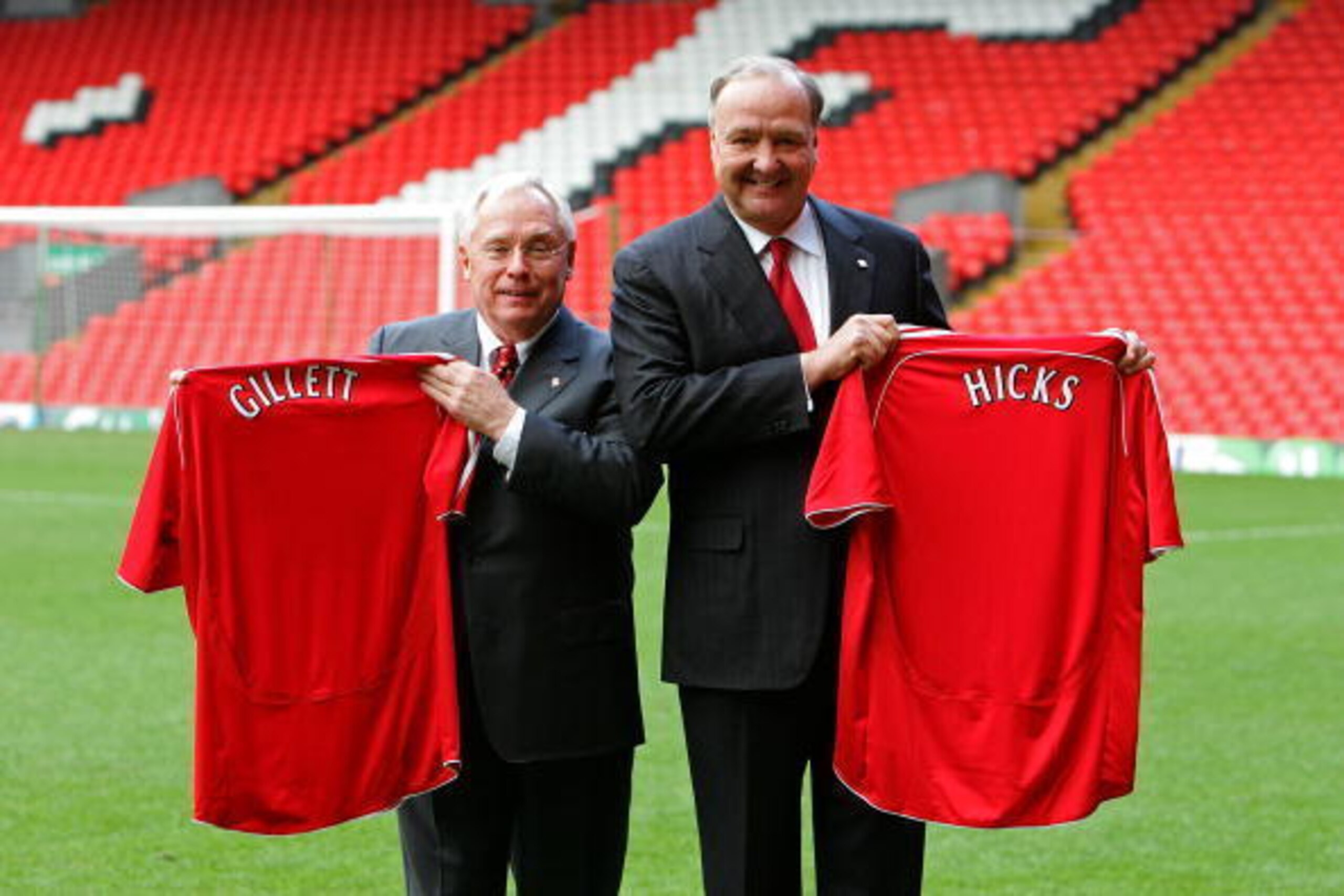

The Highs and Lows of George Gillett and Tom Hicks' Liverpool Tenure
Friday, February 6, 2015 marks the eighth anniversary of the acquisition of Liverpool Football Club by American tycoons George Gillett and Tom Hicks and, as such, serves as a pertinent point to measure their successes and failures during their ownership of the Merseyside outfit.
BBC Sport reported at the time that "the pair, who each own NHL ice hockey teams, beat off competition from Dubai International Capital" and "[are] believed to have guaranteed to invest over £200m in the club."
The article continued: "[Gillett and Hicks] confirmed they will make funds available, both for team strengthening and the building of the club's new stadium in Stanley Park and denied they had secured the club on borrowed money."
A promising landmark in Liverpool's history? Perhaps not.
Here we look at five highs and five lows of Gillett and Hicks' Liverpool tenure, rounding off with the considerable debt the pair left on Merseyside.
High: Early Optimism and Stadium Plans
1 of 10
Upon their arrival at the club, Gillett and Hicks conjured a great sense of optimism with the announcement of their intention to build a new stadium for Liverpool.
Stanley Park Stadium was designed to accommodate 60,000 fans—potentially rising to 73,000—and initially scheduled to be ready for the 2011/12 season.
Sky Sports relayed Gillett's words from Liverpool's official website, where he claimed that:
"We have been working very hard over the last six months to move the details of the design along but this is the first tangible evidence for fans that a new LFC stadium will be built.
The stadium design is unique and will be recognised across the world as the Liverpool FC Stadium. It incorporates a Kop stand that will hold 18,000 fans and we hope that the stadium will be as noisy and atmospheric on a matchday as Anfield.
"
A new stadium would allow more Liverpool fans to watch the club each week and was a positive statement of intent from the owners.
However, as Chris Bascombe of The Telegraph revealed in 2012, the unfinished stadium cost the club £50 million. More on that later.
Low: Disagreements with Rafael Benitez
2 of 10
Rafael Benitez was manager of Liverpool when Gillett and Hicks bought the club, and the Spaniard's relationship with the owners grew increasingly frosty from that moment onward.
This typically revolved around transfers—or the lack of activity in the transfer market.
After taking over the club, Gillett claimed that "if Rafa said he wanted to buy 'Snoogy Doogy,' we would back him," according to the Daily Mail.
However, soon after this, Hicks reportedly told the manager to "quit talking about new players," to which Benitez responded with a notorious press conference ahead of a Premier League clash with Newcastle United, with BBC Sport quoting his mantra-like: "I am focused on training and coaching my team."
Benitez revealed in his 2012 book Champions League Dreams (h/t the Mirror) how he "was suddenly supposed to be a bank manager," under the pair.
There was a great sense of disappointment when Benitez left the club in 2010, after he had brought so much success to Liverpool.
High: Champions League Final, 2007
3 of 10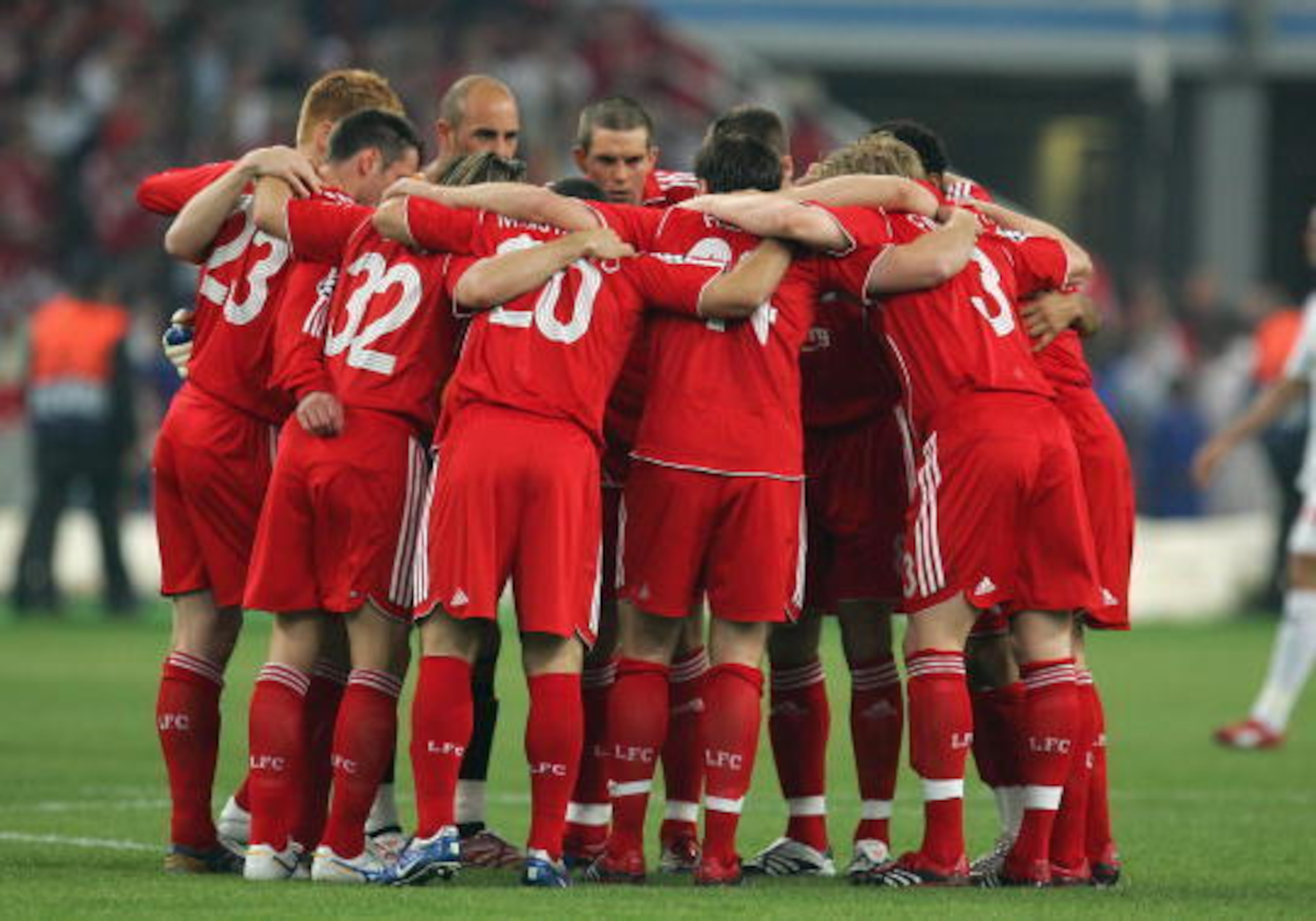
Gillett and Hicks' purchase of the club coincided nicely with Liverpool's second Champions League final in two years, as Benitez took his charges to Athens to take on AC Milan—the side they had so sensationally triumphed over two years previous.
A pair of strikes from Filippo Inzaghi consigned Liverpool to defeat on the night, with a late consolation effort from Dirk Kuyt hiding Benitez's blushes.
Ahead of the game, Gillett told Sky Sports News: "This is about the fans, this is about this club, this is about Rafa."
Although Liverpool lost the tie, this stands as another milestone of Benitez's success at the club.
Like it or not, Gillett and Hicks presided over this in 2007.

.jpg?w=2560 "APTOPIX France Protests")
Low: Pursuit of Jurgen Klinsmann
4 of 10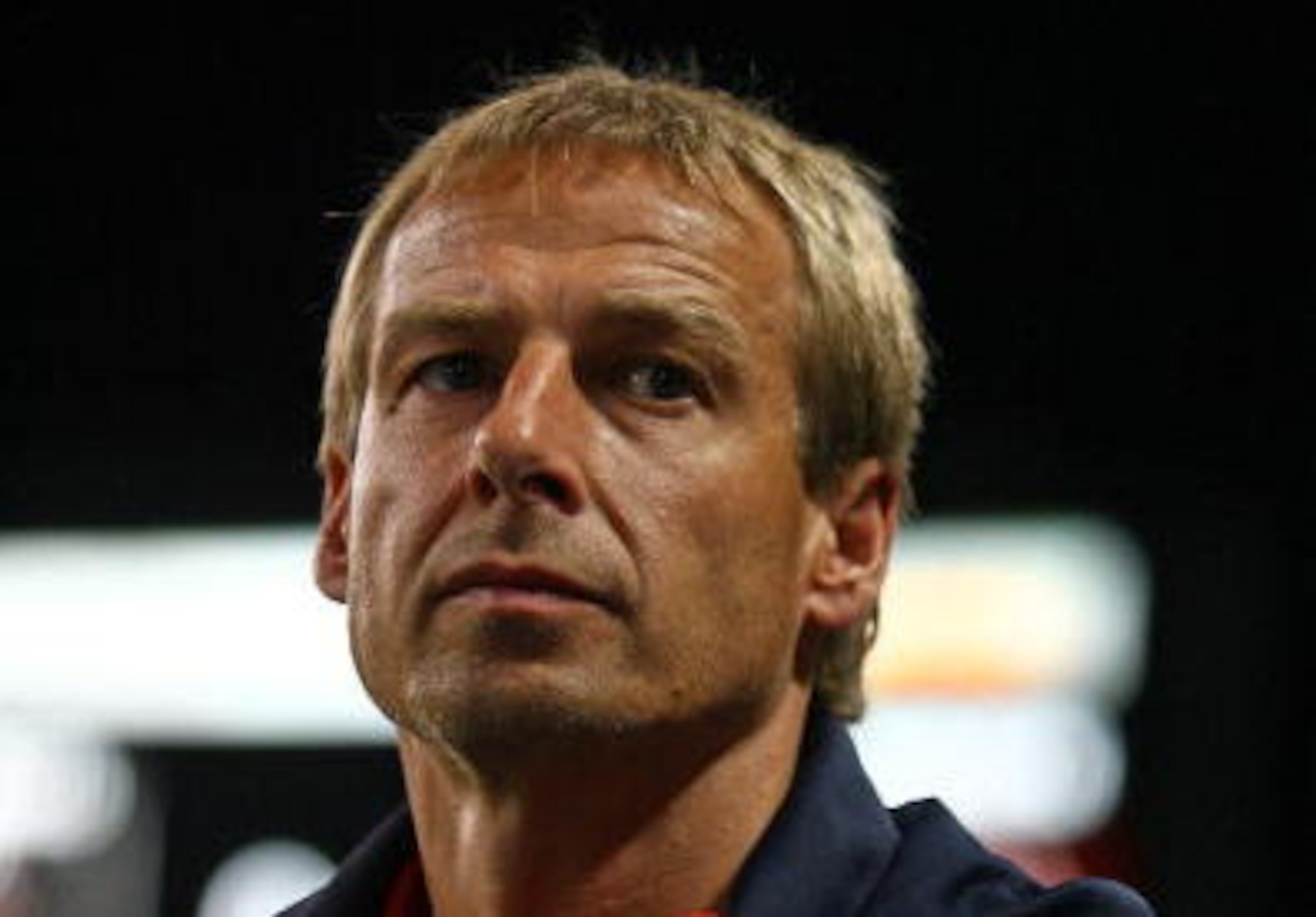
With tensions fraught between Hicks, Gillett and Benitez, the owners ushered another farcical landmark in the long-standing feud, as it emerged they had held talks with former Germany manager Jurgen Klinsmann in 2007.
In January of 2008, the Liverpool Echo revealed how "Klinsmann...was told he would be the ideal man to take Liverpool forward if Benitez either left the club or was dismissed."
The publication quotes Hicks on the subject: "We attempted to negotiate an option, as an insurance policy, to have him become our manager in the event Rafa decided to leave our club for Real Madrid."
This is arguably standard practice, with a contingency plan always required in a fast-paced business.
But as Hicks continued: "Or in case our communication spiralled out of control for some reason." This served to wholly undermine the position of Benitez under the pair at Liverpool.
High: Signing Fernando Torres
5 of 10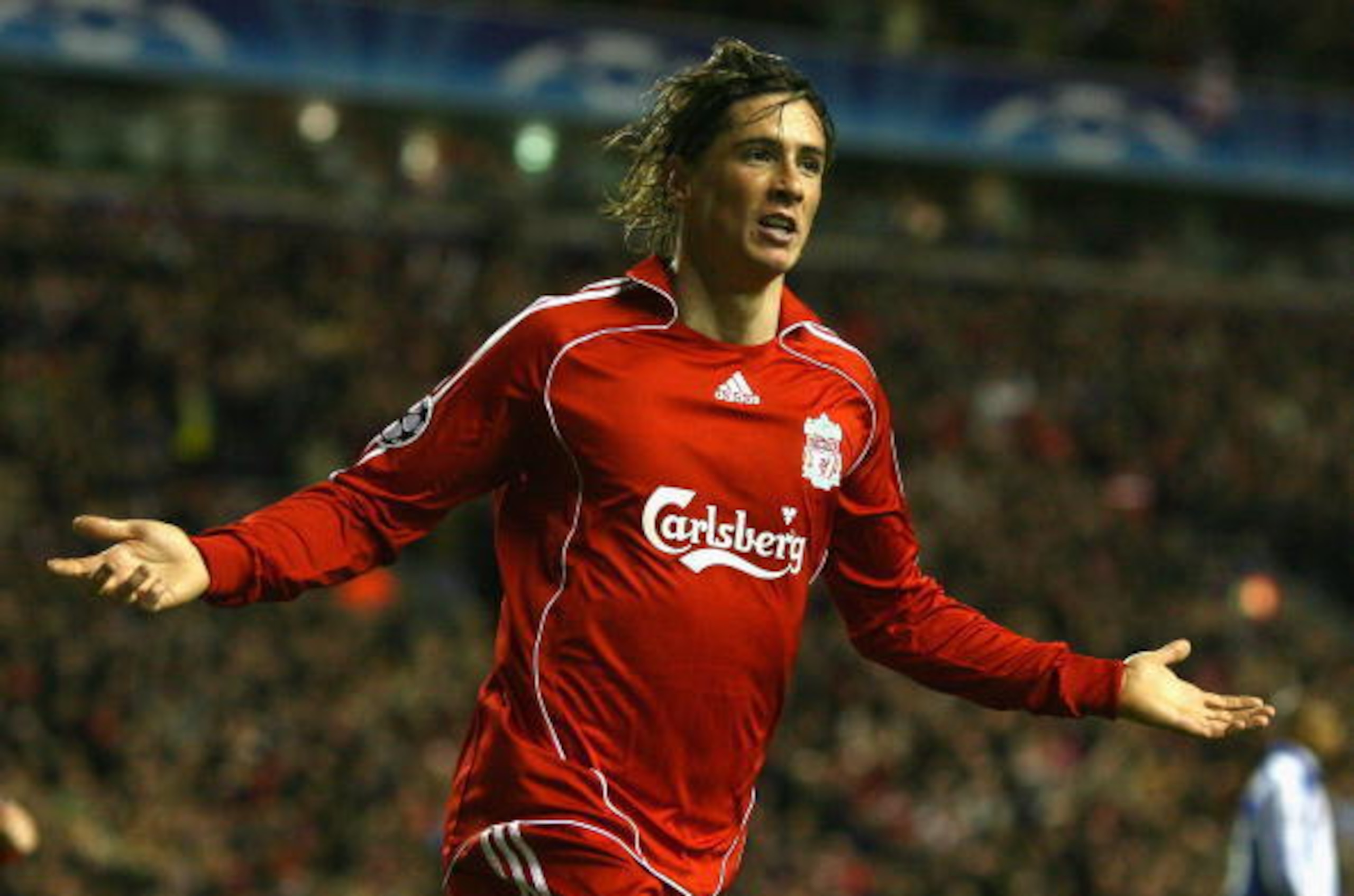
While Benitez had his gripes with Gillett and Hicks in terms of transfers, the Liverpool owners had previously bankrolled a significant spending spree for the manager.
In came Ryan Babel, Yossi Benayoun and Lucas Leiva for a combined £21.5 million, according to LFCHistory.net, as well as the £20.2 million outlay on Atletico Madrid's free-scoring centre-forward, Fernando Torres.
While Babel, Benayoun and Lucas all enjoyed or continue to enjoy relative success at Liverpool, Torres represents one of the club's best signings of the Premier League era.
The Spaniard scored 81 goals in 142 games for the club, recalls LFCHistory.
A phenomenal tally.
Low: Appointment of Christian Purslow as Managing Director
6 of 10
In the summer of 2009, Liverpool season-ticket holder Christian Purslow was asked to join the Liverpool board to "renegotiate the £350 million loan with RBS due to be repaid at the end of July and to work with manager Rafa Benitez on summer transfer targets," as reported by The Telegraph's Paul Kelso
Purslow was required to find money through means of negotiation and managing assets.
That ultimately included the sale of prized midfielder Xabi Alonso to Real Madrid, who was already unhappy at the club following a breakdown in his relationship with Benitez, reported Colin Wood of the Daily Mail.
Alonso and Alvaro Arbeloa both left for Madrid in 2009, but Liverpool's financial gain (to the sum of £38 million) was offset by a significant outlay for replacements Alberto Aquilani (£18 million) and Glen Johnson (£17 million).
Furthermore, as the Guardian's Andy Hunter detailed in 2012, "Purslow pressed on with a deal that would see Liverpool pay [free-agent Joe] Cole more than £100,000 a week for four years," detailing his inability to realistically steady the club's finances.
Purslow's background in private equity made little difference, and his appointment only helped to further damage the club's finances, as well as its fortunes on the pitch.
High: 2008/09 Premier League Title Race
7 of 10
After Liverpool's 2007 Champions League disappointment, Benitez oversaw another near-triumph on Merseyside with an earnest charge on the Premier League title in the 2008/09 season.
A dominant attacking force led Liverpool to the pinnacle of league football, and Benitez caught a glimpse of the domestic success that had eluded him since he took charge on Merseyside.
Steven Gerrard scored 16 goals, Torres 14 and Kuyt 12 as the Reds stormed the league table.
Unfortunately, Liverpool dropped vital points toward the end of the season, and rivals Manchester United pipped them to the Premier League title after a 0-0 draw at home to Arsenal.
Nevertheless, this near-success remains one of the highlights of Liverpool's recent history.
Low: Appointing Roy Hodgson as Manager
8 of 10
When Benitez finally left Liverpool, the manager parted with an immortal statement released on the club's official website, as reported by BBC Sport:
"I'll always keep in my heart the good times I've had here, the strong and loyal support of the fans in the tough times and the love from Liverpool. I have no words to thank you enough for all these years and I am very proud to say that I was your manager.
Thank you so much once more and always remember: You'll never walk alone.
"
The extreme sadness that Benitez portrayed on his departure was reciprocated by a loyal fanbase, and it was in this mournful environment that Gillett and Hicks thrust Roy Hodgson.
"This is the biggest job in club football, and I'm honoured to be taking on Britain's most successful football club," Hodgson told LiverpoolFC.com.
The biggest job for the least qualified candidate, Hodgson was immensely out of his depth on Merseyside, and his disastrous reign serves as evidence of this.
Hodgson lasted six months at the club before being replaced by Kenny Dalglish.
Liverpool were stuttering in 12th place in the Premier League, and Hodgson's signings, such as Paul Konchesky, Christian Poulsen and the aforementioned Cole, making little to no positive impact.
High: Sale of Club to Fenway Sports Group
9 of 10
Hodgson's departure came after Gillett and Hicks' final positive contribution to Liverpool: Selling the club to the Boston-based Fenway Sports Group.
"I am proud and humbled," said new owner John W. Henry at the time, via BBC Sport. "I can't tell you how happy I am. We're here to win."
FSG have brought stability and relative progression to a club considerably rocked by the poor ownership of Gillett and Hicks.
They have even fulfilled the promise of an enhanced stadium, with James Pearce of the Liverpool Echo reporting the group's plans: "By the start of the 2016/17 season, Anfield will have an extra 8,500 seats and an increased capacity of around 54,000—increasing matchday revenues initially by around £20 million per year.
"No more false dawns. No more broken promises."
Low: Legacy of Debt
10 of 10
Gillett and Hicks' ownership of Liverpool was not only disastrous on a cosmetic, results-based level but also a deep-lying financial level.
As Pearce writes, again for the Liverpool Echo, the pair "claimed they were the victims of 'an epic swindle at the hands of rogue corporate directors and their co-conspirators' when the club was sold" to FSG on their behalf by the Royal Bank of Scotland.
That the RBS were in control of this process nods to the considerable debt Hicks and Gillett put Liverpool under during their time on Merseyside.
Pearce wrote:
"Hicks and Gillett claimed they had used their own cash to buy Liverpool but it soon became clear they had taken out a large loan with Royal Bank of Scotland and saddled the club with debt. Those debts continued to mount with the crippling interest payments severely hampering the Reds’ ability to compete in the transfer market.
"
FSG wiped those debts on their purchase of the club, but that expense has regularly limited Liverpool's transfer activity.
The reign of George Gillett and Tom Hicks set Liverpool Football Club back significantly, and Fenway Sports Group, with the help of manager Brendan Rodgers, are only now truly beginning to piece everything back together.
.jpg?w=2560 "Texans Jaguars Football")

.jpg?w=2560 "Peyton Linked to Colts GM Job")