

Fired Head Coach Dallas Eakins a Scapegoat for Edmonton Oilers' Larger Problems
Dallas Eakins' firing was inevitable. No coach runs up the kind of record he did and keeps his job. It also does precisely nothing to address the disaster that has been the Edmonton Oilers roster this season.
On Monday, following weeks of speculation and another embarrassing loss in a stretch that has seen the Oilers drop 15 of 16 decisions, the team elected to part ways with its head coach:

It really comes down to the team’s record. In 2013-14, Eakins’ Oilers went 29-44-9, a worse run than they had managed a year prior under first-time head coach Ralph Krueger, who had been fired to make way for Eakins. They then went 7-19-5 to start 2014-15. Whatever the problems with the roster—and yes, they are myriad—it’s awfully hard to stick with a coach who is winning less than one game in three.
General manager Craig MacTavish admitted as much in a press conference broadcast on Sportsnet.
"He’s an excellent coach; I was happy with a lot of things," MacTavish said. "I had no real good reason to do this outside of performance."
But the simple reality of the situation is that Edmonton is a bad team, a team with problems that go way beyond Eakins.

In the short term, Eakins was killed by his goaltending. A bunch of readers collectively gasped because I didn’t start out with the defence, but it’s true. Ben Scrivens’ numbers entering Sunday’s game tell the tale beautifully; in his first 21 games as an Oiler (in 2013-14), he allowed 62 goals on 741 shots. Over his next 21 games, Edmonton cut the shots against down to 551. He still allowed 62 goals.
Did I hear an angry “BUT shot quality!” murmur from the crowd? Thanks to war-on-ice.com’s shot location feature, we can see that shot location wasn’t an issue; the Oilers actually allowed fewer shots against from the kill zone in front of the net than the league average. We also know that a shot from the high slot (commonly called a Grade B chance) was 50 percent more likely to go in against Edmonton than against an average NHL team. Even worse, we know that a point shot was 75 percent more likely to go in against the Oilers than the average NHL team.
Edmonton gambled on a pair of unproven goalies with good track records as backups. It got 0.885 save percentage goaltending; war-on-ice’s stats go back to 2002-03, and that’s exactly one point better than the worst NHL team on record. No team and no coach survive that kind of goaltending.

That the problems with the roster go well beyond goaltending reveal the extent of the problem in Edmonton. The Oilers’ defensive group isn’t NHL-calibre, as the group the team iced on Sunday night makes painfully apparent:
- Andrew Ference – Jeff Petry
- Keith Aulie – Mark Fayne
- Brandon Davidson – Justin Schultz
- Pressbox: Brad Hunt
Ference, who was a No. 4/5 defenceman in Boston before being signed to a big free-agent contract by Edmonton, is the only useful veteran on the left side of the depth chart. Aulie played just 15 games for Tampa Bay last season and cleared waivers earlier this year after being cut from training camp, Davidson took in his second career game against the Rangers and Hunt is 26 years old, 5’9” and 187 pounds and has fewer than 10 career games under his belt.
The right side of the group is in better shape, but with Petry bound for free agency and the once-prized Schultz a disaster at the moment it isn’t particularly good, and the future is even darker.
Centre isn’t any better; in many ways it’s worse. Boyd Gordon is battling through a back problem and hasn’t been available, so the coach has been stuck with three natural centres, a group that looks like this:
- Ryan Nugent-Hopkins (21 years old, 211 career NHL games)
- Mark Arcobello (26 years old, 73 career NHL games)
- Leon Draisaitl (19 years old, 31 career NHL games)
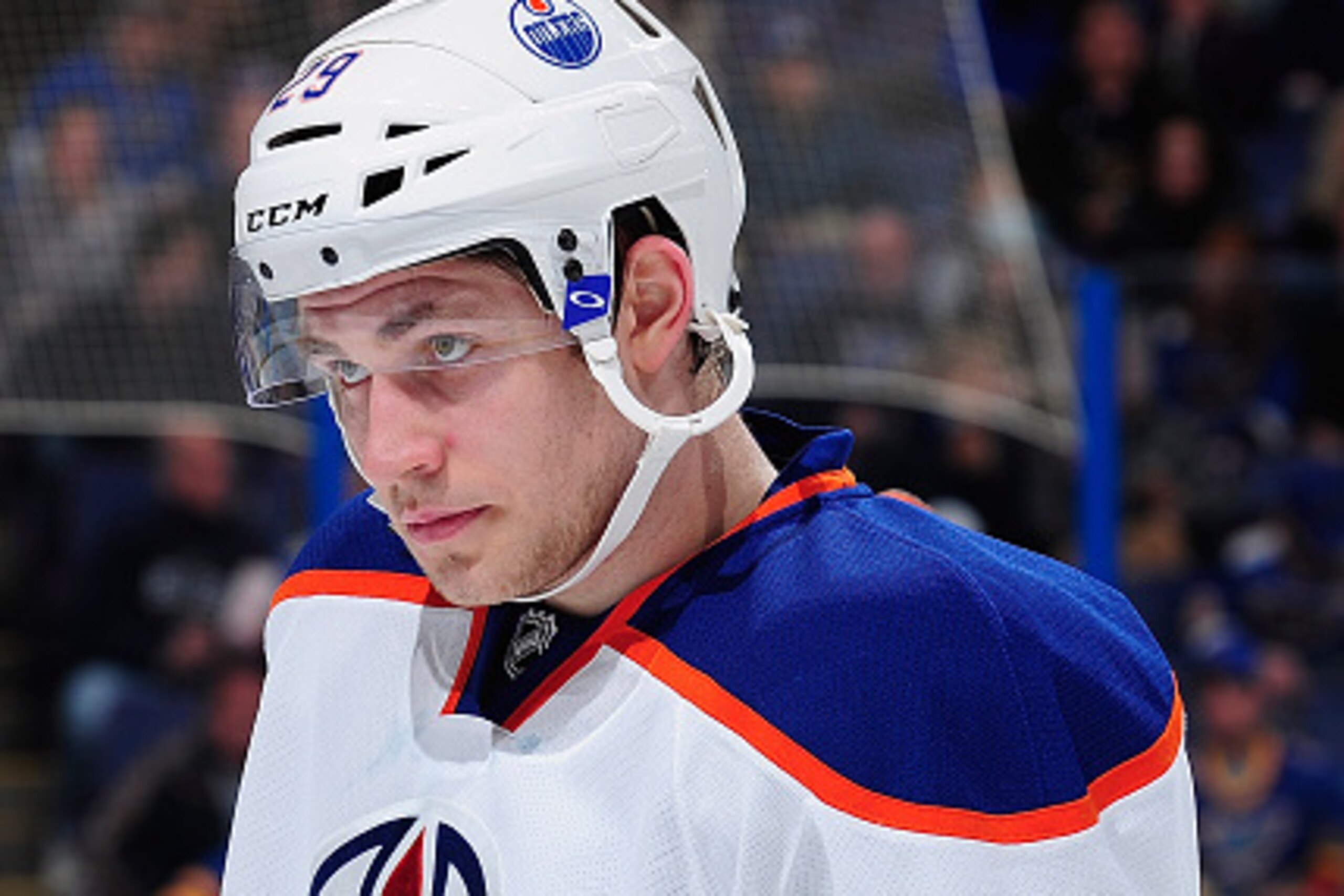
The still-young Nugent-Hopkins is the only player of the three to have played a full NHL season. Arcobello, a 5’8”, 172-pound pivot who was never drafted and fought his way up from the minor leagues, has been the default No. 2 all season. Draisaitl, whose play on Friday was so bad that Eakins benched him for one period and then replaced him down the middle with rookie winger Tyler Pitlick, rounds out the group.
"There's blood all over my hands in this as well," MacTavish said rightly.
None of this is to entirely absolve Eakins, who had his own faults, notably an inability to get the power play to function (a fault which goes back to his AHL days). The love of ex-Marlies like Aulie and the now-departed Will Acton undoubtedly falls on him, too. But the biggest problems with the team are not of his making, even if he’s being made to pay for them now.
Edmonton’s management has been unable or unwilling to fix the critical problems at the three most important positions on the roster. That’s probably why Eakins was retained for so long; the Oilers had made some strides in their possession game, strides that given what the coach had to work with were as impressive as they were surprising.
Statistics courtesy of NHL.com and war-on-ice.com.
Jonathan Willis covers the NHL for Bleacher Report. Follow him on Twitter for more of his work.

.jpg?w=2560 "OBJ Calls Out Giants After Release")




.jpg?w=2560 "Saquon Out for Game")
