

Ray Rice's On-Field Form Playing Key Role in Keeping RB off the Field
Football teams make football decisions.
With former Baltimore Ravens running back Ray Rice still on the free-agent market, it's important to keep things in perspective. Though his appeal is won and over, and he is reinstated to the NFL and could be signed to any team immediately, the fact that every club has heretofore declined do so may have almost nothing to do with the off-the-field issues that have made Rice's life a mainstream media event over the past few months.
For anyone who somehow hasn't heard about it, let's review life in the Rice house during the first three quarters of the 2014 NFL season.
TOP NEWS
.jpg?w=2560 "Titans Giants Football")
OBJ Calls Out Giants After Release
.jpg?w=2560 "Cardinals Giants Football")
NFL investigating referee after viral exchange with player
Lamar Jackson Day-to-Day
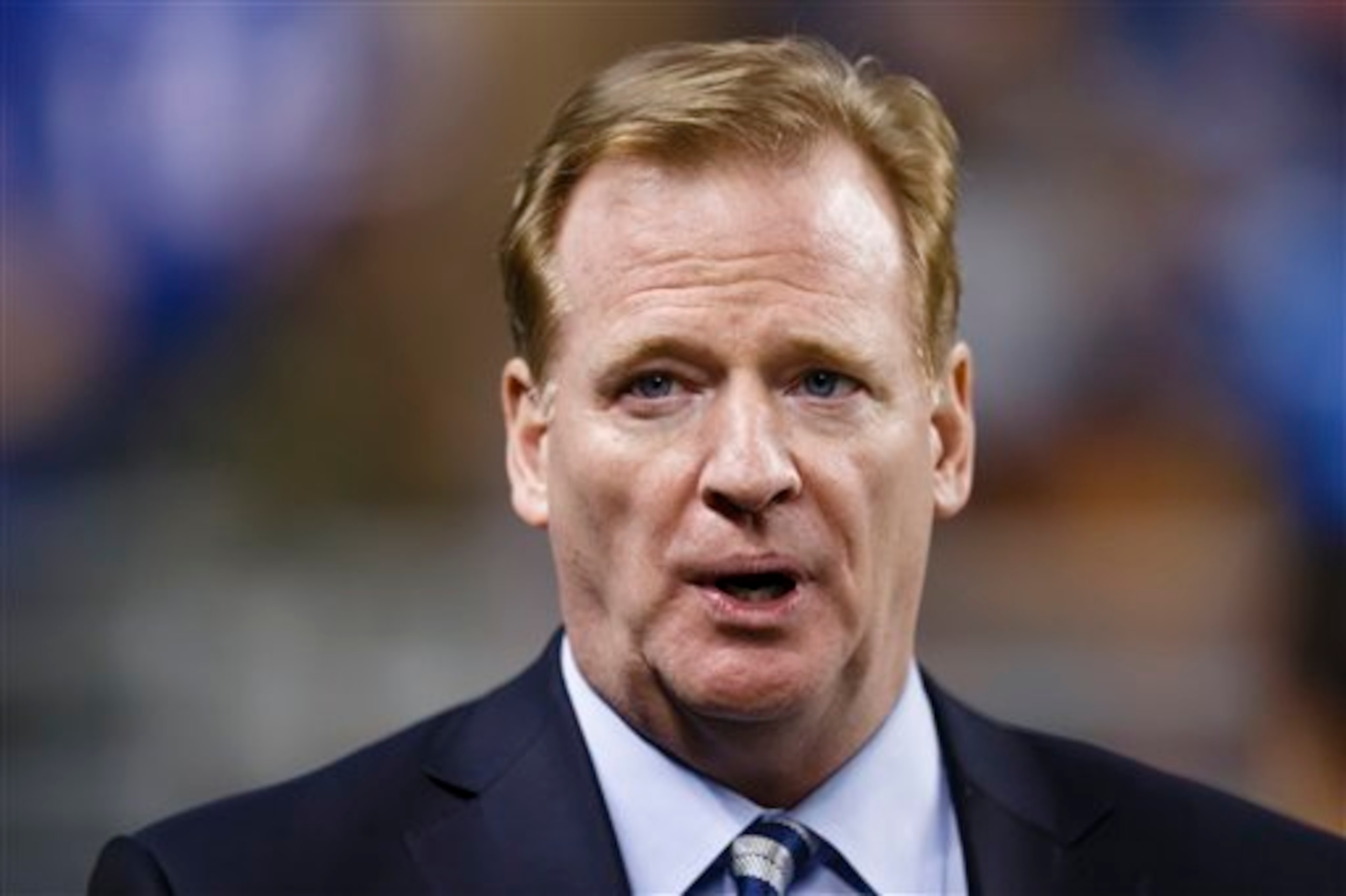
Back in February, TMZ.com released video of Rice dragging his then-fiancee/now-wife Janay (Palmer) Rice out of an elevator in an Atlantic City, New Jersey, casino. At the time, NFL commissioner Roger Goodell inexplicably only suspended Rice for two games—a fact that would later come back to bite Goodell in his proverbial backside.
When tape was later released from inside the elevator, Goodell attempted to suspend Rice indefinitely. But there's no conceivable way he could do that under the collective bargaining agreement, and a judge recently lifted the suspension.
That brings us to our current state of affairs.
Recently, Jemele Hill of ESPN.com interviewed Janay Rice, and both Janay and her husband appeared on the Today show to speak to the public for the first time about the abuse. Responses to the interviews have run the gamut of potential emotions as the public at large continues to struggle with things I outlined would happen months ago in a column on this very site:
"I ask, again, what pound of flesh is enough for an NFL athlete? I'm not asking you to forgive Ray Rice (as if it were even your place), nor am I asking you to absolve or excuse his actions. In fact, I'm pretty sure I just spent a whole lot of digital ink saying the exact opposite...
Rice's punishment cannot be that he never, ever deserves a second chance—even in the NFL.
"
Many in the public will never feel comfortable with Rice in an NFL jersey again, and that is their right to feel that way (I don't necessarily disagree). As I mentioned in that column linked above, there will be those who feel the same way—and always will—about men like Ray Lewis, Leonard Little, Terrell Suggs, Michael Vick and so many others.
Understand, though, that Rice's off-the-field sins and repentance may have only little to do with the fact that he's still struggling to find work.
Tuesday, Pro Football Talk reported that five running backs not named Ray Rice worked out for four different teams. Again, none of those backs were named Ray Rice. Though teams have privately indicated interest (as seen in the tweet below), none are as of yet willing to...you know...actually pay him to play football.
This brings us back to the lead: Football teams make football decisions.
Rice stopped being a really good football player a couple of years ago. If you haven't really noticed, I'm sure your favorite NFL team has. Rice is 27 and will be 28 by the Super Bowl. Last year, the last time we saw him play meaningful football, he was awful.
At the end of 2013, Rice had accumulated 660 rushing yards and 321 receiving yards. Both of those numbers are the lowest production he's had since a 2008 rookie season, when he shared time with Willis McGahee and Le'Ron McClain.
His 3.1-yards-per-carry average and four total touchdowns from last season would put him on par with backs like recently released Ben Tate, formerly of the Cleveland Browns.
Tate, released for Rice-like production, was jettisoned because he was unhappy with his role. Tate was almost immediately picked up by the Minnesota Vikings in a move reminiscent of New England Patriots running back LeGarrette Blount, who was deemed disposable in Pittsburgh after walking out on his team and then featured by the Patriots in subsequent weeks.
You can literally walk out on your team and talk yourself off the roster, and other teams will pick you up if they believe you can be of any use to them. Note: This is a Patriots team that has multiple backs, including a street free agent in Jonas Gray it got 201 yards from in a single game and then benched for far less than Blount was guilty of.
After the 2013 season, Pro Football Focus gave Rice a cumulative grade (subscription required) of minus-18.7. That was the lowest (141st) of any back in the NFL. The next lowest was Oakland Raiders running back Darren McFadden at minus-11.1.
It is one of the lowest grades PFF has ever given a back.
In August last year, our own Will Carroll advised fantasy owners to avoid Rice because of his workload over the previous seasons:
"While Rice's durability seems solid, playing in all 16 games over the past four years plus the playoffs, it's much the same as what we saw from Maurice Jones-Drew, a player with similar talent and physicality. Jones-Drew was surprisingly durable...until he wasn't, losing much of last year with a severe foot injury.
"
Jones-Drew had a similar workload and started declining at roughly the same age as Rice. Now, just a few years older, Jones-Drew was terrible and is now an afterthought for a really bad Oakland Raiders team.
By October 2013, people like Christopher Harris of ESPN.com were asking what was wrong with Rice and placing the blame almost solely on his teammates:
"But make no mistake: This is mostly not about Ray Rice. There are crazy breakdowns up and down this Ravens offensive line. How does a middle linebacker simply get ignored on a sweep, and meet Rice in the backfield? How does Flacco check to plays when Vonta Leach is not in to lead block, and the Pack is showing pure run blitz?
"
There's merit to all of that, yes. The Ravens offensive line was terrible last year, and the addition of tackle Eugene Monroe just a few weeks before that column has paid dividends, as has the addition of the zone-blocking scheme of new offensive coordinator Gary Kubiak.
This is similar to what ESPN's Kevin Van Valkenburg (a Baltimore resident and former Baltimore Sun journalist) said about Rice recently on Twitter:
Yet, Andrea Hangst, Bleacher Report's AFC North lead writer, was angling for the Ravens to move on from Rice before anything was known about Atlantic City or domestic violence. Even while pointing to a lackluster line performance, she wrote in January of this year:
"So much depends on Baltimore's ability to improve its run game this year, from Rice's career to the whole of the Ravens offense. If at any point Rice appears to be part of the problem and not part of the solution, we'll likely see less and less of him on the field until he's finally off the roster.
There's no reason to believe Rice cannot turn things around, but as a running back who is not getting any younger, there is reason to be concerned he's on the downslope of his career.
"
My thoughts exactly, Andrea.
Likely, those are the same sorts of thoughts that personnel men around the league are having as each team is sure to at least discuss Rice and whether his personal redemption story deserves a chapter involving the team they run.
He's a name, and because Rice is a well-known name, he'll continue to be a story. He'll be someone listed on top free-agent boards and at the tip of tongues both from fans and the media in 31 cities not named Baltimore (which actually has a decent running game without him—fifth in the league).
He just may not be a good enough running back to be worth the risk.
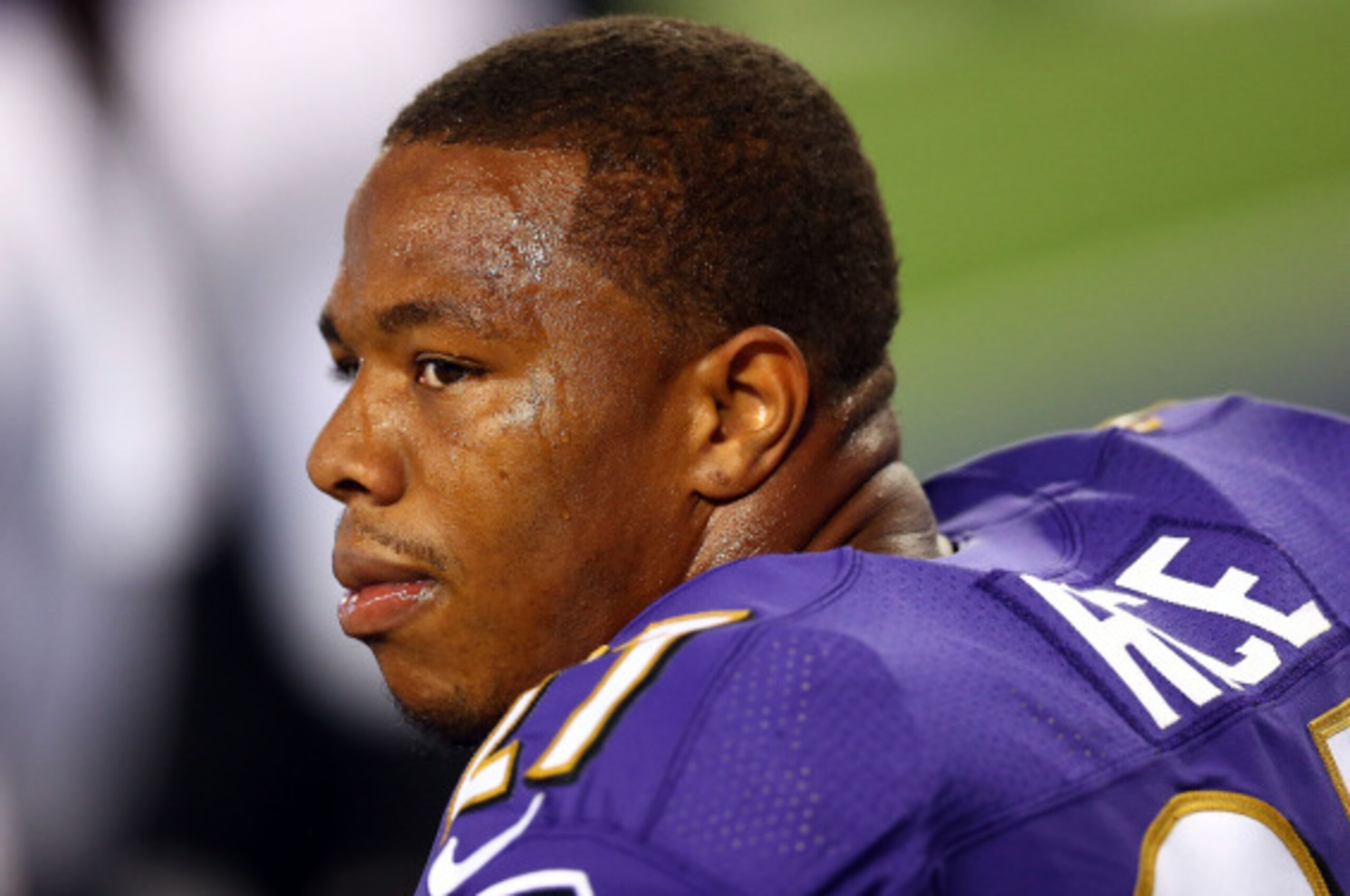
That's what this is. That's what any NFL personnel decision is. I've said it before, and this is as good a time as any to say it again: Every decision made in the NFL is a football decision. NFL teams and the employees who run them are primarily concerned with making money, and the business of making money is also the business of winning football games.
Anytime a player needs to be signed, traded, cut, drafted, waived, etc., the team is performing a risk-reward scenario whether it knows it or not. Does the potential reward for this player outweigh any potential risks he brings to the table?
For the lowliest of players, that "risk" is simply the risk of not having that cap room/roster slot to use elsewhere. It's a minor risk often mitigated by the presence of practice squads and the relatively low minimum salary in addition to the need for warm bodies with which to pad the special teams units.
For players like Rice, the risk is elevated by how people in the fanbase and local (and national) media might react and how the player's presence (and elevated media presence) might affect the rest of the locker room.
This makes Rice's off-the-field transgressions relevant, but the NFL reality is that they're far less relevant than his play.
You'll note I've said much the same in regard to former Miami Dolphins offensive guard Richie Incognito, who was a better player (though, not by that much) the last time we saw him on a football field.
I've also said the same on various radio outlets about former St. Louis Rams and Dallas Cowboys defensive end Michael Sam, who certainly did nothing wrong, but his status as the first openly gay NFL player may be a perceived risk for some making NFL decisions.
Former NFL quarterback Tim Tebow is a walking media distraction, but he got all the NFL chances he needed to prove he's no longer worth any minor risk—real or perceived.
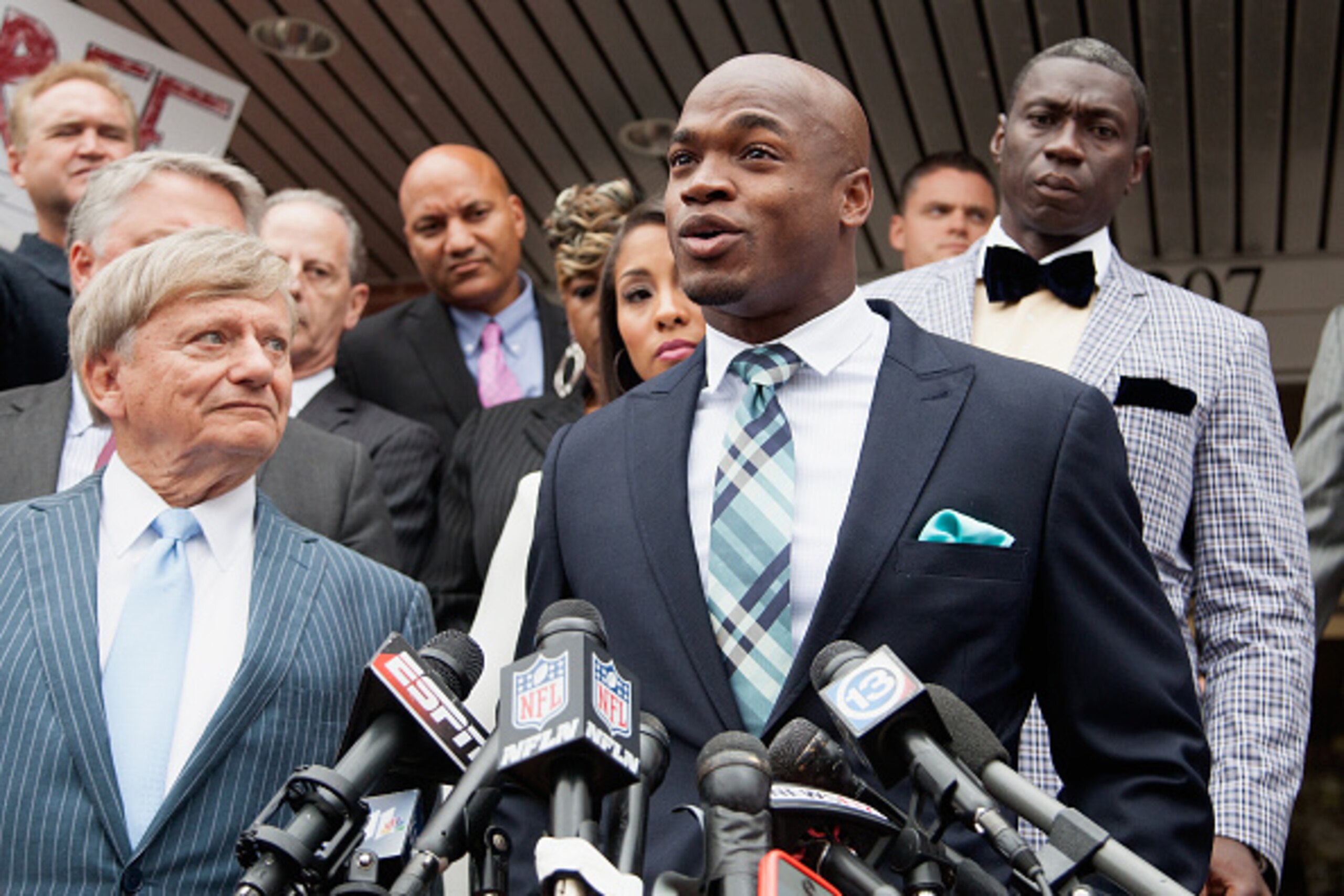
The NFL does not make big moral stances. It will not shut out Rice for being a domestic abuser any more than it shut Little, Vick or Suggs out of the league for their crimes, and it will not shut out Vikings running back Adrian Peterson for the crimes he pleaded no contest to, either.
It will not shut out Rice for hitting his wife any more than it shut out Sam "for being gay" or Tebow "for being Christian," as some may be willing to charge.
No, if Rice never plays another down in the NFL again, it will be a very simple reality: No team watched the tape from the last time he was on the field and deemed him any more worth the risk than a dozen free-agent running backs you've probably never heard of.
This is how NFL teams operate. If any franchise decides Rice can help it win football games, he'll be on its roster that very day without regard to what he did in an elevator in Atlantic City.
That's not cynical; it's just the way the NFL works.
Michael Schottey is an NFL National Lead Writer for Bleacher Report and an award-winning member of the Pro Football Writers of America. Find more of his stuff on his archive page and follow him on Twitter.






.jpg?w=2560 "LaFleur's Fumbling Warning ⚠️")