Is Andrew Miller or David Robertson the Best Closer on Free-Agent Market?
The titular question posed above has a bit of a trick element to it, because although David Robertson spent the entire 2014 season as the closer for the New York Yankees, Andrew Miller has not yet taken on the ninth inning in his big league career.
By conventional wisdom, then, the "closer" label fits Robertson just fine but doesn't quite apply to Miller, who scored a save for the Baltimore Orioles Sept. 7—the first and only in his nine years in Major League Baseball.
That doesn't mean that Miller, a free agent this offseason just like Robertson, shouldn't be considered a closer or that he can't get the job done.
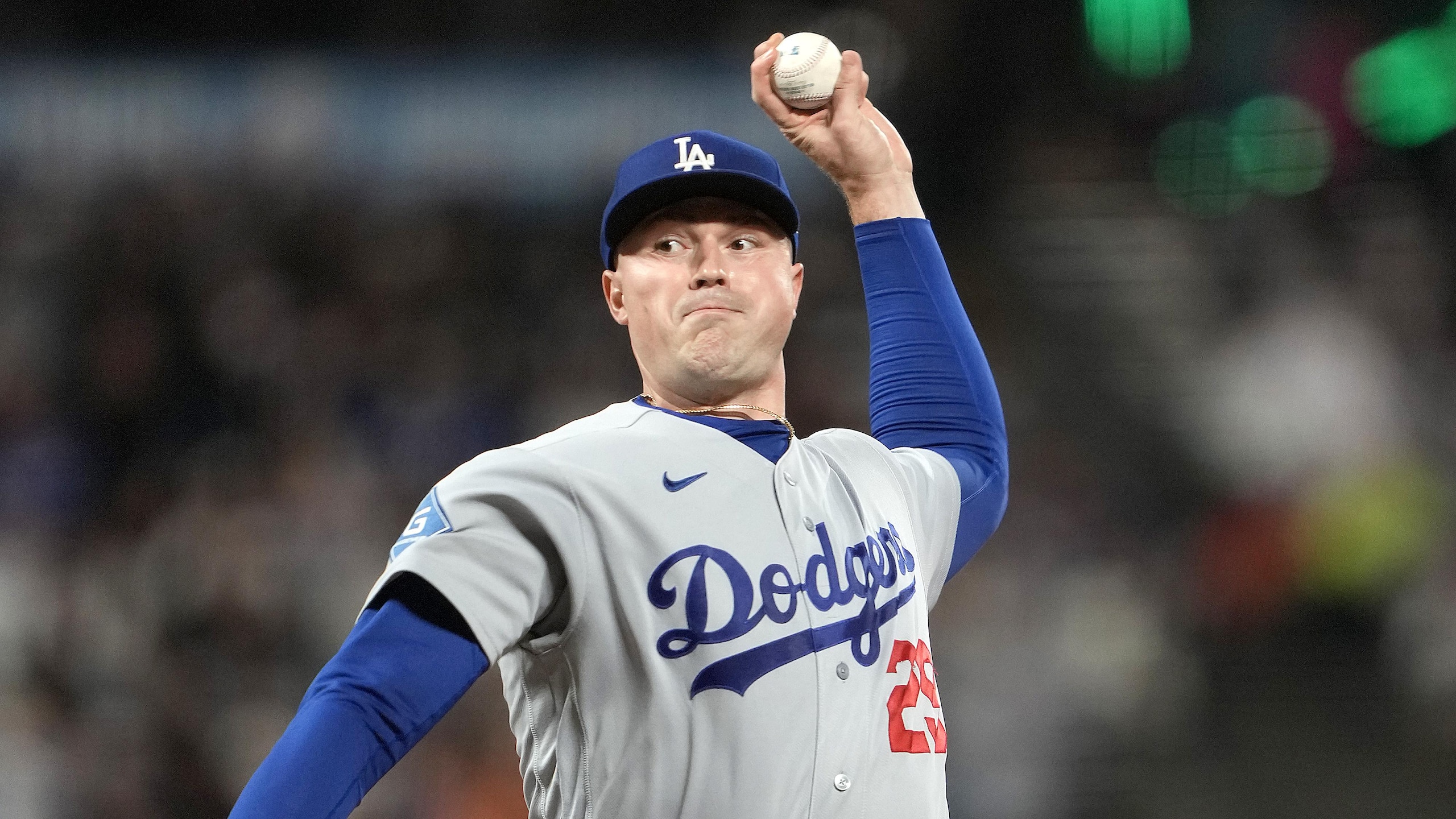
After all, it was around this time last year that Robertson was in a similar situation in the wake of Mariano Rivera's retirement after 19 seasons and 652 career saves—the all-time record. Replacing the greatest closer of all time despite having all of eight saves through the 2013 campaign was a tall task, but Robertson was up to it.
Miller, who started 2014 with the Boston Red Sox before being traded to the O's at the July deadline, isn't necessarily supplanting a ninth-inning icon, but he is looking to prove he can get the last three outs, just like Robertson.
So which of these two relief pitchers, generally regarded as the top options on the free-agent market, is the best? The answer is more complicated than you might think.
Aside from the fact that both Robertson and Miller have experience pitching in major markets in the AL East, they're also both 29 years old. Other than those commonalities, however, they're rather different.
Robertson, for instance, is a righty; Miller, a lefty. At 5'11", the compact Robertson is on the short side, especially for a pitcher; Miller, at 6'7", is tall and extremely lanky.
Robertson has been a reliever his entire pro career and was nobody's idea of a prospect when the Yankees dug him out in the 17th round of the 2006 draft.
The very same year, Miller was a highly touted college arm who projected as a top-of-the-rotation starter and thus was picked No. 6 overall by the Detroit Tigers.
As to their performance in 2014, an important season given that they were on the verge of hitting the open market, here's a look at some of their key statistics:
| G | 63 | 73 |
| IP | 64.1 | 62.1 |
| ERA | 3.08 | 2.02 |
| WHIP | 1.06 | 0.80 |
| K/9 | 13.4 | 14.9 |
| BB/9 | 3.2 | 2.5 |
| HR/9 | 1.0 | 0.4 |
| FIP | 2.68 | 1.51 |
| SV | 47 | 1 |
| fWAR | 1.7 | 2.3 |
Both pitchers obviously had spectacular seasons.
As great as Robertson was, though, Miller actually bested him in just about every category with the exception of saves, where Robertson had a huge advantage (47 to one) simply by virtue of being a closer, while Miller worked primarily in the seventh and eighth innings.
In terms of wins above replacement via FanGraphs, both were top-15 relievers.
For context, Robertson checked in at No. 14 (1.7 fWAR) between Jonathan Papelbon and Hector Rondon, the closers for the Philadelphia Phillies and Chicago Cubs, respectively.
Miller, meanwhile, rated as the sixth best (2.3 fWAR), behind only Dellin Betances (Yankees), Wade Davis (Kansas City Royals), Aroldis Chapman (Cincinnati Reds), Jake McGee (Tampa Bay Rays) and Sean Doolittle (Oakland Athletics).
Judging by the 2014 numbers, then, it appears that Miller, even sans any closer experience, might be the better reliever, right?
Thing is, this past season really was the first one in which the former first-rounder put it all together.
For a number of years, Miller had been on the verge of being a bust. The Tigers rushed him to the majors to help them out of the pen down the stretch as they pushed for a playoff spot in '06. Miller struggled when given a 13-start audition in Detroit (5.63 ERA) the ensuing season, after which he was traded to the Florida Marlins in the Miguel Cabrera deal.
Miller couldn't cut it as a starter even in a pitcher-friendly park in the National League, compiling a 5.89 ERA over 41 starts across 2008-10. Through his first five years, he was both far too hittable (10.3 hits per nine innings) and far too wild (5.3 walks per nine) to be a useful big leaguer.
What's more, while Miller's elbow and shoulder remained mostly healthy, he endured injuries to his hamstring, knee and oblique that cost him chunks of the 2007, 2008 and 2009 seasons.
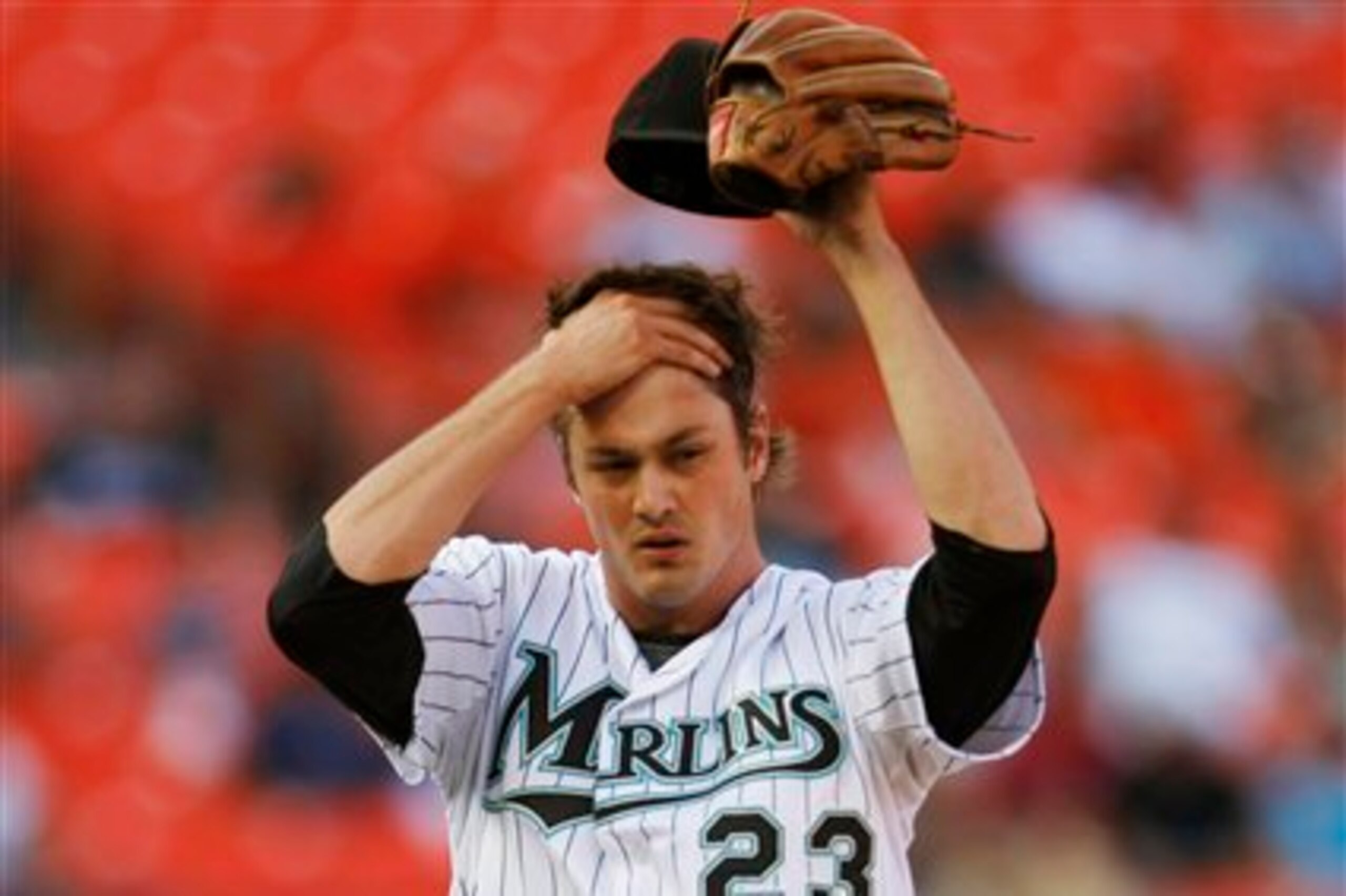
Only the fact that he was a lefty with a special arm allowed Miller to keep getting chances, which is how he wound up landing with Boston after 2010. And even then, he finally found success only after the Red Sox converted him to relief full-time in 2012.
Since then, Miller has posted a 2.57 ERA, 1.05 WHiP, 13.6 strikeouts per nine and 3.6 BB/9 in 133.1 innings (163 games). In short, it clicked—at last.
As for Robertson, well, his path has been much cleaner, even though he never was considered the kind of prospect Miller was out of college.
Simply put, the right-hander has been one of the very best relievers in the sport since 2009. As the setup man for Rivera from 2009 through 2013, he compiled a 2.50 ERA, 1.23 WHIP, 11.8 K/9 and 3.9 BB/9 in 298.2 innings (314 games).
Then, despite facing as much pressure as any player in the majors entering 2014, Robertson not only took over from Rivera, but also proved he could be a closer on a contending club and in the always-on spotlight in New York.

Looking at these two pitchers with all that in mind, Robertson and his long history of top-notch performance would appear to have the edge over Miller's more recent emergence, no?
But there's still more to it than that.
Robertson wants "Papelbon money," as Andrew Marchand of ESPN New York reports, referring to the four-year, $50 million contract—the largest ever given to a reliever—that the Phillies forked over to get their closer to sign when he was a free agent after the 2011 season.
While Papelbon has pitched well (2.45 ERA, 1.03 WHIP) and held up through the first three years of that deal, the move was widely criticized at the time, and front offices have become increasingly leery of giving long-term deals to relievers, whose performances tends to be volatile from year to year.
Although Yankees general manager Brian Cashman didn't indicate whether he would give Robertson that kind of money, he did say, per Marchand:
"Clearly, as a free agent, he is going to maximize his value, period, whatever that turns out to be, but I wouldn't characterize it other than the fact to say he is helluva pitcher that did it in the toughest environment after the greatest player of all-time and he did it with ease. I would suspect that would command top dollar.
"
Miller, as a breakout performer coming off a fantastic season and even better postseason—he threw 7.1 scoreless innings, allowing just one hit while striking out eight for the Orioles in October—can command a hefty salary himself, likely something in excess of $10 million a year for three or four seasons.
Put simply, neither of these arms is going to come cheaply.
Here's Tom Van Riper of Forbes on the questionable decision of laying out so much money to a reliever:
""
Years after team execs around the league have delved into advanced metrics to more accurately value players, the closer position remains a stubborn holdout. Many general managers still see the ninth inning specialist – the guy who “closes” out the game to preserve a lead by getting the final three outs – as a premium position. The evidence shows overwhelmingly that it isn’t.
There is one final factor to consider: Because Robertson turned down the qualifying offer of $15.3 million for one year from the Yankees—an amount that would have made him the highest-paid reliever based on average annual value of salary—any team that signs him will lose a first- or second-round draft pick (aside from the Yankees, were he to return).
That has proven to be a cost some clubs simply will not pay, meaning Robertson's market actually might not be as robust as it would otherwise appear given his age, track record and health.
Both Robertson and Miller come with very legitimate risks and concerns, separate from the fact that they're relief pitchers, a position marked by injury and inconsistency.
For the former, the massive money and loss of a draft choice are two large hurdles a team will need to get past to sign Robertson.
For the latter, the bigger questions are whether Miller's 2014 represents the real deal and if he can handle closing when he has all of one save in his nine-year career. More than likely given Miller's stuff, this is an if-A-is-true-then-B-is-also-true equation.
Ultimately between these two, Robertson undoubtedly has been more productive and is more proven, so if that's the only aspect a team cares about, then he would be the better—and safer—choice, particularly for a contender.
Miller, however, has the chance to work out as the better value, given that he isn't anchored by draft-pick compensation, might not require "Papelbon money" and has displayed a skill set that makes him one of baseball's best relievers, perhaps even as good as, or better than, Robertson.
The one X-factor in all of this is whether Robertson, as great as he has been, will find a team willing to splurge $40-plus million on a reliever and also surrender a selection in June.
If that undercuts his market to the point where his asking price comes down substantially over two or three years—perhaps even below Miller's—then he could be both the safer bet, which he already is, and the better value.
If not, Robertson's next team better hope he has four more years ahead of him to match his last four.
Statistics are accurate through the 2014 season and courtesy of MLB.com, Baseball-Reference.com and FanGraphs unless otherwise noted.
To talk baseball or fantasy baseball, check in with me on Twitter: @JayCat11.


.jpg?w=2560 "Every Trade's Best Trade Asset 🔁")
.jpg?w=2560 "Insiders: Cowboys Overpaid for Porter")
.jpg?w=2560 "Top NFL Trade Targets")