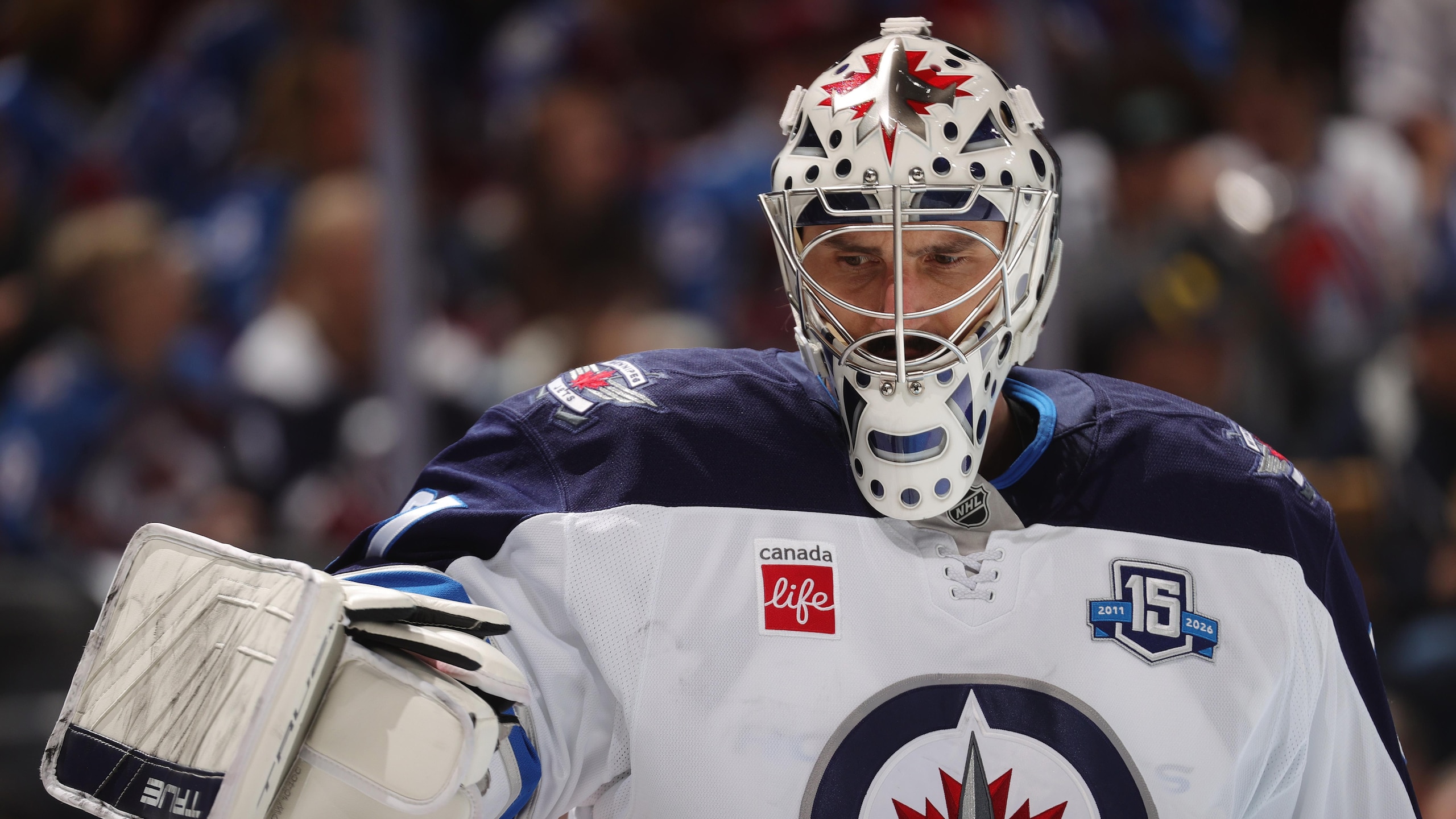
Cole Hamels vs. Max Scherzer: Assessing Each Target's Value
Front-line pitchers are there for the having.
This offseason, more than any other in recent memory, offers an array of aces. They are there in free agency—Max Scherzer, Jon Lester and James Shields—and on the trade market with Cole Hamels, Jeff Samardzija and possibly even David Price. Of course, the price has to be right to land any of those men, and the right prices will be quite costly.
Yet, of all the names listed, two stand out. Scherzer and Hamels appear to be the most appealing free-agent and trade-market arms available, respectively, and both are likely to be the most expensive in each pool.
TOP NEWS
Tokyo Giants Hire Matsui 👔

Next MLB Players to Sign $200M Contracts 💰
.jpg?w=2560)
World Series Predictions 🔮
That begs the question: Which ace is the better deal?
More than any other shopping team, the Chicago Cubs will value the answer. They have been linked to Scherzer since the World Series, and it now appears the Lovable Losers might also be back in on Hamels, according to Jon Heyman of CBSSports.com. The Cubs claimed Hamels on revocable waivers in August, but the Philadelphia Phillies pulled him back. Now, with a much bigger window to negotiate, Chicago might be the front-runner to land Hamels since it has both the money it would take and the prospects to send back to Philly.
Breaking down each guy’s value to a new team, the starting point is obvious.
Cost and Value
Scherzer turned down a six-year, $144 million extension from the Detroit Tigers before last season started, and with Scott Boras doing his bidding, the asking price for him on the open market appears to be in the range of $200 million. There is also the added cost of draft-pick compensation since the Tigers made Scherzer a qualifying offer.

For whatever price Scherzer and Boras settle on, it will net riches for a right-hander who won’t turn 31 until the end of July and has posted a 3.52 ERA, 3.22 FIP and 117 ERA+ over the last four seasons, one of which (2013) resulted in an American League Cy Young Award. While that is solid production, it’s not that of a full-blown ace. If you narrow down Scherzer’s production to his last two seasons, you get a man worthy of the ace moniker.
Hamels has been the more dominant ace over the last four seasons, but he is narrowly edged over his last two. However, Hamels in 2014 was pure mastery—a 2.46 ERA, 3.07 FIP and 151 ERA+—and has not shown signs of falling off. In fact, the only thing he seems to suffer from is a lack of run support.
"Since 2013, Max Scherzer and Cole Hamels have the same # of quality starts (43)...Scherzer is 31-2 in those games, Hamels just 14-10 #noruns
— John Boruk (@JohnBorukCSN) August 20, 2014"
The Phillies have pretty much hoisted the white flag for the next two seasons, so nearly every player on their roster is available now. Assuming the Phillies don’t pick up any of Hamels’ remaining salary, the acquiring team will owe the left-hander at least $96 million over the next four seasons (he has a $6 million buyout for 2019).
Then there is the haul the Phillies will demand for him. Aside from the money, Hamels is going to cost a team a significant package of prospects and/or young major league talent. Few teams—the Cubs, Boston Red Sox, Texas Rangers and Los Angeles Dodgers—have both the financial resources and farm system to even entertain such a trade. That will limit Hamels’ market, although the longer Scherzer, Lester and Shields hold out, the cheaper Hamels becomes because of the surplus.
The major difference between Scherzer and Hamels is innings pitched. While they are nearly even over the last four seasons, Hamels has pitched 1,883 big league innings in his career, including the postseason. Scherzer has 1,302 career regular and postseason innings. That 581-inning difference could be Scherzer’s main selling point when his value is matched up against Hamels’.
Points in Career
Despite being only seven months apart in age—Hamels is older—the innings pitched tell you where they are in their careers.
Hamels has been a Philadelphia ace since his second major league season in 2007. He has pitched 200-plus innings in six of his last seven seasons and has three top-10 Cy Young Award finishes.
Scherzer has pitched 200 innings twice in his six full seasons and has shouldered his team’s workload in only the last two years. The fact that he has thrown so many fewer innings than Hamels means Scherzer is developing his A-game later in his career. Any team that signs him will be paying for at least a few more years of top-flight production. However, to get those years, the spending team will most likely have to sign him for seven total as opposed to getting Hamels for four.
Attainability
It isn’t exactly breaking news that neither of these guys will be easy to land. Not for the Cubs or anyone else. It is likely that both will be in a holding pattern until Lester, Shields and the other pitching dominos start tumbling.
If the Cubs can sign Lester, Shields or both, it changes the market for Scherzer and Hamels. For Scherzer, it could drive his price down because one of the more aggressive teams targeting him will be out of play. For Hamels, it’s the same situation, except it’s bad news for Philadelphia’s leverage instead of Hamels’ bank account.
In a totally open market, which is where things stand, Hamels is expensive because the Phillies have leverage. It is entirely likely that the organization believes Hamels is still young enough to build around and can anchor their rotation for the duration of his contract. If the Phillies’ demands aren’t met, they are inclined to keep their ace.
"Cole is one of those guys in particular who can be a bridge to the future as well, because of the length of the contract, because of the quality of the pitcher...," general manager Ruben Amaro Jr. said in an interview with MLB Network Radio (via Philly.com's Justin Klugh). "There's no need to go out and move him, there's no rush to go out and move him."
Plus, if the Phillies can get good value for Jimmy Rollins, Marlon Byrd or anyone else they are making available, it means Hamels is less likely to be dealt and more likely that the Phillies don’t budge on their asking price.
As for Scherzer, his market is limited by Boras, who rarely allows his guys to sign for less than expected. Sometimes that means holding out until the smell of spring starts wafting.

Scherzer is dealing with a market that has much more supply than demand, and in this age of depressed offense, aces on the open market don’t carry the same cache. Zack Greinke is the recent exception, but he hit a market where the Dodgers were spending. Scherzer hits one where they have the front of their rotation set and are leaning toward more relatively frugal times.
While it still might cost a team between $160-180 million, or possibly the aforementioned $200 million—per Barry Svrluga of The Washington Post—and three more years than Hamels to land Scherzer, he is the more attainable ace for a big-market club.
Acquiring each of these pitchers requires different and highly valuable resources, but each can turn a team into a World Series contender. There is no clear answer to who is the better deal once a team decides it can afford a new, shiny No. 1 starter. It is a matter of what a team is more willing to lose: money or personnel.
The next three months will tell.
Anthony Witrado covers Major League Baseball for Bleacher Report. He spent the previous three seasons as the national baseball columnist at Sporting News and four years before that as the Brewers beat writer for the Milwaukee Journal Sentinel. Follow Anthony on Twitter @awitrado and talk baseball here.
.png?w=2560)