Using RC+ and BABIP to Predict 2015 MLB Studs and Duds
"Stats never lie."
Any casual sports fan has heard that phrase before. But when it comes to baseball, some stats can be extremely deceiving.
Thankfully, advanced statistics have come to light that help baseball fans dig deeper into a player's overall impact. The two advanced measures that will be used in this article are weighted runs created plus (wRC+) and batting average on balls in play (BABIP). By combining these metrics, we should be able to peer into our crystal ball and predict some studs and duds for 2015.


But first, a little background.
BABIP is a little easier to understand, so let's start there first. A generic batting average takes into account how many hits a player gets in relation to his at-bats. BABIP pushes that concept even further by measuring a player's batting average on balls that are actually put in play. FanGraphs puts it best when describing BABIP: "for hitters, we use BABIP as a sanity test of sorts to tell us if their overall batting line is sustainable or not."
If a hitter sees an extreme spike in BABIP, one can assume that the hitter is experiencing better luck on balls in play. Logic would tell you that such luck will not continue and that the player is likely to regress to his career average.
Obviously a higher BABIP will increase a player's wRC+, a stat designed to quantify a player's total offensive value in runs compared with the league average after park and league adjustments.
The league average is set at 100. Every point above that mark is a percentage point above the league average. Andrew McCutchen of the Pittsburgh Pirates led the MLB with 168 wRC+, meaning he created 68 percent more runs than a league-average hitter would have in the same number of plate appearances.
Together, these two stats can tell us plenty about MLB hitters. Using wRC+ and BABIP, here are some projections for the 2015 MLB season.
Three Studs
1. Justin Upton
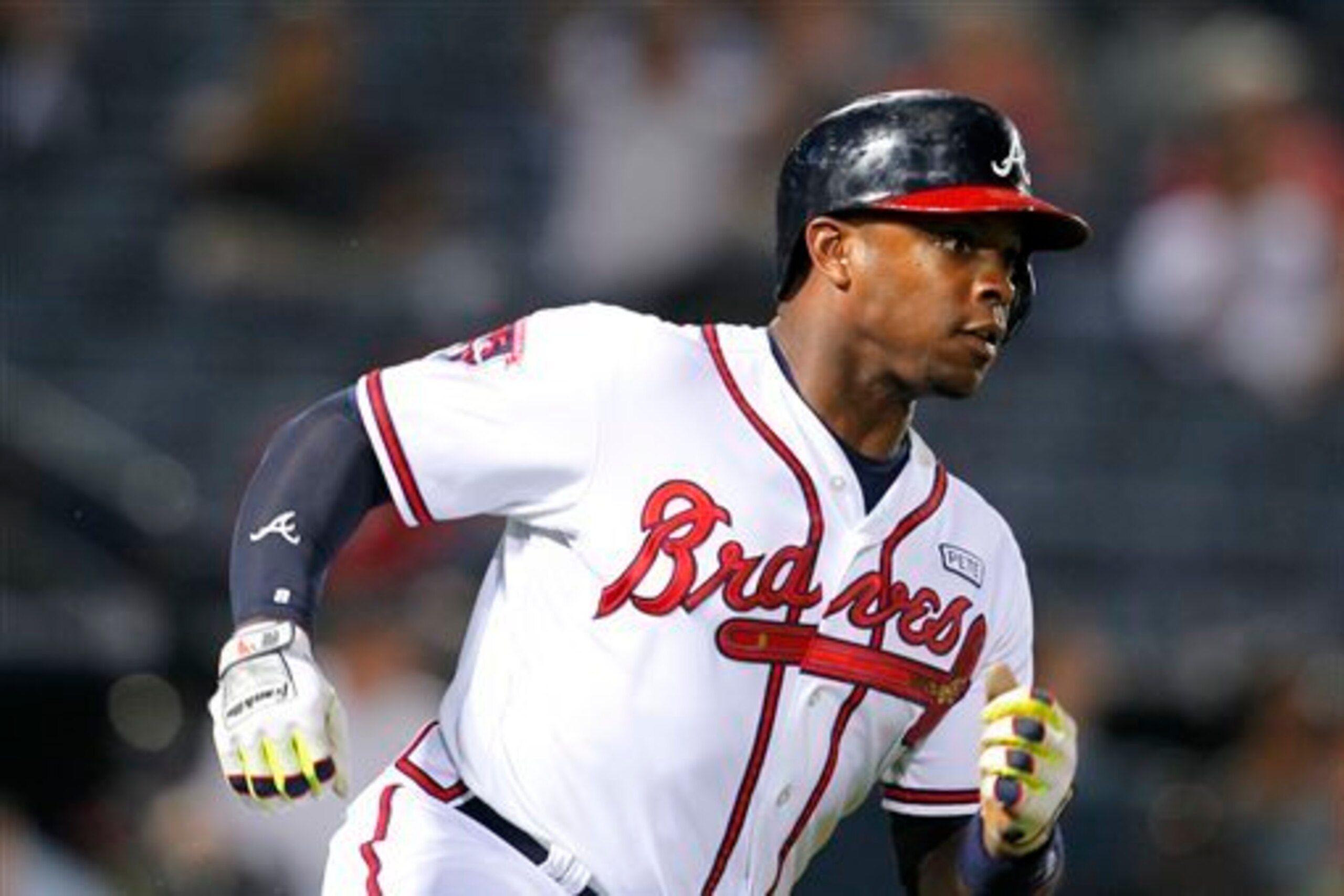
Upton produced at a high level for the Atlanta Braves this season, hitting .270 with 29 home runs and 102 RBI. The Atlanta outfielder also played in 154 games in 2014, his most since 2011.
Why will Upton continue to be one of the better hitters in the NL next season? At just 27 years of age, it's safe to assume that the former Arizona Diamondback is just beginning to enter the prime of his career.
The numbers tell you a similar story.
Upton ranked 24th in MLB with 133 wRC+. He did so with a .332 BABIP, which compares favorably to his career average. "J-Up" continued to hit a high percentage of line drives (20.1 percent), while posting an impressive home run-to-fly-ball ratio of over 17 percent.
2014 wasn't a blip on the radar. It's an indicator of what a typical Upton season will look like going forward.
2. Lucas Duda

Duda was a monster in 2014 for the New York Mets.
The slugger recorded career highs in every offensive category. His power numbers have never been questioned, as evidenced by his 30 homers and 92 RBI in 153 games.
Could Duda's breakout season be as simple as consistent playing time? A wRC+ rating of 136 with a fairly modest average of .283 average on balls in play indicates solid production without a huge jump in the good-luck department.
Mike Petriello of FanGraphs wrote an interesting article on Duda's improvements back in August. Petriello mentions more playing time at a defined position and a healthy body as key reasons for Duda's increased production.
3. Anthony Rendon

The Washington Nationals are blessed with a plethora of young talent, but Anthony Rendon may be the cream of the crop.
At just 24, Rendon led all NL third basemen in runs, ranked second in wRC+ and led all of MLB in WAR.
A huge reason for Rendon's jump in wRC+ is his increased power numbers.
After hitting seven homers in 2013, the infielder went deep 21 times this season. This can be attributed to an increase in his fly-ball percentage (33.9 to 39.6). Naturally more fly balls will lead to more long balls, as evidenced by a 3 percent increase in his home run-to-fly-ball ratio.
Rendon is just beginning to find himself as a major league player. The former top prospect's modest .314 BABIP is right on par with his career norm, proving his improvements can be attributed to talent rather than luck.
Three Duds
1. Michael Brantley

Over the past few seasons, Brantley has turned into a useful outfield option in Cleveland. Yet his run production left much to be desired, never topping 10 homers or 105 wRC+.
The Cleveland Indians outfielder has been the definition of average his entire career, especially at the dish.
Suddenly in 2014, Brantley posted a 155 wRC+ with 20 homers. After hovering around a 2.0 career WAR, he ranked third in all of baseball at 6.6 in 2014.
Brantley is a solid player, capable of playing solid defense and stealing some bases for a ballclub. But to suggest that he can maintain a level of production unseen in his career is hard to believe.
The highest BABIP of his career without a significant change in his line-drive percentage is likely the reason for the skepticism.
2. Dee Gordon
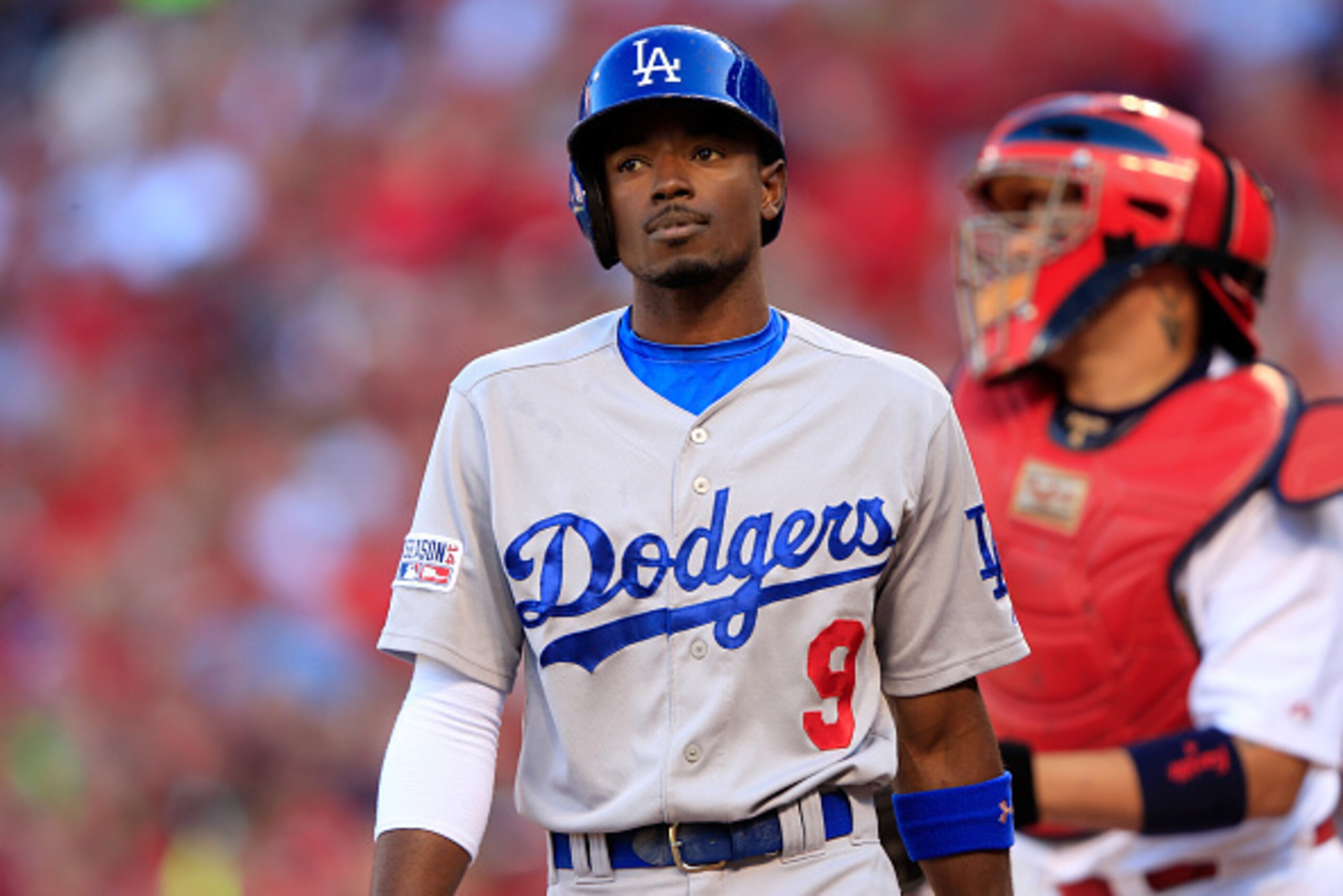
On paper, Gordon had a magnificent 2014. The speedster hit .289 with 92 runs and 64 stolen bases for the Los Angeles Dodgers this past season in a career year.
So why should we expect some regression?
Firstly, Gordon's walk percentage of 4.8 percent was the lowest of his career. That would be fine if his strikeout percentage had dipped some too, but a 16.6 percent mark is similar to his career average. Despite an increase in batting average, Gordon is walking less and failing to improve his strikeouts.
To his credit, the infielder boasted improvements in infield hit percentage and bunt hit percentage. When Gordon attempted to bunt for a hit, he succeeded roughly 42 percent of the time. By playing to his strengths, Gordon was able to become a capable leadoff hitter for L.A.
But in an article by Mike Podhorzer of FanGraphs, he notes that Gordon needed a .346 BABIP to post a very mediocre .312 wOBA. Building off that thought, Gordon's career year was a very average one at best. A dip in infield/bunt hits or an increase in pop-ups could easily bring him back to his career averages next season.
3. Josh Harrison
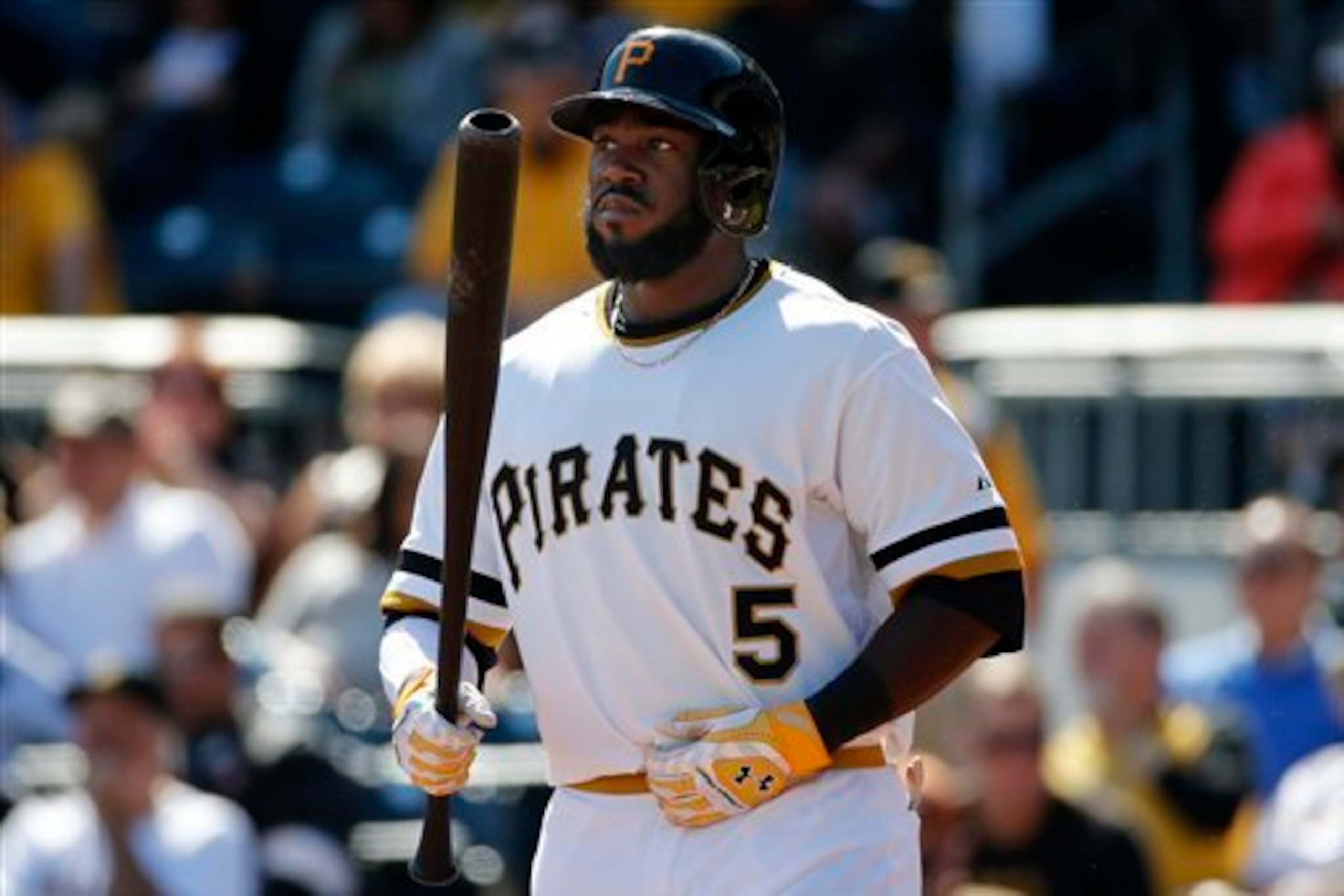
Another player in 2014 who came out of nowhere to be one of the better players in the NL was Josh Harrison.
But when longtime utility players enjoy a 40-point increase in BABIP, eyebrows will be raised. Harrison is a free-swinger as evidenced by his lowly career walk percentage of 3.3 percent. For a player with limited power potential, such a small walk percentage is cause for concern.
Jeff Zimmerman at FanGraphs wrote a great piece on Harrison's breakout 2014.
In the article, Zimmerman compares Harrison's season with similar players in the past and how they fared in the season after their career year. The resulting list included a group of average players who failed to replicate their one breakout year.
To quote Zimmerman, "Since no player in the last 35 years has broken out with Harrison's skill set, I will take my chances and guess he wont either."
Data doesn't lie, my friends.
.jpg?w=2560)
.png?w=2560)