The Best Play-by-Play Calls in Sports History
Though sports are best seen, some of the industry’s most illustrious moments are remembered for the announcers who called them.
The world’s top athletes—let’s call them visual actors—are enlivened by those who give their actions a voice. They're linguistic painters, if you will.
Announcers don’t just bring order and reason to the action; they color it in with artistic passion and imagery.
In the moment, athletes most often take precedence. But upon remembrance, the very best calls take on lives of their own, allowing fans to relive that which is stuck in time.
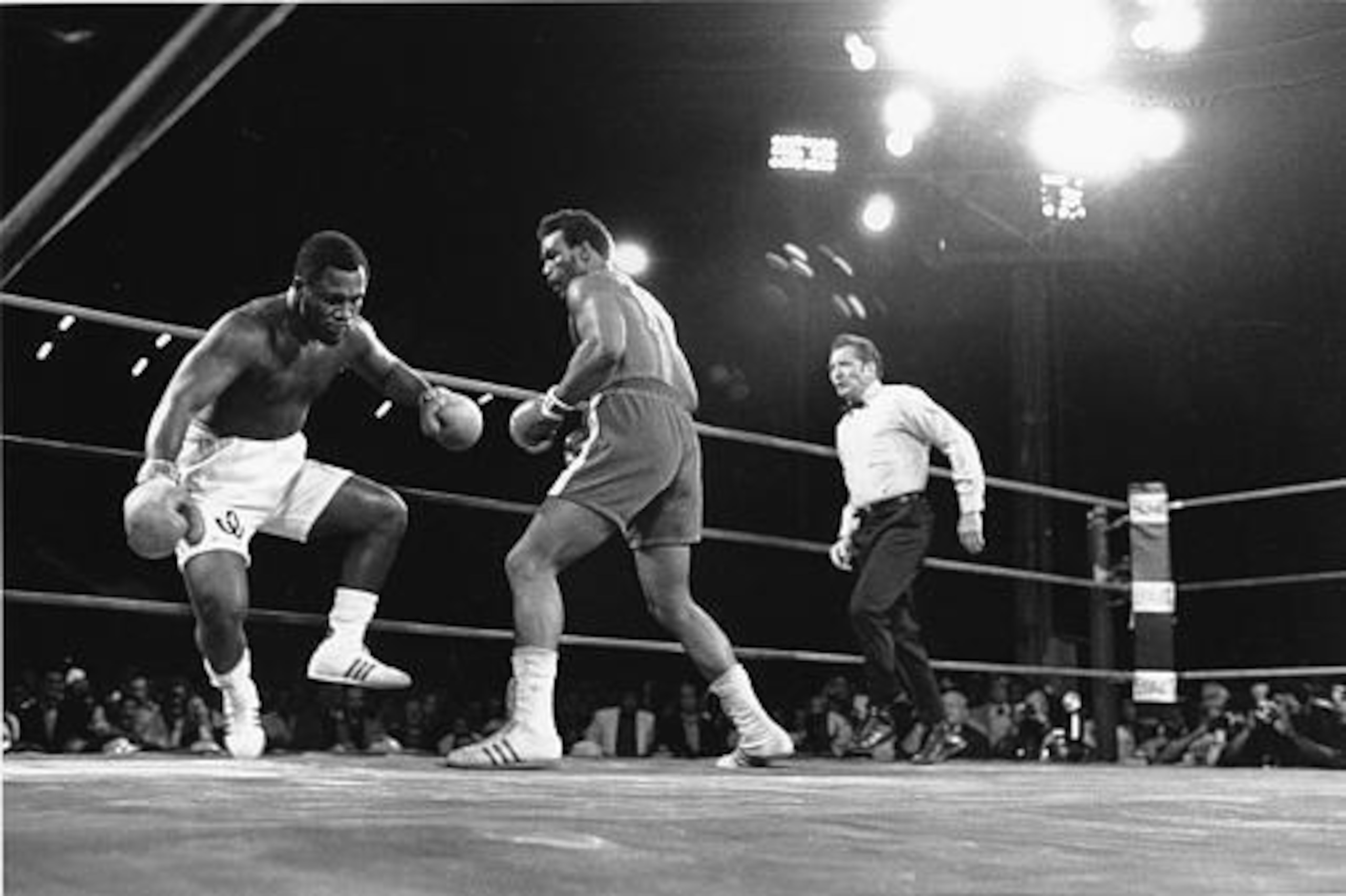
When thinking back to George Foreman’s 1973 fight with Joe Frazier, Howard Cosell’s declaration—“Down goes Frazier! Down goes Frazier!”—is every bit as memorable as the knockdown itself.
Likewise, more people have heard Johnny Most scream, “Havlicek stole the ball” than have actually seen Havlicek steal the ball.
And when baseball fans think about the "Shot Heard ‘Round the World," they remember Bobby Thomson’s homer less than Russ Hodges' iconic call.
With these oratory geniuses in mind, we decided to honor the 13 best play-by-play calls in sports broadcasting history.
Of course, some of the plays we highlight are more significant than others, and that’s OK.
After all, we aren’t celebrating the moment as much as those who captured it and the excellence with which they did so.
Close, but No Cigar
1 of 14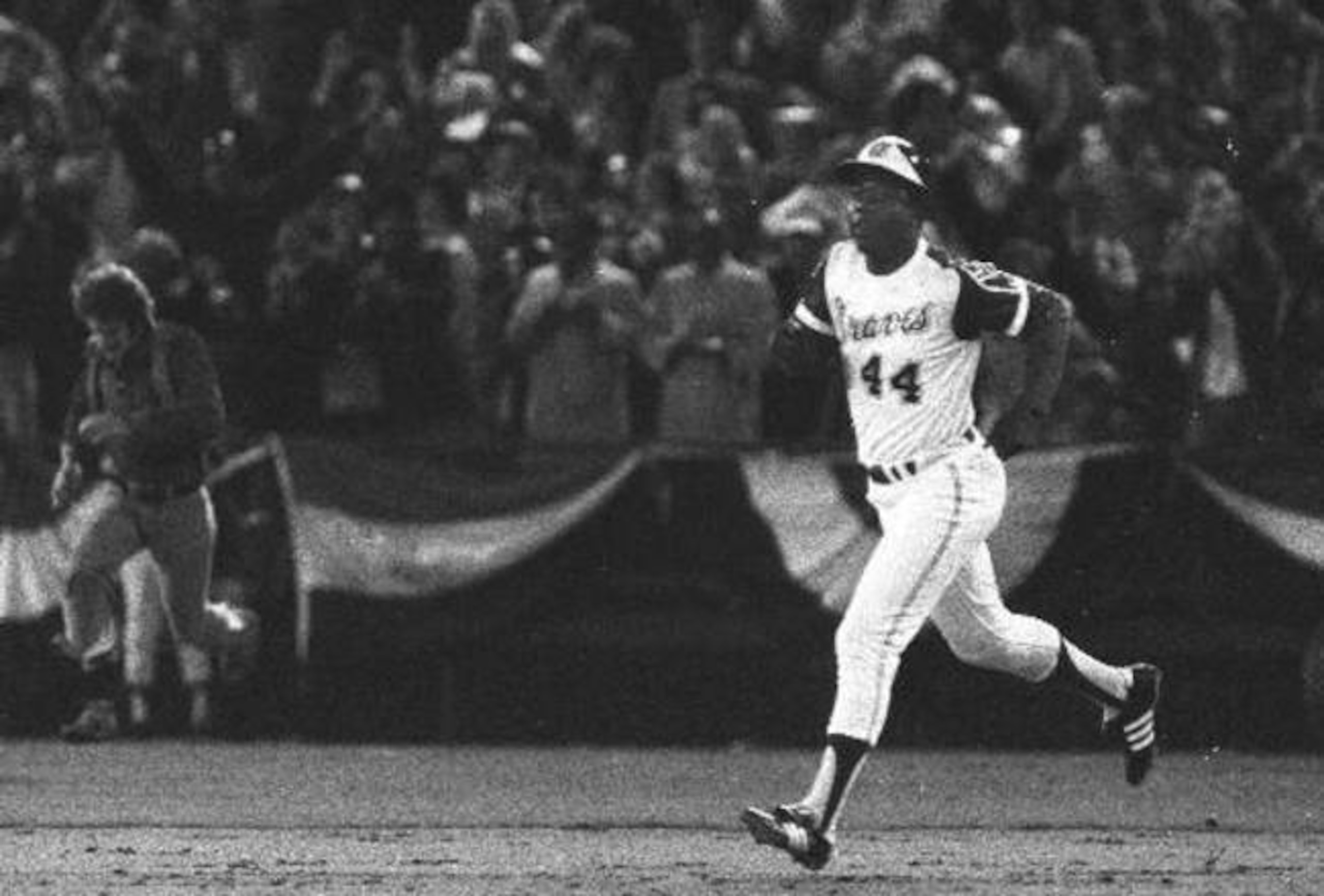
Though we confined our list to a top 13, there are plenty of other great calls worth celebrating. Here is our prestigious list of honorable mentions:
- Dan Hicks on Jason Lezak
- Larry Munson on Lindsay Scott
- Verne Lundquist on Christian Laettner
- Marv Albert on Michael Jordan
- Milo Hamilton on Hank Aaron
- Vin Scully on Bill Buckner
- Dan Davis on Doug Flutie
- Verne Lundquist on Tiger Woods
- Victor Hugo Morales on Diego Maradona
- Chic Anderson on Secretariat
- Vin Scully on Kirk Gibson
- Joe Starkey on Stanford vs. Cal
13. Ian Darke, the Donovan Goal
2 of 14The Americans shouldn’t have needed stoppage-time magic to defeat Algeria in the 2010 World Cup, but they did, and Landon Donovan’s game-winning goal remains one of the most iconic moments in U.S. soccer history.
Of course, the call from Ian Darke is every bit as memorable.
He doesn’t overshadow the dramatic moment but doesn’t shy away from it either. Darke’s comfort with the sport and the mic allows for the most seamless of calls.
More importantly, he doesn’t force a “classic” one-liner and doesn’t need one, either.
Darke delivers a hearty and natural commentary, both organic and sophisticated in tone, which is already classic enough.
12. Skip Caray Immortalizes Sid Bream
3 of 14There’s seldom a great call without a great moment, and the Atlanta Braves and Pittsburgh Pirates delivered one for the ages in the 1992 National League Championship Series.
The stage: Game 7, bottom of the ninth, Atlanta trailing by one run with David Justice on third, Sid Bream on second and relative unknown Francisco Cabrera at the plate.
It all sat on a silver platter, perfectly teed up for the great Skip Caray to bring home.
And boy did he ever.
With his “Braves win” exclamation, Skip may have borrowed a bit from his father—Harry Caray—but who can really blame him?
In the end, he paid homage to and improved upon a sound that's just too sweet to resist.
.jpg?w=2560 "NFL Paris Football")

.jpg?w=2560 "Seahawks Chiefs Football")
11. Mike Keith Captures a Music City Miracle
4 of 14In a 2000 NFL Wild Card Game, Tennessee trailed Buffalo late and needed a miracle to get the win.
And down one point, with just 16 seconds remaining, that’s exactly what the Titans got.
When Kevin Dyson took Frank Wycheck’s lateral pass 75 yards to the house, most immediately assumed it was an illegal play. In fact, many today still believe that was case.
This instinct, however, is what makes Mike Keith’s call as refreshing as it was genius. Like everyone else watching, Keith immediately looked for laundry on the field.
And, when there was none to be found, he reacted with both passion and control, in the most perfectly honest way possible: “There are no flags on the field," Keith yelled. "It’s a miracle!”
10. Russ Hodges, the Giants and Pennant
5 of 14Some great calls carry the moment, while some moments carry the call.
In the case of Russ Hodges, the latter is certainly true, at least as it relates to his most noteworthy work in 1951.
After all, it’s called the "Shot Heard ‘Round the World" for a reason.
It turns out, a few people cared.
Of course, Hodges deserves credit, too, which is why he’s on our list.
When Bobby Thomson’s home run lifted the New York Giants past the Brooklyn Dodgers, Hodges succinctly summed it up for the world, and man did his words ever hit home (pun intended): "The Giants win the pennant! The Giants win the pennant! The Giants win the pennant!"
Hodges didn’t say much, but it was more than enough.
9. Scully the Poet, Koufax the Perfect
6 of 14This moment in history—Vin Scully calling Sandy Koufax’s 1965 perfect game against the Chicago Cubs—makes our list for somewhat unique reasons.
Scully’s call as the final pitch crossed the play is special for sure but not what stands out the most. It’s his many minutes of commentary prior to that play (begin the video above at around the five-minute mark) that are most worthy of recognition.
Simply put, Scully was a poet.
With no visual elements to serve as a crutch, Scully was asked to paint the picture himself and did so perfectly, with the skill of a legendary artist.
“Sandy backs off, mops his forehead, runs his left index finger along his forehead, dries it off on his left pants leg, all the while Kuenn just waiting,” described Scully.
With his words alone, Scully helped listeners at home actually feel and believe the action in ways no one else could.
And, thanks to a little help from Koufax, Scully's work on September 9, 1965 will forever be remembered.
8. Most of Johnny Most
7 of 14Like Vin Scully, Johnny Most made listening to sports a special experience. Covering the Boston Celtics from 1953 to 1990, he gave voice to countless historic moments.
His “Havlicek stole the ball” call during Game 7 of the 1965 Eastern Conference Finals is arguably his most famous of all.
Most’s best work, however, came 20 years later, in 1985, when Larry Bird sank the Portland Trail Blazers with a game-winning jumper.
His voice at the time was one-of-a-kind, the perfect blend of rasp and authority. More importantly, his passion for Celtic basketball was palpable and elevated simple lines like, “Bird! Bird from the corner!” to legendary status.
7. Howie Rose Goes Overtime with Matteau
8 of 14The 1993-94 season was good to the New York Rangers. It marked the end of The Curse, as the Rangers defeated the Canucks to win their first Stanley Cup in 54 years.
They had to get to the finals first, however—something the team hadn’t done since 1979.
That dream didn’t become a reality until Stephane Matteau eliminated New Jersey with a conference-clinching goal in double overtime of Game 7.
In that moment, decades of frustration burst, and overwhelming relief soaked Rangers fans worldwide.
And to feel it all—that passion and intense mixture of emotion—one need only listen to Howie Rose’s classic call.
6. Tom Cheek Honors Joe Carter
9 of 14A play-by-play announcer isn’t asked to tell a story; he’s required to tell the story.
Though one is granted a wide range of creative liberty and linguistic freedom, he or she must work within realty’s framework, beholden to notions of accuracy and reliability.
During Game 6 of the 1993 World Series, Tom Cheek managed that and more, bringing an artistic flair to contextual precision.
When Joe Carter hit a series-winning, three-run homer in the bottom of the ninth inning, Cheek perfectly put the moment in perspective and did so with three Hall of Fame-worthy sentences: “The Blue Jays have repeated as World Series champions. Touch ‘em all, Joe. You’ll never hit a bigger home run in your life.”
Of course, Cheek was both riveting and right.
5. Lyell Bremser Calls the Return of the Century
10 of 14Lyell Bremser had a way with words, to say the least. His commentary was as eloquent as it was original.
It’s only fitting, then, that Bremser was on hand to call what has become known as college football’s "Game of the Century," a 35-31 Nebraska win over Oklahoma.
Bremser’s iconic call came on one of the game’s most memorable plays, a 72-yard Johnny Rodgers punt return.
Sometimes, what one says is not as important as how one says it, and Bremser had a voice that screamed college football.
Add unique lines like—“Holy moley! Man, woman and child, did that put ‘em in the aisles. Johnny 'The Jet Rodgers' just tore ‘em loose from their shoes”—to the equation, and you suddenly have one of the best play-by-play calls in sports broadcasting history.
4. Gus Johnson Goes Crazy for Gonzaga
11 of 14On a list dominated by talent from the past, Gus Johnson represents the best of the present.
His iconic moment happened in 1999 when he was calling NCAA basketball’s Sweet 16.
At the time, Gonzaga was a little-known program that was recognized mostly for wins no one saw coming.
Fittingly, few people gave the Zags a chance against a national power like Florida.
So when they surprised the world and pulled off the upset with a tip-in late in the game, you could literally feel the shock in Johnson’s voice.
And his ability to make the drama palpable, with off-the-cuff poetry no less—“The slipper still fits,” Johnson classically quipped—cements his place among the truly elite.
3. Mark Boyle Marks the End
12 of 14If you can capture a historical moment with sophistication, class and one-of-a-kind wit, you’re likely on to something.
And if that moment is imbued with passion from years of frustration and disappointment, the stage is set for a special kind of great.
That was the case in the 1995 Eastern Conference Semifinals, which saw Indiana travel to Madison Square Garden to upset the Knicks in an all-important Game 7.
After losing to New York in the playoffs in both 1993 and ’94, the Pacers put everything on the line in ’95. And as Patrick Ewing’s game-tying attempt rimmed in and out as time expired, Pacer fans everywhere overflowed with exultation.
The same could be said of longtime Pacers radio broadcaster Mark Boyle, who, in his own moment of extreme jubilation and relief, delivered a line that was historically clever and equally pungent.
With zero hesitation, and an emphasis on a bold type of confidence, Boyle emphatically declares, “Ring the bell, baby! Ding dong, the witch is dead!”
Boyle’s call may not be as famous or celebrated as some of the others on our list, but he more than makes up for it with a creative and poignant effectiveness.
2. Howard Cosell Watches Frazier Go Down
13 of 14Even on a list that includes numerous greats, Howard Cosell has a stand-alone voice.
And it never sounded better than in 1973, when Cosell visited Kingston, Jamaica to call a heavyweight championship bout between Joe Frazier and George Foreman.
Foreman made quick work of Frazier that night, knocking the champ down six times in all before ending the fight in the second round.
It was, however, the first knockdown—roughly two minutes into Round 1—that inspired Cosell to utter perhaps the most quotable words in sports broadcasting history.
Simple, but oh so sweet, Cosell famously yelled, “Down goes Frazier! Down goes Frazier! Down goes Frazier!”
While others, both before and after, were more articulate, Cosell’s timing, tone and harsh delivery separate his call from the best of the rest.
1. Al Michaels Magnifies a Miracle
14 of 14Sometimes, everything goes right. The perfect moment meets the perfect setting and is captured by the perfect talent.
In 1980, Al Michaels was that talent, as he was on hand to communicate U.S. Olympic hockey’s miraculous semifinal defeat of the Soviet Union.
Of course, the victory was heaped in significance, all of which added to and intensified Michaels’ brilliant call.
From a sporting perspective, the win represented a monumental upset—the Russians had won each of the last four hockey gold medals, dating all the way back to 1964.
Perhaps more importantly, though, the game took place in Lake Placid, New York, in the middle of the Cold War and was only intensified by then-President Jimmy Carter’s decision to boycott the upcoming Summer Olympics, which were to be held in Moscow.
So with the weight of an entire nation on their shoulders, the boys from America didn’t just win a game; they won a war...or so it felt.
And as the clock hit zero—with the upset finalized—history, emotion and national pride simply took over, with Michaels serving as the chosen conduit for it all.
Somehow, someway, he summed everything up with six basic words: “Do you believe in Miracles? Yes!”
We do too, Al. We do, too.