
The Most Unsustainable Team Statistics Early in 2014-15 NHL Season
Crazy things can happen over a short period of time in the NHL.
As much as team and individual talent rule in the long run, in the short term hockey is a game of inches, a sport in which a good (or bad) bounce or two, a fraction of a second here or there and a fraction of an inch on a shot can make all the difference to the outcome. Anybody who has witnessed his or her team win a game or a playoff series that it should have lost handily knows this.
A quick look at the early-season stats confirms this. Mason Raymond and Mikkel Boedker currently sit tied with Steven Stamkos and Alex Ovechkin for third in NHL goal-scoring. T.J. Brodie has more points than P.K. Subban or Erik Karlsson. Darcy Kuemper and Frederik Andersen are the game's best goalies; meanwhile defending Vezina Trophy winner Tuukka Rask aspires to be average.
It's no different at the team level, which we'll consider here. Read on for (in no particular order) the most unsustainable stats early in 2014-15.
Statistics via war-on-ice.com and NHL.com. Salary information via CapGeek.com.
Carolina Hurricanes: 0 Wins
1 of 10
We start with an obvious number: one so obvious that it almost doesn't deserve mention but at the same time pretty much impossible to ignore. Former Detroit assistant coach Bill Peters' first season in the top job in Carolina has not started well, with the Hurricanes going 0-3-2 through their first five games.
Pretty much everything that could go wrong has. Stars are falling left and right to injury on a roster ill-equipped to cope with their absence. Twice the 'Canes have fallen in the shootout, and they've been competitive in all of their games, never falling by more than one or two goals.
They have a good chance to snap this streak over the next few days as they tour Alberta. Carolina will play the Calgary Flames on Thursday and Edmonton Oilers on Friday; it's not at all unreasonable to think it could pick up a win off one of those teams.
Chicago Blackhawks: 40.6 Shots Per Game
2 of 10
The Chicago Blackhawks have a high-octane offence, place a premium on puck possession and in Patrick Sharp have one of the highest-volume shooters in the NHL. But even for them, the more than 40 shots per game they've averaged through five games is pushing it.
It's a total that's been goosed by some early games against bottom-feeders which were surprisingly close for most of the night. The 'Hawks outshot Calgary 50-18 in a shocking 2-1 overtime win for the Flames; they also put 47 shots on the Buffalo Sabres' net in a game that was tied heading into the third period.
Then again, they also managed 43 shots in a 4-0 rout of the Philadelphia Flyers on Tuesday.
Minnesota Wild: 22.0 Shots Against Per Game
3 of 10
Apparently an ability to limit shots on net didn't leave the Minnesota Wild at the same time that Jacques Lemaire did.
In the entire NHL last season, no team allowed fewer than the 25.5 shots per game the ridiculously conservative New Jersey Devils did. Five teams are below that figure in the early season, including the Wild.
The real key to Minnesota's early success has been the penalty kill, which is allowing less than 28 shots per hour. To put that in perspective, no team in the league allowed less than 40 shots per hour while short-handed last season.
The Wild may well be very good in this department, but no team manages this kind of defensive success long term.
.jpg?w=2560 "NHL Trade Grades Connor Hellebuyck")
Buffalo Sabres: 4.88 Percent Shooting Efficiency
4 of 10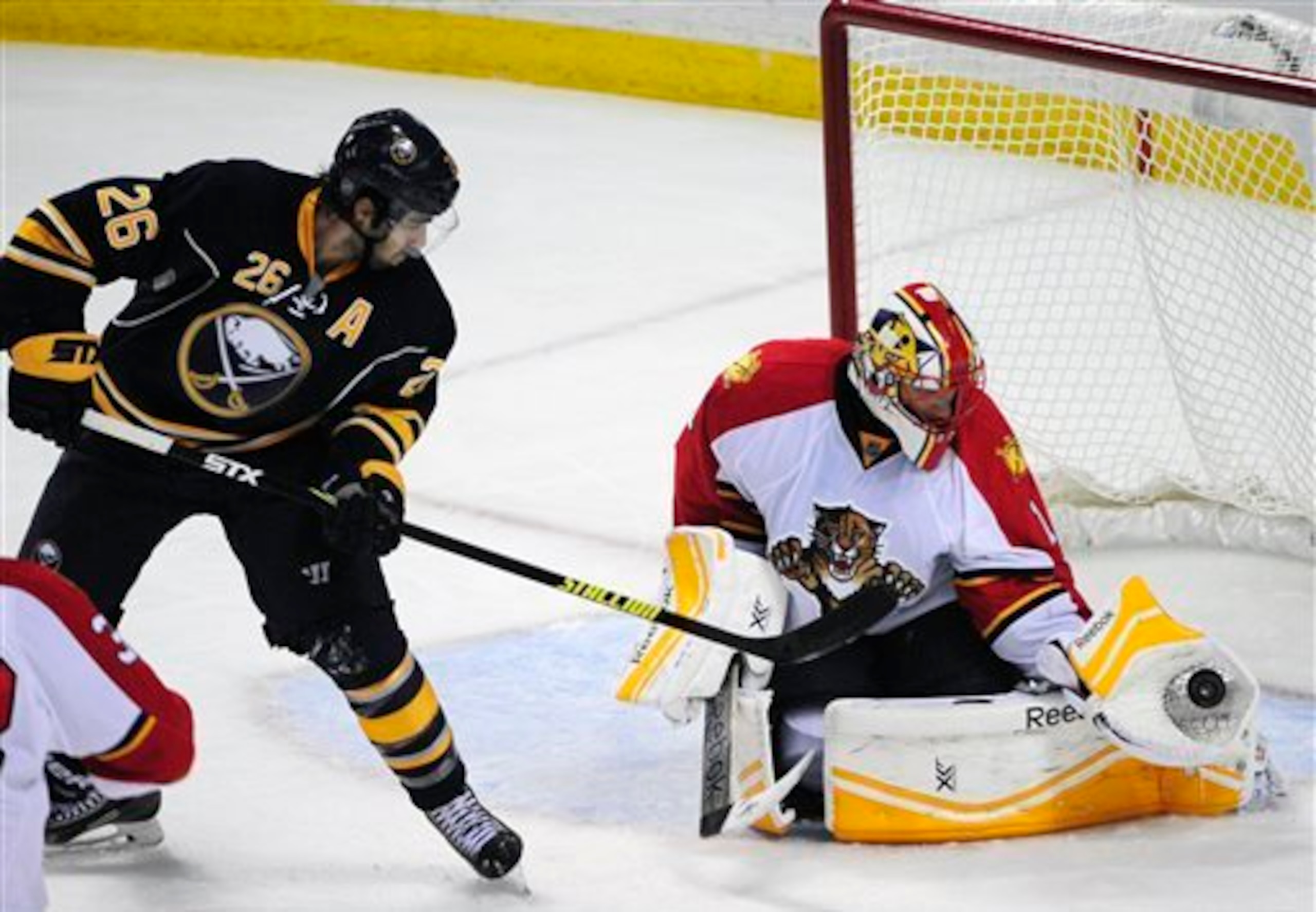
The Buffalo Sabres really aren't a good team, but their early struggles have been exaggerated to some extent by a brutal inability to finish on the chances they do get.
A quick look through the team's most prolific shooters is interesting:
- Chris Stewart: 19 shots, zero goals (career 13.2 SH%)
- Tyler Myers: 17 shots, zero goals (career 8.6 SH%)
- Matt Moulson: 15 shots, zero goals (career 13.4 SH%)
- Zemgus Girgensons: 15 shots, two goals (career 7.7 SH%)
- Drew Stafford: 14 shots, zero goals (career 10.8 SH%)
- Brian Gionta: 13 shots, zero goals (career 11.0 SH%)
- Total: 93 shots, two goals (2.2 SH%)
They may not win a lot of games, but at some points pucks will start going in for this group.
3 Teams: 0.0 Percent Power-Play Efficiency
5 of 10
The early NHL season is also prone to some funny special teams, something evidenced by the three teams clicking on exactly none of their power-play opportunities:
- Buffalo Sabres: 24 opportunities, zero goals
- Winnipeg Jets: 19 opportunities, zero goals
- Minnesota Wild: 16 opportunities, zero goals
We looked at the Sabres' shooting percentage one slide ago. Recent history suggests they aren't going to be great on the power play, but watch for them to improve in the department at pretty much exactly the same time that their shooting percentage picks up.
Columbus Blue Jackets: Ratio of 1.8 Power Plays to Penalty Kills
6 of 10
Some teams get more calls from the officials than others. Better teams in particular tend to get an advantage in the penalties-called department simply because they have the puck a lot of the time, and their opponents end up chasing them; chasing teams take penalties.
No team, however, can sustain the ratio the Columbus Blue Jackets have managed in the early season. Through five games, the Jackets have drawn 20 penalties while taking only 11, meaning that for every call that has gone against them nearly two calls have gone their way.
Not only is that unlikely to continue for any team, but Columbus in particular shows no recent evidence of talent in this area; in 2013-14 the club took 280 penalties and drew 280 penalties.
2 Teams: 100 Percent Penalty-Killing Efficiency
7 of 10
Not only have the Blue Jackets had the calls go their way in the early season, but they've been ready when penalized, joining the Detroit Red Wings as one of two teams perfect while short-handed in this season's early days.
As with the power-play numbers, this is a nice reminder not to put too much stock in a team's special teams performance over a short span of games—like, for example, a playoff series. Columbus and Detroit have played five and six games, respectively, and are perfect over that span despite both falling outside the NHL's top 10 in penalty-killing a year ago.
Philadelphia Flyers: 3 Bench Minors in 7 Games Played
8 of 10
In their first seven games, the Philadelphia Flyers have already taken three bench penalties for icing too many men.
For the sake of contrast, the Flyers are already halfway toward their season total from 2013-14. They've already matched the total number of bench minors the Los Angeles Kings took in all of last season.
This inflated number is largely the result of the team's 6-5 overtime win against the Dallas Stars on October 18 in which it was dinged twice for the infraction. The first time, Michael Raffl unquestionably jumped off the bench and played the puck too early, but the second time in the game the call was a little more ambiguous (and clearly didn't sit well with head coach Craig Berube).
Arizona Coyotes: 0.852 Save Percentage
9 of 10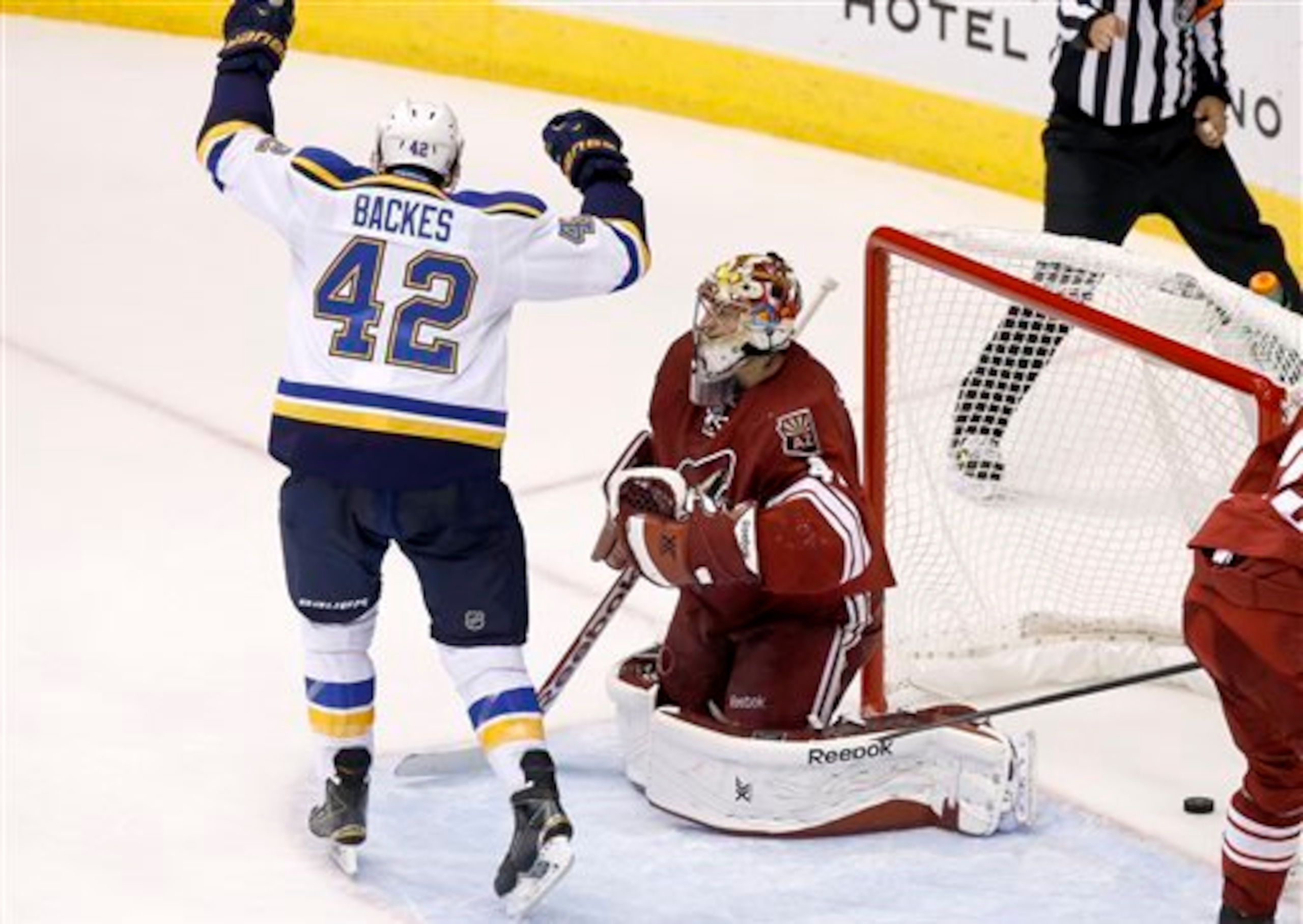
No team in the NHL has a worse save percentage today than the Arizona Coyotes.
Most of the blame for that rests on starter Mike Smith, in the second year of a big-money, six-year contract. Smith has allowed 16 goals on just 90 shots and has surrendered four or more in each of his three games for a miserable 0.822 save percentage on the year. Backup goalie Devan Dubnyk's 0.904 save percentage over two starts is significantly better but still not great.
Both goalies should rebound, and if they can't Arizona will be looking for a solution. Smith's numbers are a far cry from his career average of 0.913 and bear no resemblance to the work he's done in Arizona over the last three years, while Dubnyk is also south of his career average.
Colorado Avalanche: 38.4 Shots Per Power-Play Hour
10 of 10
Colorado was one of the top five teams in the NHL on the power play last season, scoring on 19.8 percent of its opportunities with the man advantage. It was always questionable whether that would last because the team was just a little below league average at shot generation, firing 50.3 shots per hour (the median number was a touch over 52) and was relying on a high shooting percentage for its goals.
However, there were no signs that the unit was suddenly going to completely implode. No team in the league last year fired fewer than 43 shots per hour on the man advantage; this season Colorado is down well below 40 and is in front of only the hapless Florida Panthers (one of the NHL's worst teams in this department last year).
Among Patrick Roy's many problems in Denver right now is figuring out how to get his man-advantage unit to put shots on net.

.jpg?w=2560 "NFL House in Paris Closes for Protests")

.jpg?w=2560 "Trevon Diggs Cut by Seahawks")