
Ranking the 10 Most Unlikely World Series Runs in MLB History
If baseball has taught us anything over the years, it's that reaching the World Series isn't necessarily about having the most talented roster or the highest payroll in the game. It's about great clubhouse chemistry, paying attention to the fundamentals and, perhaps above all else, a team playing its best baseball when it counts the most.
Case in point: the 2014 Kansas City Royals.
While more than a few pundits predicted the Royals would win the AL Central heading into the season, nobody—nobody—saw a World Series appearance in the team's immediate future. To say it was unlikely that the team would play meaningful baseball in late October is be a gross understatement.
Yet here we are, and the Royals sit three wins away from the team's first World Series crown since 1985.
Unlikely indeed.
In compiling the following rankings, which are highly subjective and sure to spur some debate, we will focus on how a team fared in the years leading up to its unlikely run. That removes the 2004 Boston Red Sox—a team that, had it not been for Aaron "Bleeping" Boone, may have ended the Curse of the Bambino a year before it finally did—from consideration.
The only requirement? That the most unlikely of scenarios—the team winning it all—came to fruition. That takes clubs like the 2007 Colorado Rockies and 2008 Tampa Bay Rays out of consideration.
Which surprise champion's run to glory was the most unlikely?
Let's take a look.
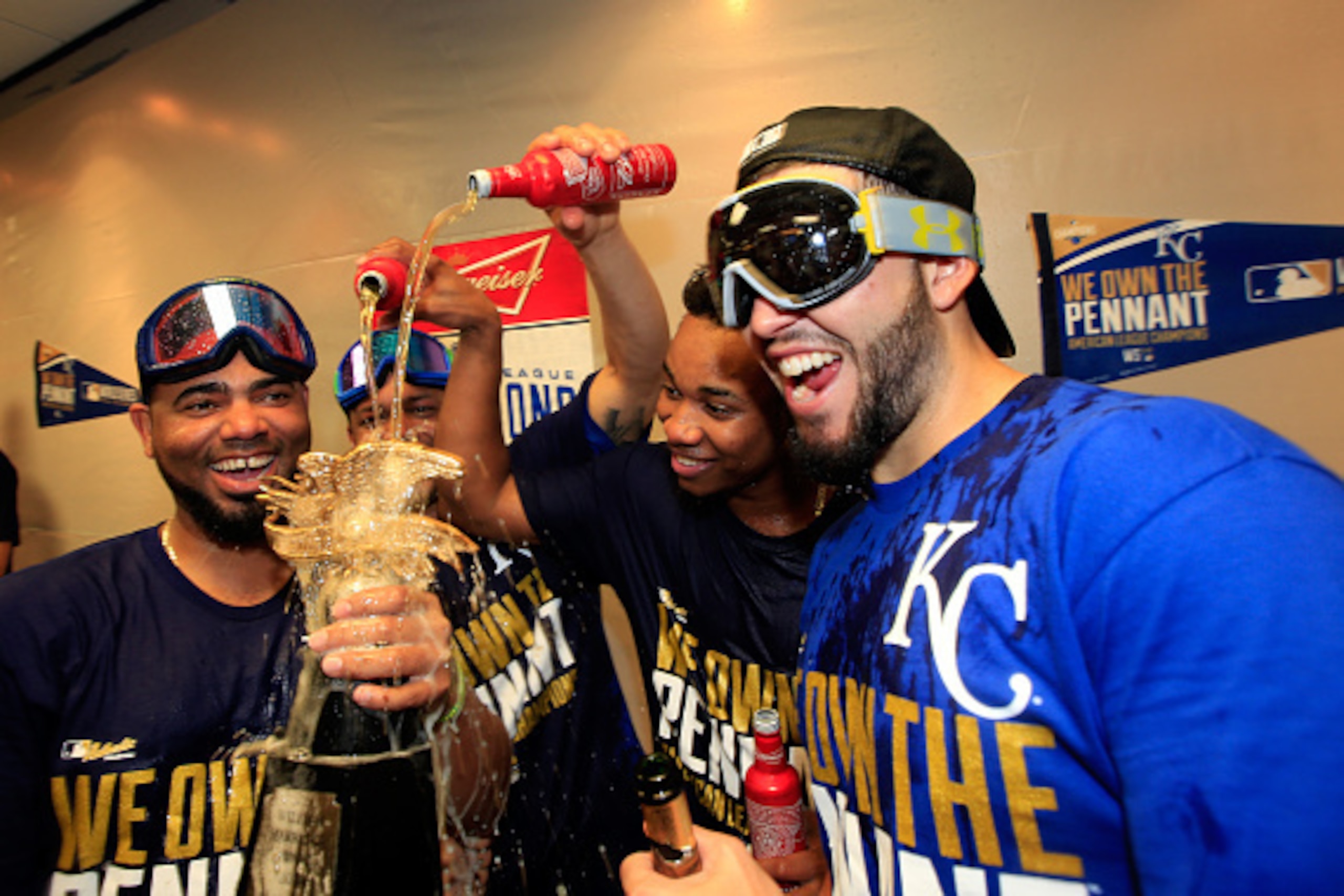
Honorable Mention: 2014 Kansas City Royals
1 of 11While the Royals technically don't qualify for this list, considering that they haven't won the World Series yet, they haven't lost either.
So the honorable mention spot is where they'll fall, at least for now.
After ending a 29-year absence from the playoffs, the overwhelming consensus was that Kansas City had already won, even if it lost.
Had they fallen to the Oakland Athletics in the AL Wild Card Game, the Royals would still be considered winners for having reached the playoffs. Had they lost to the Los Angeles Angels in the American League Division Series or the Baltimore Orioles in the American League Championship Series, the Royals still would have been winners for having made it that far.
But they didn't lose—not until Game 1 of the World Series against the San Francisco Giants, at least—and with the Fall Classic tied, the club's remarkable and unlikely run continues.
Kansas City's race to glory is even more unlikely when you consider how the Royals hit fewer home runs than anyone else in baseball during the regular season yet have relied heavily on the long ball in the playoffs. Only St. Louis, with 15 home runs, has gone deep more often than the Royals (10) in October.
Throw in the simply awful postseason showing from the team's ace, James Shields (7.11 ERA, 1.79 WHIP) and that they've gotten hardly any production from the likes of Nori Aoki (.206 BA, .488 OPS) or Salvador Perez (.146 BA, .411 OPS), and the fact that the Royals are still standing is nothing short of remarkable.
10. 1933 New York Giants
2 of 11
While the New York Giants had been one of the more successful clubs in baseball in the early part of the 20th century, appearing in nine World Series between 1905 and 1924 (and winning three of them), the team fell on hard times in 1932.
Longtime manager John McGraw retired only 40 games into the season, replaced by Bill Terry, and the Giants finished the season 10 games under .500 (72-82), 18 games back of first-place Chicago. It marked only the third time since 1914 that they had posted a losing record.
Still, expectations heading into 1933 were tempered.
While outfielder Mel Ott had a down year, hitting .283 with 23 home runs, 103 RBI and an .834 OPS—a significant drop from his averages over the previous four years (.322, 34, 127 and 1.023)—the Giants took the National League by five games behind some spectacular pitching, especially from Carl Hubbell.
The 30-year-old southpaw led the NL in wins (23), ERA (1.66), innings pitched (308.2), shutouts (10) and WHIP (0.98) en route to being named the NL MVP, and both he and Ott would come through in the clutch for the Giants in the Fall Classic.
Ott hit .389 (7-for-18) with a pair of home runs, four RBI and a 1.222 OPS against the Washington Senators in the World Series. Hubbell tossed a pair of complete games, not allowing an earned run to score over 20 innings of work and striking out 15 in the process.
9. 1954 New York Giants
3 of 11While the New York Giants had appeared in the World Series only three years earlier in 1951, expectations for the 1954 club were tempered after a miserable 70-84 showing in 1953, a record that found the team a whopping 35 games behind first-place Brooklyn.
The biggest difference between the 1953 and '54 teams? The return of superstar outfielder Willie Mays, who had missed most of the previous two years due to military service.
Mays powered the Giants to the National League pennant, hitting .345 with 41 home runs, 110 RBI and a 1.078 OPS—leading the NL in both batting average and OPS. He also delivered one of the most legendary plays in the history of professional sports in Game 1 of the World Series with his over-the-shoulder catch in center field. The Giants went on to sweep the Cleveland Indians for the title.

8. 1988 Los Angeles Dodgers
4 of 11After advancing to the NLCS in 1985—the third time in five years that they battled for the pennant—the Los Angeles Dodgers fell flat, going 73-89 in both 1986 and 1987. As you'd expect, expectations for 1988 were pretty low, with most pundits believing another fourth- or fifth-place finish was in the cards.
But after taking sole possession of first place in the NL West on May 26, the Dodgers never gave it back and wound up winning the West by seven games.
They did it despite a mediocre offense that, aside from featuring National League MVP Kirk Gibson, posted below league-average numbers in on-base percentage (.305), slugging percentage (.352) and OPS (.657).
It was a trio of outstanding starters—Tim Leary (17-11, 2.91 ERA), Tim Belcher (12-6, 2.91 ERA) and eventual Cy Young Award winner Orel Hershiser (23-8, 2.26 ERA), who set a new major league record with 59 consecutive scoreless innings—and a solid bullpen that propelled the Dodgers to greatness.
The Dodgers needed seven games—and a complete-game shutout by Hershiser in Game 7 of the NLCS against the New York Mets—to get back to the Fall Classic.
And while it's an injured Gibson's dramatic pinch-hit, two-run home run off Oakland's Dennis Eckersley to win Game 1 that is the series' most memorable moment, it was Hershiser who put the Dodgers on his back and carried them to victory.
He'd throw a complete-game shutout in Game 2 and go the distance again in Game 5, holding the A's to two runs despite issuing four walks. In six postseason appearances (five starts), Hershiser went 3-0 with a 1.05 ERA, 0.89 WHIP, 13 walks and 32 strikeouts in 42.2 innings of work, picking up a save in Game 4 of the NLCS as well.
As you'd imagine, he took home honors as MVP of both the NLCS and World Series.
7. 1990 Cincinnati Reds
5 of 11After four consecutive second-place finishes and averaging just over 86 wins a season from 1985 to 1988, the wheels fell off the updated version of the Big Red Machine in 1989.
Commissioner A. Bartlett Giamatti slapped manager Pete Rose with a lifetime ban for gambling on the game, and the Cincinnati Reds went 75-87, finishing fifth in the National League West, 17 games behind first place San Francisco.
Expectations for the 1990 season were anything but high. But under the stewardship of new manager Lou Piniella, who had gone 224-193 as manager of the New York Yankees over parts of three seasons, things turned around quickly.
Both third baseman Chris Sabo (25 HR, 25 SB) and center fielder Eric Davis (24 HR, 21 SB) put together 20/20 seasons, while a trio of flame-throwing relievers—Norm Charlton, Rob Dibble and Randy Myers, dubbed "The Nasty Boys"—helped the club finish the year 20 games over .500 (91-71), five games ahead of second-place Los Angeles in the NL West.
It'd take the Reds six games to dispatch Pittsburgh in the National League Championship Series but only four to derail the defending World Champion Oakland Athletics in the World Series.
6. 1924 Washington Senators
6 of 11
Despite having one of the greatest pitchers of all time, Walter Johnson, leading the rotation, the Washington Senators managed to finish within 14 games of first place in the American League only once between 1914 and 1923.
Johnson, 36, won his second career MVP award in 1924, leading the league in wins (23), ERA (2.72), starts (38), shutouts (six) and WHIP (1.12), helping get the Senators into the World Series for the first time in franchise history.
While his numbers in the Fall Classic against the New York Giants were out of character (3.00 ERA, 1.71 WHIP), he'd go the distance in two starts and, after entering the game as a reliever in the top of the ninth inning of Game 7, throw four scoreless innings of relief to earn the win and the team's first championship.
5. 1997 Florida Marlins
7 of 11Despite having no shortage of recognizable names on the roster—Moises Alou, Bobby Bonilla, Kevin Brown, Alex Fernandez, Al Leiter and Gary Sheffield among them—expectations for the Florida Marlins in 1997 were pretty subdued.
After finishing 80-82 in 1996, posting a winning record in 1997 was about as high as expectations went for a franchise that was in only its fifth year of existence.
Not only did the Marlins crush those expectations, going 92-70 during the regular season, but they went on to become the first wild-card team—and the fastest expansion club—to win the World Series, besting the Cleveland Indians in seven games.
While he didn't arrive until midseason and did enough during the regular season (17 GS, 9-3, 3.18 ERA, 1.24 WHIP) to finish second in National League Rookie of the Year voting, 22-year-old Livan Hernandez saved his best for October.
He went 4-0 in five postseason appearances (three starts), including a one-run complete game against Atlanta in Game 5 of the NLCS in which he scattered three hits and two walks while striking out 15. He took home MVP honors in both the NLCS and World Series in the process.
4. 2002 Anaheim Angels
8 of 11With only three postseason appearances in 41 years (none since 1986), and after finishing 41 games—yes, 41 games—behind Seattle in the American League West in 2001, thoughts of the Anaheim Angels celebrating a World Series victory in 2002 were nothing but a dream heading into the season.
But sometimes, dreams do come true.
The Angels put together a 99-win season, the highest total in team history at the time, to clinch the AL Wild Card berth. Their prize for making the postseason? A date in the ALDS with the New York Yankees, baseball's last dynasty and a team that had beaten the Angels four times in seven games during the regular season.
Anaheim needed only four games to best the Yankees and next took down the Minnesota Twins in a five-game ALCS to clinch the team's first pennant. It then rallied to take the World Series in seven games from the Barry Bonds-led San Francisco Giants in the World Series.
If that wasn't remarkable enough, consider this: The Angels faced a 3-2 series disadvantage against San Francisco and trailed the Giants 5-0 in the seventh inning of Game 6. They outscored their in-state rivals 10-1 over the next 11 innings to win the title.
3. 1969 New York Mets
9 of 11Don't you dare tell Tom Seaver the 1969 New York Mets were a fluke or that the team had no business being in, much less winning, the Fall Classic. The man who received the highest percentage of votes for induction into baseball's Hall of Fame (98.8 percent in 1992) simply isn't having any of it, as he explained to the New York Post's Mike Vaccaro a few years back:
"I understand why we were called the "Miracle Mets," I do. I understand why people got caught up in what we did. We had been a horrid franchise, and suddenly we weren't. But we also had a guy who won 25 games [Seaver]. We had a guy [Cleon Jones] who hit .340. We had one of the best catchers in the game [Jerry Grote], and a great, great manager [Gil Hodges]. And by the way? We won a hundred games!
"
While that's all true, we simply can't gloss over the fact that, indeed, the Mets had been a "horrid franchise" up to that point.
The team was coming off a franchise-best 73-89-1 mark (yes, that's a tie) in 1968 and had never finished higher than ninth in a 10-team National League. With the beginning of the divisional era in 1969, there was little reason for anyone to expect things to change.
When the Mets found themselves sitting with a winning record (62-51) but still 10 games back of first-place Chicago after play on Aug. 13, a run at the National League pennant, much less a World Series crown, seemed highly unlikely.
Yet the club would go a remarkable 38-11 down the stretch to win the division by eight games, sweep Atlanta in three games in the NLCS and, ultimately, best Baltimore in the World Series, dropping only Game 1 in a five-game set.
Truly Amazin'.
2. 1987 Minnesota Twins
10 of 11How unlikely was Minnesota's run to the World Series in 1987? Consider the following:
- It had been 63 years since the Twins won a World Series—back in 1924, when the team was known as the Washington Senators.
- The team hadn't reached the playoffs since 1970, a 17-year absence.
- It had been eight years since the club last finished the season with a winning record, going 82-80 in 1979.
With only two standout players—Kirby Puckett, who hit .332 while leading the American League with 207 hits, and Frank Viola, who went 17-10 with a 2.90 ERA and 197 strikeouts—the Twins limped into the playoffs, losing seven of their last 10 regular-season games.
They took just five games to beat the Detroit Tigers in the ALCS but needed all seven to best St. Louis in the World Series. After taking the first two games of the Fall Classic in front of a raucous Metrodome crowd, the Twins dropped all three games in St. Louis.
Despite trailing the Cardinals 5-2 heading into the bottom of the fifth inning of Game 6, the Twins never gave up. They rallied for an 11-5 victory, thanks to a two-run home run from Don Baylor in the fifth and a grand slam from Kent Hrbek in the bottom of the sixth.
Viola was masterful in Game 7, tossing eight innings of two-run ball and striking out seven. Jeff Reardon then worked a one-two-three ninth inning to clinch it for the Twins.
1. 1914 Boston Braves
11 of 11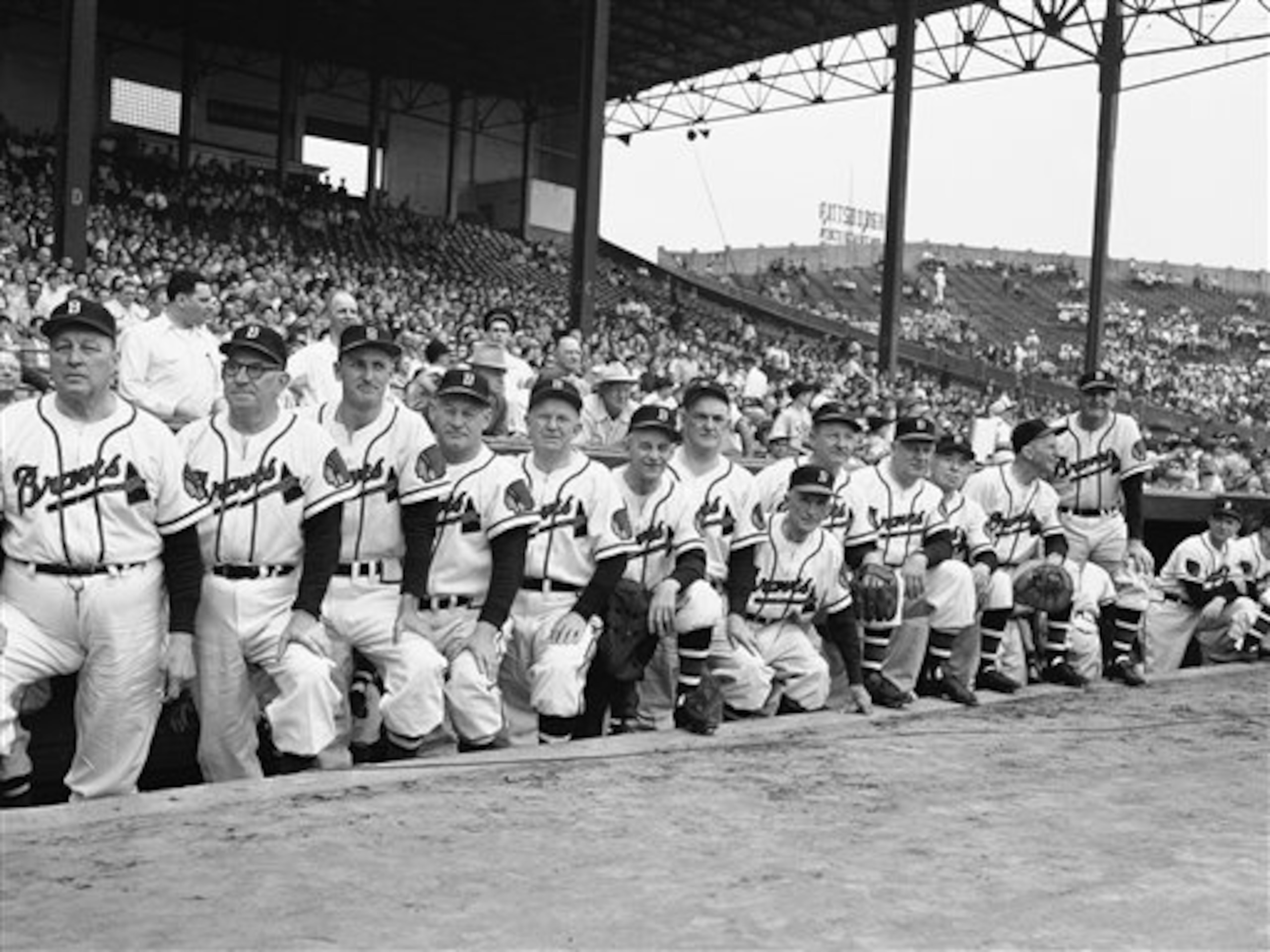
Sitting in last place, eight games under .500 (35-43) and 11 games back of the New York Giants in the National League on July 18, 1914, the Boston Braves had essentially been left for dead.
Fans weren't the only ones who thought the Braves were a lost cause, as shortstop Rabbit Maranville recalled years later, via The Boston Globe's John Powers:
"We did something nobody ever believed possible. Gamblers were laying 100-1 against us on Opening Day with hardly any takers. They raised the odds to 1,000-1 after the first month. By July 4, after we had been in the cellar all but three days, you could have gotten 1,000,000-1.
"
There was good reason for that, considering the team had posted a losing record every season from 1903 to 1913. Nobody saw one of the most remarkable turnarounds in baseball history coming.
Boston went a ridiculous 59-16 the rest of the way, winning the pennant over the Giants by 10.5 games. It rode that wave of momentum into the World Series, where the Braves would sweep the Philadelphia Athletics, the defending champions who had won three of the previous four World Series crowns, in four games.
Unless otherwise noted, all statistics and standings courtesy of Baseball-Reference.
Hit me up on Twitter to talk all things baseball: @RickWeinerBR
.png?w=2560)

.jpg?w=2560 "NFL House in Paris Closes for Protests")
.jpg?w=2560 "Trevon Diggs Cut by Seahawks")