What's to Blame for the NFL's Thursday Night Failures?
Thursday Night Football is a misnomer. It's not really "football," is it? Thursday Night Fall Asleep on the Couch would be more honest.
Week 5's edition was almost unwatchable. The Green Bay Packers went up 14-0 in the first quarter, then added a Julius Peppers pick-six—quickly followed by a second interception and fourth touchdown. The Packers responded in the second half by scoring two more touchdowns, and suddenly it was 42-0 with almost four minutes left in the third quarter.
According to Pro-Football-Reference.com, the Packers had a 99 percent chance of winning the instant Peppers broke the plane. The game was over halfway through the second quarter.
TOP NEWS
.jpg?w=2560 "NFL Paris Football")
NFL House in Paris Closes for Protests
.jpg?w=2560 "Seahawks Chiefs Football")
Trevon Diggs Cut by Seahawks
.jpg?w=2560)
B/R's Expert Week 7 NFL Picks 🔮
It's been the same story all season long.
In Week 4, the New York Giants blew out Washington 45-14. In Week 3, the Atlanta Falcons ran up a historic 56-point lead on the Tampa Bay Buccaneers before the Bucs scored two late touchdowns. Week 2? 26-6, Baltimore Ravens over the Pittsburgh Steelers. Week 1? Seattle Seahawks over the Packers, 36-16.
The NFL is notorious for its competitive parity, yet Thursday Night Football is a parade of boring blowouts. As Pro Football Talk managing editor Michael David Smith pointed out on Twitter, the numbers are astounding:
What's going on? How do these games go so wrong, so fast—and what can the NFL do to fix it?
The Walking Wounded Theory

Every NFL team has its own weekly rhythm. Generally, Monday is a day spent recovering, getting treatment or watching film. Tuesday's a day off. Wednesday, Thursday and Friday are spent practicing and installing the next game plan, and there's a light walkthrough Saturday (and for road games, travel).
For Thursday Night Football, that schedule is dramatically shortened.
Instead of two days to recover and rest, three days to work on a game plan and a day just to get there, teams basically have to choose between recovery and game prep—and skipping recovery isn't an option.
The Vikings practiced on Tuesday, still sore from Sunday, and worked in a jog-through on their travel day. Rookie quarterback Teddy Bridgewater, after suffering an ankle injury late in Week 4's game against the Atlanta Falcons, had to sit out the only practice, per Master Tesfatsion of the Star Tribune.
"Teddy’s doing much better," Vikings head coach Mike Zimmer told Tesfatsion. "If he can play, he’ll play."
He couldn't play.
Christian Ponder, who entered the season as the third-string quarterback behind Bridgewater and injured starter Matt Cassel, completed just half of his 44 pass attempts for an average of 5.05 yards. He threw no touchdowns, two interceptions and was sacked six times.
There's no question the short week of rest impacted Bridgewater's ability to recover from an apparently minor injury; Zimmer and Bridgewater are both positive about his outlook for Week 6, per the Tribune's Matt Vensel.
Yet, both teams had to deal with the short week. Both teams had bumps and bruises that didn't get the same chance to heal. Minnesota losing its starting quarterback stings more than most, but that certainly doesn't explain the whole pattern.
The Quarterback Theory
Quarterback play is a huge part of any NFL game; the likelihood of winning goes way up for a team if its quarterback significantly outplays the other.
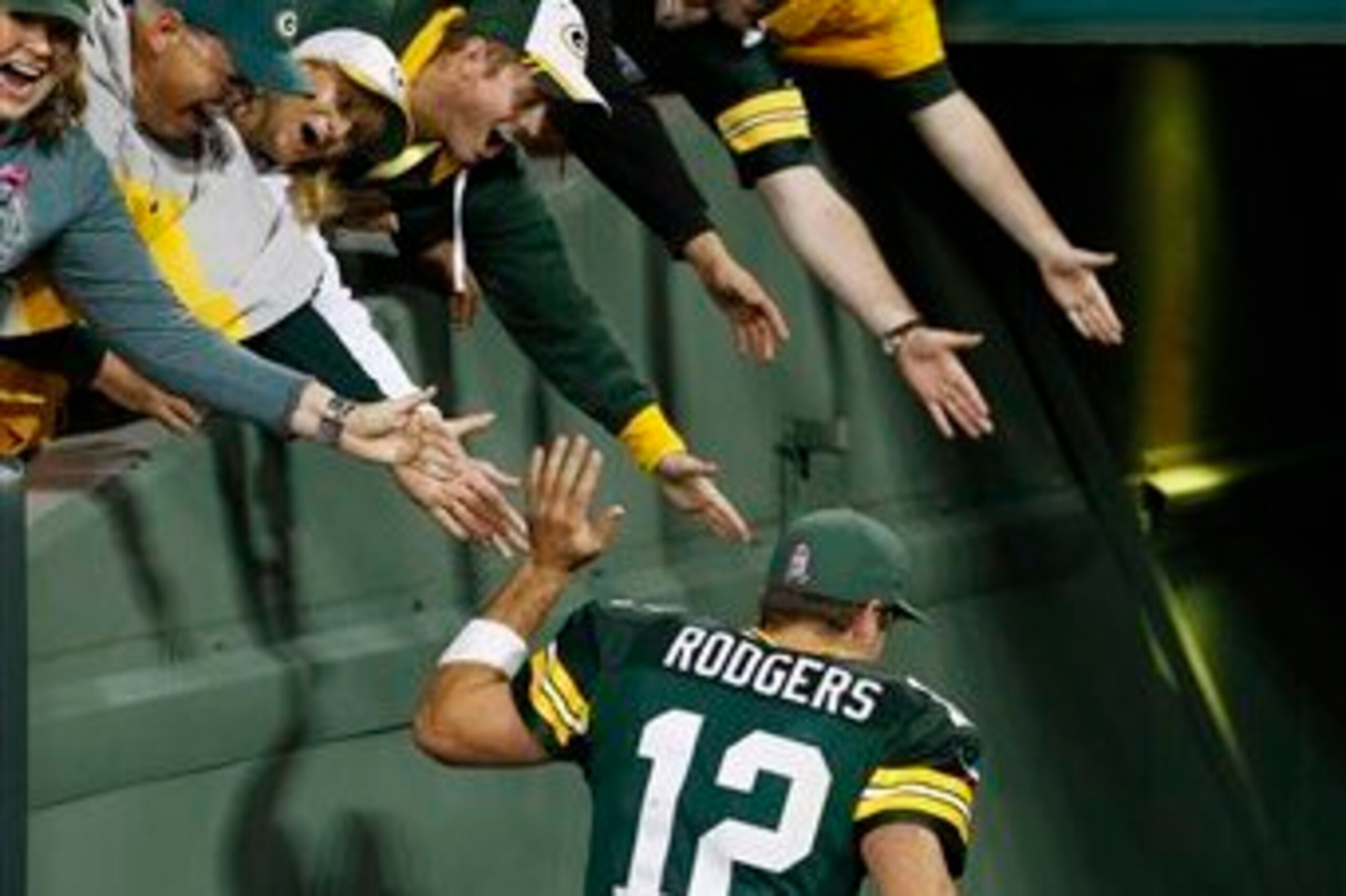
One possible explanation: A short week of prep gives coaches less time to tailor game plans to the opponent, meaning it's harder to "hide" a weak quarterback with brilliant film study and chalkboard work. When it's vanilla schemes against vanilla schemes, talent should triumph.
At first blush, this makes sense: Aaron Rodgers is much better than Christian Ponder, and Eli Manning had one of the best games of his career against Kirk Cousins' worst. Matt Ryan isn't a Hall of Famer in the making, but he's better than the combined efforts of Josh McCown and Mike Glennon.
Then, things start to break down. Is Joe Flacco that much better than Ben Roethlisberger? Is Rodgers himself a liability compared to Russell Wilson?
Better quarterback play is always a big advantage, and some quarterbacks may be better suited for a short week of prep than others, but it doesn't fully explain the awful, one-sided contests we've seen all season.
The Coaching Staff Theory
Of course, the shortened prep time puts as much pressure on the coaching staff as it does on the players.
Michigan State basketball coach Tom Izzo has a legendarily good record in NCAA tournament games that occur on short rest (18-3, per Bleacher Report National Lead Writer Dan Levy). He and his staff's maniacal preparation give the Spartans a huge advantage.
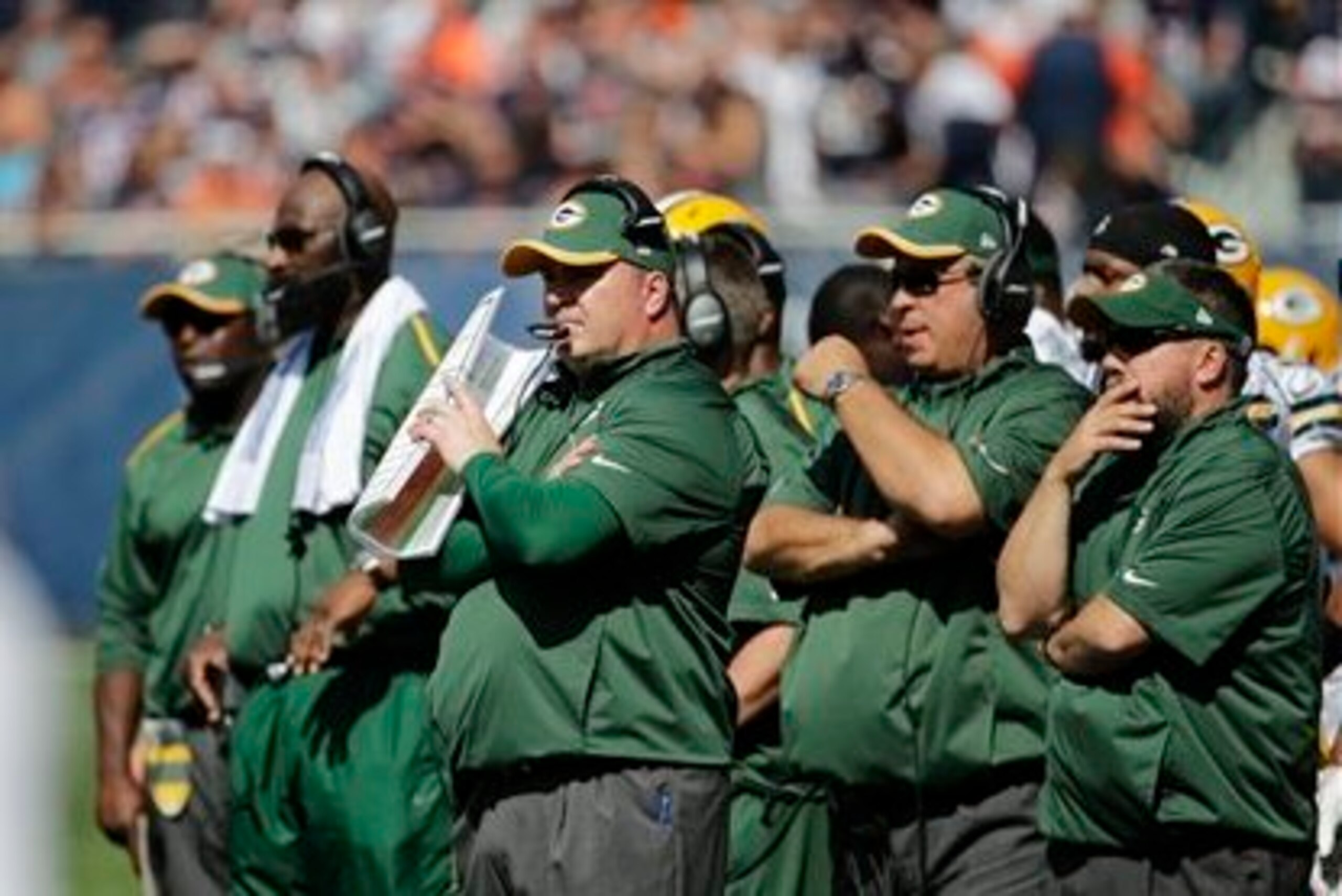
In theory, the Thursday Night Football team with the better coaching staff should have a similar edge: Being able to review film, scout the opponent, game-plan and install in 60 hours with only one practice day requires enormous amounts of football brainpower and Herculean work ethic.
Four of the five blowout victims this season have been on the road; the home loser (Washington) was coming off of a road game at Philadelphia. The longer the coaching staff spends on planes and buses instead of in darkrooms and meeting rooms, the less chance they have of winning Thursday Night Football.
Does this theory hold up? Well, it depends on what you think of the coaching staffs in question. Joe Bussell, the former Tampa Bay Buccaneers special events and team operations coordinator known on Twitter as @NFLosophy, thought the combined firepower of Zimmer and acumen of offensive coordinator Norv Turner might have the edge over Packers head coach Mike McCarthy and defensive coordinator Dom Capers:
Apparently not.
The Continuity Theory
Even if Zimmer's fiery motivation and Turner's time-tested tactics made them "better" than McCarthy and Capers as a whole, Vikings coaches had a much bigger mountain to climb than the Packers staff.
McCarthy's in his ninth season as Packers head coach; Rodgers has spent his entire 10-year career in Green Bay. Nearly all of the Packers' offensive starters—receivers Jordy Nelson and Randall Cobb, running back Eddie Lacy, four of the five offensive linemen—are holdovers from 2013. Outside of Peppers, veteran rotational lineman Letroy Guion and rookie safety Ha'Sean Clinton-Dix, most of the Packers' defense has been in place a long time, too.

Zimmer's a first-time head coach in his first season. Against the Packers, Zimmer had his third-string quarterback stepping in for his rookie second-string quarterback, a committee of unproven backups in place of his suspended starting running back, and multiple new starters at every level of the defense.
An entrenched coach with a team of established veteran starters is not going to be reinventing the wheel every week; the players are going to show up and play their game wherever they go. New head coaches like Zimmer, Washington coach Jay Gruden and new-to-the-Buccaneers head coach Lovie Smith are still trying to figure out the players they've got, let alone how best to use them.
Fixing It
No matter what the real root cause is—and all of the above theories are certainly factors—the NFL has to fix it.
By looking at Pro-Football-Reference.com's Win Probability charts, the five winning Thursday Night Football teams this season have reached 90 percent WP (and closed it out from there) in an average of 1,124.4 game seconds.
On average, these games are effectively over with 10:58 left in the second quarter. Not only is this awful football that turns fans off, it forces them to turn off the game.

CBS Sports paid $275 million for the right to co-broadcast the 2014 TNF slate, per John Ourand of SportsBusiness Journal. Technically, they're getting boffo numbers: TVbythenumbers.com reports increases of over 50 percent in both ratings and share from last year's solo NFL Network broadcasts. But for all the viewers tuning in, how many are sticking around for an entire half of garbage time—and how many that do will be left wondering why they bothered?
The most obvious solution is to get rid of Thursday Night Football completely, but the NFL loves dominating three television nights a week.
Instead, the NFL needs to minimize the damage done by the short week of prep. There are a few ways to do it.
First, the NFL should avoid scheduling in-division matchups on Thursdays. The Falcons and Packers just scored huge in-division wins; division record and strength of victory are both playoff tiebreakers.
Second, teams playing on Thursday night should be allowed to activate their entire 53-man roster, rather than dressing the usual 46. Not only would that allow hurting players like Bridgewater to warm up, feel it out and be available, teams and fans could get a valuable look at the deep bench during otherwise-boring blowouts.
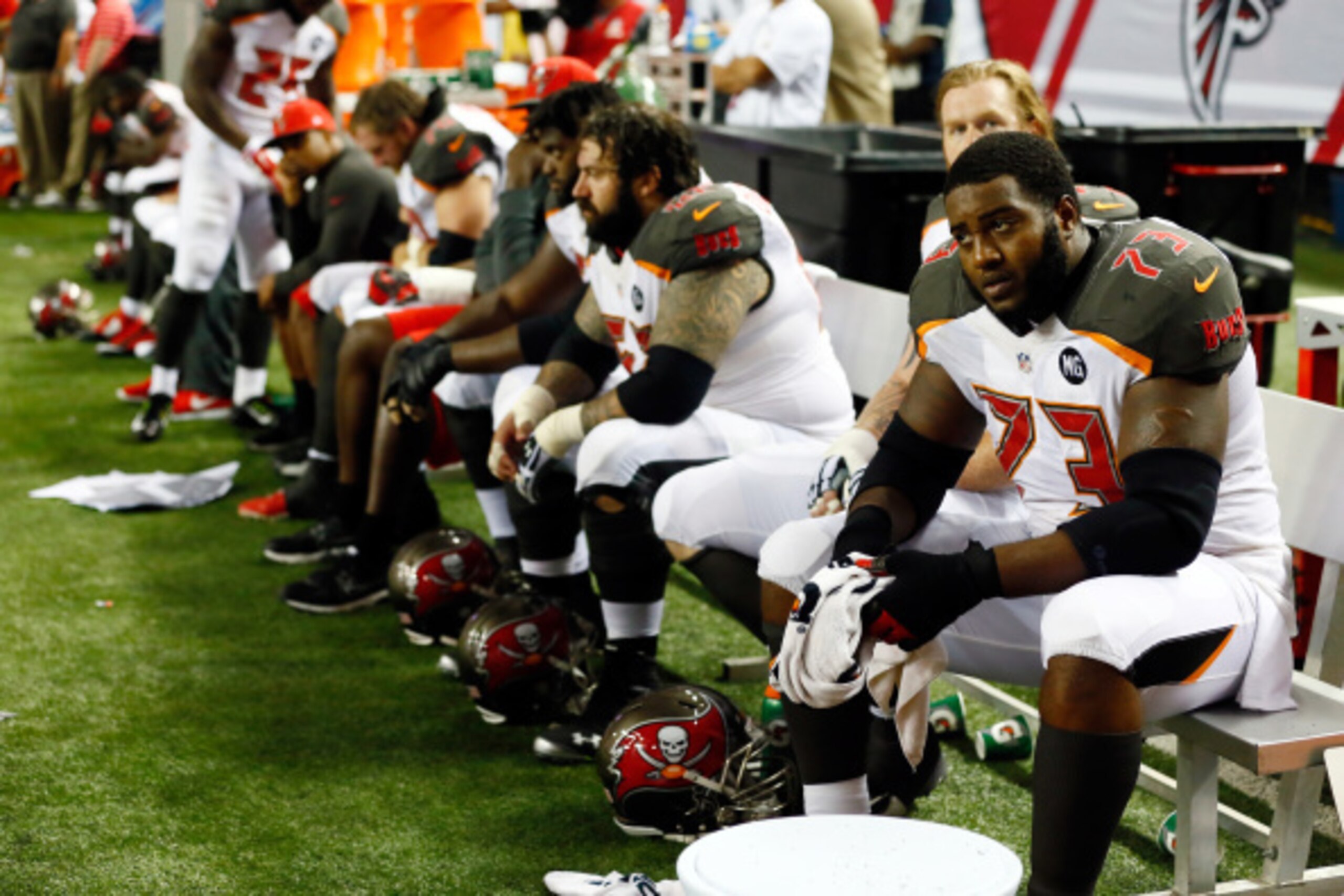
Of course, maximizing rest and prep time would help the most. An easy step to take: Ensure no team plays on Thursday night coming off a road game. This at least gives players a chance to sleep in their own beds after a game, and coaches a jump-start on watching film and game-planning.
More drastically, the NFL could make sure every team playing on Thursday night is coming off a bye. This would be much trickier to manage, schedule-wise, and mean no Thursday football for the first four weeks of the season. As undesirable as that might be for the NFL and its broadcast partners, it's less so than airing four crappy blowouts.
Of course, anything could happen in any NFL football game, and there's no way to ensure that matchups are going to be good ones before the season starts. That's why scheduling the prime-time slate is an annual boondoggle: If the NFL could guarantee a great game for national audiences, it would.
Thursday Night Football games don't always have to be blowouts, though, and the NFL needs to do everything in its power to make sure they aren't.
.jpg?w=2560 "Titans Colts Football")