Meet Bermane Stiverne, the Unlikely Heavyweight Champ on the Rise
WBC heavyweight champion Bermane Stiverne, age 35, isn’t enamored with the rigors of an austere life as a professional prizefighter. Perhaps more intriguing is the fact that he’s so honest about it.
“I mean, I wouldn’t say I like it. Let’s just say I’m used to it. I got used to it,” Stiverne told Bleacher Report with a laugh. “Before the title? Did I like my boxing career? I will be honest and say I hate this s—t!”

TOP NEWS
Later: Emanuel Navarrete vs. O'Shaquie Foster

Yaxel: Luka Not MJ 🗣️
.jpg?w=2560 "NFL Paris Football")
NFL House in Paris Closes for Protests
A boxer’s life is difficult. Fighters like Stiverne toil long hours to perform just a few times a year at most, and only those in the very top percentile make anything close to significant money in perhaps the toughest sport on the planet.
But Stiverne recognizes the long hours of hard work he endured have finally paid off.
“But once I got the title, I understood that all of it was preparation to get the title. I also understand now everything I’ve been through in my career and also my personal life. It was all to get me where I am today. It makes me appreciate the bumps on the road that I had. And why it took me 11 years to get where I’m at today.”
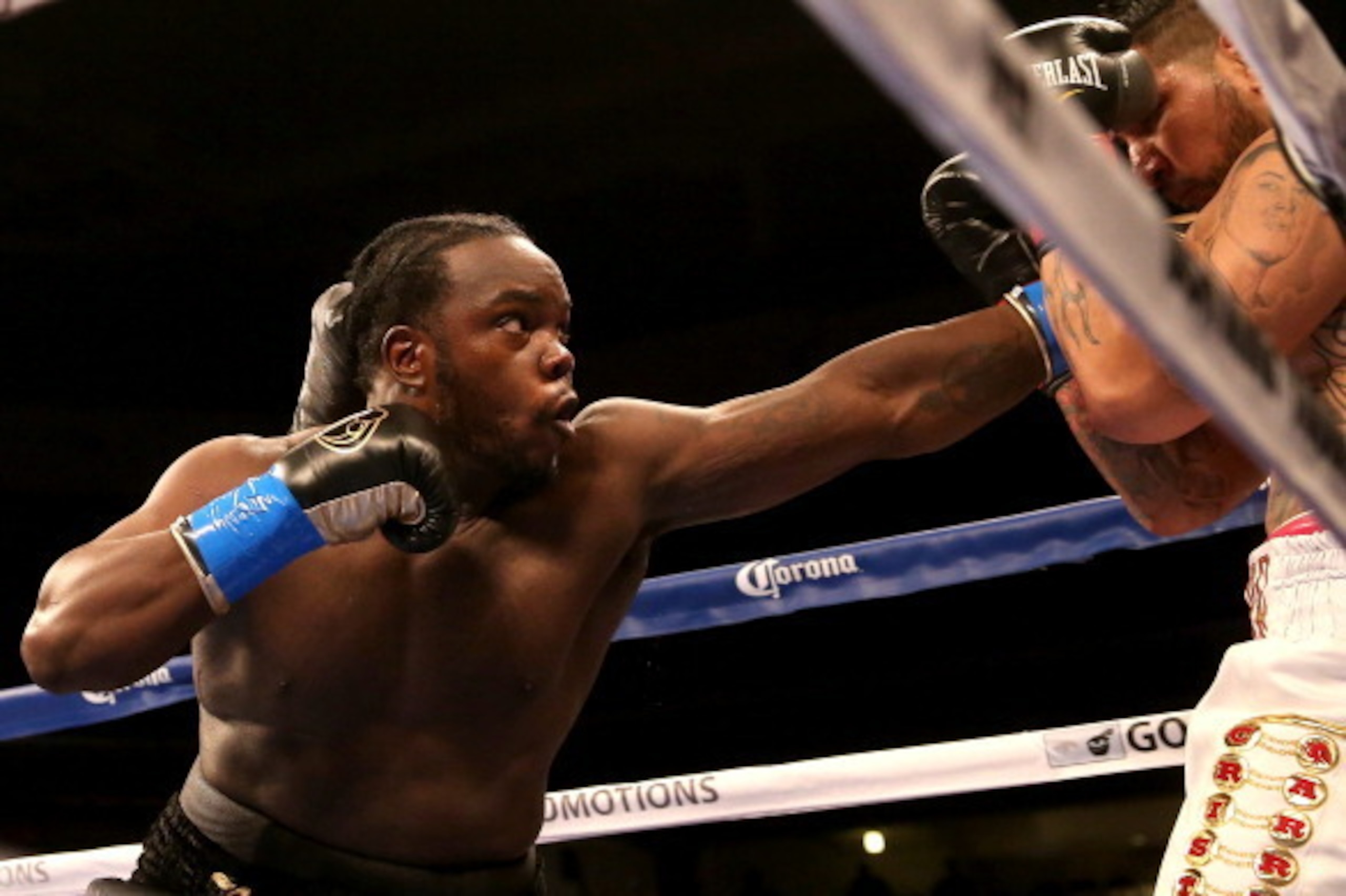
Stiverne’s journey culminated in May 2014 when he knocked out Chris Arreola in Round 6 to become the first Haitian-born heavyweight titleholder. The win garnered Stiverne the WBC heavyweight championship, a title vacated by a retiring Vitali Klitschko.
Nothing has ever come easy for Stiverne.
Born in Haiti, Stiverne came to the United States at age 10 with his family, including 12 siblings. Settling in Miami, Stiverne found himself a victim of bullying at a young age and took up karate and kickboxing for short time. But boxing was his destiny.
“That didn’t work. All the kicks and all that. I didn’t like that. That’s when I pursued football.”
Even though Stiverne was a star linebacker in the sport, football didn’t work either. He earned a scholarship from Nick Saban at Michigan State but was knocked away from the gridiron by a knee injury.
Working as a telemarketer back in Miami soon after, Stiverne only headed to the boxing gym to keep his weight in check.
Now, he's heavyweight champion of the world.
Stiverne credits much of his success in boxing to what he learned as a football player.
“My abilities that I have today in boxing are because of football. Football really helped me.”
Stiverne likens a fighter receiving instruction from his corner before and during bouts to a football player learning plays and packages from his coaches. He said the ability to listen to instruction and perform under pressure is an integral part of both sports.
“The concentration, the training...you’ve got to remember the plays. It’s just like boxing. When you fight, your eyes outside the ring are the trainer. Whatever he sees and tells you when you get back to the corner, you have to remember.”
Stiverne believes that boxing is more mental than physical.
“You can get your body ready all you want, but if your mind isn’t ready, you’re not going to succeed.”
He said the sport is 75 percent psychological, and part of that was just being able to listen and apply what is heard in the corner between rounds.
“Some fighters, when they go to the corner and their trainer talks to them, they say ‘yes,’ but when they’re back in the ring, they forget what the trainer told them.”
Stiverne started boxing at the relatively old age of 19. In a sport most often headlined by fighters who spent years before they hit puberty learning to fight, he stands out as a testament to there always being an exception to a rule.
Show me a fighter who only started boxing after his football career ended like Stiverne, and we’ll usually end up looking at someone not long for success in the sport. While football and boxing are both similarly violent pursuits, nothing in football helps a man prepare for the subtle nuances of the sweet science.
But Stiverne is an exception. He plies his trade as if he’s done it all his life. He’s calm and patient in his approach and prides himself in being able to set up shots against opponents, such as the huge right hand that ultimately became the demise of Arreola back in May.
“I think I’m more of a laid-back fighter. Once I let my hands go, you know, I don’t let them go for nothing.”
Still, how does someone who hasn’t trained as a fighter his whole life remain so calm with the largest and most dangerous punchers in the world slinging shots at him in the sport’s highest level of competition?
“I don’t know. This is something I was born with. Even when I was playing football, it was the same energy or same state of mind that I had at the time. I like to take my time and think. And whenever I punch, I always make the punches count.”
Stiverne believes his unique skill set gives him an edge over his rivals, including mandatory challenger Deontay Wilder, who Stiverne hopes to face in December.
“Some fighters just go in there and throw punches, hoping to get one in lucky. I, on the other hand, if I have something in mind, or a place where the punches should go, then that’s what I’m looking for.”
Wilder would be Stiverne’s toughest test on paper. The former bronze medalist has won all 32 of his previous bouts by knockout. He is a physical specimen, standing 6'7" with an imposing 83-inch reach.
But the opposite is also true. Wilder has never faced anyone near as dangerous as Stiverne, a skillful, hard puncher who feels that he’s just now entered his prime.
“I feel like I am a complete fighter. I feel like everything I’ve done in my career—nothing he’s done compares to what I’ve done. But just because he hasn’t faced the higher level of opposition doesn’t mean I’m going to take him lightly.”
Stiverne has been through it all. He turned professional at age 25 after a five-year amateur career fighting for the Canadian national team. But after 12 professional wins in just two years, Stiverne was knocked out by journeyman Demetrice King in 2007.
He rebounded to win five in a row before suffering a draw to a 17-17-1 fighter named Charles Davis in 2009. Stiverne said both setbacks caused him to question his vocation.
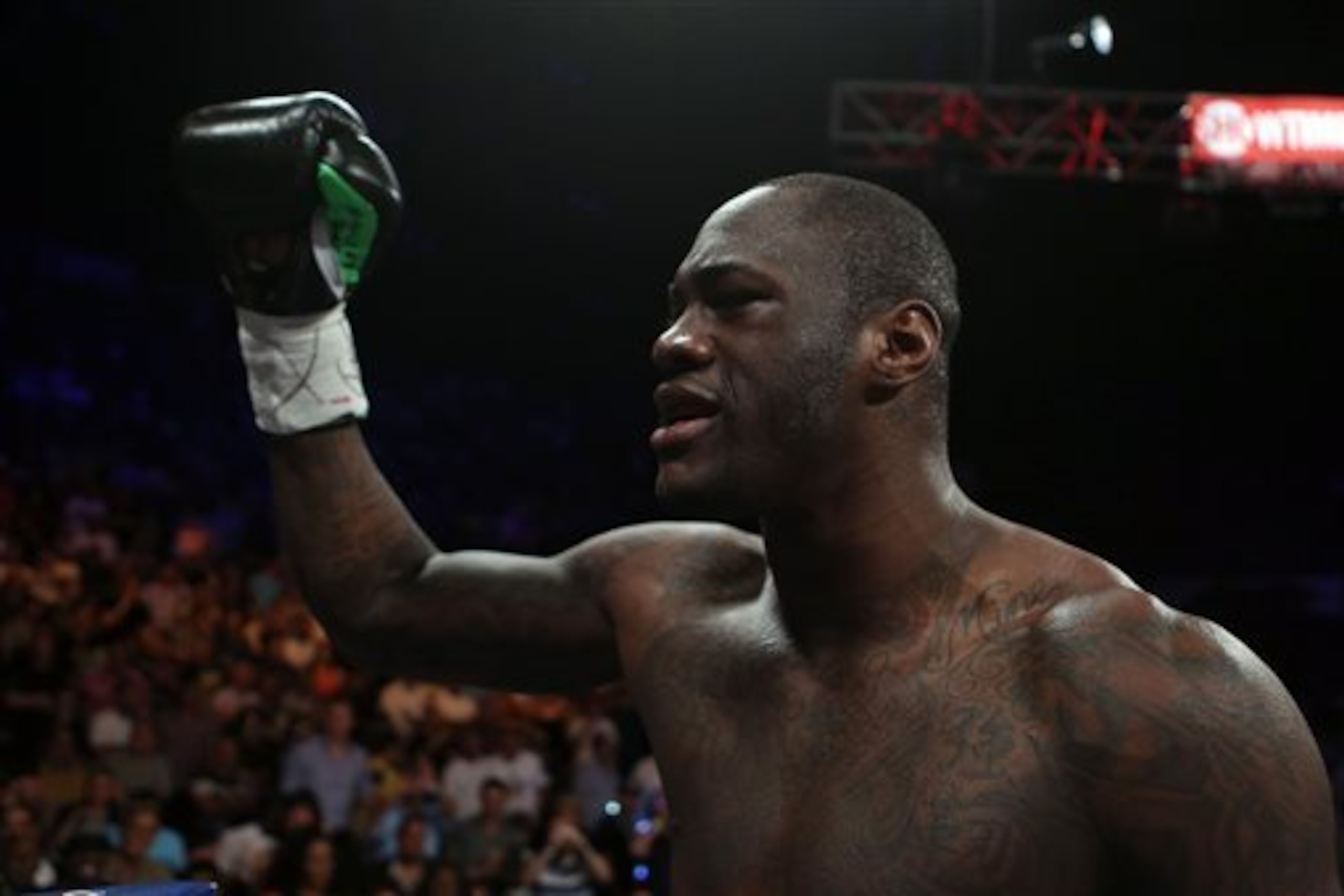
“After my draw, I was ready to go do something else besides boxing. But, you now, I had some time to think about it, and I decided to continue with it. And here I am today.”
Today, of course, Stiverne finds himself in as good a position as any heavyweight could hope for during the era of Wladimir Klitschko’s division stranglehold. Stiverne holds the only other significant heavyweight title Klitschko has not yet secured, something that could become a humongous bargaining chip should the two decide to meet in the future.
But don’t ask Stiverne about that fight just yet.
“To be honest, I’m not thinking past Wilder right now. This is one of those special fights.”
Stiverne hopes to be a heavyweight champion who wins those kinds of fights, the special ones like a potential Wilder bout as well as a unification bout against Klitschko. In fact, he said his work as a fighter didn’t end when he became a titleholder. It was only the start of something bigger.
“I’m trying to accomplish something in sport, not just being heavyweight champion but also being successful in defense of my title.”
Stiverne takes great pride in being heavyweight champion. He appreciates the significance of wearing the same belt as previous generation heavyweights like Muhammad Ali, Evander Holyfield and Lennox Lewis. He said people recognize him on the street now and that being world champion is something he always dreamed of when he started boxing.

But Stiverne doesn’t plan on being heavyweight champion forever. The unlikeliest but most honest of heavyweight champs said old age and boxing don’t go together, and he doesn’t plan on being around five years from now trying to prove they do.
“I mean, obviously, I will retire before I’m 40 years old. This is not something I want to pursue at that age. I hold the title, and I’m expecting to retire in the sport with the title. So the only thing I can do is work just as hard as I worked to get it.”
Unless otherwise noted, all quotes were obtained firsthand.
.jpg?w=2560 "Seahawks Chiefs Football")