

Jovan Belcher Reportedly Showed Signs of CTE
The brain of former Kansas City Chiefs linebacker Jovan Belcher, who murdered his girlfriend before committing suicide in 2012, had signs of chronic traumatic encephalopathy, the degenerative brain disease known to afflict many football players.
According to Steve Delsohn of ESPN's Outside The Lines, Dr. Piotr Kozlowski examined Belcher's brain at the behest of his family and found the tau protein, an indicator of CTE. A 2012 study published by Boston University around the time of Belcher's death showed that 33 of 34 NFL players whose brains were examined showed signs of CTE to varying degrees.
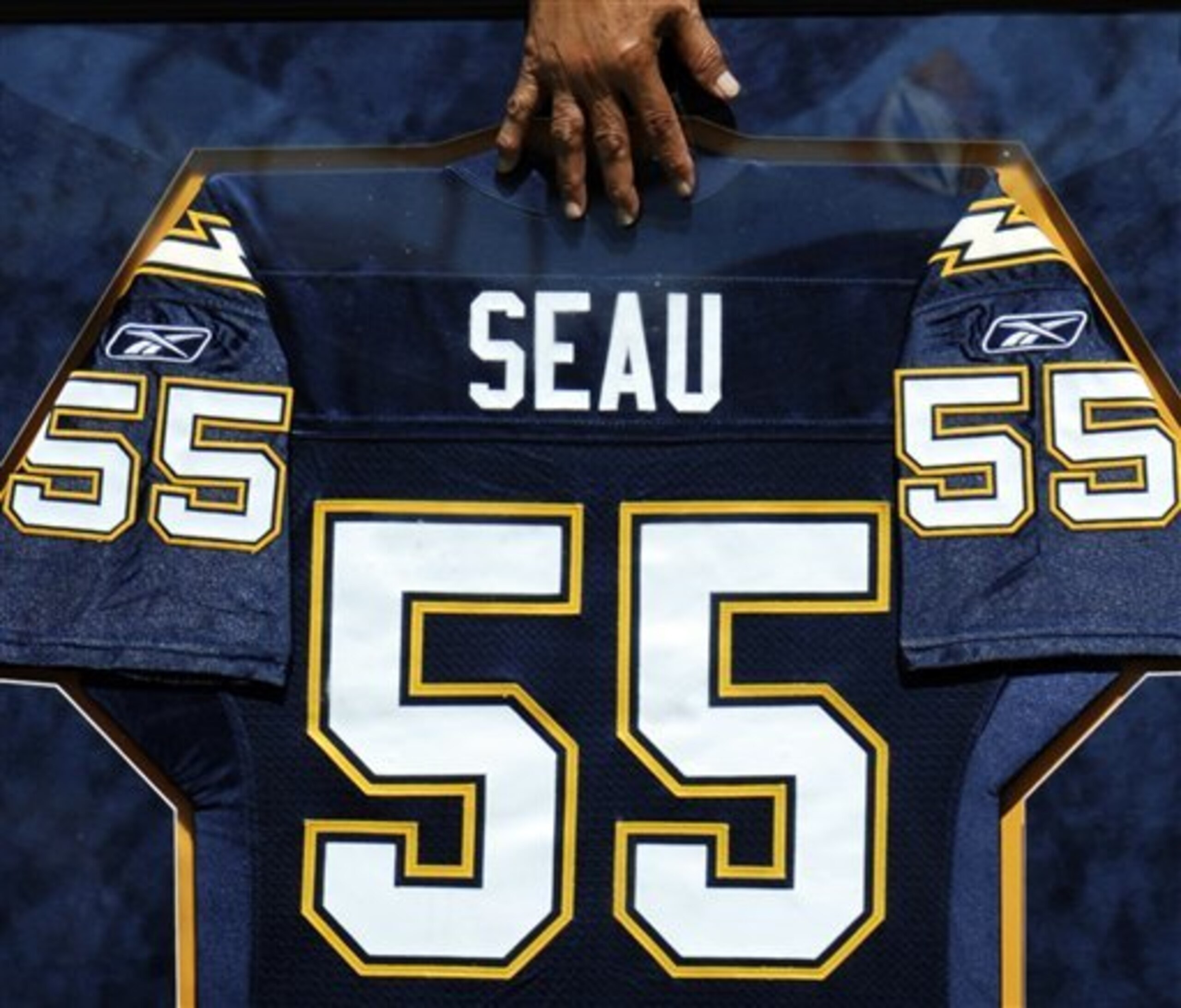
Other players, such as former All-Pro linebacker Junior Seau, have been diagnosed with CTE post-mortem since the study's release.

.jpg?w=2560 "Steelers Saints Football")
.jpg?w=2560 "Rams Raiders Football")
Belcher died of a self-inflicted gunshot wound to the head on Dec. 1, 2012, at the age of 25. Before killing himself, Belcher fatally shot Kasandra M. Perkins, 22, his girlfriend and mother of his three-month-old daughter. After killing Perkins, Belcher drove to the Chiefs' training facility, where he took his life in front of then-head coach Romeo Crennel and then-general manager Scott Pioli.

An autopsy later uncovered that Belcher was under the influence of alcohol at the time of the incident. Neurosurgeon Dr. Julian Bailes told Delsohn that the murder-suicide is not an action typically associated to someone with CTE, and the results of the test were not independently verified.
"It is of great interest. Violence against others is not typically part of the CTE picture," Bailes told Delsohn. "But it was in the case of [former professional] wrestler Chris Benoit. It would be nice to have these findings corroborated. If correct, they're very compelling."
CTE is a degenerative brain disease most commonly found in athletes who suffer repeated blows to the head. According to Boston University, CTE can have numerous symptoms ranging from memory loss to depression to even early-onset dementia. It has been directly linked to the suicides of Belcher, Seau, former Bears safety Dave Duerson and others.
The disease is most commonly associated with boxers and professional football players. In particular, the NFL has come under scrutiny due to allegations of mistreating and underreporting head injuries of current and former players.
Belcher's body was examined in part to bolster the case of his family, who have two ongoing lawsuits against the Chiefs organization. Lawyers on behalf of Belcher's mother and daughter have filed separate complaints.
The claim filed by Belcher's mother claims the Chiefs knew her son was suffering from neurological and mental issues but did not offer assistance, per a copy of the complaint obtained by Deadspin's Samer Kalaf:
"In the months leading up to Decedent's death, Defendant was aware of Decedent's symptoms and signs of cognitive and neuropsychiatric impairment. Defendant micromanaged virtually every aspect of Decedent's life when it came to his physical abilities to perform in the workplace, including analyzing his diet, speed, strength and body-mass index. Yet when it came to monitoring Decedent's mental health and neurological capacities, Defendant disregarded evidence of impairments and fostered an environment where Decedent was required to play through his injuries and become exposed to further neurological harm.
"
Belcher's mother and daughter are also in line for upwards of $4 million in settlement money if their CTE assertions are proven true. The NFL and more than 4,500 former players came to a settlement to cover healthcare and other costs, which received preliminary approval in August.
The claims against the Chiefs do not fall under the same umbrella as that settlement. The Chiefs have not publicly responded to either lawsuit filed by Belcher 's family .
Follow Tyler Conway (@tylerconway22) on Twitter
.jpg?w=2560 "Chiefs Giants Football")

.jpg?w=2560 "🚨 Week 8 AP Top 25 Poll")

.jpg?w=2560 "Lamar Being Out Shocked Ravens")
.jpg?w=2560 "Lions Outlast Packers")