

New Drug Policy Is a Huge Win for Suspended Players, NFL and NFLPA
The punishments were too severe. The appeals process was convoluted. The standards were too strict. The standards weren't strict enough. The wrong things were tested for, and the right things weren't. The whole thing was leakier than the S.S Minnow.
When it came to the NFL's drug-testing policy, just about the only thing fans, media, the NFL Players Association and the NFL could agree upon was that they needed a new one.
Now, after a false-start announcement by the NFLPA, they've got a new one:

.jpg?w=2560 "Rams Eagles Football")
.jpg?w=2560 "Texans-Mixon Released Football")
The groundwork to institute Human Growth Hormone testing was laid in the 2011 CBA negotiations, but it took three years of sometimes-contentious talks to reach this agreement. In a much-needed bit of good news for the NFL, NFLPA player reps voted unanimously to accept the new policy and settle the issue for a good long time.
Both sides can claim victory; the changes and progress made are a positive for the sport. Still, there's a reason this took three years to nail down. Who won what, and which side sacrificed what to gain where? And what'll happen to the players currently serving suspensions?
Reinstatement
Fantasy football owners, you're screaming at the screen. With the new agreement being retroactive to the beginning of the year, what's happening to players who've been suspended under the old policy?
On Facebook, ESPN's Adam Schefter summarized his and Chris Mortensen's joint report on the suspension lengths of many of the biggest names affected by this policy change:
"Upon agreement of term sheet for new drug policy, these players will be reinstated: Broncos WR Wes Welker, Rams WR Steadman Bailey, Cowboys DB Orlando Scandrick, Giants OL Eric Herman and former Vikings DE Spencer Nealy.
WRs Josh Gordon and former Colt LaVon Brazill will have their season-long suspensions reduced to 10 games.
Gordon continues to be allowed to work out at the Browns’ training facility.
The seven above names are part of the estimated 20 who will be affected by the new policy once it is approved by the NFL.
"
Welker, Bailey and Scandrick have been reinstated immediately:
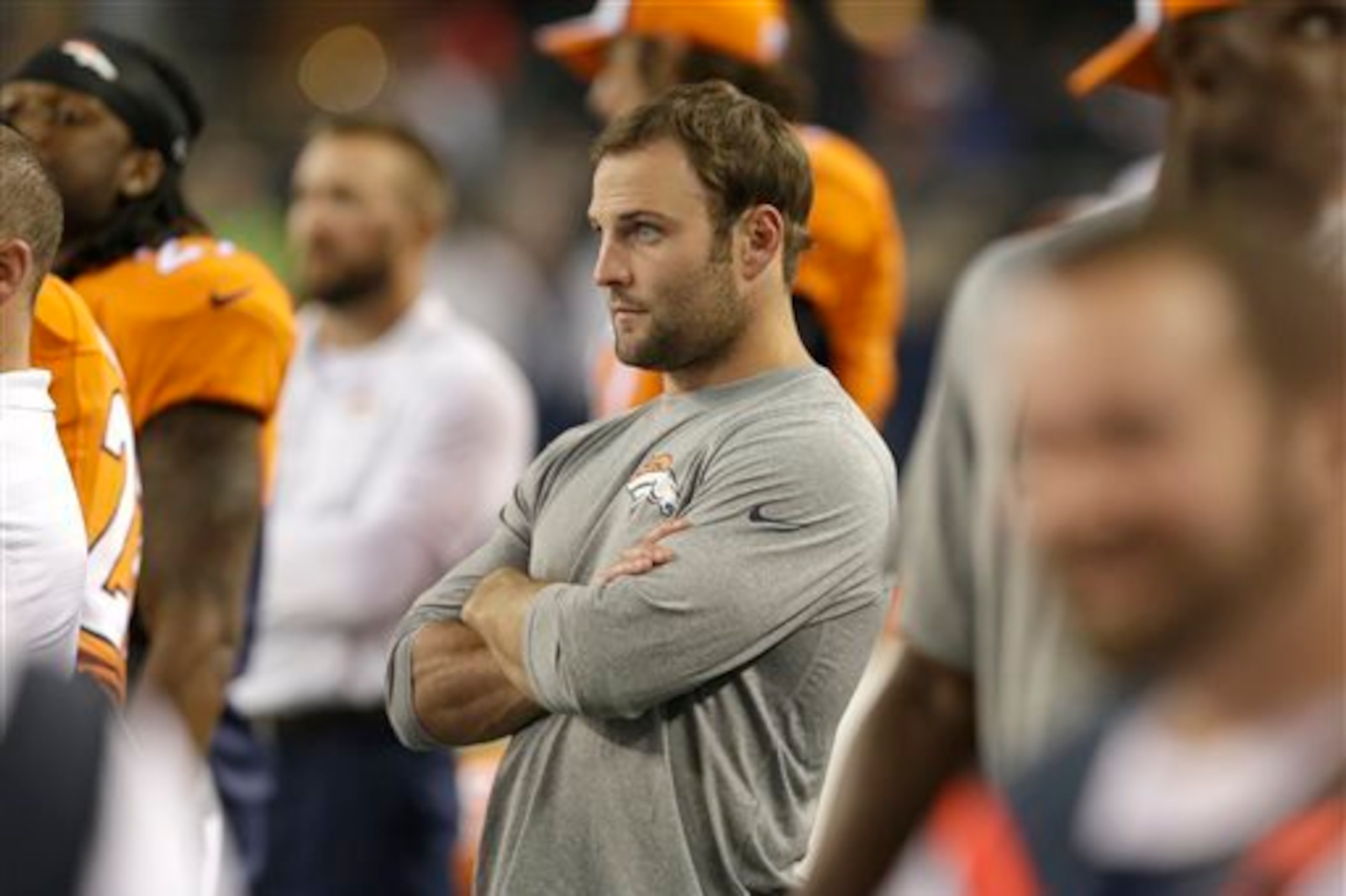
Welker is the biggest name here, and his reinstatement is the biggest news to fantasy football owners waiting to see if they can start him this weekend. He'll be a cog in the amazing Denver Broncos offensive machine, which has already scored a fourth-best 55 points without him.
Bailey and Scandrick, though, will probably have more on-field impact with their respective teams—which are both 1-1 in divisions expected to be very, very tight.
Two games into the season, the St. Louis Rams are starting their third-string quarterback and are dead last in points scored. Bailey only started two games as a rookie, but his speed and versatility should help provide desperately needed spark for the suddenly desperate Rams.
Scandrick returns to a Dallas Cowboys team nobody's quite sure what to make of.
2013's worst scoring defense lost its three best players (DeMarcus Ware, Jason Hatcher and Sean Lee) over the offseason but held the San Francisco 49ers to just 21 offensive points and the Tennessee Titans to 10. The versatile Scandrick will bolster the secondary and help the Cowboys keep their heads above water in the always-crazy NFC East.
Getting Tough on Human Growth Hormone
Had the two sides agreed shortly after the 2011 CBA was ratified, as was the plan, the NFL would have been the first American pro sports league to test players for the substance.
To test for HGH, though, requires a blood draw—and that's a big deal.

Back in 2012, Seattle Seahawks cornerback Richard Sherman was hit with a four-game suspension for performance-enhancing substances. Sherman knew errors had been made in sample collection and storage, and he appealed.
"It was a weird day, a weird testing procedure," Sherman said when former NFL executive Bob Wallace upheld the appeal and overturned his suspension, per ESPN.com. "A lot of things went wrong on that day and that's why the result came out the way it did because he made mistakes and he did things wrong."
As invasive as urine testing can be, blood testing is obviously much more so. The proficiency and safety standards required for collectors are much higher, and there is risk (though slight) of harm to the player during the collection process. Technical snafus like what happened to Sherman just can't be made when dealing with needles and veins.
On September 13, USA Today's Tom Pelissero reported the details of the testing procedure:
"Five players from eight randomly selected teams will be selected by a computer program for blood testing in the preseason and the regular season. Five players on each club during the postseason also will be tested, and 10 percent of each team's players will be randomly selected for offseason testing. There is pre-employment and reasonable cause testing, too.
"
According to the policy, players will never have to give a blood sample on a game day, which alleviates concerns that a player could be literally drained when he needs to give his all. The Red Cross website advises those who've given blood to "try not to exert yourself too much for the rest of the day," and playing professional football involves a fair bit of exertion.
Chillaxing on Recreational Drugs
In step with a generational sea change on attitudes toward marijuana use, and in the wake of a raft of complaints that drug-use punishments were outstripping those for violent crime, the NFL and players agreed to relax some standards for substances of abuse.
The testing threshold for marijuana went from a very strict 15 ng/ml to 35 ng/ml; that allows for more than double the amount of marijuana to be present in a player's system before triggering a positive result.
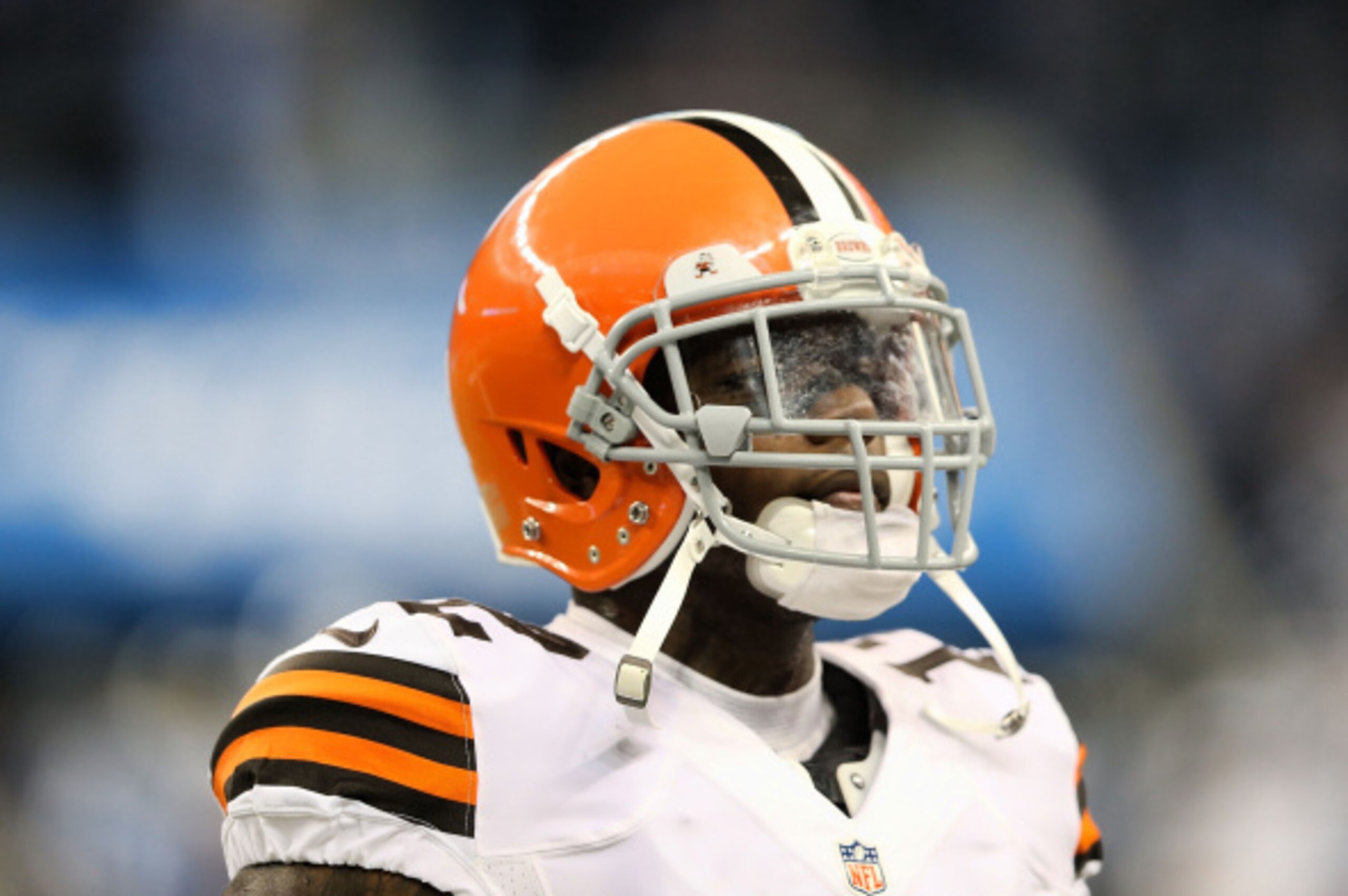
This would have prevented Cleveland Browns receiver Josh Gordon's most recent positive test (and subsequent suspension) from happening.
As ESPN's Adam Schefter put it, "Gordon's 'A' sample tested at 16 nanograms per milliliter, a bare one nanogram per milliliter above the 15-nanogram-per-milliliter threshold, while Gordon's "B" sample—which should theoretically be consistent with the "A" sample, as it comes from the exact same specimen—tested at 13.63 ng/ml, lower than the threshold."
This "A sample"/"B sample" confusion could be addressed by the "additional steps" the players say have been inserted between a positive test and suspension, but no further details were given there.
With all that said, even the new 35 ng/ml standard is far, far below the international standard of 150 ng/ml set by the World Anti-Doping Agency, used for the Olympics and most other major sports organizations.
Bleacher Report Medical Lead Writer Will Carroll told National NFL Lead Writer Mike Freeman he thought the NFL should just adopt WADA standards and be done with it:
"When WADA changed their standard, the NFL should have followed, but this is in part because they don't simply follow the WADA list or procedures the way that MLB does. The NFL has always gone its own way, setting up procedures that are far too lax on one side and far too draconian on the other. Worse, it's made things very confusing for the players and the fans.
If the standard is that we want the drugs out of the game, then the NFL is failing. If the standard is that we want the game to be trusted, the NFL is doing amazingly well. Despite 350-pound men running 4.4 40s, any great feat isn't greeted with the same steroid doubt that everything in baseball is.
"
Even so, the NFL agreed to relax standards on one performance-enhancing drug: amphetamines.
Multiple players this offseason, including Denver Broncos receiver Wes Welker, tested positive for amphetamines. The family of stimulants were considered performance-enhancing drugs—but fast-acting stimulants that quickly wear off don't enhance football performance in June.
Going forward, offseason use of these stimulants without a Theraputic Use Exemption will be treated as a Substances of Abuse violation, in accordance with the program.
The NFL had pushed to institute immediate (pre-trial) punishment for players arrested for DUI/DWI, but the players resisted. Instead, "a two-game suspension will be issued upon conviction or plea agreement for violations of law involving alcohol and driving."
Pelissero reported the full schedule of punishments for marijuana and other recreational drugs:
"If player is in the program by testing positive for either marijuana (MJ) or other banned substances of abuse (O):
Next violation relating to MJ 2 game fine
Next violation relating to O 4 game fine
Player's last discipline was 2 game fine for MJ:
Next violation relating to MJ 4 game fine
Next violation relating to O 4 game fine
Player's last discipline was 4 game fine for MJ or O:
Next violation relating to MJ 4 game suspension
Next violation relating to O 4 game suspension, entry into Stage 3 for O
Player's last discipline was for 4 game suspension for MJ or O:
Next violation relating to MJ 10 game suspension, entry into Stage 3
Next violation relating to O Banishment, can [apply for] reinstatement after 1 year
Player's last discipline was for 10 game suspension for MJ:
Next violation relating to MJ Banishment, can [apply for] reinstatement after 1 year
"
Arbitration and Confidentiality
For players, the biggest win was the installation of a neutral, independent arbitrator to hear appeals for violations of both Substances of Abuse and Performance-Enhancing Drug policies.
As NFL Media's Albert Breer reported in 2013, the players' insistence on either doing a population study of NFL players to establish alternative baseline standards, or have appeals heard by an independent third party, was the issue holding up negotiations all along. As the saying goes, this was the hill the players chose to die on; after three years their flag has stayed planted.
"The NFL and NFLPA," the new policy says, "will jointly select, approve and pay for retention of 3-5 arbitrators."
Another huge issue for players was confidentiality. In theory, the old process was supposed to be completely confidential until suspensions were announced; this allows for the appropriate appeals process to be heard. In practice, it seemed like many national reporters were able to give blow-by-blow updates of positive tests, substances they tested for, looming suspensions and projected lengths and the appeals thereof.
Now, both the league and players will have the right to retain private investigators to hunt down leaks, and punishments of fines of up to $500,000 and termination are in store for those who do the leaking.
It's only fitting: Negotiations that were supposed to take a few months but took a few years took nearly a week to go from announcement to finalization. Now, though, the players and league have a drug policy that makes much more sense in the context of other NFL policies and punishments—and suspended players and their fans have fair and final resolution.
.jpg?w=2560 "Commanders Eagles Football")
.jpg?w=2560 "Chiefs Dolphins Football")

.jpg?w=2560 "Grading WWE Raw 🔠")


