
Derek Lowe Contract Already a Bust?
TOP NEWS

MLB Commissioner Defends Salary Cap
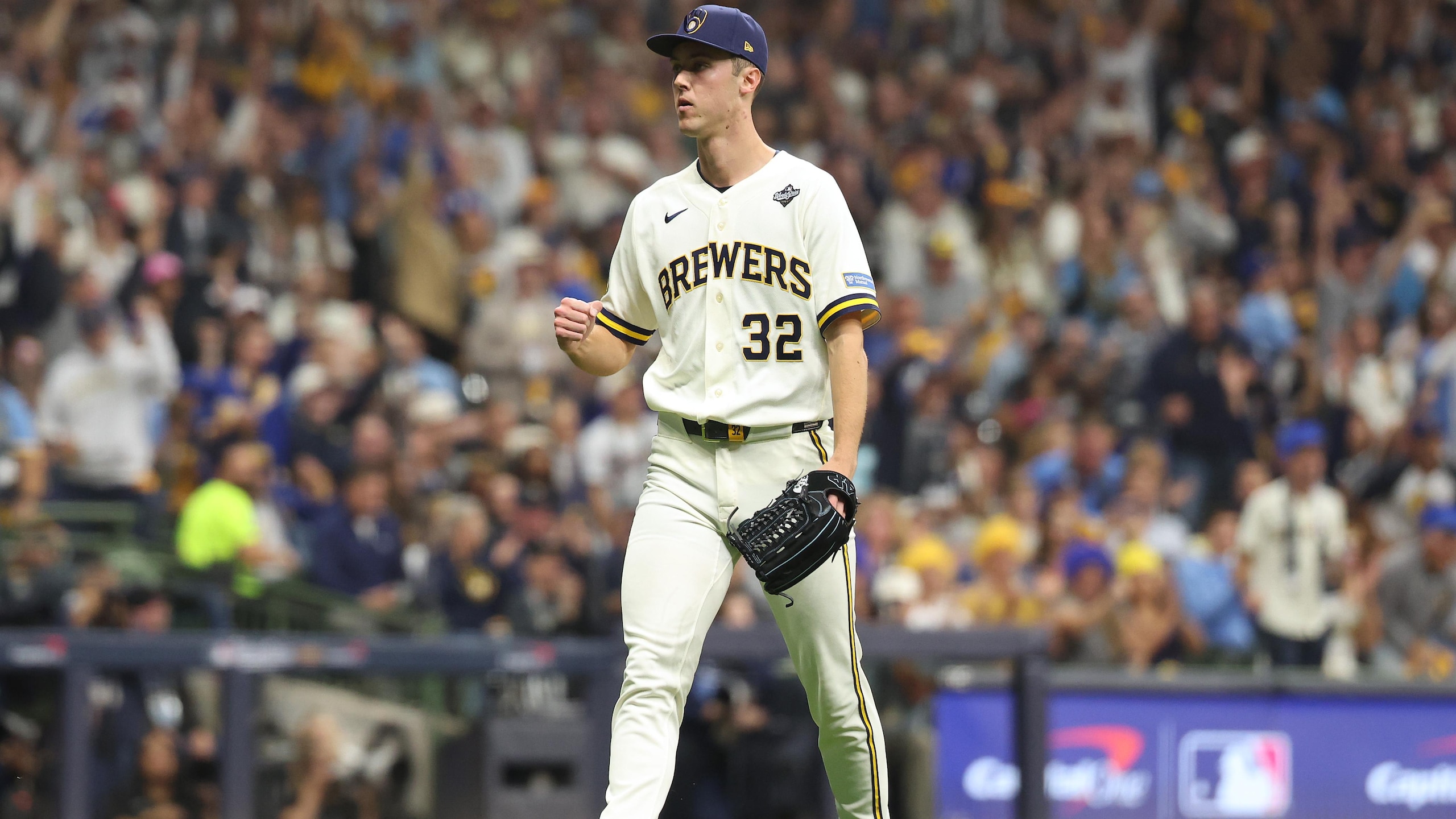
Miz Sets WS Record Already ⛽
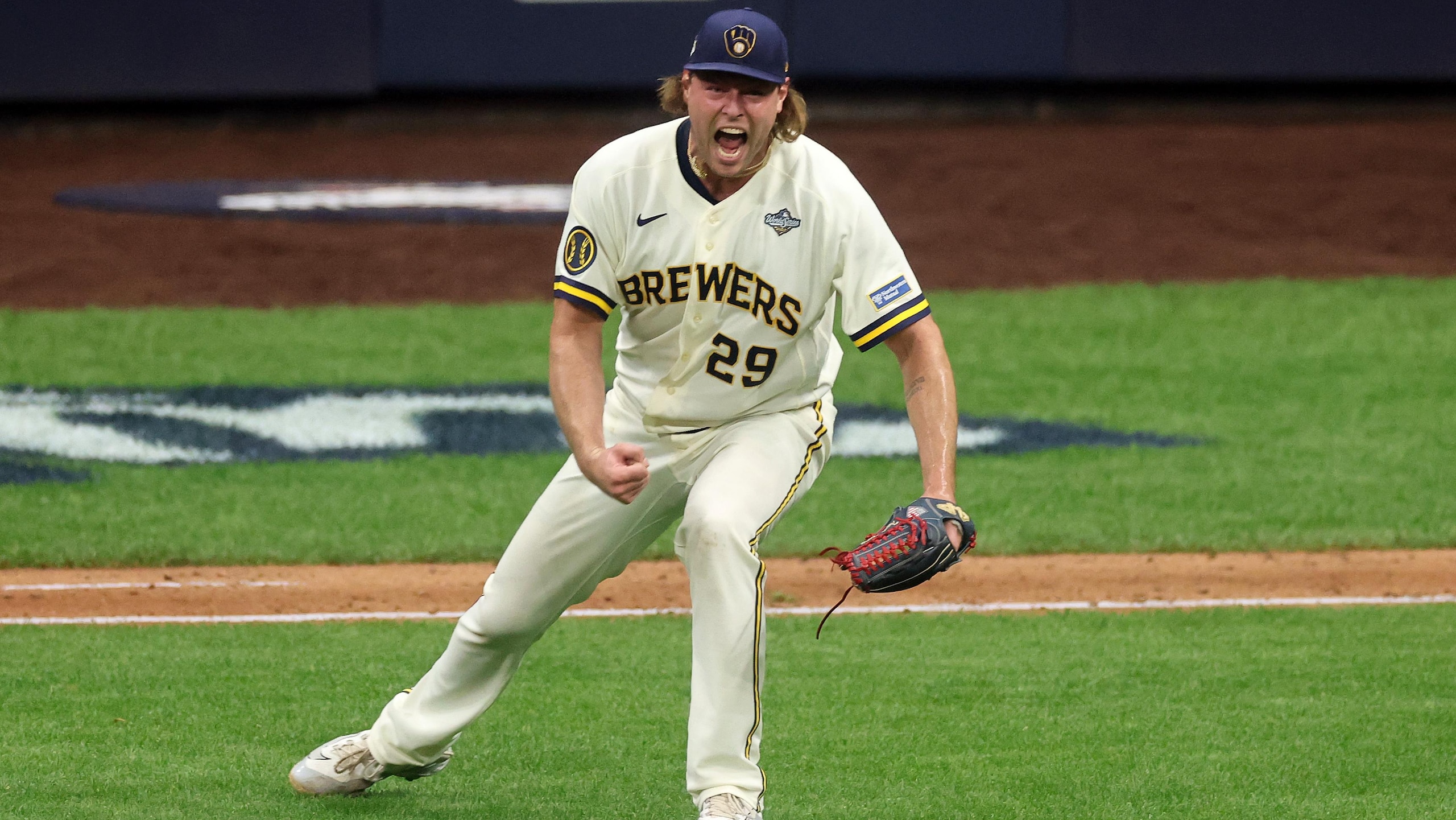
Brewers Get 1st WS Win Since 1982 💪
So why do teams do this to themselves when they certainly ought to know better?
A big part of it is the way that free agency has been set up. When major league players first won the right to become free agents by arbitrator Peter Seitz’s interpretation of the standard player contract’s reserve clause back in 1976, Marvin Miller, the head of the Players’ Association was thinking several moves ahead of the owners.
Once the arbitrator’s ruling came down, Miller saw that the issue of free agency would have to be collectively bargained, and that the owners would be predisposed to holding onto players as long as possible before they could become free agents. Being an economist by training, Miller saw that the owners would jump at a system that allowed them to hold onto their best players for six or seven major league seasons, without thinking ahead to the effect on the market for those players who eventually did reach free agency.
The vast majority of men who play in the major leagues don’t last six full seasons on a major league roster. The number of free agents in any given year is thus limited in number and also limited to the best players. With now thirty major league teams, and only a few really good free agent players available at each position in any given off-season, the market always wildly favors free agents.
Part of the allure of free agents, is that they are proven, veteran stars who are “free” to their signing team, in the sense that the signing team doesn’t have to give up any talent (with the exception of a single draft pick for certain of the most talented free agents offered salary arbitration by their former teams).
Thus, a free agent can be signed without weakening the signing team at all (in theory at least). With not enough free agents to go around, teams get into bidding wars to sign the top free agents.
Miller and the members of the Players’ Association, once Miller had explained it to them, were willing to a agree to a system that provided for free agency for such a small percentage of the Association’s membership, because the Players’ Association had negotiated binding salary arbitration for players with at least three seasons of major league service time starting in 1973, a concession the Association received as a result of the 1972 players’ strike. The more money owners threw at a relatively small number of free agents, the more the much larger class of arbitration eligible players could request, provided of course that their numbers were comparable to the overpaid free agents (often, not a particularly hard thing to do).
To this day, the owners hate salary arbitration far more than free agency. No one puts a gun to the owners’ heads and makes them overspend on free agents. They do so based on their own calculus. However, thanks to salary arbitration, they are forced to give young players massive raises after they reach approximately 2.8 years of major league service time.
Getting back to the Braves’ decision to overpay Lowe, it was a classic case of the free agent market in action. The Yankees, the team with by far the greatest resources and with the most to gain in terms of revenue by fielding a winning team every year no matter the cost, quickly signed the two free agent pitchers they considered the best, C. C. Sabathia and A. J. Burnett, to enormously high contracts.
Once the Yankees had sated themselves, that left Lowe as the generally regarded best free agent pitcher still available. Someone from the remaining 29 teams was going to overpay Lowe, it was just a question of which lucky team it would be.
Back in 1976, the only owner who saw the effect of free agency only after six years of service time was A’s owner Charlie Finley. He proposed that all players be allowed to become free agents after every season. While the best players would get huge contracts, the vast majority of major league players would find themselves competing with each other for a limited number of major league jobs.
This is, in fact, what we have now in a limited way. Many, many players in recent years have been non-tendered when they reach the service time requirement for salary arbitration. This way, teams don’t have to give these players a guaranteed big raise, and can then pick and choose among the players non-tendered by all the other teams who are competing for a more limited number of major league jobs.
Teams that are good at this process can staff the back half of their bullpens, their benches and even the odd starting slot at bargain prices. For example, the Giants have Justin Miller pitching for them this year, probably for less than $500,000, solely because the Marlins didn’t think Miller was worth what he certainly would have gotten in arbitration had the Marlins kept him.
However, the other owners thought Finley was a kook and ignored him. The owners wanted to hold onto their stars as long as they could. It now turns out Finley was right after all.
Who knows? It’s certainly possible that Derek Lowe could go 10-2 in the second half of ‘09 and lead the Braves deep into the post-season. I highly doubt it, however.
At least one thing can be said in favor the Braves’ decision to sign Derek Lowe: no matter how badly it turns out for the Braves, it will not be nearly as big a mistake as the Giants’ decision to sign Barry Zito for seven years and $126M in December of 2006.


.png?w=2560)

.jpg?w=2560 "NFL House in Paris Closes for Protests")
.jpg?w=2560 "Trevon Diggs Cut by Seahawks")
.jpg?w=2560 "Jonathan Taylor Landing Spots")
