

Do Pay Cuts Equal NBA Championships?
Teams that find ways to consistently exploit market inefficiencies might have the best odds of winning championships. Just ask the San Antonio Spurs.
The new CBA makes it tougher to give exorbitant salaries to players because of harsher luxury-tax penalties. Also, the contracts have become shorter, which means there is more player movement. Thus, it’s practically imperative to find bargains in order to maximize the potential of a team’s roster.
It’s important to remember that point while certain franchises dole out ridiculous amounts of money to players during free agency.

The Bad Model

The Washington Wizards agreed to terms with Marcin Gortat on a five-year $60 million deal. Does it make them a force to be reckoned with?
Grantland’s Andrew Sharp offered this take on the agreement:
"At the start of free agency, I’d dreamed of a two-year deal. I knew he’d get at least three years. I even accepted that all things considered, the Wizards would definitely get desperate and offer a fourth guaranteed year. But FIVE? Even when you’ve got your guard up for a bad contract, the Wizards find a way to punch you in the stomach.
"
One could rationalize that Gortat’s deal isn’t that bad. He did average 14.5 points, 10.4 rebounds and 1.6 blocks per 36 minutes during the 2013-14 campaign, according to Basketball-Reference.com. But have a look at Washington’s salary-cap sheet, per ShamSports.com, and include Gortat’s annual figure of $12 million.
Gortat is a good center, not a great one. In addition, he likely won't be serviceable anymore in the last few years of his deal because of his age (30 years old). Also, the Wizards are hoping to bring back Trevor Ariza, who will likely want a contract in the range of $9 million per season. If Washington and Ariza strike a deal, the team becomes capped out until 2016-17 when Nene’s contract expires. That very same offseason, Washington will be faced with offering a qualifying offer to Bradley Beal, upon which he would become a restricted free agent.
In other words, the Wizards are locking themselves up to a roster that finished fifth in the putrid Eastern Conference last season. The point here isn’t to pick on the Wizards, but rather it's to illustrate some of the bad turns teams can take in roster construction.
The Detroit Pistons provided another example by agreeing with Jodie Meeks on a three-year, $20 million contract, per Yahoo Sports Adrian Wojnarowski. Meeks is a one-dimensional shooter who offers nothing else on the court. Yes, Detroit overpaid for his services.
The Pistons might make the playoffs during the 2014-15 campaign, but then again, ESPN’s Fall Forecast projected Detroit would compete for a playoff spot during the 2013-14 season.
If anything, these teams provide a clear picture of the path one should avoid when trying to compete for the NBA crown. Overpaying for fringe players is the highway to mediocrity.
Smaller Pay, Bigger Play
Great teams are quite judicious when spending for quality players, which is the way to go when building a championship roster.
The talent component cannot be overstated here. Paying Ben Gordon $12.4 million during the 2012-13 campaign isn’t the same thing as paying the Spurs’ Tony Parker $12.5 million in the same season. Some of you may have only recently realized Gordon was still an active NBA player.
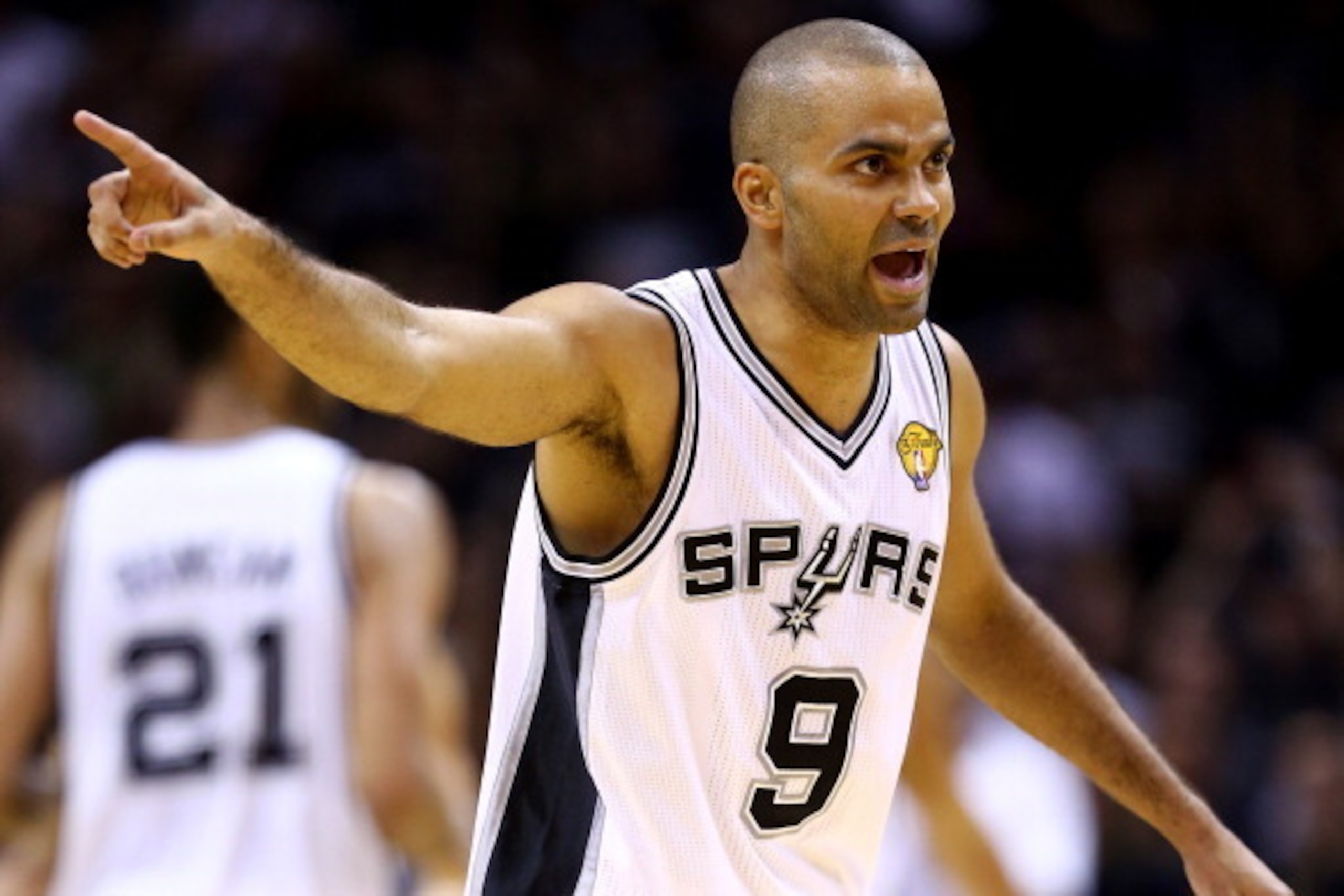
Those figures speak to San Antonio’s foresight as a front office. The newly crowned champions smartly signed Parker during the 2010 offseason to a four-year, $50 million extension.
Parker was already a three-time champion and Finals MVP (2006-07) at the time. The Spurs managed to convince him to take a modest deal that would allow San Antonio to remain in contention for multiple years.
In case you need a reference point for San Antonio’s smart financial planning, the Memphis Grizzlies signed Rudy Gay to a five-year, $82 million extension that same summer. He’s since been traded twice. Yikes!
This speaks to the smarts of San Antonio’s front office. What they accomplished with Parker isn’t an isolated incident. The Spurs managed something with Tim Duncan that I’m not sure other franchises could pull off with a superstar of his magnitude.
Duncan is possibly one of the five greatest players ever (he just moved past Larry Bird in my book), and San Antonio has been severely paying him under market value. During the 2011-12 season, he made $21.2 million, per ShamSports.com.
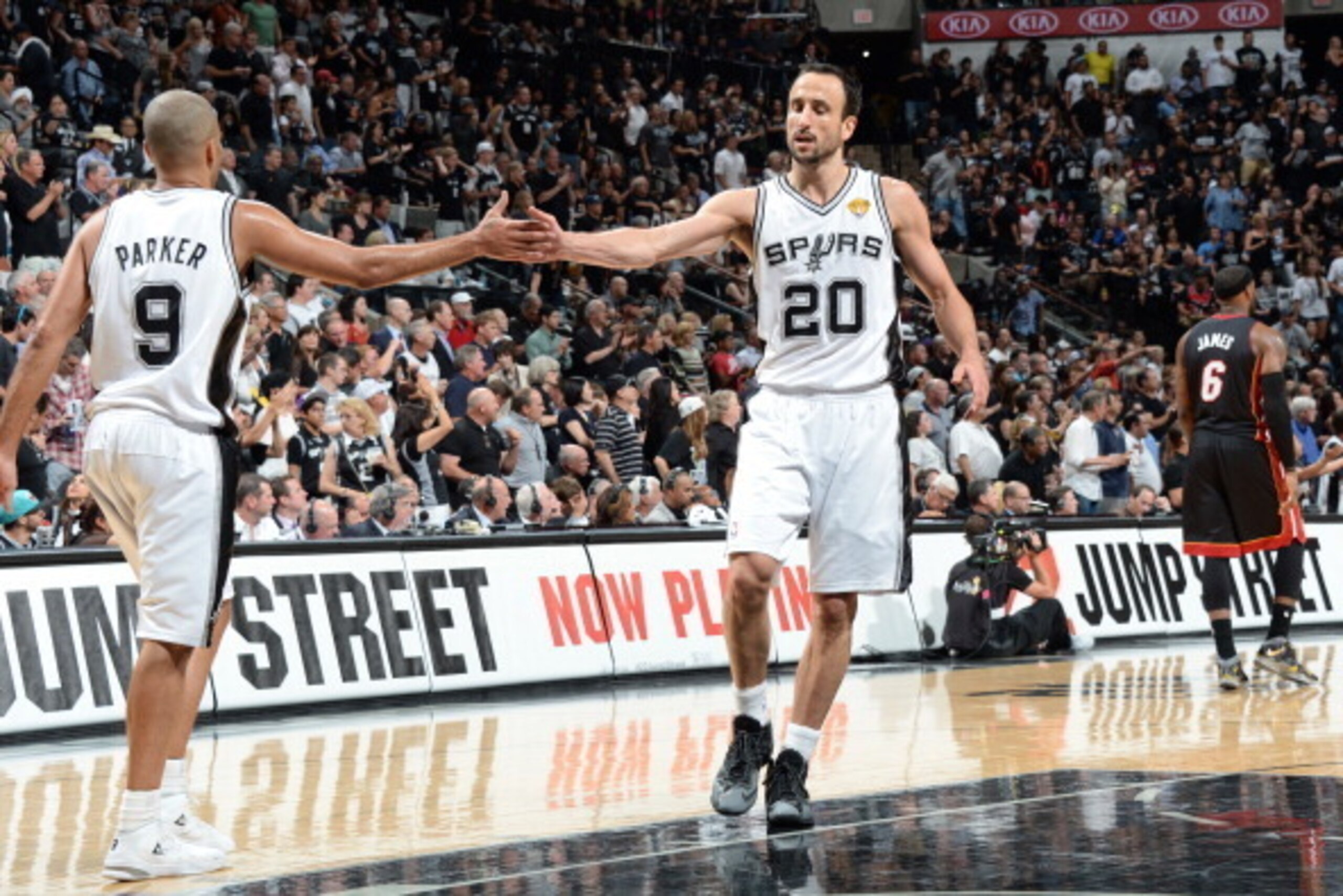
Because Parker and Manu Ginobili were emerging as elite players, Duncan agreed to a substantial pay cut. Spurs Nation’s Mike Monroe had the details in July 2012:
"By accepting an $11.5 million cut from the $21.15 million salary he earned last season, Duncan enabled the club to re-sign its most coveted free-agent players, add 2009 draftee Nando De Colo and still drop below the NBA’s projected luxury-tax threshold for next season.
"
Duncan was coming off a year in which he averaged 19.7 points, 11.5 rebounds and 1.9 blocks per 36 minutes, according to Basketball-Reference.com. That sacrifice allowed the Spurs to later sign the likes of Tiago Splitter, Boris Diaw, Danny Green and Marco Belinelli. All of these players were key contributors to San Antonio’s championship run last season.
More importantly, Duncan set the standard for his teammates, and it paid off. Grantland’s Zach Lowe explains: “All three of Tony Parker, Tim Duncan, and Manu Ginobili, all Hall of Famers, took less money than they might have received over multiple contracts to hang together and chase rings.”
San Antonio isn’t the lone team that’s figured out how to “manipulate” the salary cap. Their 2013-14 Finals opponent, the Miami Heat, was just as good in this respect. San Antonio dethroned Miami in five games during the championship series, but the Heat still managed four consecutive trips to the Finals.
The last team to accomplish that feat was the Boston Celtics (1984-1987). Miami built its team around three elite talents in LeBron James, Dwyane Wade and Chris Bosh.
All three took deals at less than market value in the 2010 offseason to enhance the Heat’s chances of signing complementary players. Each had the opportunity to sign a six-year, $119 million contract similar to the one Joe Johnson got with the Atlanta Hawks.
Instead, James and Bosh agreed to six-year deals worth $110.1 million each, while Wade signed for $107.5 million over the same period, according to ESPN.com.
Because the Big 3 took discounts, Miami was able to re-sign Udonis Haslem to a five-year deal worth roughly $20 million. It then added the likes of Mike Miller, James Jones, Shane Battier, Ray Allen and Chris Andersen at affordable costs. Feel free to view the salary breakdowns to get a clear picture of how Miami efficiently built its team.
The acquisition of talent at below-market rates allows teams to keep trotting out quality role players who end up swinging title runs.
For instance, Miller buried the Oklahoma City Thunder with his three-point shooting in Game 5 of the 2012 NBA Finals. The following year, Allen saved Miami in Game 6 with perhaps the greatest shot in Finals history.
Allen’s heroics set the stage up for Battier to help the Heat clinch the title in Game 7 with six treys. The player many have forgotten about in that series is Danny Green. San Antonio was partly in a position to win the title because of his 27 of 49 attempts stat from downtown, which stands as a Finals record.
If we look at the 2014 Finals, San Antonio’s role players were simply sensational across the board. Only two Spurs shot less than 47 percent (Boris Diaw and Cory Joseph) from the field during the title round, per NBA.com.
That’s an absurd level of efficiency, and San Antonio accomplished it because they had enough high-caliber players who fit their system. For instance, Patty Mills went bonkers in Game 5 of the 2014 Finals, while Diaw put on a clinic with his all-around skills throughout the championship series.
The reduction in salaries for the top guys as well as the smaller parts allows teams to stack talent on their roster and win titles.
It’s not an accident that Miami and San Antonio met in consecutive Finals. The similar models speak to the methodology of roster construction post-lockout. This might be the new road to titles.
Who’s Next?
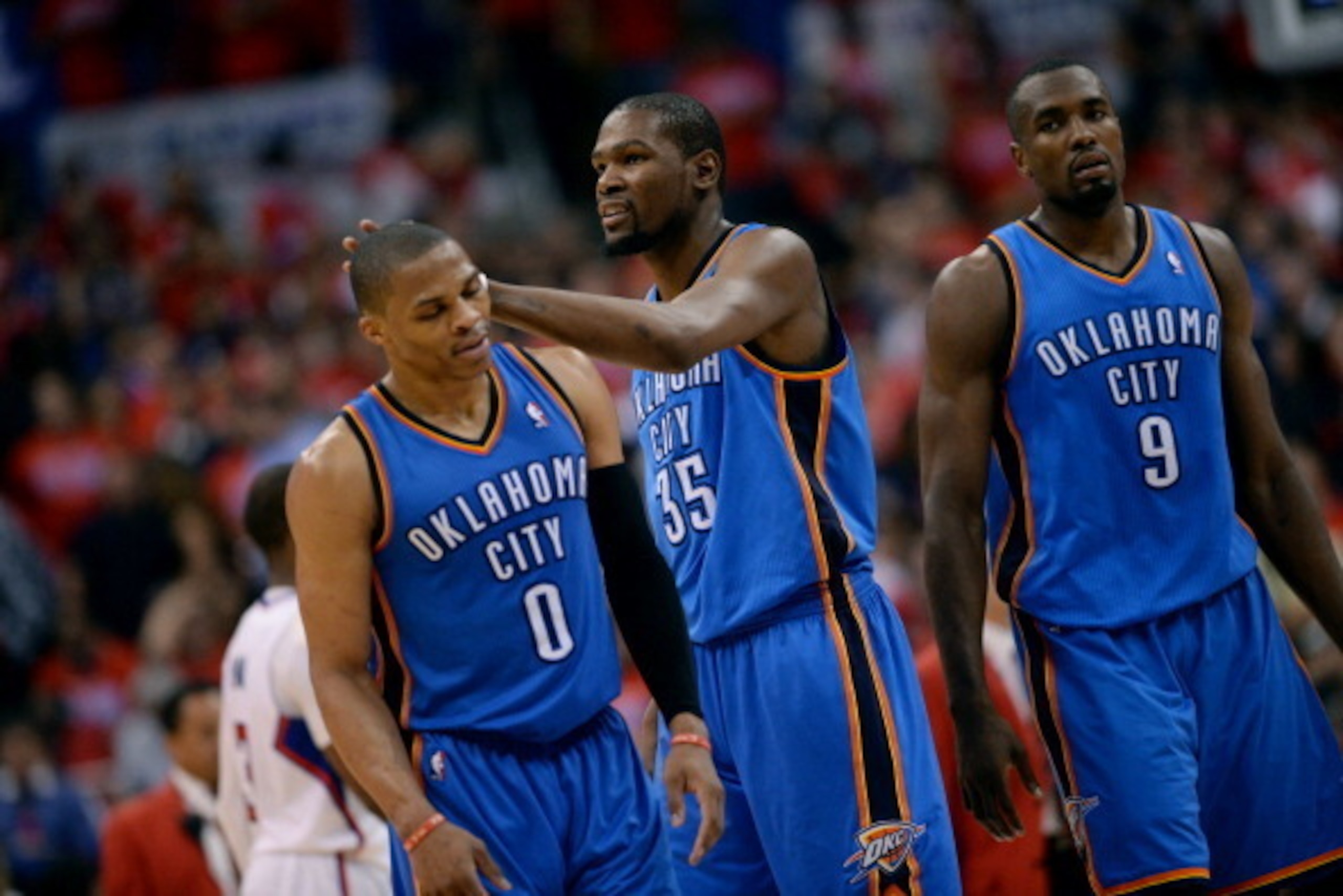
Oklahoma City looks like the next team that might make a few title runs and possibly claim the championship while following this model.
It’s worth noting that the Thunder already made an appearance in the Finals back in 2012 when they had James Harden and Russell Westbrook playing on their rookie deals.
Fearing the luxury tax, OKC traded away Harden a year before a huge extension would kick in. While it might be tempting to point out that the Thunder haven’t been back to the Finals since shipping away Harden, we also can’t gloss over the fact that the team dealt with harsh injuries during their postseason runs.
Westbrook was sidelined during the 2012-13 playoffs due to a torn lateral meniscus in his right knee. Fast forward to the 2013-14 postseason and Serge Ibaka missed the opening games of the Western Conference Finals in San Antonio because of a calf injury.
Not too coincidentally, the Spurs won those two games. Prior to those defeats, OKC had won 10 of the last 12 contests versus the Spurs. San Antonio won the series in six games, but one does wonder if the outcome would have been different had Ibaka been healthy.
The Thunder haven’t exactly mirrored the model of Miami and San Antonio, but they’re not that far off. The franchise continues to draft cost-efficient role players such as Reggie Jackson and Steven Adams, and it’s paired them with discounted veterans such as Nick Collison, Derek Fisher and Caron Butler.
The transactions didn’t get OKC back to the Finals, but an argument could certainly be made that this is the product of injuries. Interestingly enough, the Thunder went right back to work looking for the “cheap” piece that will complete their puzzle.

Oklahoma City is pursuing Pau Gasol of the Los Angeles Lakers, per ESPN.com’s Marc Stein and Ramona Shelburne. The team is attempting to put Gasol alongside Kevin Durant. Gasol made $19.3 million last season, but the Thunder are hoping to bring him in for the $5.3 million mid-level exception.
Bringing in the Spaniard would allow OKC to replace Butler and Fisher. Butler is a free agent hoping to latch on with a contender, while Fisher retired and became the head coach of the New York Knicks.
Gasol has made it clear that his next team will give him a chance to win a title, and the fact he’s considering the Thunder suggests he realizes that he can climb back up to the mountaintop if he were to join them at a fairly low cost.
I don’t want to say that the league has changed, considering that older players previously accepted lower salary figures to compete for rings. But it’s awfully hard to ignore the reality in front of us: Since the lockout, talented teams that avoided crowding up their rosters with maximum-salary players keep ending up in championship conversations.
It's an interesting dilemma for players because owners continue to profit from the sacrifices of their athletes. While the players give up some of the money, the men writing the checks watch their franchises values increase and end up cashing out more than anyone involved in the transaction. It's a tough pill to swallow, but this seems to be the successful model in place.
It doesn’t appear as though that’s going to change. Championship teams will now have to find ways to get talent at a bargain, and the Thunder appear to be the team best equipped to execute this going forward.
.jpg?w=2560 "Commanders OL HEATED After Tie ▶️")
.jpg?w=2560 "49ers LB Suspended for Headbutt")
.jpg?w=2560 "AD Trolls Bears WR on IG 😂")