The Incredibly Simple Rule Change That Will Boost NHL Scoring
NHL general managers met in Boca Raton, Florida, this past week, and among the items discussed was an ingenious recommendation to ensure more games end in overtime rather than going to the shootout.
It is such a good idea that one wonders why the general managers didn’t go a step further and implement it on a wider scale.
The rule change we are discussing here is an increased use of the “long change.” Through two periods and overtime, team’s benches are located near their own end of the rink, making it easier for a team stuck in its own end to chip the puck out and quickly change tired personnel.



Now, as CBC’s Elliotte Friedman reports, general managers are proposing that in overtime the teams would switch ends, making it more difficult for the defending team to get tired players to the bench. Friedman explains that this has been done in the United States Hockey League and that the league has seen more games end in overtime as a result.
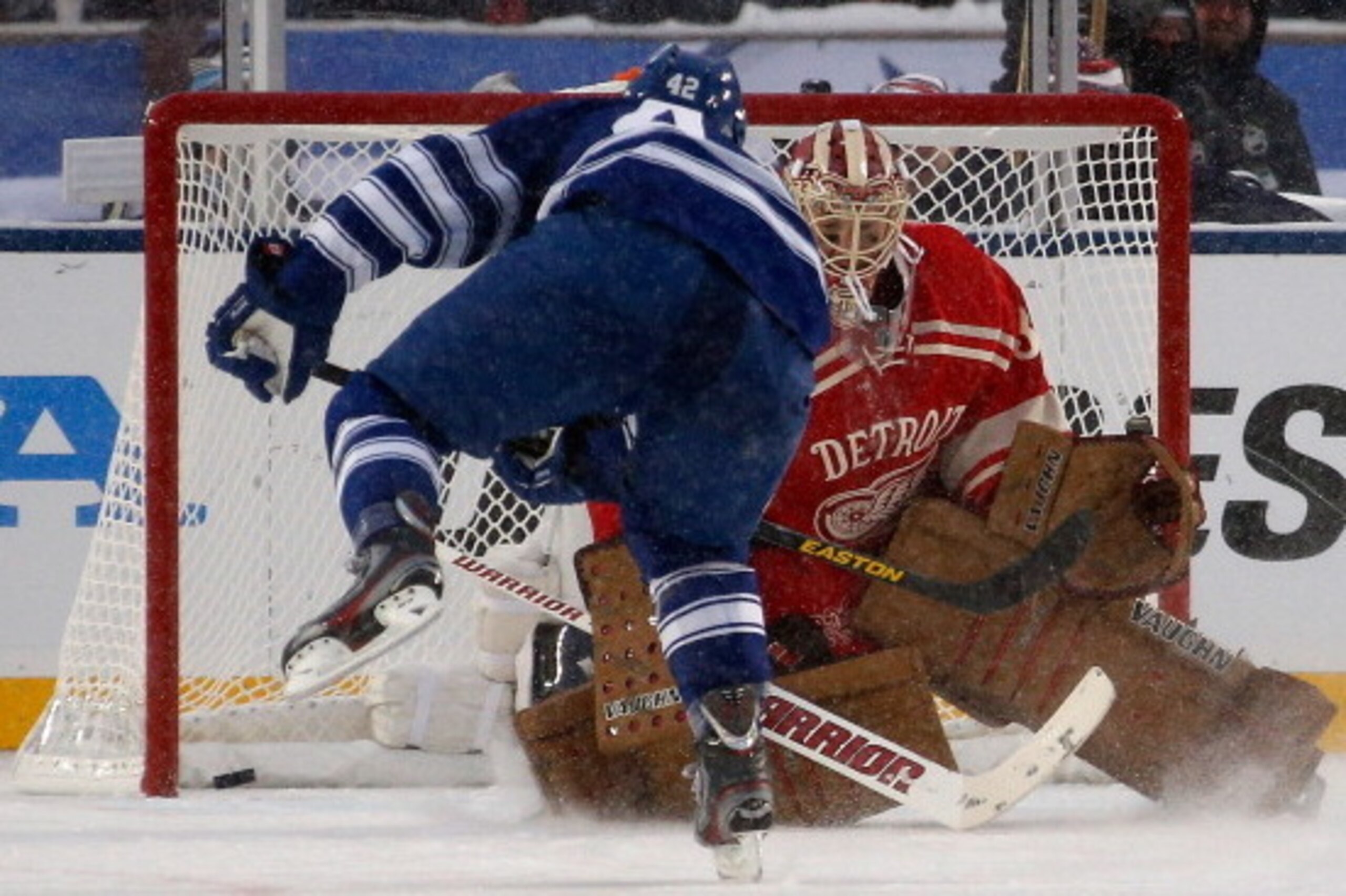
Given that shootouts have a massive component of luck (Toronto, for example, is ranked second in the NHL with a 9-4 record this year after going 0-5 last season, largely with the same personnel), it isn’t a surprise that the general managers prefer games to be decided in overtime.
What is surprising is that they aren’t going one step further: mandating the long change over the short change in two out of three regulation periods. That rule change would be a quick and easy way to increase scoring and take back some of the offense that evolving defensive schemes have sucked out of the game.
How much of a scoring increase might we see? The chart that follows shows the number of non-empty goals by period for all NHL teams over the last five seasons, as well as the percentage increase in the second period over the first and third:
| Season | 1st | 2nd | 3rd | Difference |
| 2008-09 | 2105 | 2431 | 2120 | 15.1% |
| 2009-10 | 2027 | 2381 | 2074 | 16.1% |
| 2010-11 | 1995 | 2302 | 2048 | 13.9% |
| 2011-12 | 1924 | 2254 | 2010 | 14.6% |
| 2012-13 | 1125 | 1332 | 1162 | 16.5% |
| Total | 9176 | 10700 | 9414 | 15.1% |
The long change seems to persistently boost scoring by about 15 percent. Over that five year span, NHL teams have averaged 0.82 goals per period in the first and third frames of a game, but that spikes to 0.95 goals in the second period. Even that overstates matters somewhat, as there is a persistent spike in scoring in the third period that is likely independent of the short change.
If we use this conservative estimate, switching to a long change in the first and third periods and a short change in the second period would boost NHL scoring by a little over five percent. It’s not a mammoth gain, but it is significant, and would help to counter the longtime trend of reduced scoring, brought about by smarter defensive schemes and improved goaltending.
It’s an easy change to make, too, one that many fans might not even notice. It doesn’t offend hockey’s orthodoxy by introducing bigger nets or making sweeping rule changes, and it won’t cost the league a penny. It isn’t a gimmick; it just makes defending a little harder by increasing the amount of work a team has to do to get fresh bodies on the ice.
Switching to the long change for two out of three periods would seem to be a cheap, easy and effective way to boost goal-scoring. What’s the downside?