

What Will Adam Silver's NBA Look Like?
Near the end of an otherwise spirited exchange with newly minted NBA Commissioner Adam Silver on the final day of the MIT Sloan Sports Analytics Conference, best-selling author Malcolm Gladwell offered up the following softball:
“If you had a magic wand and you could bend the teams and the players to your will, what one thing would you change about the league?”
Silver’s answer: Up the minimum age of incoming rookies from 19 to 20.

For the hundreds in attendance, the response couldn’t help but ring a bit boring.
That is, of course, until you consider Silver's guiding principle: If it ain’t broke, don’t fix it.
In his 22 years with the NBA, Silver has borne intimate witness to an unprecedented period of growth for the league, its teams and the global popularity of the game itself. It’s a legacy the 51-year-old Silver—a David Stern disciple through and through—is determined to protect.
That’s not to say Silver’s will be a rigid reign, however. Expansion to Europe, eliminating road-trip back-to-backs, rejiggering the draft and playoffs: He’s open to them all.
It’s the kind of intellectual flexibility that has become part of the conference’s very DNA.
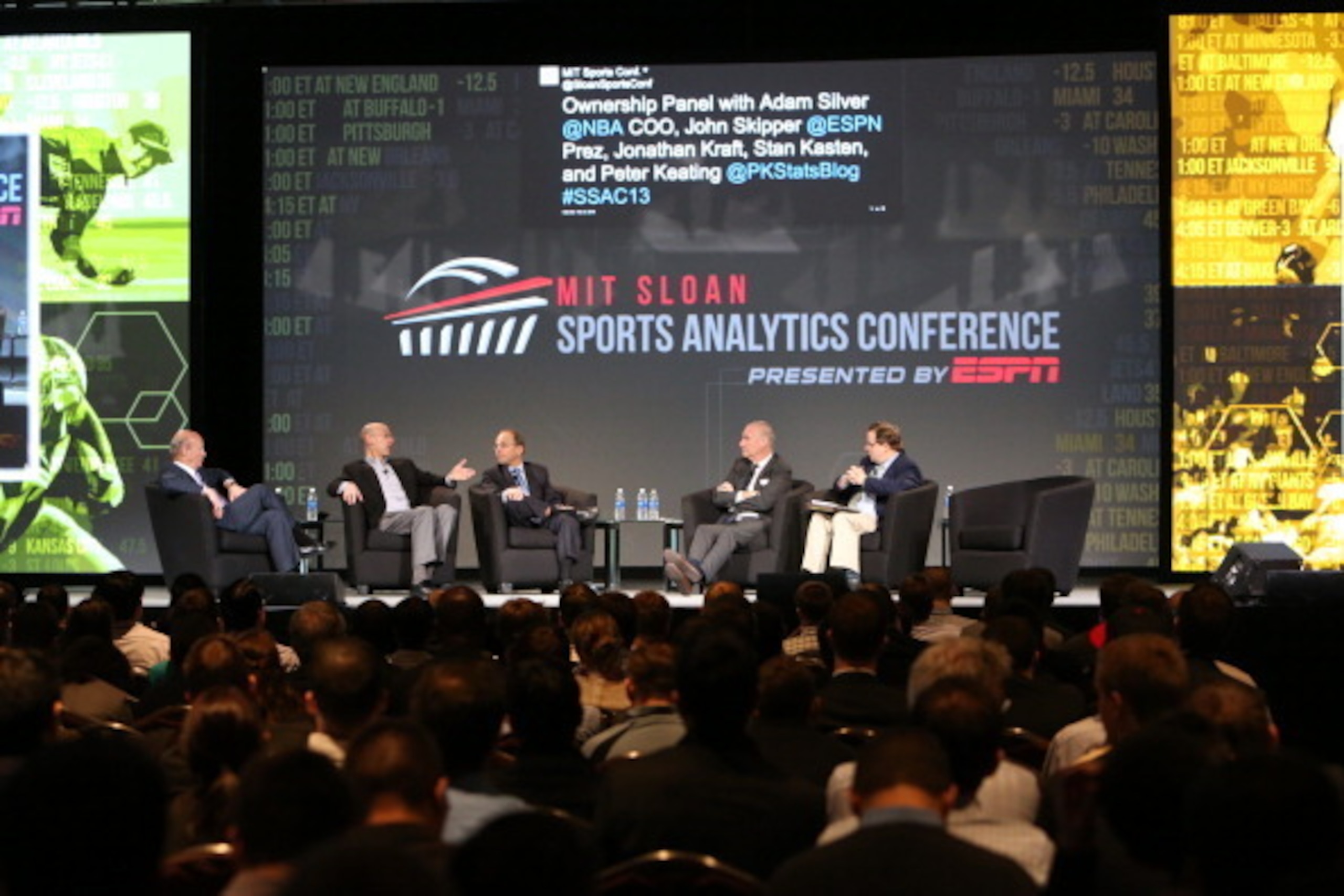
Co-founded in 2006 by Houston Rockets general manager Daryl Morey, Sloan’s growth from fringe curio to industry touchstone mirrors that of the analytics movement writ large: of sports rebels turned expert establishment at the forefront of influencing how we watch, experience and think about the games we love.
As per usual, this year’s installment was rife with potential NBA game changers: using optical tracking data to better value offensive decisions, incorporating more consistent player-sleep schedules, identifying what constitutes an on-ball screen and revisiting the controversial notion of the “hot hand,” just to name a few.
In what has become a common phenomenon, nearly half of this year’s talks, papers and panels were basketball-centric—a testament, in no small part, to the NBA’s uniquely metrics-friendly culture.
As with his predecessor, Silver seems eager to push the league squarely into the analytics vanguard, as he told The Washington Post’s Michael Lee in an interview last October:
"I come at it, historically at least, more from a fan standpoint. And one of my big pushes over the last several years is about making more of this statistical data available to our fans. Because there increasingly seems to be a real hunger by our fans to get deeper into the game and in many ways, we’ve lagged behind other sports, certainly baseball. There hadn’t been that same tradition, maybe, in basketball of getting deep into the statistics of our players and teams and using that data to analyze trends on the court.
"
Still, Gladwell made sure Silver didn’t leave Sloan without having his feet put firmly in the fire.
From player-age limits to performance-enhancing drugs (PEDs), draft overhauls to tanking, corporate welfare to the merits of paying college athletes, Gladwell pushed and prodded the new commissioner with uncommon aplomb—often with humorous results.
As if fans of the New York Knicks didn’t have enough to worry about, owner James Dolan emerged as a kind of discursive touchstone through much of the discussion, which at times had the feel of a high-stakes debate.
From Gladwell’s perspective, the fact that Madison Square Garden—the crown jewel of the Dolan dynasty—hasn’t paid property taxes since 1982 epitomizes the absurdly lopsided nature of the NBA’s power structure.
Silver responded by arguing that the money generated by NBA arenas, which he said accounts for roughly 40 percent of all league revenue, more than makes up for whatever tax breaks or incentives are levied by the municipalities, at one point referring to MSG as a “virtual town hall.”
“That’s exactly why they should be paying taxes,” Gladwell quipped.
Though the barbs and banter continued apace, the two saved their most productive exchange for two largely related issues: tanking and overhauling the NBA draft.
To Silver’s mind, there’s a distinct difference between a team actively trying to lose (misreporting injuries, intentionally botching plays, etc.) and preparing for the future by giving heavy minutes to young, inexperienced, oftentimes bad players.
Not surprisingly, the structure of the NBA draft, where the league’s worst teams have a significantly higher chance of corralling a top pick, only incentivizes that perspective, however cynical or disingenuous.
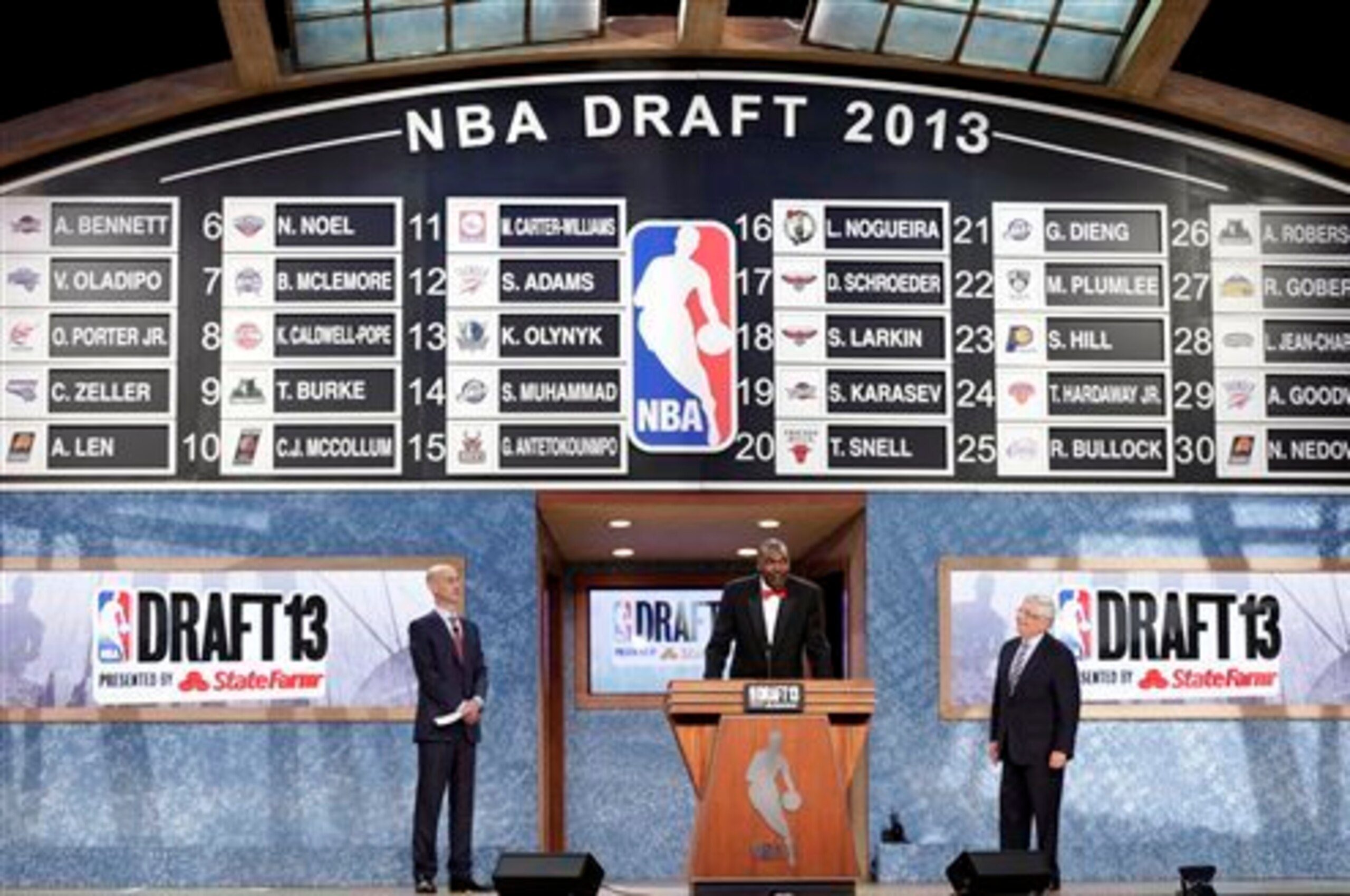
Which brought Gladwell and Silver to perhaps the league’s premier hot-button issue: fixing the draft itself.
The two talked specifically about the draft “wheel”, a tool formulated by Boston Celtics assistant general manager—and Sloan staple—Mike Zarren. Boiled down to the basics, the draft wheel would allocate specific picks to each team over a 30-year period based on a simple mathematical formula.
While both agreed the wheel—or some incarnation thereof—would represent a marked improvement over the current model, Silver in particular was quick to point out the mechanism’s pitfalls, namely the possibility of top prospects manipulating the predetermined order, perhaps by staying in college an extra year.
Though the new commissioner certainly didn’t rock the basketball boat, neither was he overly circumspect.
Indeed, Silver maintained that college athletes shouldn’t necessarily be paid specifically for their services, while hinting that a more intimate partnership between the NBA and NCAA could go a long way in alleviating some of the latter’s more nefarious ills.
At one point, while discussing the perceived prevalence of PEDs in the NBA, Silver—with a tip of the hat to Dallas Mavericks owner Mark Cuban—admitted to being “open-minded” about one day allowing for the use of human growth hormone.
Of course, not every issue was granted full shrift—the NBA’s plans for jersey advertisements and future media deals being two noticeable omissions.
At the same time, the discussion helped paint a clearer picture of how Silver intends to advance David Stern’s doubtless daunting mantle.
Whereas Stern was often criticized for his evasive, often condescending approach to interviews, Silver’s cool affability—particularly in light of Gladwell’s pointed lines of questioning—came off as much more nuanced.
The names may have changed, but the duties of the office remain the same: to represent the interests of the league’s 30 owners.
Still, Silver managed to couch the less appealing aspects of his job description within a larger context that is positively gestalt in nature.
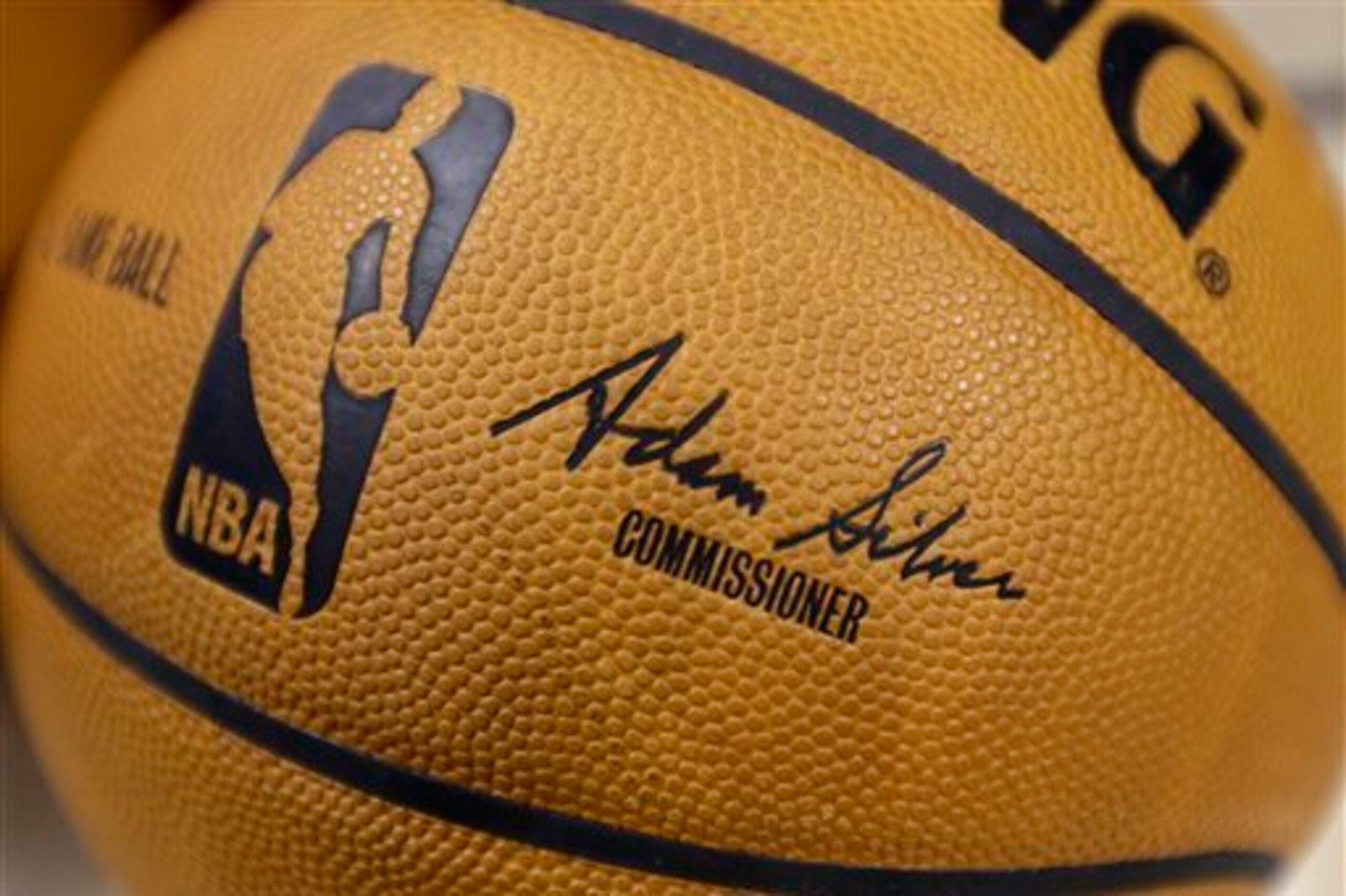
“We’re not true economic competitors,” Silver said. “If we were true economic competitors, our teams would be trying to put each other out of business… I’d say that, from an economic standpoint, we’re a single enterprise trying to create competition amongst the teams.”
Those who expected the new commissioner to offer up some game-changing pearl of wisdom might’ve viewed Gladwell’s friendly-aggressive moderation as counterproductive, sending Silver into an endless cycle of party lines and status quos.
To others, the discussion offered a brief-but-real window into the inner workings of a basketball mind at once deferential to duty and open to new ideas.
Four-point field goals, streamlined nutritional programs, robot referees, franchises in Paris and London: For Adam Silver and the NBA, it’s impossible to predict precisely where the NBA is headed.
If his remarks at Sloan were any kind of bellwether, however, Silver aims it to be pushed forward, rather than pulled back, by his predecessor’s legacy.
All quotes gathered first-hand unless otherwise noted.
Jim Cavan is a featured columnist at Bleacher Report. Follow him on Twitter @JPCavan
.jpg?w=2560 "WWE Raw Live Grades 🔠")

.png?w=2560 "Allen's BRUTAL 1H Stats 🫤")
.jpg?w=2560 "Commanders OL HEATED After Tie ▶️")
.jpg?w=2560 "Monday Night Raw Blog 🔴")