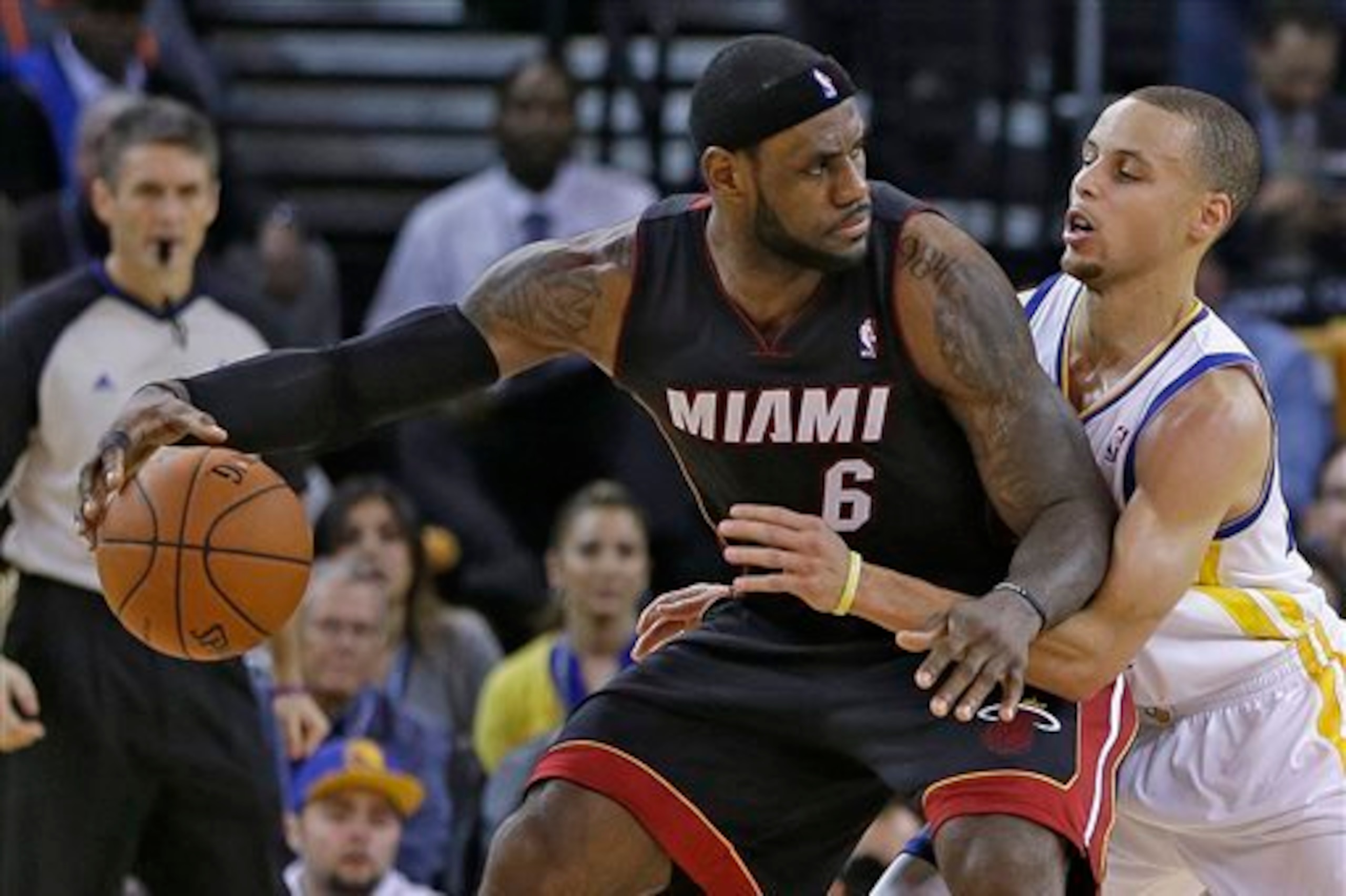

NBA Players Pushing the Limits of Their Positions
With the rules of the NBA changing at the turn of the millennium, teams have adapted, and as the teams have adapted, so have the positions. Thusly, some players are pushing the limits of their positions, redefining what is expected of them.
The rule changes mostly involved opening up the game, allowing it to be more free flowing, unclogging the paint and letting more exciting perimeter players have greater impact on the game.
As a result of these new rules, players are adjusting what they do. Point guards are more likely to drive the lane because of the defensive three-seconds. Three pointers have become more commonplace because of taking away the hand-check rule. Power forwards are stepping out to unclog the paint.
Players are doing things from positions we aren’t historically accustomed to seeing them do. They are redefining their positions. These are those players, and what we can call the new “positions” they’re creating.
Since this is all very “apples and oranges” there is no specific formula for the ranking order, but the players are ranked on how much impact they’ve had on the games in their careers, as well as how they're playing this season.
8. Anthony Davis: Shrink 4
1 of 8With the new rules, the "stretch 4" has emerged, which is a power forward who can stretch the floor with a three-point shot. But now comes the “shrink 4.”
What’s a shrink 4 you ask? Well, it’s the opposite of a stretch 4!
Anthony Davis is a beast on defense, and that’s been obvious as he’s averaging an NBA high 3.1 blocks per contest. What’s most impressive about Davis, though, isn't just the blocks he gets or the number of shots he challenges, but where he does it.
He closes out on threes like a beast, and in so doing, either blocks or affects the shots. Already this season, per Synergy, he’s been the primary defender of a three-point shot 96 times. That doesn’t even count the times he was there in help defense.
Great defensive bigs, such as Roy Hibbert, will have a big impact on the interior defense, but Davis’ impact on the court is unique in that he affects the perimeter defense. Opponents shoot 39.1 percent against his New Orleans Pelicans when he’s on the bench, 37.8 percent when he’s on the court, and 34.4 percent (per Synergy) when he’s on the ball. You can see his arsenal of moves here.
If all of the power forwards who stretch the court on the offensive end by knocking down threes are called stretch 4s, what do you call a power forward that keeps threes from being scored on the defensive end? The “shrink 4” has arrived.
7. Joakim Noah, Point Center
2 of 8Joakim Noah is conjoining two positions which would seemingly be polar opposites: the 1 and the 5. By definition, the point guard plays at the point (i.e. the top of the court), and the center plays in the center, under the net.
However, since the Bulls traded Luol Deng, Noah has taken the role of facilitator. Since the trade, Noah has 111 assists, tied for 16th in the NBA, along with his teammate, D.J. Augustin, and LeBron James.
That’s right, since Deng was traded, Noah has as many assists as James.
He is now averaging 11.9 points, 11.5 rebounds and 4.5 assists per game on the year. The last time a player did that was Kareem Abdul-Jabbar in 1978-79. Since the trade, he’s been averaging 13.5 points, 13.7 rebounds and 5.7 assists.
If he maintains anything close to those averages for the duration of the season, he would become just the fourth center in NBA history to average 12 points, 12 rebounds and five assists for a season. The other three are in the Hall of Fame.
What’s unique about Noah’s passing isn’t just the assists he’s pilling up as a center, either. It’s the way he’s getting them.
Typically, centers who have accrued big passing numbers do so by catching the ball underneath the rim and dishing it back out to perimeter shooters when the defense collapses on them.
Noah catches the ball in the high post, usually off a pick and roll, and then feeds a slashing player. Or, he drops the ball behind him with a no-look pass to a guard, screening him at the same time, giving him an open three-point shot.
He’s an extraordinary passer for a center. He doesn’t just rack up assists, he really does do it from the point, like a “point center.”
6. Russell Westbrook, Super Guard
3 of 8A couple of years ago, on CSN Chicago, I was watching an interview with Steve Nash, and they were asking him what he thought of the new breed of point guards like Derrick Rose and Russell Westbrook, and whether he thought they shot too much.
His answer was not what you might expect from one of the greatest “true point guards” of all-time. He said that he didn’t have a problem with it, and that he was actually impressed with it. He said they aren’t really point guards or shooting guards, but they’re “super guards.”
He used that term because they do everything that both guard slots are expected to do, and effectively play both positions at the same time.
Westbrook facilitates the offense but he also scores the ball. He has 8,365 points and 2,900 assists since coming into the league. The only player with more of both is LeBron James. So yeah, super guard seems to fit.
Because players aren’t allowed to hand check the way they used to, it gives explosive point guards like Westbrook more opportunity to break to the rim. When you could hand check, it wasn't just about being to slow a player down, it was about being able to crowd the ball and get feel for which way a player would break. Guarding an explosive player like Westbrook one on one is much more difficult now.
Furthermore, when defenses collapse on them, or if he's double teamed, it means one of his three-point shooters is likely open. That's why there's such a rise in "super guards." They make an offense much more efficient.
Some take issue with their high shooting, but the rules were designed to feature players like Westbrook, and they shouldn't be judged by antiquated notions of what a traditional point guard “should do.”


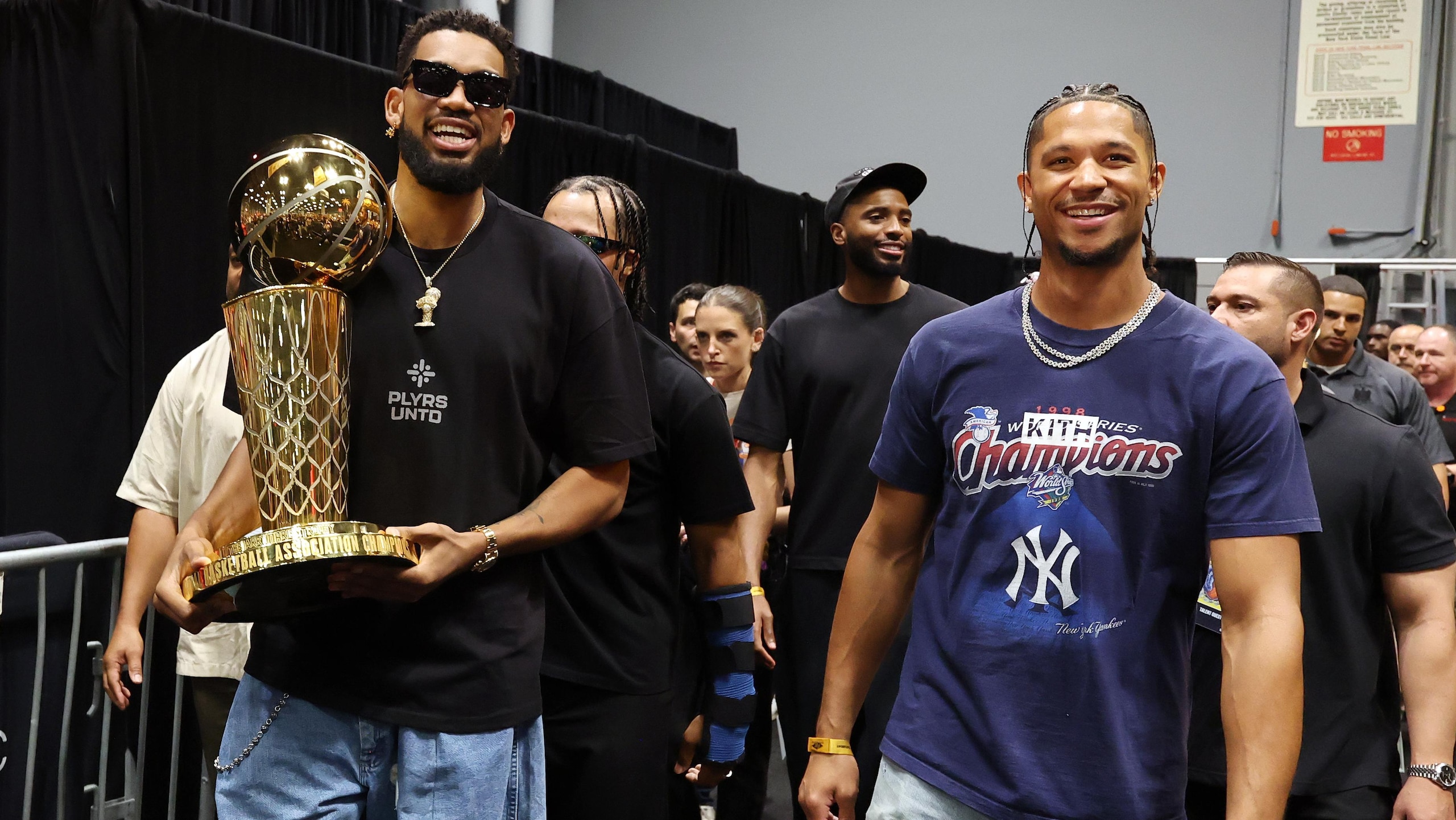
5. Stephen Curry, Super Three-Point Guard
4 of 8The “super guard” position is barely even being set, and Stephen Curry is already re-defining it. Shooting guards can be the slasher types, in the mold of Dwyane Wade, or they can be the shooter types, in the mold of Ray Allen.
Curry is a super guard in the sense that he runs the offense more like a pure point guard, passing from the perimeter inside to the paint, but he also pulls up and shoots with amazing accuracy, like an Allen-type of shooting guard.
Entering the All-Star break, Curry is leading the NBA in three-point field goals with 412 and assists with 450. Should he hold onto both leads, he’d be the first player in NBA history to lead the league in both at any point in their careers, much less in the same year.
The rule changes aid Curry because with the hand check rules in place, defenders must give the ball-handler a little more room to guard them when they break to the rim.
When you have the kind of shot Curry has, that’s all you need. He’s redefining what a point guard does, and unlike Derrick Rose and Russell Westbrook, his game could have a long shelf life since it’s built around shooting more than driving.
4.Kevin Love: Stretch 4-Plus
5 of 8Kevin Love and Ryan Anderson are taking the stretch 4 to new limits by doing something that’s seemingly implausible when you stop and think about it. They’re amassing massive offensive rebounding numbers and three-point field goals at the same time.
The downside of a great stretch 4 is that you lose offensive rebounding because if you’re shooting the ball from behind the arc, you’re a long way from the rim. Ergo, players that excel at both are very rare. It’s a seemingly paradoxical pairing of talents.
There are only two players in NBA history who have averaged two three-point field goals and three offensive rebounds per game: Love and Anderson.
Love adds yet another dimension though: his passing. He’s averaging 4.0 assists per game. This year he’s on pace to be the first player to average two three-pointers, three offensive rebounds and four assists per game. For a guy who is also averaging 25.8 points a contest, that’s an incredibly complete offensive profile. Hence, he's a stretch 4-plus. He’s a stretch 4, plus he’s everything else you need.
3. Dirk Nowitzki: Stretch 4
6 of 8The “stretch 4” is becoming commonplace in the NBA, but that doesn’t mean that Dirk Nowitzki should be left off our list.
The rule changes is to allow players who handle the ball more liberality in driving to the rim. To aid in that, teams have developed their power forwards to be able to step out to the perimeter and knock down three-point shots, thereby drawing their defender out of the paint, and opening up more space for the driving ball-handler.
No player has done more to establish that history than Nowitzki.
To put things in perspective, before Nowitzki came over, the NBA career record for three-pointers by a player at least seven-feet tall was 118, owned by Arvydas Sabonis. By the time he was in his third year, Nowitzki had more than twice as many as Sabonis. Now he has 1,424. That’s 18 more than the next 10 7-footers combined!
I think it’s safe to say he’s pushing the limits of his position, and the forerunner of the stretch 4.
2. Kevin Durant: All Forward
7 of 8Kevin Durant isn’t just a small forward, he’s an all-forward because he’s scoring from all over the place and in all kinds of ways.
He kills it from everywhere. His shot chart is greener than the felt on a pool table. It’s greener than a Shrek-skin rug. It’s greener than a Louisiana summer. You get my point? It’s really, really green!
Durant not only scores from all over, he also scores in all kinds of ways. The NBA’s new tracking data breaks down scoring into four categories: drives, close shots, catch and shoots, and pull ups. Durant scores 6.0, 1.6, 4.7 and 8.0 in each respectively and has an effective field goal percentage of over 50 percent in all of them. The only other player who scores at least 1.5 points in all four types with an effective field goal percentage over 50 percent is LeBron James.
And, if that’s not impressive enough, consider this: Synergy breaks plays into 11 different categories, and ranks all NBA players, regardless of position, according to points per play. Durant is top-50 in every single one of them, and top 30 in eight of them.
No matter where you are on the court, or how you’re talking about scoring, Durant can do it. He does it all, and that’s why he’s an all-forward.
And now, just for grins, he’s developing his passing game too, averaging a career high 5.5 assists. That’s just mean.
1. LeBron James: The 15
8 of 8LeBron James doesn’t just theoretically play all five positions; he actually has played real minutes at all five positions in his career. Hence, he’s not a 1, 2, 3, 4 or 5; he’s all of them combined. He’s a 15 (which is the sum of the numbers one through five)!
James is making the case that he’s the most complete player in the history of the game, justifying his pronouncement that, when he retires, he’ll be one of the all-time top four.
James is already one of just 11 players with 20,000 points, 5,000 assists and 5,000 rebounds.
Only five players, Kareem Abdul-Jabbar, Michael Jordan, Oscar Robertson, Kobe Bryant and John Havlicek, have more than James in all three categories. Of those, only Jordan and Abdul-Jabbar have a higher field-goal percentage, and those two names are very much in the top-four conversation.
If you project him to a very reasonable 15-year career, it’s conceivable he would retire with over 30,000 points, 8,000 assists and 8,000 rebounds. The only player who ever even came close to that was Robertson, who played in a faster-paced and less competitive era.
James is able to do everything on the court, and at times he’s asked to do everything because he is more than willing. The thing that people miss about him is that, because he’s able to do so much and is so adaptable, he compensates for the weaknesses of his team at any given time. Therefore, his teams very seldom have one.
He is the 15.

.jpg?w=2560 "Grading WWE Raw 🔠")

.jpg?w=2560 "Bijan's INSANE 1st Half 🤩")
.jpg?w=2560 "Viral Rams Coach Vid 🖕")
.jpg?w=2560 "Injury-stricken Seahawks signing veteran RB")

.jpg?w=2560 "2 NFL Officials Suspended")