
MLB Franchise Power Rankings: Who Is the Greatest of All Time?
Have you ever wondered where your favorite MLB franchise stands in comparison against all the others?
I'm not talking about how your favorite team is doing this season. In fact, this year has almost nothing to do with this discussion.
I'm referring to things like team history—playoff appearances, World Series championships and Hall of Fame players—as well as revenue earned and farm systems.
Based on the past, the present and the future, which franchise is the greatest of all time? It's an incredibly subjective question, but I did my best to make it objective by basing it entirely on numbers.
Obviously, the New York Yankees and their 27 World Series titles take the cake for first place, but the team in second place might surprise you even more than the team in last place. (The team in seventh place is by far the most surprising, though.)
On the following slide, I'll explain the thought process and the numbers that went into the calculations. Beyond that slide, we'll work our way from the least successful franchise all the way up to the Bronx Bombers.
Figures on the following slides taken from Baseball-Reference.com, BaseballHall.org, ESPN.com, Forbes.com and Statista.com.
Celebrate Pedro Martinez's Iconic Career with B/R World Tour Merch.
Criteria Considered
1 of 31There were six factors considered for each franchise, with a weighted value assigned to each factor:
1. Percent of years in which team made the playoffs (Weight: 30 percent).
2. Percent of years in which team won the World Series (Weight: 25 percent).
3. Two hundred times the number of Hall of Fame players in franchise history divided by number of years franchise has existed (Weight: 15 percent).
4. One-eighth of revenue earned in 2012 in millions (Weight: 15 percent).
5. Fifteen plus operating income in 2012 in millions (Weight: 10 percent).
6. Thirty-five minus the average value of the farm system as ranked by ESPN's Keith Law in February (Insider subscription required) and Bleacher Report's Mike Rosenbaum in August (Weight: five percent).
Great. So what the heck does that mean?
Seventy percent of each franchise's grade is based on its history. For 16 teams, that history dates back to well before World War I, but 14 of the teams have no history prior to 1961. As such, we had to divide by the number of years that the franchise has existed in order to make it a fairer playing field.
In my opinion, making the playoffs is a sign of a successful season—especially from 1903-1968, when the only playoff series was the World Series—so it deserves the heaviest weight. Winning the World Series every now and then is also rather crucial to being considered a successful franchise, so it gets the second-largest multiplier.
Having Hall of Famers in the past isn't necessarily a prerequisite for success, but if teams feel the need to honor their Hall of Famers at their stadiums, then I figure they have to be worth something here as well. If you have a grievance with the number of Hall of Famers counted for your franchise, feel free to take it up with the official HOF website linked in criterion No. 3 above.
The next 25 percent measures where the team is at right now. It's one thing to have a gold-plated history, but if the franchise didn't make much money in 2012, it's hard to argue for its success. I wanted to include both revenue and operating income so as to not penalize the small-market teams that are actually turning a considerable profit.
The final five percent on the farm system is so we can say that the future state of the franchise was taken into consideration without giving too much emphasis to the players who may amount to nothing.
Just for the record, the multiplying factors in the criteria (one-eighth of revenue, 15 plus operating income, etc.) were put in place so that the numbers were all between zero and 60 before applying the weight factors. I promise none of them were arbitrarily applied in order to help any franchises.
30. Texas Rangers
2 of 31Franchise since: 1961 (includes Washington Senators from 1961-1971)
Number of years in playoffs: six
Number of years winning World Series: zero
Number of Hall of Fame players: zero
Revenue in 2012: $239 million
Operating income in 2012: negative-$8.7 million
Average farm system rank: 11.0
Total Score: 97.73
About to complete their 53rd year of existence, the Rangers are the oldest franchise without a World Series title, as well as the oldest franchise without a player in the Hall of Fame—Houston is right on their tail in both categories, though.
(I realize that Nolan Ryan is wearing a Rangers cap on his Hall of Fame plaque, but the Hall of Fame website has the Angels listed as his "primary team.")
What further sealed their fate in these rankings was a 2012 operating income that ranks second worst among all teams. No, I don't know how those numbers were calculated, but I trust that Forbes got it right.
They have no history worth mentioning and are currently losing money hand over fist. Last place makes sense despite the fact that they are likely headed for the playoffs this season.
29. Milwaukee Brewers
3 of 31Franchise since: 1969 (includes Seattle Pilots)
Number of years in playoffs: four
Number of years winning World Series: zero
Number of Hall of Fame players: two
Revenue in 2012: $201 million
Operating income in 2012: $9.0 million
Average farm system rank: 26.5
Total Score: 106.85
The Brewers scored almost 10 percent higher than the last-place Rangers, but their struggles to make the playoffs over the past 44 years kept them near the bottom of the list. Among the teams without a World Series title, only the Nationals/Expos have made it to the playoffs less frequently than the Brew Crew.
Their near-worst farm system and below-average operating income didn't do them any favors, either. Good thing they sent Paul Molitor and Robin Yount to the Hall of Fame, or they would have finished near the bottom of all six categories.



28. Miami Marlins
4 of 31Franchise since: 1993
Number of years in playoffs: two
Number of years winning World Series: two
Number of Hall of Fame players: zero
Revenue in 2012: $195 million
Operating income in 2012: negative-$7.1 million
Average farm system rank: 13.5
Total Score: 110.21
In 20 years of existence, the Marlins have won the World Series twice.
Winning the World Series 10 percent of the time put the Marlins in second place behind the Yankees, who have absurdly won one for every four years of existence.
Other than that, this Marlins franchise has largely and publicly been a disaster. I'm sure the operating income will be much improved in 2013 after shedding salaries left and right, but in 2012, they were in last place in the NL East in wins and in last place in the NL in profits. Not a great combination.
27. Los Angeles Angels
5 of 31Franchise since: 1961
Number of years in playoffs: nine
Number of years winning World Series: one
Number of Hall of Fame players: one
Revenue in 2012: $239 million
Operating income in 2012: negative-$12.9 million
Average farm system rank: 30.0
Total Score: 111.91
Unanimously, the Angels have the worst farm system, and they had the worst operating income in 2012.
Historically, they're in decent shape. They've made the playoffs in 17.3 percent of their 52 years and have both a World Series title and a player in the Hall of Fame. If this were based solely on history, they would rank ahead of the Houston Astros and would be somewhere in the vicinity of 20th place.
Instead, they're more than 30 points behind the Astros and are only ranked ahead of the Marlins because of the aforementioned decision by the HOF website to declare the Angels as Nolan Ryan's primary team.
On a side note, the Angels could be headed for some seriously dark times in the near future. They're already operating at a net loss, have one of the worst records in baseball and have nobody in the minors worth calling up. Not to mention the frustration of having to watch the Dodgers become the most prominent team in all the land.
26. Seattle Mariners
6 of 31Franchise since: 1977
Number of years in playoffs: four
Number of years winning World Series: zero
Number of Hall of Fame players: zero
Revenue in 2012: $215 million
Operating income in 2012: $12.9 million
Average farm system rank: 8.5
Total Score: 114.80
They don't have any right now, but we can assume the Mariners will have a couple of Hall of Famers within the next few years. Ken Griffey Jr. is a guaranteed Hall of Famer as a Mariner, as is Ichiro five years after he decides to retire. Randy Johnson is definitely going to make it into the Hall of Fame, but the only question is whether it's as a Mariner or an Arizona Diamondback.
Similarly, they don't have any World Series titles, but I remain optimistic that they'll win at least one between now and 2020. They have one of the best farm systems in the game and already have a strong stable of talent in the big leagues.
If I were to re-write this article in 10 years, I'd bet the Mariners jump from 26th place into a spot in the top 15. The first 36 years haven't been overwhelmingly successful, but they have great things on the horizon.
25. Toronto Blue Jays
7 of 31Franchise since: 1977
Number of years in playoffs: five
Number of years winning World Series: two
Number of Hall of Fame players: one
Revenue in 2012: $203 million
Operating income in 2012: negative-$4.8 million
Average farm system rank: 26.0
Total Score: 116.65
For the most part, I concur with the rankings. The top five and bottom five were pretty much exactly what I was expecting. There were a few in the middle 20 that seemed a bit out of place, though, and the Blue Jays are one of them.
They've won two World Series and have managed to make the playoffs nearly 14 percent of the time despite playing in the toughest division in baseball for more than half of their lifespan. It feels like they should be at least five or six spots higher than this.
However, the farm system isn't pretty, and neither is their financial situation. They had a negative operating income in 2012 before trading for the contracts of Mark Buehrle, R.A. Dickey and Jose Reyes, which are only going to get uglier after this season.
24. Washington Nationals
8 of 31Franchise since: 1969 (includes Montreal Expos)
Number of years in playoffs: two
Number of years winning World Series: zero
Number of Hall of Fame players: two
Revenue in 2012: $225 million
Operating income in 2012: $28.4 million
Average farm system rank: 21.0
Total Score: 119.86
Here's another team that seems a bit out of place.
In 44 years, the Nationals and Expos have made the playoffs a grand total of two times. That's just 4.5 percent of the time, and the next worst clip is 8.2 percent by the White Sox. Coupled with the fact that they have never won a World Series, one could easily argue that they have been the least successful active franchise in MLB history.
Despite their checkered past, they made a ton of money in 2012. Their $28.4 million operating income was the fourth-highest in all of baseball and made up more than 36 percent of their total score.
23. Colorado Rockies
9 of 31Franchise since: 1993
Number of years in playoffs: three
Number of years winning World Series: zero
Number of Hall of Fame players: zero
Revenue in 2012: $199 million
Operating income in 2012: $18.7 million
Average farm system rank: 23.0
Total Score: 122.01
The Rockies haven't done much in their 20 years of existence. They've made the playoffs three times and kind of shocked the world by making it to the World Series in 2007, but they have never won their division and their three playoff appearances are also the only three times they even finished second in their division.
More often than not, they've been the whipping boys of the NL West, finishing at least 10 games below .500 in 12 of their 20 seasons.
But they're turning a profit in the process, and depending on who you ask, that's more important than winning pennants.
22. New York Mets
10 of 31Franchise since: 1962
Number of years in playoffs: seven
Number of years winning World Series: two
Number of Hall of Fame players: one
Revenue in 2012: $232 million
Operating income in 2012: negative-$2.4 million
Average farm system rank: 15.0
Total Score: 122.96
The Hall of Fame factor ended up being a detriment to every team that isn't at least 100 years old. Only one of them has had more than two players inducted. As such, the highest HOF score (before adding the weight factor) was a 9.1.
By contrast, the lowest score for a team with roots dating back to before 1903 was a 12.7, and each of those 16 teams has had at least seven players inducted into the Hall of Fame.
It shouldn't come as a huge surprise, then, that to this point, we've dealt exclusively with franchises that didn't exist 60 years ago.
The Mets are no different. Despite a respectable rate of appearances in the playoffs and a pair of World Series titles, the only New York Met in the Hall of Fame is Tom Seaver, and their score suffered for it.
A negative operating income in 2012 certainly didn't help matters, either.
21. Tampa Bay Rays
11 of 31Franchise since: 1998
Number of years in playoffs: three
Number of years winning World Series: zero
Number of Hall of Fame players: zero
Revenue in 2012: $167 million
Operating income in 2012: $10.0 million
Average farm system rank: 9.0
Total Score: 129.31
Despite opening their franchise history by finishing 10 consecutive seasons at least 21 games below .500, the Rays have turned things around nicely over the past five-plus years.
No championships yet, and certainly no Hall of Famers, but they should be headed to the playoffs for the fourth time in the past six years. As a bonus, they managed an operating income of $10 million in 2012 despite the lowest amount of revenue in the majors.
20. Detroit Tigers
12 of 31Franchise since: before 1903
Number of years in playoffs: 14
Number of years winning World Series: four
Number of Hall of Fame players: Nine
Revenue in 2012: $238 million
Operating income in 2012: negative-$0.4 million
Average farm system rank: 27.0
Total Score: 135.04
There are still a handful of expansion franchises left to be discovered, but we've finally hit our first member of the "original 16," if you will.
This also marks the end of the list of teams that had a negative operating income in 2012—and negative $400,000 is undoubtedly better than the number that many non-MLB Detroit-based companies were reporting for the year.
Only eight teams have more World Series titles than the Tigers, but their relatively low percentage of playoff appearances didn't do much to help cover up their current financial situation or dismal farm system.
19. Kansas City Royals
13 of 31Franchise since: 1969
Number of years in playoffs: seven
Number of years winning World Series: one
Number of Hall of Fame players: one
Revenue in 2012: $169 million
Operating income in 2012: $16.3 million
Average farm system rank: 10.5
Total Score: 135.46
From 1976-1985, the Royals made the playoffs seven times and won a World Series.
Aside from that, this small-market team has an ugly history. Fortunately for Kansas City, small market doesn't mean small income. Unfortunately for the fans, the on-field talent has suffered for nearly 30 years in order to turn that profit.
If they finish this season above .500, it would be just the second time since the MLB strike 19 years ago.
18. San Diego Padres
14 of 31Franchise since: 1969
Number of years in playoffs: five
Number of years winning World Series: zero
Number of Hall of Fame players: one
Revenue in 2012: $189 million
Operating income in 2012: $29.9 million
Average farm system rank: 6.5
Total Score: 135.50
The Padres benefited greatly from the current and future portions of the grading system.
Their farm system is one of the best in the game today, and their operating income in 2012 trailed only the Cubs and Orioles for most profit.
Meanwhile, they were in the bottom 10 or worse in each of the historical factors. They've never won a World Series, and only Tony Gwynn stands between them and a goose egg in the Hall of Fame.
17. Chicago White Sox
15 of 31Franchise since: before 1903
Number of years in playoffs: nine
Number of years winning World Series: three
Number of Hall of Fame players: 10
Revenue in 2012: $216 million
Operating income in 2012: $22.9 million
Average farm system rank: 27.0
Total Score: 141.04
As previously mentioned in Washington's slide, the White Sox have the second-lowest rate of appearances in the playoffs, having averaged a postseason berth just once for every 12.2 years since 1903. They've been in the playoffs as many times as the Houston Astros, who have been in existence since 1962.
The White Sox are a profitable franchise, and one of the teams (the other being Cleveland) that has sent more players to the Hall of Fame than teams to the playoffs. To me, that says they've had the necessary players to be great, but have failed to produce.
16. Philadelphia Phillies
16 of 31Franchise since: before 1903
Number of years in playoffs: 14
Number of years winning World Series: two
Number of Hall of Fame players: 10
Revenue in 2012: $279 million
Operating income in 2012: $0.6 million
Average farm system rank: 22.0
Total Score: 144.41
If not for the third-highest revenue among all clubs in 2012, the Phillies would have been substantially lower on the list.
Their poor operating income is probably directly related to some of the ridiculous salaries on their roster, but they also aren't too concerned about it considering the windfall of a TV contract that should be in their near future.
All told, the current financial situation is pretty solid, but the team's playoff record is rather disappointing. The Phils won their two World Series titles much more recently than the Cubs or the Indians, but that's still not good for a team with such a long history.
15. Houston Astros
17 of 31Franchise since: 1962 (includes Houston Colt .45's)
Number of years in playoffs: nine
Number of years winning World Series: zero
Number of Hall of Fame players: zero
Revenue in 2012: $196 million
Operating income in 2012: $24.7 million
Average farm system rank: 4.5
Total Score: 144.64
There's an even bigger surprise coming eight slides from now, but this one will certainly be an eye-opener.
The Astros have no World Series titles and no players in the Hall of Fame, but they still rank 15th? What gives?
Well, for starters, they have made the playoffs almost 18 percent of their existence, which is the 10th-best rate. That might seem crazy if you've only been following baseball for the past five years, but they had a pretty good stretch from 1994-2005, which should eventually yield some Hall of Famers such as Craig Biggio and Jeff Bagwell.
They also ranked seventh in 2012 operating income and fourth in the farm system rankings. So even though they scored a zero in multiple categories, they did well enough in the other four to land in the top half overall.
14. Cleveland Indians
18 of 31Franchise since: before 1903 (includes Cleveland Naps)
Number of years in playoffs: 10
Number of years winning World Series: two
Number of Hall of Fame players: 12
Revenue in 2012: $186 million
Operating income in 2012: $22.9 million
Average farm system rank: 18.5
Total Score: 145.57
As previously mentioned on the White Sox slide, the Indians are one of just two teams with more Hall of Fame players than years in the playoffs.
That rate of Hall of Famers is almost exclusively responsible for their slightly better-than-average rank. Their rate of years making the playoffs is lower than any other team left on the list, and their World Series rate is lower than every team except for the Cubs.
Neither the revenue nor the farm system are worth writing home about. Instead, they have Bob Feller and company to thank for their relevance in these rankings.
13. Minnesota Twins
19 of 31Franchise since: before 1903 (includes Washington Senators from 1903-1960)
Number of years in playoffs: 14
Number of years winning World Series: three
Number of Hall of Fame players: eight
Revenue in 2012: $214 million
Operating income in 2012: $10.8 million
Average farm system rank: 1.5
Total Score: 149.49
The Twins became something of a punchline in the American League over the past two seasons, but they have a relatively favorable past and an incredibly promising future.
They have won three World Series titles (two as the Twins, one as the Senators) and boast the top-rated farm system at the moment. Provided you can look past the product that's currently being put on the field, there's a lot to love about this franchise.
12. Baltimore Orioles
20 of 31Franchise since: before 1903 (includes St. Louis Browns from 1903-1953)
Number of years in playoffs: 12
Number of years winning World Series: three
Number of Hall of Fame players: six
Revenue in 2012: $206 million
Operating income in 2012: $30.1 million
Average farm system rank: 19.0
Total Score: 150.36
The Orioles are just slightly below average in five of the six categories and place second in operating income from last season.
They don't have a particularly well-decorated past. Yes, they've won three World Series titles, but every team with roots dating back to 1903 has won at least two. Half of their 12 playoff appearances took place during a nine-year span from 1966-1974, with only three playoff appearances occurring in the past 29 years.
They also have the fewest number of Hall of Famers among the 16 teams that have been in existence for at least 60 years.
Nevertheless, the business side of the franchise is flourishing and was strong enough to boost them into 12th place.
11. Cincinnati Reds
21 of 31Franchise since: before 1903
Number of years in playoffs: 14
Number of years winning World Series: five
Number of Hall of Fame players: eight
Revenue in 2012: $202 million
Operating income in 2012: $20.9 million
Average farm system rank: 15.5
Total Score: 157.62
Now we're finally getting into the meat and potatoes. The final 11 teams, including the Reds have won 83 of MLB's 108 World Series dating back to 1903.
The Big Red Machine is largely to "blame" for much of their success. Led by eventual Hall of Famers Johnny Bench, Joe Morgan and Tony Perez—as well as Hall snub Pete Rose—six of their 14 playoff appearances and two of their five World Series titles came during the 1970s.
As far as the here and now is concerned, their revenue, operating income and farm system are each roughly average in comparison to the other 29 teams.
10. Atlanta Braves
22 of 31Franchise since: before 1903 (includes Milwaukee Braves, Boston Braves and several other teams in Boston)
Number of years in playoffs: 22
Number of years winning World Series: three
Number of Hall of Fame players: 10
Revenue in 2012: $225 million
Operating income in 2012: $12.4 million
Average farm system rank: 21.0
Total Score: 170.68
For their first 90 or so years of existence, the Braves were nothing special. They won a World Series in Boston and one in Milwaukee, but playoff appearances were few and far between.
Then the 1990s happened, and they made the playoffs in 14 consecutive years.
Unfortunately, that string of regular-season success only resulted in one World Series ring; otherwise, they'd be much higher on the list.
They've put 10 players into the Hall of Fame, but it shouldn't be long before they have at least another four in the form of Greg Maddux, Tom Glavine, John Smoltz and Chipper Jones.
9. Pittsburgh Pirates
23 of 31Franchise since: before 1903
Number of years in playoffs: 14
Number of years winning World Series: five
Number of Hall of Fame players: 12
Revenue in 2012: $178 million
Operating income in 2012: $26.8 million
Average farm system rank: 5.5
Total Score: 172.20
A long, long time ago, people actually expected the Pirates to be good.
While playing in the NL East from 1969-1993, the Pirates won their division nine times and placed in the top three in 17 of those 25 years.
But then MLB split the leagues into three divisions and sent them to the NL Central. Since then, they have only had three top-three finishes in 19 chances—none of which have occurred since 1999.
It would be extremely difficult for them to finish outside the top three in their division this year, but you would think the Pirates have never had a winning season before in their franchise history based on some of the narratives about their surprise success in 2013.
Financially, they have the sixth-highest operating income despite also having the fourth-lowest revenue. And looking on the horizon, their farm system ranks fifth-best.
8. Los Angeles Dodgers
24 of 31Franchise since: before 1903 (includes all Brooklyn teams)
Number of years in playoffs: 26
Number of years winning World Series: six
Number of Hall of Fame players: 10
Revenue in 2012: $245 million
Operating income in 2012: $3.2 million
Average farm system rank: 15.0
Total Score: 185.96
A poor operating income in 2012—fallout from the midseason acquisition of Josh Beckett, Carl Crawford, Adrian Gonzalez and Nick Punto—kept the Dodgers a little lower on this list than I feel they deserve to be.
Their six World Series championships put them in sole possession of sixth place all time, and their 26 playoff trips rank second only to the Yankees.
However, their 2012 profits and a so-so farm system are keeping them from reaching the 200-point plateau reserved for the upper-echelon franchises. Tons of history here, but the total package falls just a little short.
7. Arizona Diamondbacks
25 of 31Franchise since: 1998
Number of years in playoffs: five
Number of years winning World Series: one
Number of Hall of Fame players: zero
Revenue in 2012: $195 million
Operating income in 2012: $7.6 million
Average farm system rank: 11.5
Total Score: 187.58
What?! How are the Diamondbacks ranked this high?
Well, they have made the playoffs in five of their 15 years as a franchise. In case that math is too challenging, that's 33.3 percent of seasons ending in a playoff berth. Aside from the Yankees, the next best rate belongs to the Dodgers at 23.6 percent.
The Diamondbacks also won the World Series in 2001, which is good enough for fifth place in that category (6.7 percent success rate).
Even though they have no Hall of Fame players and a below-average financial situation, they come in seventh place by virtue of placing so close to the top in the most heavily weighted categories.
They certainly don't have a long history, but on a year-by-year basis, their history is comparable to some of the best in the business.
6. Oakland Athletics
26 of 31Franchise since: before 1903 (includes Kansas City A's and Philadelphia A's)
Number of years in playoffs: 24
Number of years winning World Series: nine
Number of Hall of Fame players: 12
Revenue in 2012: $173 million
Operating income in 2012: $27.5 million
Average farm system rank: 21.0
Total Score: 203.30
I'll be honest, I had no idea there was this much playoff history in Oakland's blood line.
To be fair, eight of their 24 playoff appearances and five of their nine World Series titles occurred prior to 1932 while they were still the Philadelphia Athletics—and why would anyone under the age of 80 living nowhere near Oakland have committed that knowledge to memory?
Still, they've made the playoffs 16 times since 1971, which is more than I was anticipating to find.
I was fully expecting the great operating income, though, because the A's have done more with less budget than any team over the past 15 or so years.
5. Chicago Cubs
27 of 31Franchise since: before 1903
Number of years in playoffs: 16
Number of years winning World Series: two
Number of Hall of Fame players: 14
Revenue in 2012: $274 million
Operating income in 2012: $32.1 million
Average farm system rank: 3.5
Total Score: 206.04
Despite the lack of World Series titles, the Cubs have one of the most loyal fanbases and routinely post one of the highest operating incomes.
In 2012, they had the highest operating income—more than $2 million better than the second-place Orioles. Revenue ranked fourth because they somehow find a way to always fill the seats—even for their mid-week 2:20 p.m. CT games against teams from more than 1,000 miles away.
Their 14 players in the Hall of Fame rank third all time, as does their farm system. If they could just make the playoffs more regularly and perhaps win a World Series every 100 years or so, they would be in second place overall.
4. Boston Red Sox
28 of 31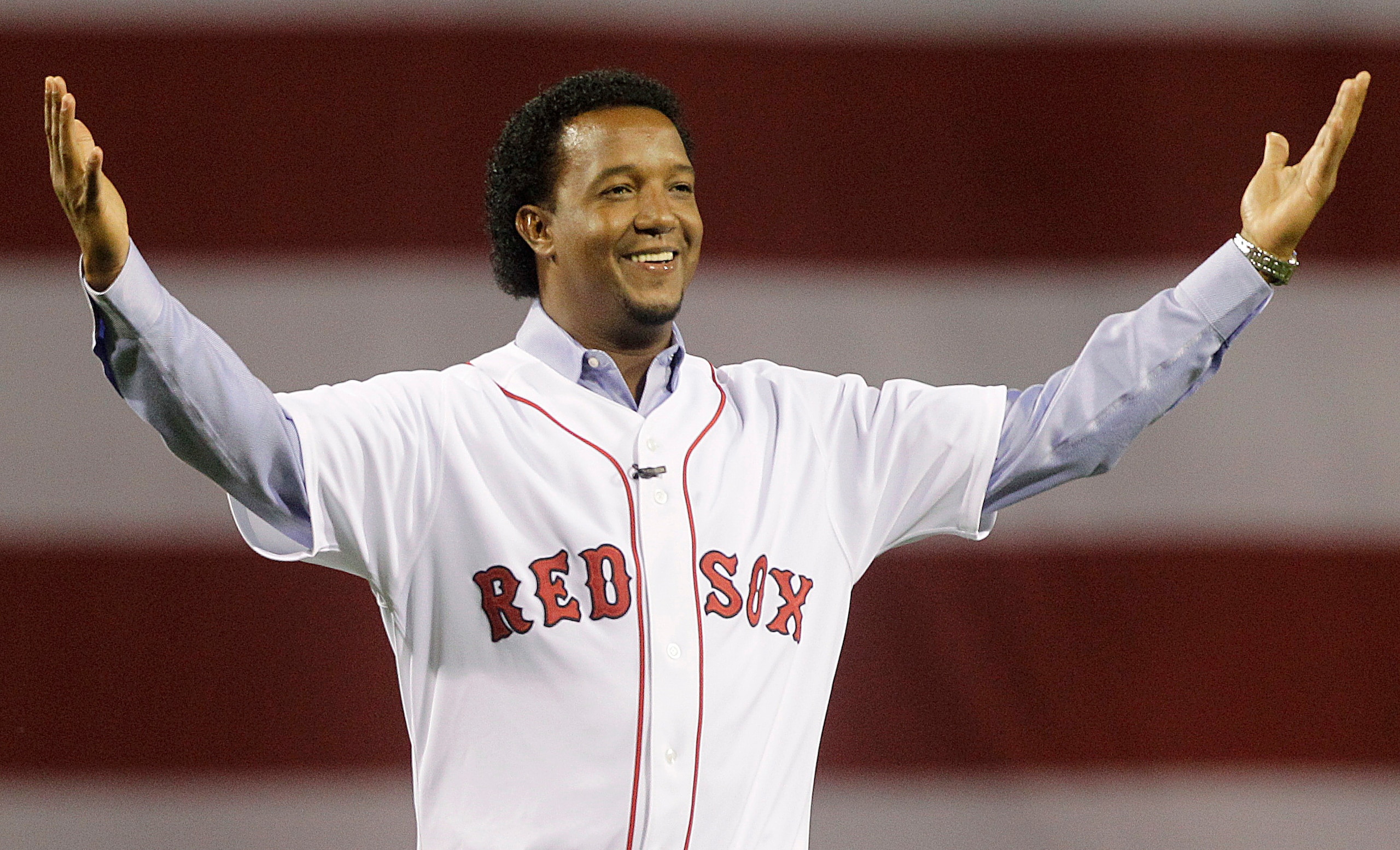
Franchise since: before 1903 (includes Boston Americans)
Number of years in playoffs: 20
Number of years winning World Series: seven
Number of Hall of Fame players: nine
Revenue in 2012: $336 million
Operating income in 2012: $23.9 million
Average farm system rank: 11.5
Total Score: 208.65
Each of the top six teams has at least 13 players in the Hall of Fame except for the Red Sox.
They ended up ranked in fourth place because of a ridiculous amount of revenue and a quintet of World Series titles by 1918, but it's crazy to think that they became so beloved throughout the years without Hall of Fame players or championship teams.
Celebrate Pedro Martinez's Iconic Career with B/R World Tour Merch.
Geographically, it makes sense. If you grew up in the northeast, you either rooted for the Yankees or the Red Sox. Then, after ESPN became popular, you were almost forced to favor one side of the rivalry or the other regardless of where you grew up.
Still, it's unbelievable that the Red Sox had 2012 revenue that was nearly 25 percent more than the Cubs and equal to the amount of revenue earned by the Rays and Royals combined.
At least in the past decade, they finally started to repay that loyalty with some championships.
3. St. Louis Cardinals
29 of 31Franchise since: before 1903
Number of years in playoffs: 25
Number of years winning World Series: 11
Number of Hall of Fame players: 14
Revenue in 2012: $239 million
Operating income in 2012: $19.9 million
Average farm system rank: 2.0
Total Score: 227.58
I was a little amazed that the Cardinals didn't finish in second place.
They have the second-most World Series titles of any franchise, make a lot of money, have a great farm system and always seem to be in the playoffs. However, they have 10 fewer Hall of Famers than the team that actually came in second place, which more than accounts for the slim margin between them.
Nevertheless, third place isn't half bad. St. Louis has one of the most storied franchises in the history of the game.
From the looks of things, it'll be adding to that story over the next decade.
2. San Francisco Giants
30 of 31Franchise since: before 1903 (includes New York Giants)
Number of years in playoffs: 24
Number of years winning World Series: seven
Number of Hall of Fame players: 24
Revenue in 2012: $262 million
Operating income in 2012: $17.6 million
Average farm system rank: 26.5
Total Score: 232.79
It would appear that the Giants' two World Series titles in the past three years have propelled them to the top of the heap of teams not named the Yankees.
Their 24 players in the Hall of Fame were a pretty huge factor as well. Even the Yankees only have 19 such players in their history.
In the end, they were at or near the top of every category—except for the marginally important farm system, where they're nearly in last place.
However, they could win 10 straight World Series and still be behind the Yankees. In this case, second place truly is the best loser.
1. New York Yankees
31 of 31Franchise since: before 1903 (includes New York Highlanders)
Number of years in playoffs: 51
Number of years winning World Series: 27
Number of Hall of Fame players: 18
Revenue in 2012: $471 million
Operating income in 2012: $1.4 million
Average farm system rank: 12.0
Total Score: 363.98
It's ridiculous, really.
It may be lost in translation since the Yankees have only won one World Series in the past 12 years, but as far as history is concerned, they are Major League Baseball.
Despite making just five trips to the playoffs during a 30-year stretch from 1965-1994, the Yankees have been involved in the postseason over 40 percent of the time since 1903 and have won 25 percent of all of the World Series.
Moving on from the history, their revenue in 2012 was 40 percent higher than the next closest team (Boston). But somehow, they just barely had an operating income.
In terms of total score, they're 58 percent ahead of the Giants. Even if we combine the scores of the second-place Giants and the 18th-place Padres and called it one franchise, the Yankees would still be in first place.
And if that isn't enough to make you hate the Yankees, I made sure to pick the smuggest picture of Alex Rodriguez that I could find.

.jpg?w=2560)




.jpg?w=2560 "Commanders OL HEATED After Tie ▶️")
.jpg?w=2560 "49ers LB Suspended for Headbutt")


.jpg?w=2560 "AD Trolls Bears WR on IG 😂")