
Competitive Balance Still a Pipe Dream for Many NBA Franchises
Could LeBron James ever wear a Charlotte Bobcats jersey?
The notion is unfathomable. NBA superstars leave small markets; they don’t go to them. In the NBA’s “superteam” culture, neither a marquee talent like James, nor lesser stars like Brandon Jennings or Monta Ellis, would ever opt against the glamor of a star-packed major market for anything less.
It’s why privileged franchises are able to hoard and easily add to their wealth in the current top-heavy league, and it has created a vast divide between the haves and the have-nots.

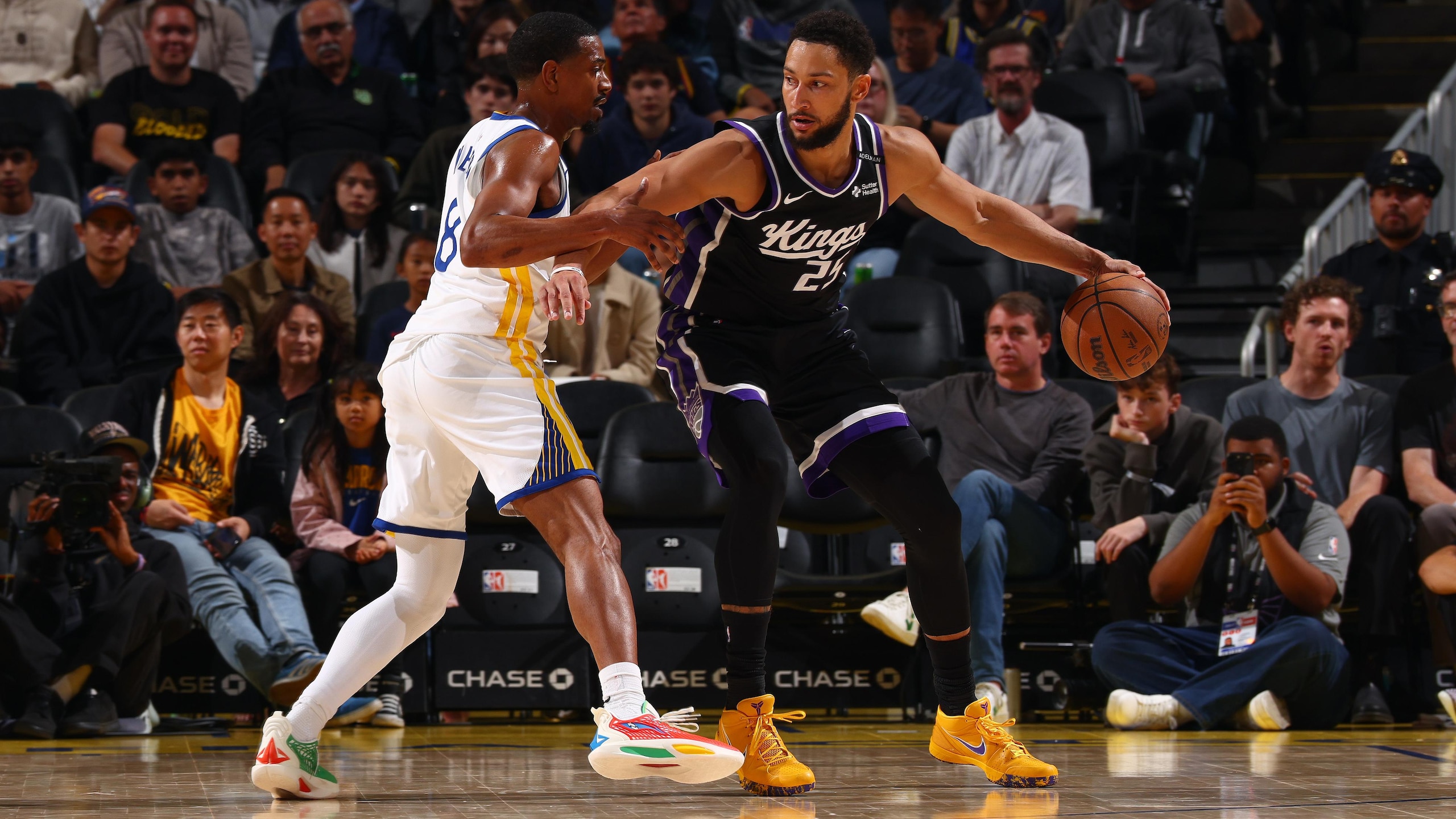
“It’s bad for business,” said Aaron Goodwin, the NBA agent who first represented James, Kevin Durant and Dwight Howard, and now represents reigning Rookie of the Year Damian Lillard. “You want each team, each fanbase, each city believing in its team, not looking for when its star player is going to go and join another team for the sake of instant gratification.”
Sports thrive on competitiveness, but too many markets will enter this coming season with no chance at a title. The competitive balance of the league is lopsided to the point of predictability.
While superteams in big markets such as Los Angeles and New York can stockpile talent and titles, the process is far more difficult for franchises in the smaller markets, where the margin for error is Kevin Durant-thin and luck is required.
Here's a look at the largest and smallest NBA markets, ranked nationally:
Superstars fleeing small markets for the brighter stage and more glamorous quality of life is nothing new, of course, and neither is a top-heavy league.
Within the past two decades, only the 2004 Detroit Pistons won a title without a superstar, though they are still a top-10 media market. The league has had just nine different champions since 1980 and none can be categorized as small market other than the San Antonio Spurs.
Winning in a small market isn’t impossible, as recently shown by the Spurs, Oklahoma City Thunder, Indiana Pacers and Memphis Grizzlies. Those teams, however, also exhibit just how difficult it is for a small-market team to become a true contender.
No doubt, there is luck involved. Granted, both the Thunder and Spurs have a history of making the right personnel moves, but their ultimate success is predicated mostly upon landing high picks in Tim Duncan and Kevin Durant.
The Pacers and Grizzlies, meanwhile, stand up to superteams without a glaring superstar through strong drafts, trades and opportune signings of second- and third-tier free agents. Both teams have also taken on the grinding, defensive identities to counter the lack of an offensive superstar.
That level of proficiency through the draft and free agency, and the creation of chemistry, is difficult and rare. Small-market teams must draft brilliantly and find guys who, for whatever reason, wish to remain in a less desirable city. While other superstars have fled to bigger markets, Duncan and Durant have opted to stay put.
Durant, who was Goodwin’s client up until 2012, opted for a five-year, $89 million extension in 2010 to stay in OKC. Goodwin said that Durant, "somewhat of a modern-day pioneer," even passed on an option after Year 4 of his deal and was adamant about his commitment to the Thunder.
When superstars do leave a small market, however, it’s impossible to replace them because talent, usually, only wants to play with comparable talent. Think how few superstars are playing without a fellow All-Star; it’s a list you can certainly count with just a couple of fingers.
“If you are going to contend for championships, you really do have to have two of the elite players in the league on your team and a third that’s All-Star caliber,” said Jerry Reynolds, who stepped down in June as director of player personnel for the Sacramento Kings.
“That’s why it is tougher on the smaller markets. They can maybe get an All-Star, a special player, but you have to get help for him. And the draft just often doesn’t provide it or it takes too long.”
If a less-attractive destination such as Sacramento hopes to land even a second- or third-tier free agent, it must overpay. A small-market signing of a top-tier FA is certainly out of the question. The last time that occurred was when Grant Hill and Tracy McGrady each signed with the Orlando Magic back in 2000.
“It’s a different way of trying to compete for championships,” Reynolds said. “Sacramento, Denver, Milwaukee, Utah, Charlotte, New Orleans...even if you have the money available, the superstar free agent has five or six suitors and certainly the smaller-market team is going to be the backup plan.”
Is recreating small-market success a near impossibility?
Reynolds, who also once served as coach and general manager of the Kings, remembers what it took to catch lightning in a bottle in Sacramento.
The Kings experienced a brief run of success in the early 2000s thanks to the city’s biggest free-agent signing: Vlade Divac. It also took the turnaround of Chris Webber, who was acquired by trade from Washington because no other team wanted him. Even then, the All-Star power forward was reluctant to come to Sacramento. The team, with Jason Williams and later Mike Bibby, in addition to Doug Christie and Bobby Jackson, thrived off chemistry.
That model is neither easy to accomplish nor is it sustainable. Once it began to fade, it quickly vanished and a return to glory is still but a dream.
Sacramento spent the last few years in a fight just to keep its franchise. Now, its cornerstone, center DeMarcus Cousins, is looking for max dollars and/or a trade elsewhere. The team already traded away last season’s first-round pick, Thomas Robinson, in a money-saving move by former ownership, and new ownership lost out on free-agent target Andre Iguodala. All that only means added expectations for incoming rookie Ben McLemore.
You can find more evidence by way of the Milwaukee Bucks with the offseason departures of star guards Brandon Jennings and Monta Ellis, and through LaMarcus Aldridge’s desire to leave the Portland Trail Blazers.
Each of those examples provides further testament to just how difficult it is to create small-market magic.
“Fans are oblivious to what it takes to be a contender,” said Whitey Gleason, a sports talk radio host for 95.7 The Game in San Francisco, who spent more than two decades in the Sacramento Kings media market. “You have to be lucky in the draft to get a guy who is going to have a huge impact. It’s really difficult in the NBA; things really have to fall your way to even have a chance to compete, especially if you are a small-market team.”
It’s just a matter of time before fans in those smaller cities without draft luck realize they don’t have any title hopes. There can only be so many predictably mediocre seasons or failed offseasons.
| Highest and lowest revenues | (From Forbes) |
| 1. New York Knicks | $243 mil |
| 2. Los Angeles Lakers | $197 mil |
| 3. Chicago Bulls | $162 mil |
| 4. Miami Heat | $150 mil |
| 5. Boston Celtics | $143 mil |
| t-27. Memphis Grizzlies | $96 mil |
| t-27. Minnesota Timberwolves | $96 mil |
| t-27. Sacramento Kings | $96 mil |
| 28. Charlotte Bobcats | $93 mil |
| 29. Milwaukee Bucks | $87 mil |
| 30. Brooklyn Nets (*arena costs) | $84 mil |
The league has marketed celebrity ahead of team for so long—developing superstar images and rivalries between players instead of teams—but that model is lost on the growing majority of fanbases without even a single star.
“I think there is a sense of frustration among fans,” said Dave Mason, a radio host for CBS 1140 in Sacramento. “I think most fans realize the Kings are not going to attract the top free agents. The reality is they are not coming to Sacramento. I was born and raised here. I love Sacramento. But you’re not going to get LeBron, D-Wade or Chris Paul.
“You can’t make your city more attractive. The only way to make your franchise more attractive is wins, and the way to do that is the model of an Oklahoma City, San Antonio or Indiana. You have to make truly intelligent moves because you’re not going to get those superstars.”
Can the small-market disadvantage change?
The NBA has taken steps to alleviate the problem.
The league, under its Collective Bargaining Agreement from 2011, places a much steeper penalty on teams that go over the luxury tax line of $71.75 million. This discourages teams from combining two to three max (or near-max) contracts, as dedicating $40 million to two players or $60 million to three players ultimately leaves teams without depth or having to pay hefty luxury tax fees.
Teams looking to duplicate the Heat’s model of success will have a much harder time. Buying a superteam isn’t impossible, however, as we’re seeing with the Brooklyn Nets. Owner Mikhail Prokhorov scoffed at this year’s luxury tax penalties and landed Paul Pierce, Kevin Garnett and Jason Terry from the Boston Celtics to join Deron Williams, Brook Lopez and Co.
Then again, the Russian oligarch is mega-wealthy even by billionaire standards. Any other team, whether in a large market or not, will need to find creative methods of combining stars. Bob Myers, general manager of the Golden State Warriors, says the superteam model is certainly the trend in the NBA. Golden State has done its best to combine All-Star-caliber talent—albeit, not “superstar” talent—by blending Stephen Curry, David Lee with this offseason’s four-year, $48 million signing of Iguodala.
The Warriors were built through the draft—Curry, Klay Thompson and Harrison Barnes—and through trades that brought Lee and Andrew Bogut. Golden State, however, even as a large market, is proceeding cautiously in regards to big-money contracts.
Myers said teams, under the recent CBA terms, must be extremely wary about how they spend their dollars:
“If you’re not a team that is winning or attractive for whatever reason, you may have to get to a point where you have to pay a premium to get players to come,” Myers said. “Under the new CBA, that’s a dangerous path to go down because you’re limited in your flexibility once you start overpaying players.”
Now think of the pressure on small-market teams when forced to overpay on free-agent question marks. It becomes a trap for smaller markets that are basically held hostage to a fanbase's desire to make a free-agency splash, which usually means overpaying for either over-hyped talent or the wrong fit.
One bad high-priced deal can lead a franchise to seasons of salary headache. The New Orleans Hornets knew Eric Gordon was a risk to give four years at $58.4 million, but when options are limited in a small market these types of moves are necessary.
“If you sign a big free agent, he better be a true superstar,” Myers said. “Under the new CBA, the flexibility you have after you pay someone $15 to $20 million is much more rigid. If you’re paying for that star, and if you’re paying for two of those stars, I’d argue they have to be in the top 10 or 15 players in the NBA. They have to be that good: first-, second- or third-team all-pro players.”
A dire situation
The consequence for error is much less forgiving for the small-market teams. The Bobcats have just one winning season in their 10-year history. They can’t compete against most teams and they certainly can’t compete for top-tier free agents.
Carl Scheer, former GM of the Charlotte Hornets and longtime NBA executive, currently serves as a special adviser for the Bobcats. He says the new rules and regulations of the CBA help level the playing field for small-market teams, including revenue sharing that is roughly three times what it used to be.
“The revenue sharing is a very important component that allows the smaller communities the chance to compete with Miami, LA, New York, Brooklyn and so forth,” Scheer said. “As a small-market team, I am encouraged by what the league has done to temper the super-team concept that Miami has done and so many others are trying to do.”
This offseason, Charlotte gave free-agent center Al Jefferson $41 million over three years. Scheer believes the Bobcats are using the new rules and limitations to their advantage. He is encouraged by Jefferson’s signing and the direction of the team, and he says that's not just "baloney to sell to season-ticket holders.”
“We have fans more concerned and frustrated with our management than concerned with having to fight off the likes of Miami, Boston and, to some extent now, Brooklyn,” Scheer said. “I think it’s frustrating for [our fanbase] to accept the fact there are times when we have a chance to be competitive in the draft process and we botch it.”
Like so many other franchises in their situation, Charlotte’s slightest slips can result in years of damage. As it stands, Charlotte and Sacramento are just two examples of teams that fall victim to the realities of big-market superteams.
Eventually, the smaller cities are going to tire of consistent failure. Superteams result in watered-down competition and the predictable, monotonous regular season that currently exists.
A big market doesn’t guarantee success nor does a small market doom a franchise to mediocrity in perpetuity, but it undoubtedly skews the competitive advantage to the big cities. If this trend continues, how long will small markets continue to stay interested in the NBA?
All quotes for this article were gathered exclusively by Bleacher Report’s NBA Lead Writer Jimmy Spencer.
.jpg?w=2560 "WWE Raw Live Grades 🔠")
.png?w=2560 "Allen's BRUTAL 1H Stats 🫤")
.jpg?w=2560 "Commanders OL HEATED After Tie ▶️")
.jpg?w=2560 "Monday Night Raw Blog 🔴")