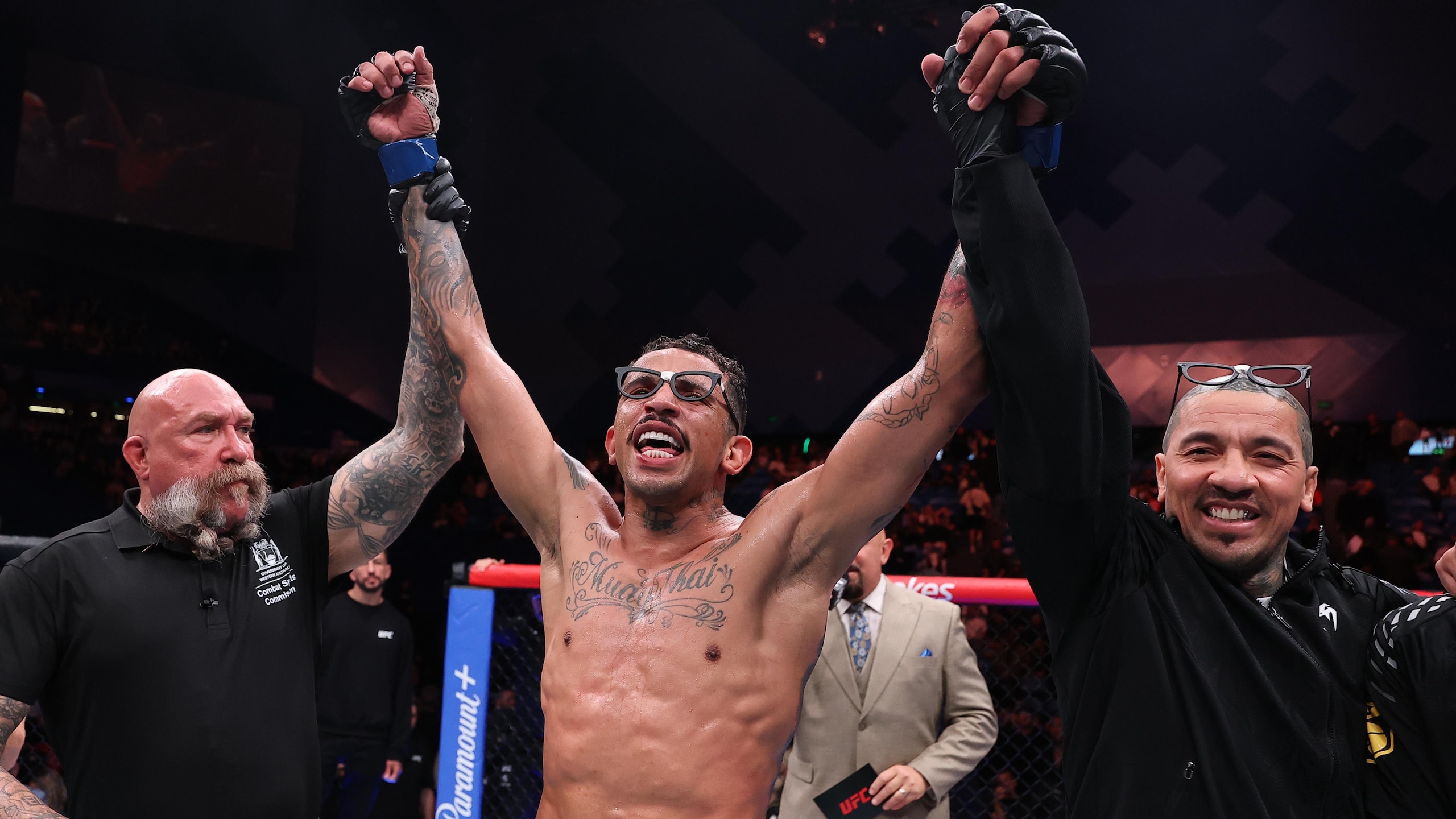
You could say that Bob Delaney knows a thing or two about officiating in the NBA Finals, but you'd be selling him short.
Way, way, WAAAAY short.
Delaney was witness to nine championship series during his 24-year career as a pro basketball official. He's seen some of the greatest players and teams in the sport's history—from Magic Johnson's "Showtime" Los Angeles Lakers and Larry Bird's Boston Celtics, through Isiah Thomas' "Bad Boy" Detroit Pistons and Michael Jordan's Chicago Bulls, and on to the Kobe Bryant-Shaquille O'Neal Lakers, Tim Duncan's San Antonio Spurs and LeBron James' Miami Heat—on the grandest of stages.
Delaney now spends his days talking about his life as a New Jersey state trooper and undercover operative-turned-basketball referee, enjoying retirement in Florida and (of course) watching the occasional NBA game.
He took some time just prior to Game 1 of the 2013 finals to talk to Bleacher Report about flopping, officiating superstars, the peculiarities of playoff basketball, and more.
Read on to get a glimpse into the hectic world of referees in the heat of the postseason.
How Did Flopping Get to Be Such a Big Problem? How Can It Be Solved?
1 of 16Bob Delaney: I think flopping started out with the defender trying to enhance the call or bring attention to the call. It started with offensive fouls and the defender trying to draw attention to the play. Either he throws himself back, blurts something out trying to draw attention.
And then at some point we got to where we are today, where even if the ball’s going out of bounds and two players are going for the ball, one’s flopping, trying to fool the referee. Or, as rebounding’s starting to happen, we’re seeing flopping.
We’re seeing it on the offensive side as well as on the defensive side, and it’s designed to do one thing: It’s designed to fool the referee, which never makes sense to me why someone at the end of a ballgame would be upset with the officiating if, all night long, you’ve been doing things to try to fool the officials and not allow he or she to do their job by what they see.
I’d think that players would want their calling card to be athleticism, not flopping, when we’re talking about their legacies.
It’s obvious that the NBA isn’t happy with it because they came out with the anti-flopping rules. Like all things in the NBA, if players don’t take a level of responsibility and police themselves on it, there’ll be more teeth put to it. And I’m not saying that I know that, but I’ve been involved with this league to have a feel for what will come.
I’ll use this example. If you recall years ago, when any kind of altercation took place on the floor, players would come off the bench. Many times, they’d come off the bench in support of their teammates, not necessarily really wanting to get into a fight.
But that behavior changed through education and awareness, and a rule change was made to raise awareness about the consequences for taking that action. Today, when something happens on the floor, no one comes off the bench. The reason being, they know they may be suspended, or they will be suspended and the fine can be pretty heavy.
So, behavior gets changed either by policing yourself or when restrictions become even tighter.
It’s going to be interesting to see how flopping goes next season because of the attention it’s getting this season, and the NBA has already put the anti-flopping rule into effect. So, it’ll be interesting to see how much more teeth they put behind it. My belief is that they will because it’s not good for the game.
And again, flopping is designed to do one thing and one thing only: fool the referee.
How Did You Handle Flopping?
2 of 16BD: What you do is you watch as much tape as you can. You’re able to tell a level of delayed reaction on a flop. That doesn’t mean that it doesn’t fool you sometimes.
What I would say to players is, I don’t need any help with the call—I don’t need you flopping. And the other thing is, when you flop, it doesn’t mean that my decision is going to be to your advantage. You may fool me to where you get to a disadvantage, so why would you put me in that spot and put yourself in that spot?
You do the best that you can in trying to evaluate flops and added movements.
Many times, there’s a flop that doesn’t change the call. In other words, if a player flops, it doesn’t negate the fact that there was illegal contact on the front end. Sometimes people will say, “Well, there was a flop on that play.” Yeah, there was a flop on that play, but there was still illegal contact on the play, so the foul that was called was the correct call.
How Do You Think the NBA and Officials Have Handled Flopping in These Playoffs?
3 of 16BD: You do the best that you can with it. It’s obvious that sometimes the officials have been fooled, and the NBA has taken action with the anti-flopping and fining people.
I don’t know what more can be done, and that’s why I said on the front end that if this doesn’t create an environment where players take some sort of responsibility and police themselves and say, “Hey, this is not something that should be done,” then I would think that the levels of severity of penalty will increase.
There’s an awareness of tendencies, yet you don’t have the luxury to have that as a predetermined thought. What an official does is react to plays. If you remember Game 2 or 3 of the Miami-Indiana series, where there were numerous technical fouls and flagrant fouls called, people were asking me, “Do you think the officials overreacted?”
My response was, “No, the officials REacted.” Officials can prepare and talk about an awareness of tendencies and team styles of play, but you can only react to what’s given to you on the floor.
So that night, they were reacting, not overreacting, because the players were at a higher level of aggressiveness, physicality—whatever term you want to give to it—that causes the referee to bring them back, and the only way to get them back is through technical fouls or flagrant fouls being called.
That’s a reaction to what’s presented to you, so it’s not like you go in with predetermined decisions.
.jpg?w=2560 "NBA Gambling Charges")

On "Superstar Calls"
4 of 16BD: People talk about superstar calls.
I’d would like to bring folks out onto an NBA floor and ask them to referee a period, and when you’re refereeing that ballgame, you’re going to have to know all the rules. You’re going to have to observe, process, evaluate, make decisions over and over and over again, and then you’re going to tell me that I can determine which player I’m going to call certain things on and that I’m not going to call others on?
I thank you for thinking that I’m that good, but I’m not.
And if you experienced it, you would understand that it cannot be part of the process because you would have to make all that decision on the front end before you even saw what took place. It’s impossible! You are reacting to what takes place.
These are the greatest athletes in the world—amazing strength, quickness, ability to be above the rim, flying through the air. To be able to make those kinds of decisions reactively, by putting into your thought process, “Well, this is so-and-so, so I do this for him, but I don’t do it for someone else,” is unrealistic.
The only way to help people understand is probably to bring them out on the floor and have them referee at the NBA level. I’m not talking about refereeing fifth and sixth grade. I’m talking about refereeing the greatest athletes in the world.
More on Superstars and the Effects of Familiarity on Officiating
5 of 16Bleacher Report: There are often notions floated about how refs sometimes are harder on rookies and younger guys, but go easier on veterans. Might that be a matter of familiarity? Of you having seen more film on and having a better understanding of the tendencies of guys who have been around longer, as opposed to younger guys, whose habits you aren’t quite as familiar with?
BD: Yeah, that could possibly be, but there’s also the level of perception as well. People will say, “The superstar gets the call.” Well, it’s not the guy that’s the superstar that gets the call. The guy that is one of those great players has the ball in his hands more, so there’s going to be more situations where a decision would have to be made when he has the ball.
Also, when you talk about that subject, I’ve never been given a list of who the superstar is and who the superstar isn’t. I’ve never been told that this is a guy that’s in one certain bracket or another bracket.
It just doesn’t exist.
While those terminologies are used within the media or the fans, it’s not the way that we speak to each other about players. It’s just not, and I think it’s hard for people to understand that because that’s how they speak about it. It’s a very hard thing to try to define because it doesn’t exist for us.
I don’t sit there and say, “Well, this guy’s got 10 years in the league, so I referee him differently.” It just doesn’t happen. It’s always difficult to prove a negative.
On the Tendencies of Players in the 2013 NBA Finals
6 of 16B/R: As opposed to it being a matter of stature and experience, would the understanding that guys like Dwyane Wade, Tony Parker and Manu Ginobili have a shared tendency to attack the basket and throw themselves in harm’s way affect how they’re officiated?
BD: Oh yeah, you’re going to be aware of that. Absolutely. You want to be aware of that type of tendency, because how they guard the rim is important.
Like, when you think about Indiana, they guard the rim by blocking shots. Miami guards the rim by taking offensive fouls. If you go to the hoop, you can rest assured that (Shane) Battier, (Udonis) Haslem, Birdman (Chris Andersen), they’re not going to be afraid to give up their bodies to get the offensive foul. So that’s their way of defending the basket.
With San Antonio, it’ll be a very similar way. It’s not like they've got a whole bunch of shot-blockers out there in the finals. They’re going to defend the rim in another way, which means making sure that somebody’s giving up their body when somebody goes to the hoop.
That’s another way that a team defends that rim, because if you don’t have someone who can get up, like (Roy) Hibbert, and take that ball out of the air...
Thoughts on Officiating Tim Duncan
7 of 16B/R: What if you’re handling a guy like Tim Duncan, who isn’t known as a particularly physical player but is obviously very big and plays in a spot where he’s likely to draw some sort of contact? How does that affect the way he’s officiated?
BD: I don’t think that it affects you, and I’ll go back to, when you’re out there, you’re refereeing each play. You have an awareness of, “Does the guy go to the hoop? Does he turn around and shoot a jump shot?” You’re aware that Timmy likes to get to the box and turn around and shoot a bank shot off the glass. You know those kinds of things.
But it doesn’t mean you change how you referee him.
You can only react to what’s given to you, so you have to wait and be aware. You’re refereeing the defense, you pick up the offensive player so that you’re aware of him. All of this is going on split-second and is constantly changing from however the ball is passed or what kind of physical activity starts to take place.
So you’re going from one to the other to the other. It’s constant movement of eyes...not (movement of) head. When you see a referee’s head like a bobblehead out there, that’s not good, because that means they’re moving from one place to another.
You have to be able to shift your eyes.
What we always talk about is peripheral vision, but peripheral vision not only in the typical way we talk about it where you can see out if you put your hands out to your sides. That’s what normally people talk about with peripheral vision.
We then add another one: Put your hand in front of you, and then put one hand above your head and one hand below your waist. That’s how you want to see big picture. So, it’s peripheral vision to force your eyes to see up, to see down, to see side to side, without moving your head.
And there’s even drills that we do. Like, you can sit in a room and you can look forward. We always tell officials what you would want to be able to do is see the ceiling, the floor and the two walls at the sides.
And if you’re really good, you see the back wall...then you’re really going to be a hell of a referee with those eyes in the back of your head.
How Do You Handle Officiating a Physical Specimen Like LeBron James?
8 of 16BD: There are others. Think about Shaquille O’Neal.
I refereed with Jack Madden when Shaquille first came in, and Jack Madden was one of my senior referees. I had a ballgame with Jack, and he said, “I never thought I’d referee a ballplayer stronger than Wilt (Chamberlain),” because he did referee Wilt. He said, “but I think I just did,” and that was Shaquille O’Neal.
So, the physical abilities and strengths continue to grow and grow and grow. Obviously, LeBron’s at this level, not only physically but how he has matured on the floor. And his understanding the game has grown as well.
From an official’s standpoint, my job is not to evaluate all of what we just spoke of, then put it into the process regarding what is a foul and not a foul or what takes place on a call. I keep going back to saying, until you do somebody else’s job do you fully understand his/her job.
I don’t know what it’s like to be a dentist, but I’m sure he/she has a game face on when they're doing their job, and they have a high level of focus and concentration. They don’t say, “You know, I’m going to do LeBron’s teeth differently than I do Josh’s.”
Who Gets to Referee in the Playoffs and in the Finals?
9 of 16BD: There are 60 officials, and then it’s determined. I don’t know the exact breakdown now because I’m not involved at this point in the selection process. It’s like 32 or 33, somewhere in there, go to the first round, and then like 25 or 26 in the second round, then 17 or so in the third round, then 12 work the finals.
Then there are other officials that are assigned to be alternates, so there’s four officials assigned to be down in Miami tonight. All four go out on the floor. They alternate, then, before the ballgame starts, goes back into the locker room, observes the game from there, and is ready in the event that, unfortunately, someone gets injured or hurt.
They’re meeting today (June 6, prior to Game 1). They’ll have lunch together, they’ll take their nap and rest up, and then they start getting ready to go to work.
And I can share it from my standpoint that the game face goes on at the hotel because your focus...you always put on a suit and tie, even though nobody sees you go back in the arena. The whole mindset behind that is, you’re going to work. I’m heading to my office, and you start getting the mindset of focus, concentration, high levels of concentration.
When you get to the locker room, you’re interacting with your crew, but you’re also getting yourself physically ready because of the stretching and getting yourself warmed up to be able to run with these great athletes up and down that floor.
How Do Referees Deal with the Crazy Atmosphere of the Finals?
10 of 16BD: One of the keys for tonight is, while there’s a tremendous amount of excitement...and when you first work a finals game, you start to understand that there’s a different level of intensity and hundreds of media from so many countries covering the games.
It’s hard to even find a spot to stand out on the floor during the warmups because there’s so many press around and there’s so much going on. You don’t have the luxury of getting caught up in that.
You’ve got to fight that, and you’ve got to keep yourself at a calm, composed level so that when that game starts—and it’ll look like 10 guys in a blender tonight out there to those referees when it starts. They’ll be going so fast, and the officiating team needs to stay calm, and it’ll start being basketball—that you don’t have the luxury to get caught up in all that.
Your calmness is important to maintain, so that when everything else goes up, you have to go down. The more you have an ability to do that, that’s when you start to become an upper-echelon referee.
Those officials that’ll be out there tonight and the other nine that’ll work every game after have that ability.
What Criteria Does the NBA Use to Determine Who Gets to Referee in the Playoffs?
11 of 16BD: You would have to ask that of the NBA front office because I’ve never been privy to the selection process. I’ve been selected, but I’ve never been privy to what the process is.
We are evaluated, and when I say “we,” the NBA referees are evaluated after every ballgame during the regular season.
The amount of statistics and information that they have is tremendous in helping train officials. There’s also high levels of scrutiny. There’s a whole referee department that monitors what’s going on. So not only are games watched in person in the arena, they’re watched on TV, and evaluations come in that way.
I do consulting for the referee department and mentor officials during the regular season. Then there’s ratings systems as well.
But when it comes down to it, from what my understanding is, is that it’s still the NBA referee department and the NBA’s management decision when it comes to who’s being selected.
To get a really good answer for that, you’d be better off asking the office than me. I don’t think I’m qualified and everything I would say is opinion. When it comes to what you ask me about officiating, that’s experience, and that’s something I know.
Does Your Approach Change Between the Regular Season and the Playoffs?
12 of 16BD: I don’t think your approach to officiating changes. The way I describe it is, I usually try to put it back into somebody else’s business.
For example, would it be different for you the way you would interview President Obama or the way you would interview me? You’re going back to your basics, I would imagine, of how you do your job. It doesn’t matter how important the person is. It’s your basics of “how you do your job is how you do your job.”
And if you start going in a different direction, you’re not going to allow what you’ve been trained to do to take hold.
So, hopefully, I’m helping you get a feel for what the referee business is like. If you start thinking differently, you’re going to mess up. You’ve been doing this, for some of these guys, 15, 20, 25, 30 years. If you start doing it different on the bigger stage than you did on the other stages, you’re not going to be good.
You’ve got to stay consistent.
Players want referees to handle the game and have a level of calmness and confidence that comes out in their calls. That, in turn, gives players a confidence about how the game is going to be called and take place for them.
When you see the emotion of a player come up against a referee, it’s their will to win that causes that. The difference between pro athletes and everyone else is that their will to win is phenomenal, absolutely phenomenal. And at times, they see the referee as the obstacle that gets in the way of that.
It’s not personal when they get upset; they’re so emotional about trying to win that if they perceive a call went against them or not their way, that’s where the reaction comes.
Now, officials will allow them what we call a heat-of-the-moment reaction, where they have one reaction. When it becomes prolonged, the histrionics become more disrespectful, it’s called a “respect for the game” technical foul.
We’ve all spoken about this. They’ve heard this for the last quite a few years, about the demeanor that they have a responsibility to have under control when they’re on the floor.
What Changes in Style of Play Do You See Between Regular Season and Playoffs?
13 of 16BD: What happens in the playoffs versus the regular season is, there’s a level of intensity that continues to grow, and it’s a higher level of intensity. That doesn’t mean you don’t have those kinds of intense games during the regular season, but teams don’t play each other every other day during the regular season. So there’s a built-in difference right there.
Teams are not going home if they lose a fourth game during the regular season. That increases the level of urgency and, at times, desperation.
The way I like to describe the series games, the playoff games, is it kind of reminds me of refereeing a regular game, where there’s a first, second, third and fourth period, and the fifth, sixth and seventh games are the overtimes.
So, in a regular-season game, in the first quarter, they’re usually feeling each other out. The intensity comes up in the second. Get it to halftime, it comes back in and they kind of figure out where to go in the third, and then everything goes real high in the fourth, because that’s the determination of who is going to win the game.
Well, think of a playoff series as Game 1 being the first quarter, second quarter being Game 2, third, fourth, obviously. Then, once you get to Games 5, 6 and 7, that’s overtime. Teams are going to go into a different desperation mode if they’re down 3-1 going into that fifth game. A team that’s down is going to take a lot more chances and a lot more gambles, so the game changes.
Again, the referees react to what’s given to them, but understanding those levels of urgency and desperation as they come during the playoff series is important.
Do You, as an Official, Feel Pressure to Perform as the Stage Gets Bigger?
14 of 16BD: You know what’s going on. If anyone says that they don’t, they’re being naive and foolish. You know the intensity. You sense it. You feel it when you’re out there.
And you know the hype, even when you’re pulling up to the arena. It’s not like pulling up during the regular season, when you can just roll in. You’ve got to give yourself another half-hour to get there because the traffic is going to be heavier.
So all of those kinds of things create maybe a different feel, but when you get between the lines, it’s still a ballgame. They didn’t change the size of the court—it’s still 94 by 50. It’s still the calls. We’re still going to play 12-minute quarters. It’s still going to be the same kind of fouls and violations that’ll take place and you have to react to.
So, all the hype takes place prior to the game and the sense of what’s on there, it goes back to, again, if you talk to someone that’s never done what you do.
For example, when you interview the LeBrons of the world and the great players, other people may say to you, “Don’t you get nervous when you start to interview him?” But, in reality, you may feel a little bit something going on inside you, but once the interview starts, you’re back to doing what you do for a living.
How Does Teamwork Among Refs Help to Alleviate the Pressure of Calling Games?
15 of 16BD: Teamwork amongst us is vital.
There’s three teams on the floor every night: the two teams competing and the referee team. All three are trying to do the best they can. Every one of them is leaving the locker room in hopes of a perfect game, but in reality, all three teams know they’re not going to be perfect.
Nobody shoots 100 percent from the floor or gets every rebound, gets every loose ball. Same thing with officials. They’re hoping and striving, and they have a goal to have the best game they can possibly have, but they know there’s going to be imperfection. It’s just the reality of the business.
The replay system has helped us tremendously, to be able to make decisions on the floor and then have it either confirmed or overturned, that helps in particular situations.
The referees for today’s game (Game 1 of the NBA Finals) are meeting today at some point in the morning as a crew. They’re going to spend time looking at tape as well as going over training tape that officials get. We have a secure website so that we’re able to have tests given to them, rules tests every week, as well as seeing plays over and over and over again so they can see unique plays and know what is expected.
Say something happens during the regular season in Chicago. Well, everyone doesn’t have to physically experience it to learn from it. By putting the video tape up, then everyone can see how the play unfolded, how it was called, whether it was right or not, what was the positioning of the officials.
We all learn from each others' games. Our ”plays” are how we move on the floor—a trail, a lead and a slot position—and everyone has a primary responsibility. That movement by the officials is determined by the location of the ball.
So if the ball is above the free-throw line extended in the half court, the trail official is on the ball, the lead is off the ball looking at players from the free-throw line extended back into the paint, and the slot is looking off-ball on the weak side. If the ball then moves over, then the slot moves out to the trail, the trail moves down to the slot, and the lead changes position underneath the basket.
The lead always stays in line with the ball.
Our terminology is a little bit different. When we say “strong side,” we’re talking about where the lead official is, where in basketball terminology, “strong side” is where the ball is.
What Were Your Favorite, Least Favorite Things About Refereeing in the Playoffs?
16 of 16BD: Well, there is no least favorite. There’s nothing bad about refereeing in the finals. There’s no bad in refereeing playoff games.
In fact, Hubert Evans, who was one of my mentors and was a great official, told me, “Never make a decision about whether it’s your time to go during the playoffs” because it’s such a high and there’s so much going on, and there’s so much time in between games that you feel so well-rested, and you’re so ready to go and your body’s physically able to handle it.
The decision of whether it’s your time to go, you should make that in December or January, when you’re kicking that bag out the door and you’re on the road for 25 days out of the month.
There’s nothing bad about it. It’s exciting. It’s the highest level. The highest level of any profession, when you’re able to get there, there’s nothing better. To have that camaraderie of your team going out with the two teams in the finals all trying to be the best they can be that night, it’s a challenge.
That’s what officiating is, it’s a great challenge every night. It’s what you work for. It’s what you’ve done your whole life to try to get to, and to accomplish it is a great experience.
And once you’ve accomplished it, the next step is to try to hold on to it and stay there.




.jpg?w=2560 "Aikman Blasts Cowboys WR 🫣")
.jpg?w=2560 "Jonathan Taylor Landing Spots")