15 Best Lunch-Pail NHL Players Heading into the 2013 Season
The captains of all four of the NHL’s reigning Stanley Cup semifinalists personify a team that would fit the late Herb Brooks’ expression, “You don’t have enough talent to win on talent alone.”
Even on the teams with certified celestial skaters, there needs to be a place for players who are fit to take on grunt work and turn it into glamour for themselves and the group as a whole. This task chiefly falls onto third-liners or borderline top-six forwards who, whether it is through habitual hitting or more subtle grinding, can reverse the flow of the game and get in on the instantaneous attack.
The top 15 blue-collar strikers to watch for as this season goes into full swing are coming off a strong showing for their respective teams in 2011-12. In most cases, they established their precedents well before then, and in all cases, how they follow up on them amid the uniquely tight hustle through 2013 could be crucial X-factors in their clubs' fates.
Based primarily on the impression they had left by the end of last season, here are the NHL's top lunch-pail players at the start of 2013.
David Backes
1 of 15Of the three Selke Trophy finalists in 2011-12, Backes was the most explicit in his defensive game and the way he helped to convert defense into offense. Not much more needs to be said beyond the fact that he led last year’s St. Louis Blues, who scored on a steady diet of balance over star power, in the way of hits (226), goals (24) and points (54).
Dave Bolland
2 of 15Bolland is roughly a full year removed from being named the “Best Grinder” in the league by The Hockey News.
While not as overtly physical as most of the selections on this list, Bolland has let his determination trump his skill set well enough to give the Blackhawks what they need from a depth forward.
The 2011-12 season was the second time he finished with 19 goals to place sixth on the team in that category. He had previously done that in 2008-09 and has since long replenished his game after missing substantial time in between, sitting out half of 2009-10 with a back ailment.
Dustin Brown
3 of 15Like Backes, Brown is an exemplary captain who can, and often willingly does, use his brawn to instantly change the course of the puck. His role in the Los Angeles Kings’ heart-stopping run to playoff qualification and dominant 16-4 run through the subsequent tournament underscored his ability to fluster the opposition on each side of the puck.
The way Brown habitually and forcefully pries an opposing puck-carrier away from the biscuit and then draws an opposing penalty upon going the other way epitomizes the principle of dishing out and accepting punishment as needed.

Ryan Callahan
4 of 15The New York Rangers captain was at his best all-around when it mattered most in 2011-12, throwing 82 hits, recording 16 takeaways and tallying 10 points in 20 postseason games.
As a team, the Rangers are expecting more production now that Rick Nash has been brought in to join Brad Richards and Marian Gaborik and thicken the top layer of the offense. But with Callahan leading the rest of the forwards and also keying the first laser-beamed line of defense on the home front, they should expect nothing less than what they got last spring.
David Clarkson
5 of 15Like Callahan, Clarkson elevated his game for the New Jersey Devils during their 2012 playoff run. He averaged precisely three hits per night in 24 games and, while he hardly gives off a top-six vibe, pitched in 12 points to give the team a critical dose of depth.
In each of the three series New Jersey won, Clarkson had at least one point in the clinching game. He later tallied an assist in Game 4 and five hits in Game 5 to help the Devils briefly stave off defeat in the championship round.
With the productive Zach Parise gone, the Devils will need every dewdrop of fruitful physicality out of Clarkson now more than ever.
Cal Clutterbuck
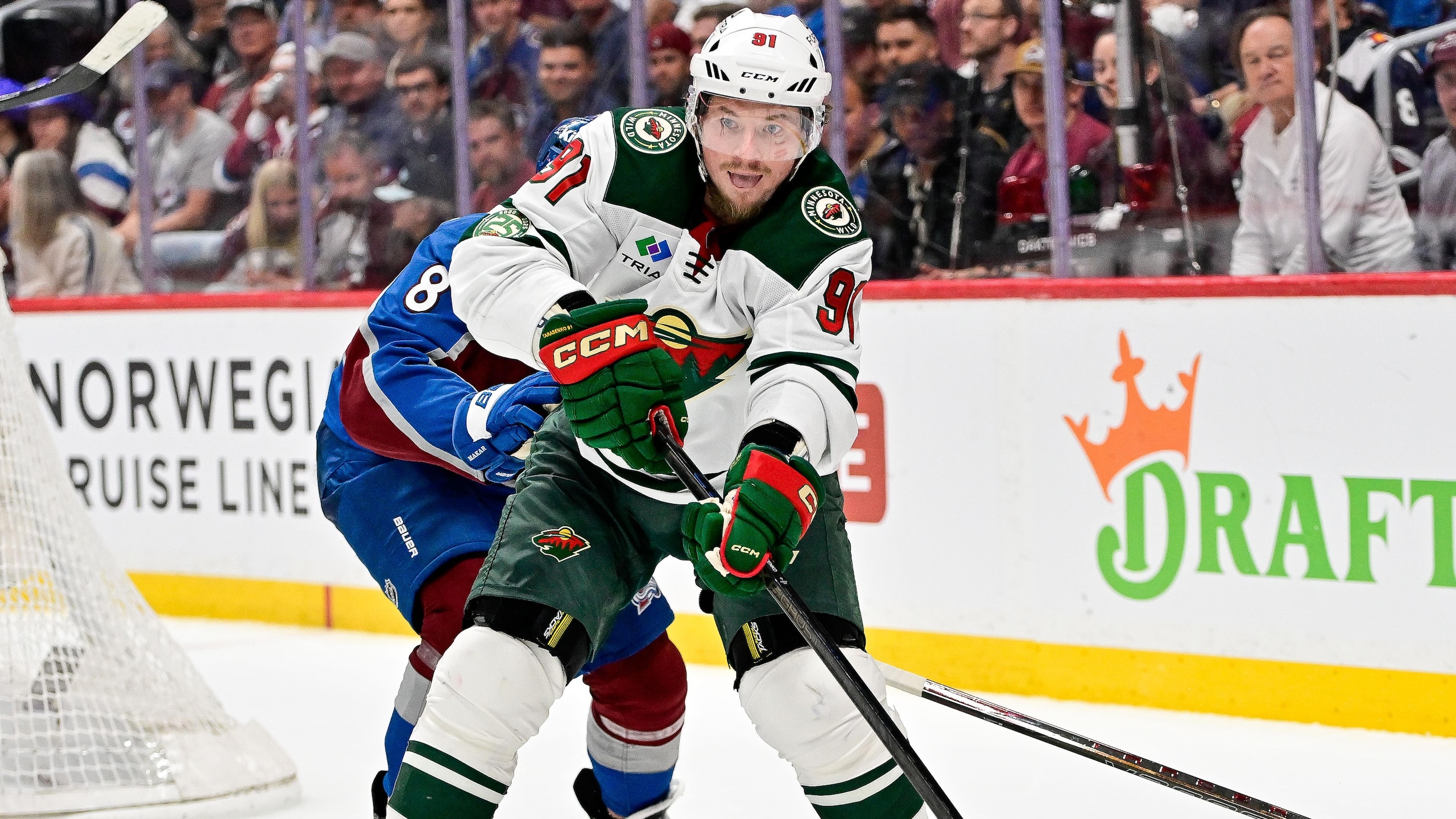
6 of 15On a Minnesota Wild team that was shriveled by the prolonged absences of Pierre-Marc Bouchard and Mikko Koivu, Clutterbuck finished fourth with 15 goals and sixth with 27 points.
Under more ideal circumstances, namely with Bouchard and Koivu healthy for the whole ride, he would have been seventh in those categories with roughly the same output, bolstering a playoff contender. His physicality may have also translated into better efficiency.
This season, Minnesota has added the aforementioned Parise and rookie Mikael Granlund to the mix of Kyle Brodziak, Bouchard, Matt Cullen, Dany Heatley, Koivu and Devin Setoguchi. Assuming the top six shows up consistently, Clutterbuck’s tangible and intangible impact and the resultant bottom-six scoring will be the next question as the Wild chase restored relevance.
Erik Cole
7 of 15Even while toiling on a Montreal team that finished last in the Eastern Conference, Cole matched or revised his career highs with 35 goals (a team high), 61 points and a plus-11 rating. Only defenseman Josh Gorges joined Cole in dressing for all 82 games last season, and the grizzled forward placed second on the squad with 186 hits.
With that fruitful physicality, Cole cultivated his 35 goals out of 241 shots on net, the 29th-highest total in the league, which translated to an irreproachable 14.5 percent success rate.
Shane Doan
8 of 15Having entered the second half of his 30s, Doan will likely never again be as prolific as he was when he surpassed the 70-point threshold in 2007-08 and 2008-09. Nonetheless, the Phoenix captain is coming off a high point in his career after co-piloting a mission to the Western Conference Finals.
Doan led his Coyotes in their franchise breakthrough playoff run with 79 hits and 13 takeaways and sprinkled five goals and nine points over a span of 16 games.
Nick Foligno
9 of 15Now embarking on his first season as a Columbus Blue Jacket, Foligno was underrated with the Senators last year, as he tied Daniel Alfredsson and Sergei Gonchar for third on the team with 32 assists.
Generally speaking, the Sens were strapped for secondary scoring after defenseman Erik Karlsson and the troika of Alfredsson, Milan Michalek and Jason Spezza. But the rest of their depth chart tallied better than nothing, owing partially to Foligno’s career year on the dasher boards and the scoreboard.
Now, in an even smaller pond in Columbus, Foligno, in the words of R.J. Umberger (according to Rusty Miller of The Associated Press, h/t CountOn2.com), will be banked on as “an aggressive player” on an ensemble cast in the post-Nash era.
Scott Hartnell
10 of 15For somebody who has “not a natural shooter” listed among his shortcomings by The Hockey News, the hulking Hartnell made the most of his opportunities last year en route to a career-high 37 goals. He placed 22nd among all qualified leaders with a 15.9 percent connectivity rate, hitting the net on 37 of his 232 registered stabs.
One thing that is natural is the notion that Hartnell creates many of those shots by using his gifted frame to change possession and plow the other way to create space.
Chris Kunitz
11 of 15It is nothing short of a compliment to Kunitz’s physical game when Pittsburgh Penguins head coach Dan Bylsma decides to use it as a means of setting up scoring chances for Sidney Crosby. That approach has worked in the past and, coming off a career-high 180 hits, Kunitz is flanking the captain once again to start this campaign.
Gabriel Landeskog
12 of 15In defiance of his age and the overall struggles of the Colorado Avalanche, Landeskog garnered the 2012 Calder Trophy upon surpassing all of his teammates with 219 hits, a plus-20 rating and 22 goals. As Avs fans eagerly await an encore and wonder if the new captain can build on that, a tentative answer is that he will, provided he retains his work ethic.
In addition, for this year and beyond, his leadership will be critical to keeping Colorado relevant in a Northwest Division highlighted by two-time regular-season champion Vancouver, the revamped Wild and the Edmonton Oilers' star-studded youth movement.
Milan Lucic
13 of 15While the Boston Bruins could stand to have him perform a little more effectively in the playoffs than he has in the past two years, Lucic has not percolated much cause for complaint in the regular season. He led last year’s Bruins with 201 hits and placed third on the league’s second-best strike force with 26 goals.
Steve Ott
14 of 15The Buffalo Sabres could not ask for a much more ideal third-line center.
The veteran who made headlines by boasting about his faceoff stats can also win battles for possession when the clock is running. In addition, in his final year with Dallas, Ott was one of the Stars’ more efficient skaters, rewarding his unmatched 278 hits with a plus-five rating along with 39 points for fifth best on the team.
Ryan Smyth
15 of 15One or two generations prior, a decidedly more skilled Edmonton Oilers hero made his “office” behind the net, where he made opposing heads spin with his craft.
Today, the grizzled Smyth continues to make his own office on the porch of the net and produce goals in and around the 20s each year, mostly by persevering through constant bumps and shoves from annoyed defensemen and goalies.
If the aforementioned youth movement on the Edmonton offense had been further along last season, he may not have had to settle for 19 strikes.
.jpg?w=2560 "Grading WWE Raw 🔠")
.png?w=2560 "Allen's BRUTAL 1H Stats 🫤")