
How NBA Free Agency Is Changing the Trade Market
It took Danny Ferry, the Atlanta Hawks' president of basketball operations and general manager, all of one week on the job to reshape his roster. After being hired on June 25, exactly one week later—on July 2—Ferry completed two major trades when he dealt Joe Johnson to the Brooklyn Nets and Marvin Williams to the Utah Jazz.
The Hawks roster was immediately reshaped, and Josh Smith—the eight-year pro—became its longest-tenured player.
Smith made news on Saturday when it was reported that he alerted the Hawks he would not sign an extension with the club and would become a free agent next summer.
TOP NEWS

J-Dub, Wallace May Miss Entire Season
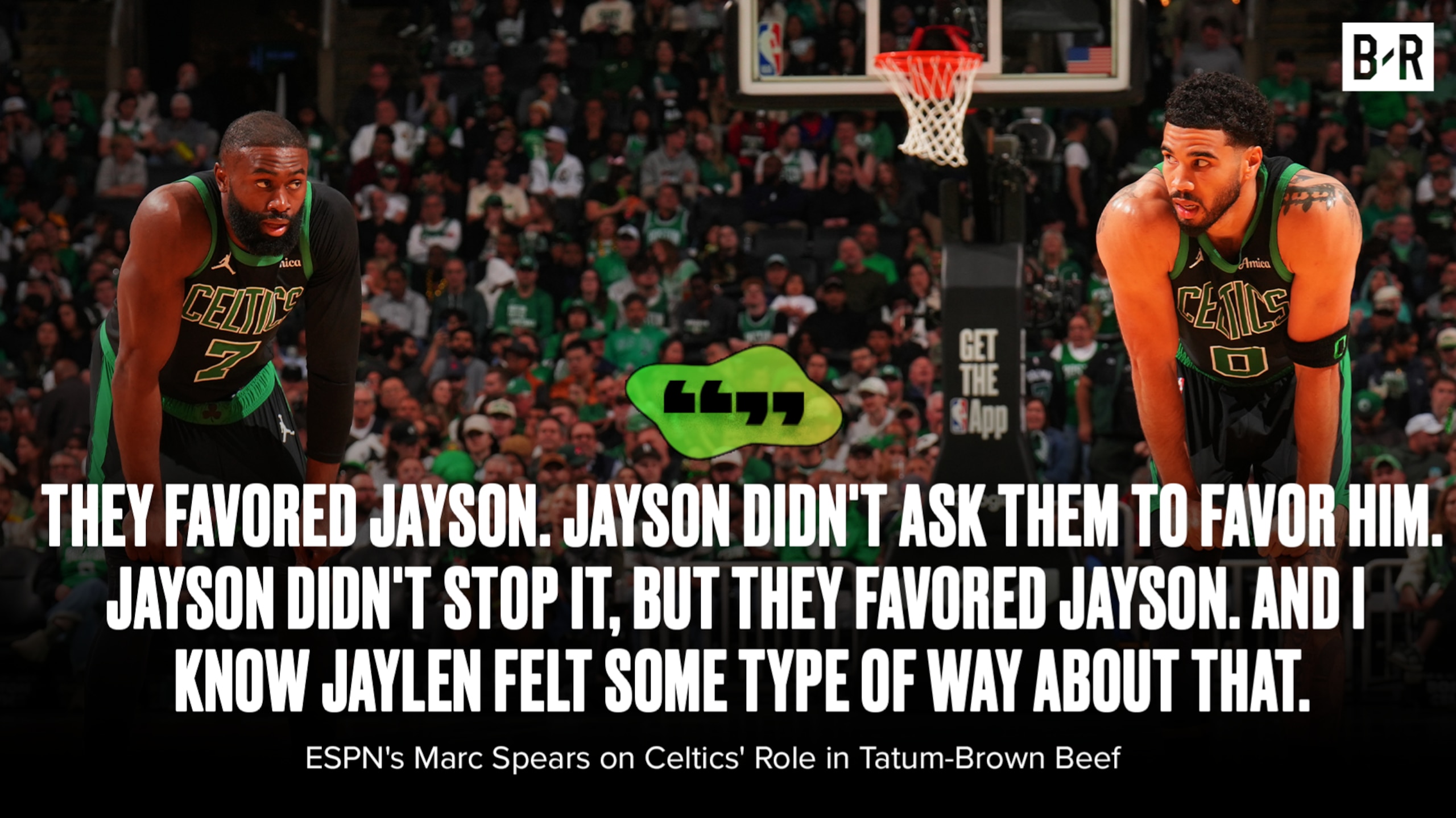
Celtics at Fault for JT-JB Beef? 🤔
Melo's Quote on Confidence 😎
And now, you can bet that he’ll find his way onto the trade market.
That’s the way it is in today’s NBA.
Good luck to you, Danny Ferry.
There’s nothing wrong with Smith electing to become a free agent, especially not when he stands to profit by doing so.
The law of the NBA’s 2011 collective bargaining agreement makes it such that Smith could only sign a three-year extension, but if he plays out this season and becomes an unrestricted free agent, he would be eligible to sign a new five-year deal with the Hawks.
LeBron James and Chris Bosh left. Then Carmelo Anthony, Deron Williams, Chris Paul and Dwight Howard were each eventually traded because their respective owners all knew that they would have to.
In 2012, NBA players have less incentive to forgo free agency, and that has caused some of the NBA’s most prized superstars to find themselves on the trade market.
Smith—though not the same caliber of player as the aforementioned six—is a defensive stalwart and will be one of next summer’s most coveted free agents. And of next summer’s free agents-to-be, Smith seems like the one who is most likely to want to leave his current team.
If you’re Danny Ferry, there’s no way you could allow one of the game’s most defensively dominant players, who’s only 26 years old, to walk away for nothing.
So Ferry will do exactly what Masai Ujiri did when he traded Carmelo Anthony: He’ll attempt to determine whether or not the player wants to remain with the club, and if not, he'll field offers and eventually pull the trigger.
The other notable free agents of next summer’s crop may include Chris Paul, Dwight Howard, Andrew Bynum, Al Jefferson and Paul Millsap. Monta Ellis of the Milwaukee Bucks has an early termination option and may elect to hit the market as well.
If the Oklahoma City Thunder fail to reach an extension agreement with James Harden by the October 31 deadline, Harden will become a restricted free agent who’s likely to receive a maximum contract offer that may be difficult for the Thunder to match due to the potential luxury tax implications.
So if Halloween comes and goes and Harden doesn’t sign an extension, what should Thunder general manager Sam Presti do? Of course, Harden’s restricted status would give the Thunder the right to match any offer he receives, but there’s no guarantee that they could or would.
The fact is, today, NBA owners and general managers fear free agency. The result has been a boom on the trade market.
Once upon a time, the term “franchise player” was more than a tag that an NBA organization threw around to describe a player who has been around for a few years and helped sell a few tickets. It was a term proudly carried by the likes of Hakeem Olajuwon, Karl Malone, John Stockton, Patrick Ewing, David Robinson and Reggie Miller.
Of those six, only two—Olajuwon and Robinson—would ever win an NBA championship. And of the six, only three—Stockton, Robinson and Miller—would only wear one jersey for their entire career.
But what all six of these men had in common was that their personal legacies, to them, weren’t more important than the fortunes of their franchises. Sure, winning a championship would have been great. But winning one with a different team wouldn’t have been the same.
That’s a franchise player. Regrettably, in today’s NBA, they’re a dying breed.
Paul Pierce and Tim Duncan are the epitome, and though Dirk Nowitzki (Milwaukee Bucks) and Kobe Bryant (Charlotte Hornets) weren’t drafted by the Dallas Mavericks or Los Angeles Lakers respectively, they were each acquired on draft day and have never worn another uniform, so they fit in.
Dwyane Wade and Kevin Durant? We’ll see soon enough.
But the major point here is that today’s generation of NBA talent is mostly afraid of committing to a franchise and pinning their personal legacies on the competence of a front office staff.
That’s not necessarily the fault of the player, though. Not after Chris Webber, Allen Iverson, Tracy McGrady and—until recently—Kevin Garnett had their careers and accomplishments diminished by some fans and media for failing to win on the NBA’s ultimate stage.
Today’s NBA talents—the LeBrons, Boshes, Howards and Pauls—don’t want to be added to that list. None of them can control the moves made by their respective front offices, but they can control if, when and where they sign.
Free agency is a rare right that today’s gifted NBA players usually have to wait four years for—and it’s something that NBA owners and general managers, today, in the post-Decision era, fear.
Fear.
In many ways, that’s what’s driving this whole thing.
NBA players fear being chained to inept management and wasting the prime years of their careers. LeBron James feared never getting over the hump with the Cavaliers, and Bosh feared playing out the sting of an irrelevant career.
So, they left.
Carmelo Anthony and Dwight Howard feared not being able to compete with the likes of Miami’s super team, so they each forced their way out.
Today, the NBA’s owners fear getting spurned. The result is a revolutionized trade market in which players—unlike Kevin Durant and Russell Westbrook—who don’t trust their management or otherwise don’t wish to be franchise players seek greener pastures as soon as they’re allowed to.
Knowing that’s the case, there’s simply no way an NBA team can allow a perennial All-Star, much less a future Hall of Famer, to walk away for nothing.
Me? I fear that this is bad for everybody involved. For the foreseeable future, the NBA will continue to become top-heavy, and players will continue to find themselves on handpicked, talent-stacked teams.
It’s the modern-day NBA talent arms race.
The players use free agency as their primary weapon, and the NBA’s owners and general managers attempt to be proactive and avoid being left with zilch.
For Dan Gilbert’s sake, I hope the Cleveland Cavaliers build a championship-caliber roster around Kyrie Irving.
If not, he’ll eventually have to end up on the trading block.

.jpg?w=2560 "Chiefs, Steelers Eye WR Trades")





.jpg?w=2560 "Raiders Sticking with Cousins")