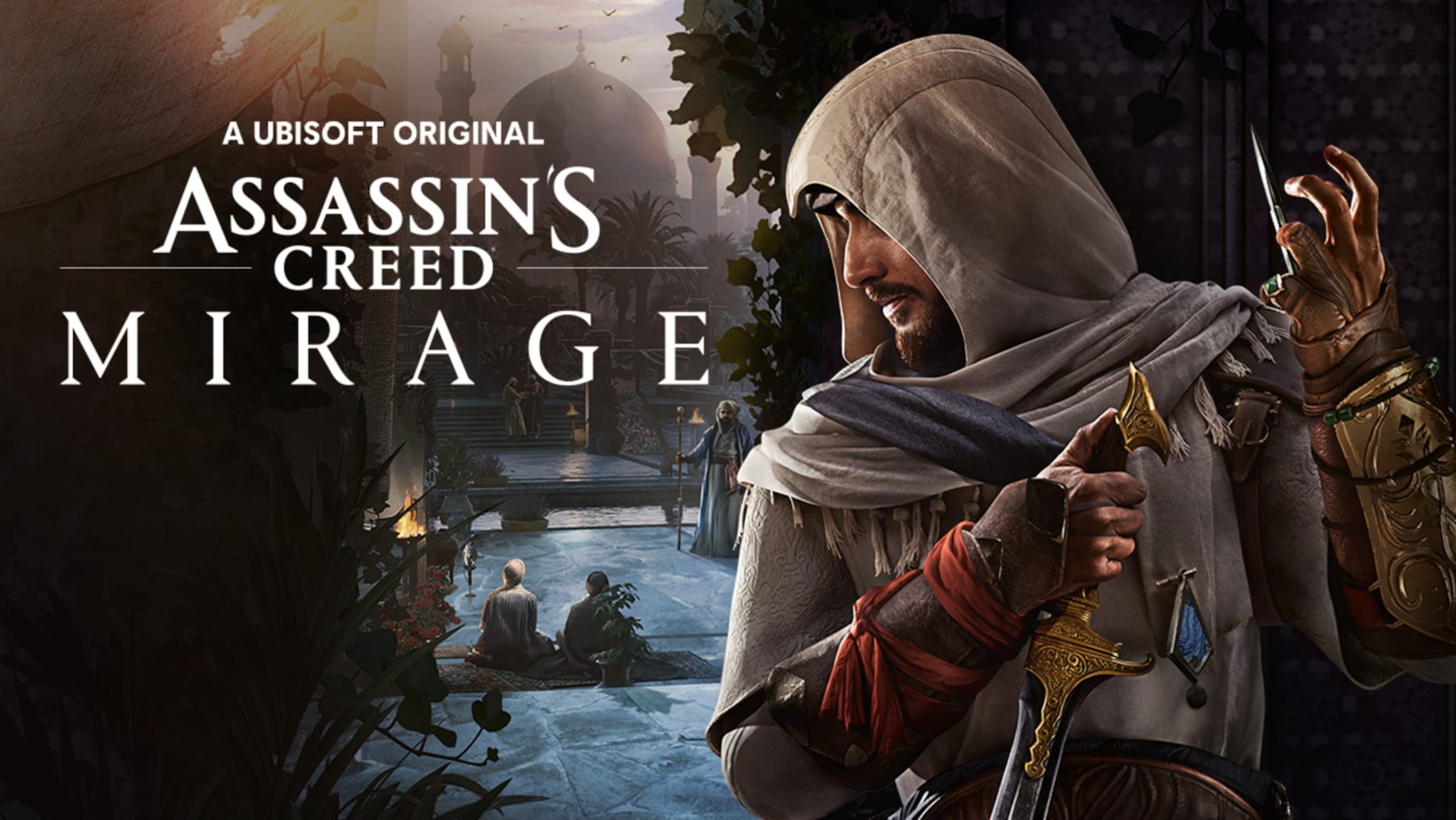


Assassin's Creed Mirage feels like a critical moment in time for one of gaming's most storied franchises, which waxes a bit poetic for a series that specializes in timeline and history.
Mirage, from developer Ubisoft Bordeaux, is the first release in the series since 2020's Assassin's Creed Valhalla and originally started as an expansion to that game.
But it couldn't feel more different, with Mirage going back to the roots of the series and not in a cliche way. A more focused, dialed-back release that aims to match the themes and feel of the original stealth-oriented detective games, it's quite a few steps removed from the massive open-world RPGs of the last few releases.
TOP NEWS

🚨 NC State Fires Head Coach

Malachi Toney Sets ANOTHER Record
.jpg?w=2560 "NBA Gambling Charges")
Malik Beasley Negotiating Plea Deal (AP)
A risky mixup, but one longtime fans of the series might appreciate—and one that could say much about where the series goes beyond 2023.
Graphics and Gameplay
It doesn't do Mirage justice to merely say it is the best-looking game in the series, even if it is.
Animation work is crisp, shadows add splendid density to each environment based on time of day or night that stands among the industry's best and savvy camera angles and presentation decisions capture the action and world in a way that will keep onlookers glued to the screen.
But by far the star of the show is the 9th-century rendition of Baghdad, creating an immersive Middle Ages romp of stunning complexity and unexpected depth.
The city feels like its own character, which isn't something we've been able to say about the sprawling open worlds of the last few games, nor many games in general.
Plantations, gorgeous fountains, gardens and their counterpart in the more industrialized, grim sections of the city give distinct areas personality, as do the droves of varied, numerous and district-specific NPCs. This goes beyond simple citizenry with scientists, merchants and scholars populating the areas, fitting for a critical trade center of the era along the Silk Road. This is some of the best NPC density and day-to-day behaviors in gaming to date.
The level of detail found within a single building interior gives off a lived-in feel, not just a placeholder. Sprinkle in some nice verticality and it easily feels like the best environment in any game to date in the series.
This is a deceptively huge game map even if it's smaller than the open world of Valhalla, with players starting in a small town outside of the city before the narrative reels back the curtain on the massive, varied districts. While it's not as appealing, the spaces outside the city offer multiple different biomes and plenty of wildlife, too.
Much of this wouldn't be possible without the superb sound design, with the chatter and general buzz of a city permeating the experience. Combat and actions sound impactful and accurate and the voice work is fantastic, highlighted by the iconic voiceover work of Shoreh Aghdashloo as a mentor to the main character.
The game even lets players have some fun with the visual settings. Tucked into the menus is an AC 1 filter, bathing the presentation in that blue hue found from the original game.
Granted, all Assassin's Creed games have had breathtaking, stunning and dense environments to explore. The more recent offerings have also had sprawling open worlds with a lot of checklist items to accomplish, massive amounts of travel, level-gated areas and heavy RPG gameplay mechanics that felt like the series was moving far away from the original vision.
Not here.
Players explore with some typical staples, such as Eagle Vision, which helps locate enemies, points of interest and places to hide.
Then there's the eagle companion Enkidu, with the big major mixup here being the presence of new enemy types capable of spotting and shooting down Basim's friend.
Traversal and parkour are fun, be it corner swings, pole-vaults and other ways of getting vertical and to destinations. Like past games, it's far from perfect and there are frustration points when Basim does something far different than what a player wants—like sticking to a boat when the player aimed for the water. But those are uncommon gaffes that stick out for being unusual.
Players use a wheel to access one of the six stealth tools, which range from the more lethal items like blowdarts and throwing knives to diversion-based, like noisemakers and smoke bombs. These are brilliant fun, especially due to versatility. The smoke bombs, for example, can cause diversions, enable assassinations outside of combat or even get dropped in the middle of a fight, letting the player sneak around and get one-hit kills.
Refreshingly, combat truly feels like a last resort. In prior games, it wasn't overly long before players could tackle waves of enemies all at once through savvy parry, counter and/or dodge usage.
That's out the door here (as are enemy levels from the last few games in favor of simple health bars again), as it feels much tougher to tackle multiple foes head on and stealth seems to feel like the optimal route. That doesn't mean players won't unlock better gear and weapons that are upgradeable at Tailors and Blacksmiths, respectively, but it certainly makes sense—this series is about assassins, after all, not foot soldiers.
As a result, combat is just fun. Players will get punished for not singling out enemies and getting cute. There are amazing kills and combos to pull off, yes, but they feel more elusive and as a result, more rewarding.
Series staples return, such as wanted posters and slipping coin (Favor tokens, this time) to heralds to ease off the Notoriety bar for being witnessed committing crimes, be it petty such as pickpocketing or much worse. Players, of course, can also hide in nooks and crannies or blend into crowds, the last point being something that is also still very effective in initiating tasks, too.
There are three levels of Notoriety this time, with the first meaning citizens are more likely to spot Basim, the second seeing the mobilization of rooftop archers and more aware guards and the third an elite guard deployed to deal with the player. And they are very elite, being able to avoid assassination one-hit kills and even heal mid-combat.
The dramatic escalation as players fill up the Notoriety bar feels far more realistic this time out, especially in the way people out in the world will notice Basim and alert authorities. It's not a minor annoyance anymore, but an enjoyable time, which is a feat in itself given how frustrating wanted systems in other games can be.
In a nice development, there are usually a few different ways to tackle missions and goals. That doesn't mean enemy A.I. or detection is consistent and fair-feeling across the board, nor is the checkpoint system that oversees the action.
But far more often than not, Mirage is a joy to play because the player feels small in a big city, vulnerable, yet like the most dangerous person on the planet, too.
Story and More
Basim takes the lead role in Mirage and joins The Hidden Ones (ancient moniker for what players know as Assassins) while slowly realizing his potential amid a grander narrative.
Players first met Basim in Valhalla while adventuring as Sigurd and Eivor, though they don't need to go back and play that game to enjoy the narrative here. On the timeline, Mirage takes place before Valhalla and seems to technically be another installment in the ancient history arc.
There is a very measured pace to the story, with Mirage making a point to slow-walk players through the idea that this time is different in terms of gameplay and mechanics, more classical. So much so, there's a big deal out of Basim simply getting his first sword after going without for a notable amount of time.
Beyond the main narrative, Baghdad and its surrounding areas offer plenty to do, even if some of it merely checks some expected boxes.
Favor tokens for completing smaller side quests for factions around the city are worthwhile as a form of power given that they can be used to impact notoriety and other things.
Tales of Baghdad weave in the rich history of the city nicely. History of Baghdad is more akin to simply visiting many landmarks across the city for more of the same, which is a nice diversion.
Lost Books are puzzle-based encounters that are fun to experiment with, while Mysterious Shards are the game's collecting goal. Players tired of such things can easily take a pass and favor the main story and not feel like they're missing out on too much.
An Investigation Board replaces the traditional quest log and displays targets, important locations and characters capable of helping move things along.
Thankfully, the story's pacing keeps a nice tempo to match a new direction in terms of progression, which removes the traditional experience grind found in the series and pretty much any other video game. Instead, the game presents "Power" in its place, with players earning new levels by climbing Assassin's ranks.
Players climb these ranks by progressing through the main story while more typical skill points level up skill trees and are unlocked via various activities.
Working for skill points and making tough decisions on the skill trees remains a fun gameplay loop. But what's really interesting here is how the progression via "Power" aligns so nicely with the narrative that is Basim attempting to work his way up the ranks of the Assassins. Improvements feel earned and worth the time investment.
An industry leader in accessibility and other options, Mirage goes deep in these areas again, including the ability to remap controls. There are three difficulty levels atop these options, too.
A highlight are the language options, including experiencing the game in its truest sense by enabling Arabic voiceovers with subtitles.
Conclusion
Assassin's Creed Mirage is, in fact, not a mirage—it's a paradise of a return to form for the series through a smart dialing back of systems that pushed the series to lose its identity.
Originally intended as an expansion to Valhalla, it's impressive that the scope was so far expanded into a full game, while also walking the tightrope that is refining the gameplay loop and systems to harken back to the days of the original games.
There was nothing wrong with the Assassin's Creed series expanding and evolving into the RPG realm—and it did it very well. But this? It's a return to form and well worth the wait, even if some of the tried-and-true gameplay loops within have been done ad nauseam by veteran players.
Mirage could very well be the pivot point for games where the worlds get smaller again as opposed to every game cramming in an open world. If they're all done this well, players win big. Sans a lot of hype in a stacked 2023, Mirage quietly feels like it belongs on Game of the Year lists.
.jpg?w=2560 "Commanders 49ers Football")


.jpg?w=2560 "Jonathan Taylor Landing Spots")