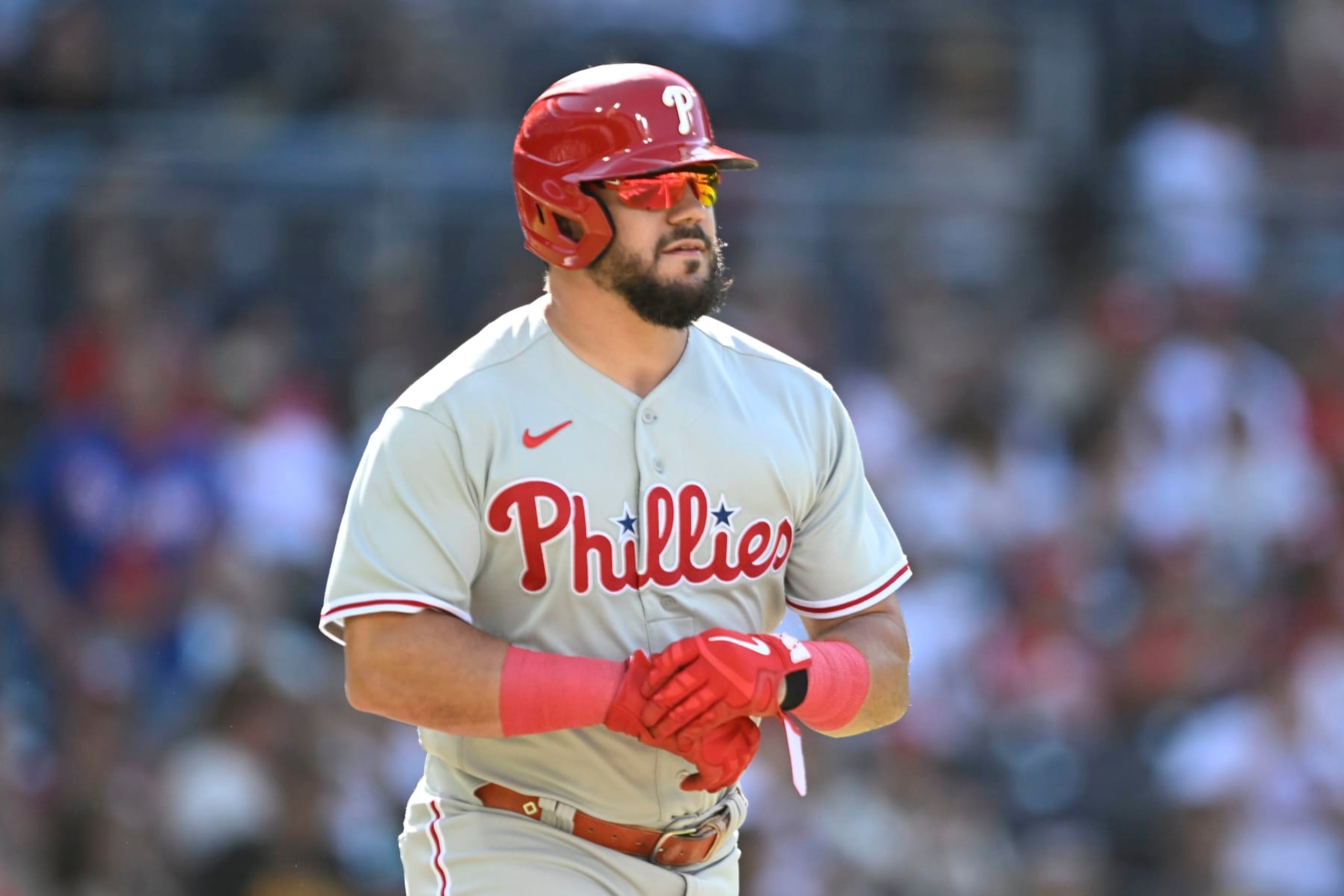


Kyle Schwarber is one of baseball's best power hitters, but his rock-bottom batting average and defensive shortcomings make him a confounding player when it comes to his all-around impact on the game.
The Philadelphia Phillies slugger has 41 home runs this season, which ranks fourth in the majors and marks the second year in a row he has reached the 40-homer mark. He has already homered four times in September, including a solo shot to lead off Thursday night's game against the San Diego Padres.
Meanwhile, he is still hitting just .195 with an NL-leading 177 strikeouts in 138 games, and with Bryce Harper spending much of the season as the team's primary designated hitter he has once again been forced to flounder in left field as one of the worst defenders in baseball.
All of that has left Schwarber as a mere 0.6-WAR player, despite his 40-homer production, which begs the question where his 2023 season ranks among the worst 40-homer campaigns in MLB history.
Who's ready for a trip down memory lane?
Note: There were multiple options for a few different players (looking at you Adam Dunn and Joey Gallo), so in an effort to provide some variety, each player was only included once.
Jeff Burroughs, 1977
1 of 9
Stats: 154 G, 123 OPS+, .271/.362/.520, 157 H, 41 HR, 126 K
WAR: 0.7
Jeff Burroughs won AL MVP honors with the Texas Rangers in 1974, and he joined the Atlanta Braves prior to the 1977 season in a blockbuster deal that sent five players and $250,000 the other way.
He slugged a career-high 41 home runs in his first season with the Braves, but his disastrous defense in right field left him as just a 0.7-WAR player, which was the 11th-highest mark on a Braves team that lost 101 games.
Among the 738 players who fielded a position for at least one out during the 1977 season, Burroughs ranked dead last with minus-3.4 dWAR.
Vinny Castilla, 1996
2 of 9
Stats: 160 G, 112 OPS+, .304/.343/.548, 191 H, 40 HR, 88 K
WAR: 3.2
At first glance, those are fantastic numbers.
However, this was the Coors Field effect at its absolute peak, and the home/road splits that Vinny Castilla posted during the 1996 season are the reason he earns a spot on this list.
- Home: 81 G, 1.048 OPS, .345/.389/.659, 27 HR
- Road: 79 G, .720 OPS, .259/.291/.429, 13 HR
At home, he was a legitimate NL MVP candidate.
On the road, he was a replacement-level player, and those numbers look even worse when you consider the offensive landscape at the height of the Steroid Era.
Jose Canseco, 1998
3 of 9
Stats: 151 G, .237/.318/.518, 138 H, 46 HR, 159 K
WAR: 1.5
During the offensive explosion that was the 1998 season, Jose Canseco slugged a career-high 46 home runs and won Silver Slugger honors at designated hitter in what would be his only season with the Toronto Blue Jays.
The 33-year-old also struck out an AL-leading 159 times and managed a middling .318 on-base percentage, which dragged down his overall value since his only positive contributions came in the batter's box.
At that point in his career, he was a minus-1.4 dWAR player for the 551.2 innings he did spend in the outfield, and his aggressiveness on the bases also proved to be a negative as he was caught stealing 17 times to go along with his 29 successful attempts.


Tony Batista, 2000
4 of 9
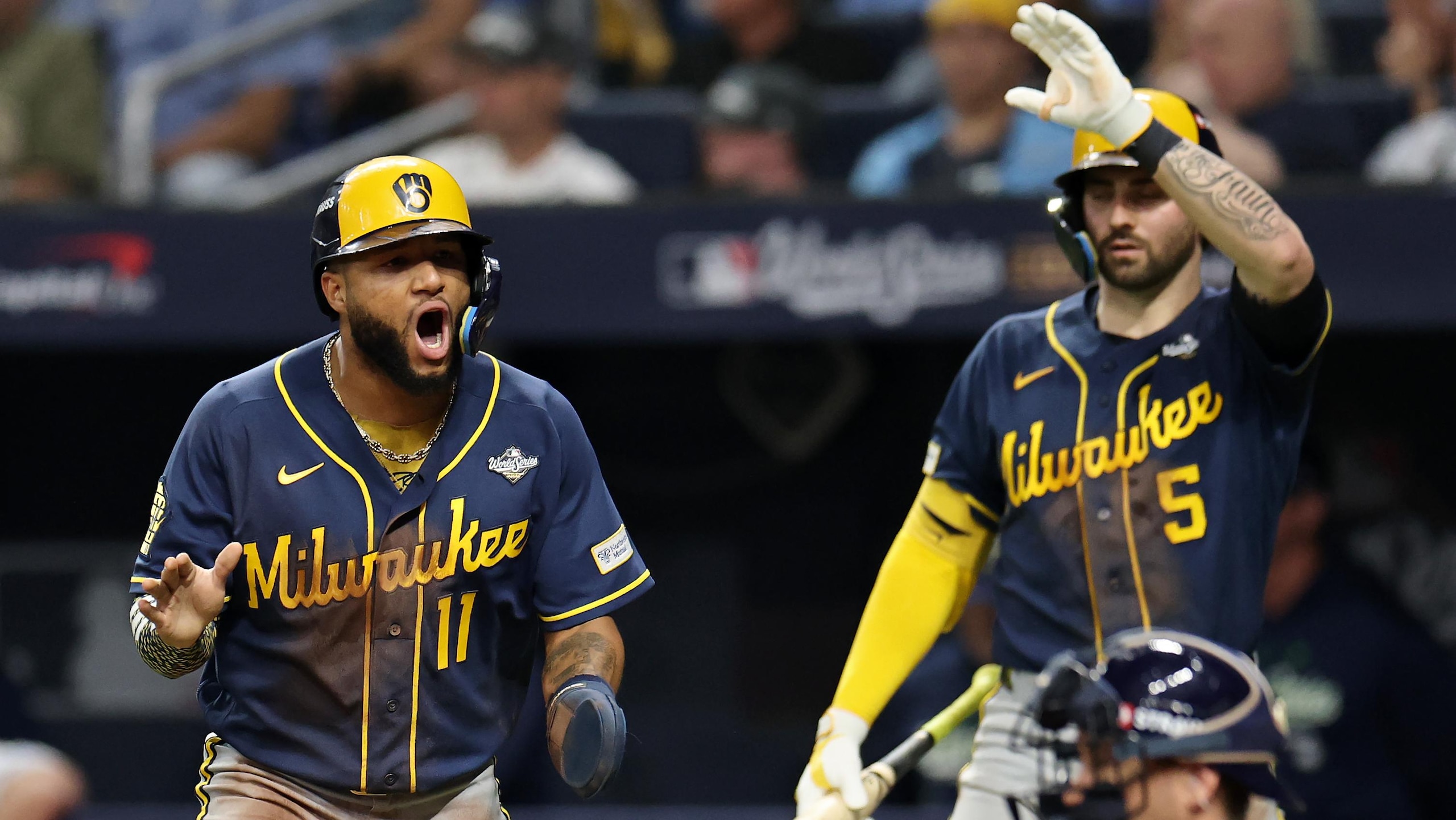
Stats: 154 G, 102 OPS+, .263/.307/.519, 163 H, 41 HR, 121 K
WAR: 2.4
Tony Batista might be best known for his unique batting stance, which took the idea of having an open stance to the absolute extreme.
A career journeyman who played for six different teams over his 11-year career, Batista had four different 30-homer seasons, and he slugged a career-high 41 long balls during the 2000 season.
The offensive environment in Toronto that year was something resembling Coors Field Jr. with Carlos Delgado (41 HR), Brad Fullmer (32 HR) and Jose Cruz (31 HR) joining Batista with at least 30 homers on the Blue Jays roster.
In the end, his .307 on-base percentage and an inflated offensive environment led to a middling 102 OPS+ that stands as the lowest mark ever in a 40-homer campaign.
Adam Dunn, 2012
5 of 9
Stats: 151 G, 114 OPS+, .204/.333/.468, 110 H, 41 HR, 222 K
WAR: 1.6
Adam Dunn had five straight 40-homer seasons at the peak of his career, and while he always struck out a ton and was a defensive liability, he hit .249/.382/.533 for a 133 OPS+ during that five-year peak.
The final 40-homer campaign of his career was a different story.
The 32-year-old had seen his batting average crater to hovering around the .200 mark by the time he joined the Chicago White Sox. In 2012, he struck out a career-high 222 times for a 34.2 percent strikeout rate, and even with an AL-leading 105 walks he still only managed a .333 on-base percentage.
Chris Carter, 2016
6 of 9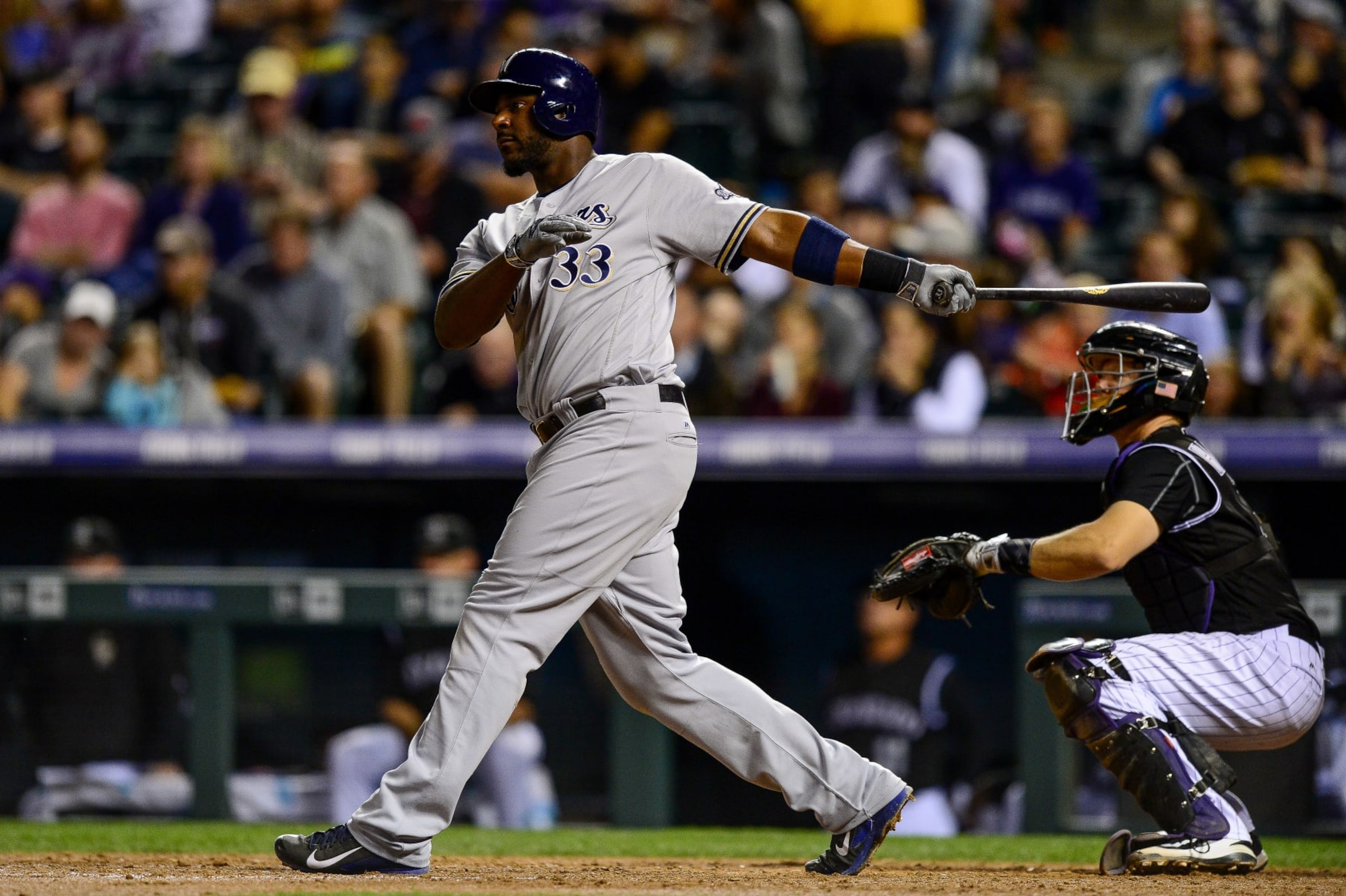
Stats: 160 G, 113 OPS+, .222/.321/.499, 122 H, 41 HR, 206 K
WAR: 0.9
An imposing 6'4", 245-pound slugger, Chris Carter enjoyed a brief MLB career with the Houston Astros and Milwaukee Brewers, peaking when he was the NL home run leader with 41 long balls in 2016.
With 951 strikeouts in 2,853 career plate appearances, he went down on strikes in exactly one-third of his trips to the plate, and that included 206 punchouts during what ended up being his only season with the Milwaukee Brewers.
He played just 62 more games in the majors after the 2016 season, despite the fact that he was just 29 years old, as it started to become increasingly difficult for one-dimensional sluggers to find a role.
Todd Frazier, 2016
7 of 9
Stats: 158 G, 107 OPS+, .225/.302/.464, 133 H, 40 HR, 163 K
WAR: 3.4
Todd Frazier holds the dubious distinction of posting the lowest slugging percentage ever in a 40-homer season.
With a .225 average, .302 on-base percentage and only 21 extra-base hits that didn't travel over the outfield fence, Frazier had one of the emptier offensive seasons from a 40-homer slugger. To his credit, he was a solid defender at third base and finished strong with a .281/.341/.526 line and seven home runs in September to reach 40 long balls for the first and only time in his career.
Joey Gallo, 2018
8 of 9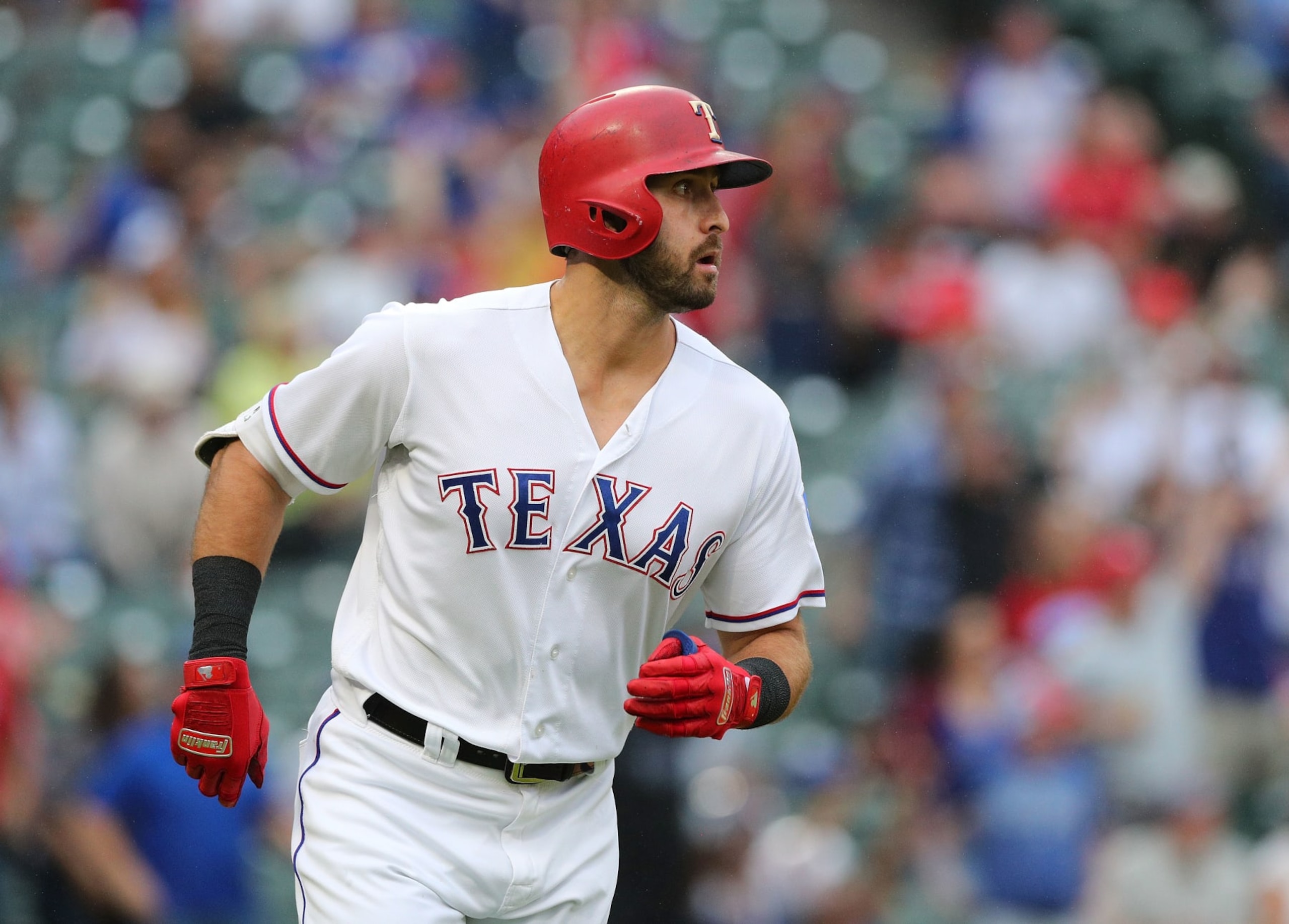
Stats: 148 G, 109 OPS+, .206/.312/.498, 103 H, 40 HR, 207 K
WAR: 2.4
With 321 of his 577 plate appearances resulting in a strikeout, walk or home run, Joey Gallo was the definition of a three true outcomes player during the 2018 season, and that has been the case throughout his MLB career.
At his peak, he helped pump up his overall value with Gold Glove defense in the outfield and terrific on-base skills, but back in 2018 he was in his first year as a regular outfielder and was still a year removed from seeing a significant spike in his walk rate.
His 109 OPS+ in 2018 is the third-lowest ever in a 40-homer season.
Kyle Schwarber, 2023
9 of 9
Stats: 138 G, 123 OPS+, .195/.345/.475, 98 H, 41 HR, 177 K
WAR: 0.6
With just 0.6 WAR through 138 games, Kyle Schwarber is having one of the worst 40-homer seasons in MLB history according to overall value, though he is currently swinging a hot bat and there is still time for him to avoid that distinction.
The 30-year-old is on pace for his second straight 200-strikeout season, though he also has 112 walks and a .345 on-base percentage, which is the reason he has spent much of the season in the leadoff spot in the batting order despite his sub-.200 batting average.
However, the biggest reason Schwarber has such a low WAR figure is has brutal defensive metrics (-19 DRS, -12.5 UZR/150) and the Phillies will have to seriously consider using him exclusively as a designated hitter going forward.

_0.jpg?w=2560 "MLB playoffs")

.jpg?w=2560 "Chiefs, Steelers Eye WR Trades")

.jpg?w=2560 "Cowboys Handle Eagles on MNF 🤠")
.jpg?w=2560 "WWE Raw Live Grades 🔠")