

B/R Exclusive: Teddy Atlas on Why Boxing Officiating Desperately Needs Reform
If you follow boxing, you know Teddy Atlas.
He's a protégé of old-school training sage Cus D'Amato, worked with a teenage Mike Tyson, delivered some of history's most memorable corner speeches and provided an occasionally grumpy soundtrack for a generation of fans on ESPN's since-retired Friday Night Fights series.
These days, at age 66, he's evolved into another role: The sport's senior-most social conscience.
.jpg?w=2560 "Cardinals Giants Football")

.jpg?w=2560 "Jets Dolphins Football")
A scarred-up Yoda, if you will, with a heavy Staten Island accent and a quick left hook.
The combative guru's angst has been stirred to boiling point by a series of recent issues, including a title bout at 140 stopped in favor of the A-side fighter after zero decisive blows, and a pay-per-view headliner at 135 whose round-by-round judging was deemed shoddy at best and criminal at worst.

He took to the podcast air 72 hours after the PPV event's close, leading his The Fight with Teddy Atlas show with renewed calls for a federal boxing commission. An online petition picked up thousands of signatures within a day and the podcast had more than 138,000 views by Wednesday morning.
The instant response has got Atlas thinking, or at least hoping, that this effort will have the sort of staying power other controversy-spurred crusades—including a partnership with then-senator and later Republican presidential nominee John McCain—did not.
"People's memories are still long enough, fresh enough to know that this is just the latest," Atlas told Bleacher Report. "It's not a new syndrome. It's not a new happening. This is just a reminder that it's always there and it's never going to change unless we do something. It goes back to the thing where you say, 'You can either be part of the problem or part of the solution.'"
The latter choice, he said, melds Howard Beale with a jolt of modern technology.
Beale was the fictional news anchor in 1976 film Network who implored frustrated viewers to throw open their windows and yell "I'm as mad as hell, and I'm not going to take this anymore!"
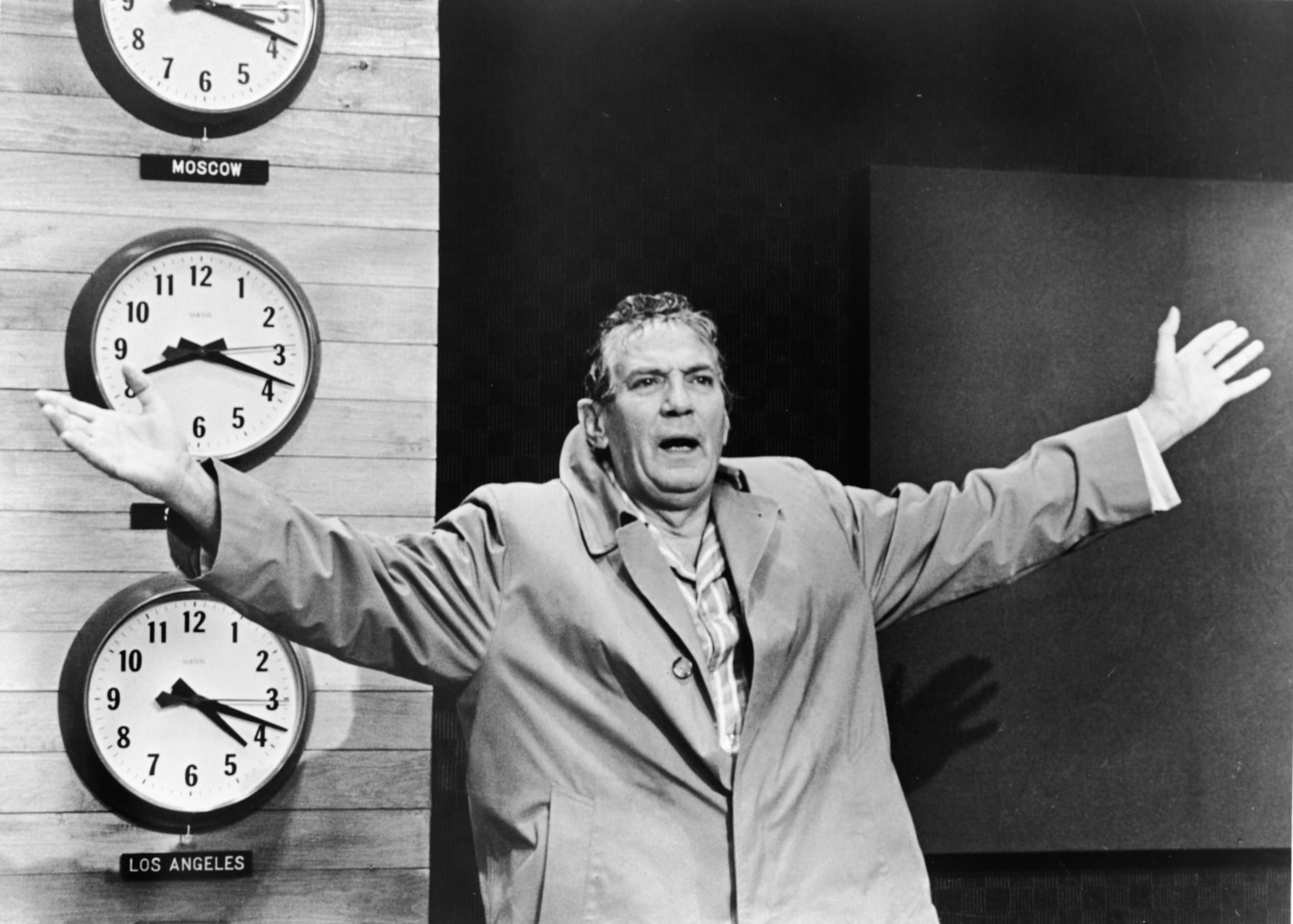
The role earned Peter Finch an Oscar. Atlas is hoping his reprisal will move listeners, followers and otherwise perturbed fans to rescue the sport from yet another would-be "breaking point."
"Let's see if we can actually do something instead of just complaining about it over and over and over again," he said. "Because like that old saying, the definition of insanity is doing the same thing over and over and expecting something to change. It feels that way.
"Instead of yelling out the window, sign this petition. Lo and behold, people are signing the petition. They're yelling, 'I'm fed up and I can't take it no more' in their own way."
Most of the volume this time comes courtesy of referee Tony Weeks and judge Dave Moretti.
Weeks pulled the plug on a barely damaged Ismael Barroso before he completed a schooling of PBC favorite Rolly Romero on May 13, while Moretti scored Round 10 of Devin Haney's fight with Vasiliy Lomachenko for the American a week later, though nearly every independent card suggested it was the Ukrainian's clearest and most dominant three minutes.
Moretti, in fact, gave five of the final six rounds to Haney, countering a consensus that the four-belt champion had controlled the fight's first half before his opponent rallied down the stretch.

They're hardly the biggest blows a beleaguered sport has taken.
But the sustained punishment lately is too much for Atlas to ignore.
And too much to not suspect.
"That's really what it was. The cumulative effect where I didn't want to take no more standing-8 counts," he said. "(Cus and I) would have these talks, and I remember when we were talking about one of these terrible situations similar to this and worse.
"I remember he said to me, 'Teddy, it can only be two things. It can either be incompetence or corruption. But nobody could be that incompetent over and over again.'"
Lomachenko's close loss was the third of his decade-long career, and, at age 35 and likely in his final competitive chapter, prompted an unapologetic flow of tears in the post-fight locker room.
Still, he's won titles in three divisions, made piles of money, is well-received by media members and will be a Hall of Fame lock within the requisite number of years after his last bout.
So, Atlas said, though the campaign comes in the wake of his defeat, to construe it as an effort on Lomachenko's behalf is a misread. Rather, it's for the anonymous guys who never went to a prom, never played other sports and had gotten up at 5 a.m. to do roadwork and chase a dream since elementary school.
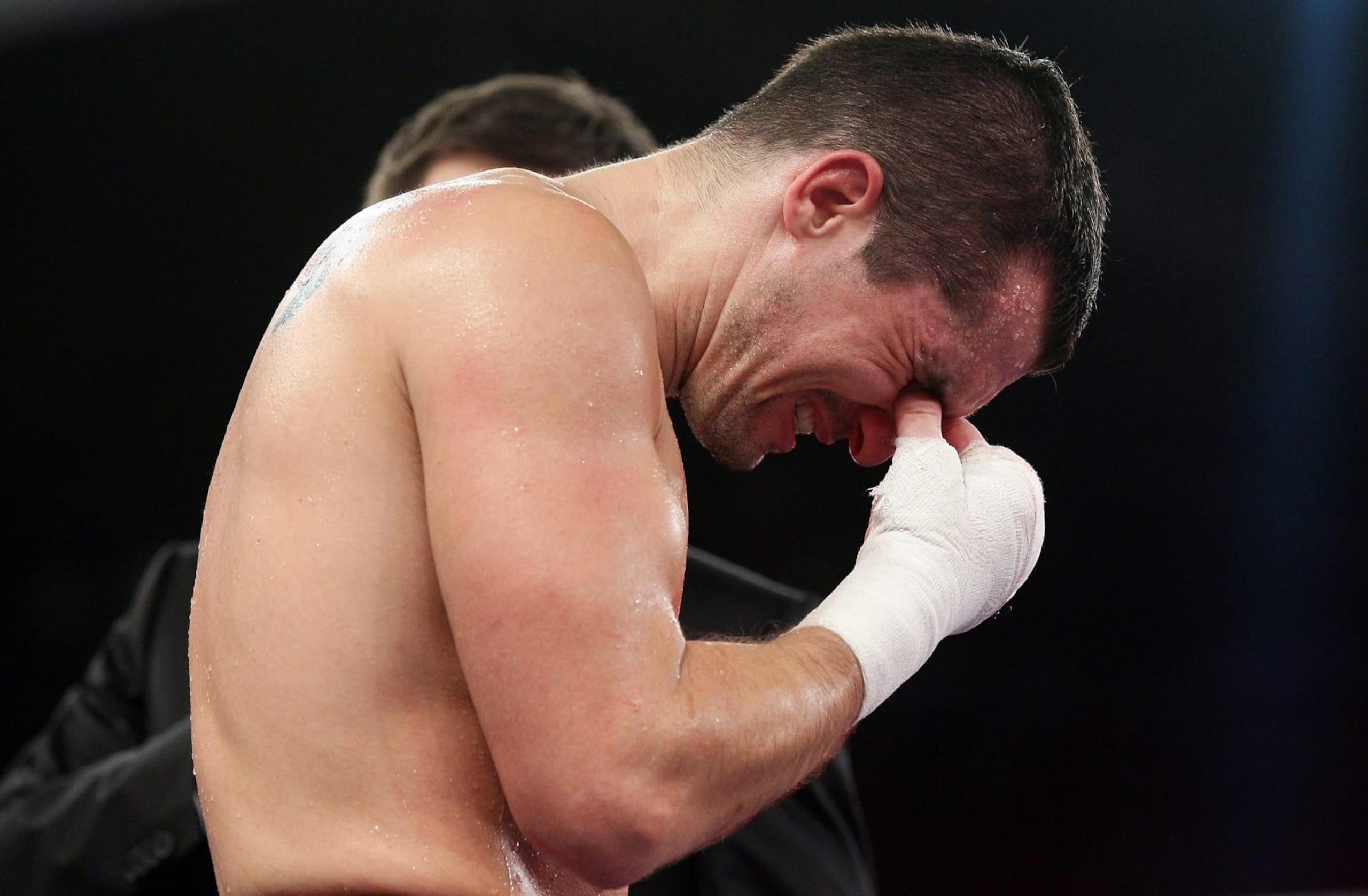
"I'm fighting for the no-names, the unknown, the ones who never got to where they deserved to get," he said. "The guys, you don't know their names, you wouldn't recognize their names, who fought their hearts out, left it in the ring, got a chance to get to where every fighter wants to get—to a title fight where they're finally going to change their family's lives—and they got it ripped away from them, and nobody ever heard about them again, ever.
"When I think about that, and then I see that fight and another a week before, it brings back those kinds of thoughts where I'm thinking about all these kids that you never heard of again. I watched them, fight after fight, fall on the ground after they got robbed by these criminals, crying."
Easing that already-inflicted pain is impossible.
Insulating the next victim in advance, though, doesn't have to be.
Ideally, Atlas said, the digital petition will draw enough signatures to attract the attention of elected officials and prompt its advancement before Congress.
From there, he said, the goal would be the establishment of a centralized, standardized authority to supervise boxing in a way similar to other major sports, including a school to train judges and referees, based on NFL protocols.

One day, perhaps, the sustained punishment and standing 8-counts will stop.
But, make no mistake, there's a personal stake in play for Atlas, too.
The 2019 Hall of Fame inductee is a father to two adult children, and, though he won't admit to spending much time pondering personal career achievements, he easily concedes how important it is that the standard he holds himself to is both recognized and shared by his kids.
"Sometimes I don't know how much it should matter what I've done," he said.
"I don't know how to judge that, how to put a metric on that. Then, when my children tell me, 'Dad, we're proud of you. We're proud of you in the way you've lived your life. We're proud of you in the way that (promoter Bob) Arum and Co., when they pushed you out of boxing, what did you do? You didn't just sit around and, obviously, just get angry about it.'
"'You went and you developed to another place, to another branch in your world.' When they tell me that and tell me that they're proud of me, not just for the resiliency but for recreating yourself a little bit, it makes me think, 'All right, you know what? Maybe I did all right.'"
.jpg?w=2560 "Titans Ravens Football")



.jpg?w=2560 "NFL investigating 2 referees for separate viral exchanges")
