

NBA stars shine brightest during the playoffs.
That's how things are supposed to go, at least.
But as this postseason—and all the previous ones—have shown, though, some handle the spotlight better than others.
By combining the old, reliable eye test with statistical analysis (both of the traditional and advanced varieties), we have assigned a letter grade to every playoff participant's top two stars, a label we will subjectively apply to players with the greatest impact but also the most name recognition and stature in the hoops world.
Atlanta Hawks
1 of 16
Trae Young
Young couldn't get anything going the first two games of this series, but he finally found some traction in Atlanta's Game 3 win. He had game highs of 32 points and nine assists, and his shot was on track from the field (12-of-22) and at the stripe (6-of-6).
Still, that showing can only salvage so much, especially when he's still sitting on an underwhelming 41.9/26.3/78.9 shooting slash and holding Atlanta's worst net differential at an awful minus-26.3 points per 100 possessions.
Grade: C-
Dejounte Murray
Murray is doing what he can to help the Hawks maintain a pulse in this series. Saying he's been great would be a step or two too far, but he has put up an efficient 26 points per game (45.7/36.0/100.0 slash) to go along with 5.7 assists and only 2.0 turnovers.
His defense has been disruptive (2.7 steals) but not entirely effective otherwise. His opponents are shooting 15 percentage points higher against him than they are on average.
Grade: B
Boston Celtics
2 of 16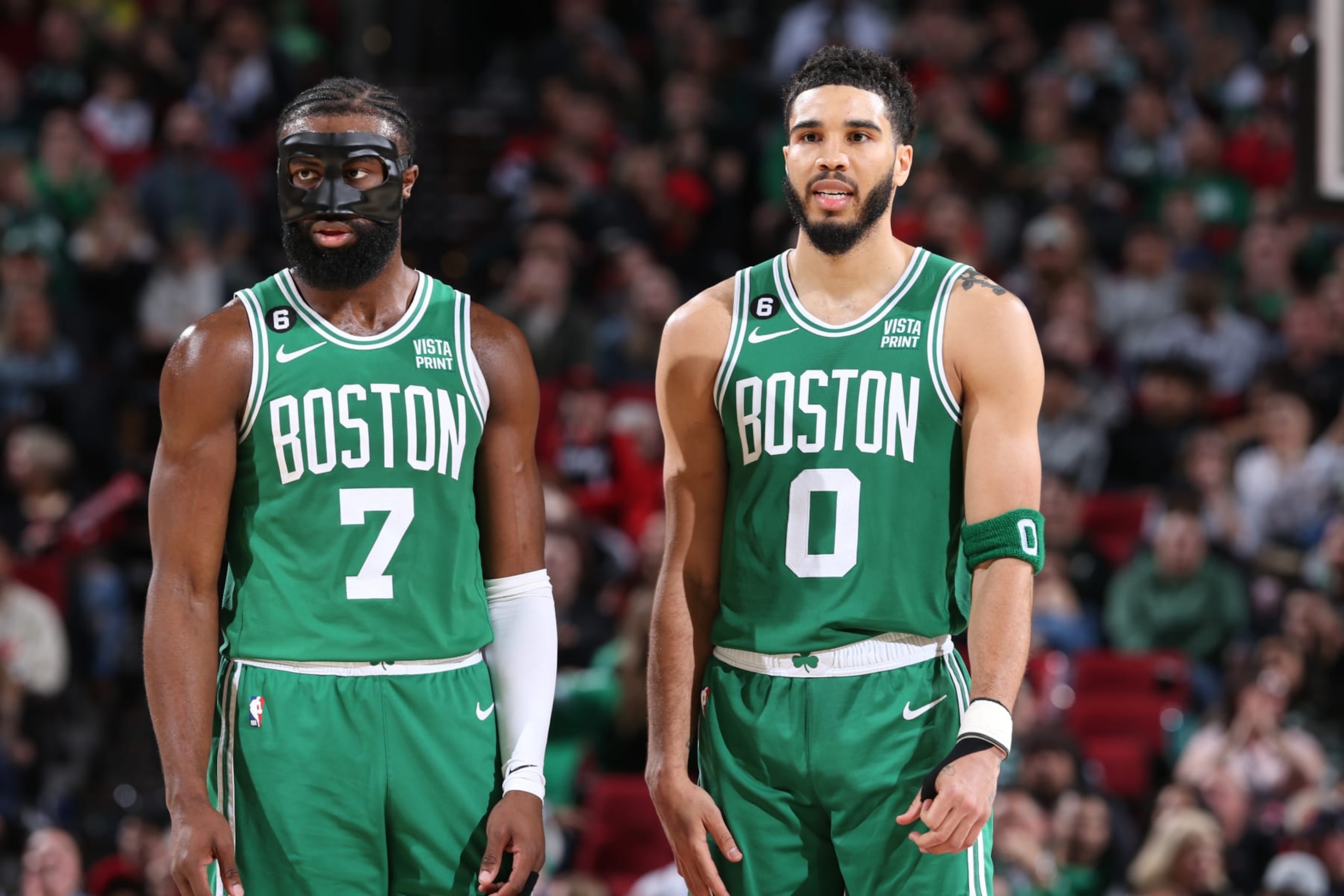
Jayson Tatum
This version of Tatum is the one who was making serious noise in the MVP race earlier this season.
He's had an answer for just about everything Atlanta's defense has thrown at him. When he struggled with his shot Friday (9-of-22), he upped his aggressiveness and made nine trips to the free-throw line—or seven more than he had in the first two contests combined.
Grade: A-
Jaylen Brown
Three games aren't enough to develop a trend, but if they were, fans might be a tad worried about the way Brown's numbers have declined each time out. After opening with 29 points and 12 boards, he has seen both categories come down. By Game 3, he was down to just 15 points and a single rebound.
At least his turnovers are coming down, too (six in the opener, seven total in the two games since). He's also increasing the chaos he creates on defense (one steal in Game 1, three each in Games 2 and 3). You wouldn't call this a rough series by any stretch, but since performing like a superstar in the opener, he has looked more like a high-end role player the last two outings.
Grade: B
Brooklyn Nets
3 of 16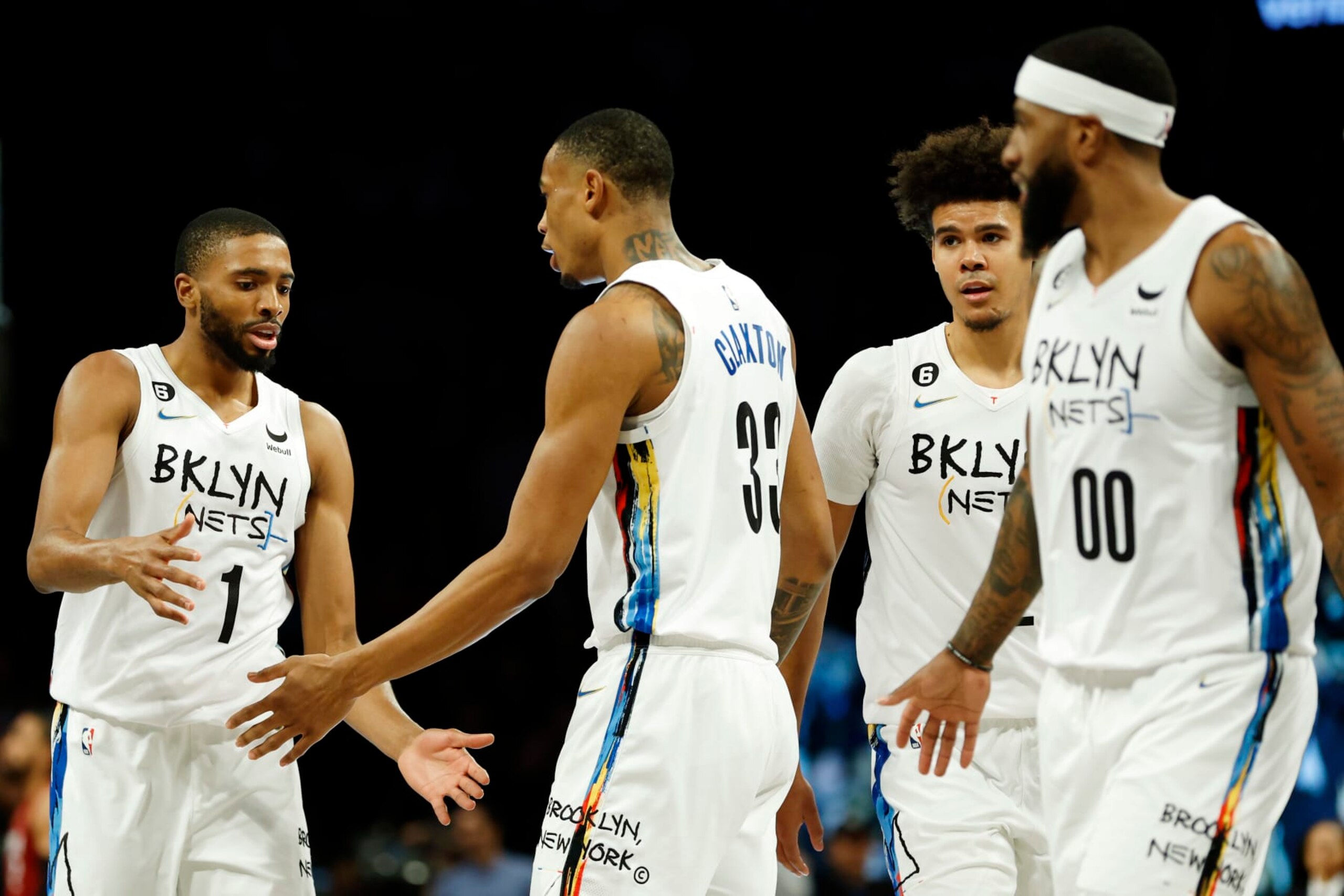
Mikal Bridges
Bridges' first playoff venture as a franchise focal point has largely backed up the torrid run he enjoyed following his deadline deal to Brooklyn. It was fair to wonder how he'd handle more spotlight time and defensive attention than he'd ever received, but so far, so good.
He has not only netted a team-leading 25.7 points per game, but he has done so while converting 45.8 percent of his shots and 42.1 percent of his threes. Only 42.1 percent of his two-point shots have been assisted, which speaks to his rapid ascension as a self-sufficient scorer.
Grade: B+
Nic Claxton
Is Claxton the right choice here? Great question, and one that really highlights the steep incline of Brooklyn's playoff hike. The Nets' opponents, the Philadelphia 76ers, have one of the more star-studded rosters in basketball, and Brooklyn's No. 2 role could be argued for the likes of Spencer Dinwiddie and Cameron Johnson.
We're spotlighting Claxton, though, for his elite defensive ability and high-profile matchup with MVP finalist Joel Embiid. Claxton has held up OK in that tussle, as Embiid is shooting 50 percent (20 percent from distance) with six turnovers, five assists and zero free-throw attempts against Claxton. That's about as good as the numbers get for the Nets center, though, as he's averaging just 7.7 points, 6.7 rebounds and 1.0 block in his 26.3 minutes.
Grade: C



Cleveland Cavaliers
4 of 16
Donovan Mitchell
The Cavaliers paid a huge price to pluck Mitchell away from the Utah Jazz last summer—three players (including breakout star Lauri Markkanen), three first-round picks and two pick swaps—and so far, he is justifying that sky-high cost.
It hasn't always been pretty, but he has been more productive than most. He is Cleveland's leader in both points (25.7) and assists (8.7). Game 3 wasn't kind to his perimeter splash rate (2-of-8), but he still escaped it with a 48.3 field-goal percentage intact.
Grade: A-
Darius Garland
This is Garland's first-ever playoff trip, and it's coming against a Tom Thibodeau-coached defense. So, you want to cut him some slack for sandwiching a quiet game and a nightmare around a masterpiece.
That doesn't actually change the numbers, though, and his great Game 2 (32 points, seven assists) can only prop up his stat sheet so much—especially when Game 3 really dragged it down (10 points on 4-of-21 shooting, 1-of-7 from range). For the series, he has a 37.3 field-goal percentage and more turnovers (12) than assists (11).
Grade: C-
Denver Nuggets
5 of 16
Nikola Jokić
Jokić has an uncanny ability to read the pulse of his team. No matter what the Nuggets need—a scoring flurry, a bunch of boards, a dizzying array of delectable dimes—he's always ready to scratch that itch. Having one of history's deepest bags at the center spot surely helps.
The Nuggets haven't needed a ton of points from him, so he hasn't forced the issue. Instead, he has put up an efficient 20.0 points per outing on 56.8 percent shooting while grabbing 11.3 rebounds and dishing 9.0 assists. Denver's offense has been a wholly ridiculous 21.4 points better per 100 possessions with him than without.
Grade: B+
Jamal Murray
Based on what we saw in the bubble and what we're witnessing this postseason, Murray must live for these moments. He was good in Games 1 (24 points, eight assists and eight rebounds) and 3 (18 points and nine assists) and all-caps GREAT in Game 2 (40 points on 59.1/60.0/88.9 shooting), helping the Nuggets navigate around Anthony Edwards' 41-point flurry in the latter.
"When the stage is at its biggest, Jamal seems to step up and perform," Nuggets coach Michael Malone told reporters after Game 2. "It speaks to his mental toughness, his preparation, his physical toughness and not being afraid of the moment."
Murray is averaging 27.3 points and has a 48.3/42.3/86.7 slash line. You would be forgiven for forgetting he missed all of last season recovering from an ACL tear.
Grade: A-
Golden State Warriors
6 of 16
Stephen Curry
If Curry never needed a breather, the Warriors might be enjoying a 3-0 series lead instead of facing a 2-1 deficit against the Sacramento Kings. Golden State has won his minutes in every game, which is why he has this postseason's second-highest plus/minus (plus-38).
He had 58 points on 41 shots his first two times out, but Game 3 was his strongest to date. In a contest the Warriors absolutely had to have, he led all scorers with 36 points while hitting half of his 12 three-point attempts and all six of his free throws. He even helped the Dubs defense that was down stoppers Draymond Green and Gary Payton II, tallying two steals, one block and five defensive rebounds.
Grade: A
Draymond Green
This hasn't been the best playoff run of Green's career. Not by a long shot. He's been even less threatening as a scorer than normal (6.0 points on 36.4 percent shooting), and his usual impact in the non-scoring departments hasn't been there. He is averaging 8.0 assists but also a team-high 4.0 turnovers. His 6.5 rebounds are unremarkable, as is the 48.6 field-goal percentage he is giving up to his primary matchup.
Adding insult to...well, insult, his Game 2 stomp on Domantas Sabonis earned Green an early exit that night and a suspension in Game 3.
Grade: D
Los Angeles Clippers
7 of 16
Kawhi Leonard
If not for another encounter with Leonard's longtime adversary, the dreaded injury bug, he might be the easiest player to lock into an A-plus. His 34.5 points per game are the second-most this postseason, and they're propped up by his sizzling 54.5/60.0/88.2 shooting slash. He's also holding Phoenix Suns not named Kevin Durant to just 3-of-8 shooting and as many turnovers as assists (five each).
But a right knee sprain kept him out of Game 3, and he will miss Game 4, per Shams Charania of The Athletic and Stadium. As has often been the case of late, Leonard's injuries are getting in the way from some otherwise outstanding basketball.
Grade: B+
Russell Westbrook
With Paul George sidelined by his own knee sprain, Westbrook has been elevated to second-option status (when Leonard is healthy, at least). As per usual, there has been both good and bad with the Brodie.
On the good side of the coin, Westbrook has averaged 22.3 points, 8.3 assists and 8.0 rebounds while authoring perhaps the best defensive play of this postseason. On the opposite side, though, he's shooting just 39.7 percent from the field, coughing up a club-worst 3.7 turnovers and allowing his matchups to shoot 52.9 percent.
Grade: B-
Los Angeles Lakers
8 of 16
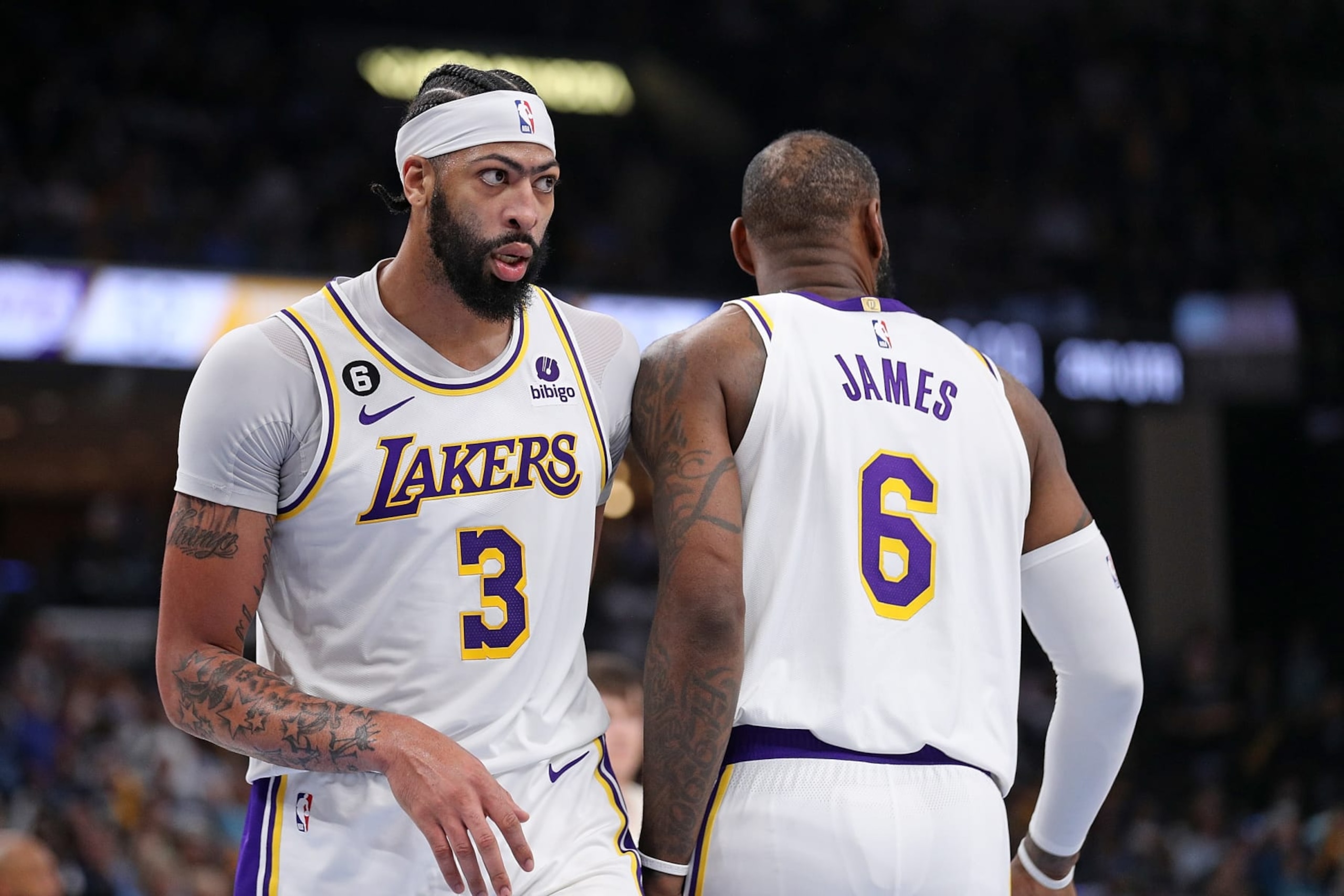
LeBron James
This almost feels premature to write before James has the chance to respond—on the court—to being called out by Memphis Grizzlies agitator Dillon Brooks. If those comments get James playing with more force and purpose, he could jump a letter grade or more.
For now, though, this hasn't been a great postseason for him. He has been unguardable from close range (75 percent in the paint) but a non-factor elsewhere. He's just 4-of-16 from three and 5-of-8 at the line with eight assists and six turnovers.
Grade: C
Anthony Davis
If defense wins championships, then Davis might be in championship form. He has 21 boards, 12 blocks and three steals through two games. L.A.'s defense has been 28.5 points better per 100 possessions with him on the floor. He is holding his matchups to just 34.3 percent shooting.
Of course, there are two ends of a basketball court, and once we shift over to the offensive side, that's where Davis' grade falls apart. He was moderately effective in Game 1 (22 points on 17 shots) and a mess in Game 2 (13 points in 38 minutes, 4-of-14 shooting). The Lakers won't win big—in this series or beyond—unless Davis really ramps up his offensive production.
Grade: C
Memphis Grizzlies
9 of 16
Ja Morant
A hand injury kept Morant out of Game 2, and since that's the only one the Grizzlies won, it's probably time for some to fire up those old think pieces about whether Memphis is better without him. (The answer is no, but the Grizzlies have depth and a starting-caliber replacement in Tyus Jones, so they aren't dead in the water when Morant sits.)
Prior to Morant's early exit from Game 1, he wasn't off to a great start. He had 18 points in 30 minutes with two assists and six turnovers. For context, his average outing this season featured 26.2 points, 8.1 assists and 3.4 turnovers.
Grade: D+
Jaren Jackson Jr.
Jackson is doing casual fans a solid this postseason. For those who missed his breakout this regular season—when he was named an All-Star and the Defensive Player of the Year—he is breaking out again.
His offensive output is up to 24.5 points (on 54.5/42.9/76.9 shooting) and 3.5 assists, and he is rounding out his stat sheet with 7.0 rebounds, 2.5 blocks and 1.0 steals. Perhaps most importantly, he's been able to stay on the floor, committing just six fouls in his 77 minutes.
Grade: B+
Miami Heat
10 of 16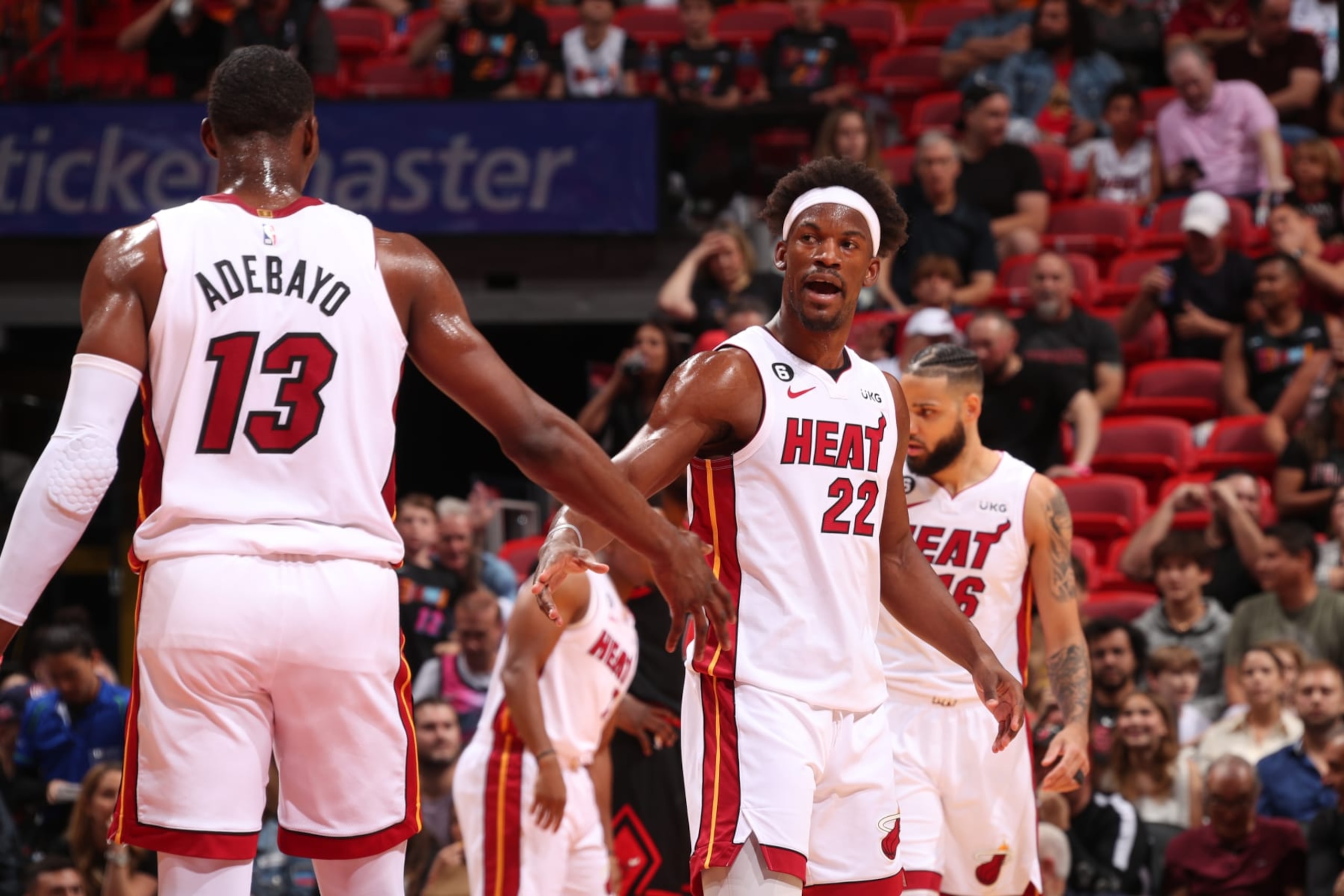
Jimmy Butler
On paper, the Heat shouldn't have a chance against the top-seeded Milwaukee Bucks. Yet they swiped one of two games during their trip to the Badger State, because Playoff Jimmy Butler is a top-shelf superstar. He was a magician in Game 1, piling up 35 points, 11 assists, five rebounds and three steals in 43 minutes, which the Heat won by 17 points (in a 13-point win).
"He's just a brilliant competitor," Heat coach Erik Spoelstra said afterward, per Anthony Chiang of the Miami Herald. "He does it on both ends of the court and he has an innate feel for what's necessary during the course of a game."
Butler couldn't quite repeat his masterpiece in Game 2, but he still managed 25 points on 8-of-12 shooting with three assists, three boards, two steals and one giveaway in his 28 minutes.
Grade: A-
Bam Adebayo
If it weren't for Adebayo's 20 points per game on 55.9 percent shooting, his grade would be in really bad shape. That's hardly a great output for a two-time All-Star, but at least Miami has felt the impact of his points.
Move to any other category, though, and you'll be let down by his numbers. His 7.0 rebounds in 29 minutes per game are a snoozer. His 4.0 assists have been matched by his 4.0 turnovers. His next block will be his first in this series.
Grade: C-
Milwaukee Bucks
11 of 16
Giannis Antetokounmpo
Antetokounmpo is typically a larger-than-life presence on the hardwood, but he has barely been seen in this series. That's because a back injury ended his Game 1 run after just 11 minutes and kept him out of Game 2.
Those 11 minutes were a little choppy, as he exited with just six points, three rebounds, two fouls and one turnover. Still, the sample size is too small to analyze.
Grade: Incomplete
Khris Middleton
Middleton is presumably still rounding into form after being limited to 33 regular-season games while rehabbing offseason wrist surgery and later battling knee soreness. The latter even kept him out of games down the stretch, so it's hard to imagine he's operating at full strength.
You wouldn't know that by the stat sheet, though. He leads Milwaukee in scoring (24.5 points) and ranks second in both rebounds (7.5) and assists (5.5). His shooting rates from three (33.3 percent) and the line (75.0) could be higher, but that's about as nitpicky as we can get. Defensively, he has been an asset, holding his matchups to 33.3 percent shooting.
Grade: B+
Minnesota Timberwolves
12 of 16
Anthony Edwards
Very little has gone well for the Minnesota Timberwolves so far, but what has basically all comes back to Edwards. After a rough go of things in Game 1, he has been borderline unguardable since.
Games 2 and 3 yielded a total of 77 points for Edwards, plus nine boards, nine assists, five steals and four blocks. His 29 free throws lead all postseason participants, and he's converting those freebies at an 86.2-percent clip.
Grade: A-
Karl-Anthony Towns
It's tempting to eschew any analysis here and just write the word yikes. Towns was OK in Game 3 (27 points, seven rebounds), and that was an enormous improvement from two nightmare tilts to start the series.
If you want to focus on the good, he has 29 rebounds in three games, so that's...something. Otherwise, the rest is all bad: 16.0 points per game on 14.7 shots; 40.9/31.3/77.8 slash line; five assists against 13 turnovers; 62.2 percent shooting allowed.
Grade: D
New York Knicks
13 of 16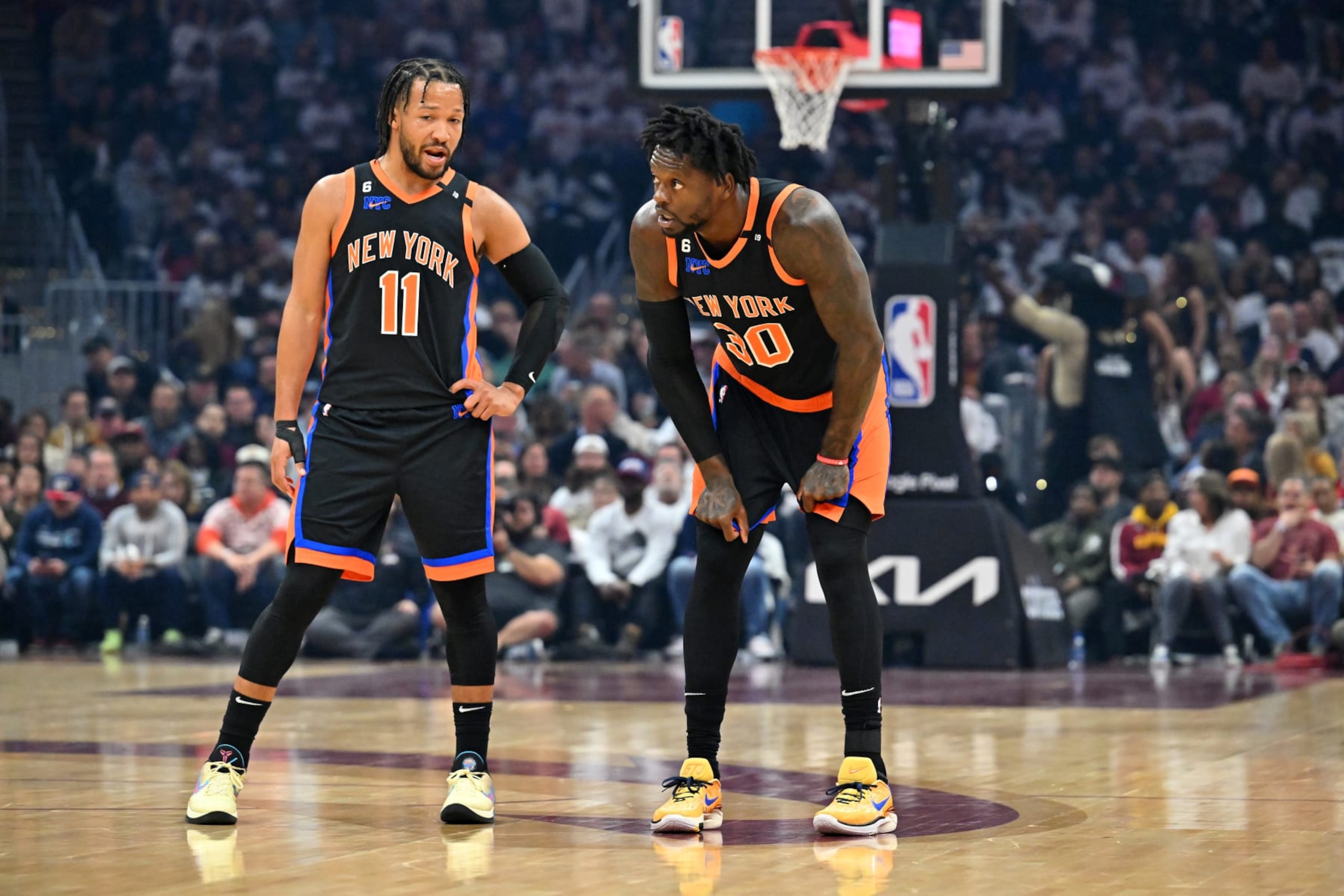
Julius Randle
Randle's All-Star resurgence hasn't carried over to the postseason. Not yet, anyway. He might be facing the league's best defensive frontcourt combo in Cleveland's Evan Mobley and Jarrett Allen, but that excuse doesn't do Randle much good here.
The Knicks need him to be a star, and he hasn't been anywhere close. He has more shots (55) than points (52) and way more turnovers (13) than assists (eight). Even in New York's 20-point win Friday, he shot just 3-of-15 overall and 2-of-10 outside.
Grade: D
Jalen Brunson
Statistically, Brunson can do better. He hasn't gone inferno mode yet, and he can absolutely summon those nights as a scorer. He also can't find his touch from three, as he has all of two makes on 16 long-range looks.
If his three-ball was falling, though, it'd be hard to have too many gripes. He is putting up 22.7 points per game on 44.1 percent shooting (93.3 percent at the line) and has a not insignificant gap between his nightly assists (4.7) and turnovers (2.0).
Grade: B-
Philadelphia 76ers
14 of 16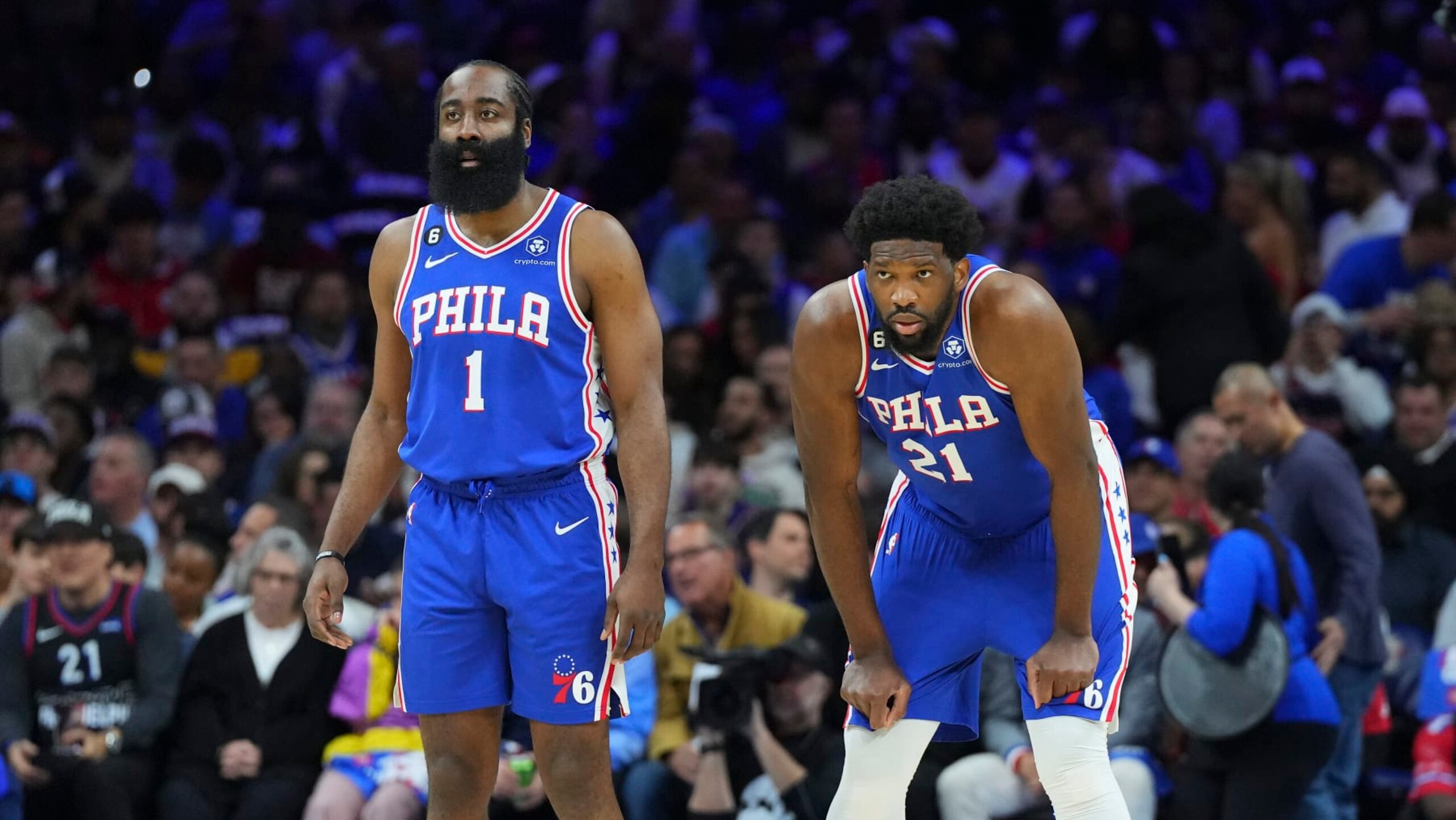
Joel Embiid
The Nets have been determined not to lose this series to Embiid. The Philadelphia 76ers MVP candidate has mostly done a good job of not forcing the issue and finding open teammates when extra pressure comes his way. The extra attention might be frustrating him, but he isn't jacking shots or hijacking the offense.
He is trusting his teammates and letting them deliver. In addition to his 4.0 assists per outing, he has tossed a playoff-high 3.0 secondary assists per game. He is controlling the glass (11.3 rebounds) and protecting the paint (2.3 blocks, including a game-clincher in Game 3). Frankly, he is doing enough to earn a decent mark despite relatively quiet scoring numbers (20.0 points per game on 46.2 percent shooting).
Grade: B
James Harden
It's been a strange series for Harden, and not only for his strange ejection in Game 3. His three-point shot is on (12 makes, 42.9 percent shooting), and he's had some brilliant moments as a ball-mover (20 assists in the first two games). But Game 3 was the first time he shot above 40 percent from the field. And it's not like the Sixers are playing him for his defense.
The Sixers have managed to live without Harden's scoring (17.3 points), in part because Tyrese Maxey has looked so good. (And in part because Brooklyn just doesn't have enough talent to match up.) But Philly's biggest question all season has been whether Harden would finally deliver in the playoffs. He has done very little to quiet that concern.
Grade: C
Phoenix Suns
15 of 16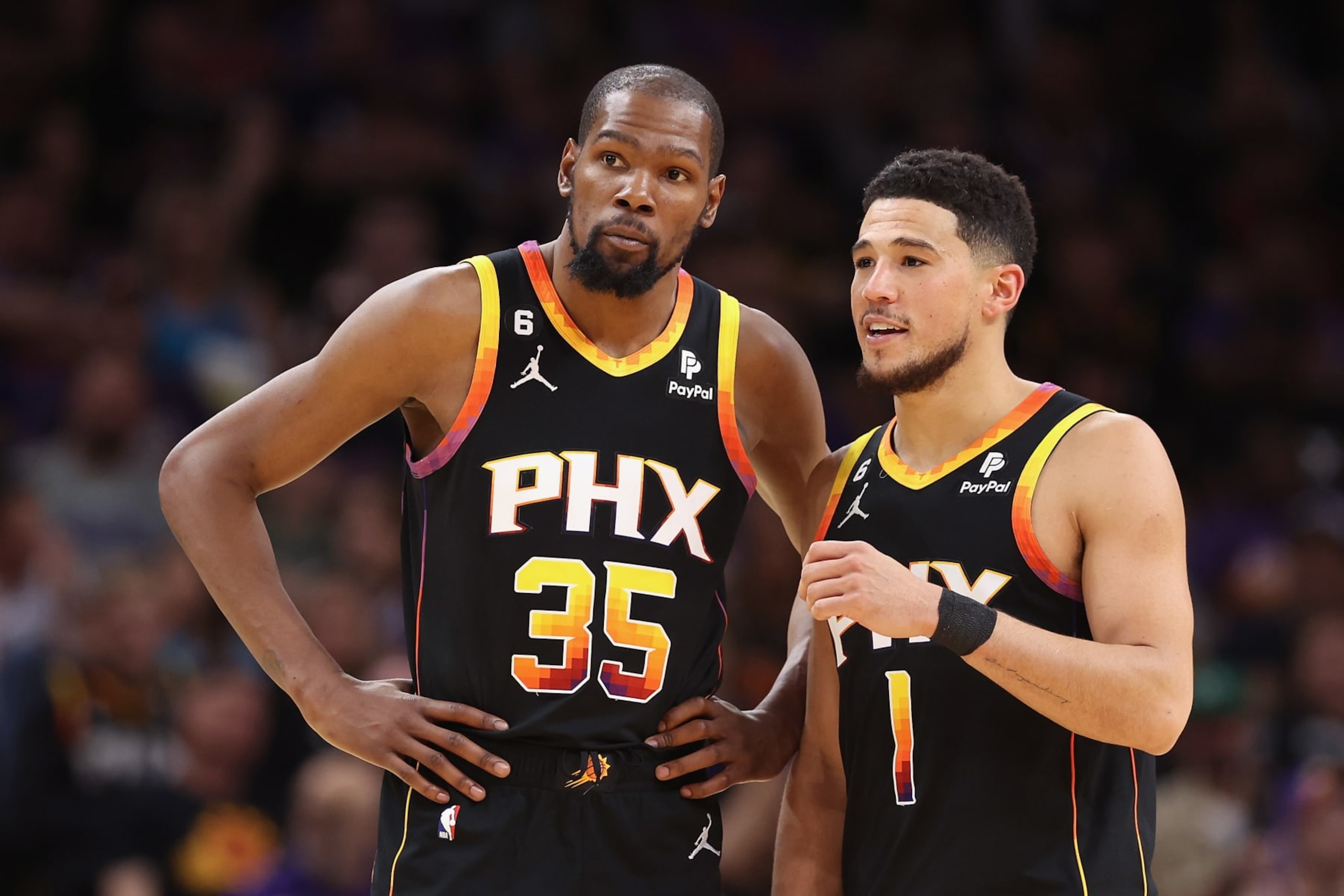
Devin Booker
You know things are going great for Booker when he opened the playoffs with 26 points on 52.6 percent shooting, four steals, three blocks and three assists, and that game looms as by far his worst to this point. In his last two outings—both Suns' wins—he has upped his production to 41.5 points on 62.7/50.0/92.3 shooting with 6.0 assists against 1.5 turnovers.
"It's that time," Booker said after scoring 45 points in Game 3, per ESPN's Ramona Shelburne. "Win or go home. I love it. I dedicate my whole entire life, and I have since a kid, to this sport and this game. This stage is all we can ask for."
Booker is the postseason's leading scorer at 36.3 points per game, ranks fifth in steals with 2.7 per game and is tied for 20th with 5.0 assists.
Grade: A+
Kevin Durant
It speaks to Durant's generational talent that he hasn't had fewer than 25 points, six rebounds or five assists in any game yet, and it still feels like we haven't seen anything close to his best.
He is finding shots within the flow of the offense and picking apart the Clippers defense with his passing. He is tied for 12th in points created by assists (16) and tied for third in that category among players making fewer than 50 passes per game. A bucket binge is coming at some point, but he deserves credit for not getting impatient.
Grade: B
Sacramento Kings
16 of 16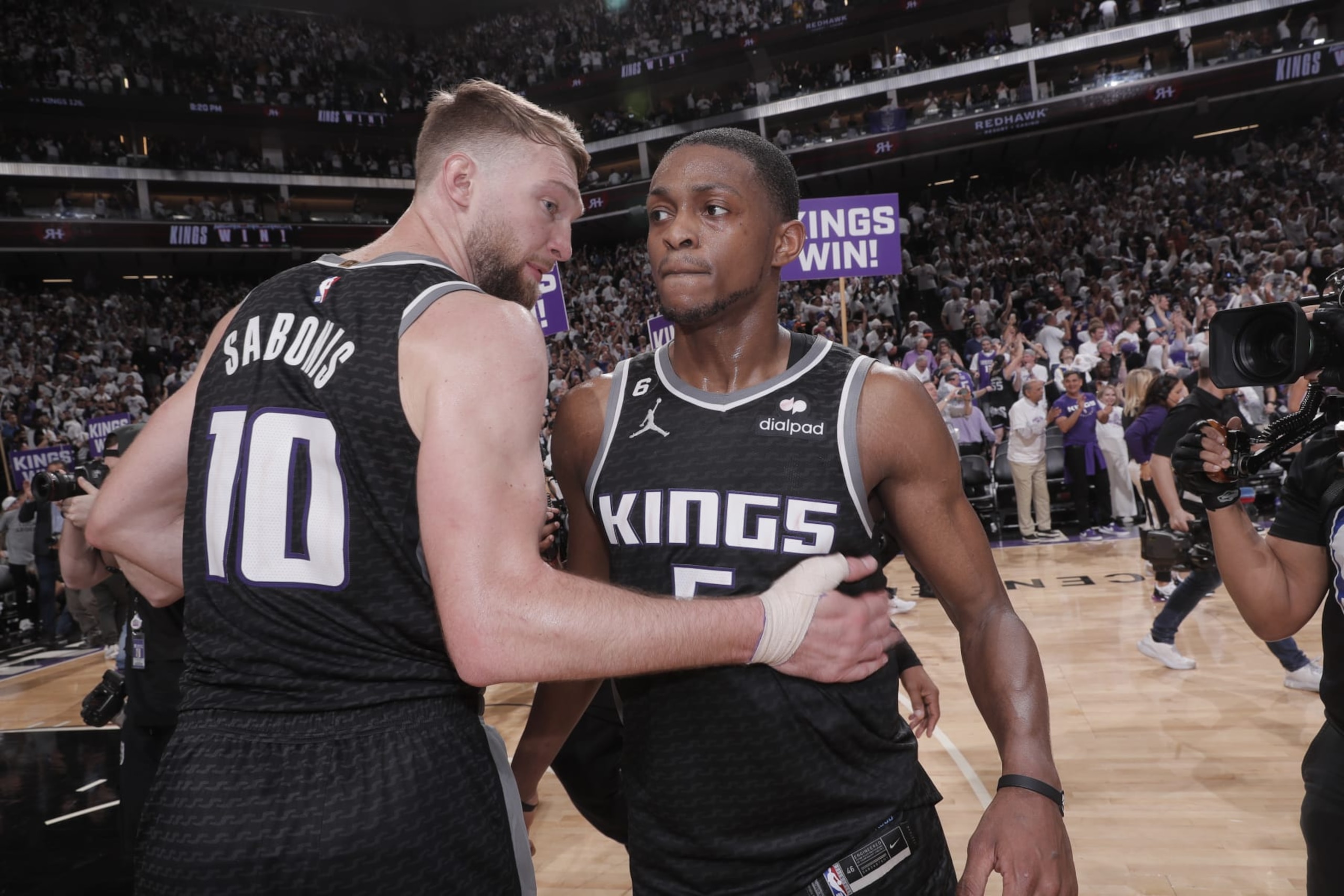
De'Aaron Fox
This is the first playoff trip for Fox—the first for the Kings since 2006—but if the stage has bothered him at all, he hasn't shown it. He was massively important in Sacramento's two wins to start the series (62 points, 14 assists) and not exactly ineffective in Game 3 (26 points, nine assists and nine rebounds).
The Warriors have had trouble staying in front of him on offense and, perhaps most impressively, getting around him on defense. He's holding the Splash Brothers, Stephen Curry and Klay Thompson, to 40.9 percent shooting overall and 26.7 percent shooting from three.
Grade: A
Domantas Sabonis
In theory, Sabonis should probably be feasting against Golden State's undersized frontcourt. In reality, he has finished with 15 points or fewer twice this series, including Game 3, which Draymond Green missed due to suspension.
But beyond controlling the glass (playoff-leading 13.7 rebounds per game), Sabonis hasn't made his presence felt often enough. He is lagging behind his regular-season averages in both points (17, was 19.1) and assists (3.3, was 7.4) while exceeding it in turnovers (4.3, was 2.9).
Grade: C-
Statistics courtesy of Basketball Reference and NBA.com and accurate through Thursday's games.
Zach Buckley covers the NBA for Bleacher Report. Follow him on Twitter, @ZachBuckleyNBA.
.jpg?w=2560 "Raiders Could Start Mendoza")

.jpg?w=2560 "Rodgers Iced Out on Plane 💎")
.jpg?w=2560 "🚨 Week 8 AP Top 25 Poll")