


The disparity between big- and small-market MLB teams continues to grow with each passing year, yet we still see playoff clubs that rank near the bottom of the league in payroll every year.
The average team payroll last season was a little over $150 million, and the Seattle Mariners ($115.8M, 21st in MLB), Tampa Bay Rays ($98.3M, 23rd in MLB) and Cleveland Guardians ($66.5M, 27th in MLB) were the only teams below that line to make the playoffs.
How do they do it?
Ahead we've highlighted 10 areas of focus that are necessary for a small-market team to find success in a world where the richest franchises are spending double, triple and, in a few cases, even quadruple what they're spending to build a ballclub.
The list covers everything from developing homegrown aces to spending wisely in free agency when the time comes to prioritizing the international market. Think of this as a blueprint of sorts for the cash-strapped teams to level the playing field.
Hand Out Early, Team-Friendly Extensions
1 of 10
Oftentimes, a small-market team's only hope of holding on to a star player long term is to lock him up with a team-friendly extension early in his MLB career, and that can sometimes take a leap of faith.
The Tampa Bay Rays took that leap when they signed Wander Franco to an 11-year, $182 million extension with just 70 big league games under his belt, but he is under club control through the 2033 season at a price that might wind up being well below his market value once he gets into what would have been his first years of free agency.
The Pittsburgh Pirates signed Andrew McCutchen to a six-year, $51.5 million extension following his first All-Star appearance in 2011. He finished third in NL MVP voting in the first season of that deal and took home the trophy the following year, establishing himself as one of the best players in recent franchise history over the life of that contract before he was flipped to the San Francisco Giants in the deal that brought Bryan Reynolds to Pittsburgh.
Cleveland Guardians star José Ramírez had just one full season under his belt when he agreed to a five-year, $26 million extension. That ended up being one of the best bargains in MLB history, and he was rewarded with a new seven-year, $141 million deal last April amid a flurry of trade rumors.
Waiting to pay your homegrown stars until they reach free agency can prove prohibitively costly. Just ask the New York Yankees. It took $360 million to keep Aaron Judge in pinstripes, and that's simply not a contract a small-market team could have afforded.
Develop Front-Line Pitching In-House
2 of 10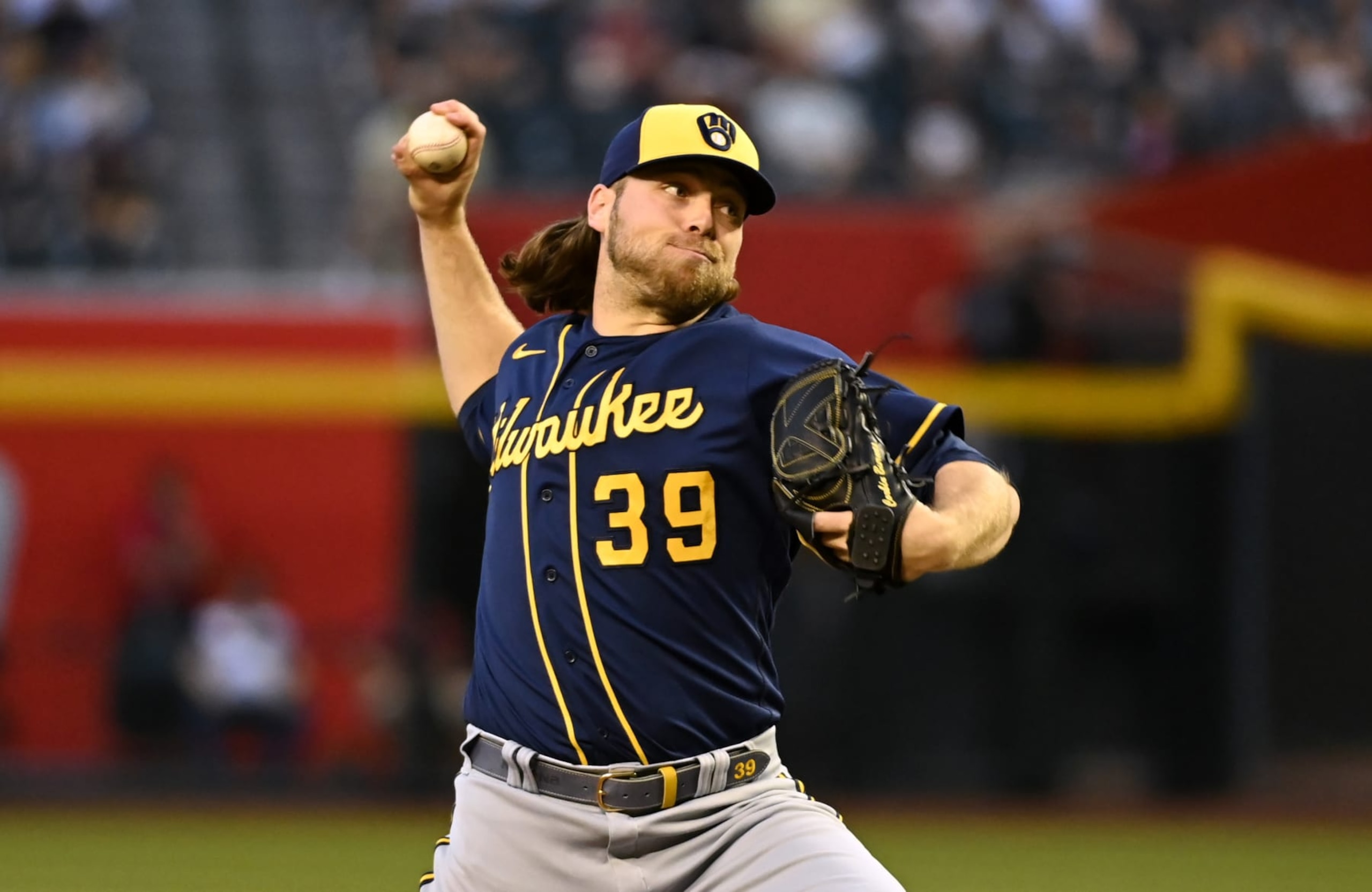
The cost of quality starting pitching on the free-agent market makes it borderline impossible for a small-market team to assemble a good starting staff without developing in-house arms.
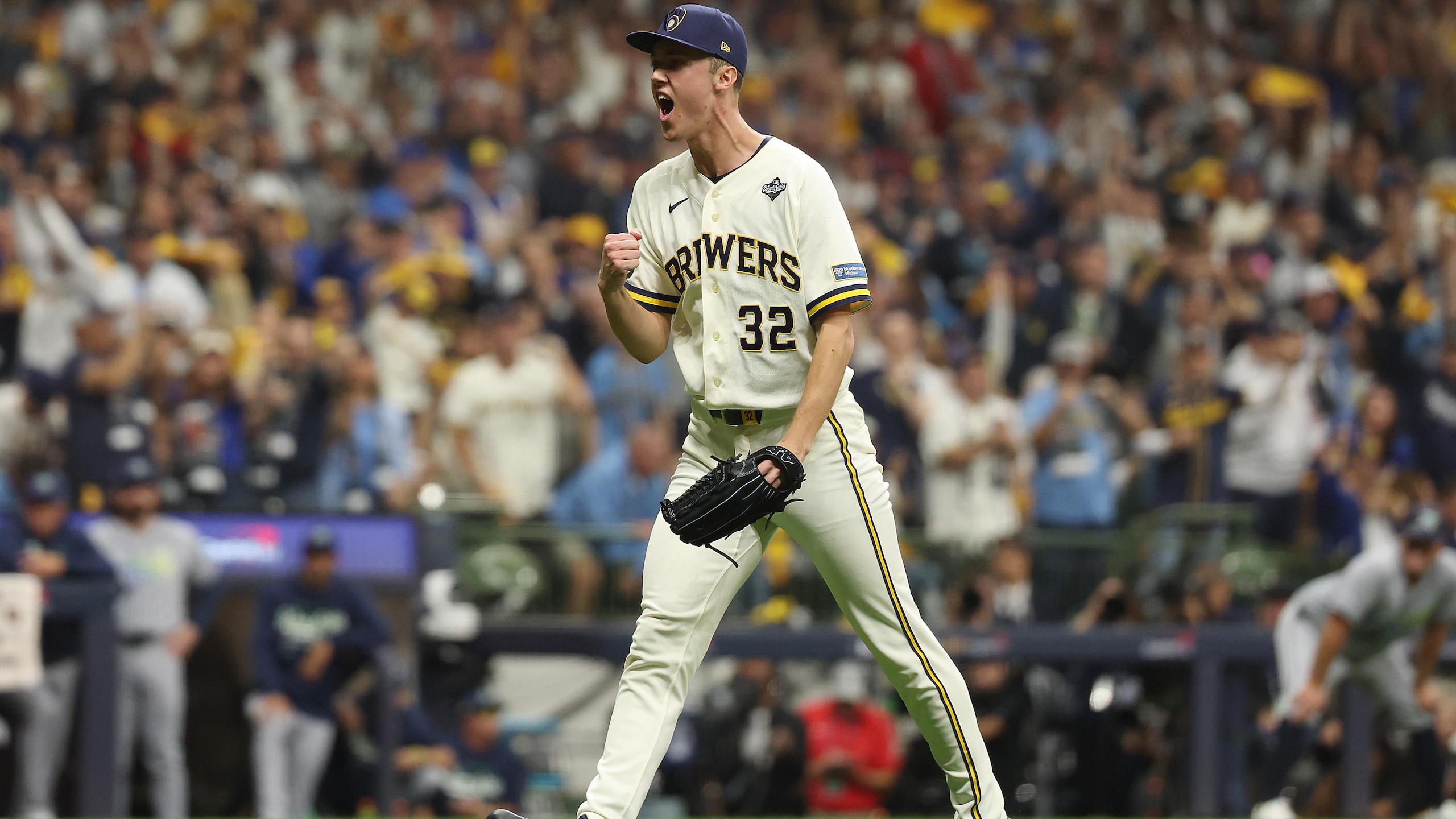
The Milwaukee Brewers are a prime example of a team that has found success through this formula, drafting Brandon Woodruff (fifth round, 2011) and Corbin Burnes (fourth round, 2016) while also acquiring Freddy Peralta from the lower levels of the Seattle Mariners farm system when he was a 19-year-old prospect.
The Los Angeles Dodgers are not a small-market franchise by any stretch of the imagination, but much of their success can also be attributed to their ability to cultivate their own pitching talent. Clayton Kershaw, Walker Buehler, Julio Urías, Dustin May and Tony Gonsolin were all drafted or signed as an amateur free agent by the organization, and there is more high-end pitching talent climbing the minor league ranks.
The Pittsburgh Pirates snapped a long-running playoff drought with homegrown Gerrit Cole as part of the staff, Shane Bieber won Cy Young honors in Cleveland as an in-house player and Shane McClanahan broke out last season as the latest in a long line of Tampa Bay pitching success stories.
Now the Baltimore Orioles are hoping Grayson Rodriguez can join the list of homegrown aces who help lead their team to contention.
Never Stop Hunting for Pitching
3 of 10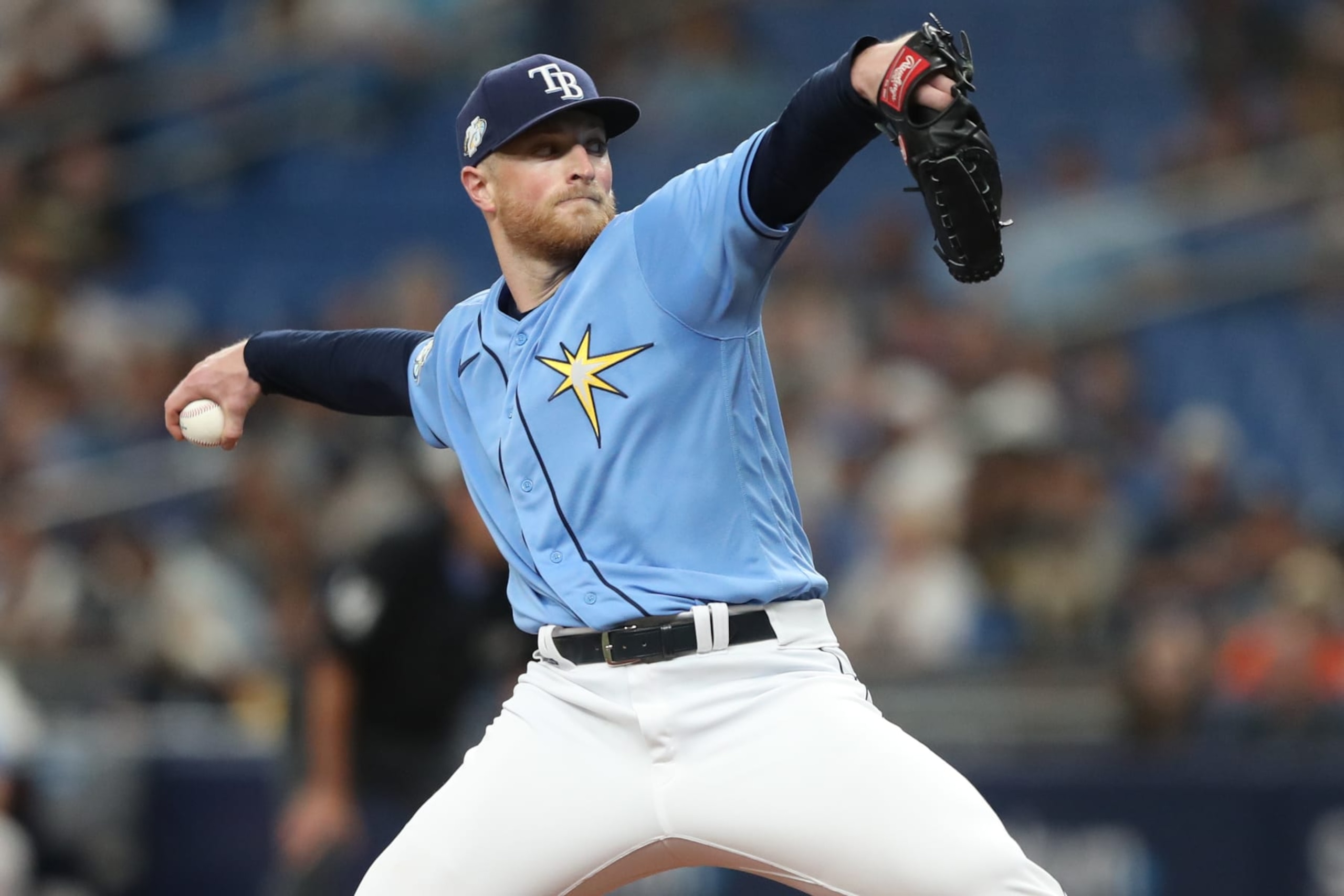
There is no such thing as having too many quality pitchers.
The Houston Astros won the World Series last season on the strength of a pitching staff that led the American League with a 2.90 ERA, but they still used eight different starting pitchers and 22 hurlers total during the 162-game regular season.
The NL pennant-winning Philadelphia Phillies used 10 starting pitchers and saw 33 different players toe the rubber.
Even if a team is not in a position to contend, nothing is more in demand at the trade deadline than quality pitching, whether it's in the rotation or at the back of the bullpen, so teams should never stop hunting for pitching.
A Tampa Bay organization loaded with quality arms traded Willy Adames to the Milwaukee Brewers in exchange for a pair of guys pitching out of the Milwaukee bullpen at the time.
One of them was Drew Rasmussen, who joined the Tampa Bay rotation last year and went 11-7 with a 2.84 ERA, 1.04 WHIP and 125 strikeouts in 146 innings.
There might have been no team in baseball at the time in less "need" of more pitching, but now he's one of the Rays' most important arms, and it's because regardless of how strong a team's pitching staff looks, that can change in the blink of an eye.


Target Low-Cost Free Agents Who Have Trade-Chip Potential
4 of 10
Just because a team is in the early stages of rebuilding does not mean it should sit on its hands during free agency, and that goes double for small-market clubs that place a premium on prospect talent.
Giving buy-low veterans one-year deals and hoping they play their way into being valuable trade chips is a great way to essentially purchase prospect talent.
One of the most successful examples of this was the Chicago Cubs' signing of Scott Feldman to a one-year, $6 million deal prior to the 2013 season. The 30-year-old had struggled to a 5.09 ERA in 123.2 innings the previous season with the Texas Rangers, but he had a solid track record in the years prior.
He ended up posting a 3.46 ERA and 1.14 WHIP in 15 starts with the Cubs before he was flipped to the Baltimore Orioles on July 2 for Jake Arrieta and Pedro Strop, who would both later emerge as key pieces of the Cubs' World Series-winning team in 2016.
Just last year, Brandon Drury signed a minor league deal with the Cincinnati Reds and José Quintana inked a one-year, $2 million deal with the Pittsburgh Pirates, and both were flipped for a quality prospect return after better-than-expected results.
The Pirates found a staff ace when they signed Francisco Liriano to a one-year, $1 million deal in 2013 and he went 16-8 with a 3.02 ERA and 163 strikeouts in 161 innings to finish ninth in NL Cy Young voting. The only reason he wasn't flipped for a solid return is the Pirates emerged as surprise contenders and claimed a wild-card berth.
Who could be this year's sign-and-flip success story?
Jeimer Candelario (1/$5M) and Dominic Smith (1/$2M) with the Washington Nationals, Carlos Santana (1/$6.7M) and Andrew McCutchen (1/$5M) with the Pittsburgh Pirates, Trevor May (1/$7M) and Jesús Aguilar (1/$3M) with the Oakland Athletics, Aroldis Chapman (1/$3.75M) with the Kansas City Royals and Wil Myers (1/$7.5M) with the Cincinnati Reds are all names to watch.
Spend Wisely When You Spend Big
5 of 10
When it does come time for a small-market team to spend in free agency, they can't afford to get it wrong.
One of the best recent examples of a deal that went according to plan was the Pittsburgh Pirates' addition of veteran catcher Russell Martin on a two-year, $17 million deal.
That might not seem like a significant expense, but it still stands as one of the largest free-agency deals in franchise history, and his arrival helped turn the tide for a long-suffering franchise.
The Pirates snapped a 20-year postseason drought in his first year with the team and returned to the playoffs again in his second season, as he racked up 9.8 WAR and earned NL MVP votes both seasons.
The Tampa Bay Rays made Charlie Morton their highest-paid player with a two-year, $30 million deal prior to the 2019 season, and his $15 million salary still stands as the highest single-season mark in franchise history.
He went 16-6 with a 3.05 ERA and 240 strikeouts in 194.2 innings to finish third in AL Cy Young voting in his first season in Tampa Bay, and while he battled injuries the second year, he returned to full health in time to help pitch the team to the World Series with 10.2 scoreless innings in the ALCS.
Spending for the sake of spending will never make sense for a small-market team, but it's worth extending beyond the budgetary comfort zone to add the potential missing piece.
Scour the Bargain Bin
6 of 10
Right-hander Jason Adam posted a 5.91 ERA and 1.50 WHIP in 12 appearances with the Chicago Cubs in 2021, and the decision to non-tender him that offseason didn't exactly grab headlines.
Despite those lackluster numbers, the Tampa Bay Rays saw enough to offer the 30-year-old a one-year, $900,000 split contract in free agency. That ended up being one of the biggest steals of the offseason as he went on to post a 1.56 ERA, 0.76 WHIP and 10.7 K/9 with eight saves and 22 holds in 67 appearances.
Now they have a low-cost bullpen ace under club control through the 2026 season.
The division-rival Baltimore Orioles have also done a nice job of hunting for value in recent years while continuing with their long-term rebuild.
Jorge Mateo, Ramón Urías and Cionel Pérez tallied a combined 9.7 WAR for the O's last season, and all three were acquired via a simple waiver claim without giving up anything in return after other teams cut them loose.
Minor league free-agent signings and under-the-radar waiver claims might not grab headlines, but they can make a real difference for teams in need of low-cost contributors.
Hit on Early Draft Picks
7 of 10
Teams that rely on the cost-controlled nature of homegrown players cannot afford to whiff on early draft picks.
The Houston Astros used first-round picks on George Springer (2011), Carlos Correa (2012), Lance McCullers Jr. (2012), Alex Bregman (2015) and Kyle Tucker (2015) to help climb from three straight 100-loss seasons to perennial title contention. They also used a first-round pick on Daz Cameron (2015), who was a key piece in the blockbuster deal to acquire Justin Verlander.
The Chicago Cubs similarly used early draft success to expedite a rebuild, with Javier Báez (2011), Kris Bryant (2013), Kyle Schwarber (2014) and Ian Happ (2015) all selected in the first round during their lean years.
On the opposite end of the spectrum, the Detroit Tigers have potentially fumbled their opportunity to select No. 1 overall twice in the span of two years by taking Casey Mize (2018) and Spencer Torkelson (2020). They breezed through the minors but have yet to develop into the franchise cornerstones they were expected to be.
How much different would the Tigers' outlook be if those picks were instead used on Shane McClanahan (2018) and Jordan Walker (2020)?
The ability to draft and develop is paramount for every team, but it's especially so for clubs that rely on those cost-controlled years at the start of a player's MLB career.
Prioritize the International Market
8 of 10
Any team that ignores the international amateur market is trying to contend with one arm tied behind its back.
Just look at the homegrown international signings who played a key role on the last two World Series winners:
2022 (HOU): 2B Jose Altuve, LHP Framber Valdez, RHP Cristian Javier, RHP José Urquidy, RHP Luis Garcia, RHP Bryan Abreu
2021 (ATL): OF Ronald Acuña Jr., 2B Ozzie Albies, C William Contreras
Looking ahead to the present and future MLB landscape, franchise cornerstones Rafael Devers (BOS), Wander Franco (TB), Vladimir Guerrero Jr. (TOR), José Ramírez (CLE), Julio Rodríguez (SEA) and Julio Urías (LAD) are all homegrown superstars who rank among the faces of the sport.
All of those players were available to highest bidder once upon a time, and it is generally the teams that are most involved in international scouting that reel in those high-ceiling young players.
Spending big on the international market is far from a sure thing. The names Kevin Maitan, Dérmis Garcia, Adrian Rondon, Yadier Álvarez, Yusniel Díaz, Lazaro Armenteros, Víctor Víctor Mesa and Robert Puason are just a sampling of a long list of high-priced cautionary tales.
However, there is little doubt the potential reward far outweighs the risk.
Know When to Trade Players You Can't Afford
9 of 10
It can be a harsh reality for teams to accept that their homegrown superstar is headed for greener pastures once free agency arrives, but maximizing his value while he is still under club control is a must for small-market clubs.
The Cincinnati Reds did just that last season when they traded ace Luis Castillo to the Seattle Mariners ahead of his final year of arbitration eligibility, bringing back a prospect package headlined by Noelvi Marte (No. 61 on Baseball America Top 100 list) and Edwin Arroyo (No. 63).
He eventually signed a five-year, $108 million extension with the Mariners, which likely would have been beyond the Reds' spending comfort zone, and now they've added two high-ceiling prospects to one of the best farm systems in baseball.
Another great example of selling when the time is right was the Guardians flipping Mike Clevinger to the San Diego Padres at the 2020 deadline.
That trade brought back Cal Quantrill, Josh Naylor, Austin Hedges, Owen Miller, Gabriel Arias and pitching prospect Joey Cantillo, helping to restock the Cleveland roster with low-cost talent.
The Cleveland front office also dealt Francisco Lindor when it became clear he was not going to stick around long term, and in exchange acquired its current middle infield tandem of Andrés Giménez and Amed Rosario.
On the other end of the spectrum, the Colorado Rockies waited too long to trade Trevor Story and lost him for nothing more than a draft pick in free agency, while the Milwaukee Brewers run the risk of doing the same with Corbin Burnes after damaging their relationship with the 2021 NL Cy Young winner during his arbitration hearing.
Don't Be Afraid to Go All-in, but Beware of Chasing Wild-Card Contention
10 of 10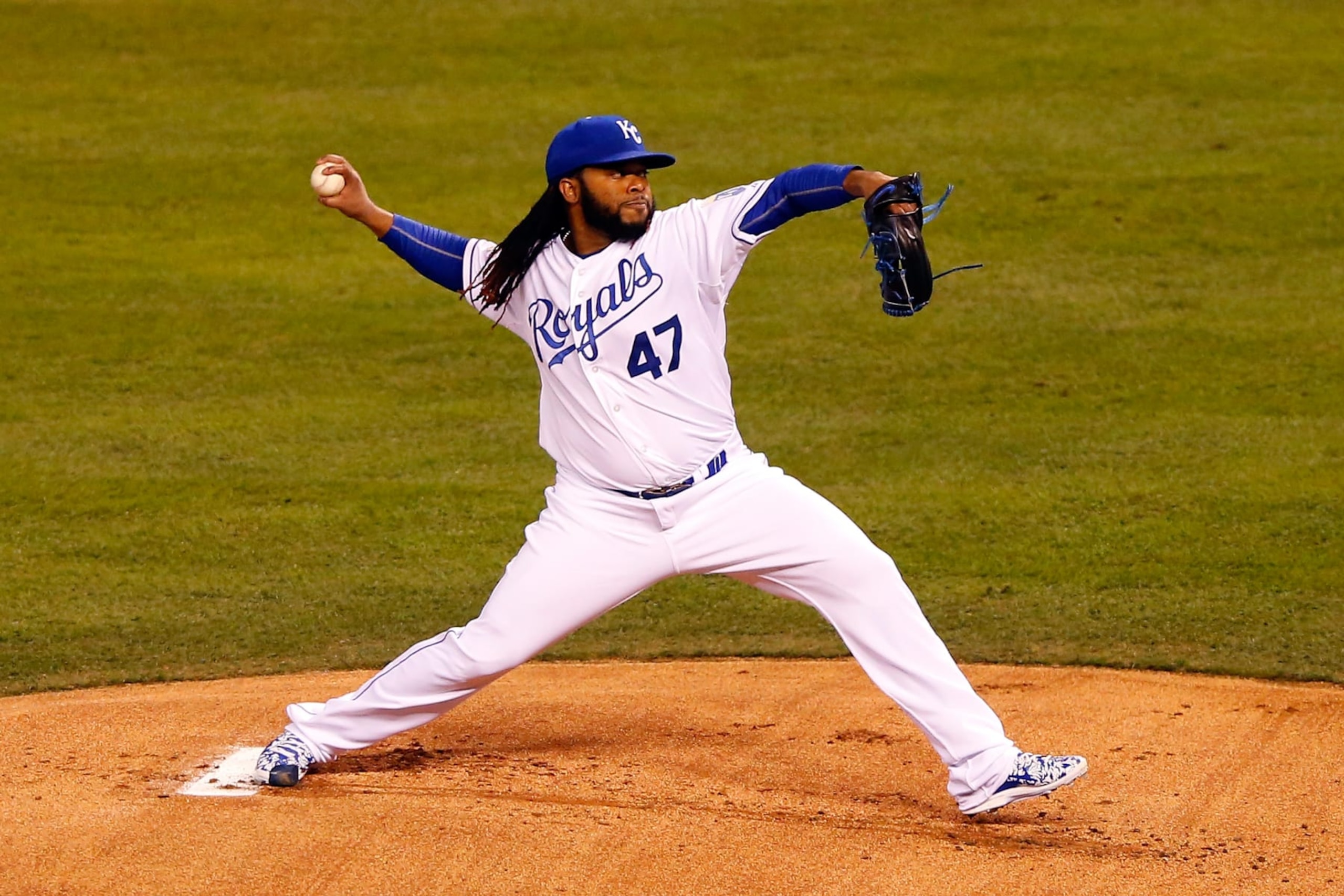
Knowing when to flip the switch from rebuilding to contending can be tricky.
The goal of every team is to win the World Series, so even small-market clubs need to seize the opportunity when title contention is a legitimate possibility, even if it means spending beyond the usual limits or mortgaging young talent for a chance to win now.
The Kansas City Royals are a great example of when things go right.
After a surprise run to the World Series as a wild-card team in 2014, they were 20 games above .500 with an eight-game lead in the AL Central standings the following year when the trade deadline rolled around.
Despite their reliance on homegrown talent, they traded top prospects Brandon Finnegan (No. 2 KC prospect, No. 55 MLB prospect) and Sean Manaea (No. 3 KC prospect, No. 81 MLB prospect) as the centerpieces in a pair of blockbuster deals to acquire Johnny Cueto and Ben Zobrist.
Cueto started four playoff games during the team's run to a World Series title, including a complete game in Game 2 of the World Series. Zobrist hit .303/.365/.515 with 10 extra-base hits and 15 runs scored in 16 postseason games while hitting No. 2 in the batting order and playing second base. Without those bold moves, the Royals probably don't hoist the trophy.
However, it's not as simple as just chasing contention when the opportunity presents itself, and the 2016 Chicago White Sox are a prime example of how things can go wrong.
They were two games above .500 and third in the AL Central standings on June 4 when they swung a deal to acquire veteran starter James Shields from the San Diego Padres in hopes of solidifying the starting rotation.
They finished the year 78-84 and missed the playoffs, and one of the lower-level prospects they gave up in the ultimately unnecessary deal to acquire Shields was a young shortstop named Fernando Tatis Jr.
Statistics via Baseball Reference unless otherwise noted. Payroll info via Spotrac.




.jpg?w=2560 "Jonathan Taylor Landing Spots 📍")




