
Best Landing Spots for 2023 NFL Draft's Top QBs After Latest Signings, Trades

With the first wave of NFL free agency winding down, we can approach the 2023 draft with a clearer picture of what teams need and what they have to offer perspective draft selections.
Things are quite a bit different than they were a couple of weeks ago. The Chicago Bears, for example, dealt the No. 1 pick to the Carolina Panthers in exchange for wideout D.J. Moore and a bevy of draft picks.
The Panthers, meanwhile, did a little offensive reloading by bringing in veteran quarterback Andy Dalton, tight end Hayden Hurst, running back Miles Sanders and wideout Adam Thielen—who agreed to a three-year deal with Carolina on Sunday, according to NFL Network's Ian Rapoport.
Carolina's next big step will likely be using the top overall selection on a new quarterback. The Houston Texans and Indianapolis Colts also seem like obvious picks to target quarterbacks after early signings and trades.
What might be a little less obvious is which teams offer the best situations for the draft's top QB prospects. That's what we'll examine here, focusing on factors like roster makeup, coaching, prospect production and skill set. This isn't necessarily a prediction of where we think these prospects will land, though we are using realistic landing spots as a guideline—the Los Angeles Rams aren't landing a QB1 in Round 2.
We'll focus on the top five quarterbacks on the Bleacher Report Scouting Department's post-combine big board, listed in ranked order.
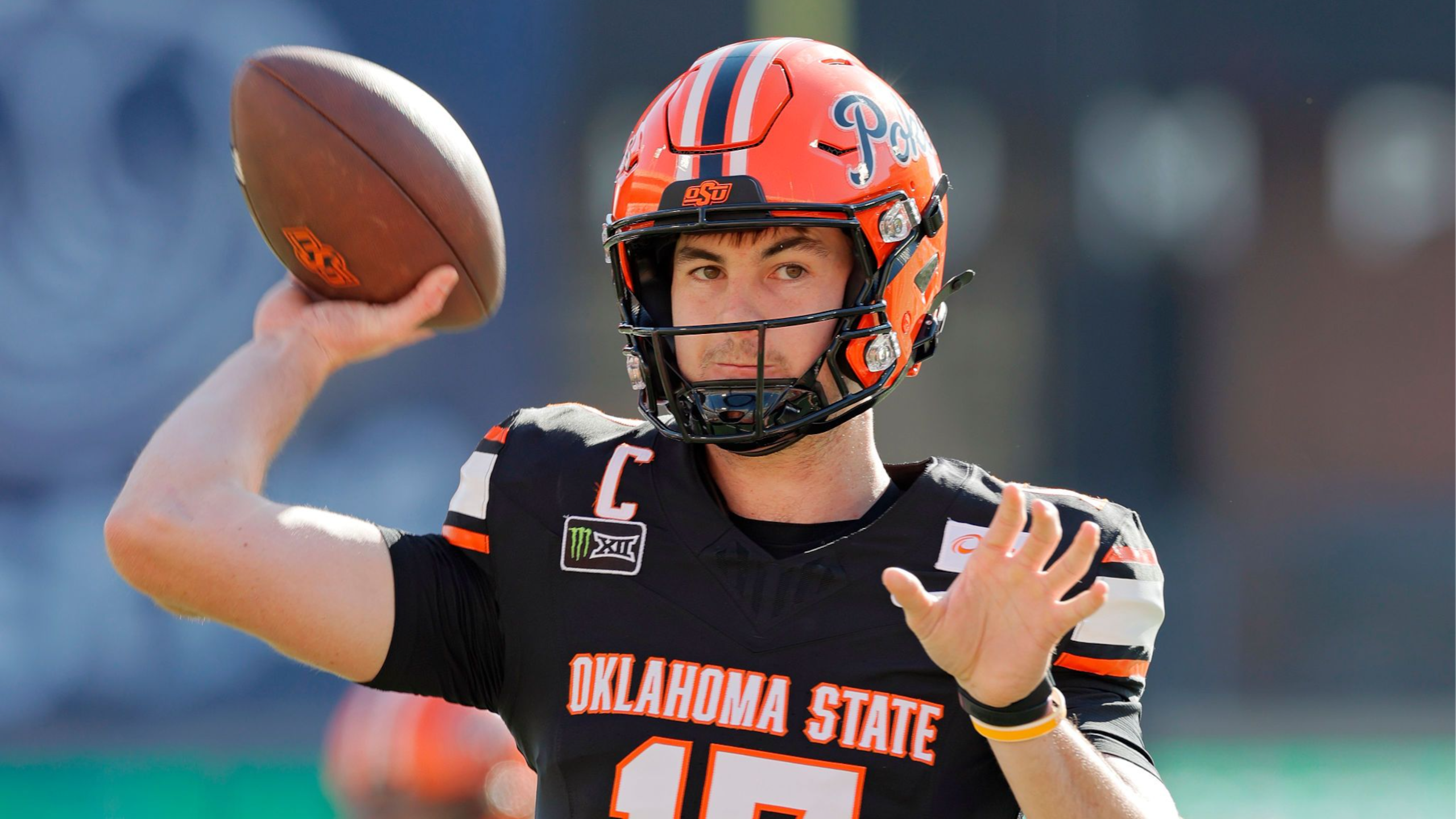
1. C.J. Stroud, Ohio State: Carolina Panthers
1 of 5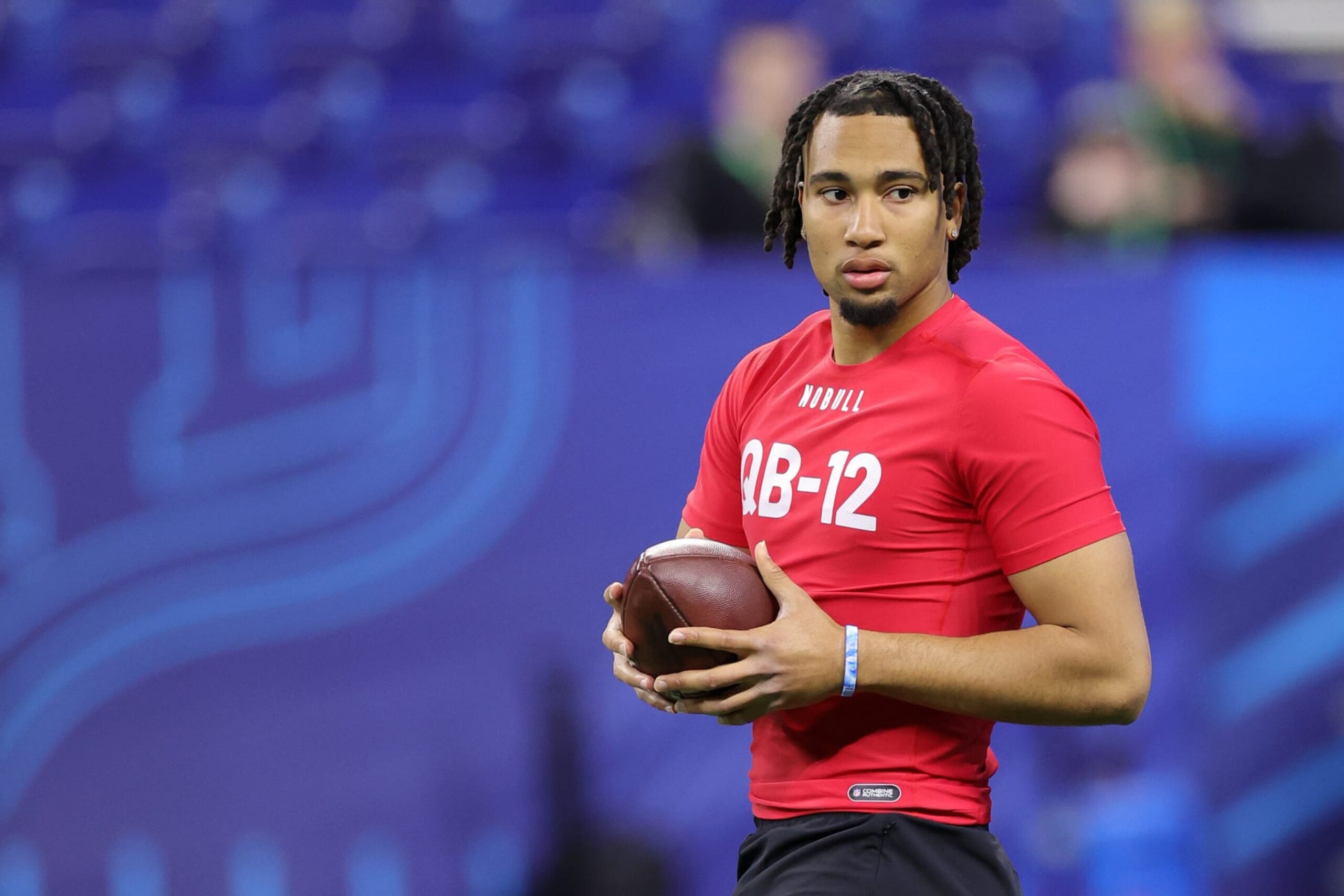
Draft Slot: No. 1 overall
Ohio State's C.J. Stroud tops the B/R quarterback rankings because of his rare combination of arm strength, accuracy, ball placement and processing skills. Stroud, who threw for 3,688 yards, 41 touchdowns and six interceptions this past season, has the tools to be a premier pocket passer at the next level and to get there quickly.
"He's got the pre-snap vision, arm talent and accuracy to be functional sooner rather than later, and the progress he showed as the year went on suggests he has a capacity to improve rapidly," Derrik Klassen of the B/R Scouting Department wrote.
Panthers head coach Frank Reich recently worked with pocket passers like Philip Rivers, Carson Wentz and Matt Ryan as the Colts' head coach. He also oversaw the final season of Andrew Luck's career.
In 2018, Luck returned to the Pro Bowl, and the Colts returned to the playoffs for the first time since the 2014 season.
While Stroud isn't as physically gifted as Luck, he possesses similar arm talent—his throwing display at the combine was truly impressive. He should fit well in a dropback passing scheme that plays heavily off the run and play-action.
Stroud's potential to be a good rookie starter also makes this an ideal pairing. The Panthers came close to winning the NFC South this past season and should be in the thick of the divisional race with even average quarterback play.
Reich is a former quarterback himself and can aid Stroud's continued development, and Dalton can serve as a valuable backup and mentor. Carolina would give the former Buckeye the best chance for both immediate and sustained success.
2. Anthony Richardson, Florida: Indianapolis Colts
2 of 5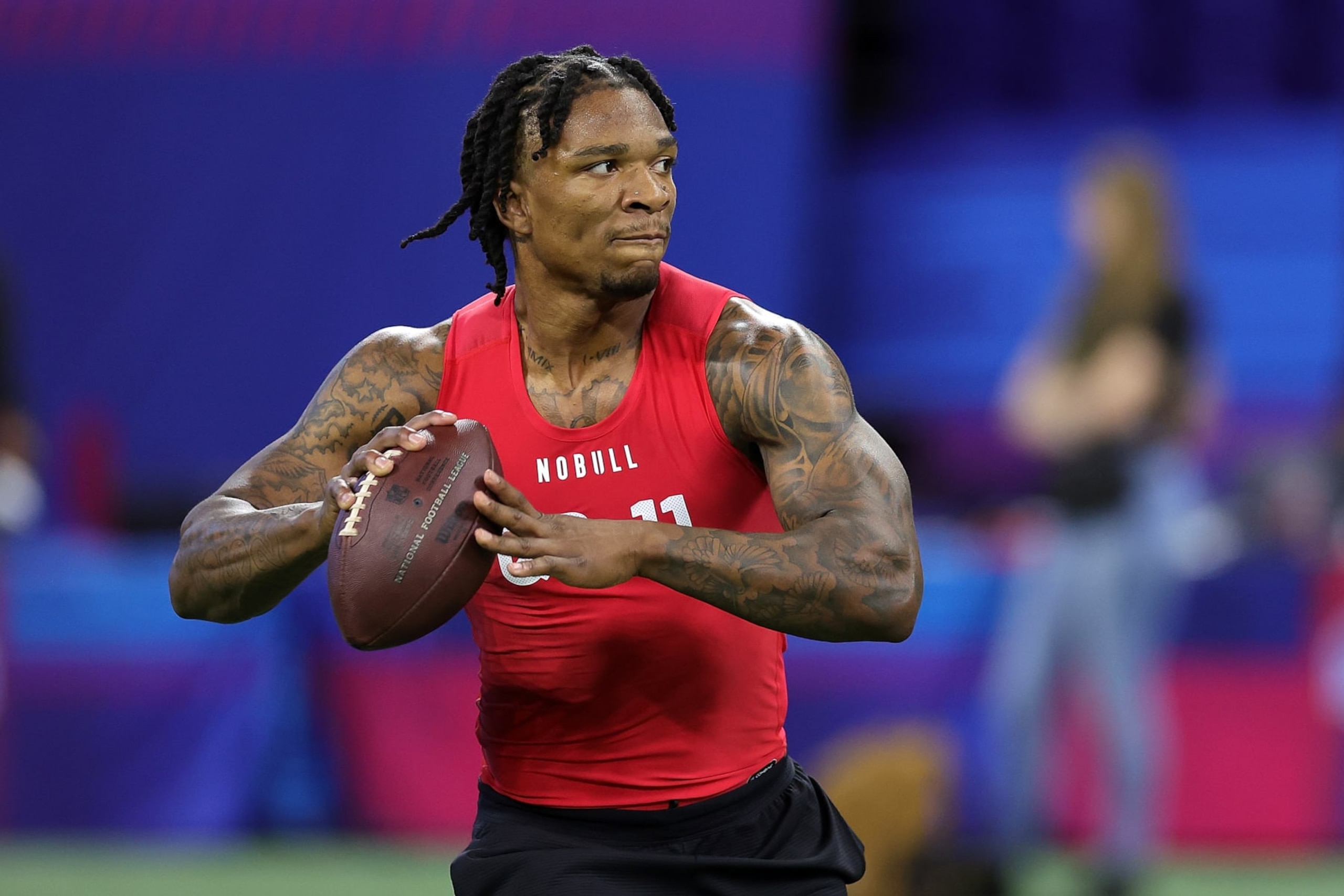
Draft Slot: No. 4 overall
With only 22 games on his college resume, Florida's Anthony Richardson is less experienced than Stroud. However, he blows Stroud and every other QB prospect out of the water with his elite package of physical tools.
At the combine, the 6'4", 244-pound prospect posted a 40.5-inch vertical jump, a 129-inch broad jump and a blazing 4.43-second 40-yard dash. Richardson is big, explosive, fast and could quickly emerge as one of the NFL's top scrambling quarterbacks.
Richardson has the potential to be both a physical runner like Jalen Hurts and a breakaway threat like Justin Fields.
The knock on Richardson is his inconsistent mechanics and accuracy. Coaching can help clean those up, and a team can lean on Richardson's legs in the interim. Indianapolis and new head coach Shane Steichen can do exactly that.
Steichen helped develop Hurts into a Pro Bowl quarterback and legitimate MVP candidate with the Philadelphia Eagles. An offense that featured a lot of designed quarterback runs, run-pass options, balance and variety allowed Hurts to be a functional second-year starter while progressing as a passer. Hurts eventually exploded in Year 3.
In Indianapolis, Steichen will be the play caller and bring similar philosophies to the offense.
"It's going to look differently each week," Steichen said, per JJ Stankevitz of the team's official website, "but my philosophy is we're gonna throw to score points in this league and run to win."
Richardson has the tools to do many of the things Hurts did under Steichen in Philadelphia. He'll be supported by Jonathan Taylor and a strong running game, and if he isn't ready to start Week 1, the Colts can turn to recent acquisition Gardner Minshew II.
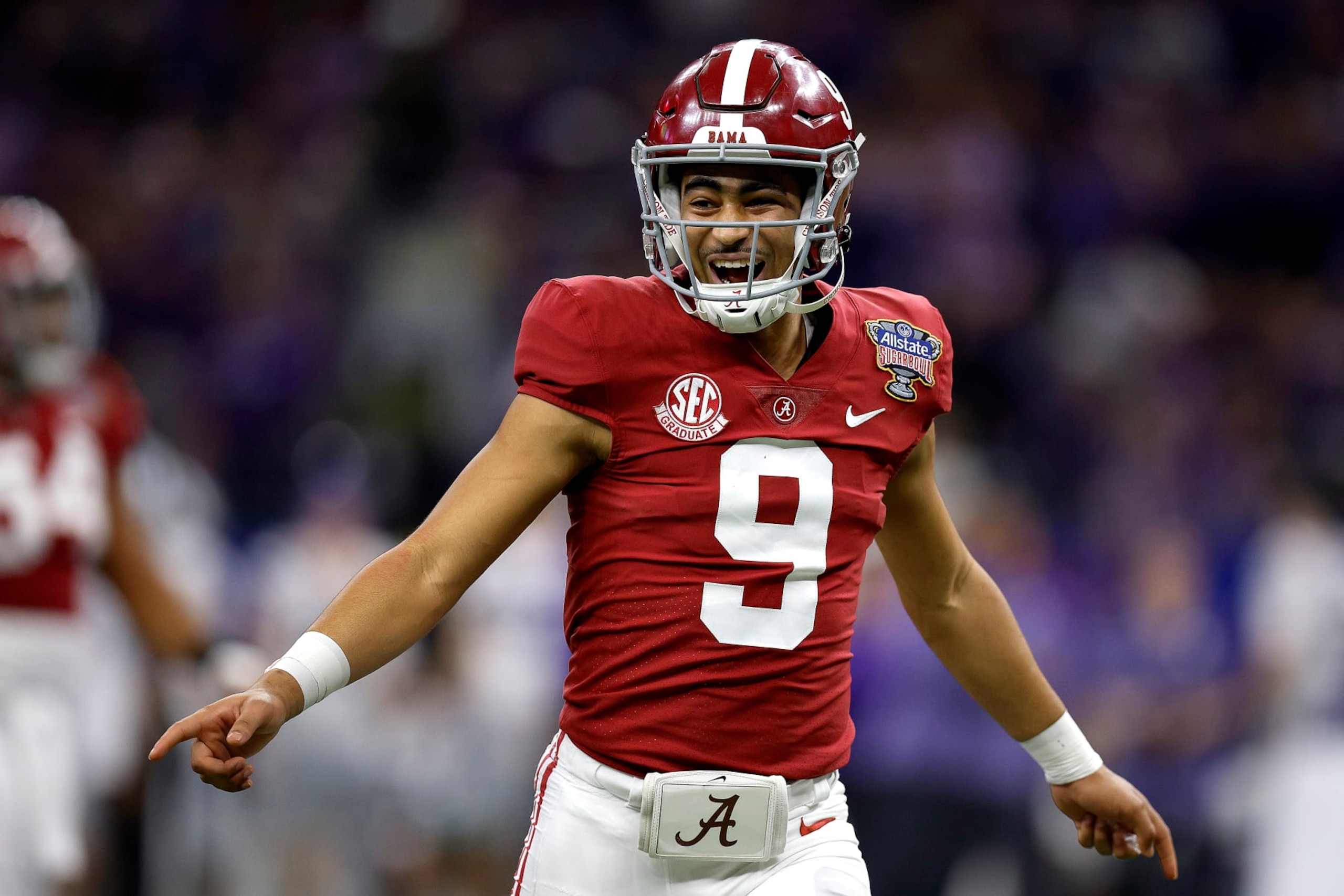
3. Bryce Young, Alabama: Houston Texans
3 of 5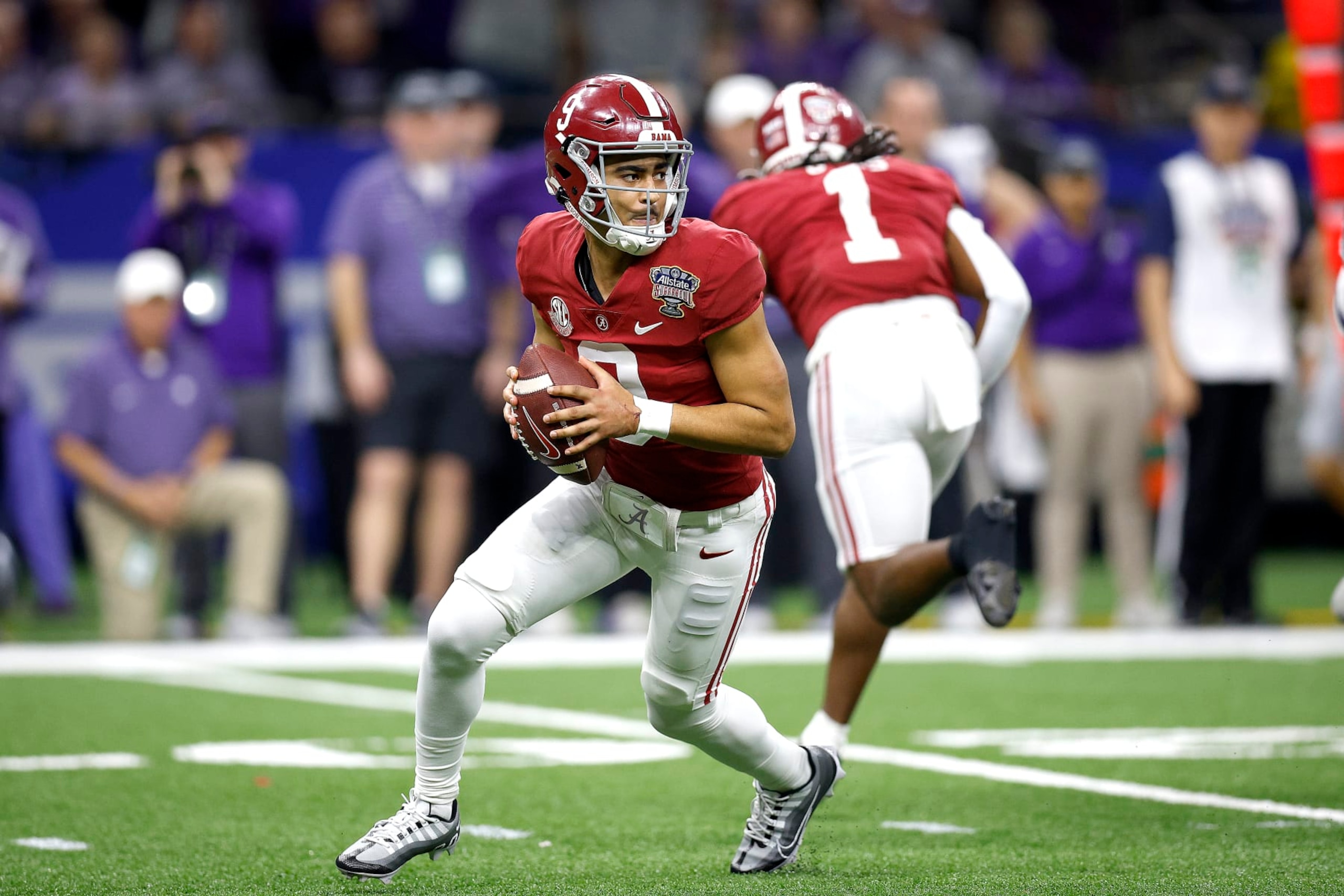
Draft Slot: No. 2 overall
The big question mark with Alabama quarterback Bryce Young is his size. At 5'10" and 204 pounds, the former Crimson Tide standout has a smaller and slighter frame than most NFL quarterbacks.
Young is similar in size, however, to Arizona Cardinals two-time Pro Bowler Kyler Murray, so there's reason to believe that size won't be a major limiting factor. Like Murray, Young is a legitimate playmaker at the quarterback position who can win with his arms, his legs, on script and off.
"Once Young decides a play is broken, either because of pressure or sticky coverage, he is quick to find an answer," Klassen wrote. "Sometimes that is a timely checkdown, but more frequently it means a play outside the pocket, where his blend of athleticism, creativity and flexible mechanics creates magic."
Young's ability to go off-script would be a welcome addition to a Texans offense that recently traded wideout Brandin Cooks and doesn't feature a ton of established talent. Houston should be able to offer Young a solid defense and an offense well-suited to his abilities.
The Texans ranked just 30th in total defense last season, but they added defensive head coach DeMeco Ryans, along with defensive tackle Sheldon Rankins, edge-rusher Chase Winovich, defensive lineman Hassan Ridgeway and safety Jimmie Ward this offseason. The defense should be dramatically better.
Offensive coordinator Bobby Slowik—who, like Ryans, comes from the San Francisco 49ers—should bring many of San Francisco's offensive concepts to Houston. This means an offense that leans heavily on Dameon Pierce and the run game, play-action and a passing scheme that uses spacing to get receivers open.
Under head coach Kyle Shanahan, the 49ers have run a quarterback-friendly system—see Brock Purdy's rookie success as evidence—and Slowik should feature the same in Houston.
Young could thrive as a game manager early while occasionally flashing with his playmaking ability, and he'd have the support of one of the league's best backups in Case Keenum.
.jpg?w=2560 "Chargers Chiefs Football")
.jpg?w=2560)
4. Will Levis, Kentucky: Las Vegas Raiders
4 of 5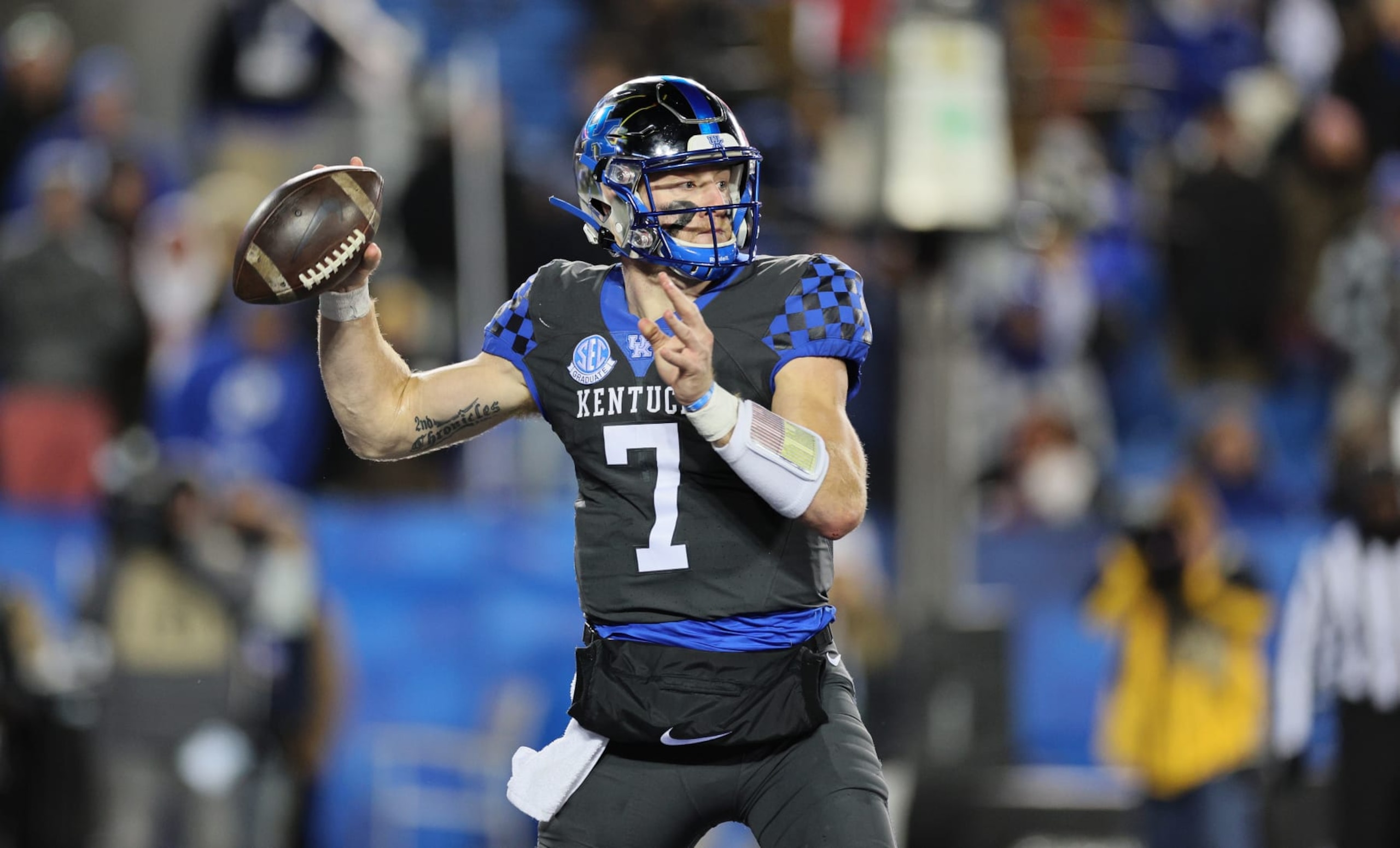
Draft Slot: No. 7 Overall
There seems to be a gap between the top three QB prospects and Kentucky's Will Levis, who has a nice blend of arm strength and athleticism but questionable accuracy and post-snap processing.
"In all, Levis is a bet on getting something similar to Ryan Tannehill," Klassen wrote. "Like Tannehill, Levis has the arm, toughness, functional athleticism, and experience to come in and play right away. However, the accuracy woes, inconsistent processing, and lack of spark outside the pocket make for a long and winding road before Levis can reach his full potential."
In the long run, Levis could benefit from landing with a team that doesn't ask him to start immediately. After acquiring Jimmy Garoppolo in free agency, the Las Vegas Raiders could be that team.
In Las Vegas, Levis could sit for a year or even two behind Garoppolo while being coached up by Josh McDaniels and offensive coordinator Mick Lombardi. His experience in a pro-style Kentucky offense would allow him to adapt quickly to McDaniels' system, and his arm strength would complement downfield receivers like Davante Adams, Phillip Dorsett and Jakobi Meyers.
With running back Josh Jacobs commanding plenty of defensive attention, Levis could be extremely dangerous off play-action.
Though he isn't as experienced or as polished as Garoppolo, Levis possesses a lot of the same traits—he can work the pocket, deliver the ball to any area of the field and is a serviceable scrambler when necessary. Watching from the sideline would give Levis the perfect opportunity to learn what and what not to do in McDaniels' offense.
Levis' floor is high enough that he could start if the oft-injured Garoppolo misses time. Ideally, though, he'd be drafted and developed for a 2024 or 2025 debut.
5. Tanner Mckee, Stanford: Los Angeles Rams
5 of 5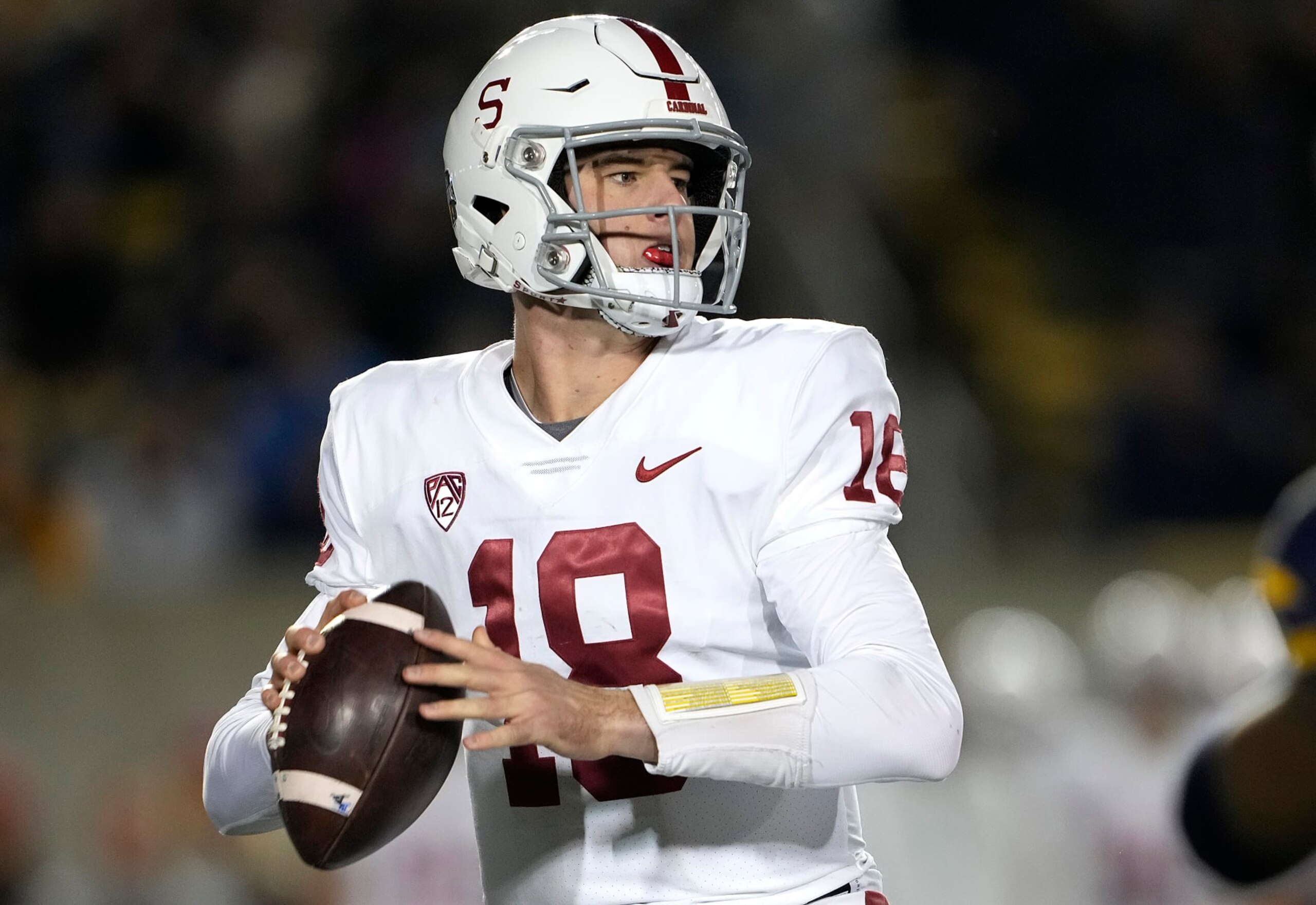
Draft Slot: 69th overall pick
There's a big drop-off from Levis to Stanford quarterback Tanner McKee, who is pegged by the B/R Scouting Department as a third-round prospect. McKee is an accurate, polished pocket passer with a strong arm and high-end in-play processing.
"McKee handled a number of pro-style concepts at Stanford and executed them well. He proved he would cycle through his reads efficiently and decide in a confident, timely manner," Klassen wrote.
However, McKee is limited athletically and not a running threat at all. Should he become an above-average starter in the NFL, it will be because of his arm talent and cerebral ability.
Schematically, the Los Angeles Rams could provide an ideal landing spot for McKee. In L.A., he could serve as an understudy to Matthew Stafford, who could be nearing the end of his time with the franchise.
"The Rams would have (we're told) welcomed the opportunity to trade Stafford," ProFootballTalk's Mike Florio wrote. "If Aaron Rodgers hadn't decided to join the Jets, Stafford could have become the Plan B, if he would have been willing to go to New York."
Sean McVay's offense would be ideal for McKee's skill set—like McKee, Stafford is more of a pure pocket passer who doesn't scramble often, and he won his first Super Bowl in McVay's system. It's an offense predicated on timing and spacing, which would complement McKee's accuracy and processing skills perfectly.
Assuming Stafford remains on the roster—and with his 2023 option bonus and 2024 salary becoming guaranteed on Friday ($57 million total), he should—McKee would have a year or two to learn under one of the best pure throwers in the league.
Los Angeles would be a terrific place for McKee to develop into a future starter.
*Contract information via Spotrac.
.jpg?w=2560 "Seahawks Chiefs Football")
.jpg?w=2560 "Grading SmackDown 🔠")