
How NFL Scheme Fits Can Erase Doubts for Bryce Young, Undersized 2023 Draft Prospects
This 2023 NFL draft class is unique in that it includes several undersized top prospects. While every year features outliers who don't fit the height and weight expectations for their positions, what makes this year's class different is that several of those players are toward the top of draft boards.
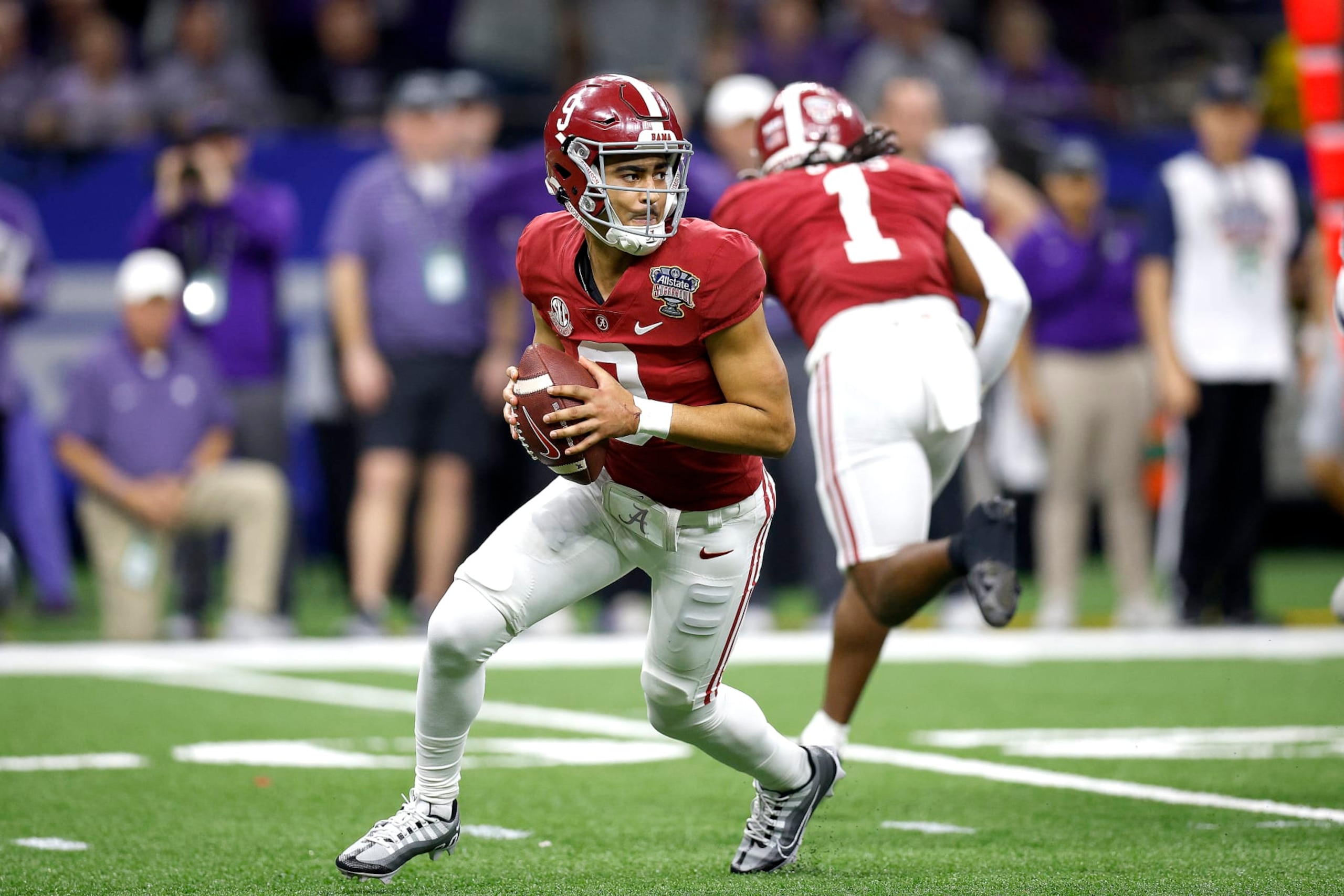
Alabama's Bryce Young is expected to be one of the first picks of the draft despite measuring in at 5'10" and 204 pounds at the NFL combine. Defensive linemen Nolan Smith from Georgia and Calijah Kancey from Pittsburgh also don't meet the prototypical size requirements but are expected to hear their names called early.
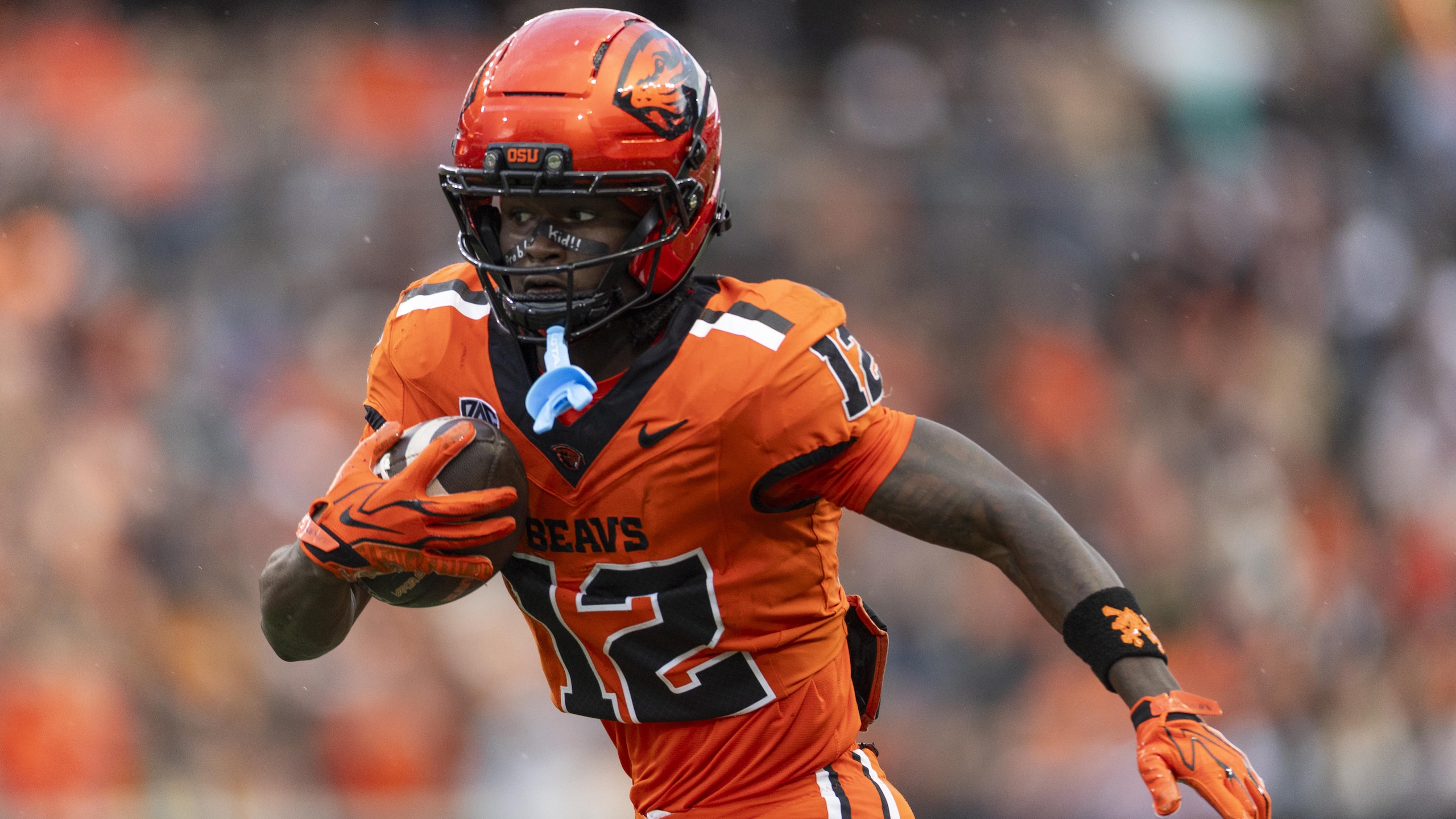
Even players who might be closer to the Day 2 category, like Boston College wide receiver Zay Flowers and TCU cornerback Tre'Vius Hodges-Tomlinson, are noteworthy prospects despite their physical limitations.
As we've seen throughout the years in the NFL, though, size does matter. How will these five undersized prospects make it in a league among giants?
Part of the answer is the scheme they would fit best in, which can apply to any prospect with a similar profile. The other part is specific to the individual player's style. We'll dive into both here to show how each guy can go from an undersized draft prospect to an NFL outlier.
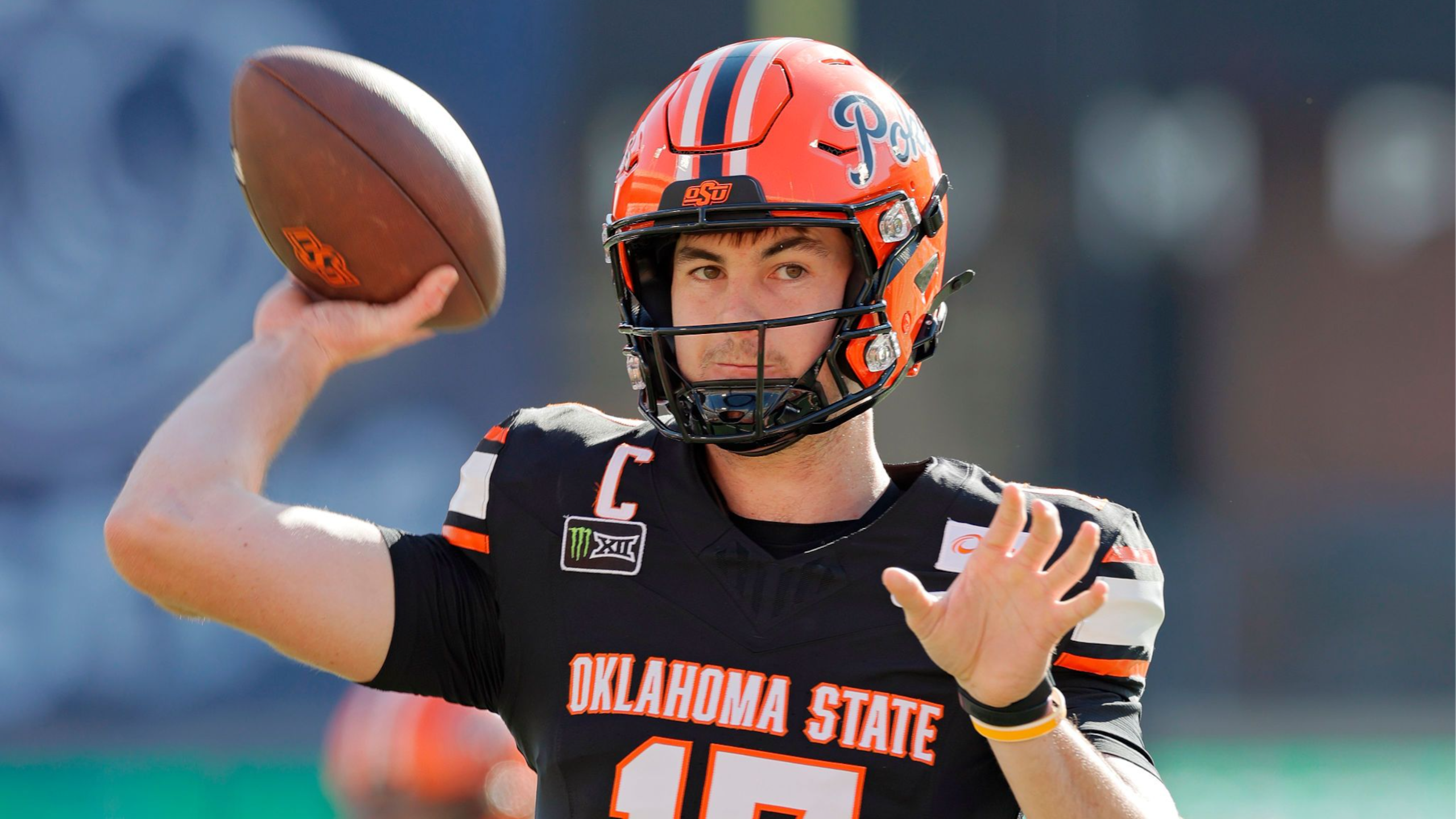
Bryce Young
1 of 5
Young eased some size concerns at the combine by weighing in over 200 pounds. However, as outlined in B/R's NFL combine flops article, it is concerning that he didn't participate in the athletic testing at his new weight in Indianapolis.
A big part of his game and ability to avoid injury is that he moves in the pocket well and can evade hits, but we don't know if those movement skills will translate with the extra weight.
That will also have an effect on his scheme fit in the NFL.
With short or sub-six-foot quarterbacks like the Alabama product, the traditional dropback and full-field read passing schemes don't function properly. Fellow former Crimson Tide QB Tua Tagovailoa shed some light on this in September when he said: "I can't see because I'm not the biggest guy out there. If I can't see you ... I can't get you the ball."
It's difficult for shorter passers to get a clear picture of the middle of the field behind tall offensive linemen and a sea of defenders. One way to get around this is to have the quarterback take a deeper drop—say five steps instead of three—but then the timing of the play/routes is thrown off.
The way most offenses work around vertically challenged signal-callers is through bootlegs and half-field reads.
When the quarterback is moving on a boot, the play is almost always coupled with play action where the offensive line is working in the opposite direction of the quarterback. That means less obstruction of the quarterback's vision and a clear view of the field.
The passer must be good at throwing on the move and/or without having his feet set. That's one of Young's strengths, as highlighted in his scouting report, and why he would be a good fit in that type of system.
Half-side reads have made the move from college to the pro game over the last few years, partially because they make things simpler for the decision-maker. Instead of trying to see the entire field, the quarterback's options are limited to one side.
Shorter quarterbacks have fewer trees to look through, so to speak. Rather than peering through five offensive linemen and seven defenders, only two or three of each are in their view, creating a much clearer picture.
If Young picked up and thrived in Bill O'Brien's pro-style offense in Tuscaloosa, he should have no problems with a half-side scheme. Again, it's easier to learn.
Calijah Kancey
2 of 5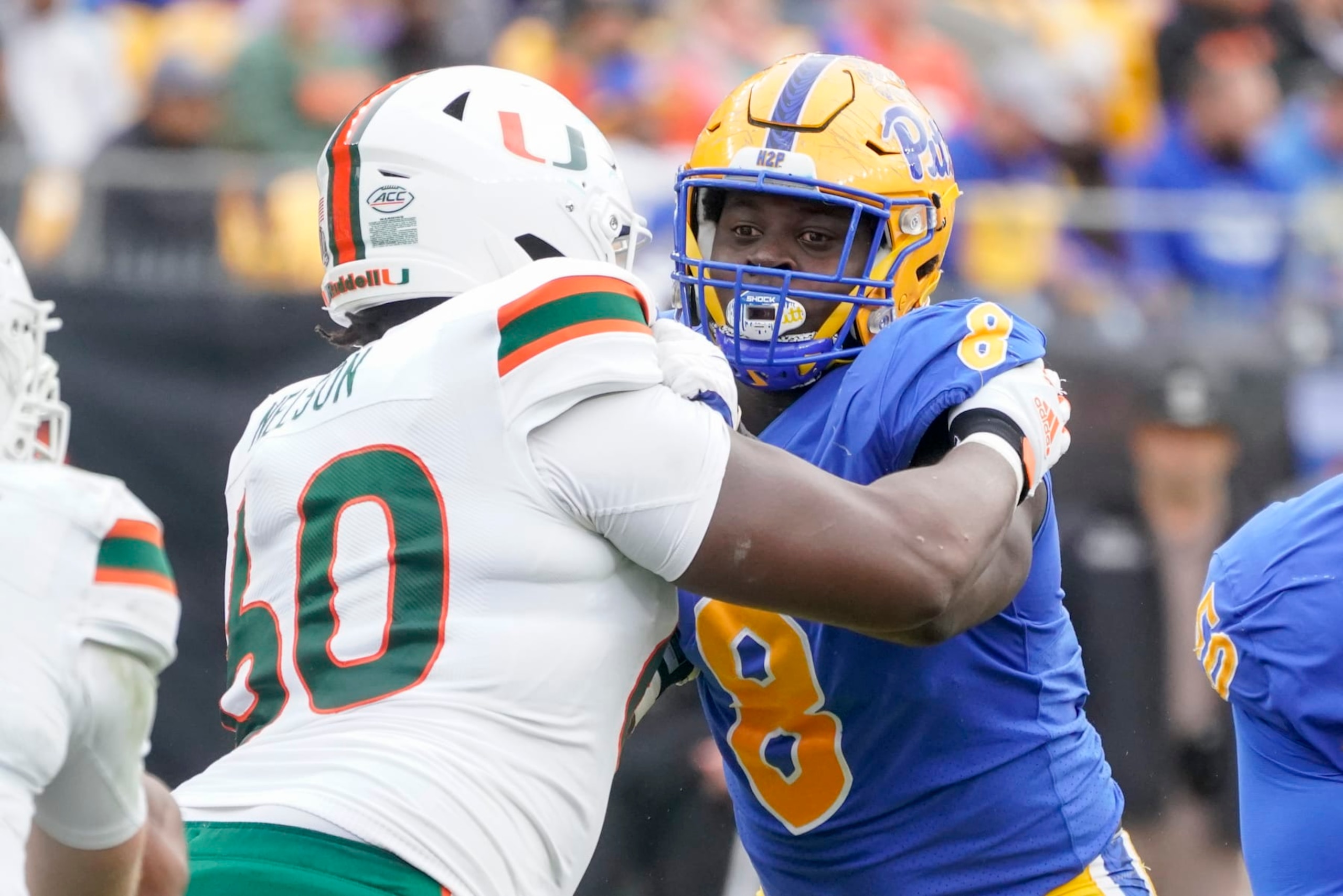
As an All-American and undersized defensive tackle from the University of Pittsburgh, Kancey has drawn comparisons to All-Pro Aaron Donald. The younger Panther measures in right at 6'1" while the older one is a shade under that mark with only a four-pound weight difference as well.
Cancey (4.67 and 1.64) and Donald (4.69 and 1.63) even have nearly identical 40-yard dash and 10-yard split times. That will help Cancey transition to the NFL, especially the 10-yard split since his ability to get off the ball is on par with arguably the best player at the position.
The ability to accelerate off the line of scrimmage puts pressure on offensive linemen because they lose some of the advantages of knowing the snap count and have to engage with the defender sooner than they're used to. That shows up on Kancey's tape and is a big reason he was so successful in college.
However, more than height and weight, Kancey's shortcomings (no pun intended) in the NFL could relate to his arm length.
Donald, who again is an outlier size-wise for the position, has 32⅝-inch arms while Kancey's are a full two inches shorter at 30⅝ inches. That'll make it difficult for the latter to get off blocks because it will limit the amount of extension he can get against offensive linemen.
When defensive linemen are taught to take on blocks, they're told to be physical and use their hands/arms to lock out the blocker, creating space between the two players' chests. That makes it difficult for the offensive lineman to get his hands on and stay engaged with the defender and thus to push him out of the way.
But if the defender has shorter arms and can't get as much extension, the lineman can recover by reengaging his hands and latching on to the defender.
Schematically, Kancey can overcome this in a system that likes to stunt or twist its defensive line. For example, a defensive tackle might line up in the B-gap (between the guard and tackle) pre-snap but quickly shift to the A-gap (between the guard and center) post-snap.
That will allow the Pittsburgh product to use his quickness to avoid contact and still get penetration or play in the offense's backfield. That can also impact how opposing offensive linemen play him even when he isn't stunting because it will be in the back of their minds and might cause them to play less aggressively.
Nolan Smith
3 of 5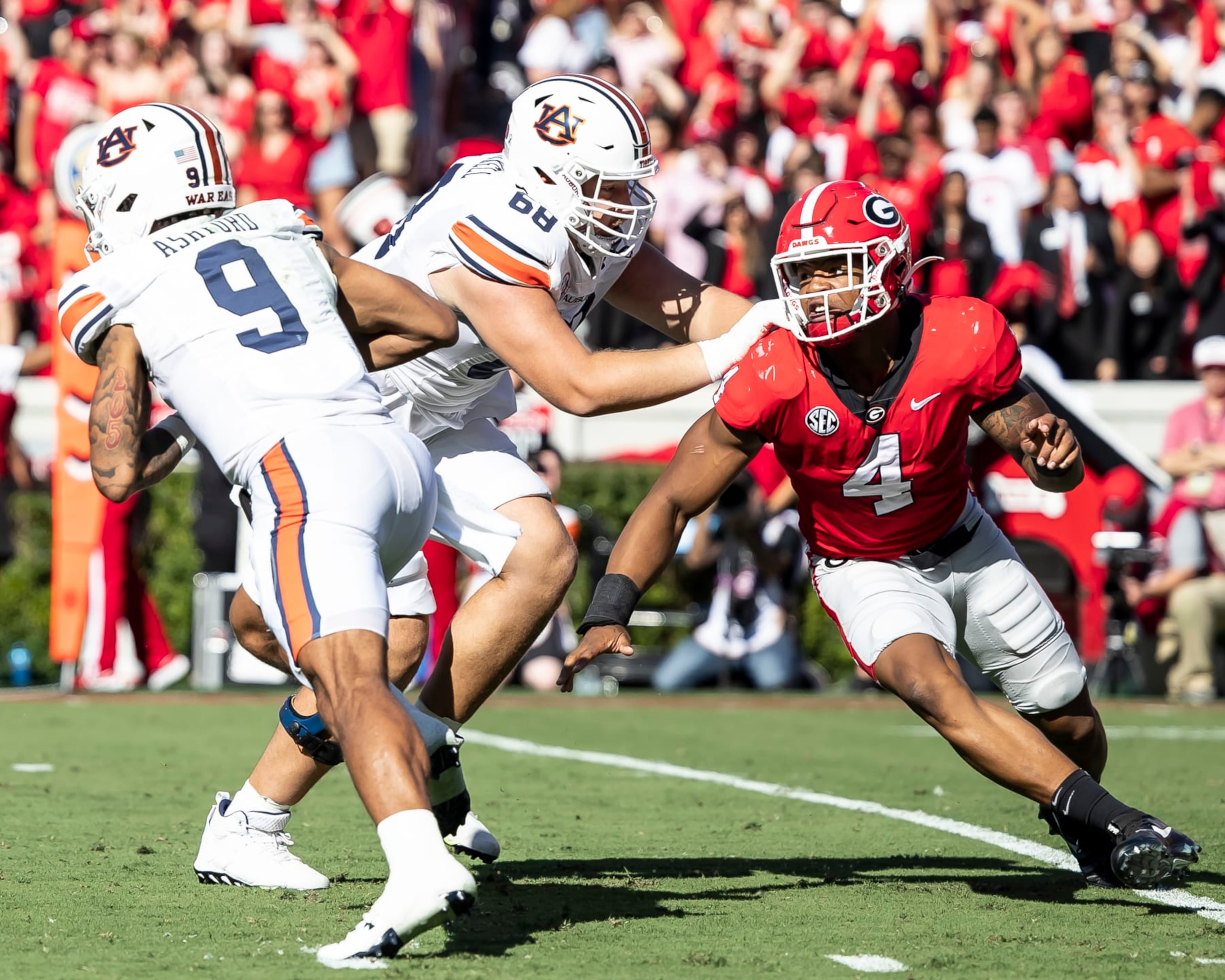
At 6'2" and 238 pounds, Smith received a "very poor" grade for his size as a defensive end, according to the Relative Athletic Score (RAS) scale.
NFL scouts and general managers typically look for someone who is at least 6'4" and near the 270-pound mark to play as a hand-in-the-dirt defensive end in even fronts (four defenders on the line of scrimmage). For a stand-up linebacker in odd fronts (three or five defenders), the standard drops but still hovers around 6'3" and 250 to 260 pounds.
Smith falls short (again, no pun intended) of what the league's decision-makers look for. However, playing in an odd front might be a good way for him to overcome his lack of size.
As a stand-up backer, you're in a two-point stance where only your feet touch the ground and your base is underneath you, whereas a traditional defensive end has one hand in the ground and his shoulders in front of his toes/base.
The latter is better for a taller prospect like Texas Tech's Tyree Wilson (6'6" and 271 pounds) because his pad level starts lower and makes it possible for him to gain a leverage advantage on the offensive lineman. But with Smith, who is four inches shorter, that's not a concern because he has "natural leverage," which is a nice way scouts call someone short.
It's more important for Smith to have his base underneath him from the snap so that he can dig his heels into the ground and hold up against offensive linemen as a run defender. When the D-lineman has his hand in the ground, he'll have a little lean where his shoulders are over his toes. That's fine if said player has enough size and strength, but the smaller guys can struggle with that.
What makes the Bulldog unique is he played well out of a three-point stance in college. Take a look at the video below from Ben Fennell.
Smith starts in a three-point stance, but he's so quick off the ball that he gets his base underneath him before contact. In Indianapolis, he showed that impressive get-off by clocking a 1.52-second 10-yard split time, which is ridiculously fast and earned a near-perfect score from RAS.
He's also a lot stronger at the point of attack than his 240-pound frame suggests. In the clip above, he shoots his hands and stops the offensive lineman in his tracks to "set the edge" or avoid getting pushed toward the sideline.
Most guys Smith's size won't be able to do that, but again, that's why he's such a highly regarded draft prospect. It's worth watching if he can maintain that strength after a torn pec held him out of the second half of the season. Otherwise, he'll have to find a home as a stand-up backer in odd fronts and will be less scheme-versatile.
.jpg?w=2560 "Chargers Chiefs Football")
.jpg?w=2560)
Zay Flowers
4 of 5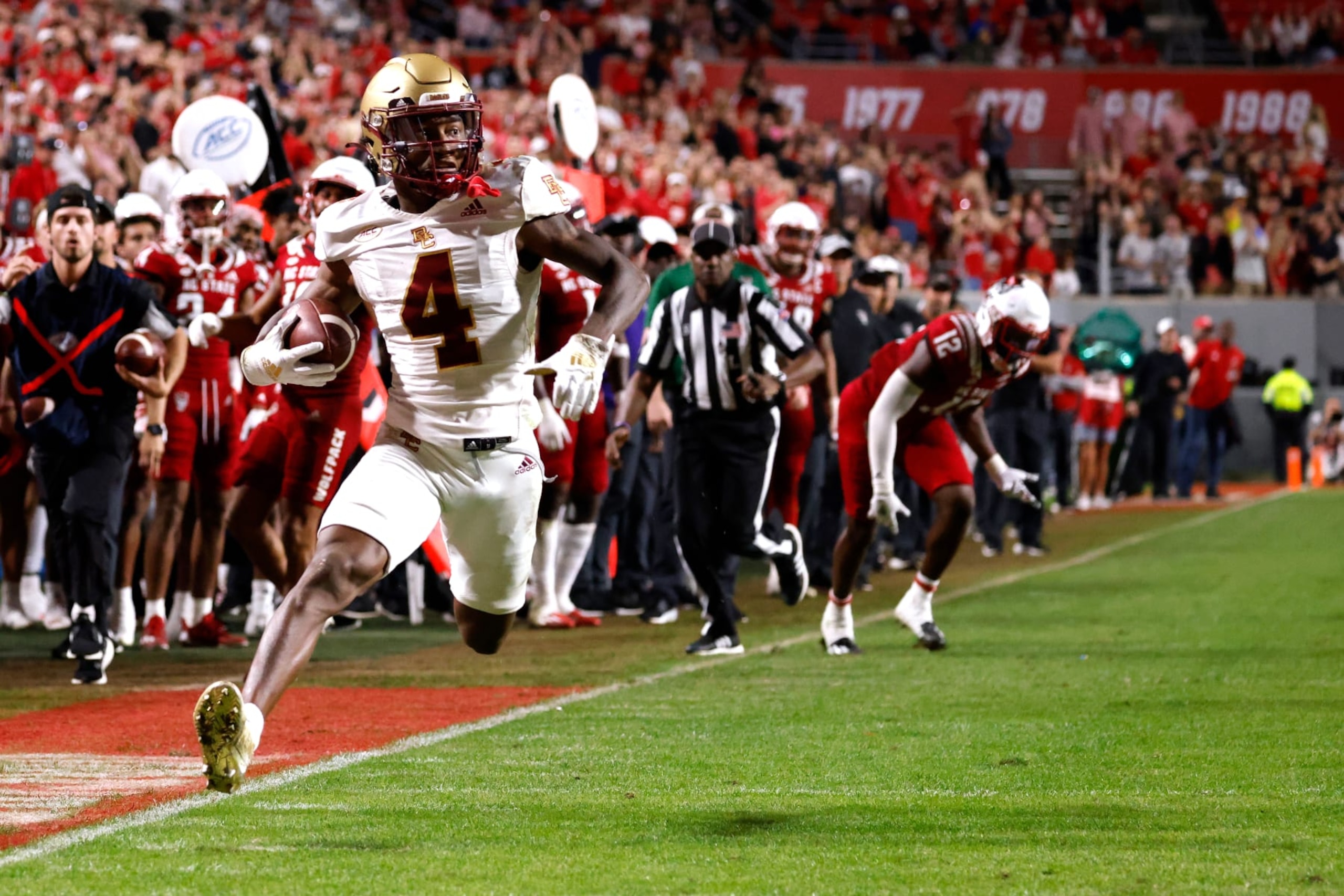
When people talk about wanting a "No. 1 wide receiver," what they mean, in football terms, is an X receiver.
An X receiver will typically be asked to run the most advanced route tree, meaning the biggest variety of routes, and usually lines up as the seventh man on the line of scrimmage. The latter is especially important for draft prospects because they need to be able to beat press coverage.
In college, many teams don't like to put their cornerbacks on the line of scrimmage because if they get beat on the line, they have to play catchup throughout the rep, which can lead to an easy pitch and catch for an explosive play and/or touchdown. College defenses prefer off coverage, and almost any wideout can be an X regardless of size.
However, in the NFL, where corners are better and more technically sound, wideouts see a lot more press coverage. They need to have quick feet and be strong enough to play through contact at the line of scrimmage. This is why Davante Adams is the prototypical X receiver. He has a basketball background to help with his footwork and is just under 6'1" and 215 pounds.
At 5'9" and 182 pounds, Flowers lacks the size to hold up against physical corners and will get pushed around on the line of scrimmage, which will knock him off his path and disrupt the timing of his route and the play.
He'd be better off playing on the inside as a slot receiver where he doesn't need to be on the line of scrimmage. That will give him more room to operate and allow him to use his quick feet to make the defensive back miss and get into his route.
The other reason Flowers would be great as a slot is he's shifty and can create separation in the short areas of the field. Most offenses will have their inside receivers run shorter routes because they're closer to the quarterback than the X is, so if a blitz comes, the quarterback has an option who is looking for the ball and is open.
A lot of taller/bigger receivers need more time to create separation because their center of gravity is higher, so it takes them longer to get in and out of cuts. In a sense, that's where the Boston College product's smaller stature helps him.
Flowers is also great after the catch as highlighted in his B/R scouting report. That makes him even more valuable because if he's running shorter routes as a slot receiver, he could create an explosive play despite catching the ball near the line of scrimmage.
If a team prefers someone like Adams who can line up on the outside and beat press coverage, Flowers probably isn't the guy. However, for a coaching staff that wants to improve production on the inside and is looking for a receiver who can win on short routes, then the Eagle is a great option.
Tre'Vius Hodges-Tomlinson
5 of 5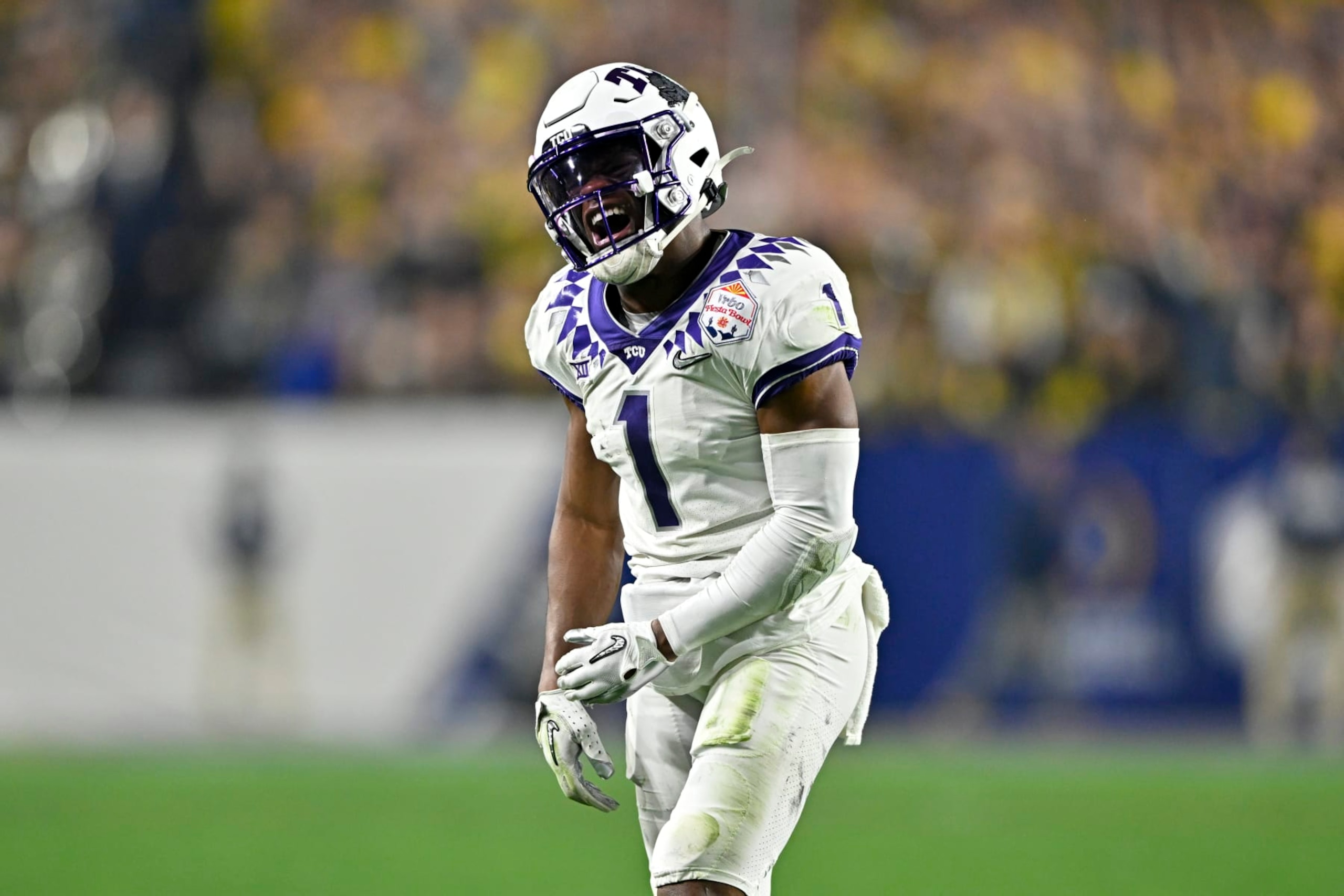
At TCU, Hodges-Tomlinson made a name for himself as an outside corner and made several outlets' All-American teams last season. Part of the reason he overcame his physical limitations—5'8" and 178 pounds—is his 39-inch vertical to go up and play the ball in the air in contested catch situations.
However, he would be a massive outlier if he sticks on the outside in the NFL at that size.
The most notable small wide corner in recent memory is Janoris "Jackrabbit" Jenkins, who has enjoyed an 11-year career and is best known for his time with the then-St. Louis Rams and New York Giants. For comparison's sake, Jenkins is 5'10" and 193 pounds, or two inches taller and 15 pounds heavier than Hodges-Tomlinson while being just as fast. The former ran a 4.46-second 40-yard dash at the combine in 2012 while the latter clocked in at 4.42.
Jenkins' arms are also nearly three inches longer than Hodges-Tomlinson's, so on contested catches against the DeAndre Hopkins of the world, the veteran would have a better chance at making a play on the ball than the soon-to-be rookie.
The Horned Frog would be best suited to make a position change in the NFL as a slot or nickel corner.
As discussed with Flowers, the inside is typically where offenses stick their smaller receivers, meaning Hodges-Tomlinson will face more opponents closer to his size. That will allow him to use his movement skills to stay in phase in coverage rather than getting "boxed out" by someone who's bigger.
The other advantage of playing as a nickel is that contested catches are less frequent. With 50-50 balls, offenses look to dial up one-on-one matchups that they think their guy can win, which typically comes down to a size advantage.
In the middle of the field, more defenders can help the defensive back, so the offense wants to keep the jump balls to isolation situations toward the boundary to make sure the matchup is tilted in its favor.
In summary, Hodges-Tomlinson's college success on the outside likely won't translate to the NFL given his size, but he has plenty of movement skills to be a great slot corner. With how the league has changed and become centered on the passing game, nickelbacks are considered "starters" as the modern-day "base defense" has become two linebackers and five defensive backs.
.jpg?w=2560 "Seahawks Chiefs Football")

.jpg?w=2560 "Grading SmackDown 🔠")