
It's Time for the NFL Draft Rules to Change
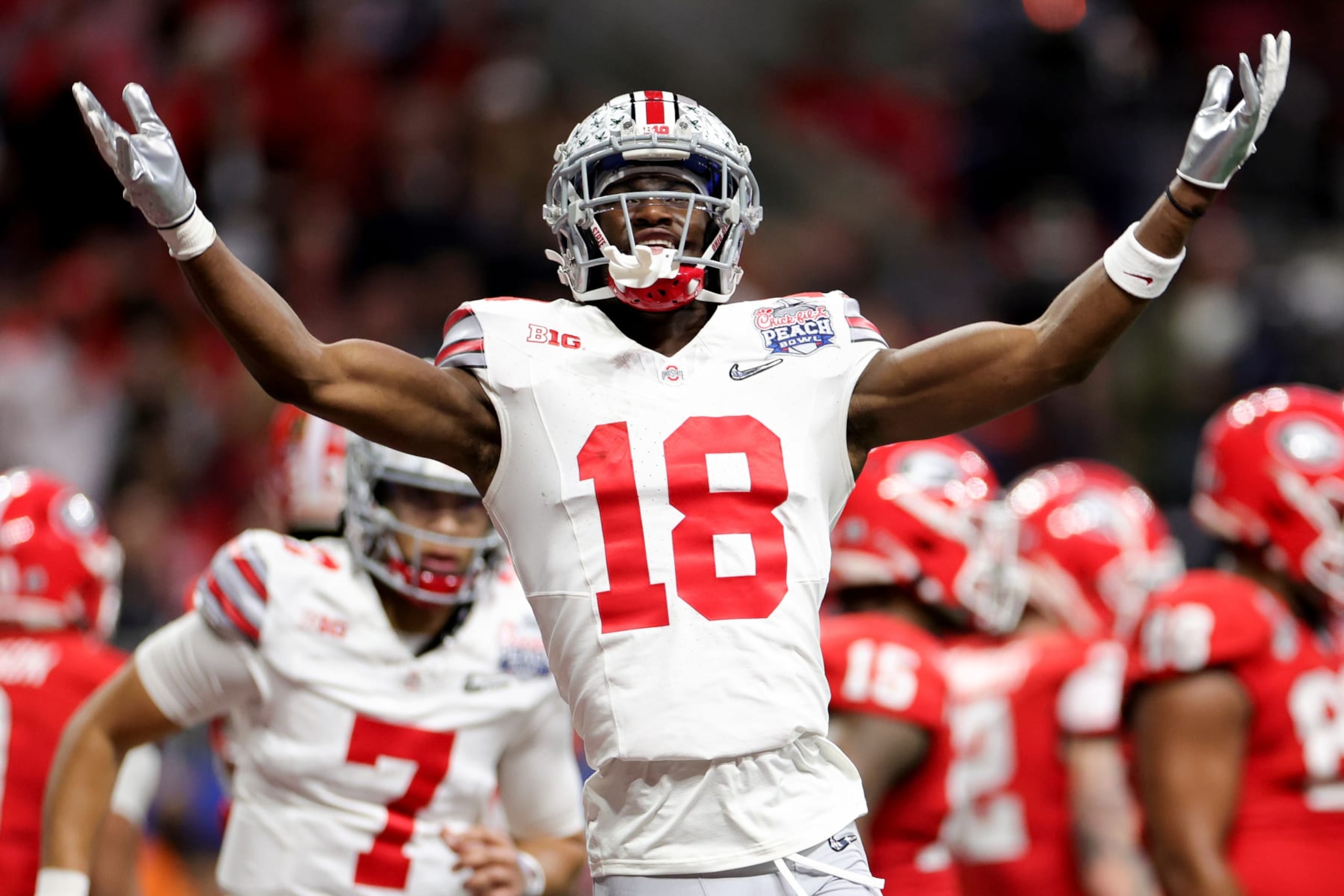
On September 2, 2023, with football in the air and hope cascading across programs across the country, Ohio State will head to Indiana for its first game of the season. In that game, barring transfer or injury or something otherwise unforeseen, wideout Marvin Harrison Jr. will suit up for his third (and final) season with the Buckeyes.
The son of Hall of Fame wide receiver Marvin Harrison became required viewing on Saturdays this past year. His 14 touchdowns were fourth in the nation, while his 1,263 receiving yards were sixth. Harrison was a regular on All-American lists when the season concluded.
The 6'4", 205-pound wideout delivered a slew of acrobatic catches throughout the season, contorting his body to make the impossible look routine. He normalized brilliance at the position, becoming one the best players in college football.
.jpg?w=2560 "Titans Giants Football")

But because of the NFL's draft rules, Harrison, a soon-to-be-junior, is not eligible for the 2023 NFL draft. Instead, the surefire first-round pick will return to college for one more season, waiting for his draft-eligibility clock to finally run out.
The question is not new, although it must be asked again. With a talent this grand, it boils down to one simple thought: Why?
We accept this because it's largely all we've known. But why should this barrier still be deemed reasonable? Why is the NFL preventing someone like Harrison from realizing his professional dreams? As the sport shifts more toward the players—as well it should—we must at least question this long-standing pillar.
For the uninitiated, it's simple: You need to be three years removed from high school before you can enter the NFL draft.
"To be eligible for the draft, players must have been out of high school for at least three years and must have used up their college eligibility before the start of the next college football season," according to NFL Football Operations. "Underclassmen and players who have graduated before using all their college eligibility may request the league's approval to enter the draft early."
It doesn't matter if you play, star, redshirt or sit. You just need to be three years out of high school. If that sounds familiar, it should. For as long as many of us have followed football or been on this planet, those rules have been in place.
Harrison is not alone in starring in a much shorter period than that. The same could be said about USC quarterback Caleb Williams and Georgia tight end Brock Bowers.
Williams, who is also just finishing up his sophomore season, would likely be considered a candidate for the No. 1 overall pick if he were eligible for this year's draft. The USC quarterback is coming off a Heisman campaign after transferring from Oklahoma following his freshman year.
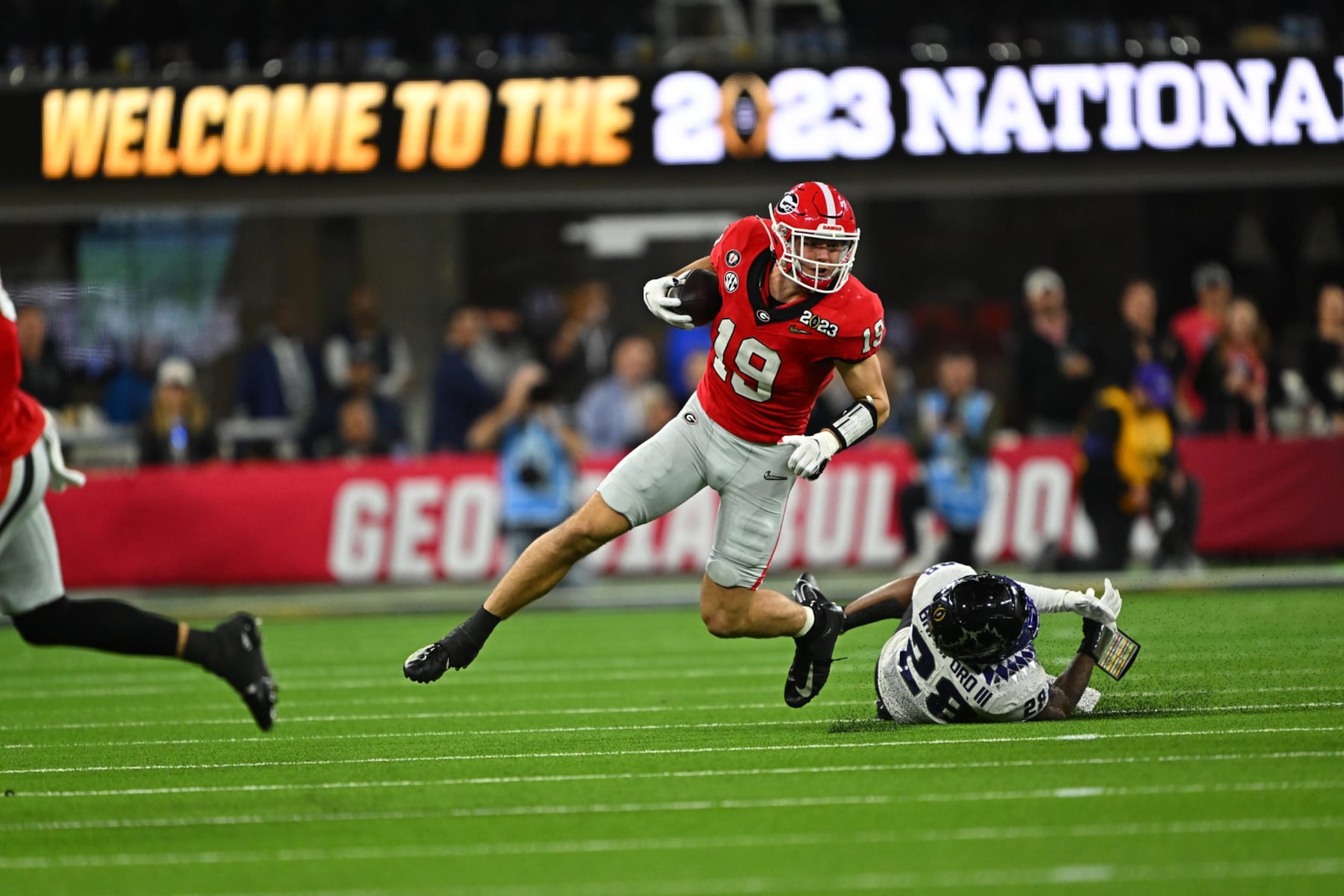
Meanwhile, Bowers is one of the best tight ends college football has ever seen. In two seasons, he has won two national titles. His seven-catch, 152-yard performance against TCU in the national championship game showcased his wide array of skill sets.
He's a unicorn at the position, and he would be a high draft pick if he were allowed to leave this year. While his future draft position could be debated due to unique opinions on the importance of tight ends, one element isn't up for debate: Bowers is ready for an NFL field right now regardless of whether it will welcome him.
Selfishly, college football fans and enthusiasts welcome these NFL draft rules. Seeing Harrison, Williams and Bowers stay on campus for one more season only increases the interest in the sport. The fact that college football fans can enjoy these players for three full seasons is an extraordinary luxury for the sport and those fanbases. Their greatness will be celebrated locally and beyond.
But there's also a bit of guilt that comes with it. Deep down, we know these players are ready to do something more. They don't need another year in school.
If they want one, fabulous. That's their choice to make. Except in many instances, that choice only goes one way.
The addition of NIL and the transfer portal have certainly softened this guilt for many. All three can now be compensated for the inconvenience of having to wait one more year before going pro. And the portal, which allowed Williams to join Lincoln Riley in USC, has provided a newfound flexibility that long eluded the sport.
However, these modifications cannot and should not distract us from questioning eligibility requirements that are entirely out of date. We questioned these rules 20 years ago; why shouldn't we now?
Former Ohio State running back Maurice Clarett sued the NFL in 2003, challenging the laws that prevented him from leaving early. A star freshman with the Buckeyes, Clarett felt like a potential tipping point.
Ultimately, he was not. The 2020 collective bargaining agreement between the NFL and NFLPA chose to keep the draft eligibility rules exactly as they are.
The NFL would like to keep it this way for as long as possible. It essentially has a minor league scouting system and development hub that it doesn't have to pay for. While the arrangement is unique, it's perfect as is for the NFL's purposes.
There's no need to rush players in the league from the NFL's perspective; they will get there soon enough. In their absence, another promising draft class will be properly assembled, scouted and put into the NFL. But only when they've waited long enough.
The excuse that players need time to physically develop at the college level has long grown tired. Does anyone believe that Harrison couldn't physically compete with NFL cornerbacks right now? Of course not.
Players are coming to college more physically prepared than they ever have. By the time most early enrollees reach their first football season, their bodies have been reshaped. After two years, they have completely changed.
That isn't to say that we're ready for high school seniors to take a direct pipeline to the NFL. It's merely acknowledging that as the sport evolves, players evolve. The rules should grow as the game grows around them.
As the NBA contemplates the possibility of lowering its age requirement back to 18, perhaps as soon as the 2024 NBA draft, the NFL should at least explore the possibility of doing something similar.
Not all players will be prepared for the NFL after their sophomore year. In fact, the overwhelming majority likely won't be close. Staying at a university for longer has distinct advantages, especially in the NIL era. The path to developing into an NFL-caliber player can and often does take three to four years, and the resources in place on campus will allow many to develop at their own pace.
But when COVID-19 impacted the 2020 season, we saw what two years of development looked like for a handful of stars who decided to opt out of their junior years rather than play a limited, disrupted slate of games.
Included in that group was former LSU wideout Ja'Marr Chase and former Penn State linebacker Micah Parsons. Both earned Rookie of the Year honors for the Cincinnati Bengals and Dallas Cowboys, respectively, becoming NFL stars after a matter of weeks.
That is not to say that this pathway is normal. It takes transcendent talents to be that ready after such a short period of time. However, the reality is that those players do exist, and more are likely to follow.
It seems reasonable to question why such unreasonable rules remain in place after so long. More specifically, why tremendous sophomore talents must wait another year to officially start their professional journeys.
College football players are better compensated than they once were, which cannot be overlooked. Insurance polices and NIL have somewhat mitigated the risk of injuries.
Things are much better than they used to be for star college football players, and don't let anyone tell you otherwise. But they are still trapped in a system that restricts their ability to pursue their professional dreams when so desired.
For the college football fan, that ceiling is welcomed. More excellence. More starpower. More time.
But for the players who have proved to be NFL-ready much earlier than most, one can't help but wonder how much longer this can go on.

.jpg?w=2560 "Broncos Eagles Football")

.jpg?w=2560 "Report: Baker May Miss Up to 6 Weeks")
.jpg?w=2560 "Rap: Lions, LaPorta End Contract Talks")