NHL: 7 Players with Something to Prove in 2011-12
Hockey players are a proud lot. Tell them they are underachieving and one can imagine the response he or she might get.
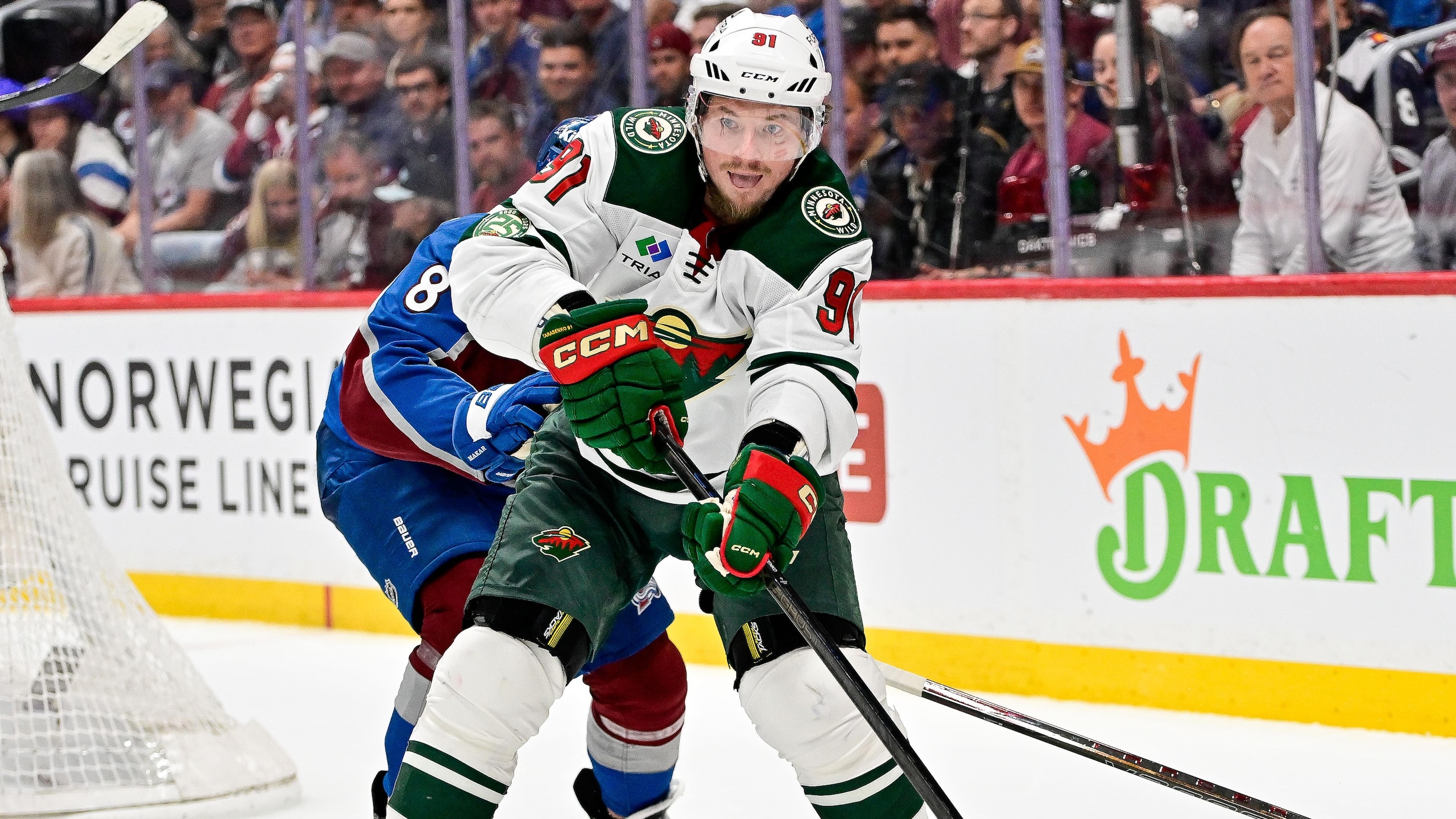
"I always want to prove people wrong, and I'd like to do it again," said Dany Heatley of his trade to the Minnesota Wild.
Heatley is one of a number of NHL players looking for a rebound season this fall.
"If you score goals you're always expected to score goals, and that's never going to change," Heatley said. "I love being in that spot. If you don't like being in that spot, I think you're in the wrong place."
Heatley's comments indicate he is eyeing a return to form this season. He likely isn't alone.
Here are seven NHL names with something to prove in 2011-12.
Enjoying the story? That's okay, it happens. Get more enjoyment at SlewFooters.com, or Twitter with James @slewfooters.
Roberto Luongo
1 of 7Think Luongo might have something to prove after last season's collapse? The Canucks dropped series leads of 2-0 and 3-2 on their way to losing the Stanley Cup Finals in seven games.
Of all those responsible, Luongo did little to help the cause. The franchise goaltender allowed 20 goals in seven games, while recording two shutouts at home. He allowed six of his 20 goals against at home, four of which in game seven.
That totals 14 goals against in three games in Boston (4.67 GAA), where each time the Bruins managed to quash the momentum Vancouver had created on their own ice.
The losses of momentum proved too much by the final game. Boston walked away with the Cup on the strength of four more goals against Luongo, one of them a patsy, another shorthanded.
The President's Trophy is little consolation to an entire Canucks team which underachieved in the Cup Finals, but the brunt of the blame lies, perhaps rightfully, on the shoulders of their goaltender.
Luongo's redemption will come only in the playoffs. Beating up on Edmonton, Calgary, Colorado and Minnesota won't prove much this regular season.
Vancouver needs to move deep into the postseason once again, and Luongo needs to perform well, even if in a losing effort, to ease doubts about the ten years remaining on his contract.
Evgeni Malkin
2 of 7Evgeni Malkin will be the Penguins player most looking for a strong season in 2011-12.
Two straight seasons of nagging (and more-than-nagging) injuries, hapless linemates and inconsistent production have dulled the shine on his Conn Smythe and Art Ross 2008-09 season.
Malkin battled knee injuries through all of last season before receiving the big one in a game against the Buffalo Sabres. Malkin tore a knee ligament in the game, knocking him out for the remainder of the season (though he may have been able to return for a deeper playoff run).
Before the Buffalo injury, though, Malkin was experiencing a down year. He played fewer than 45 games for the first time in his career in 2010-11—it was also the first season in which Malkin produced at less than a point-per-game pace.
A regression that has seen Malkin go from Selke Award whispers to turnover machine. Malkin led the league in takeaways in 2008-09 with 94. That number dropped to 56 in 2009-10.
In 43 games last season, Malkin had 40 giveaways to just 29 takeaways.
The reason for the decline? It's hard to say, though Dan Byslma's systems certainly stand out. In addition to injury and linemate factors, Malkin's declining productivity has coincided with the two seasons in which Dan Bylsma has run the team.
While Bylsma's work did little to stop Malkin's storming 2008-09 campaign, Bylsma had little chance to leave his impression on the team. After two full seasons, Pittsburgh is Bylsma's club.
The systems worked well enough to earn a Jack Adams Award, but they are the absolute antithesis of "European" hockey, which may not play well to Malkin's strengths.
The best bet for Geno and the Penguins is to let him play the game as it occurs most naturally to him. If that means forfeiting the "grind, grind, grind" mantra while the second line operates, so be it.
Malkin is set to make $8.7 million this year, the same as Sidney Crosby. Malkin has the potential to produce like Crosby, and by all rights needs to in order to validate his paycheck.
Perhaps the team needs to let him play in the manner which will most facilitate that.
Brad Richards
3 of 7Brad Richards was the star (get it?) of the 2011 free agent class and the New York Rangers compensated him as such, awarding Richards a nine-year, $60 million contract.
The deal carries a cap hit that averages out to $6.67 million per year, but for each of the next two seasons Richards will be one of the highest-paid players in hockey at $12 million per.
The biggest name of the summer, Richards immediately becomes New York's No. 1 center, where he will be expected to feed Marian Gaborik and help fuel the Rangers' offense through the murderer's row that has become the Atlantic Division.
For a $60 million man, Richards will be expected to pick up his offense. He totaled 77 points in 72 games with the Stars last season, but has produced at a better than point-per-game clip only three times in 10 NHL seasons.
He's also had some injury problems lately, enduring a concussion last year and appearing in 56 games in the '08-'09 season.
Richards is a proven playoff performer, the area in which the Rangers most need to improve. New York hasn't reached the second round of the postseason since being eliminated by the Pittsburgh Penguins in 2007-08, Jaromir Jagr's last season with the team.
Richards will come to town having scored 21 goals and 41 assists in 63 career postseason games.
Henrik Lundqvist has been the workhorse in New York for years. Acquiring a center of Richards' caliber will certainly take some of pressure of the goaltender's shoulders, and Richards will be shouldering a good deal of expectation as a result.
His first season with the Blueshirts needs to be a success. GM Glen Sather has thrown a lot of money at free agents, sometimes with little to show for it. The pressure is on Richards to deliver for the organization.

Dany Heatley
4 of 7Dany Heatley has carried high expectations his entire career. After potting 41 goals with the Atlanta Thrashers in 2002-03, Heatley moved on to Ottawa, where he posted 50 goals in consecutive years in 2005-06 and '06-07.
Since demanding a trade from Ottawa prior to the 2009 season, Heatley has seen his production drop steadily. He scored 41 and 39 goals in each of his last two seasons in Ottawa while playing on a line with Daniel Alfredsson and Jason Spezza.
In San Jose, Heatley played with all-stars Joe Thornton and Patrick Marleau, yet posted seasons of 39 and 26 goals in 2009-10 and '10-'11, respectively.
His playoff numbers are nothing to write home about, either. Heatley has just 15 goals in 66 career postseason games.
While he is a 1.03 PPG player in the regular season, Heatley's PPG average drops to .636 in the playoffs.
Last year, he added just three goals and six assists in 18 postseason games, and the Sharks were dropped from their second-straight Western Conference final, this time in five games by the Vancouver Canucks.
The steady decline has kept Heatley on the move, and he will now try to help revive Minnesota's anemic offense and rediscover his own scoring touch.
Possible linemates include Mikko Koivu and former Sharks teammate Devin Setoguchi. Heatley has stated that he enjoys proving people wrong, and he'll have the chance to do so in hockey country.
Helping Minnesota return to the playoffs would likely mean a big step in the direction of reversing his waning production.
Ilya Bryzgalov
5 of 7No one has more pressure on their shoulders than Ilya Bryzgalov. No one.
Philadelphia Flyers fans have turned a full generation older without having seen a stable, consistent goaltender backstop their team through a deep playoff run.
The Flyers haven't had the guy in net since Ron Hextall, who was traded from Philadelphia to Quebec in the 1992 trade that brought Eric Lindros to Philadelphia.
For nearly 30 years, Philadelphia has lacked their guy. They believe they've finally reeled one in in Ilya Bryzgalov.
The pressure must be suffocating.
Remember, Bryzgalov isn't a high-ceiling prospect going to a team whose town is indifferent to hockey, as was the case when he signed on with the Phoenix Coyotes. Flyers fans are ruthless. Merciless. They spare no one.
To compound the pressure, Bryzgalov is a known commodity. He broke out with 42 wins in 2009-10 and held form with 36 wins last season. In each of those seasons, he has had a goals against average below 2.50 and a save percentage north of .920.
Flyers fans will expect him to be a star goaltender. Anything short of that, and one can be sure the fans will let him know just how they feel.
Bryzgalov needs to prove he can be the guy for the Flyers. Acquiring him meant clearing cap space that cost the team Jeff Carter, at the least.
Coming up short of another playoff run will be a disappointment, and Bryzgalov is no postseason ace. He is just 12-13 in the postseason as a starter, 3-8 in the last two postseasons combined.
He'll have to help bring the team deep into the playoffs to ease doubts about his nine-year contract.
Jaromir Jagr
6 of 7Everyone playing for Philadelphia has something to prove, if only to avoid drawing the ire of the team's fans.
Jagr is a special case, however.
Few players in hockey have the man-sized juevos needed to pull of a maneuver like Jagr orchestrated this offseason. After telling the Pittsburgh Penguins and Detroit Red Wings that he would be interested in coming to both teams (even claiming that he wanted to do right by Mario, in Pittsburgh's case), he forced the front offices of those clubs to wait.
And wait.
And wait, while he and his agent Petr Svoboda mulled over the decision.
The result? Detroit and Pittsburgh rescinded their offers, and Jagr went to the highest bidder, the Philadelphia Flyers.
Though Jagr and Svoboda have claimed that other NHL teams offered as much as $6 million per season, the move is money-based, nothing more. The Penguins and Red Wings were prepared to offer as much as $2 million, perhaps $2.5 million, but weren't willing to mortgage their free agent plans on an aging star who hasn't played in the NHL in three seasons.
Philadelphia threw more money on his lap, and Jagr bit. The 39-year-old winger has been a mercenary throughout his career, and the Flyers signing was the latest instance of it.
Now, though, he'll have to provide the scoring to match his deal. $3.3 million is a good deal of money for any player, and the Flyers aren't exactly rife with cap space. Philadelphia has to expect Jagr to produce reasonably well, and especially on the power play.
For all that occurred this summer in the NHL, Jagr could have made two or three times as much, tax free, by remaining in the KHL.
In returning to North America, Jagr must have had something he wanted to prove. By joining the Flyers in the fashion in which he did, he'll have something to prove to the rest of the NHL (and especially Pittsburgh, who must be dying to play the December 29 game at CONSOL).
And, accepting a paycheck of $3.3 million, he'll have to prove to Flyers fans that he was worth the investment.
Alex Ovechkin
7 of 7It may be the rest of the team who have more to prove than Alex Ovechkin, but as captain the weight of expectation will be placed most heavily upon him.
That expectation, this year more than ever, is a trip to the Stanley Cup finals.
Ovechkin performed admirably while his team crumbled around him during last year's Eastern Conference Semifinals round against the Tampa Bay Lightning, accounting for five goals and five assists in nine playoff games.
Ovechkin had a down year offensively like the rest of Capitals, and it was expected that the decreasing offensive output would make the Caps a stronger defensive team that could thrive in the postseason.
While the Capitals finished second overall in penalty kill percentage and fourth in goals against, they fell to 19th in goals per game and 16th on the power play, unfamiliar territory for a team that seemed able to score at will the year prior.
Finding a balance will be key to making a long playoff run. The Capitals have been eliminated in heartbreaking fashion in each of the last three postseasons—in seven games by the Penguins, in seven stunning games by the Montreal Canadiens and a Chernobyl-style collapse in last year's playoffs against Tampa Bay.
Believe it or not, Ovechkin's goal output has decreased in each of the last three seasons, going from a monstrous 65 goals in 2007-08 to seasons of 56, 50 and 32 goals. While none of those numbers belie a slouch of a player, it seems as though Ovechkin's productivity has come down while the rest of the team has chipped in.
Of course, that complementary effort always seems to dry up in April and May.
This slot may be better reserved for Alex Semin and Nick Backstrom, perennial playoff ghosts, or for head coach Bruce Boudreau, whose performance in the HBO 24/7 series exposed a coach with a tenuous grasp on his locker room.
However, Ovechkin is the face of the Capitals. If this team ever slays its postseason demons, it will be because he led the charge.
The moves made by GM George McPhee this summer only intensify the Capitals' need to prove themselves in hockey's second season.

.jpg?w=2560 "Cam Ward Says He's Not A Loser")
.jpg?w=2560 "Viral Dan Campbell Presser 💙")
.jpg?w=2560 "Chargers Fall to 0-5 🤢")