
Minnesota Vikings: Grading Each of the Vikings' 2011 NFL Draft Picks
The NFL draft always has a way of washing out that bad taste in your mouth after a season of disappointment.
To say the 2010 Minnesota Vikings fell short of expectations is an understatement, and it had fans anxiously waiting an off-season of retooling a team that just missed the Super Bowl in 2009.
Free agency and player trades are still not an option with the lockout still in effect, but last season proved that the Vikings are better off building the majority of its team through the draft.
Cornerback Lito Sheppard and wide receiver Greg Camarillo were brought in last season to help fill holes, but neither made much of an impact.
There was also a certain gray-haired quarterback who was brought back for one more year. Brett Favre didn't have the same magic that people around the league saw in his first season in Vikings purple, leading to the demand to join the rest of the division in bringing in a potential franchise quarterback, instead of relying on an aging veteran every two years.
The Vikings hired Leslie Frazier as head coach and also brought in a completely new offensive staff. The 2011 draft was the final step in turning over a new leaf in Vikings country.
Here is a look at the 2011 draft class and my grades for all 10 picks.
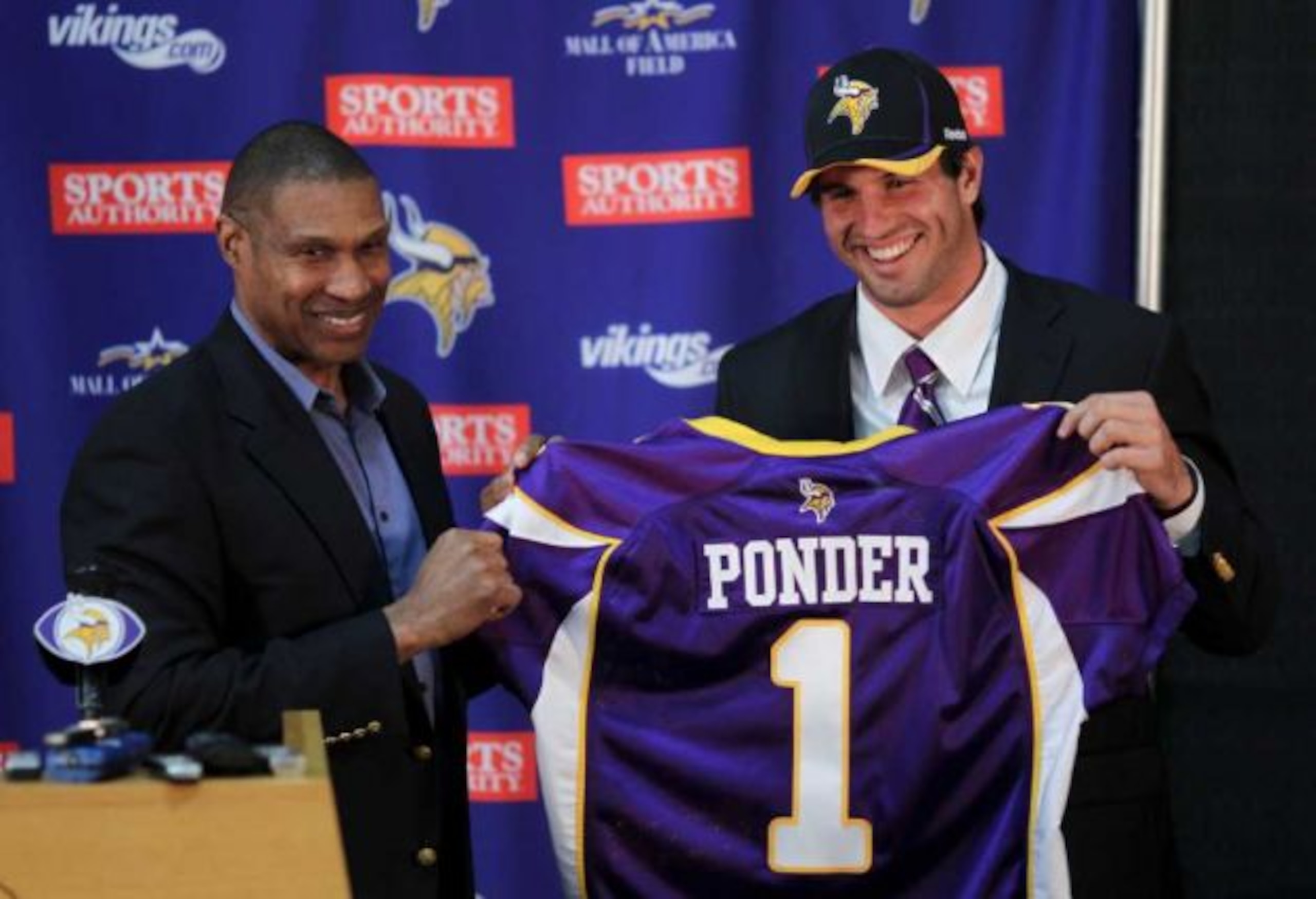
Round 1: No. 12 Overall: Christian Ponder, QB Florida State
1 of 10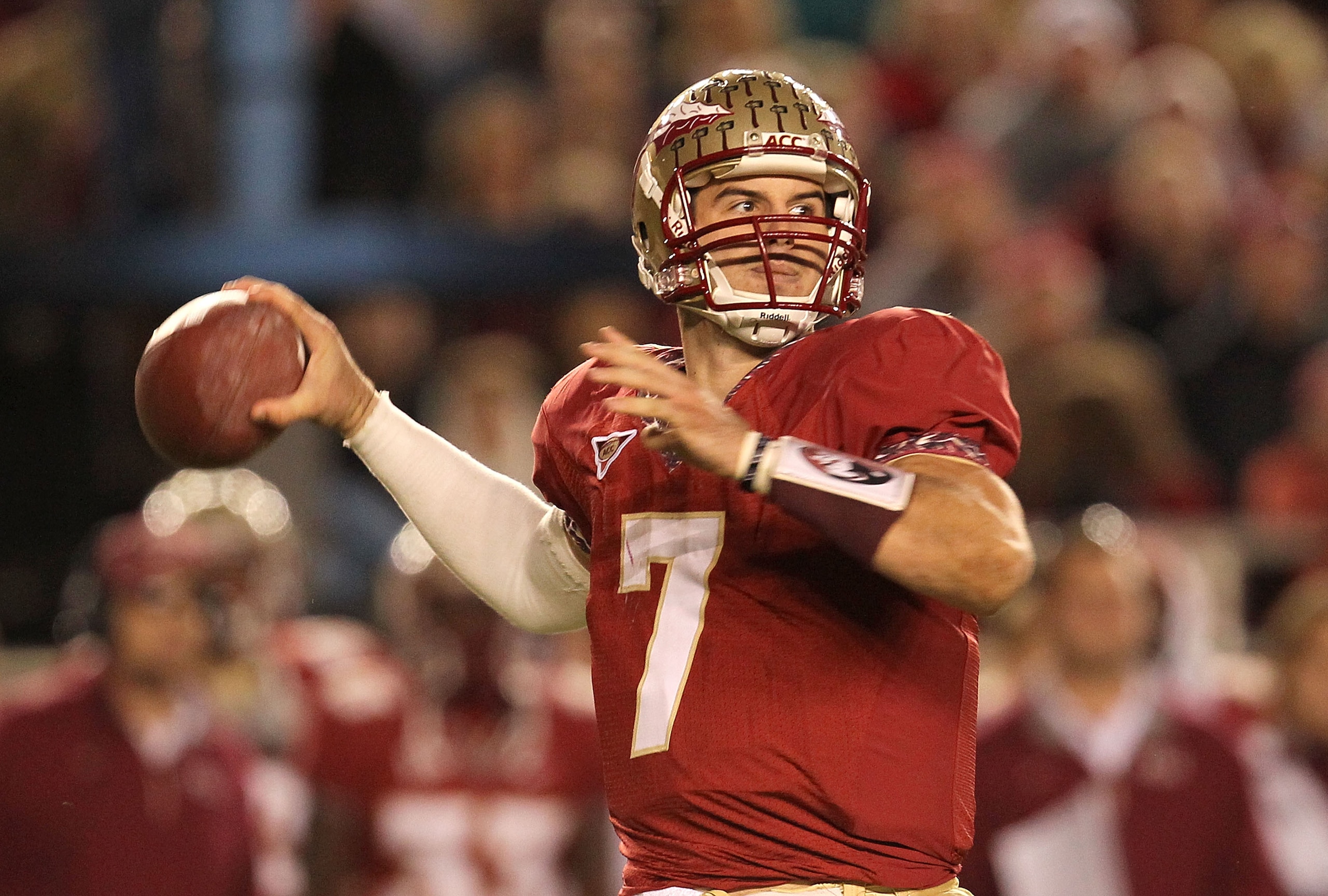
The smoke seems to have finally settled about the selection of Florida State quarterback Christian Ponder. While many Vikings fans were surprised and some disappointed, it was a pick the team had to make if they are ever going to get to the next level.
Ponder is a three-year starter who completed nearly 70 percent of his passes in his junior season. His accuracy isn’t the only thing that stands out. He moves around in the pocket well, escapes pressure, has great command in the huddle and has more arm strength than people have given him credit for.
Many believe Ponder is the most NFL-ready quarterback in this draft. I agree. Outside of just his physical traits, Ponder has the charisma you want from the leader of your football team. So is Ponder a reach? Depends, is taking a shot on a future franchise quarterback ever a reach?
For the people who think Ponder would have been there with the Vikings 43rd pick, think again. The Vikings either had to take him in the first round or trade up in the second and lose the valuable picks they desperately needed to add depth at other positions.
No one has any idea how Ponder will turn out, but it was absolutely the right choice to take him when they did. You eventually have to take a chance to make your franchise better, and that’s what the Vikings did.
Grade: B+
Round 2: No. 43 Overall: Kyle Rudolph, TE Notre Dame
2 of 10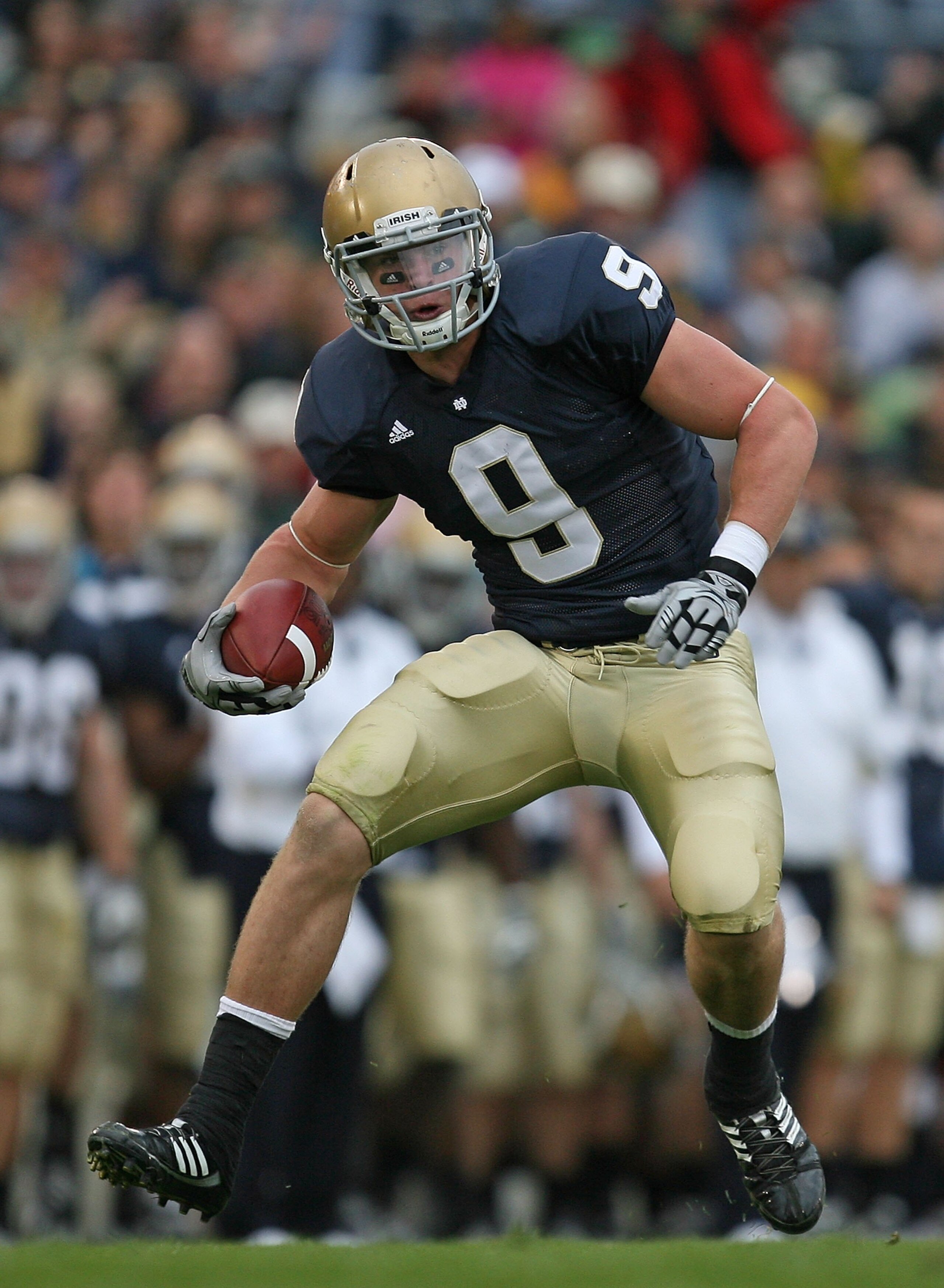
The Vikings went with the "best player available" approach with Notre Dame tight end Kyle Rudolph. Rudolph was thought to be a possible first-round pick, but missing seven games in 2010 contributed to Rudolph sliding all the way to No. 43.
Tight end wasn't a huge need for the Vikings, but adding a weapon for Ponder was a no-brainer. Rudolph is an athletic tight end with the size to become a popular target, especially for a young quarterback.
New offensive coordinator Bill Musgrave will love creating mismatches by using both the 6-6 Rudolph and the 6-4 Visanthe Shiancoe in multiple-tight end sets.
Rudolph is still raw as a run blocker, but he'll have the chance to learn from one of the best blocking tight ends in the business in Jim Kleinsasser.
If Rudolph can stay healthy, he can be a potential game-breaker at tight end.
Grade: A
Round 4: No. 106 Overall: Christian Ballard, DT Iowa
3 of 10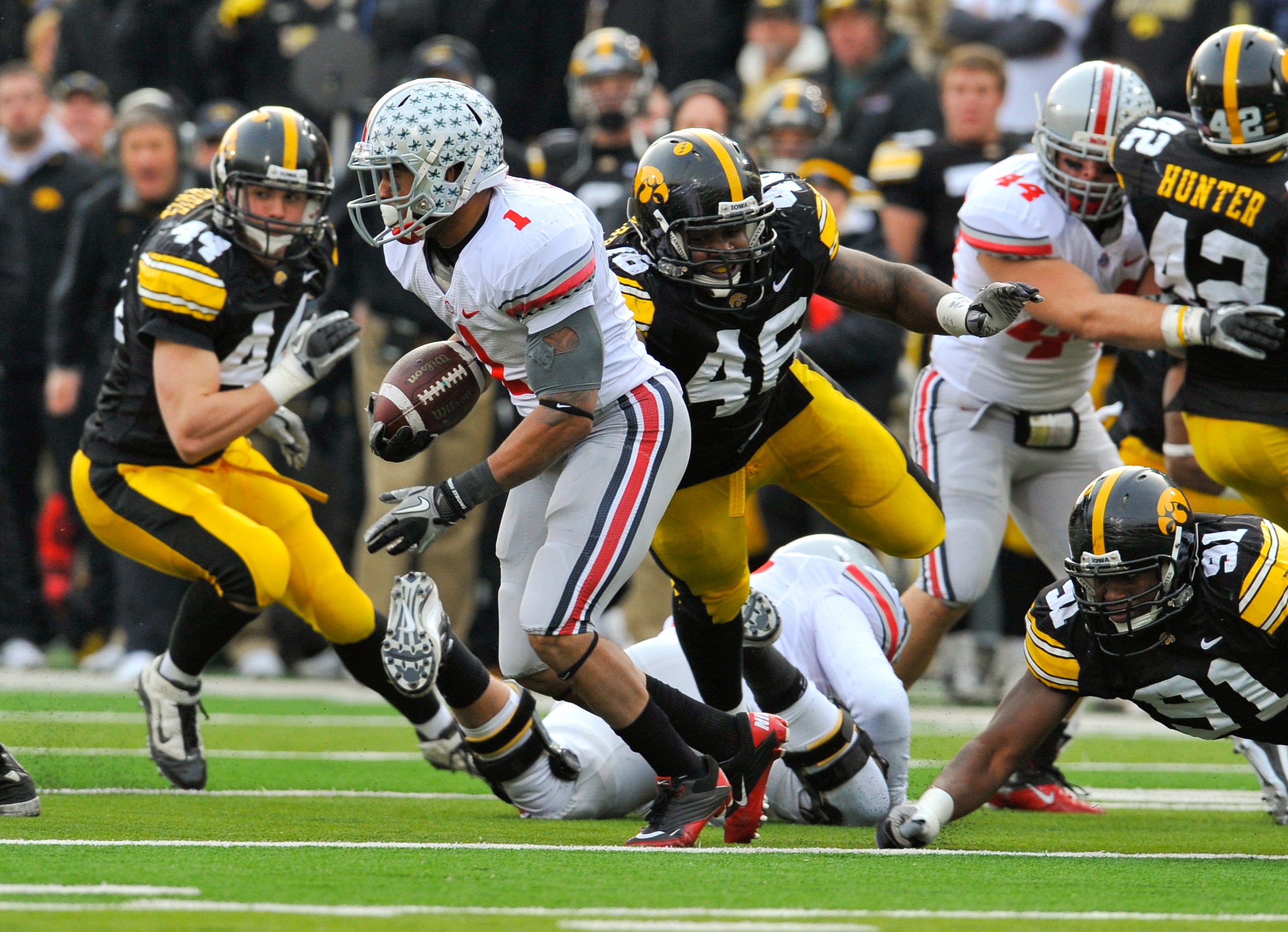
The Vikings continued their trend of drafting defensive linemen in the fourth round. The Vikings had taken defensive linemen with their last three fourth-round draft picks (Ray Edwards, Brian Robison and Everson Griffen), and Iowa's Christian Ballard now makes it four in a row.
Defensive line was an area that would have been an intriguing target in the first round with so many talented players at the position in this year's draft.
Instead, the Vikings waited to snag Ballard in the fourth with the hope that he can add versatility to a defensive line that could look a lot different next season.
Ballard started his career at Iowa as a tight end, which helps explain his quick feet and explosiveness. His pass-rushing ability will need to improve, but he can play both on the inside and outside.
Ballard could have the opportunity to start right away with Pat Williams likely signing elsewhere and Kevin Williams possibly facing a four-game suspension.
Ballard has some issues, including possibly failing a drug test at the combine. He also can be inconsistent at times but the Vikings got a lot of value out of this pick.
Ballard can help himself out by looking to learn from veterans like Williams and Jared Allen, and he will have a great opportunity to see significant playing time early.
Grade: B+

.jpg?w=2560 "Seahawks Chiefs Football")
Round 5: No. 139 Overall: Brandon Burton, CB Utah
4 of 10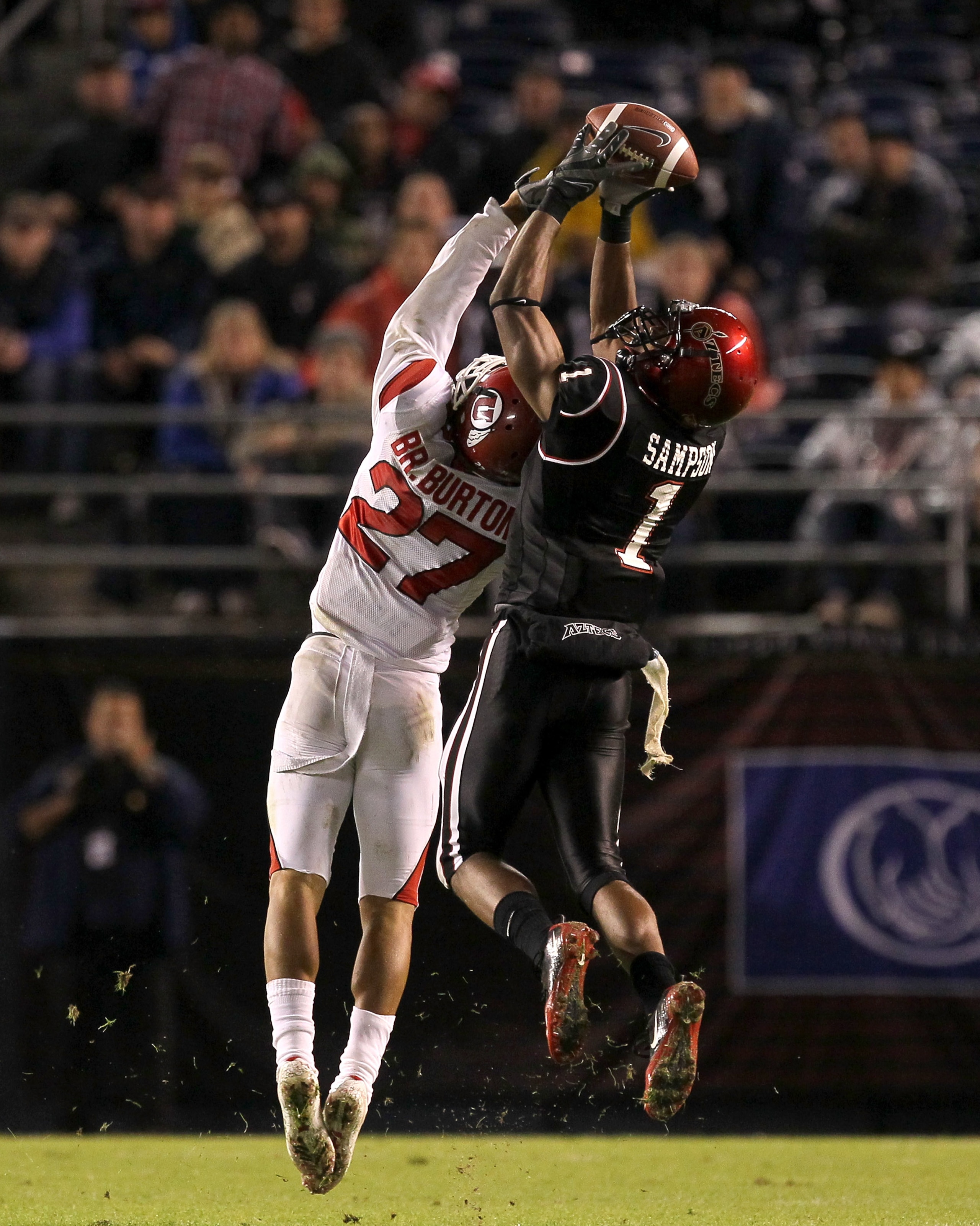
You could call the selection of Utah cornerback Brandon Burton another value pick for the Vikings. Burton declared for the draft after his junior year when he received a second-round draft grade from the NFL Draft Advisory Board.
However, he fell to the fifth round and the Vikings added Burton with the hope that he can bring depth to a group of cornerbacks who could not stay on the field last season.
Antoine Winfield is still playing at a high level but he'll be 34 in June. Cedric Griffin only played in two games last season and has needed two knee surgeries the last two seasons. Last year's top pick Chris Cook, also dealt with injuries last season.
You can never have enough depth at the corner position and Burton will have a chance to compete for time in nickel or dime situations. Burton doesn't have much playmaking ability, with only three career interceptions, but he started 25 games at Utah and is known for being good in coverage.
Burton also has special teams ability, blocking two field goals while at Utah. Burton will likely need some time to develop but has the upside to be a very good NFL cornerback.
Grade: B
Round 6: No. 168 Overall: DeMarcus Love, OL Arkansas
5 of 10
The offensive line struggled last season, both making holes for Adrian Peterson and keeping Brett Favre off his back. The Vikings used a fifth round pick last year on Chris DeGeare to help the line and they again used a late pick this season on an offensive lineman in Arkansas's DeMarcus Love.
Love brings a lot of versatility, starting 26 games at left tackle and another 11 at guard. As a senior, he would move from the left side of the line to the right multiple times a game on his way to becoming a first-team all-SEC selection.
Love will be able to provide valuable depth on the line with his ability to play all over. He likely isn't ready to challenge Bryant McKinnie or Phil Loadholt for a starting spot, but he could be a valuable player right away.
Grade: B
Round 6: No. 170 Overall: Mistral Raymond, DB South Florida
6 of 10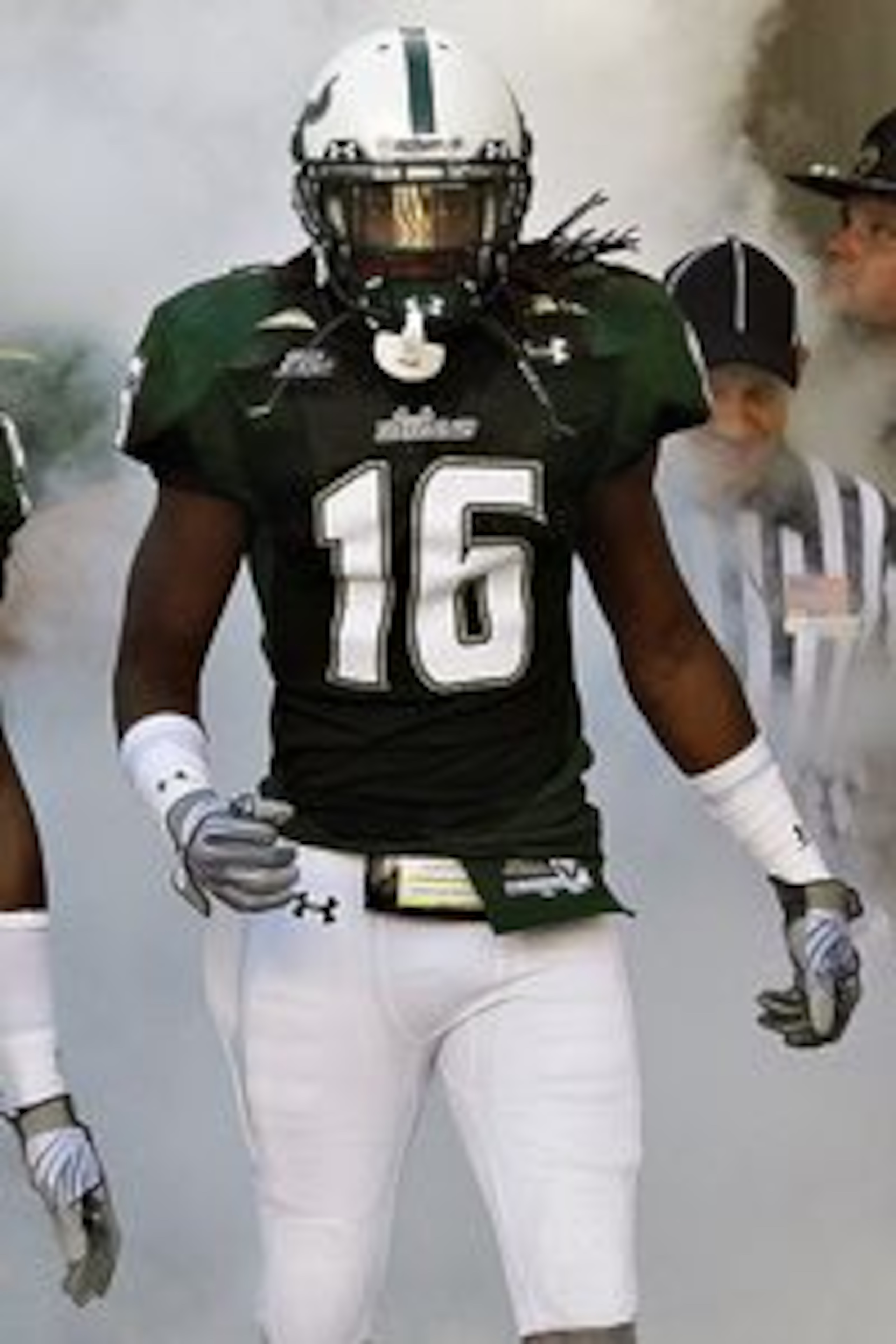
Generally you wouldn't think a sixth round pick would have much of a chance to see playing time as a rookie. But, if you saw the Vikings safeties last season, you could see why anyone on the roster would have a chance to earn a spot.
Mistral Raymond can play both safety and cornerback and could see himself in the mix at safety if Madieu Williams and Tyrell Johnson continue to struggle.
More than likely though, Raymond will have to earn himself a spot by playing above-average special teams.
Raymond is a former walk-on and had to earn his way on the South Florida roster through special teams before becoming a starter.
The Vikings special teams have had their ups and downs, and if Raymond can bring a spark to the unit, he will be a valuable addition.
Grade: C+
Round 6: No. 172 Overall: Brandon Fusco, OL Slippery Rock
7 of 10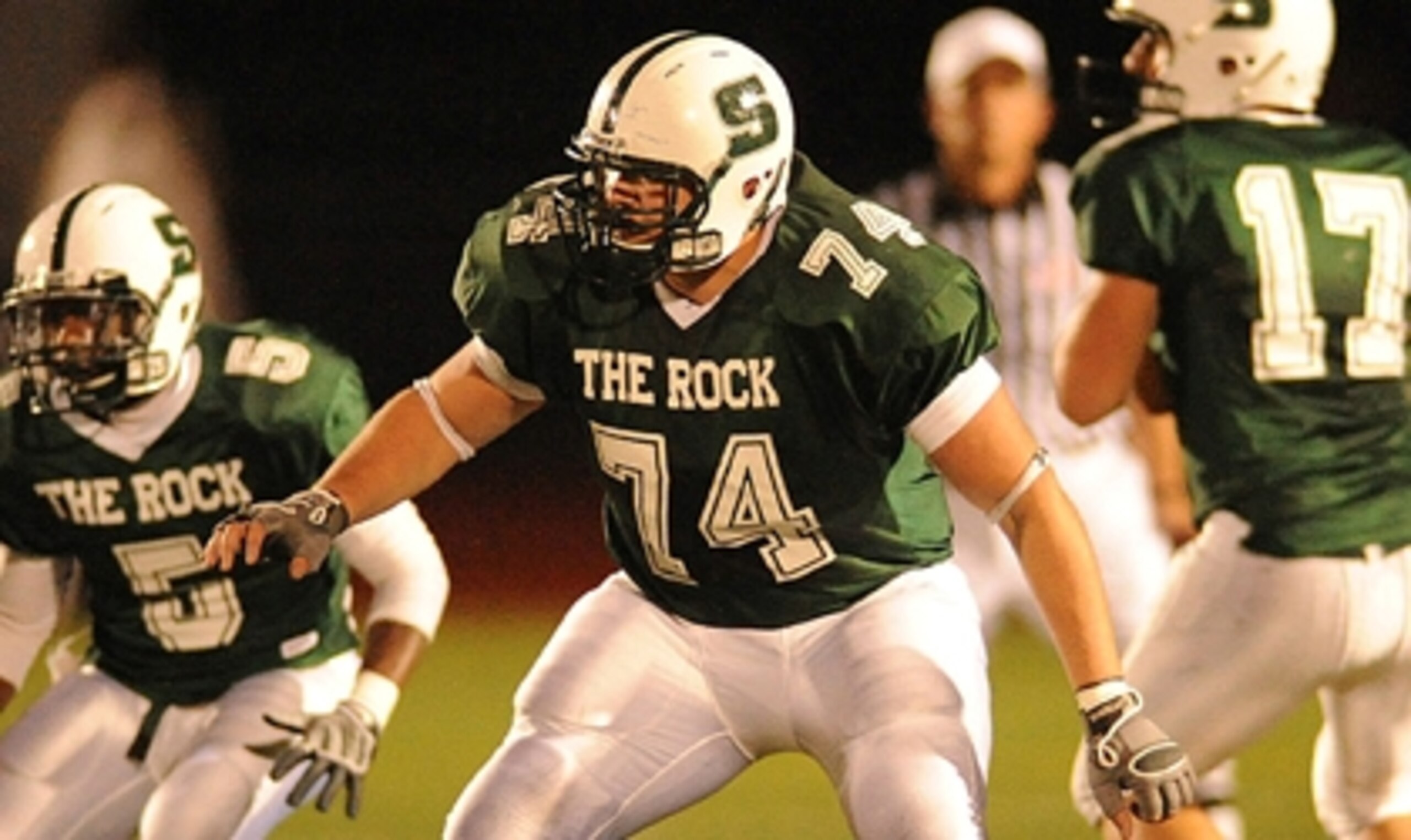
The Vikings drafted Brandon Fusco with the idea of using him as a developmental player. Fusco played at Division II Slippery Rock, where he earned the Gene Upshaw award for the top Division II offensive lineman. It will be a much different game at the next level, though.
Fusco has the size to play in the NFL, (6-4, 316 pounds) but it will be an uphill battle for someone who didn't play against top competition.
Fusco has a great motor and had a strong showing at the Senior Bowl. He played center in college but will likely try to earn a spot on the team as a swing offensive lineman.
Fusco's best bet is likely to try to earn a spot on the Vikings practice squad, but could have an opportunity to make the final roster if the offensive line continues to struggle.
Grade: C-
Round 6: No. 200 Overall: Ross Homan, LB Ohio State
8 of 10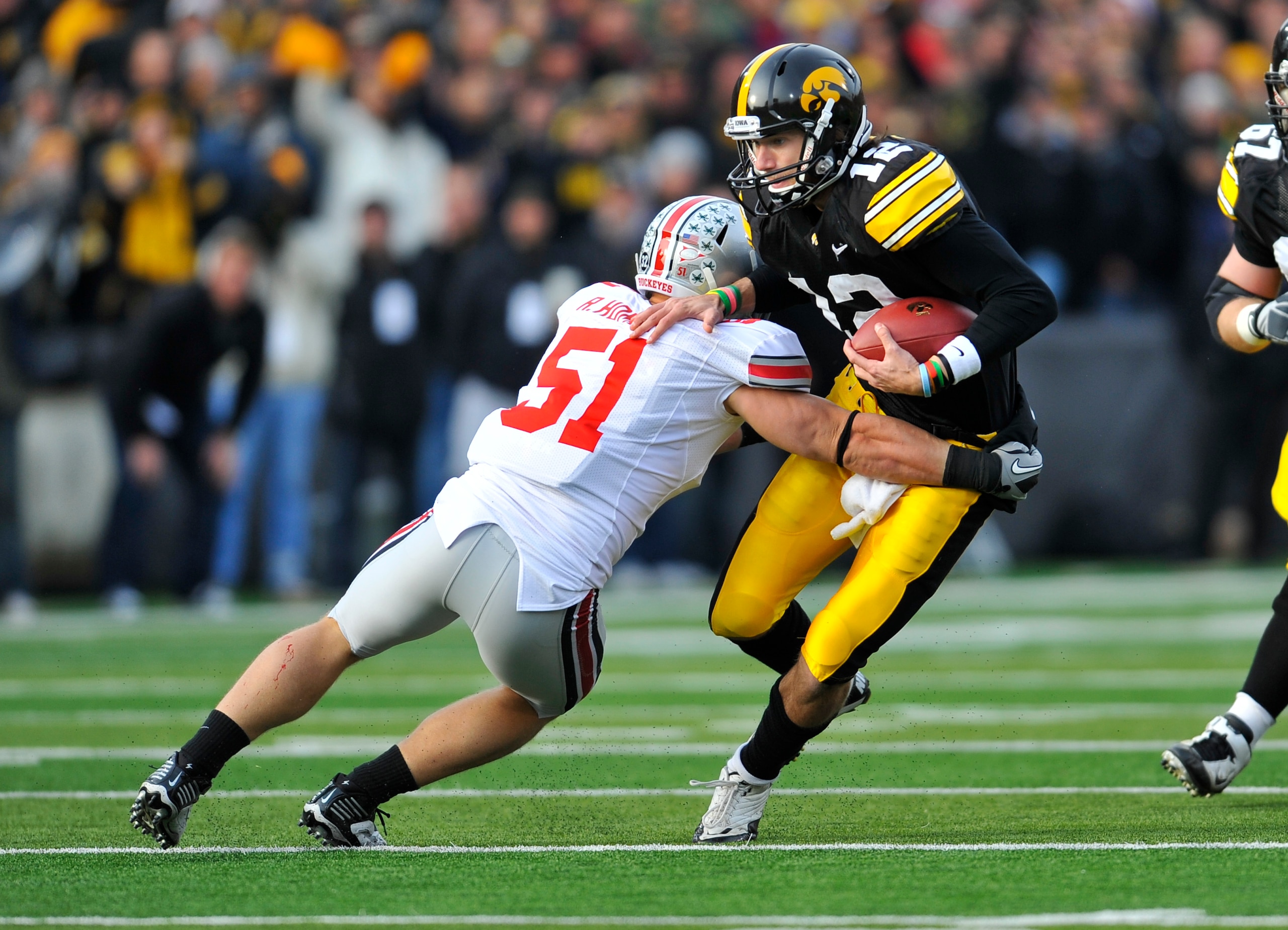
The Vikings took a familiar face around the Midwest with the final pick of the sixth round. Ohio State linebacker Ross Homan has been one of the best players on the best team in the Big Ten. Homan is coming into an ideal situation with the Vikings.
He is considered a Tampa-2 type linebacker, which the Vikings run. He also may have an opportunity to compete for a starting position right away if Ben Leber leaves as a free agent.
Homan put up great numbers at Ohio State, finishing his career with 253 tackles and seven interceptions.
Homan's size could hold him back in the NFL, though. He is listed as only 6-0, 238 pounds and that could hurt him against mammoth NFL offensive linemen.
Homan makes up for his small stature by having tremendous instincts. If Homan can fight through blocks, he could be a steal this late.
Grade: B
Round 7: No. 215 Overall: D'Aundre Reed, DE Arizona
9 of 10
A lot of mock drafts had the Vikings taking a defensive end in the first round due to the fact that Ray Edwards will likely not be back. Instead, the team waited until the seventh round to select Arizona's D'Aundre Reed.
It's hard to know what the team really got from Reed. He played a lot at Arizona but was in a three-man rotation and didn't start.
Reed is another player who was likely taken as a developmental prospect. He has athleticism and could potentially add depth to the defensive line.
Reed's best chance to wear purple this season likely will be as a practice squad player, but then again, John Randle wasn't considered a potential starter his rookie season, so you never know.
Grade: C-
Round 7: No. 236 Overall: Stephen Burton, WR West Texas A&M
10 of 10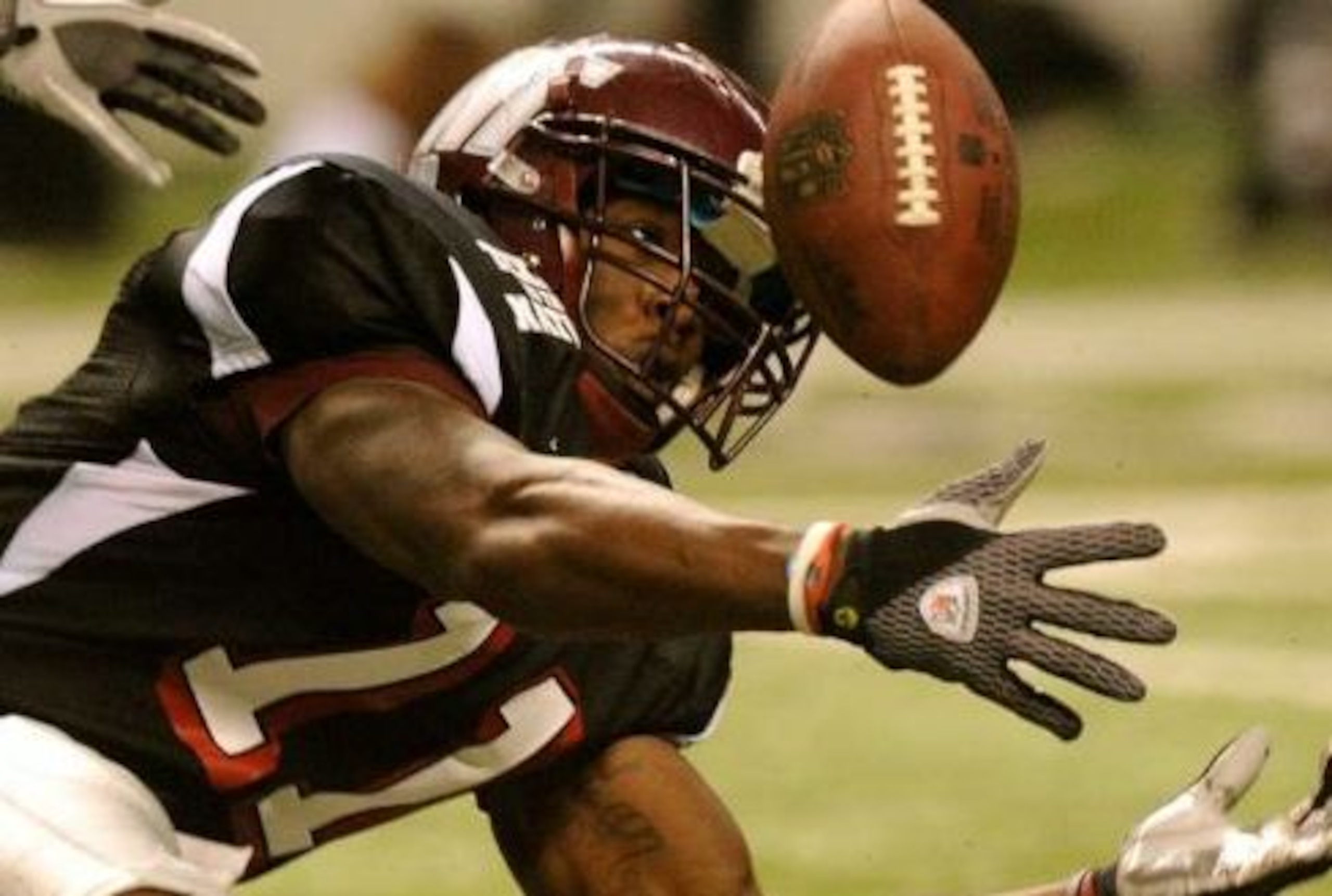
With the Vikings final pick of the 2011 draft they went with speed and a possible special teams upgrade. West Texas A&M wide receiver Stephen Burton chose to play Division II football after two years of junior college to avoid having to sit out an year.
Burton could have gone to Oklahoma but instead made his mark at a lower level. In 2010, Burton had 70 receptions for 1,021 yards and 11 touchdowns. He also contributed as a kick and punt returner, a likely spot for him if he is going to make the Vikings roster.
Burton runs a 4.44 forty yard dash, something that intrigued the Vikings as they are trying to use Percy Harvin less on kick returns.
Greg Camarillo also didn't wow anyone on punt returns, making the pick seem to make more sense. If Burton can adjust to a much higher level of play, he could be one of the surprises of this year's draft class.
Grade: B



.jpg?w=2560 "Latest Peyton-Colts Rumors")