
2011 Stanley Cup Playoffs: How Much Does Experience Matter?
Every year, as NHL experts and fans put together their playoff predictions, they tend to think about a common factor.
It has nothing to do with goals scored, points posted or which goalies can put together the most shutouts.
That factor is experience.
Those of us in the business of making playoff predictions often point to experience because we think it can help determine the outcome of a series.
In our minds, it can seem obvious that the team who has the most players who have been to the playoffs time and time again will make the deepest postseason run.
However, the Stanley Cup playoffs are not always predictable. Just like regular season champions seldom take home the Cup, the team with the most veterans is not guaranteed the trophy, either.
We're going to take a look back at the last five Stanley Cup Finals matchups and break down the experience on each team. We'll also look at the Conn Smythe winner from each championship matchup. From there, we'll draw conclusions on how much experience mattered in the Finals series.
At the end, we'll look at how much experience is counting so far in the 2011 playoffs.
Enjoy the read, and regardless of whether you agree, please leave your thoughts on how much experience matters in the comments.
Alison Myers is an NHL and Pittsburgh Penguins Featured Columnist for Bleacher Report. You may e-mail her at Alison.Myers@mail.com with questions, comments or other writing opportunities.
2006: Carolina Hurricanes and Edmonton Oilers
1 of 6
In 2006, the Carolina Hurricanes were making their second Stanley Cup Finals appearance in franchise history. They had been in the 2002 Finals, but they fell to the Detroit Red Wings in five games.
Following that, they did not return to the playoffs until their 2006 postseason run.
The Hurricanes still had nine players on their roster from that 2002 team. Then-captain Rod Brind'Amour had been a finalist one other time in his career as a member of the 1997 Philadelphia Flyers team that also lost to the Wings.
Also, Bret Hedican was on the 1994 Vancouver Canucks team that lost to the New York Rangers in the Finals.
Mark Recchi, who had won the 1991 Stanley Cup with the Pittsburgh Penguins, came to Carolina in a trade with the goal of winning his second Cup.
Cory Stillman had won the 2004 trophy with the Tampa Bay Lightning. By the time the Finals were over, he would have helped another team to their first Stanley Cup in their history.
However, it wasn't just the experienced players who were doing well. Cam Ward stepped up in his first NHL postseason, going 15-8 in 23 playoff games with two shutouts. He also posted a 2.14 GAA and .920 save percentage, which helped him capture the Conn Smythe Trophy.
Meanwhile, the Oilers were that year's Cinderella story. They were in the Finals as the eighth seed and had beat Western Conference powerhouses such as the Wings and the San Jose Sharks.
However, they only had two previous Cup finalists on their team: Michael Peca and Dwayne Roloson. Both had played for the 1999 Buffalo Sabres team that fell to the Dallas Stars on a controversial overtime goal in the Cup-clinching game.
Although this series went seven games, the Canes had more players who had more deep postseason experience. They also had veterans such as Glen Wesley and Doug Weight, who were chasing their first Stanley Cups.
Both teams had 16 players with some sort of playoff experience, but the Oilers' magical run came to an end in Raleigh. Experience was a factor for the overall series, but Ward proved that you don't have to be around for years before making an impact on your team.
2007: Anaheim Ducks and Ottawa Senators
2 of 6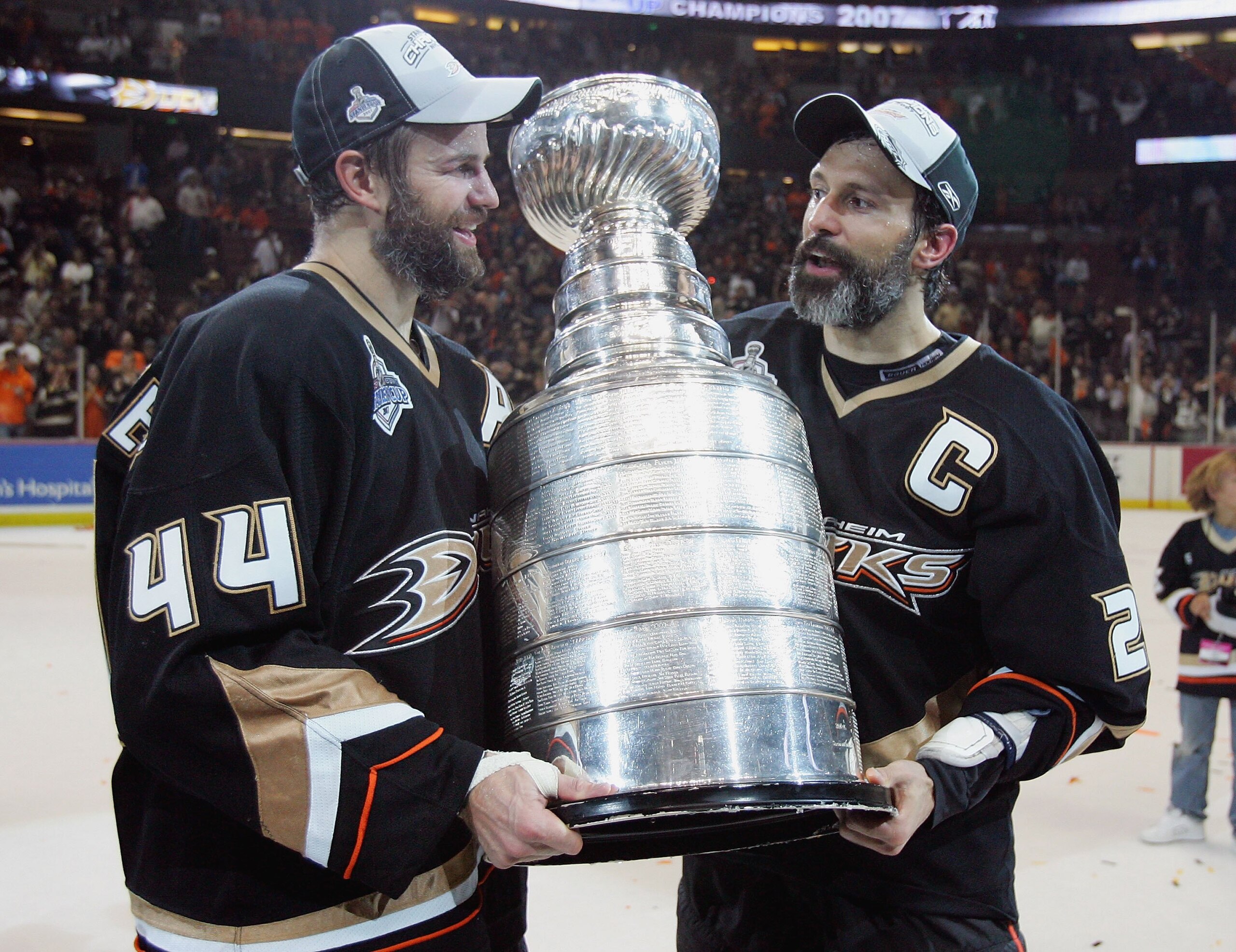
Anaheim came into the 2007 Finals ready for their second championship appearance in five years.
Meanwhile, the Senators were in the Finals for the first time since their franchise had returned to the NHL in 1992.
The Ducks had four players on the squad who were on the 2003 team that lost to the New Jersey Devils in seven games. Key players included Jean-Sebastien Giguere, one of few players who was awarded the Conn Smythe as a Stanley Cup runner-up, and Scott Niedermayer, who was already a three-time Cup winner.
Niedermayer ended up capturing the Conn Smythe Trophy after posting 11 points in 21 playoff games. He got to enjoy the win with his brother Rob, who was also a member of the 2003 Ducks runner-up team.
They were the first set of brothers to win the trophy since Duane and Brett Sutter won with the New York Islanders in 1982 and 1983.
Giguere had earned his first Conn Smythe by posting a record of 15-6 with five shutouts with a 1.62 GAA and a .945 save percentage. In 2007, he put up respectable numbers once again, going 13-4 with a 1.97 GAA and a .922 save percentage.
There were four players on this team who had been in the playoffs the previous year, including Andy McDonald, Chris Kunitz, Dustin Penner and Francois Beauchemin. Teemu Selane got his first Cup in his already storied career, and the moment left him on the bench crying tears of joy.
The Senators only had one previous Cup finalist, Oleg Saprykin, who is no longer an active NHL player. He was on the 2004 Calgary Flames team that lost to the Lightning in seven games.
Ottawa's roster had 17 players who had previous NHL postseason experience, but the majority of players had not played for any other team.
They had not had the chance to go far in the playoffs, as the Senators had only made it past Round 2 once since 1996-97. They lost to the Devils in the 2003 Eastern Conference Finals.
Ottawa had many talented players, but the players who had already been through the trenches with the Ducks knew what to expect in the Finals, and they weren't going to go away empty-handed a second time. Their many respected veterans only further helped their case, and they won all but one series in five games.
The Senators had also won all their series in five games, but could not find the same success against the Ducks.
2008: Detroit Red Wings and Pittsburgh Penguins
3 of 6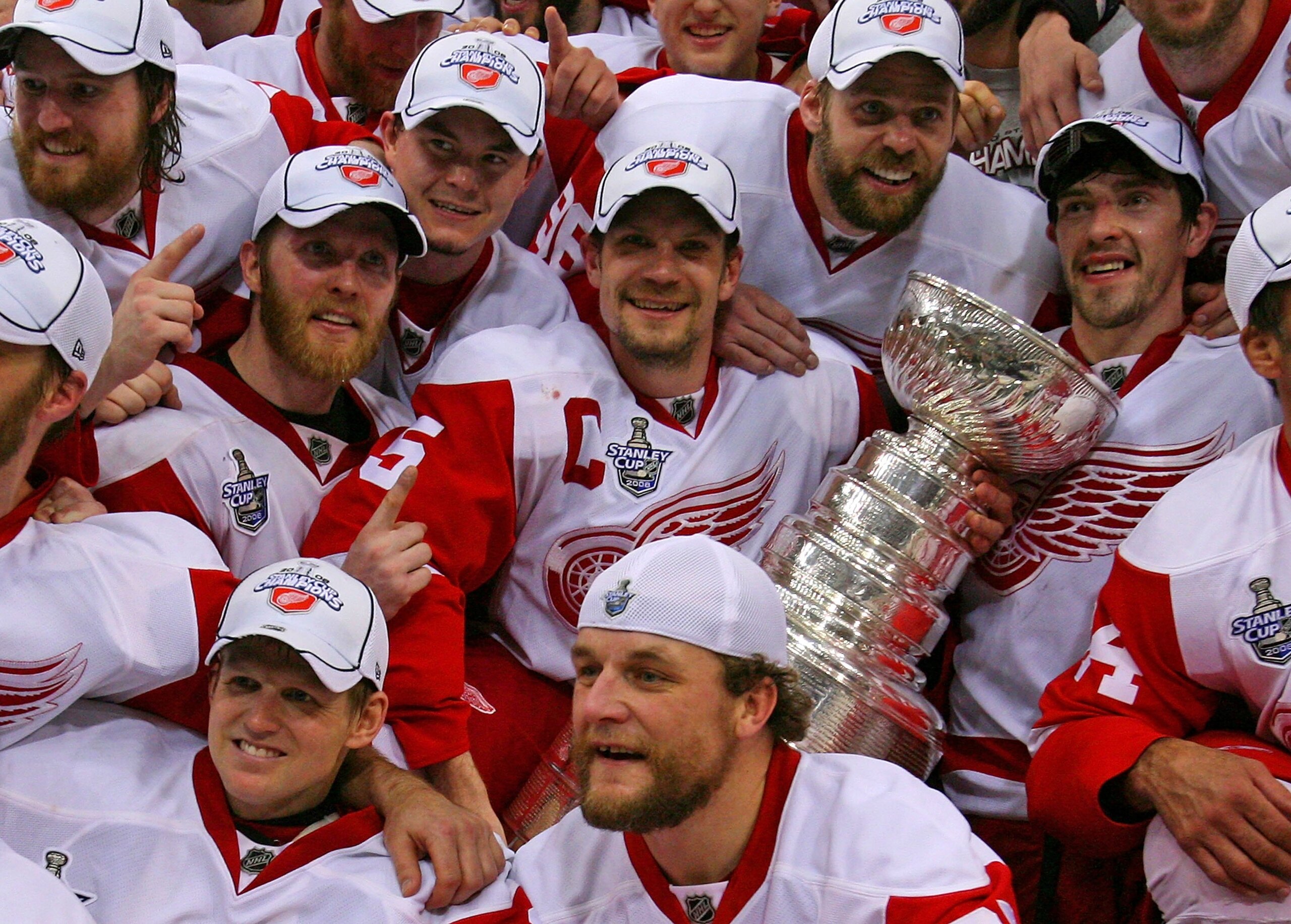
The Pittsburgh Penguins undoubtedly had an incredible run through the 2008 playoffs.
After being eliminated by the Senators in five games in the 2007 Eastern Conference Quarterfinals, the Penguins breezed through the first three rounds of the 2008 postseason. They dismantled the Senators, the Rangers and the Flyers.
However, like many other teams before them, their Cup dreams came crashing down once they crossed Detroit's path.
The Red Wings had an overwhelming 10 players who had previously won Stanley Cups. Five of those players (Nicklas Lidstrom, Tomas Holmstrom, Kris Draper, Kirk Maltby and Darren McCarty) were part of the Wings' 1997, 1998 and 2002 Cup-winning squads.
Brian Rafalski, one of Detroit's key defensemen, was already a two-time Stanley Cup winner with the Devils as a part of the 2000 and 2003 championship teams.
Detroit stormed out to an early 2-0 series lead, shutting out the Pens by scores of 4-0 and 3-0. Although Pittsburgh had numerous players who had playoff experience, including several from the 2007 appearance, the Penguins were in over their heads.
However, they showed some resiliency and refused to let the Wings dispose of them so quickly. In Game 5, Petr Sykora scored in the third overtime to force a Game 6 in Pittsburgh.
During Game 6, deadline acquisition Marian Hossa scored at 18:33 of the third to put the Penguins within one goal, but it was not enough. The Wings lifted their third Cup in 10 years on the ice at Mellon Arena.
Henrik Zetterberg won the Conn Smythe in his third playoff run with the Wings. He had been improving on his postseason totals each year and was named playoff MVP after tallying 27 points in 22 games.
The Penguins weren't necessarily inexperienced coming into these Finals; they were just the victim of Detroit's playoff machine. The Wings are notorious for picking apart younger teams, and the Penguins were no exception.
But that would all change next year...
2009: Pittsburgh Penguins and Detroit Red Wings Re-Match
4 of 6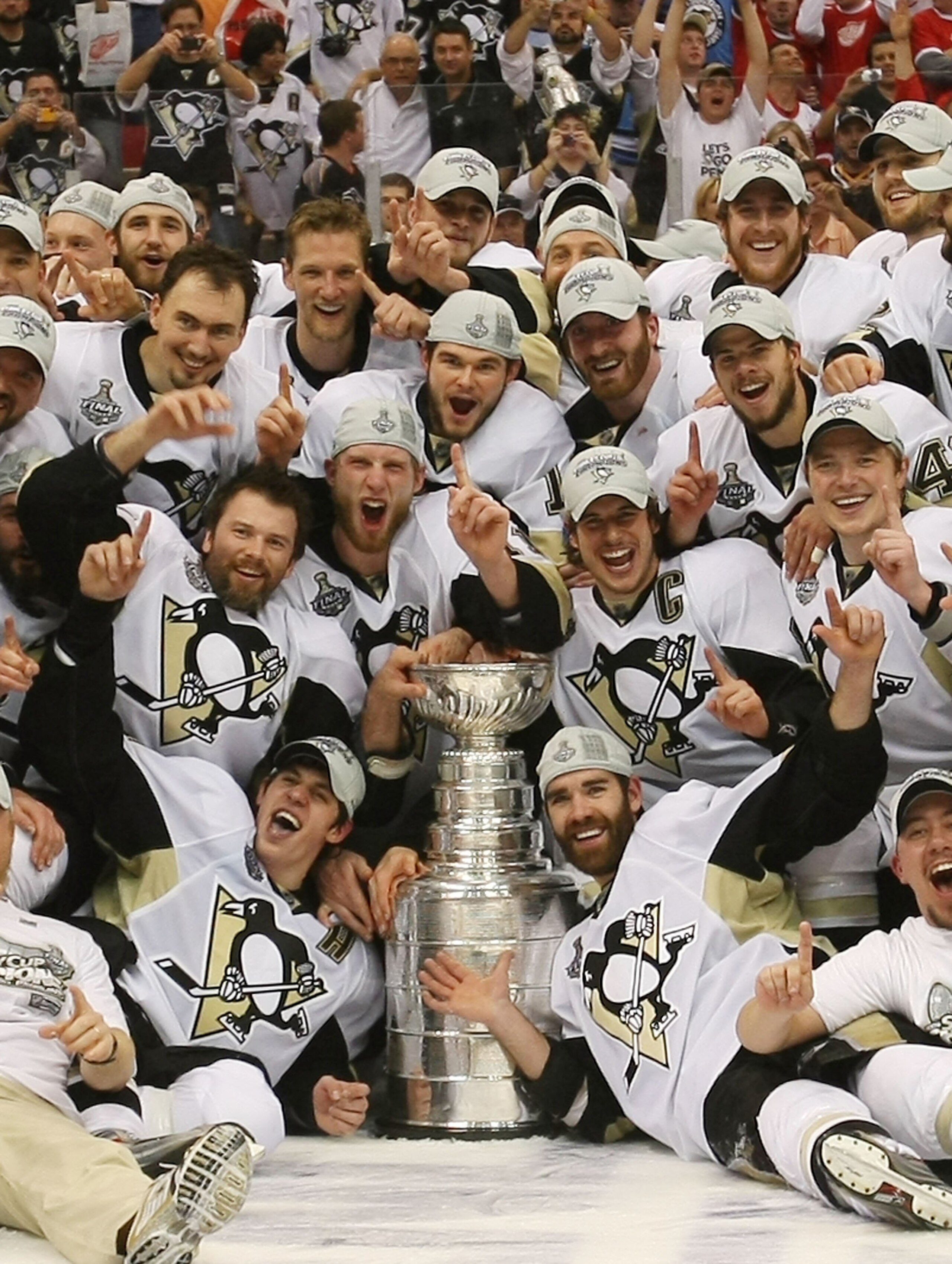
Midway through the 2008-09 season, it looked like the Penguins weren't even going to sniff the posteason.
Then, some changes were made.
Michel Therrien was out, and Dan Bylsma was in.
Sergei Gonchar's return from injury helped spark the team's quest for a late season playoff push.
Ray Shero went out and got some proven Cup winners in Bill Guerin (1995 with the Devils), Craig Adams (2006 with the Hurricanes), Chris Kunitz (2007 with the Ducks) and Ruslan Fedotenko (2004 with the Lightning). He also brought in Miroslav Satan, who was a 1999 Cup runner-up with the Sabres.
The Penguins lineup was definitely improved, but the Wings were still dangerous.
The opening games looked to be a repeat of last year. Pittsburgh lost Games 1 and 2 by identical scores of 3-1. However, they responded by taking Games 3 and 4 by 4-2 scores back at Mellon Arena.
However, Detroit regained control in Game 5, shutting out the Penguins by a 5-0 score. Marc-Andre Fleury was pulled in favor of Mathieu Garon, and the Wings picked up three power play goals while the Penguins took numerous penalties.
Their control would not last long, as Pittsburgh forced a Game 7 back in Detroit. Still, experts believed that the Wings' heavy veteran presence would undermine the Penguins again. Detroit also had two players in Jonathan Ericsson and Justin Abdelkader who were having solid playoff debuts.
In Game 7, Max Talbot scored two goals in the second period after a scoreless first. The lead held up, and Pittsburgh defeated the Wings 2-1 to earn their third Cup in franchise history.
The Penguins were officially an experienced playoff team, and this would help them become a postseason force to be reckoned with in the future.
The Conn Smythe went to Evgeni Malkin, who finished the playoffs with 36 points in 24 games.
This was one of the cases where David defeated Goliath, and so, the Wings' experience hardly mattered at the end of the day.
2010: Chicago Blackhawks and Philadelphia Flyers
5 of 6
The Blackhawks were looking to take care of unfinished business in 2010. They were eliminated by the Wings in the 2009 Western Conference Finals in five games, and although they were still young, they stayed focused in 2010.
In addition to having Marian Hossa, who was still looking for his first Cup after losses in 2008 and 2009, the Hawks had two other Cup winners. Andrew Ladd was a 2006 champion with the Hurricanes, while John Madden won with the Devils in 2000 and 2003.
They also had 17 players who were 2009 Western Conference Finalists. Key players included Patrick Kane, who scored the game-winning goal in Game 6 of the 2010 Finals, and Conn Smythe winner Jonathan Toews.
Dustin Byfuglien was also a big part of the team, as he used his size to help give the Hawks a physical edge over an aggressive Flyers squad.
Philadelphia came in to the playoffs with Chris Pronger, a 2007 Cup winner with Anaheim and 2006 runner-up with Edmonton. In addition, 16 players already had previous NHL postseason experience.
The Flyers were in the middle of a Cinderella run. They knocked off the heavily favored Devils in five games, came back from a 3-0 series deficit against the Boston Bruins and ended the Montreal Canadiens' own magical run.
Key performers for the Flyers in last year's playoffs included Daniel Briere, who led all postseason participants with 30 points. Simon Gagne also helped by scoring the overtime goal in Game 4 against Boston that helped spark the series comeback.
Both teams were in the Finals for the first time in several years. The Flyers had not been in the Finals since 1997, where they lost to Detroit, and the Hawks were in for the first time since 1992, when they lost to the Penguins.
I do not feel the Hawks had enough experience to say it was truly the reason they beat the Flyers. Both teams were pretty equal, and other factors, such as strong goaltending from Antti Niemi, were the reason for the Hawks' win.
2011: Is Experience Reigning Supreme?
6 of 6
Let's take a look at some of the series so far and see how experience is or is not helping:
The Vancouver Canucks bring Mikael Samuelsson, who was a part of the 2008 Red Wings team that beat the Penguins. Raffi Torres was a part of the 2006 Oilers team that went to the Finals, but ultimately lost to the Hurricanes in seven games.
These are not the first players that come to mind when you think of the best of the postseason best, but have the Canucks finally figured out the defending champions? They are just one game away from a sweep at the United Center.
The Canucks' experience with the Hawks gives them an edge, and being the top seed doesn't hurt, either.
Pittsburgh may be in the playoffs for the fifth straight year, but Tampa Bay has stars such as Vincent Lecavalier and Martin St. Louis, who were both part of the 2004 Stanley Cup team. Slight edge to the Pens for the experience factor.
Boston, despite having Vezina candidate Tim Thomas, find themselves down two games to none to the Canadiens. Goaltender Carey Price is rising to the occasion in his first postseason run as a starting goaltender. He has an incredible .985 save percentage and 0.50 GAA.
The Flyers entered the playoffs as the top seed and are currently split with the Buffalo Sabres. Ryan Miller established himself as a big game goaltender in the last Olympics, and players such as Thomas Vanek are not to be overlooked.
In a rematch of the 2010 Western Conference Quarterfinals, Detroit has the upper hand on the still-rebuilding Phoenix Coyotes.
How do you think experience will come in as these series hit their midpoints?
.jpg?w=2560 "NHL Trade Grades Connor Hellebuyck")


.jpg?w=2560 "Malik Beasley Negotiating Plea Deal (AP)")

.png?w=2560 "Week 8 Winners & Losers 📊")

.jpg?w=2560 "Aikman Blasts Cowboys WR 🫣")
.jpg?w=2560 "Jonathan Taylor Landing Spots")