
MLB Power Rankings: Breaking Down the Top 100 Greatest Players in MLB History
Spring is here. The bloom is back on the trees. The sun is out and the temperature is turning warm.
Actually, spring isn't exactly here.
The weather hasn't turned warm in Boston, where the Red Sox are the favorites to win the AL East after missing the playoffs in 2010. There is still snow on the ground in Philadelphia, where Phillies fans are gearing up for one of the greatest pitching rotations in baseball history. And the chill remains in the air in San Francisco, where the Giants and their fans are getting ready to try to defend their World Series championship.
But in Arizona and Florida, spring has arrived, and with it, the boys of summer.
As part of our month-long preparation for the the 2011 Major League Baseball season, we check in with the current roster of the top 100 greatest players of all-time to see which current players are on the list and where they might be after the season.
Honorable Mentions
1 of 114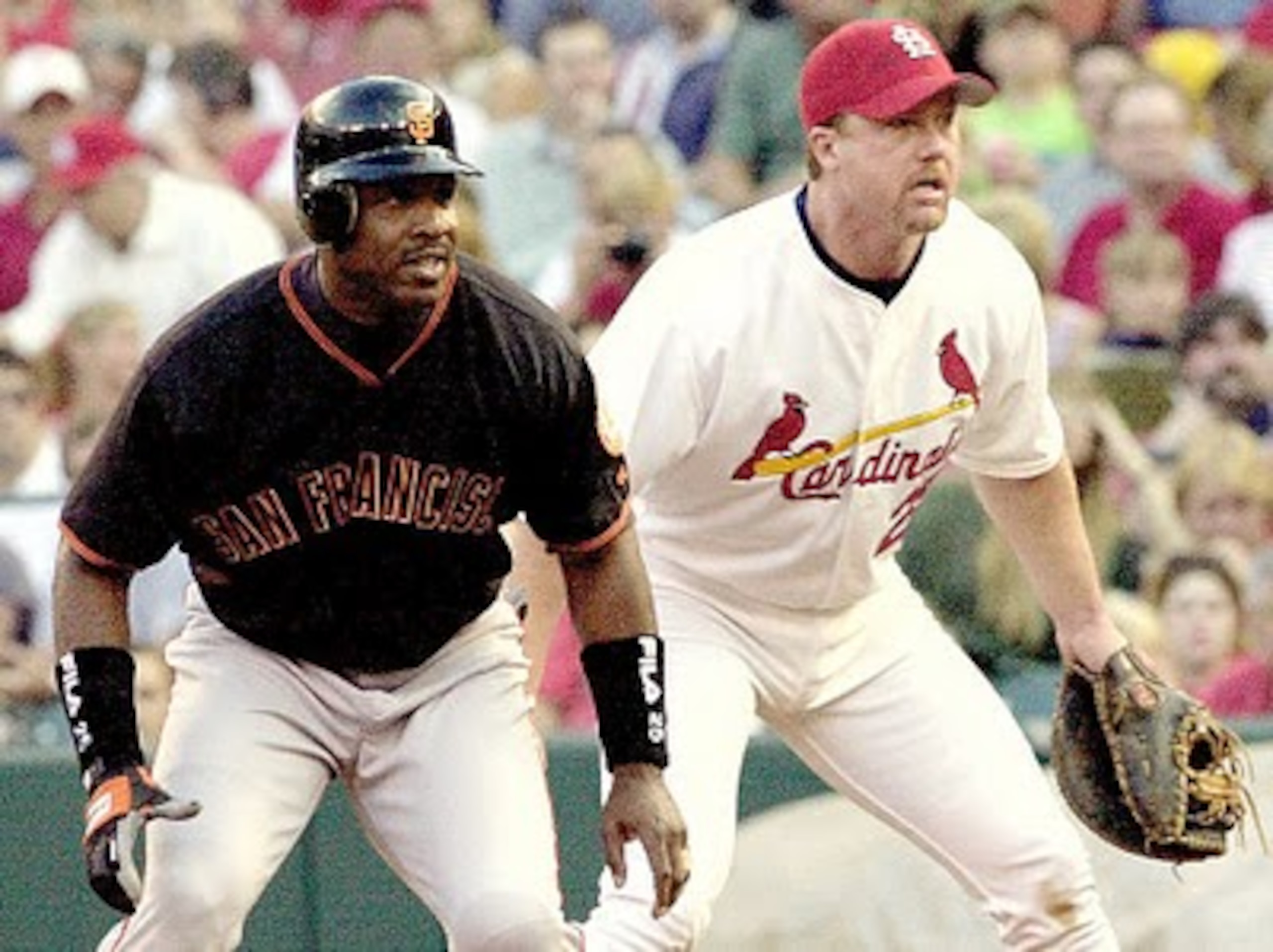
There can be no doubt that several of the greatest players of all-time have played in the last 20 years.
Unfortunately, we now also have little doubt that some of those players used steroids and other performance-enhancing drugs during their careers.
Fact is, we do not simply render these players ineligible for a top 100 list because of alleged or admitted steroid use. Barry Bonds was a fabulous player beforehand, and so were Mark McGwire, Roger Clemens and Manny Ramirez.
However, it is anyone's guess as to how we should account for the impact of PEDs on these players' performances.
With this in mind, we take the following approach: Each player who has been either accused of or busted for using performance-enhancing drugs will be listed here where they would be listed based on their performance alone without regard for their PED's use.
However, rather than being actually ranked, these players will be referenced with honorable mention designations. That way we can appreciate their careers without infecting our brains with the whosit-whatsit of trying to iron out the controversies of the Steroid Era.
Honorable Mention: Rafael Palmeiro, 1B/DH, Rangers/Orioles
2 of 114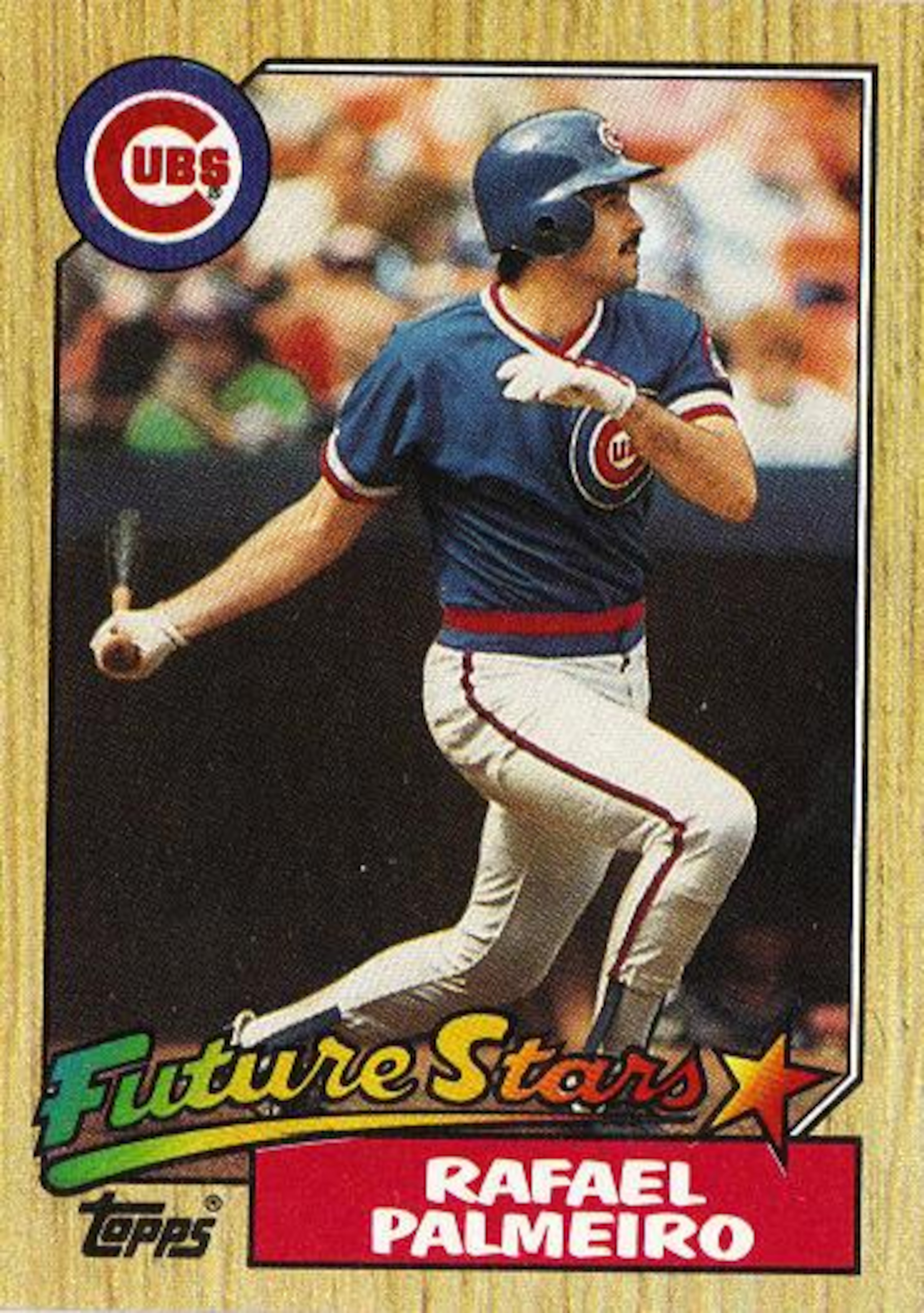
...Rafael Palmeiro played part of his career in the 1980s but was quintessentially a player of the 1990s...
100 (tied). Eddie Murray, 1B, Orioles/Mets/Dodgers/Indians
3 of 114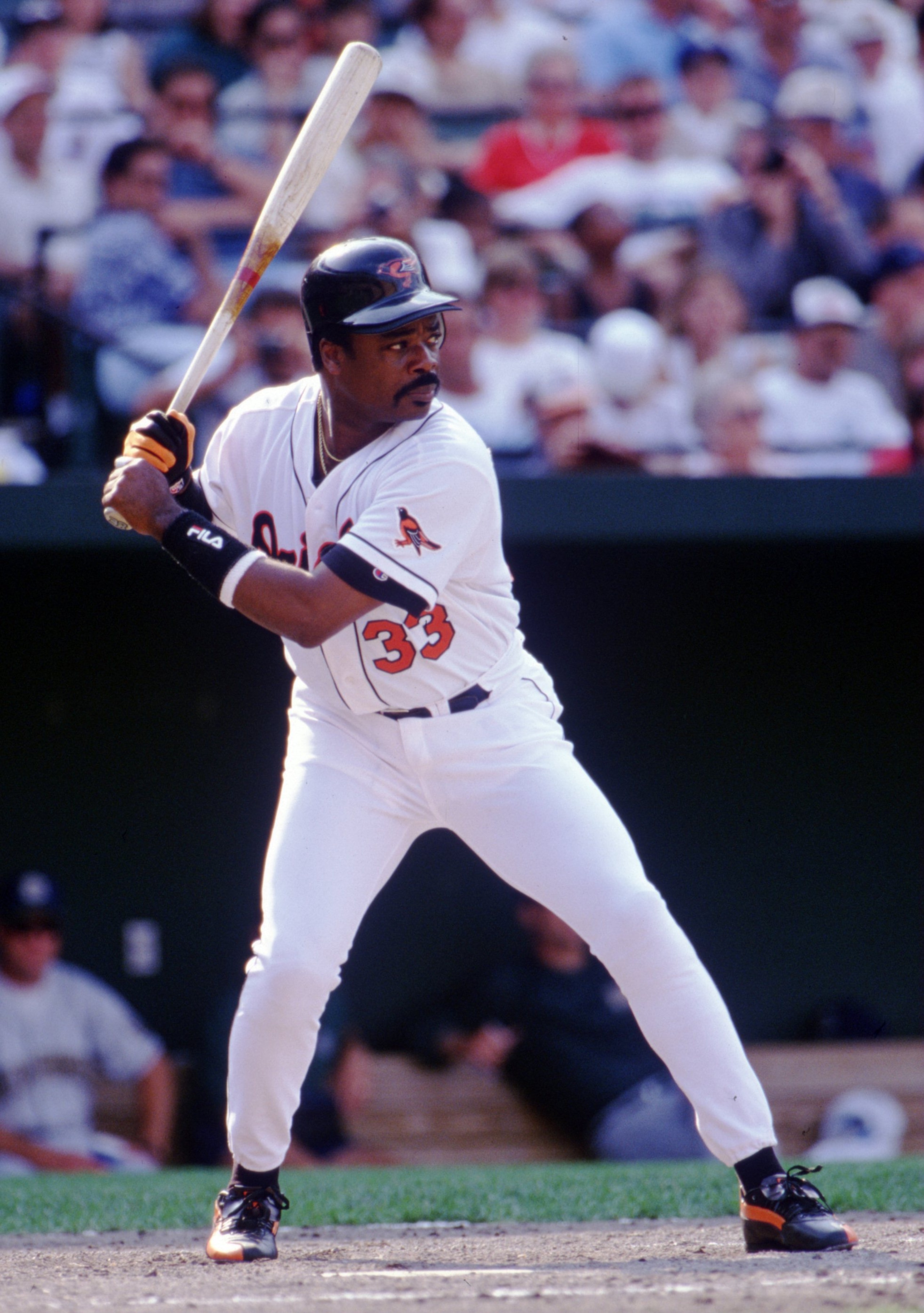
Eddie Murray played part of his career in the 1990s, but he was quintessentially a player of the 1980s...


100 (tied). Fred McGriff, 1B, Blue Jays/Padres/Braves/Devil Rays/Cubs
4 of 114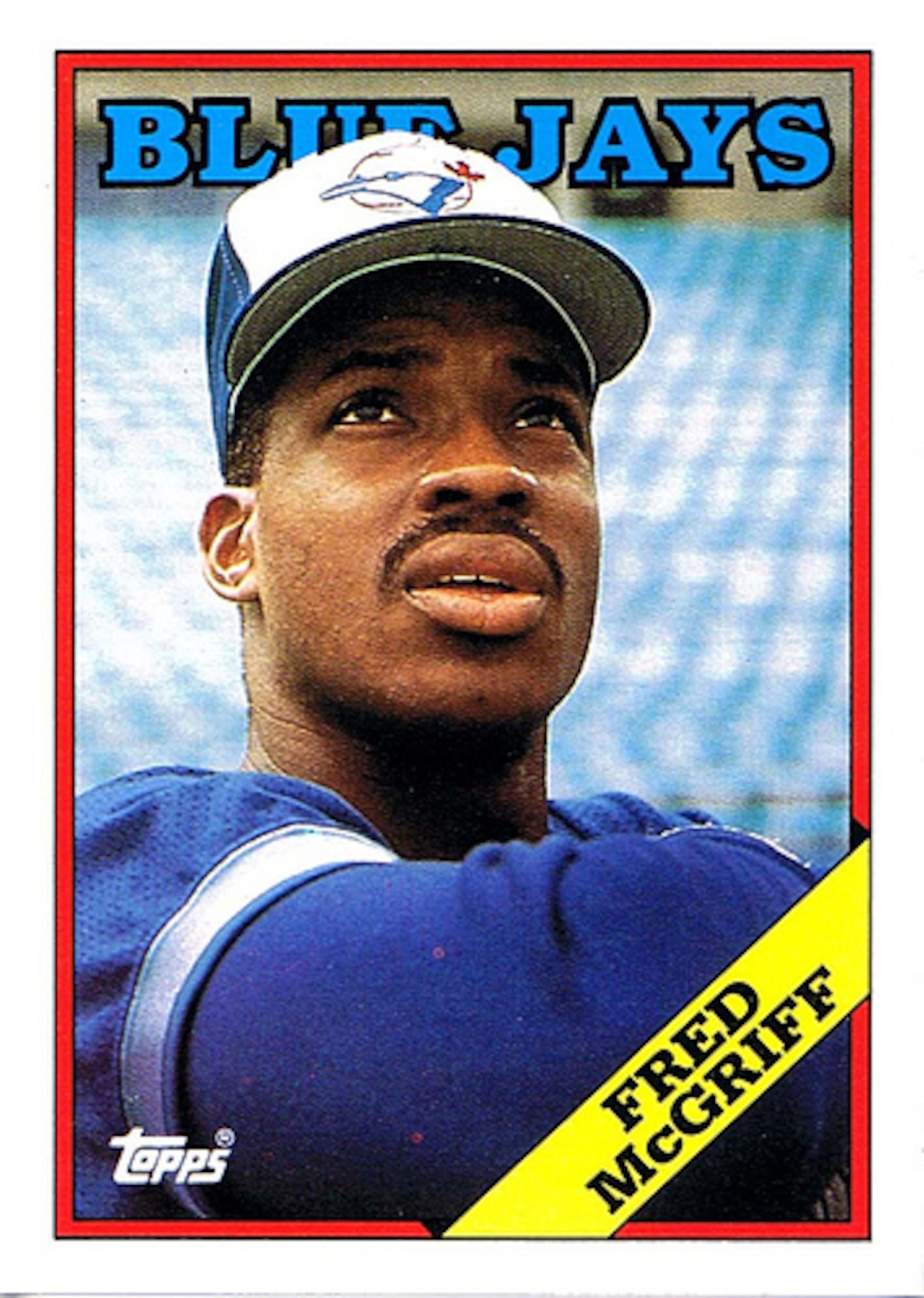
...and Fred McGriff was the bridge between the two of them, essentially a 1980s first baseman adapting to the 1990s.
Ultimately, we think Murray and Palmeiro really are the same player, just set in different decades, while McGriff was probably slightly better than both of them but for a shorter period of time.
99. Ted Simmons, C, Cardinals/Brewers
5 of 114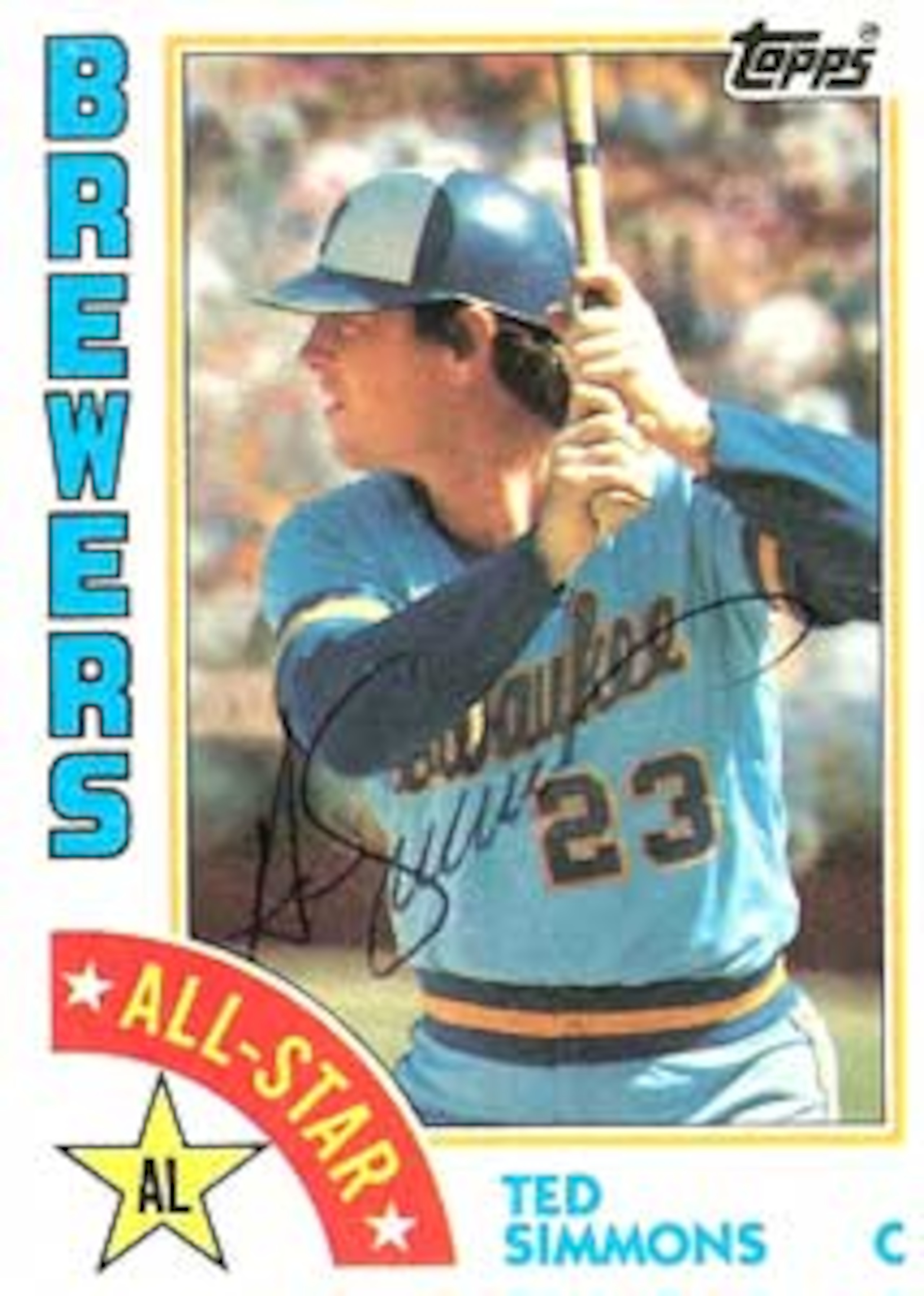
Ted Simmons was a contemporary of Carlton Fisk, and the two had very similar careers.
Unfortunately for Simmons, Carlton had the more storied career and, as a result, he walked into the Hall of Fame easily while Simmons didn't sniff it.
All Simmons did during his career was earn a World Series trip with the 1982 Milwaukee Brewers, catch three Cy Young winners (Vukovich, Fingers, Gibson) and collect 1,389 RBI.
98. Jim Palmer, SP, Baltimore Orioles
6 of 114
Jim Palmer won three Cy Young Awards, succeeded in the AL after the invention of the designated hitter and enjoyed seven 20-win seasons. These are amazing feats.
At the same time, Palmer gave up plenty of home runs, walked plenty of batters and didn't strike out a lot of guys. His best attribute was his hits allowed: The 7.6 hits per nine innings he allowed during his career is good for 45th all-time.
But this isn't Nolan Ryan, Randy Johnson or Roger Clemens. Palmer wasn't unhittable, as demonstrated by his relatively pedestrian strikeout numbers. He did, however, have two of the best defensive infielders of all-time behind him in Brooks Robinson and Mark Belanger.
Palmer was a great pitcher who got lots of great help.
97. Hoyt Wilhelm, RP, White Sox/Yankees
7 of 114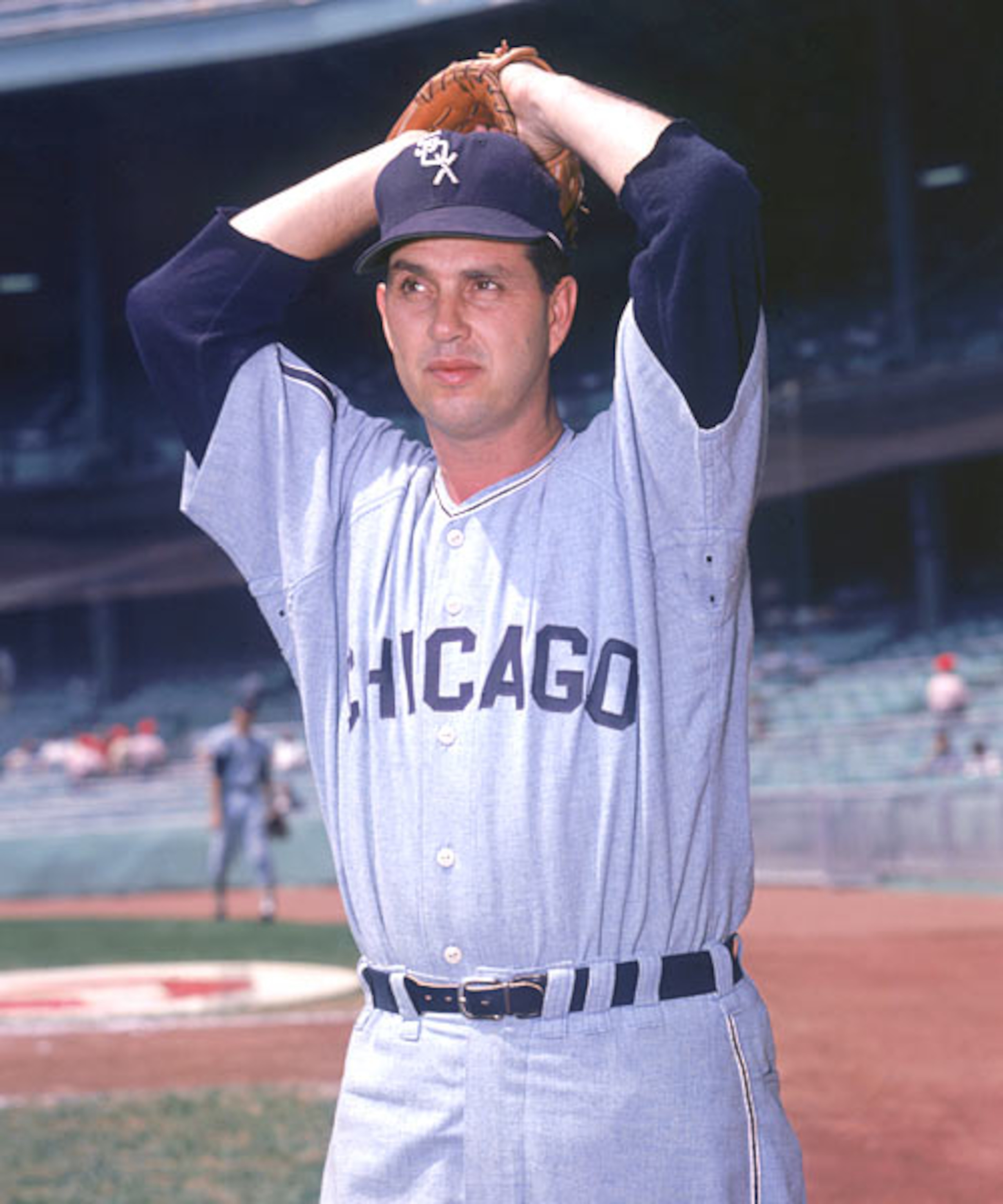
Hoyt Wilhelm had an idiosyncratic career as a major-league pitcher.
He didn’t make his major-league debut until the age of 29, but then played for 21 seasons, until the age of 49. In his first major-league season with the New York Giants, he went 15-3 with a league-leading 2.43 ERA in 159.1 innings and a league-leading 71 games pitched.
In his second season, he again led the league in games pitched. By the end of his third season, he’d compiled a career record of 34-15 record with a 2.55 ERA.
In 1959, the Baltimore Orioles decided to make a full-time starter out of Wilhelm, and he was sensational, going 15-11 with a league-leading 2.19 ERA and three shutouts over 13 complete games. Then, just as quickly as he’d been converted, he was converted back.
Wilhelm turned 40 in 1963, and from that point on put together a shockingly good resume. From 1963 until the end of his career in 1972, Wilhelm went 54-47 with a 2.18 ERA and 129 saves (not that they were counting them the whole time). He struck out 681 batters in 881.0 innings and only walked 251. His WHIP over that decade was 0.989, and his ERA+ was a tremendous 157.
Until recently, there has been absolutely no doubt in the world that Hoyt Wilhelm was the greatest relief pitcher of all-time...
96. Mariano Rivera, RP, New York Yankees
8 of 114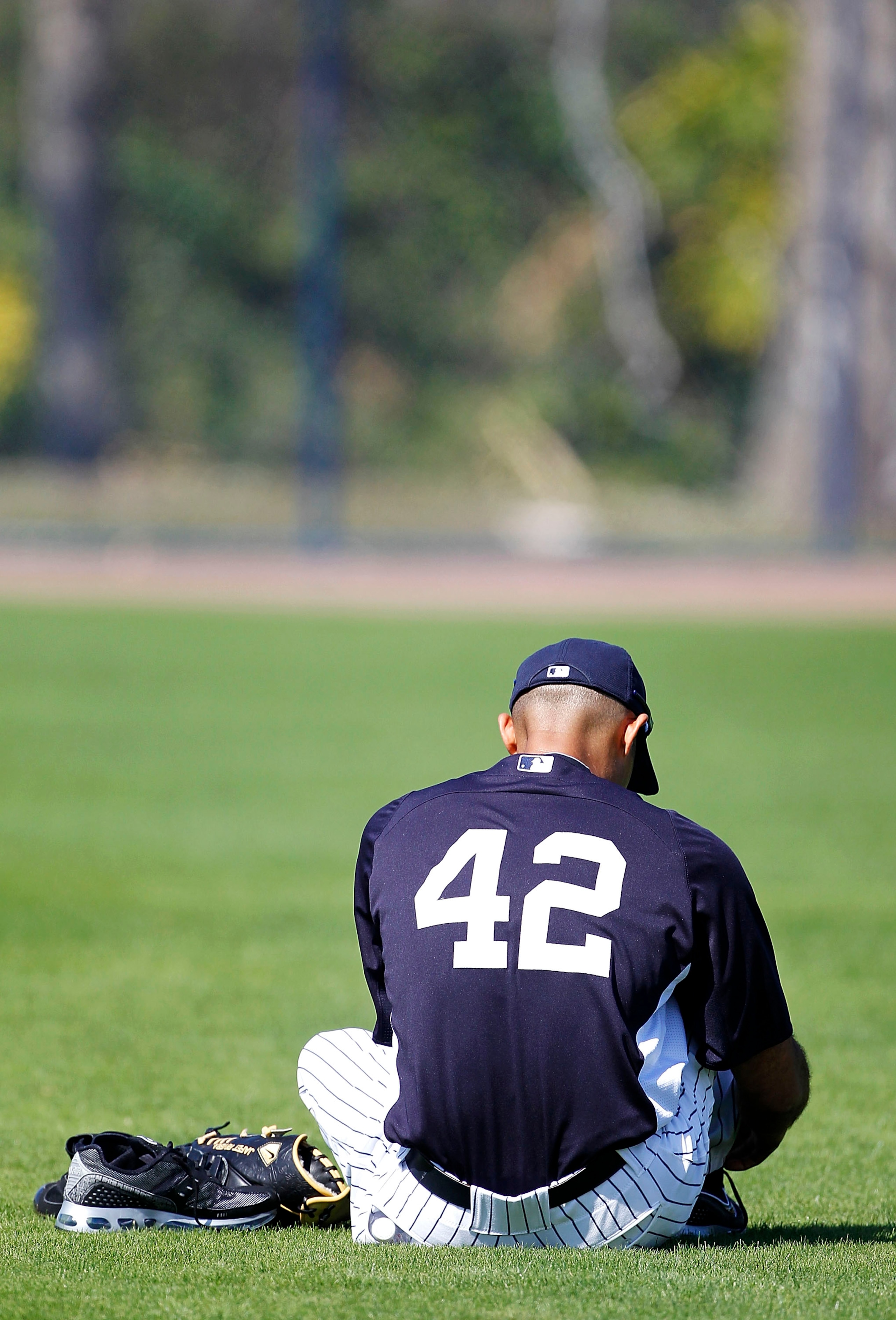
Ladies and gentlemen...the greatest relief pitcher of all-time.
Mariano Rivera defies all the rules, all the conventional wisdom and all the expectations we have for relief pitchers.
That he has pitched as well as he has is remarkable. That he has pitched that way for as long as he has is unprecedented and unfathomable.
You can't take anything away from Mo. He has done it with bad defense behind him, in hitter-friendly parks, with high drama on the biggest stages.
Ninety percent of major-league pitchers will never have a season in which their ERA+ is over 200 (twice as good as the league average). Rivera's career ERA+ is 205.
It is possible to overrate great players. It may not be possible to overrate Mariano Rivera.
95. Barry Larkin, SS, Cincinnati Reds
9 of 114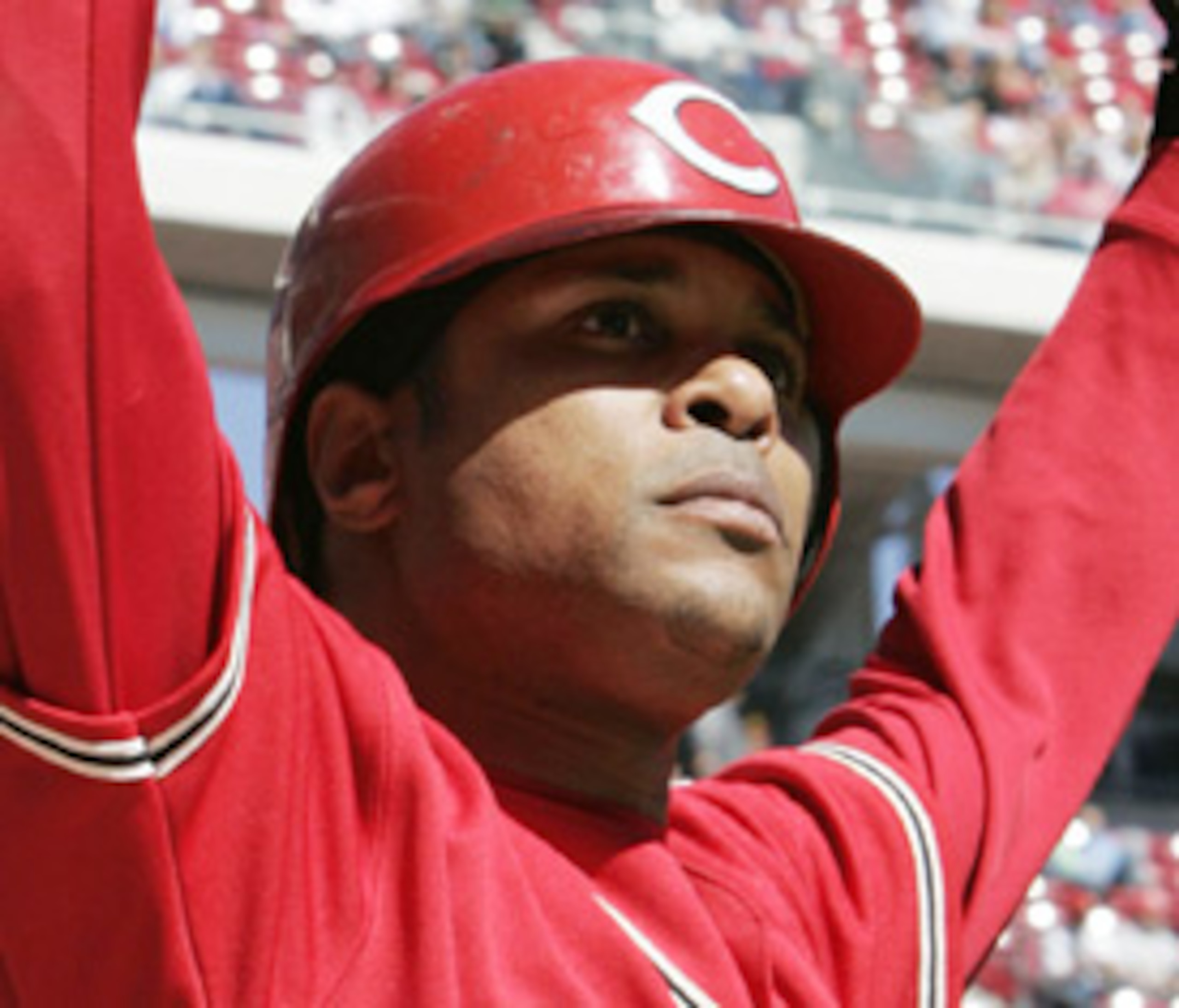
Barry Larkin is incredibly underrated as a result of having starred in the era of baseball immediately preceding the A-Rod-Nomar-Jeter-Tejada era.
Larkin was, however, an offensive force in his own right, winning the NL MVP in 1995 with 15 home runs, 51 stolen bases and a .319 batting average. He then went out in 1996 and went 30-30.
Larkin would have won more Gold Gloves than the three he came away with if not for being a near-contemporary of Ozzie Smith.
94. Pete Rose, INF/OF, Cincinnati Reds/Philadelphia Phillies
10 of 114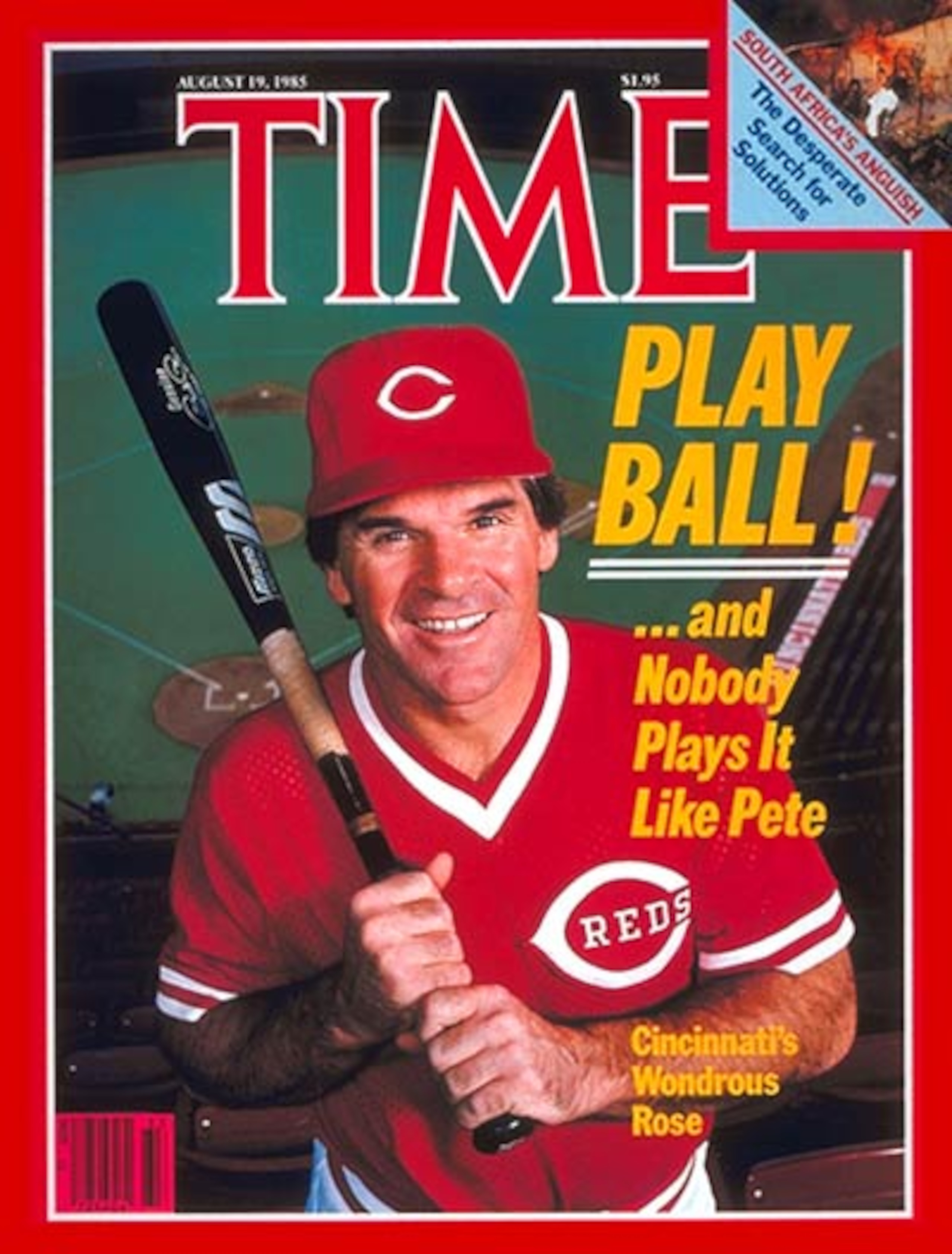
As Pete Rose himself has pointed out, he may have collected more hits than any other player in the history of baseball, but he also made more outs than any other player in the history of baseball.
Rose might have been what we would call a one-tool player—he was not a particularly good defender, he could not hit for power and he was not particularly fast.
In fact, Rose wasn't even a truly elite hitter.
Despite being the all-time leader in hits, winning three batting titles and leading the league in hits seven times, Rose's .303 batting average pales in comparison to the list of guys we're thinking of as the greatest hitters of all-time, meaning Ruth, Gehrig, Shoeless Joe Jackson, Hornsby, Cobb, Sisler, Carew, Boggs, Gwynn, Williams and Ichiro.
Rose's career average ranks 174th all-time, tied with Mike Greenwell and just ahead of Placido Polanco.
The only thing Rose did really well was try really hard. And in that category, he may have very well been the greatest of all-time.
Blessed with any natural ability at all, he would rank higher on this list.
93. Frankie Frisch, 2B, New York Giants/St. Louis Cardinals
11 of 114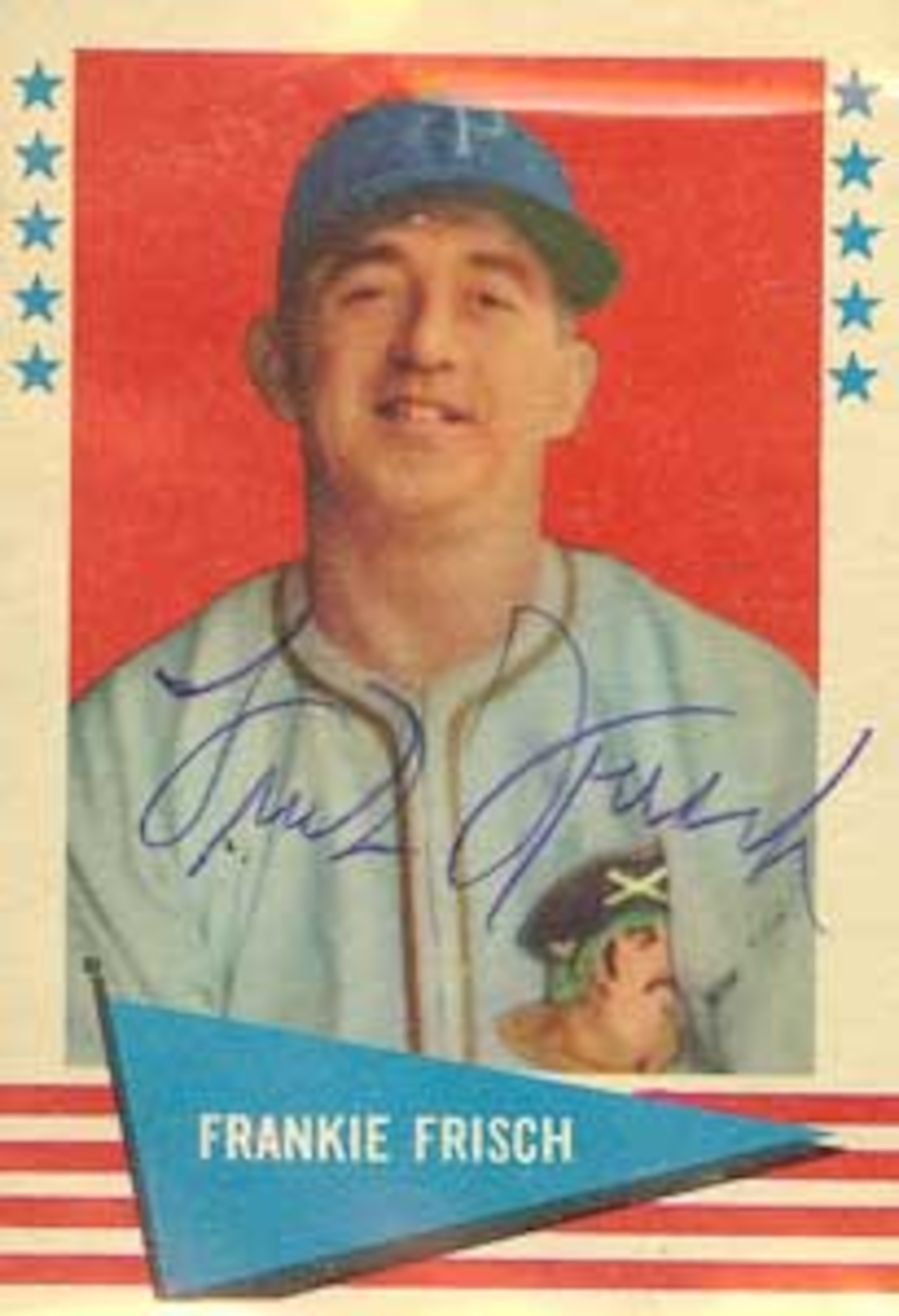
Frankie Frisch was a switch-hitting second baseman for most of his career and remains to this day one of the greatest-hitting second basemen of all-time.
All you parents out there, listen up: If you want to fast-track your kid to the majors, teach him or her to hit left-handed and teach her or him to play the infield. The number of highly successful left-handed hitting infielders in baseball history is somewhat shocking.
Frisch went to eight World Series, four each with the Cardinals and Giants, and won four titles. He collected 200 hits three times and finished just shy of 3,000 for his career. He drove in tons of runs, despite not hitting for power, and thrice he led the league in stolen bases.
Frisch had such a good eye that he managed to strike out over 20 times in a season only twice.
In 1931, he won the first ever BBWAA NL Most Valuable Player Award.
92. Ryne Sandberg, 2B, Chicago Cubs
12 of 114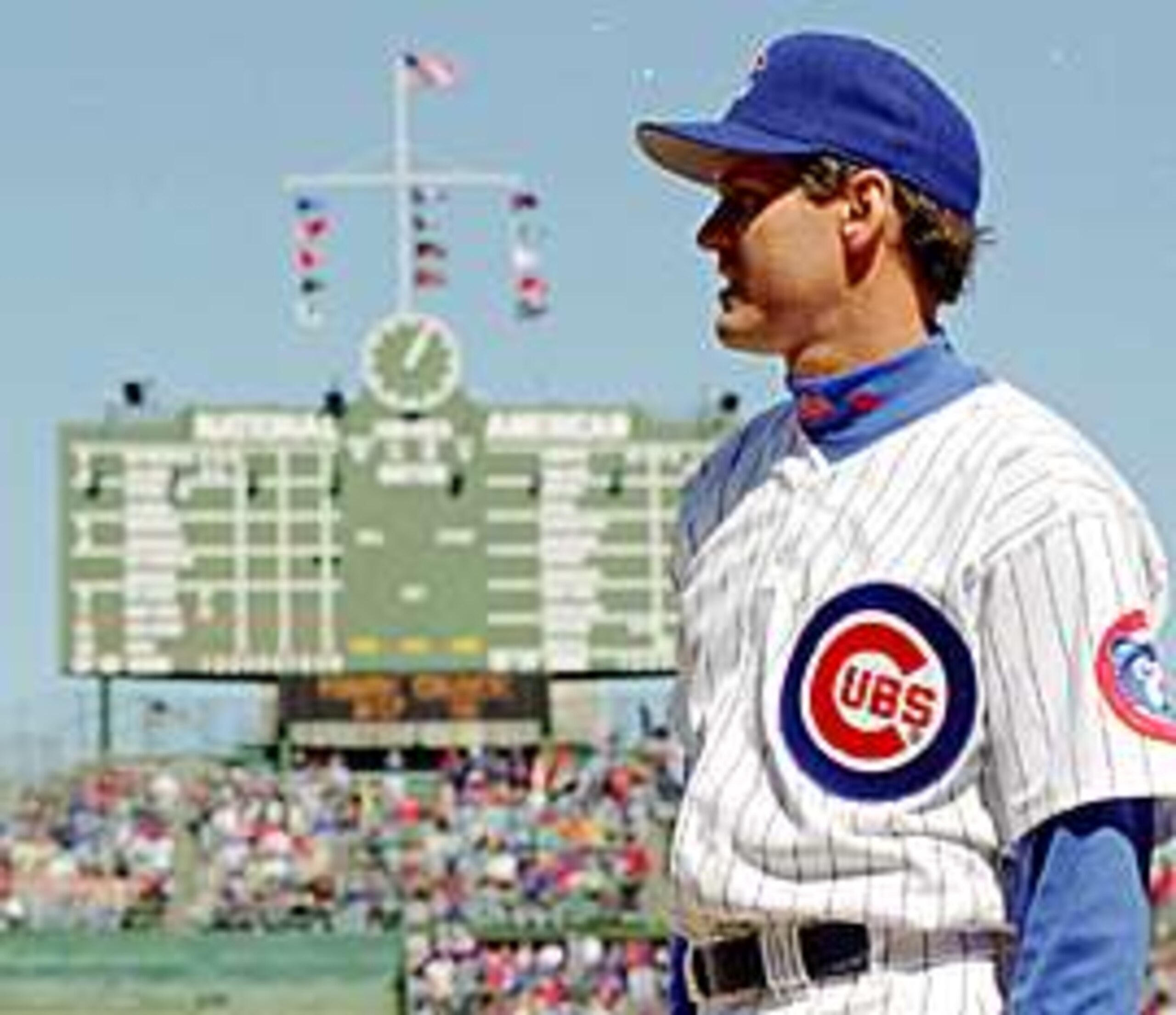
Prior to his premature retirement in 1994, Ryne Sandberg had a career batting average of .290 with 240 home runs, 881 RBI and 323 stolen bases in 13 seasons. Three more years and he would have been a sure thing for 300 home runs and 1,000 RBI. Five more years and who knows?
In the last two years of his career, Sandberg batted .253 and struck out nearly three times as often as he walked. He added 37 home runs and 19 stolen bases to his career totals, but he generally hurt his game overall.
All of which is to say that Sandberg was a brilliant talent, a genuine five-tool player, and guys like Chase Utley and Robinson Cano still have a ways to go before they catch Ryno.
91. Ron Santo, 3B, Chicago Cubs
13 of 114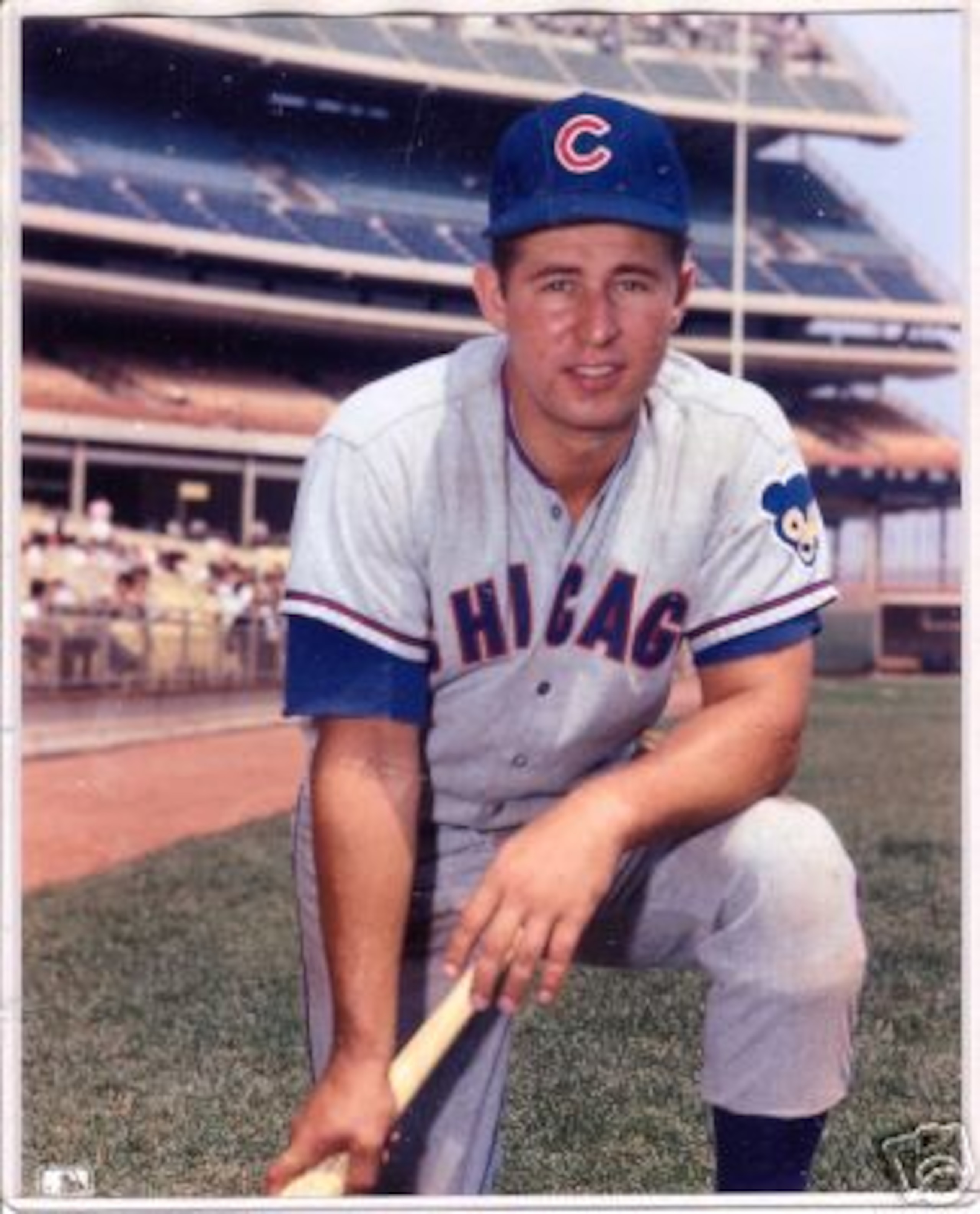
Yes, I am a Chicago Cubs fan, but I think any reasonable baseball fan who looks objectively at the issue should be forced to the same conclusion:
It is a crying shame that Ron Santo is not in the Hall of Fame, bordering on a crime against nature and an absolute black mark on Cooperstown. This is not a situation in which there are one or two players in the Hall that are less deserving that Santo. There are upwards of 20 players over whom Santo towers in the history of baseball who have been admitted ahead of him, and yet he continues to wait.
He's a third baseman. In 15 seasons (pre-Steroid Era mind you), he had 342 home runs, 1,331 RBI, 1,138 runs scored, a 125 OPS+ and five Gold Gloves.
This isn't a Hall of Famer?
Sadly, as of December 3rd of last season, he has taken that wait to baseball heaven.
90. Robin Yount, SS/CF, Milwaukee Brewers
14 of 114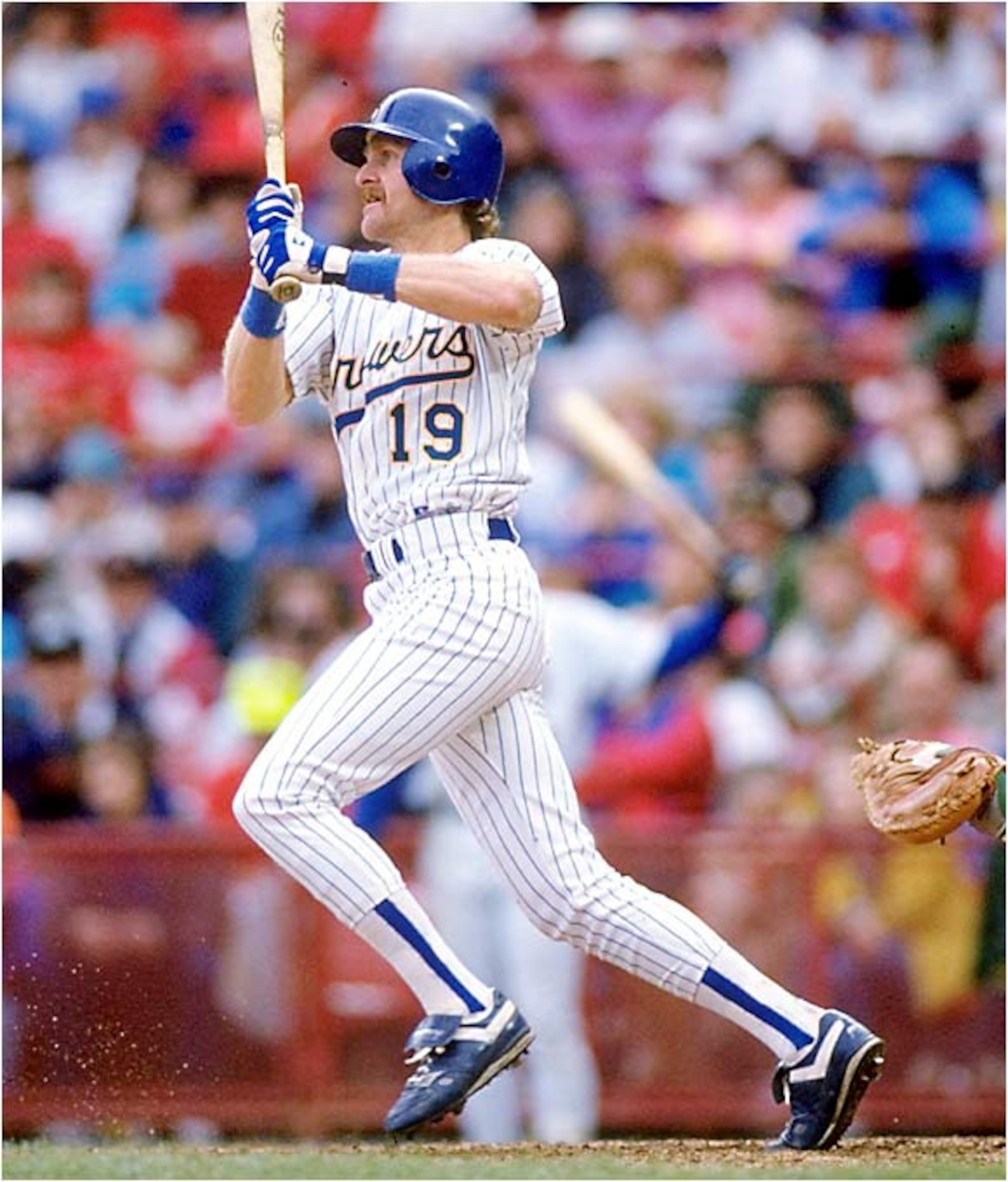
Hands down the all-time greatest Milwaukee Brewer, which is what it is.
The key to Robin Yount is that he became a major-league regular at the age of 18 and spent five years wondering if he really wanted to play baseball. Once he got going, around the age of 24, he became an elite shortstop and then an elite center fielder.
Yount’s career statistics tend to look more like statistics of attrition rather than statistics of greatness, but if the Brewers had either allowed Yount to develop in the minors or Yount had decided he wanted to be a great baseball player sooner, they would look far better.
Consider: From the age of 23 forward—meaning, take off his first five seasons—Yount had 1,300 runs scored, 1,100 RBI, 225 of his 252 career home runs and 208 of his 271 career stolen bases.
89. Nolan Ryan, SP, Mets/Angels/Astros/Rangers
15 of 114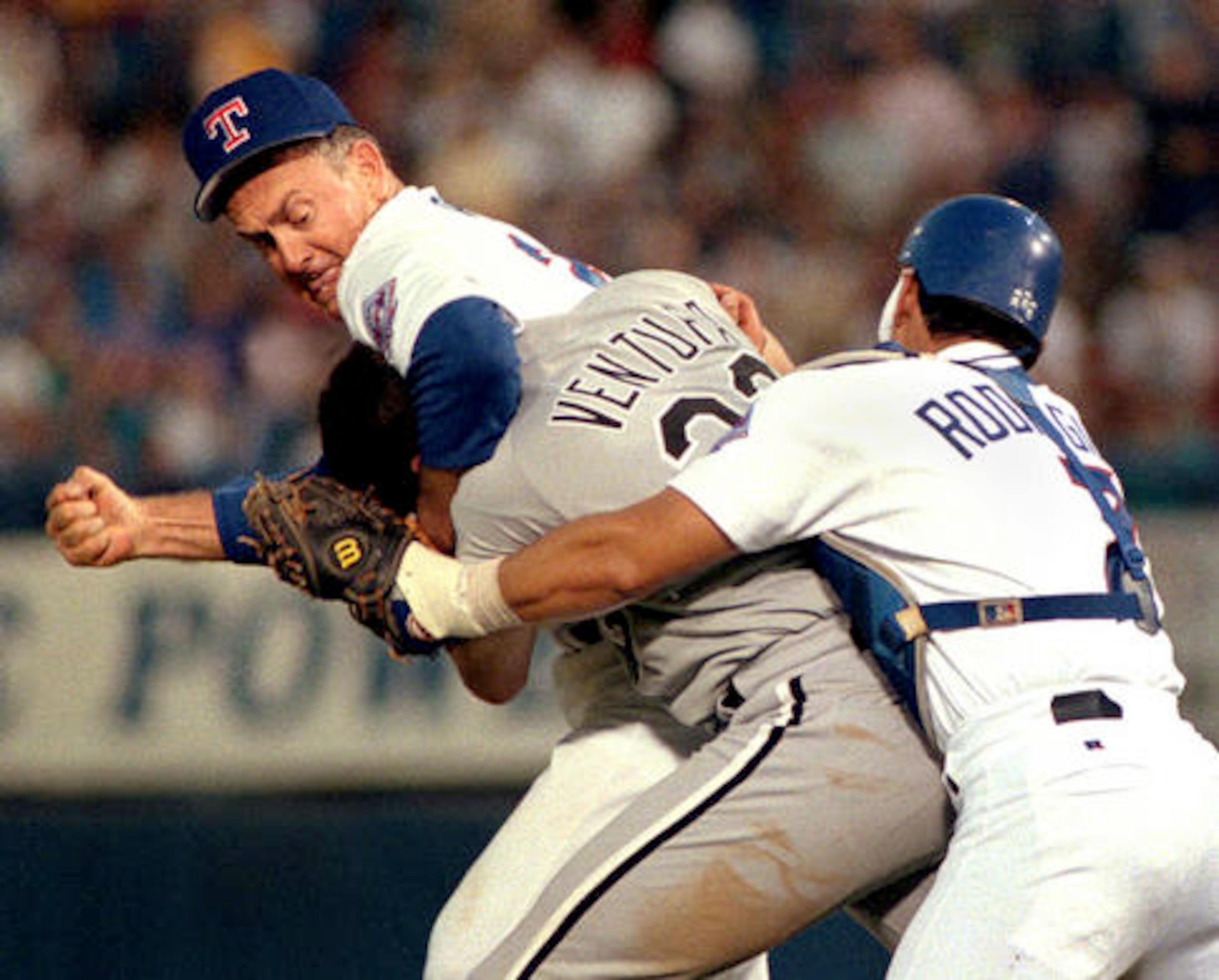
One of the essential theories that underlies my view of player rankings is what I like to call the "talent/value spectrum."
At one end of the spectrum, we have players who are incredibly talented, but whose talent doesn't translate particularly well into value. Think Ichiro Suzuki—no one can hit a baseball better than Ichiro, plus he is incredibly fast, plays amazing defense and he is disciplined almost to a fault.
At the other end of the spectrum, we have players who only do one or two things right, but who are incredibly valuable to their team. Adam Dunn won't beat you in a foot race, takes half an hour to bend down to field a ground ball and couldn't hit .300 if his life and the lives of his loved ones depended on it. All he can do is hit home runs and get pitched around because of it.
At the end of the day, though, Dunn will likely be more valuable to your team than Ichiro.
Most players fall somewhere in the middle of the spectrum.
Nolan Ryan was one of the most talented pitchers of all-time. One of the most durable pitchers of all-time, he is also the hardest-to-hit pitcher in major-league history. Ryan had more strikeouts, more high-strikeout games, more no-hitters, more one-hitters and more two-hitters than any other pitcher in history.
He also walked more players than any other pitcher in history, so much so that he ended up giving up as many runners by walking them as he prevented runners by not allowing hits.
At the end of his career, he'd never really had a dominant season, his ERA and winning percentage were much more mediocre than you would have expected, and he won 300 games, in essence, because he pitched forever.
There weren't too many pitchers who could do what Nolan Ryan did. But there were a lot of pitchers who were more valuable than Ryan, and at the end of the day, that is why he is so low here.
88. Steve Carlton, SP, Philadelphia Phillies
16 of 114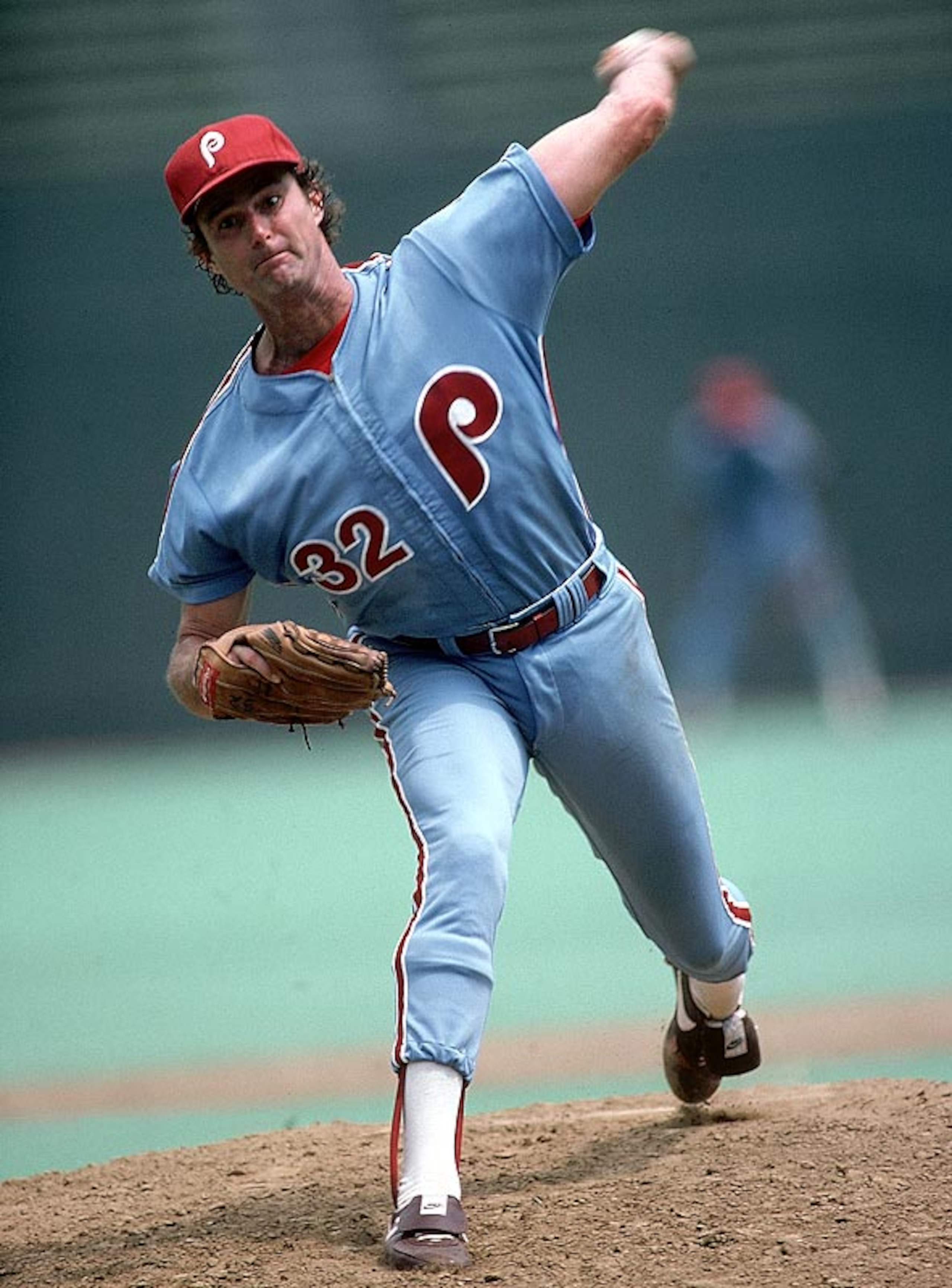
Steve Carlton, on the other hand, was not as talented as Nolan Ryan, but far more effective, enjoyed more dominant seasons, helped his teams to postseason success and won four Cy Young Awards.
In fact, if not for the last five years of their respective careers, during which Ryan somehow pitched some of his finest seasons and Carlton held on way too long, the difference between Carlton and Ryan might not seem nearly as small as it does.
The lesson of Nolan Ryan and Steve Carlton is that the more talented player is not always the most effective or the most valuable.
87. Tim Raines, LF, Montreal Expos/Chicago White Sox
17 of 114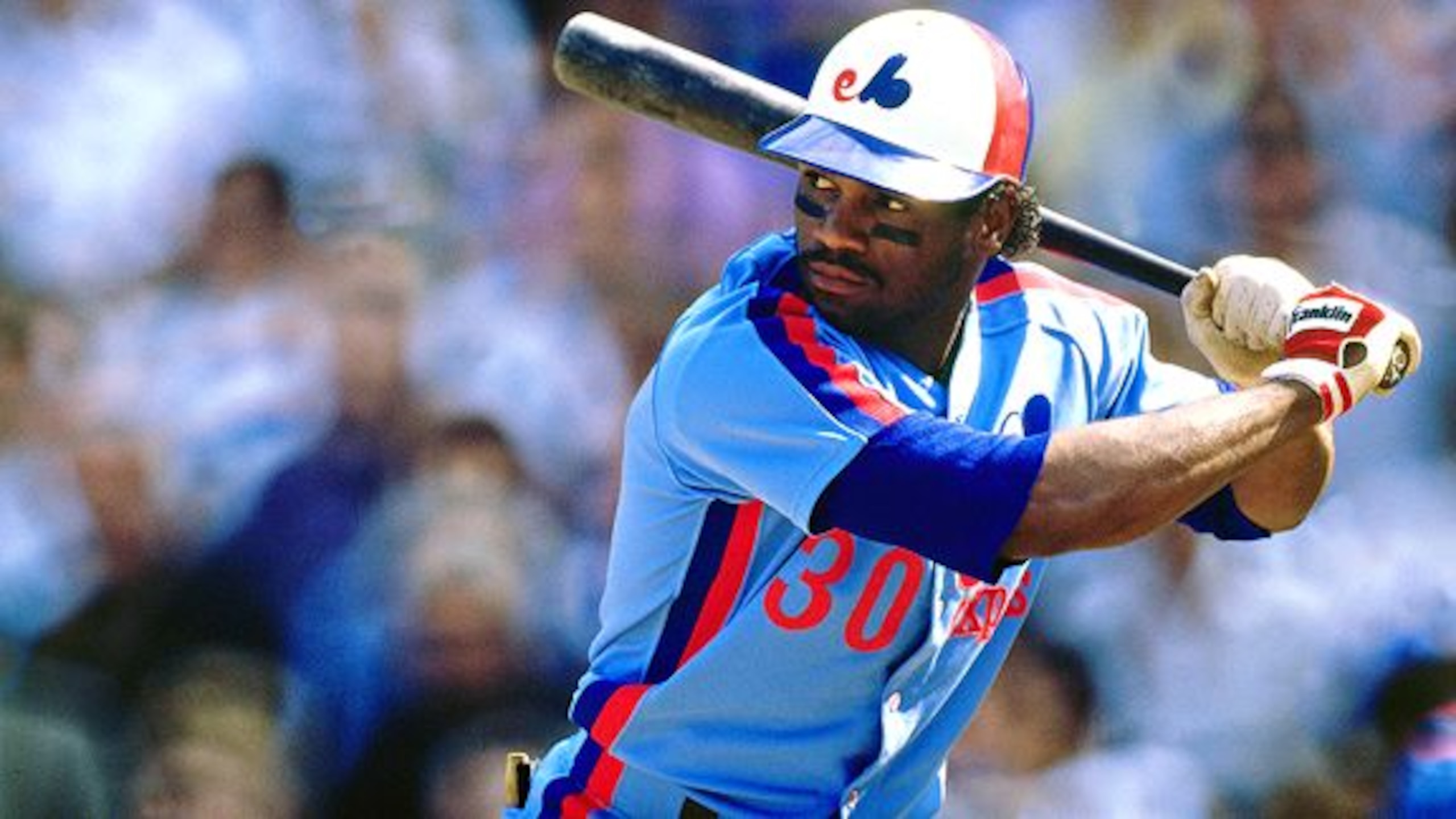
Who is the greatest leadoff man in the history of baseball?
Easy, Rickey Henderson.
Who is the second greatest leadoff man in the history of baseball?
A very strong case could be made for Raines.
Raines was an almost exact contemporary of Henderson's, and Henderson's shadow was large. But Raines had a phenomenal .385 on-base percentage (seriously, look up guys like Willie Wilson, Vince Coleman and Otis Nixon to see how Raines compares), 808 stolen bases, 1,571 runs and an .810 OPS.
I'm not saying he definitely should be in the Hall of Fame, but any consideration at all would have been nice.
Honorable Mention: Gary Sheffield, 3B/RF, Brewers/Marlins/Braves/Yankees/Tigers
18 of 114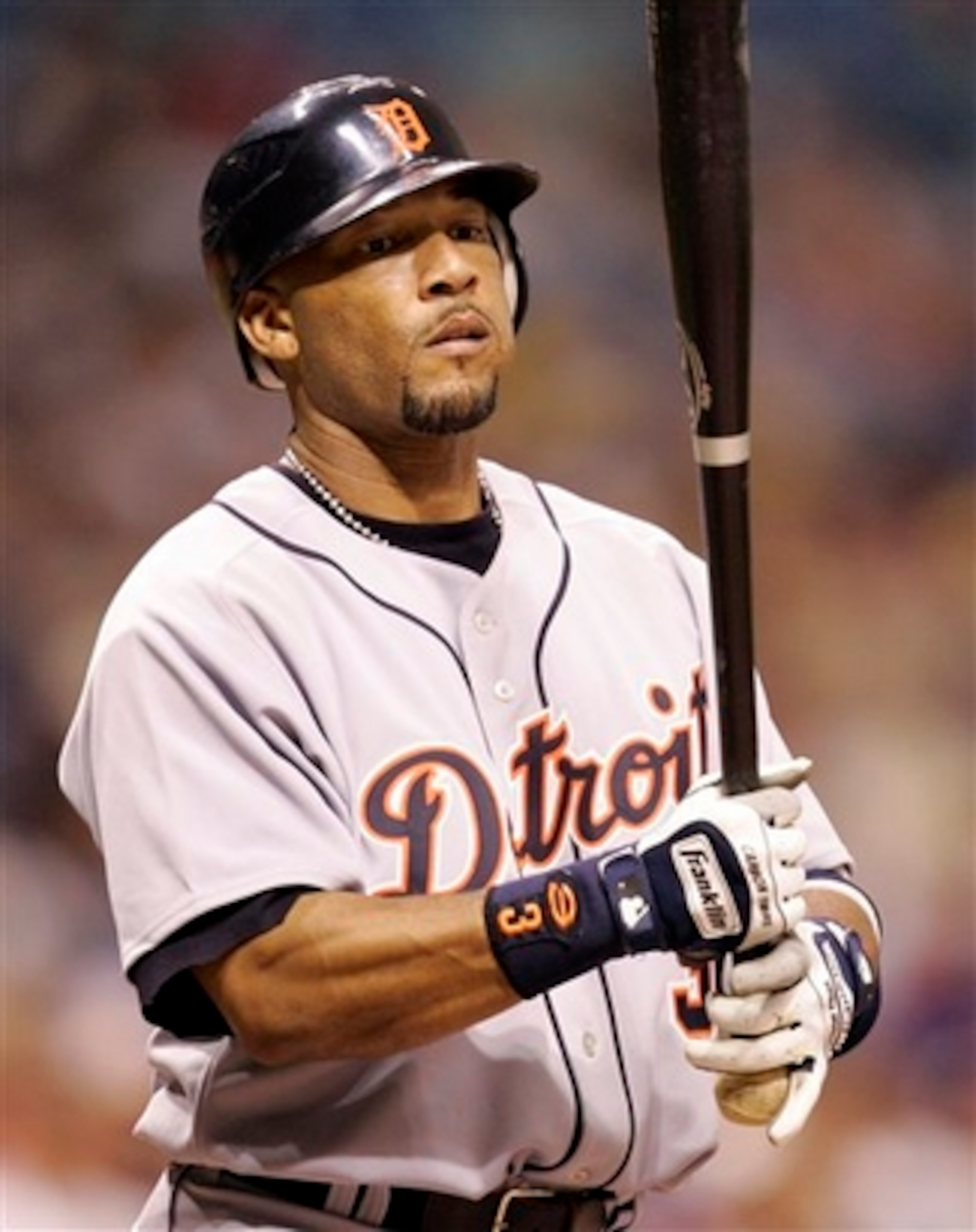
His stats are what they are. His era is what it is. His persona was what it was.
Not a likable guy, but one of the quickest bats to ever play the game and a far better contact hitter with a much better eye than anyone gives him credit for.
He scored 1,600 runs, he had 1,600 RBI, he hit 500 homeruns and he walked far more than he struck out.
His numbers are all time.
86. Paul Molitor, INF/DH, Brewers/Blue Jays
19 of 114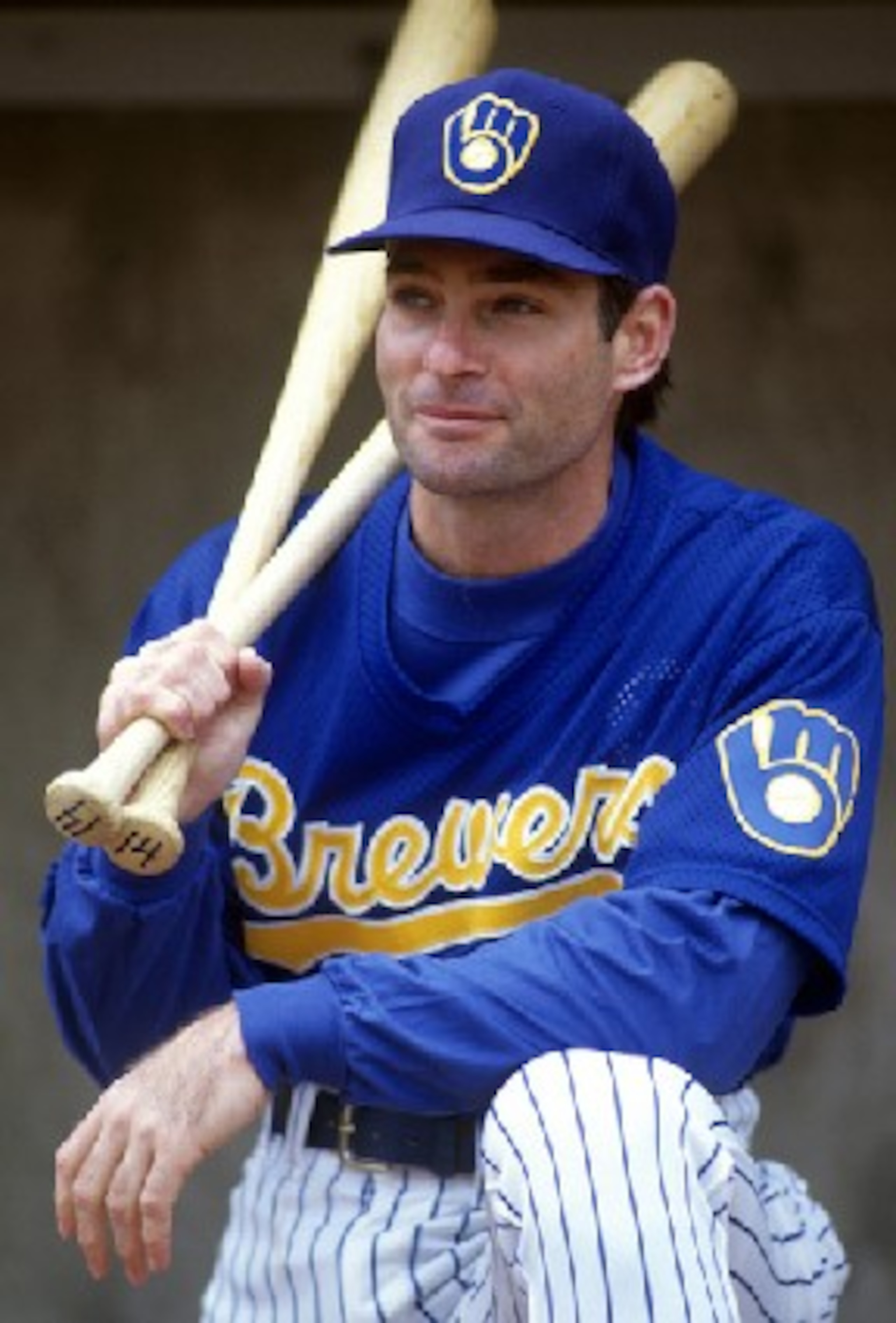
Paul Molitor finished his career by crossing over some elite milestones: 1,700 runs, 3,300 hits, 600 doubles, 100 triples, 200 home runs, and 500 stolen bases.
Crazy thing? Those numbers should have been better.
Molitor missed most of the 1981 season due to injuries and to the players' strike.
He missed all but 13 games in 1984 due to injuries.
In 1987, he shocked the world by leading the AL in runs with 114 and doubles with 41...despite playing only 118 games!
Molitor missed 59 more games in 1990. He led the league in games played in 1994 with 115 before the players went on strike again, then played in only 130 in the strike-shortened 1995 season.
Between injuries and strikes, Molitor missed roughly three-and-a-half seasons worth of baseball.
Imagine where his career totals would have been if he could have gotten those games all back.
85. Ernie Banks, SS/1B, Chicago Cubs
20 of 114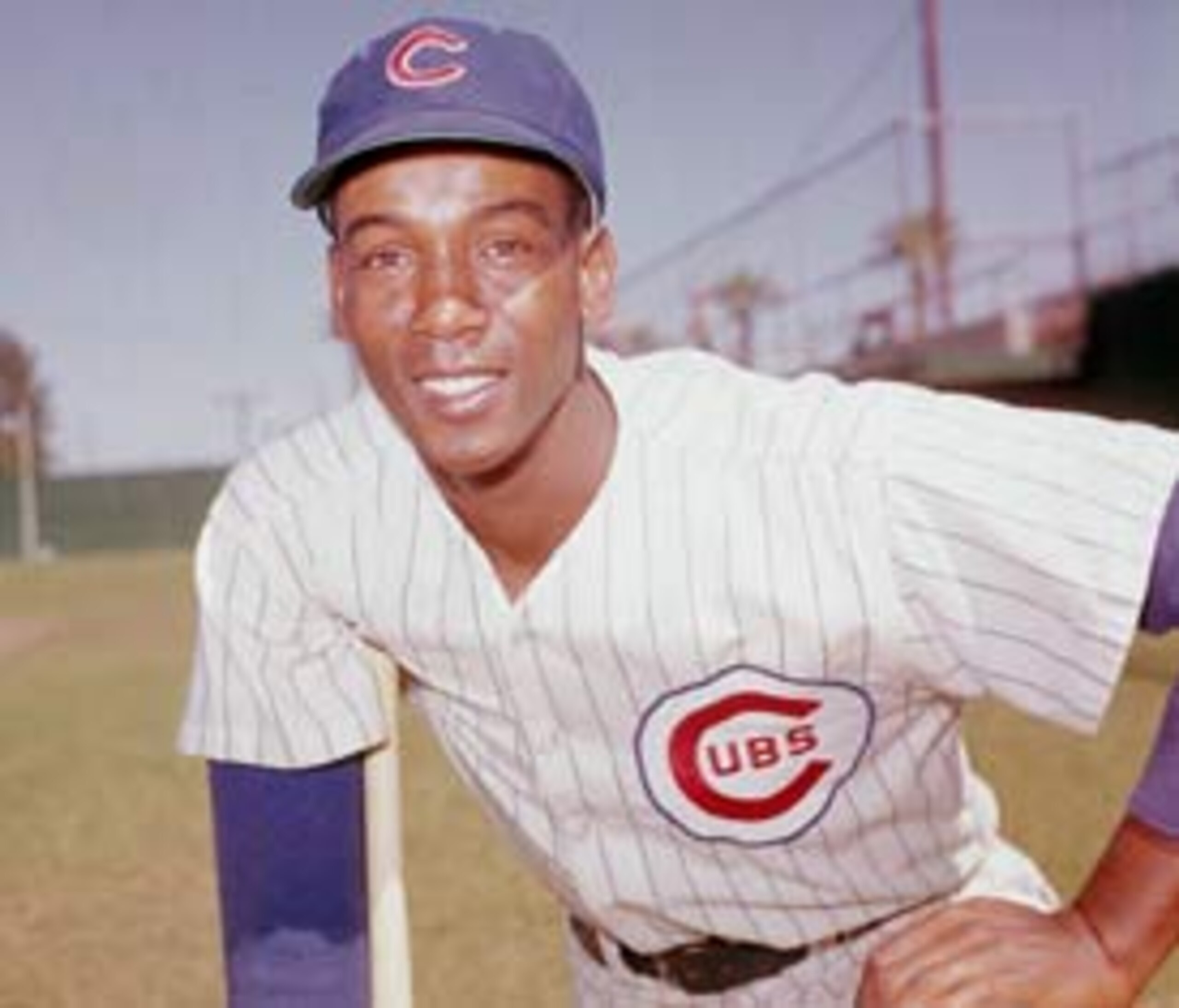
You are surprised to see Banks this low. So was I.
Quick, which position did Ernie Banks play? Shortstop, right?
Well, not exactly. Banks played roughly two more seasons and roughly 150 more games at first base than he did at shortstop. Compared to historical shortstops, Banks' numbers are amazing. Compared to historical first basemen, they are somewhat lacking.
Then there's this: Banks is an esteemed member of the 500 home-run club. However, he spent his entire career at Wrigley Field, wherein he hit 290 of his 512 career home runs. In a hitter-neutral park, who knows if he gets anywhere near 500 home runs.
84. Rube Waddell, SP, Philadelphia Athletics/St. Louis Browns
21 of 114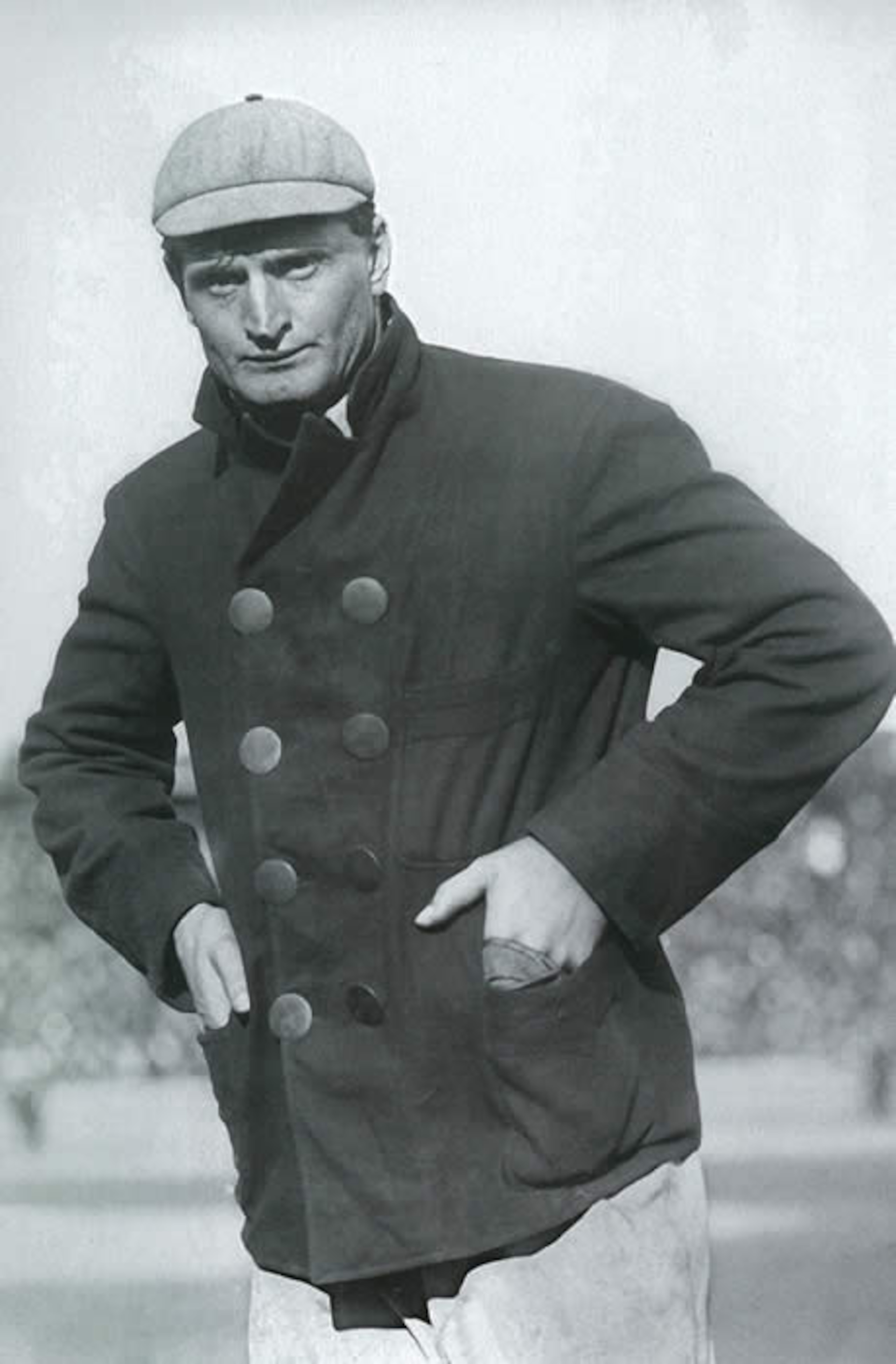
Rube Waddell played from 1897, at the age of 20, to 1910, retiring at the age of 33. During Waddell's career, he went 193-143, a solid-but-not-impressive record to be sure. This record was compiled in 12 seasons, in which he pitched 2,961.1 innings, again not staggering numbers.
But from there it gets good.
First, consider Waddell's career ERA: 2.16, or 134 relative ERA. Really great.
Then consider strikeout-to-walk ratio: 2,316/803, or just a hair under three to one. Also solid.
By today's standards, 2,316 strikeouts does not seem particularly impressive, and Waddell ranks only 42nd all-time in strikeouts. But, of players who pitched from 1900 to 1930, Waddell ranks fourth behind (ready for this?) Walter Johnson, Cy Young and Christy Mathewson.
Or, put another way, three of the top six or seven pitchers of all-time. What's more, those guys compiled their totals in 7,354.7, 5,914.7 and 4,780.7 innings pitched, respectively. Rube Waddell was simply on another planet in terms of strikeouts per inning in the beginning of the 20th century.
Indeed, Waddell finished first or second in strikeouts eight times in 10 years from 1900 to 1909. He finished first in K/9 innings pitched eight out of nine times from 1900 to 1908. And he wasn't just finishing first in these categories. In 1904, when he struck out 349 batters, Jack Chesbro finished second, more than 100 behind at 239. And, Chesbro pitched 71 more innings than Waddell. In 1902, Waddell topped Cy Young by 50 strikeouts despite pitching over 100 fewer innings than Young.
In 1908, Ed Walsh edged Rube Waddell out for the strikeout title. It was the first time in seven years that Waddell had not won the strikeout title. Walsh struck out 37 more batters than Waddell did, 269 to 232. While Waddell pitched 285.7 innings that season, Walsh pitched 464.0 innings.
During the course of his career, Rube Waddell won a pitching Triple Crown, led the league in ERA twice, adjusted ERA three times and hits allowed per nine innings twice. He was the original strikeout king, before Johnson, Vance, Feller, Koufax, Carlton or Ryan.
And, out of the four strikeout kings just mentioned, Waddell had the second-best relative ERA, behind only Walter Johnson.
83. Al Simmons, LF, Philadelphia Athletics/Chicago White Sox
22 of 114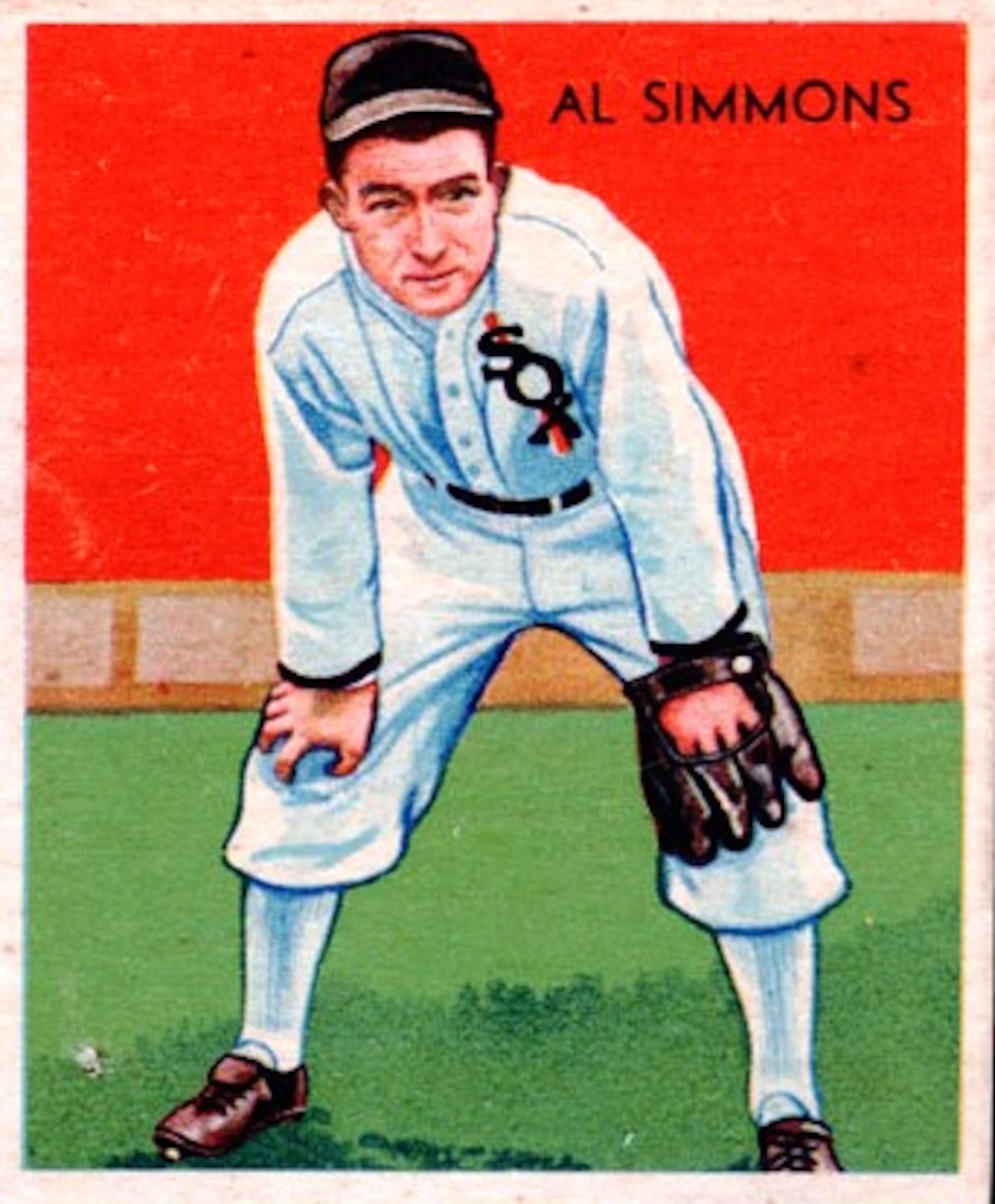
We have Bucketfoot Al, as Al Simmons was known, ranked comparatively low because of era-skepticism. Simmons, like many players who debuted in the mid-1920s, starred in the late 1920s, peaked in 1930 and then played a few more good years in the 1930s before fading through the mid-to-late 1930s.
Nevertheless, his numbers are fantastic.
Simmons' forte was accumulating RBI—in 15 full seasons and five partial seasons, Simmons ended up with 1,827 RBIs, good for 16th all-time.
He also managed to join the 100-plus club (100 more RBI than home runs) six times.
In addition to these feats, he also hit 53 doubles one year, managed 253 hits in 1925, 165 RBI in 1930, 200 or more hits six times, a .334 career batting average, 539 doubles and 1,507 runs.
Only 15 players have more career RBI than Simmons does, and of those, only four were contemporaries of Simmons'—Ruth, Gehrig, Foxx and Ott. Pretty impressive company.
82. Edgar Martinez, Designated Hitter, Seattle Mariners
23 of 114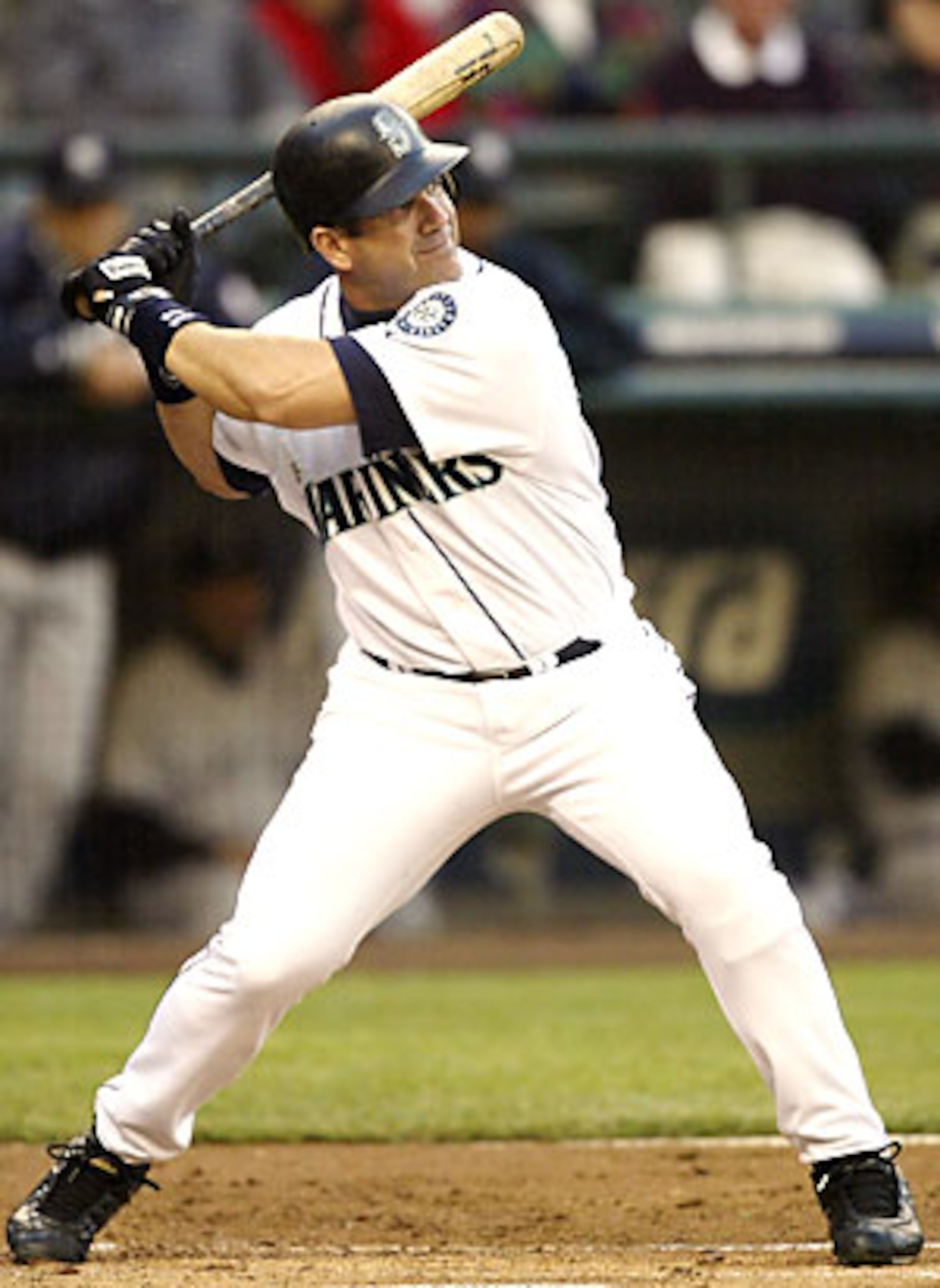
Edgar was a career designated hitter, and some people will never forgive that, but he was also one of the greatest right-handed hitters of all-time.
He finished his career with a .312/.418/.515, which makes him one of only 18 players in baseball history to finish their career with a batting average over .300, an on-base percentage over .400 and a slugging percentage over .500.
He also won two batting titles and finished his career with 1,200 runs, 1,200 RBI and 500 doubles, all despite not becoming a major-league regular until the age of 27.
Ask yourself whether it is better to have a hitter who doesn't play the field or to have a hitter who hurts the team in the field.
81. Roberto Alomar, Second Base, Padres/Blue Jays/Orioles/Indians
24 of 114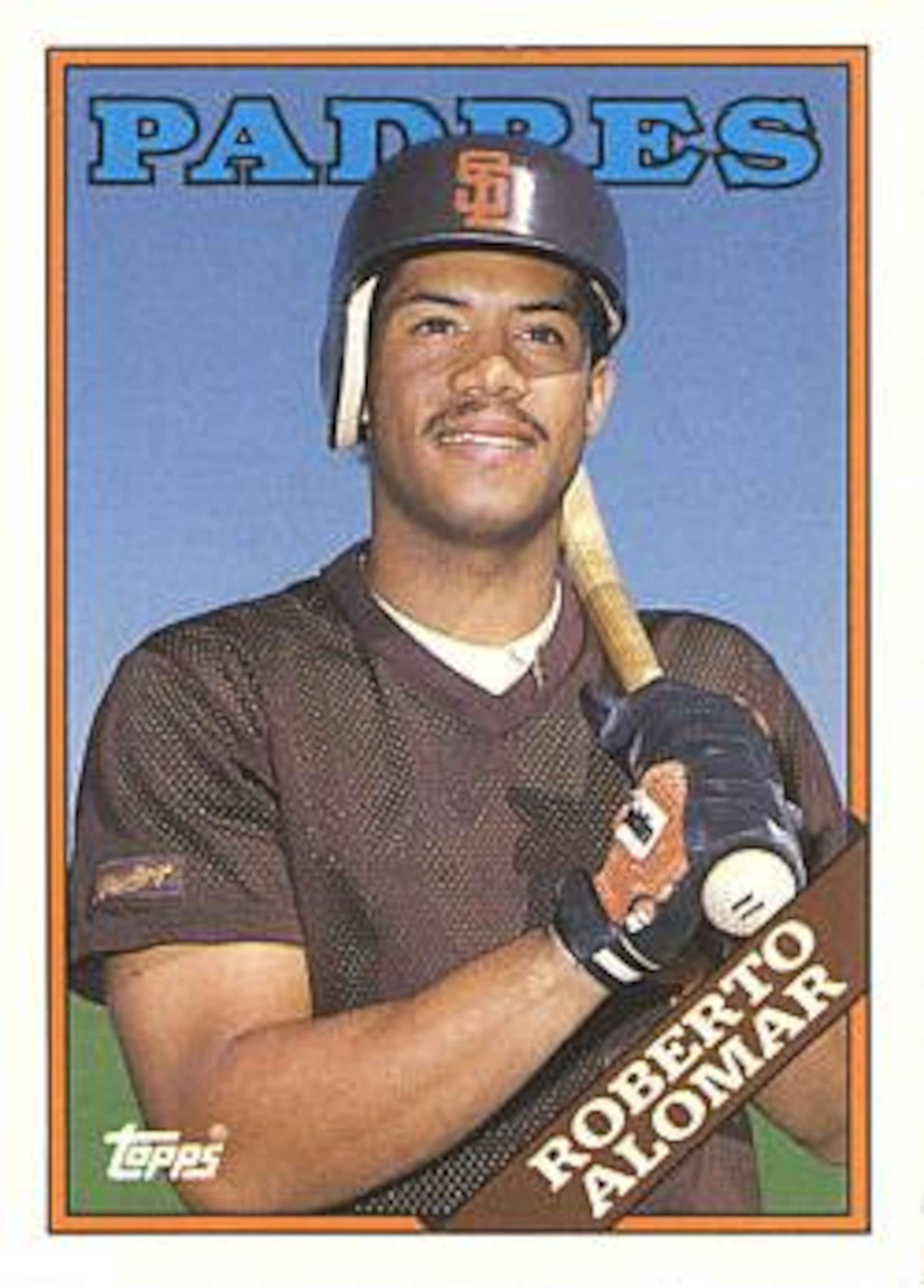
One of the finest combinations of offense and defense at second base in baseball history.
Obviously, we would have preferred if Alomar had not fallen off a cliff at the age of 34.
80. Craig Biggio, Second Base, Houston Astros
25 of 114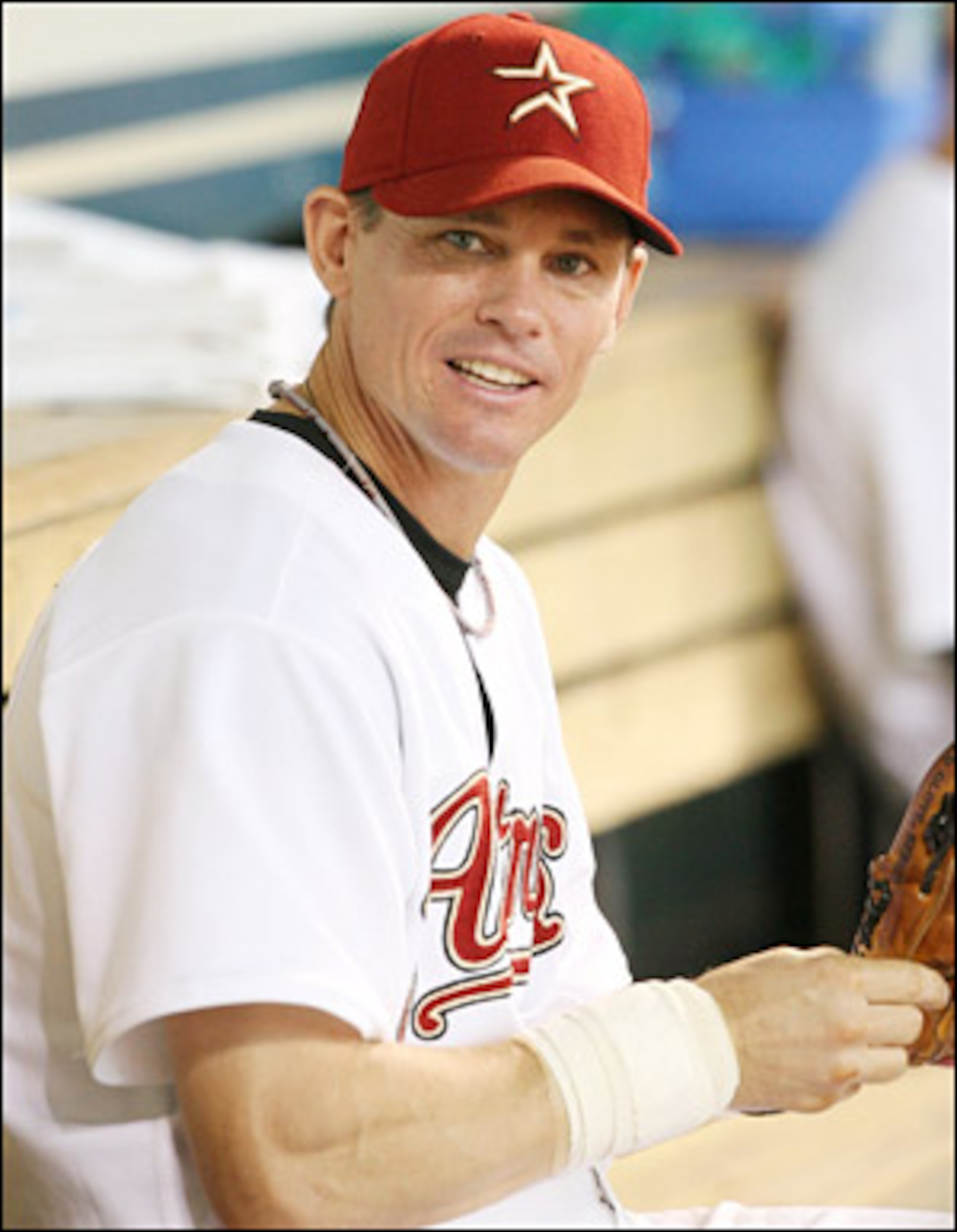
Bill James once said Craig Biggio was the 35th greatest player in the history of baseball. Unfortunately, he reached this conclusion by comparing Biggio's 1996 and 1997 seasons to the 1996-1997 seasons of Ken Griffey, Jr., which doesn't make a ton of sense.
Biggio was a remarkable player who is deserving of enshrinement in Cooperstown on the first ballot. His combination of power and speed, along with 3,000 hits and 1,800 career runs clinches that.
Nevertheless, while his combination of 34 HBPs and zero double plays in 1997 remains one of the greatest and strangest statistical anomalies of all-time, it doesn't propel him into the top 50 alone.
79. Duke Snider, CF, Brooklyn Dodgers
26 of 114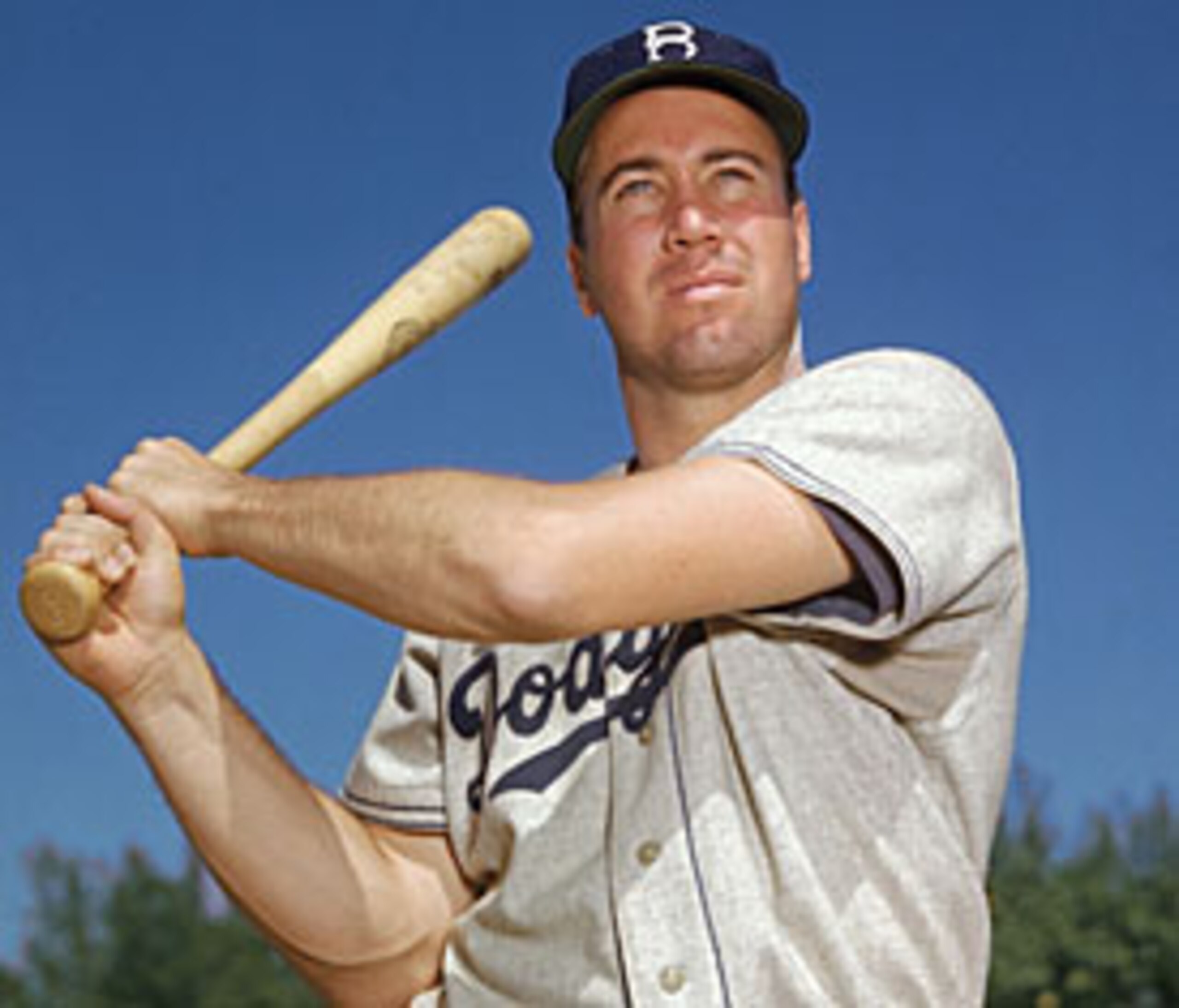
Duke Snider was a terrific player for a relatively short period of time. The meat of his career really only lasted 12 years.
Nevertheless he was a centerfielder who once hit 40 home runs five years in a row and finished with 400 career home runs, both of which were amazing feats in his day.
78. Shoeless Joe Jackson, LF, Cleveland Naps/Chicago White Sox
27 of 114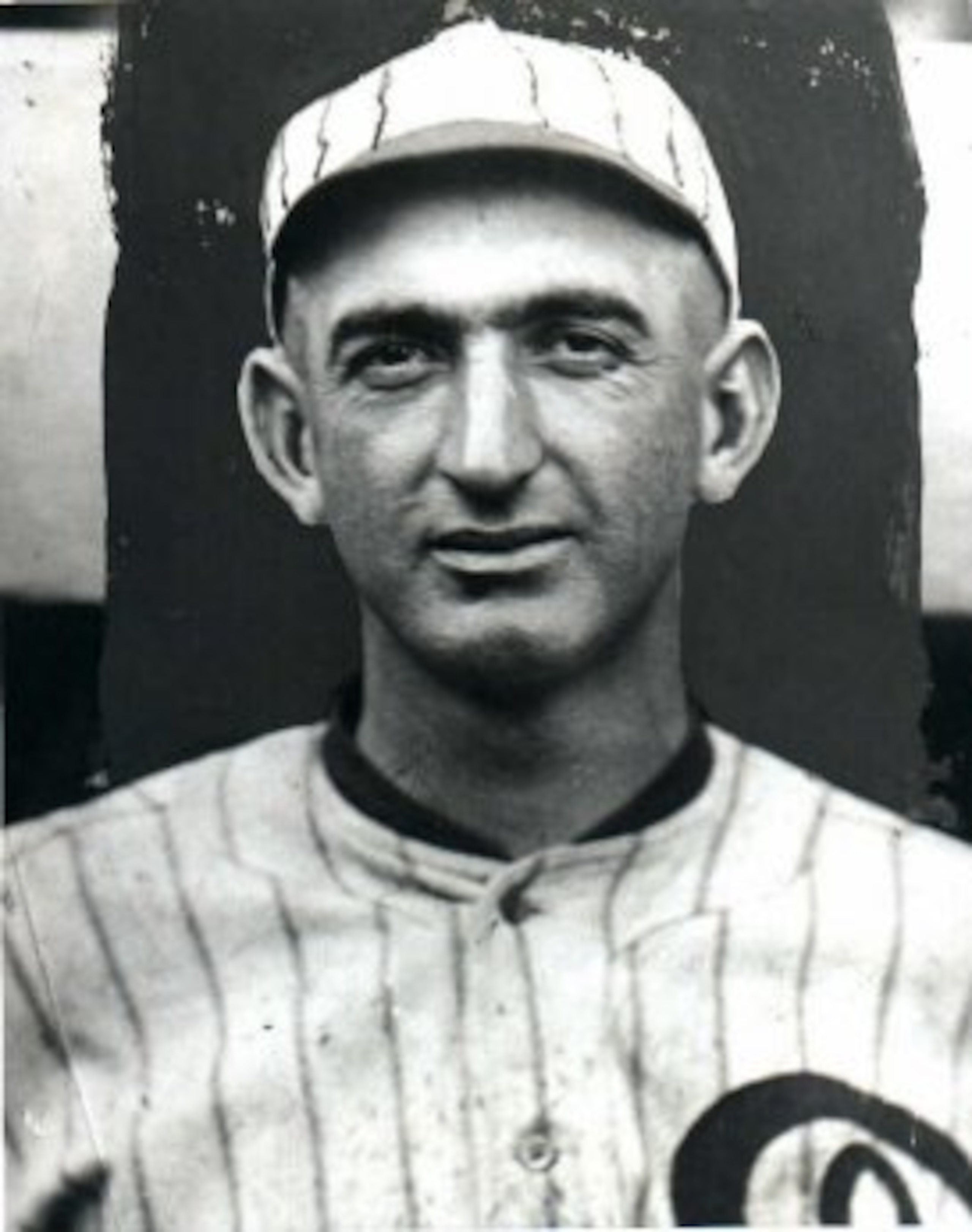
Shoeless Joe Jackson wasn't kicked out of baseball for throwing the 1919 World Series but for being associated with people who were throwing the 1919 World Series.
As a result, this is all we remember him for.
Here are six other things we should remember him for:
6) His .356 batting average is the third highest career batting average of all time, behind Ty Cobb and Rogers Hornsby and ahead of Babe Ruth, Ted Williams, etc.
5) In 1911, his first full season as a major leaguer, at the age of 21, he hit .408 in 641 plate appearances.
4) In his second and third full seasons, he led the AL in hits both years and hit a combined .385.
3) He missed all but 17 games in 1918, at the age of 28, due to service in World War I.
2) He hit .375 in the 1919 World Series, a performance for which he was banned from baseball.
1) In 1920, at the age of 30, he hit 12 home runs with 121 RBI, 105 runs, 218 hits and a league-leading 20 triples, while batting .382 with a .444 on-base percentage and a 1.033 OPS and only 14 strikeouts in 649 plate appearances.
And at the dawn of the 1920s, the most prolific offensive era in baseball history, when he would have no doubt put up impressive numbers in the second half of his career, it would be his final season.
77. Ed Walsh, SP, Chicago White Sox
28 of 114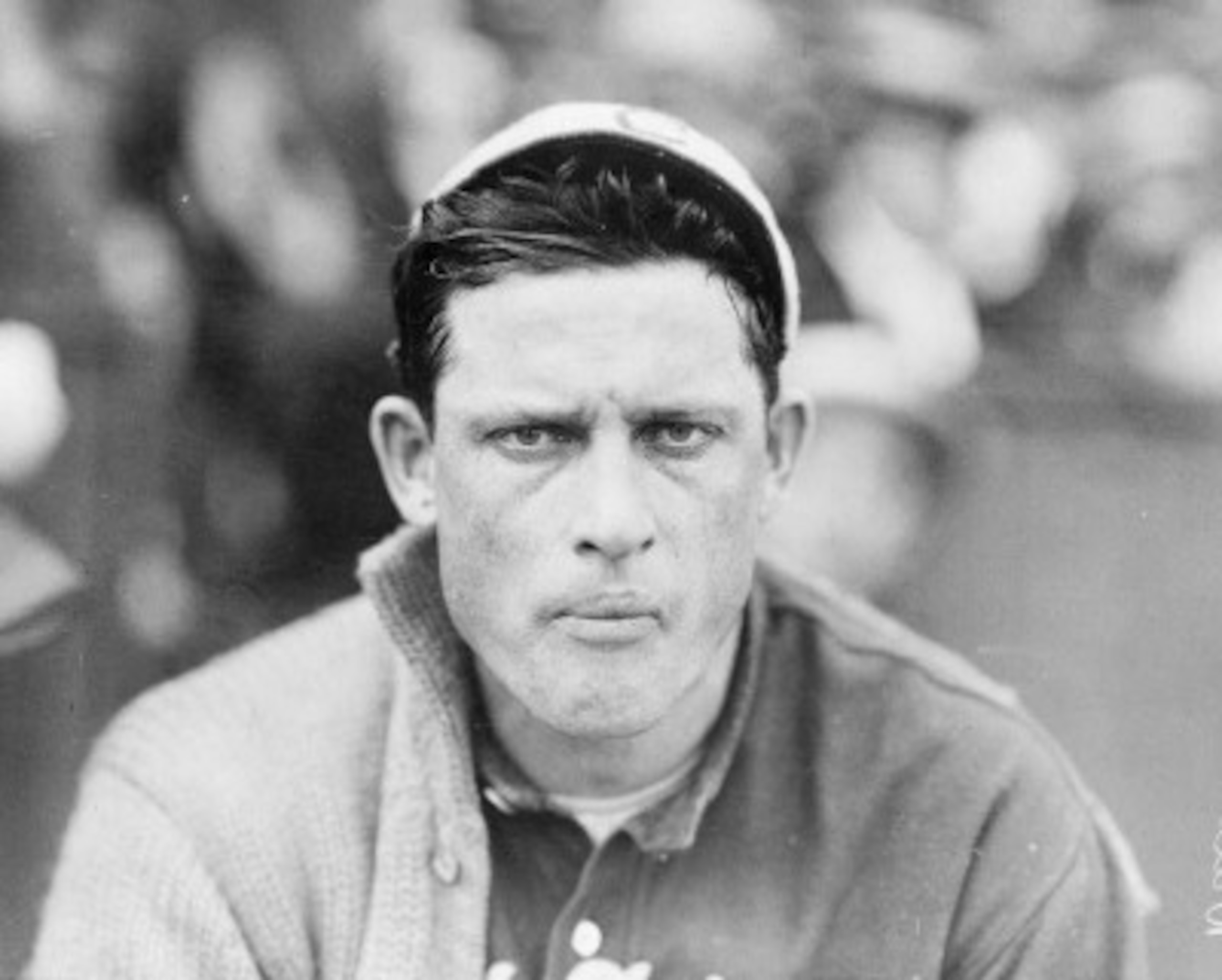
Ed Walsh pitched over 25 percent of his team’s innings in five separate seasons and went over 30 percent twice. For comparison, Greg Maddux led the NL in innings five straight seasons but never pitched in as much as 20 percent of his team’s innings.
The game has changed, and you can certainly take this line of logic too far, but surely, Walsh should receive some extra credit for having a much larger impact on his team’s won-loss record than any modern pitcher.
On the other hand, Ed relied on the spitball, lasted only seven full seasons and may not have been great had he been born 50 years later.
76. Dick Allen, 1B/3B, Philadelphia Phillies/Chicago White Sox
29 of 114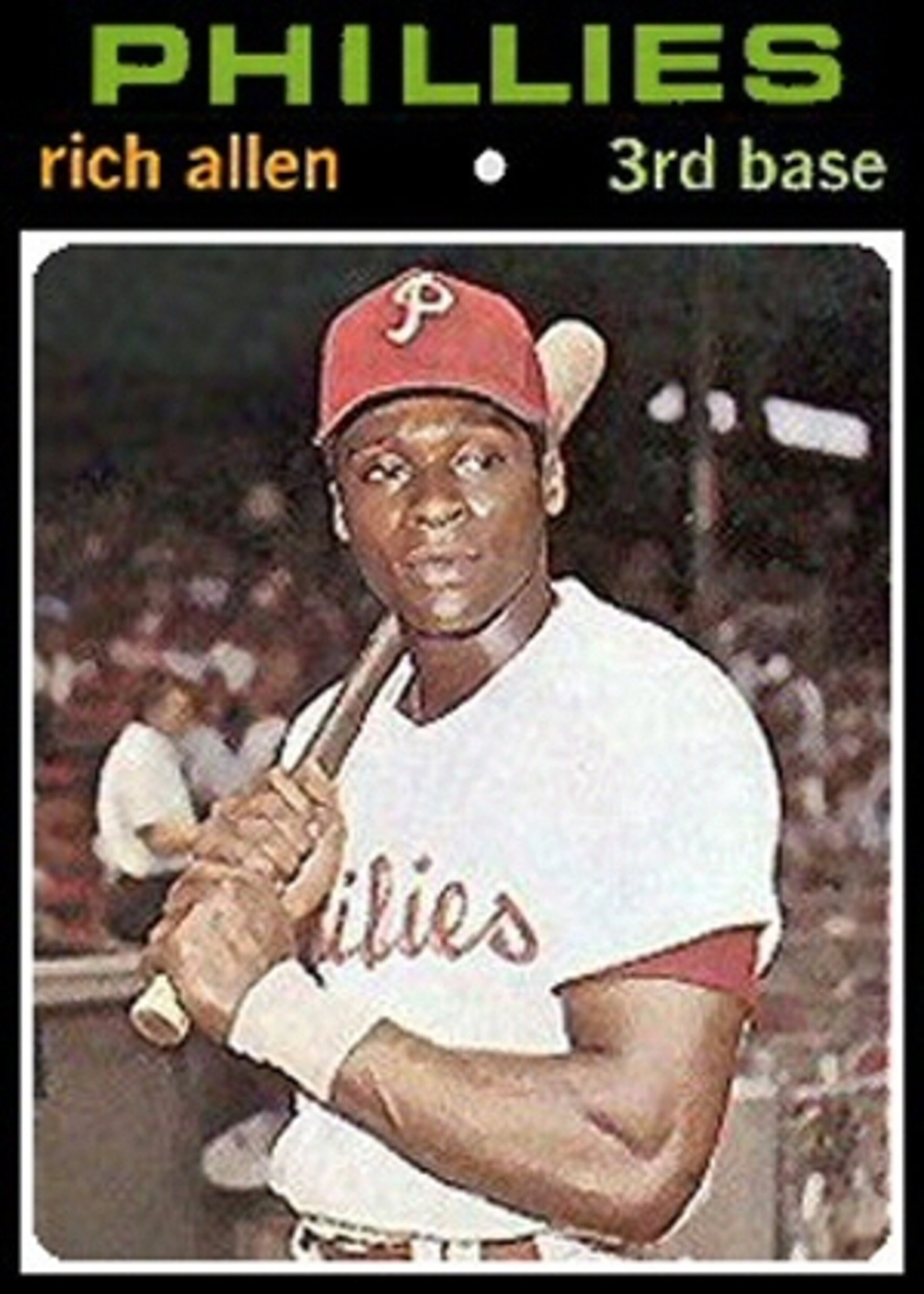
Dick Allen leads the All-Star team of players with immense talent and immense egos.
Whether Allen's problems, chiefly in Philadelphia, were caused by his own personality or by the caustic relationship Phillies fans have with their hometown stars is up for debate, but Allen's baseball abilities are not.
Allen finished with the 19th best OPS+ of all-time, tied with Willie Mays and ahead of Hank Aaron, Joe DiMaggio, Manny Ramirez, Frank Robinson and Honus Wagner.
If Allen had been a Cub, he would have played 20 years, he would have been beloved by his hometown fans and he would be in the Hall of Fame.
75. Frank Baker, 3B, Philadelphia Athletics
30 of 114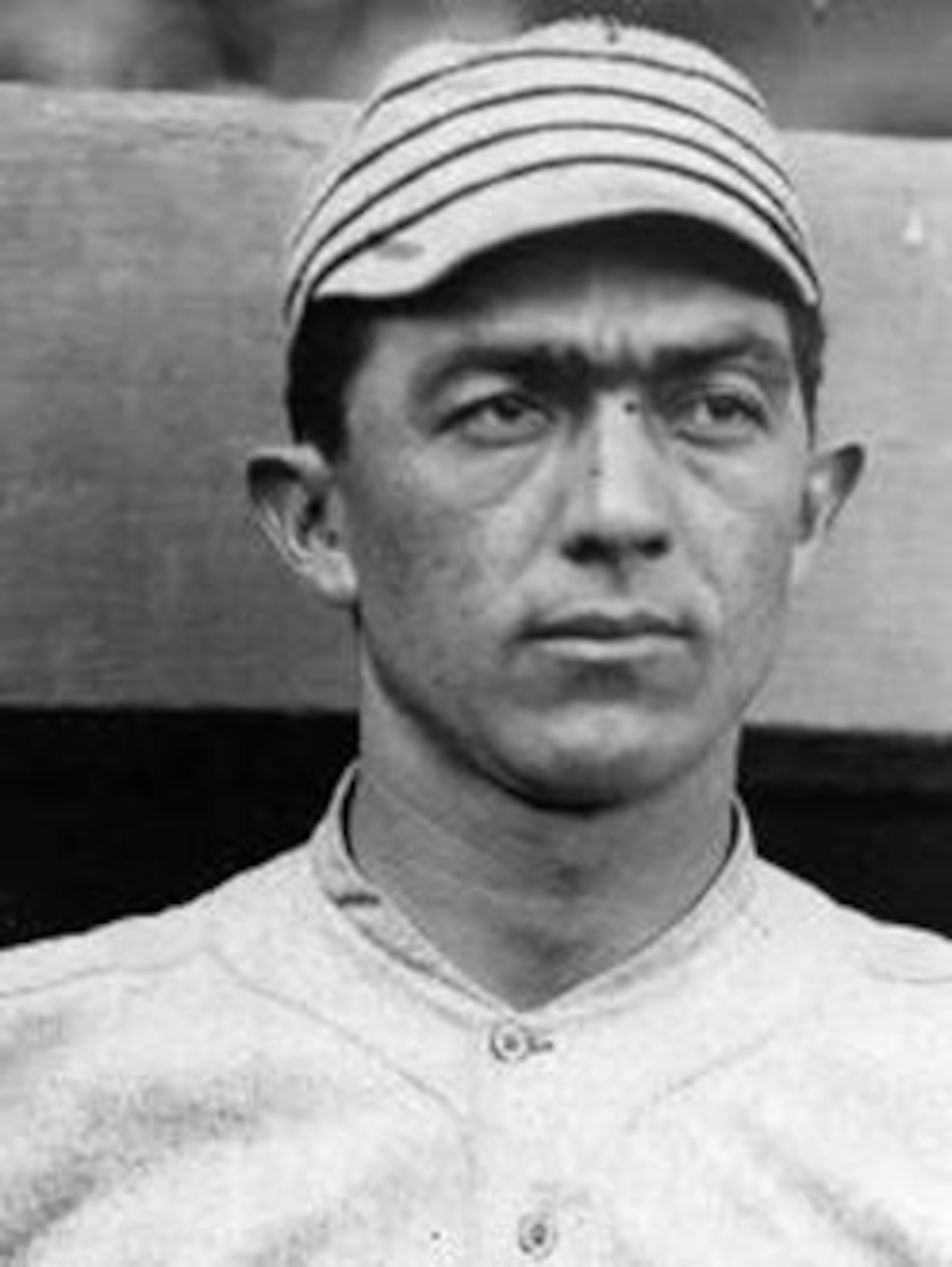
From the age of 23 to the age of 28, Frank "Home Run" Baker was one of the elite hitters in the history of baseball. A third baseman, he led the AL in home runs four years in a row and hit .321 over six seasons.
Baker was also part of a tremendous Philadelphia Athletics team that went to the World Series four times and won three championships.
Beginning in 1915, though, he began to have major run-ins with management. He sat out the entire 1915 season over a contract dispute with Connie Mack. He was sold to the New York Yankees before the 1916 season and played four more years at a diminished value.
After retiring in 1920 at the age of 33, he returned for two more seasons in 1921 and 1922 as a part-time player on Babe Ruth's Yankees and went to two more World Series, losing them both.
74. Carlton Fisk, C, Boston Red Sox/Chicago White Sox
31 of 114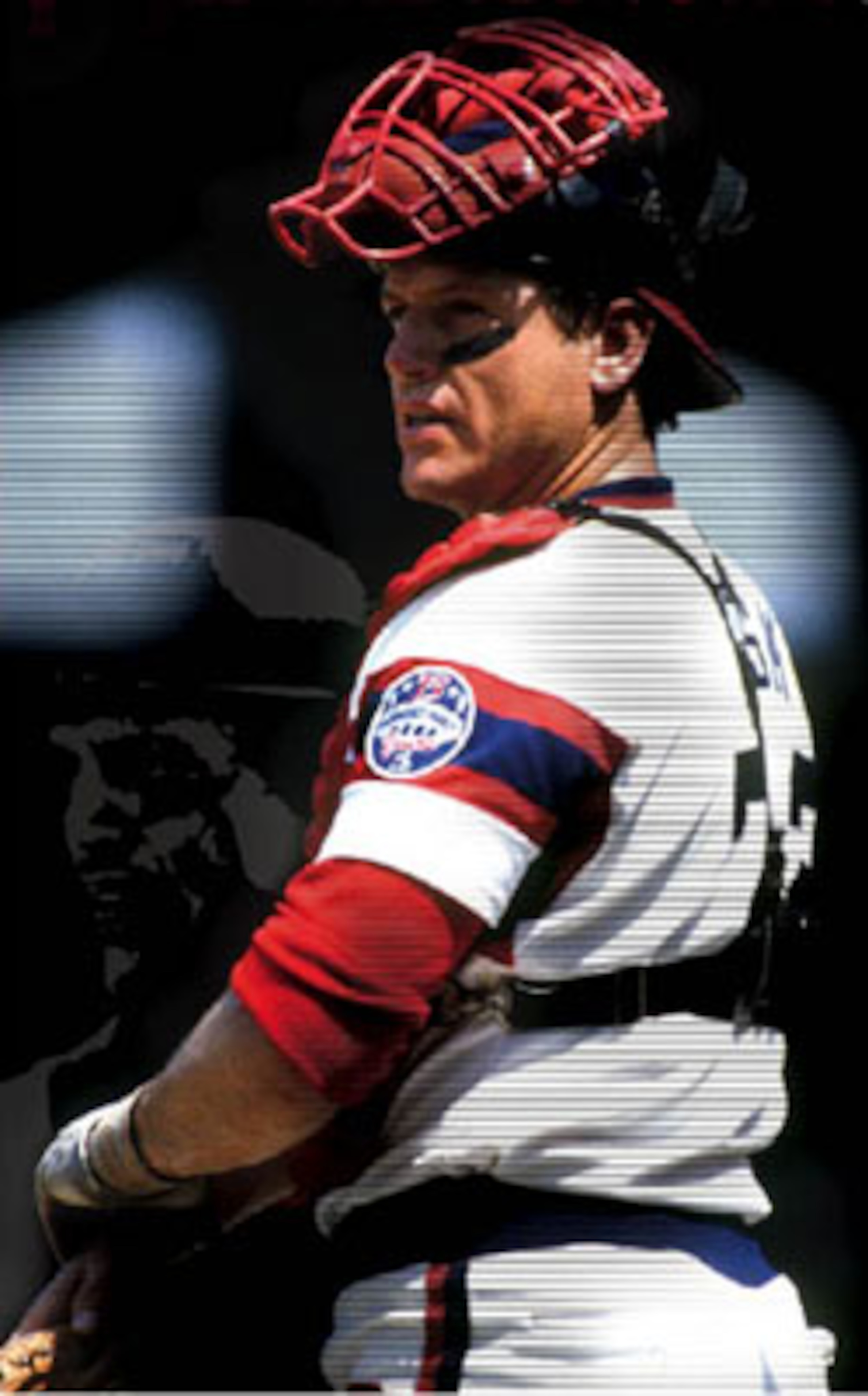
Carlton Fisk's career totals—2,499 games played, 376 home runs, 1,330 RBI, 3,999 total bases—are very impressive, but they tend to obscure the fact that Fisk played over 130 games only 12 times and topped 150 games only three times in 24 seasons.
Bill James has this bit on Fisk in which he compares Fisk to Roy Campanella by pointing out that if you consolidate a player's career into a single season, Fisk would have played a full season because of his career being so long while Campanella would have played just over half a season because his career was so brief.
Ironic that a player who very rarely played full seasons would be used as the full-season example.
Fun Fact: If Fisk would have played one more game and gotten one more hit, he would have finished his career with 2,500 games played and 4,000 total bases.
Honorable Mention: Roy Campanella, C, Brooklyn Dodgers
32 of 114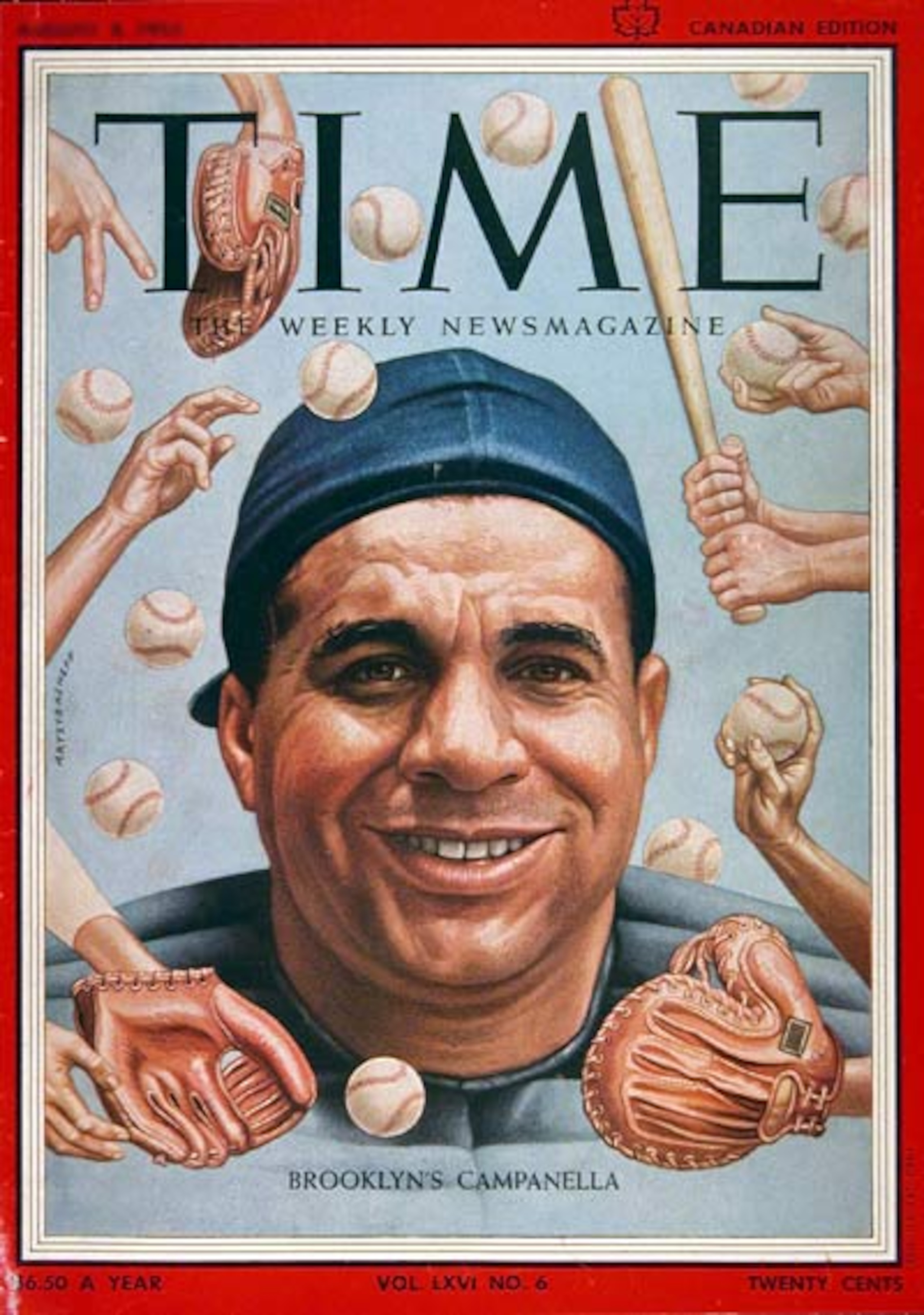
No, this isn't a steroids honorable mention. This is an honorable mention dedicated to an incredible ballplayer whose major-league career was all too brief.
After Jackie Robinson broke into the majors with the Brooklyn Dodgers to smashing success, the next former Negro Leaguer that Branch Rickey brought to the majors was Campanella, by then a 26-year-old and 10-year veteran of the Negro Leagues.
Campanella began playing professional baseball at the age of 16 after dropping out of high school and joining the Washington Elite Giants. He became a star after the team moved to Baltimore in his second season. He debuted with the Dodgers in 1948 and he would win the National League Most Valuable Player award in 1951, 1953 and 1955.
Campanella also led the NL in caught-stealing percentage five times in his first six years, and the Dodgers became a force to be reckoned with.
Campy's career was truncated at the beginning by the color-barrier and truncated again at the end by tragedy after he was paralyzed in an automobile accident after the 1957 season at the age of 35.
For an all-too-brief time, Roy Campanella was one of the greatest catchers of all-time.
73. Cal Ripken, Jr., SS, Baltimore Orioles
33 of 114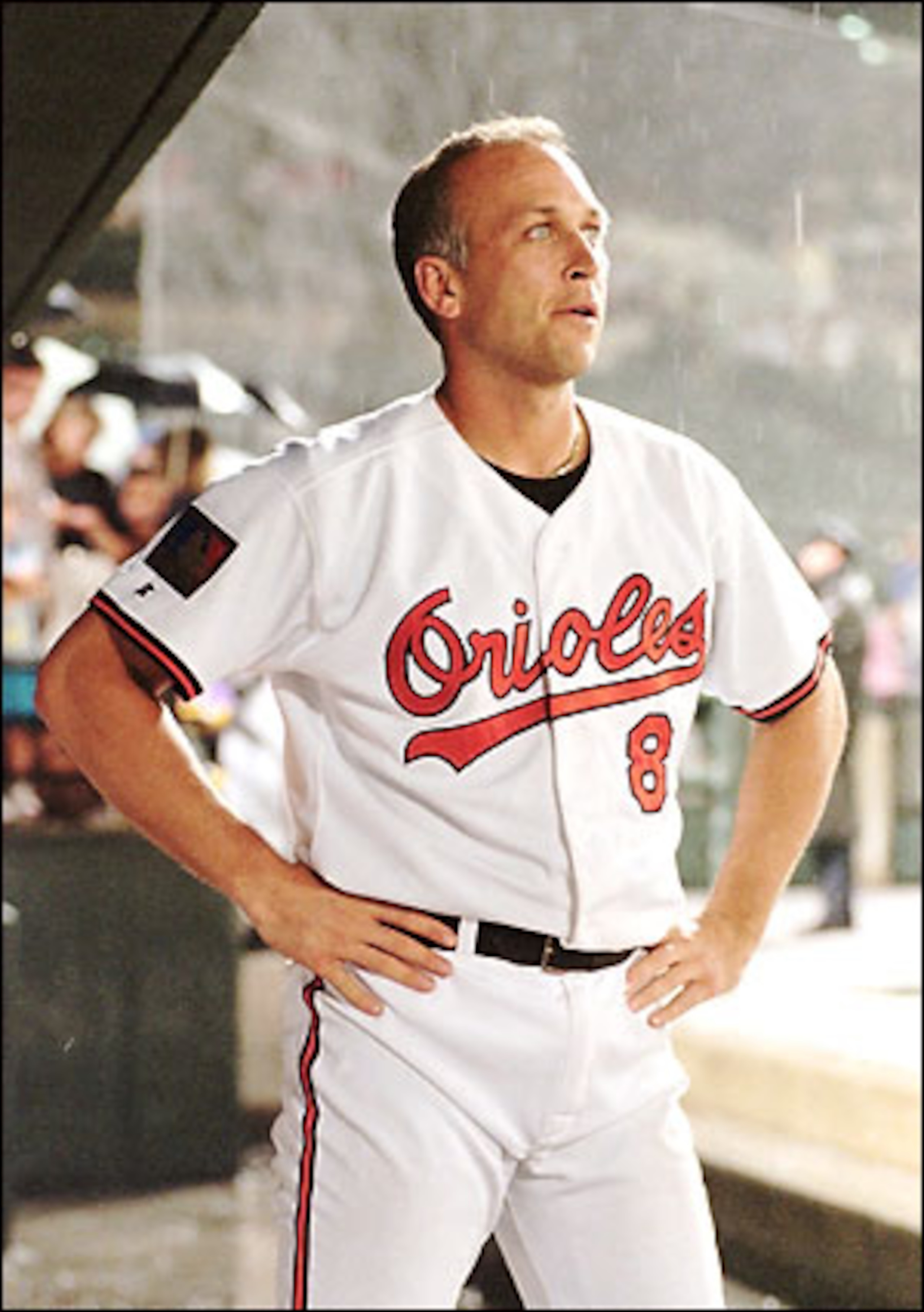
The Iron Man was no Silent Cal.
Ripken was the prototype for the modern shortstop, giving rise to guys like Jeter, Alex Rodriguez, Miguel Tejada and Nomar Garciaparra. Ripken showed people that you could be big and play short, and that it was OK for the shortstop to be one of the best hitters on the team.
Ripken finished his career with over 3,000 hits, 400 home runs, 1,600 runs and 1,600 RBI, plus two AL MVP Awards, a Rookie of the Year Award and a World Series title.
Oh, and there was also the matter of breaking Lou Gehrig's unbreakable record for most consecutive games played while playing one of the two most demanding positions in baseball.
72. Roberto Clemente, RF, Pittsburgh Pirates
34 of 114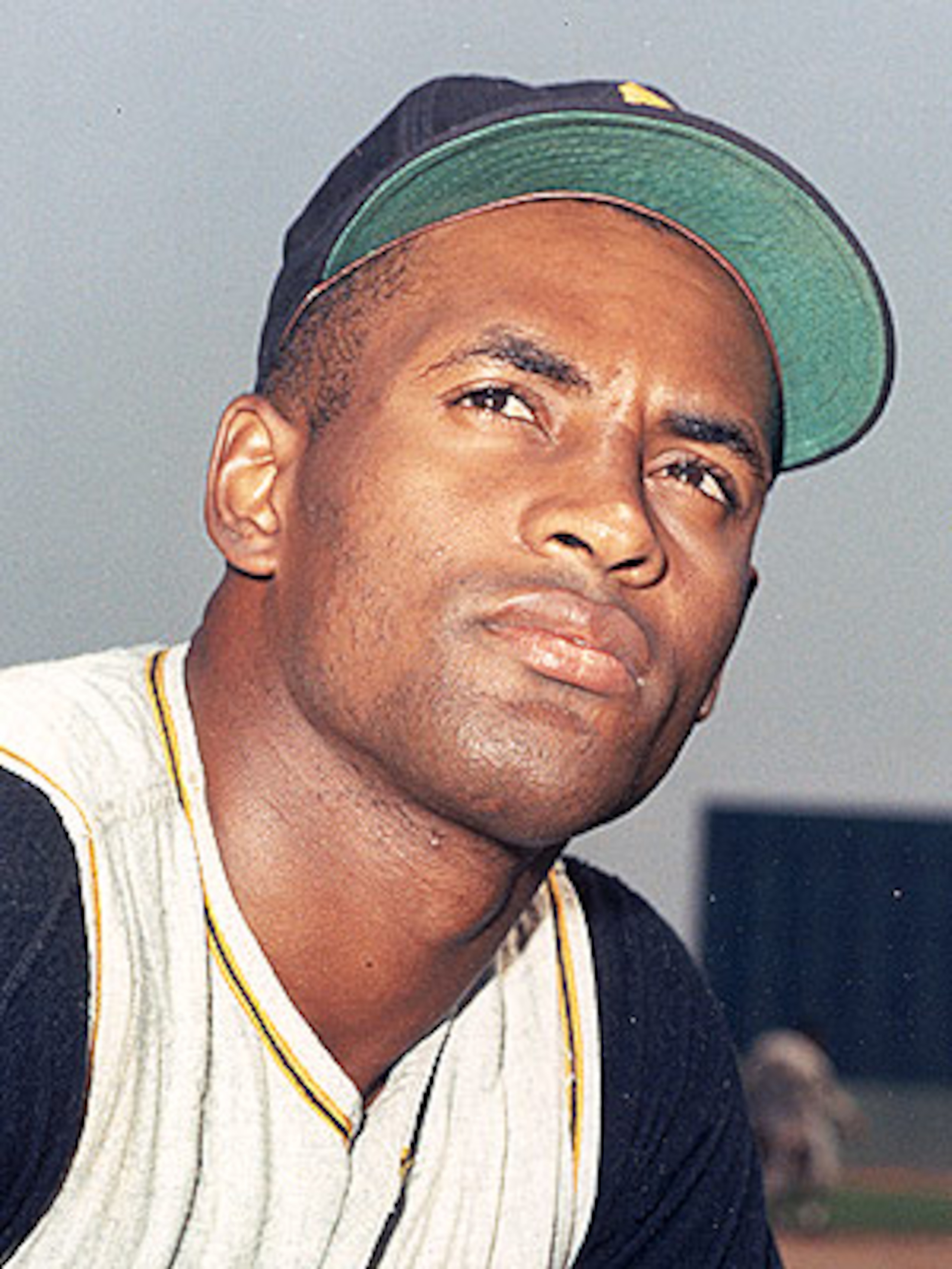
We did not include Roberto Clemente here originally, and people were up in arms. We stood by the decision until, however, a reader named "patrick bohn" presented an argument that was too good to refudiate. Take it away, patrick:
Normally, I refuse to fall victim to the "compare guys of a different era" fallacy, but lists like this, by nature, invite that. So here goes.
Winfield: .283/.353/.475, 130 OPS+, 3110 hits, 465 HR's 223 steals, D WAR -9.2 on baseball-reference, -92 runs on FanGraphs
Clemente: .317/.359/.475, 130 OPS, 3000 hits, 240 HR's, 83 steals, D WAR 22 on baseball reference, 204 runs on fangraphs
Offensively, Winfield seems to have two main advantages: Steals and Home Runs. And while those two things have value, I'm not 100 percent sure that Winfield was necesarily better in regard to the underlying skill of speed.
According to baseball-reference and fangraphs, Winfield was worth 36 runs on the bases and had a speed score of 4.8, compared to Clemente's 21/5.5. Their SB percentages were 70 and 64. Clemente his 166 triples and was routinely among the league leaders. So Winfield stole more, but he wasn't necessarily faster or better on the basepaths than Clemente.
As for the HR's, yeah no way around that.
But there's also no way around the defensive side of it. Winfield was an overrated fielder, and a below-average one at that. Clemente was an excellent fielder, arguably one of the best in the league for most of his career.
So here's what it boils down to IMO
1) As overall hitters, Winfield had a clear advantage due to his home run power, but both players had identical SLG's and nearly identical OBP--even accounting for Winfield's decline phase, his numbers through 37 when Clemente died, .283/.357/481 are still essentially the same
As overall runners, Winfield has a slight advantage, though probably insignificant over careers that long
As fielders, Clemente has a decisive advantage. It's not even close.
So in their overall games, was Winfield really better? IMO, no. Clemente's excellent fielding outweighs the HR's, since most of the other rate stats are similar
We stand corrected.
72a. Dave Winfield, RF, Padres/Yankees/Angels
35 of 114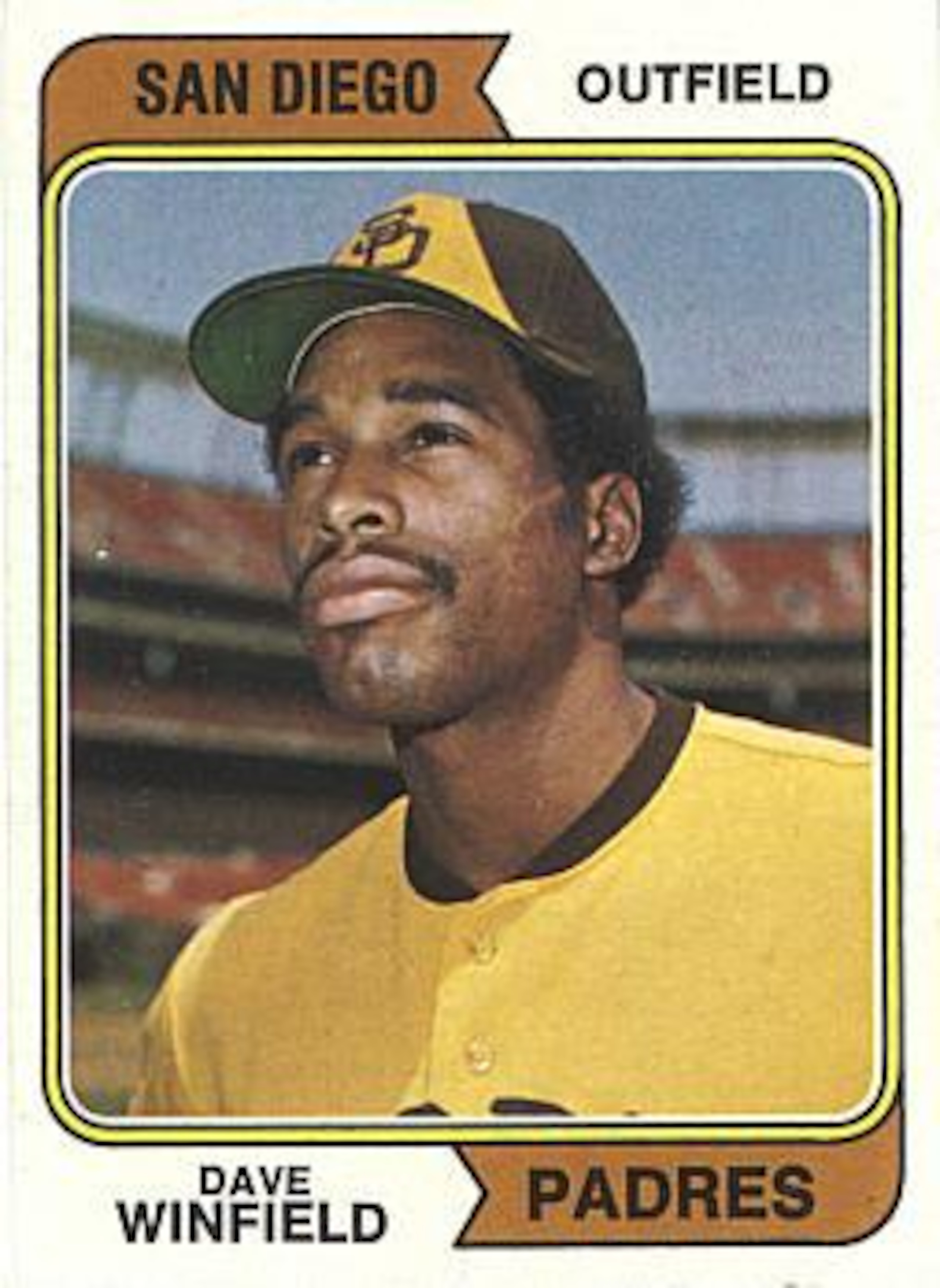
Dave Winfield was a very good player for a very long time.
When the San Diego Padres drafted him in 1973, they basically sent him straight to San Diego. He was drafted in June and he was the club's regular everyday right fielder by the end of the month.
Winfield could hit 30 home runs, drive in 100 RBI and score 100 runs. He could hit .300. He had a tremendous arm. He never put up elite numbers in any particular category, but at the end of his career, his career totals were amongst the all-time best.
Because he was a very good player for a very long time.
71. Eddie Plank, SP, Philadelphia Athletics
36 of 114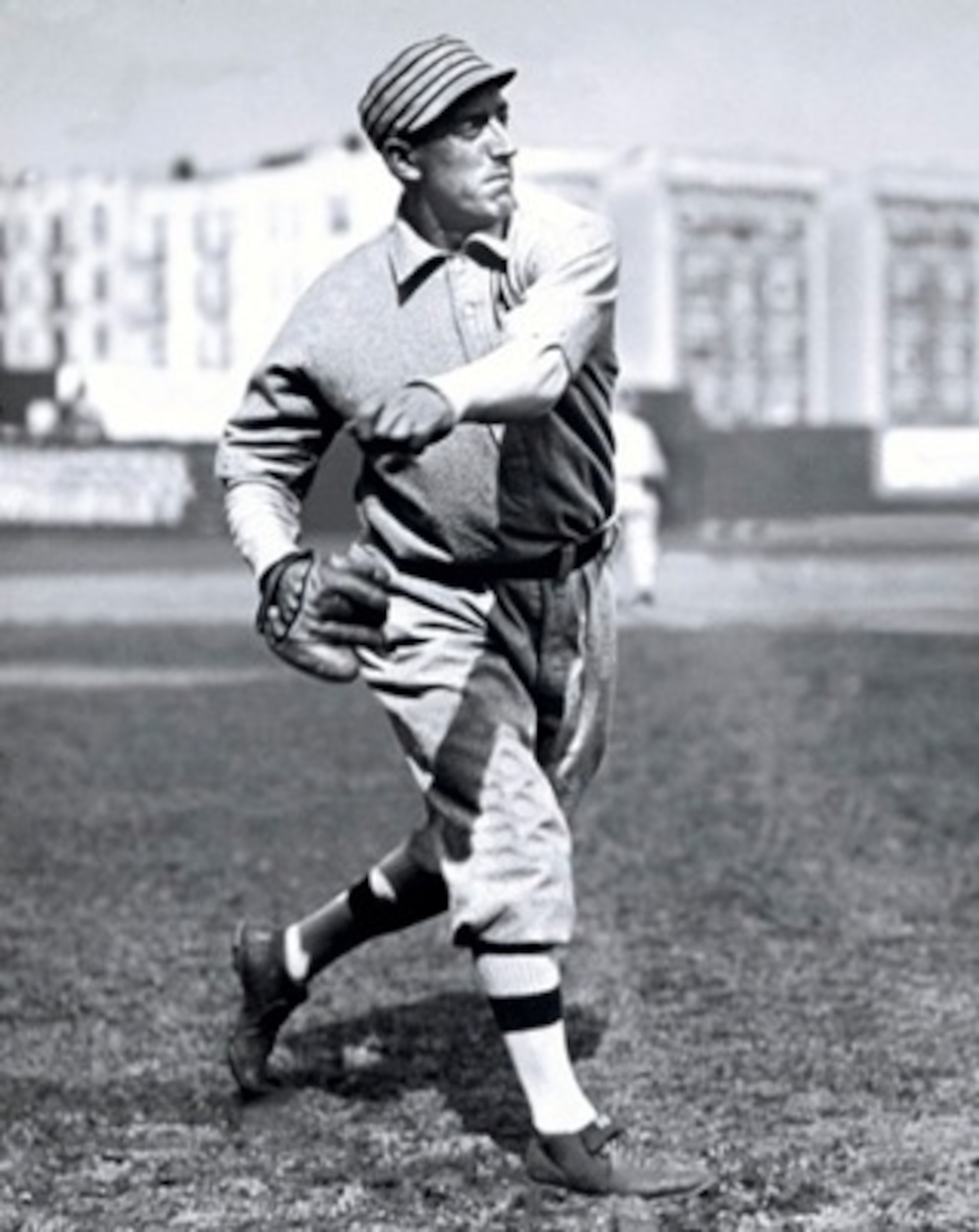
Plank finished his career with 326 wins, which is automatic for the Hall of Fame and also a 2.35 ERA (122 ERA+).
As an indication of how different baseball was back then, Plank's 1914 Philadelphia Athletics club that lost in the World Series to the Boston Braves featured three sub-6'0" pitchers that year—Plank, Bullet Joe Bush and Bob Shawkey. That trio combined for 47 wins.
70. Derek Jeter, SS, New York Yankees
37 of 114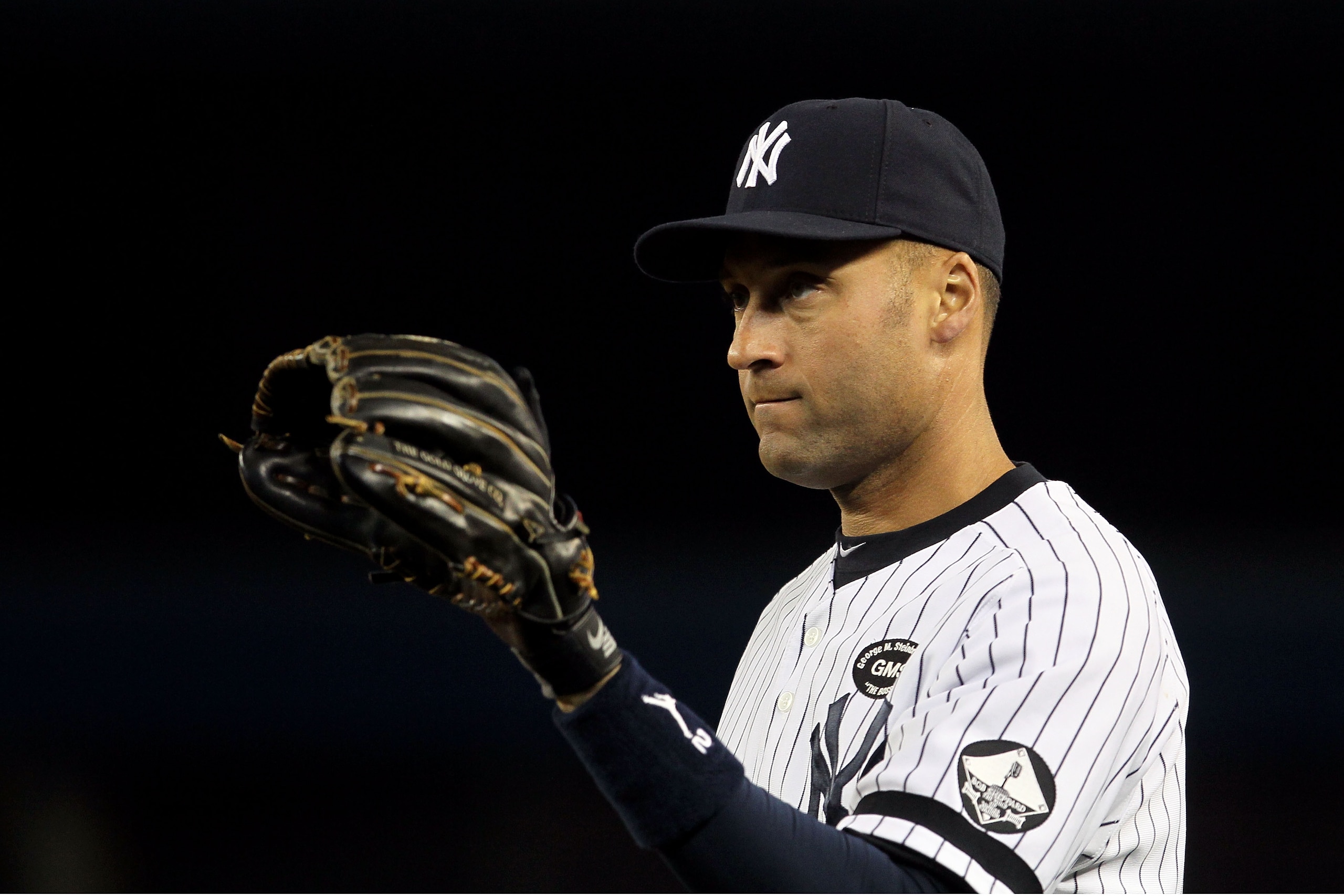
Derek Jeter's biggest fans are completely blind to Jeter's deficiencies as a shortstop.
However, Jeter's detractors are equally blind to the fact that he has been a terrific player during his storied career, deficiencies notwithstanding.
When you consider the tonnage of Jeter's accomplishments, you really do have to take your hat off to a guy who has played the game at an elite level for a very long time.
69. Wade Boggs, 3B, Boston Red Sox/New York Yankees
38 of 114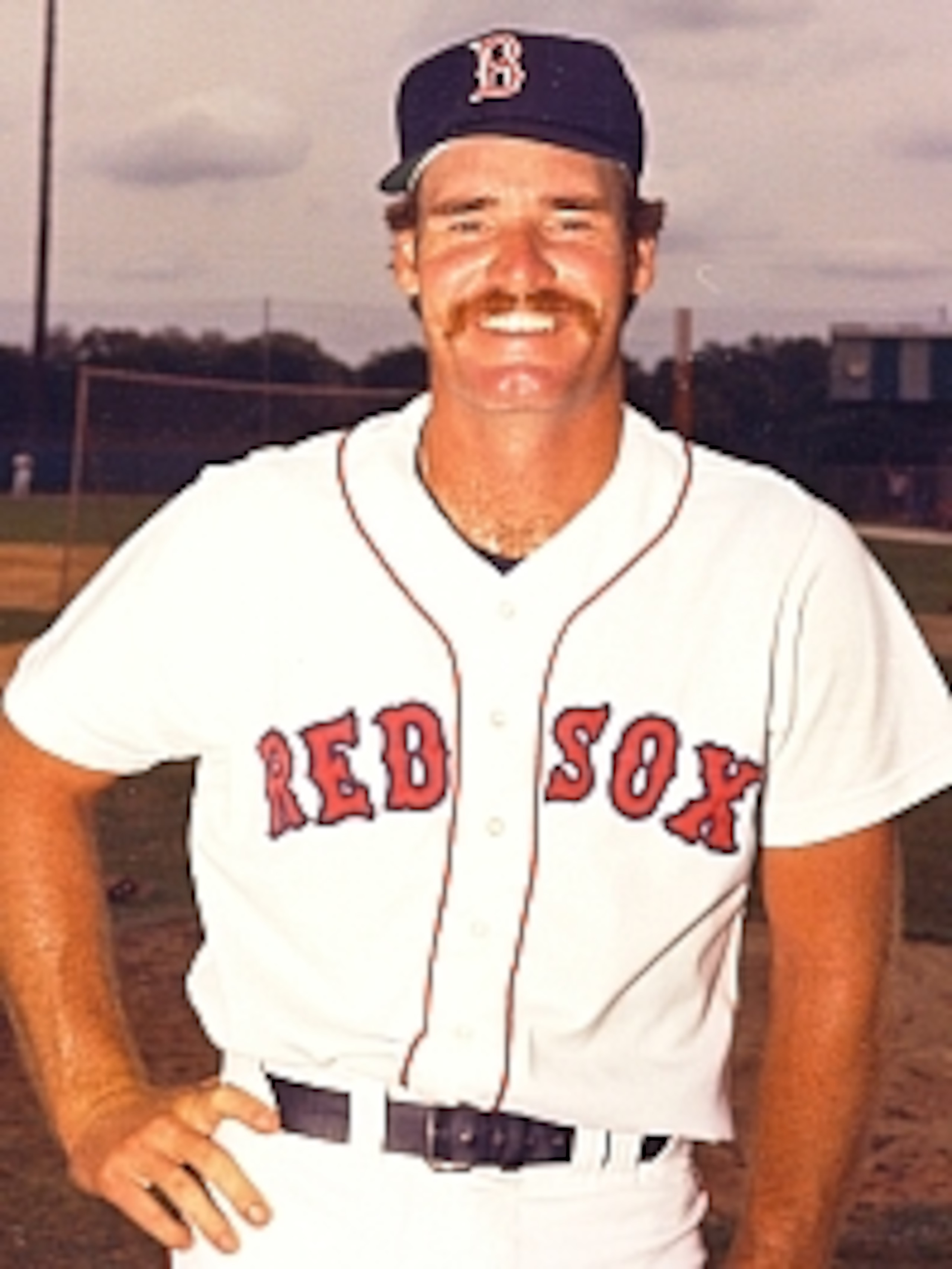
When I was a kid, Wade Boggs kind of gave me the creeps.
Why?
Because every time the Boston Red Sox were on television, the broadcast would inevitably turn to black-and-white pictures of the only players who had ever performed at the level Boggs did from 1982 to 1991.
I knew at a very early age that Boggs was doing something that hadn't been done in a very, very long time, and it gave me chills.
Turns out, Boggs was a supernatural force of nature at Fenway Park and merely a very good player away from Fenway. For example, in 1987, Boggs hit .363 with a 1.049 OPS. However, he hit .411 at home and only .311 on the road that season.
In 1983, when he hit .361, he hit .397 at home and .321 on the road.
Don't get me wrong—.321 on the road is still awesome. But it doesn't give you the chills, you know?
On the raw numbers, Boggs would probably be one of the top two or three hitters of all-time. Knowing what we know about his home-field advantage, he is still pretty high.
68. Joe Cronin, SS, Washington Senators/Boston Red Sox
39 of 114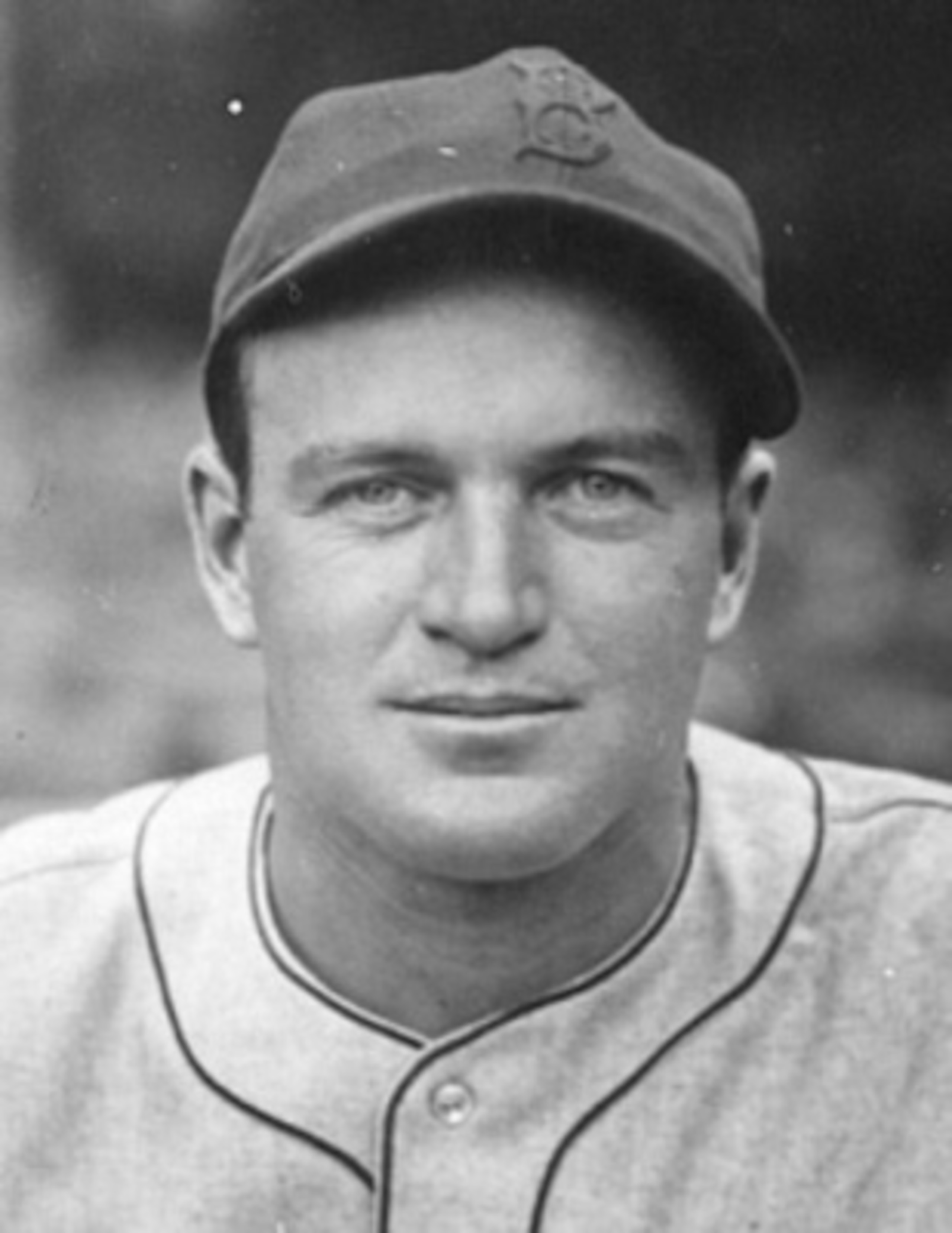
Joe Cronin put up some of the most gawdy shortstop numbers of all-time—a four-time member of the 100-Plus Club, Cronin had 1,400 RBI and 1,200 runs while batting .301 and putting up an OBP of .390. Of course, Cronin spent the first half of his career in the offense-crazed late-1920s and early 1930s and then got traded to offense-crazed Fenway Park in 1935, so we take his numbers with a grain of salt.
Plus, he once made 62 errors in 143 games, which is a post-deadball era record.
67. Carl Yastrzemski, LF, Boston Red Sox
40 of 114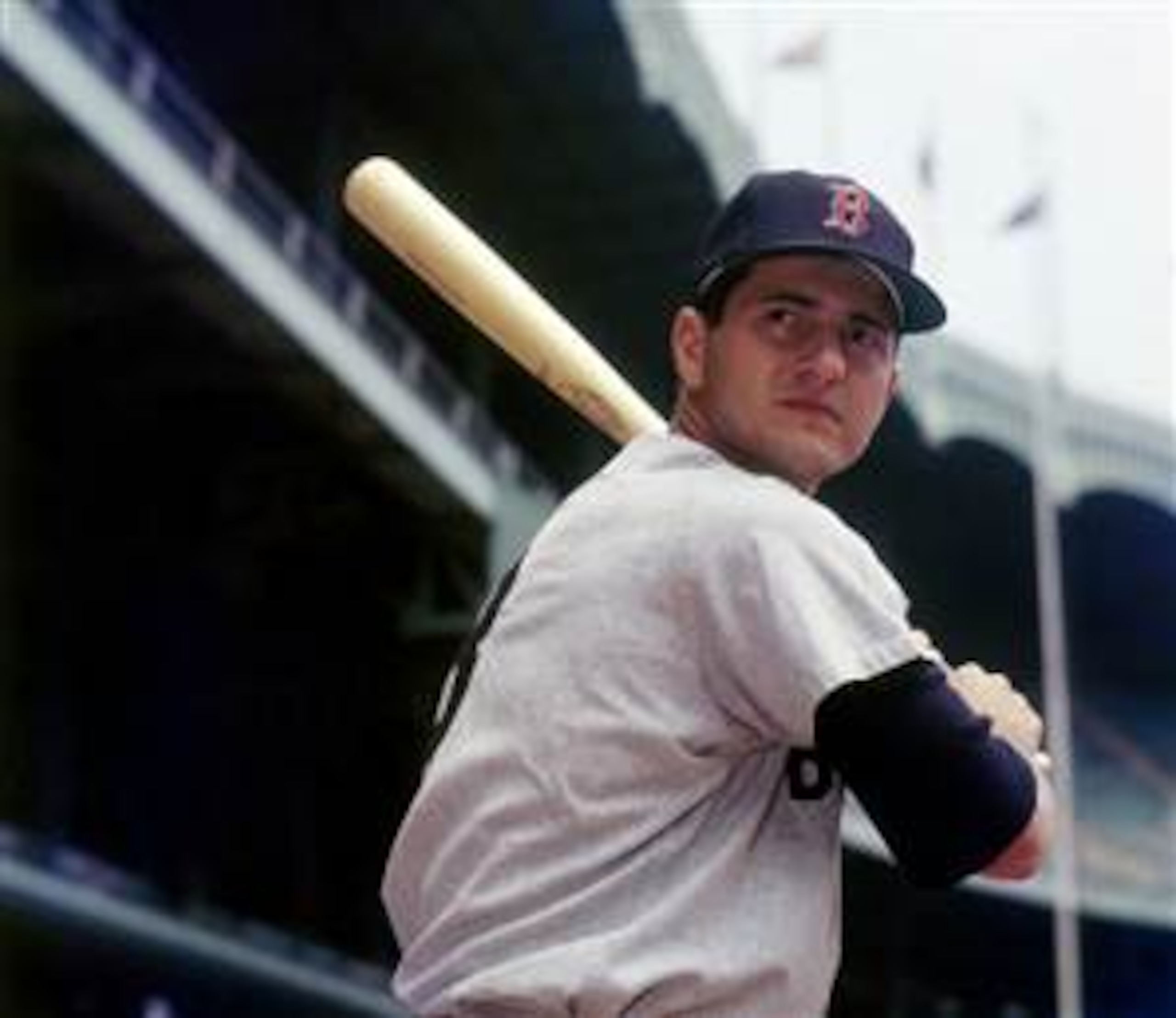
Everything I just said about Wade Boggs applies to Yaz as well.
In 23 seasons, Yaz hit .306 at Fenway Park and only .264 on the road. He had 1,063 RBI at home compared to 781 on the road. The rest of his numbers follow suit.
For his career, Yaz's OPS at home was .904, while his OPS on the road was .779. The list of players who finished their careers with an OPS higher than 900 at home and lower than 800 on the road is very short and comprised mostly of players who spent their careers in extreme hitters parks.
If Yaz had played his home games in a hitting-neutral park, I think we'd remember him very differently.
66. Warren Spahn, SP, Milwaukee Braves
41 of 114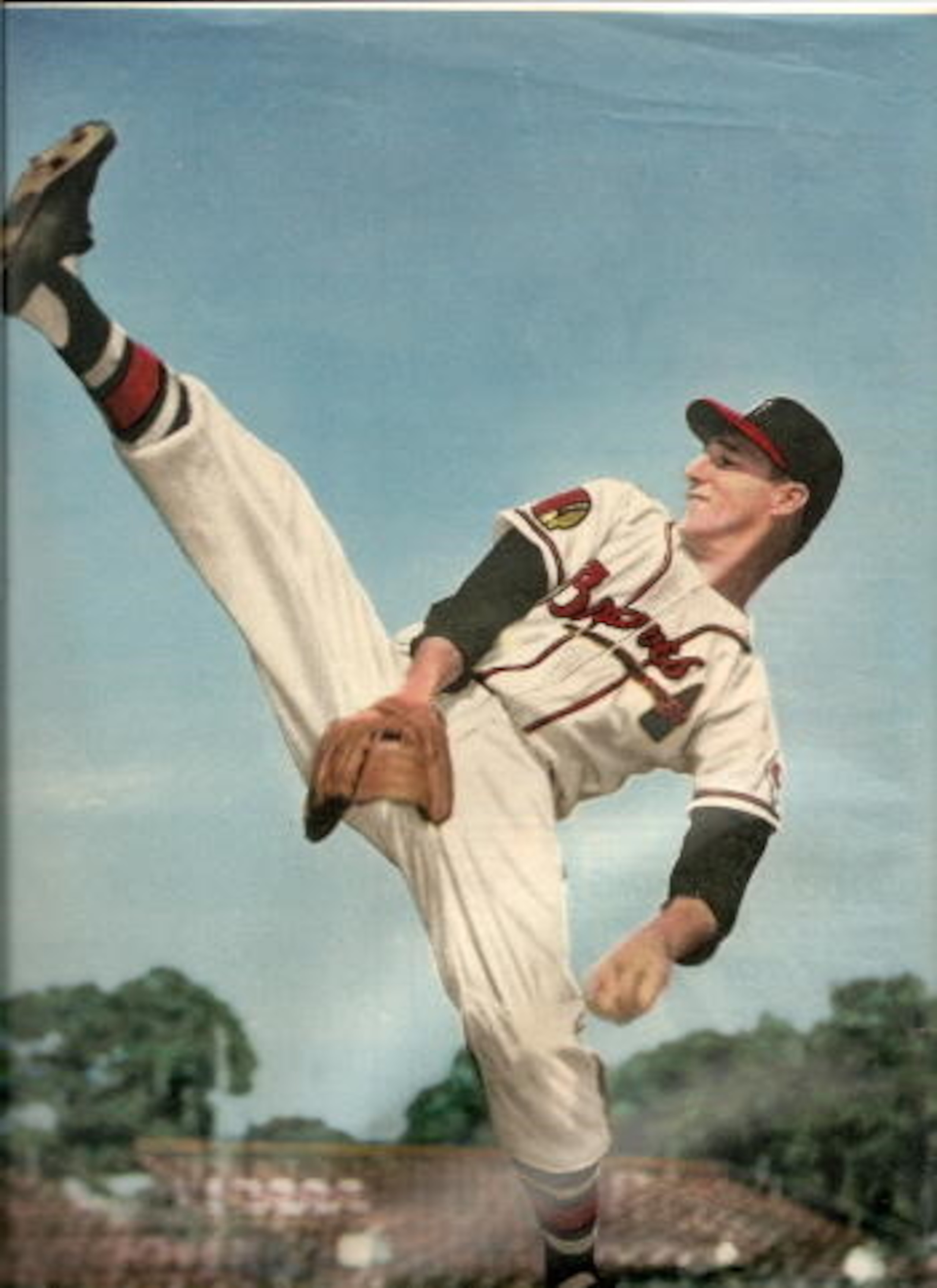
Warren Spahn won 20 or more games 13 times. He led the league in wins eight different times. He also led the league in complete games nine times, innings and strikeouts four times and ERA once each in three different decades.
His career ERA isn't amazing, his strikeout-to-walk ratio is unimpressive and he gave up plenty of hits and walks.
Frankly, the stats in the first paragraph above are so overwhelming that the take-aways in the second paragraph don't even seem to matter.
And oh, by the way, he won 363 games despite not pitching his first full season until the age of 26 due to World War II.
What the what?
65. Paul Waner, RF, Pittsburgh Pirates
42 of 114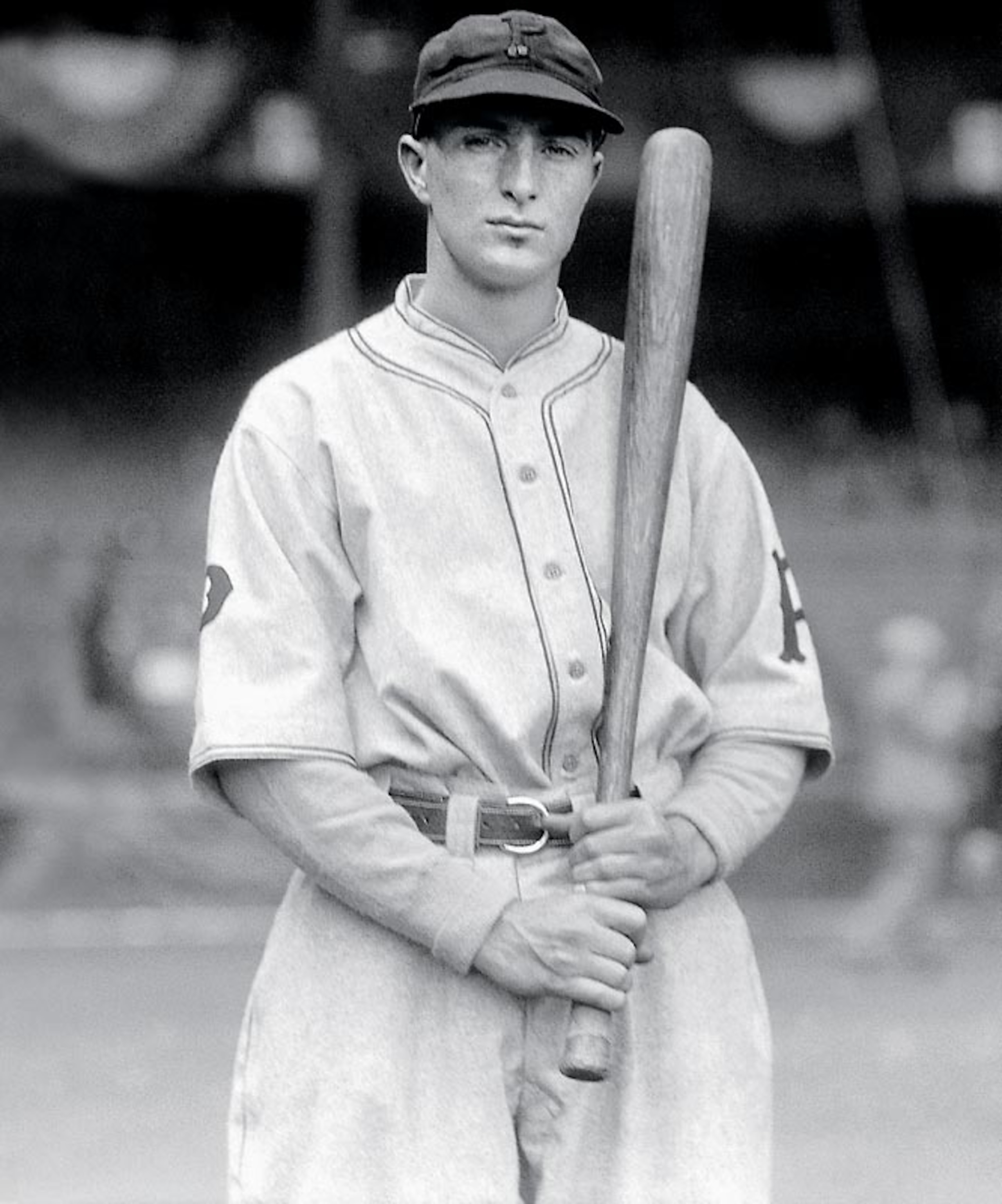
A Tony Gwynn-style player, with plenty of doubles and triples, power and a great eye. Paul Waner hit .333, hardly ever struck out, and won several batting titles.
Waner was so good, he got his brother Lloyd into the Hall of Fame as well.
64. Three Finger Brown, SP, Chicago Cubs
43 of 114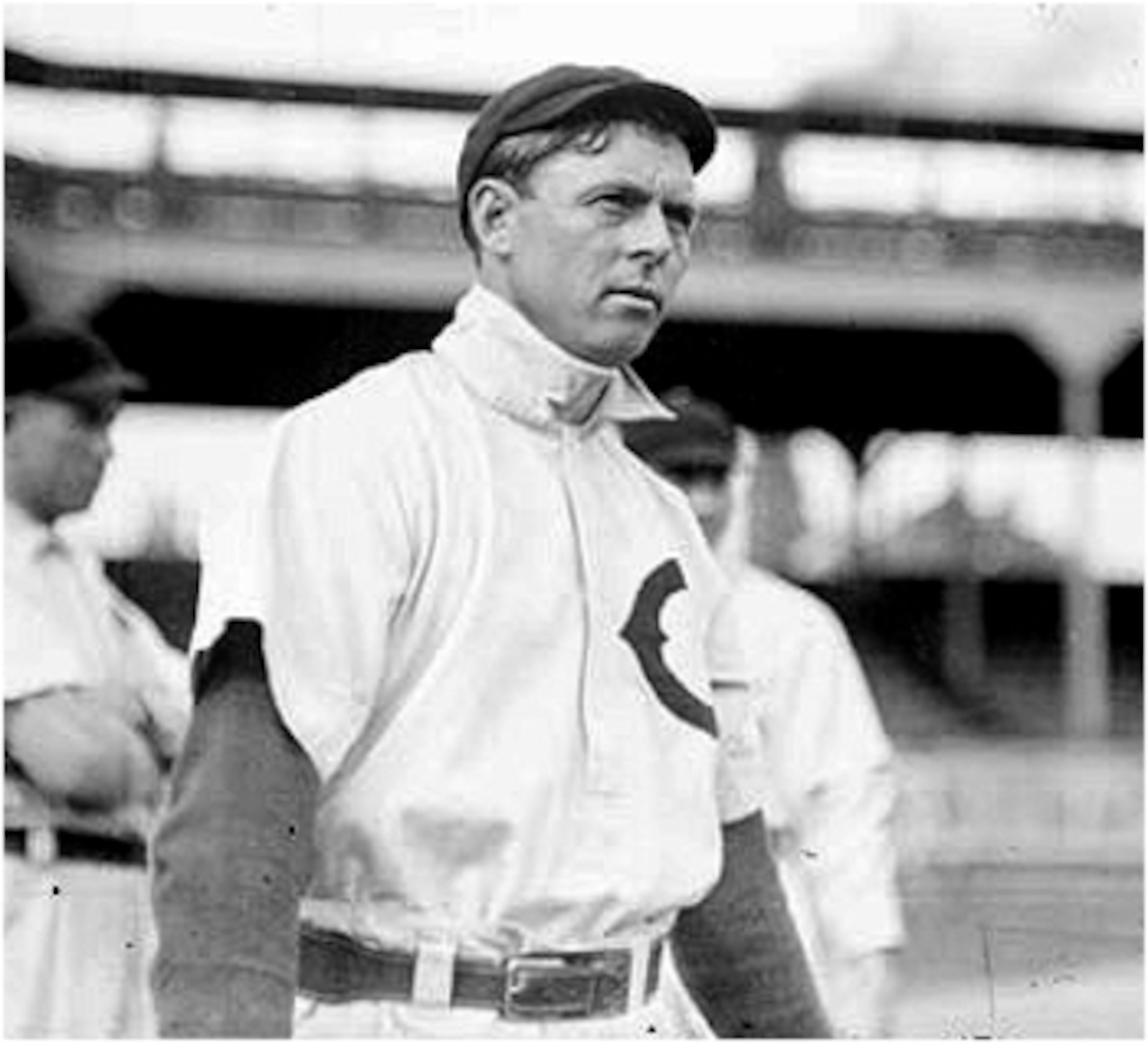
The three-fingered Mordecai Brown did not let a lack of height or a lack of fingers keep him out of the Major League Baseball Hall of Fame. In fact, the hand that Brown mangled in a farming accident apparently helped him to be a better pitcher rather than a worse one.
Brown was on the last Chicago Cubs World Series championship team in 1908.
63. Luke Appling, SS, Chicago White Sox
44 of 114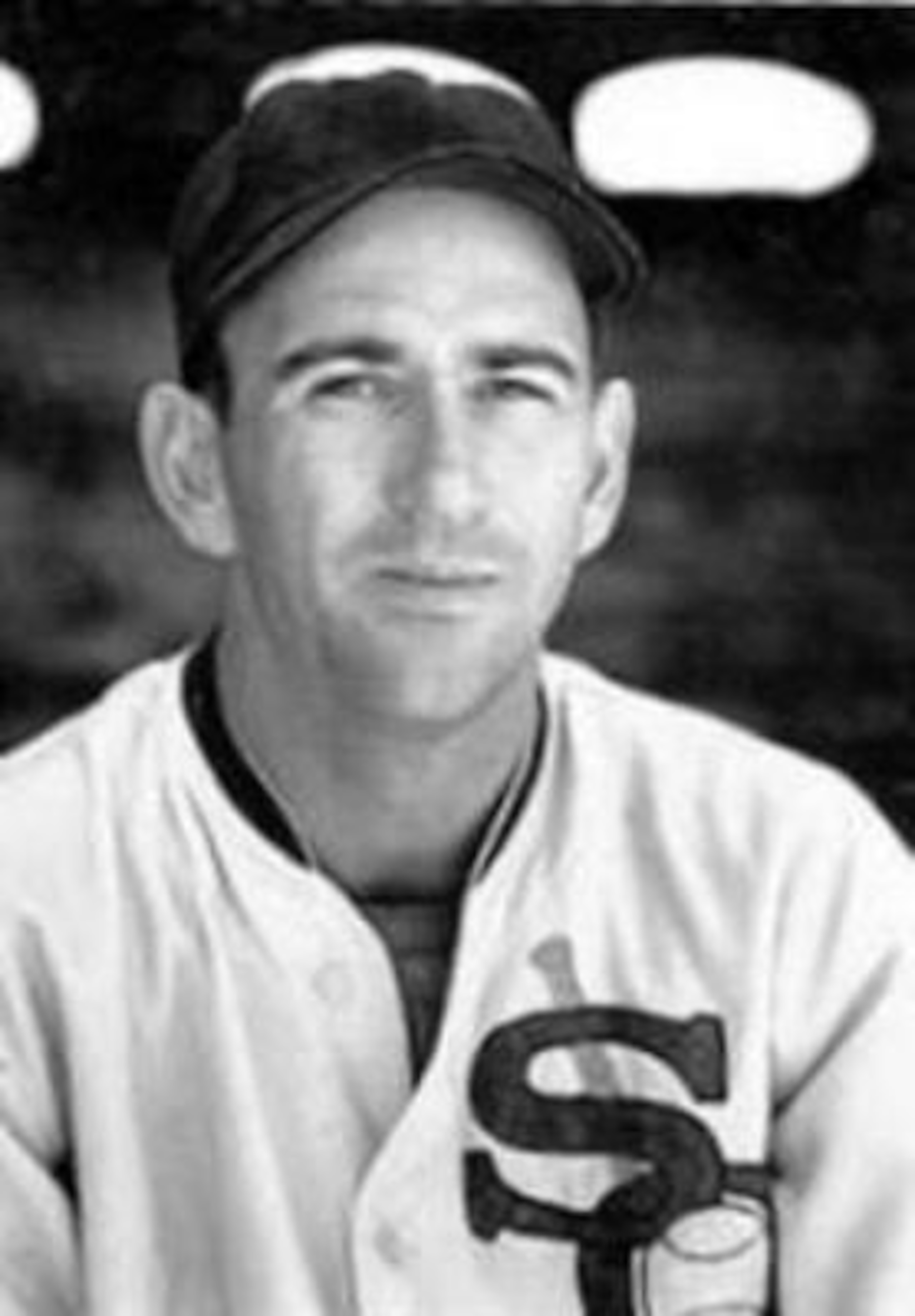
Appling is one of the most underrated players in baseball history.
Obviously, that is a tough case to make for a guy who is in the Hall of Fame, but Appling's name is rarely mentioned in the greatest shortstops conversation.
Appling was a two-time batting champ, had a remarkable strikeout-to-walk ratio of 1,302-to-528, scored over 1,300 runs and 1,100 RBI despite hitting only 45 career home runs and had a career on-base percentage of .399.
Appling once drove in 128 RBI despite only six home runs, once struck out only 24 times in a full season, and hit .301 with an .833 OPS at the age of 42.
And, if not for missing all but 18 games from 1944-1945 due to World War II, Appling almost certainly would have finished his career with 3,000 hits. As it was, he finished with 2,749.
62. Al Kaline, RF, Detroit Tigers
45 of 114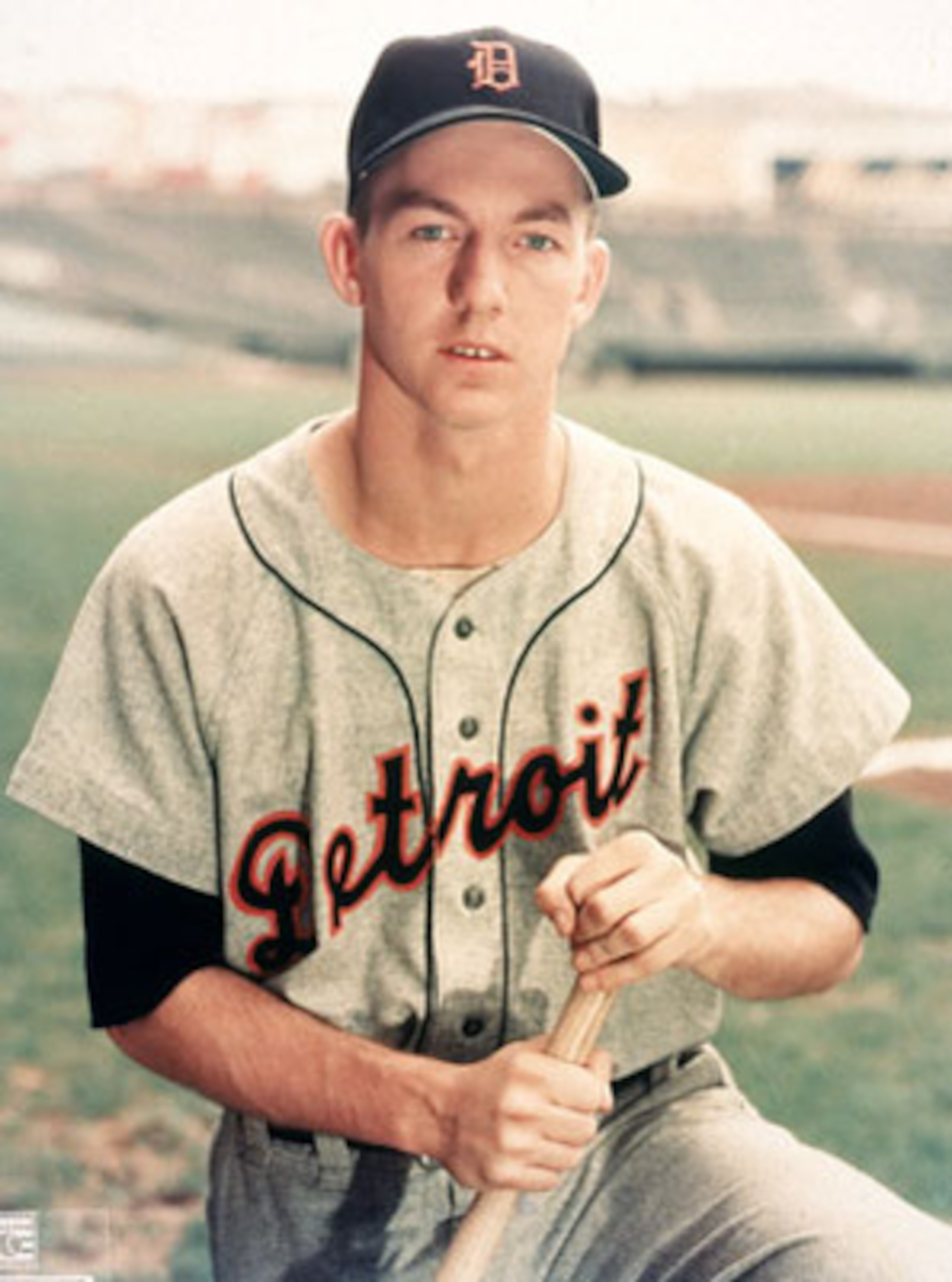
With Al Kaline nearing the end of his career, the 1974 baseball season in Detroit was him. After not having appeared in over 131 games in seven straight seasons, Kaline played 147 games for the Tigers.
And what did it get him?
Well, lots: Kaline finished the season, and his career, by getting to 1,600 runs, 3,000 hits and 75 triples.
Kaline's career is marked, though, by the insanely narrow margin by which he missed several major career milestones.
Kaline has 498 career doubles (51 players have 500), 4,852 career total bases (18 players have 5,000), 1,583 career RBI (30 players have 1,600), and perhaps most importantly, exactly 399 career home runs.
Keep in mind, when Kaline retired, only 14 players had ever hit that many.
Kaline went homer-less in the final 12 games of his career.
One can only wonder how Kaline's career milestones—both hits and misses—taint our perception of the man.
Of course, he's in the Hall of Fame, and he is No. 62 on this list, so...
61. Sandy Koufax, SP, Brooklyn/Los Angeles Dodgers
46 of 114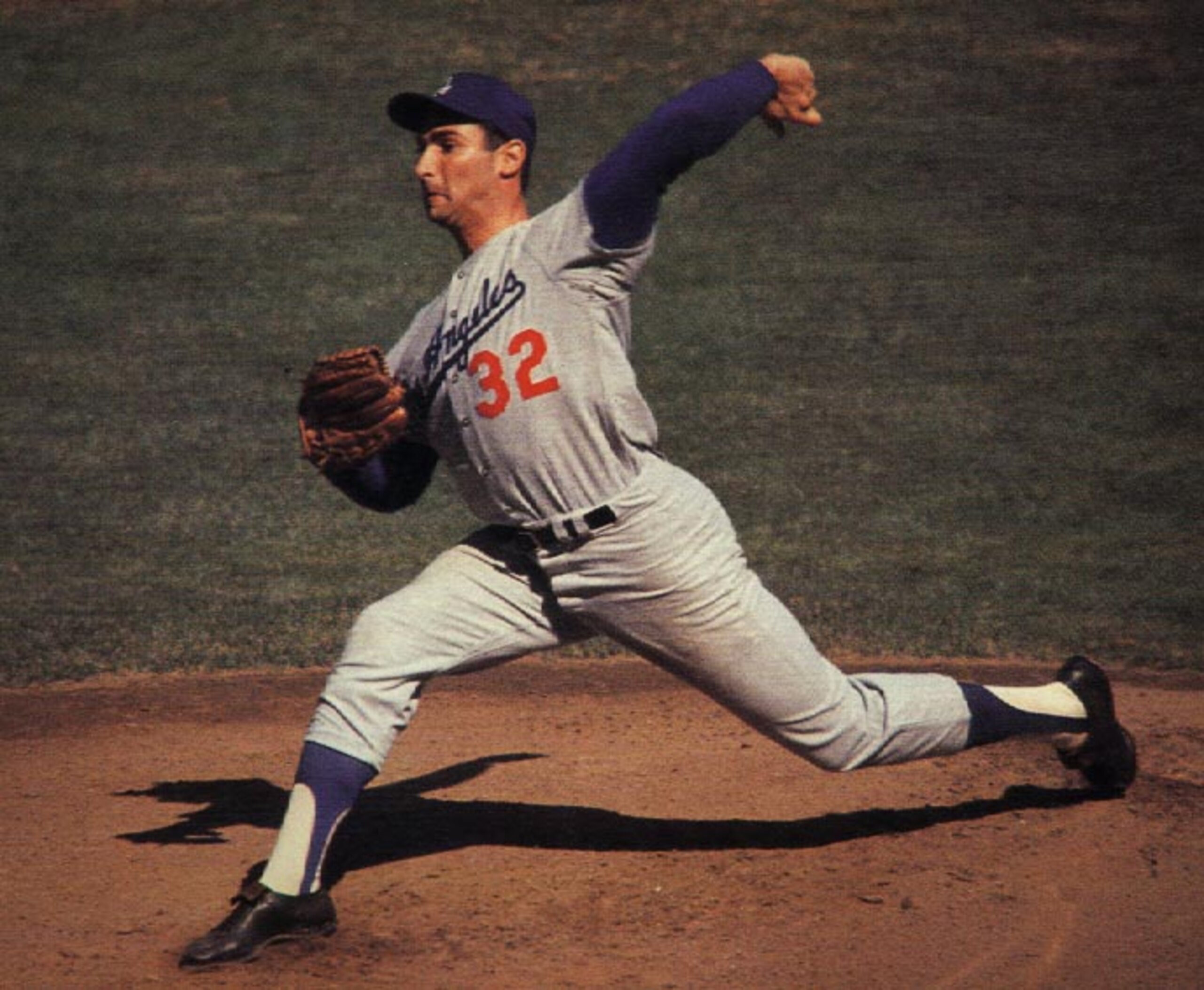
Over a very brief period of time, Sandy Koufax put up some of the most dominant numbers of all-time, but he did it in the most pitcher-friendly era of all-time, in one of the most pitcher-friendly parks in the league, from on top of one of the highest pitcher's mounds of all-time.
From 1962 to 1966, Koufax led the NL in ERA five years in a row, which is outrageous. To gauge the impact that Dodger Stadium had on his numbers, let's look at his home ERA versus his road ERA:
1962: 1.75 ERA at home, 3.53 on the road
1963: 1.38/2.31
1964: 0.85/2.93
1965: 1.38/2.72
1966: 1.52/1.96
Still, his numbers were still amazing, and frankly, I would have liked to have seen five more years of him. That his arm prevented him from pitching beyond the age of 30 is a tragedy.
60. Carl Hubbell, SP, New York Giants
47 of 114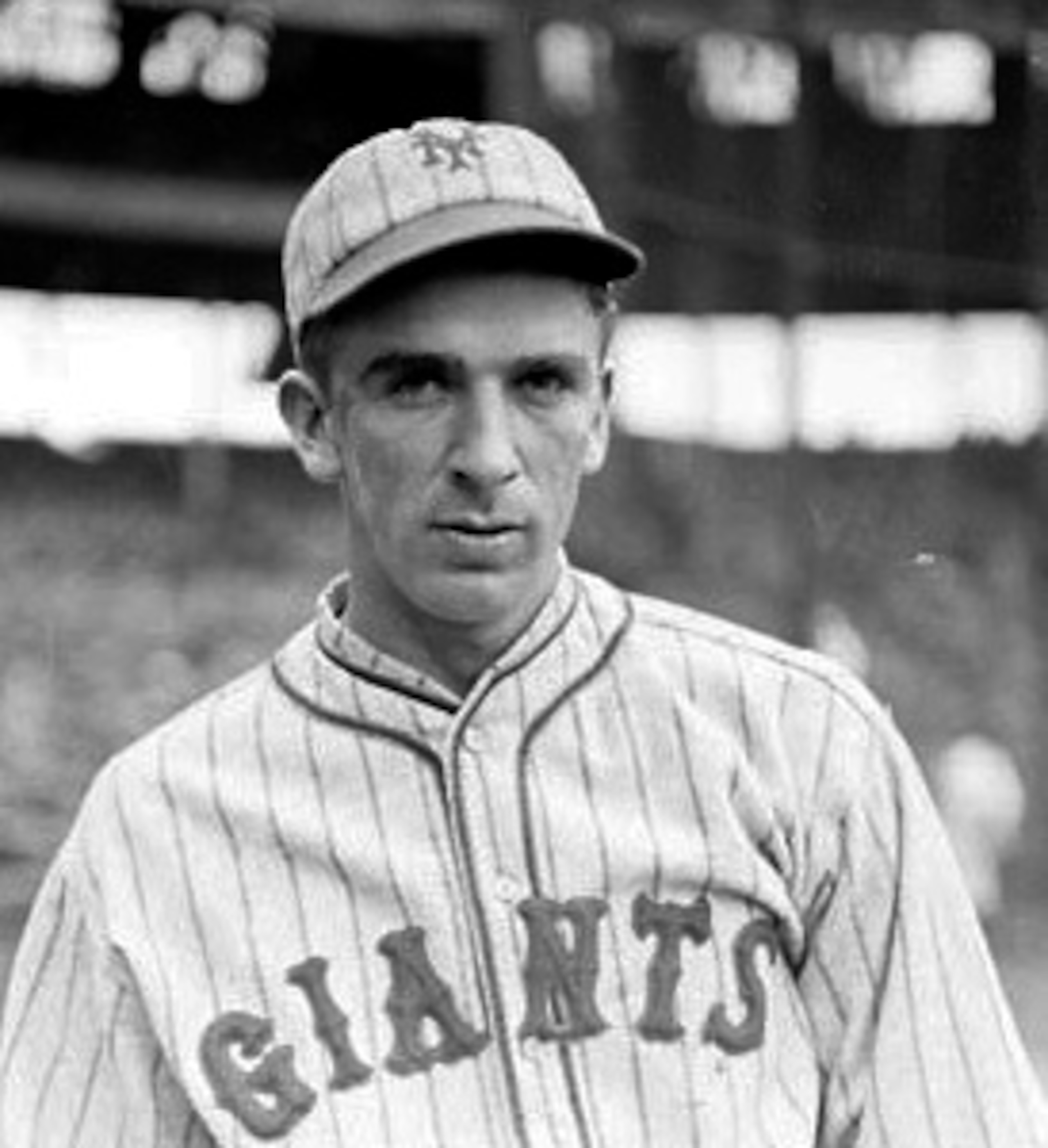
A very underrated pitcher, Carl Hubbell did not make his major league debut until the age of 25 but then dominated the National League during the hitter-friendly 1930s, in a very hitter-friendly Polo Grounds.
He won 250 games, two Most Valuable Player awards and a World Series in 15 full seasons.
59. Rod Carew, 2B/1B, Minnesota Twins/California Angels
48 of 114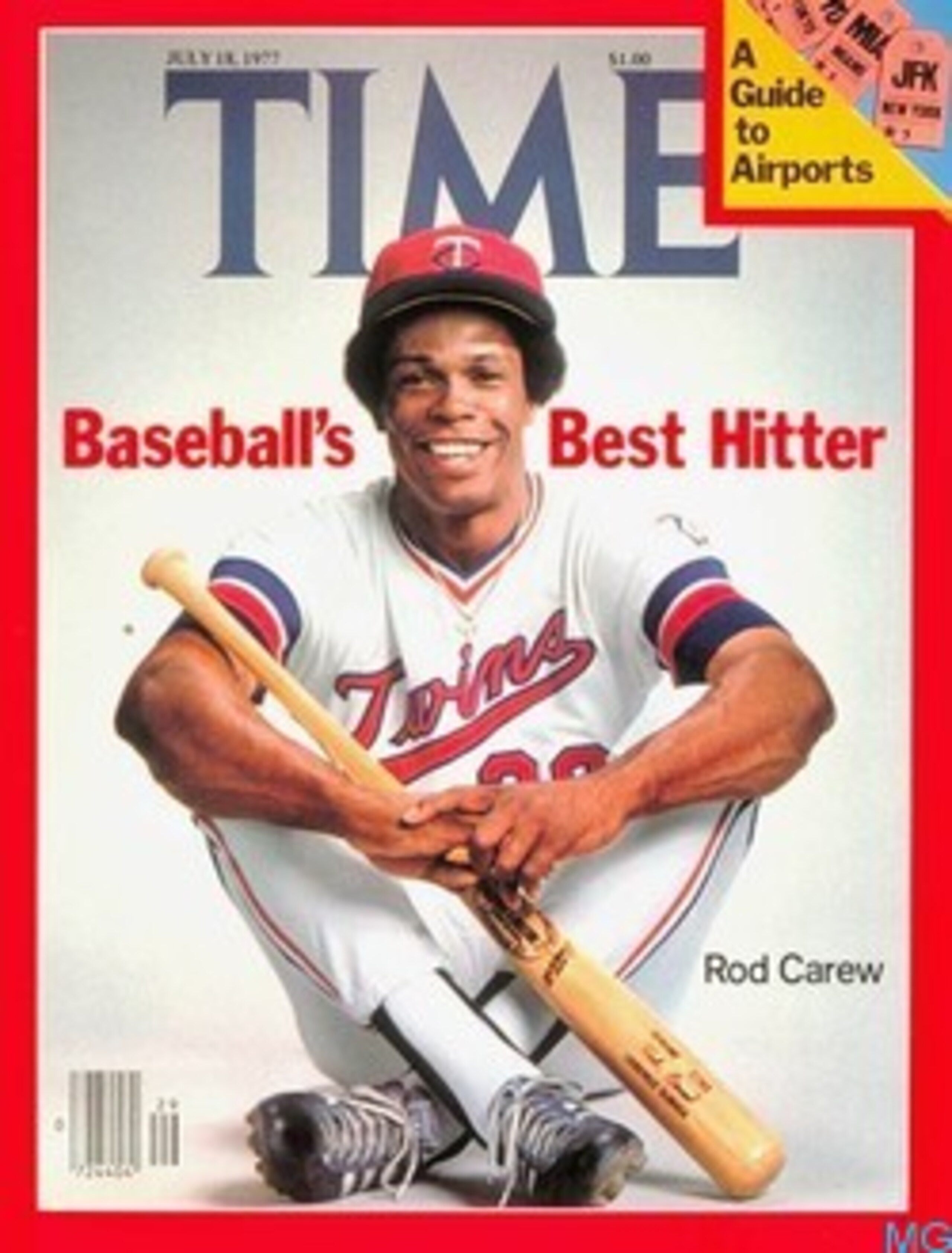
On the talent-value spectrum, Rod Carew is probably one of the most talented hitters of all-time, if his overall value isn't as high as we'd expect.
Carew's record as a hitter certainly impresses—.328 average (over a league average of .260), .393 on-base percentage, 3,000 hits and seven batting titles. His relative OPS is 131, which is merely solid for a home-run hitter but downright spectacular for a guy with 92 dingers in almost 2,500 games—by comparison, Sammy Sosa had almost 600 homers, and his relative OPS was 129.
A second baseman by trade, he actually played more of his career at first base.
Honorable Mention: Mark McGwire
49 of 114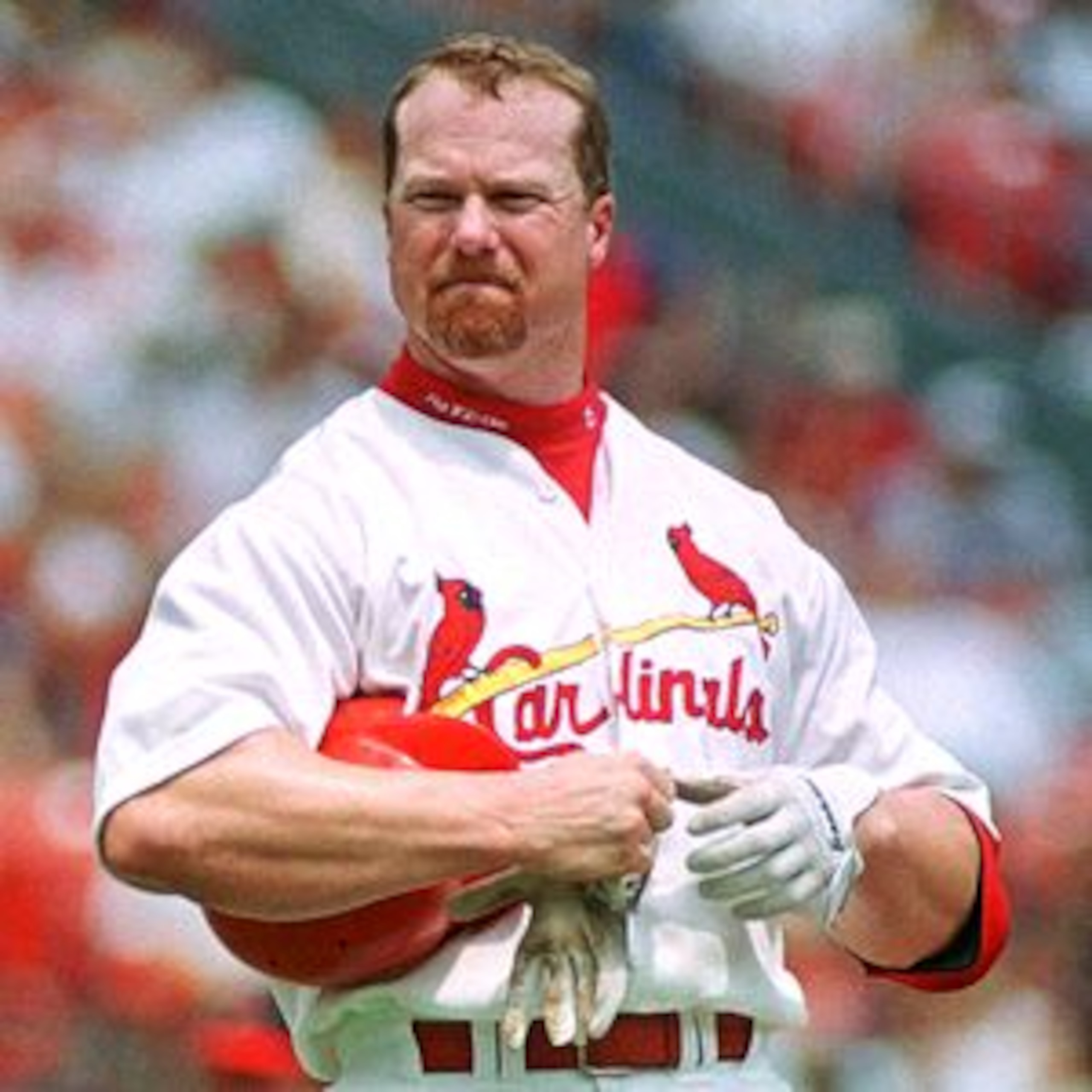
The greatest home run-per-at-bat hitter in baseball history. The rest of his numbers pretty much derive from his trying to hit home runs on every swing and from pitchers being terrified of making a mistake to him.
58. Jim Thome, 1B/DH, Indians/Phillies/White Sox/Twins
50 of 114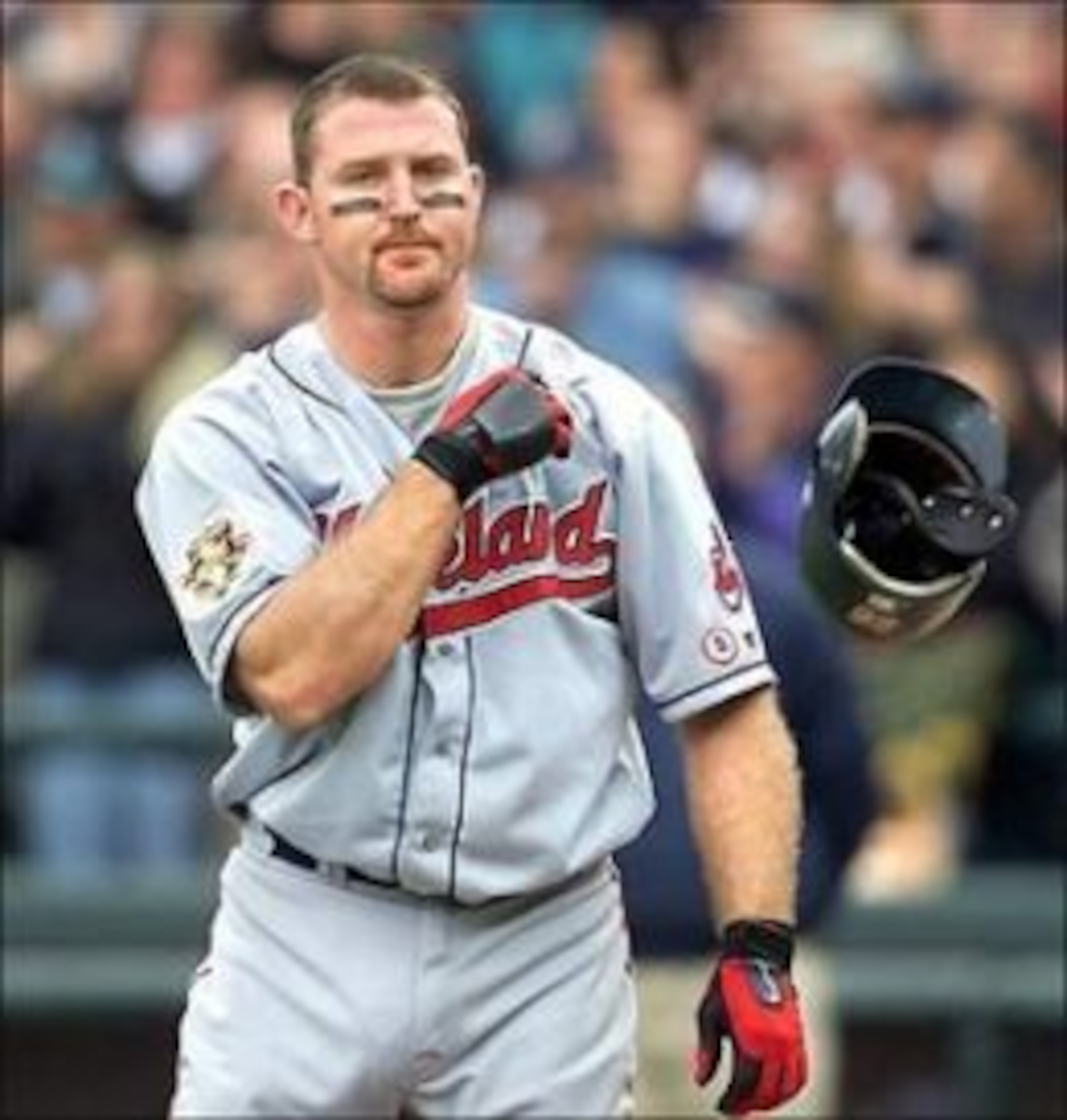
The next five players—Jim Thome, Willie Stargell, Harmon Killebrew, Willie McCovey, and Mark McGwire—are all basically tied in my book.
It is difficulty for us to distinguish between these players because they each represent, in essence, the same archetypal power hitter: They were all extremely powerful but struck out plenty because of their tendency to go for the long ball. However, they all drew plenty of walks because of the longball as well. And none of them were particularly adept at playing defense.
Most importantly, however, it seems clear that if you took McGwire and Thome back in time to the 1960s and 1970s, they would have performed about as well as Killebrew and McCovey. And if Killebrew, McCovey and Stargell could have played during the Steroid Era, they each would have added 100 home runs to their resumes.
57. Willie Stargell, LF/1B, Pittsburgh Pirates
51 of 114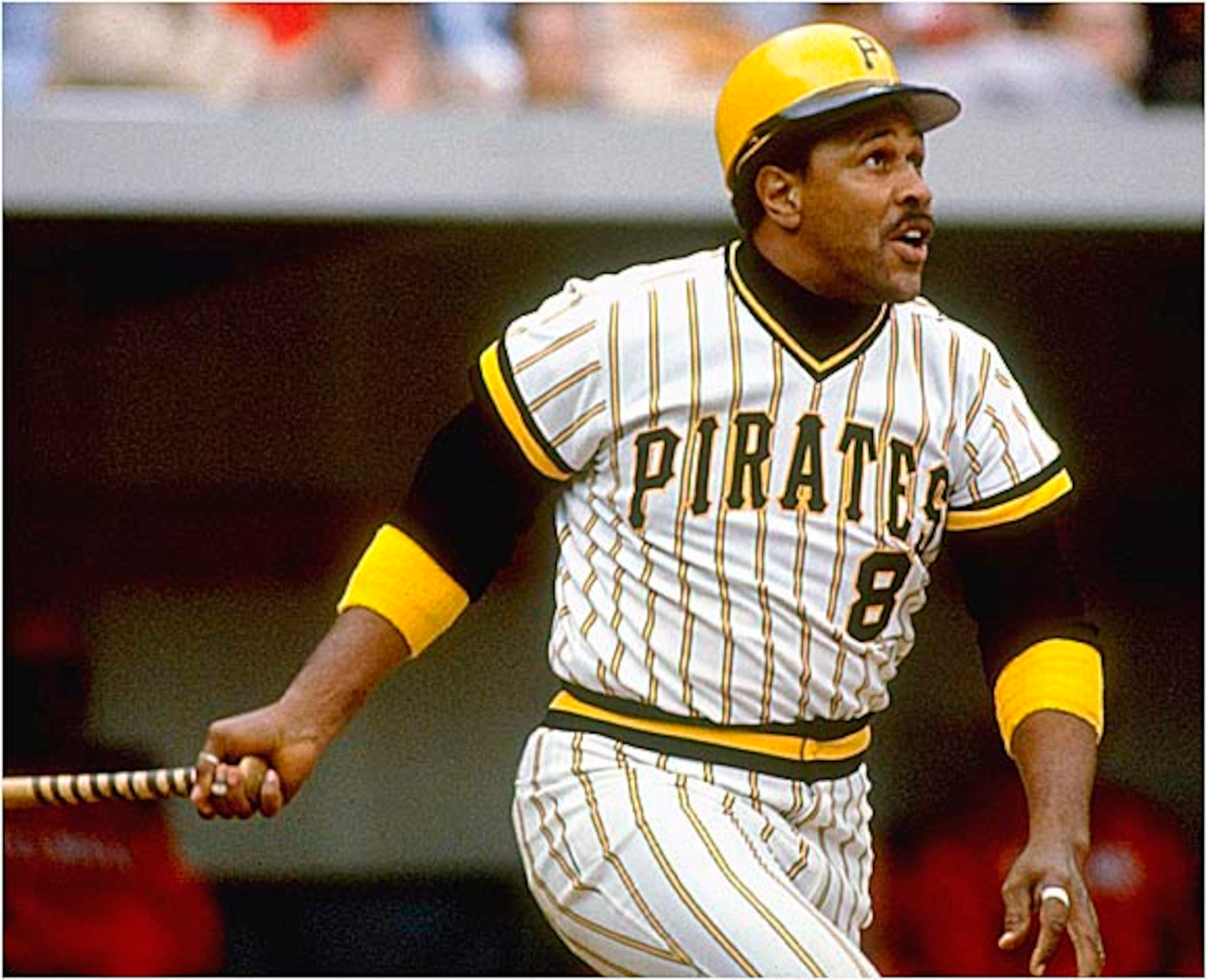
Interesting fact about Willie Stargell: Not once in his entire career did he play over 150 games. His career high was 148 in 1973. Nevertheless, he twice led the league in home runs and also led the league in doubles and RBI in 1973.
Over the course of his career, he probably missed about 300 games for various reasons. Yet and still, he finished with 475 homeruns, 1,540 RBI and over 4,000 total bases.
Imagine if he had played every day.
56. Harmon Killebrew, 3B/1B, Minnesota Twins
52 of 114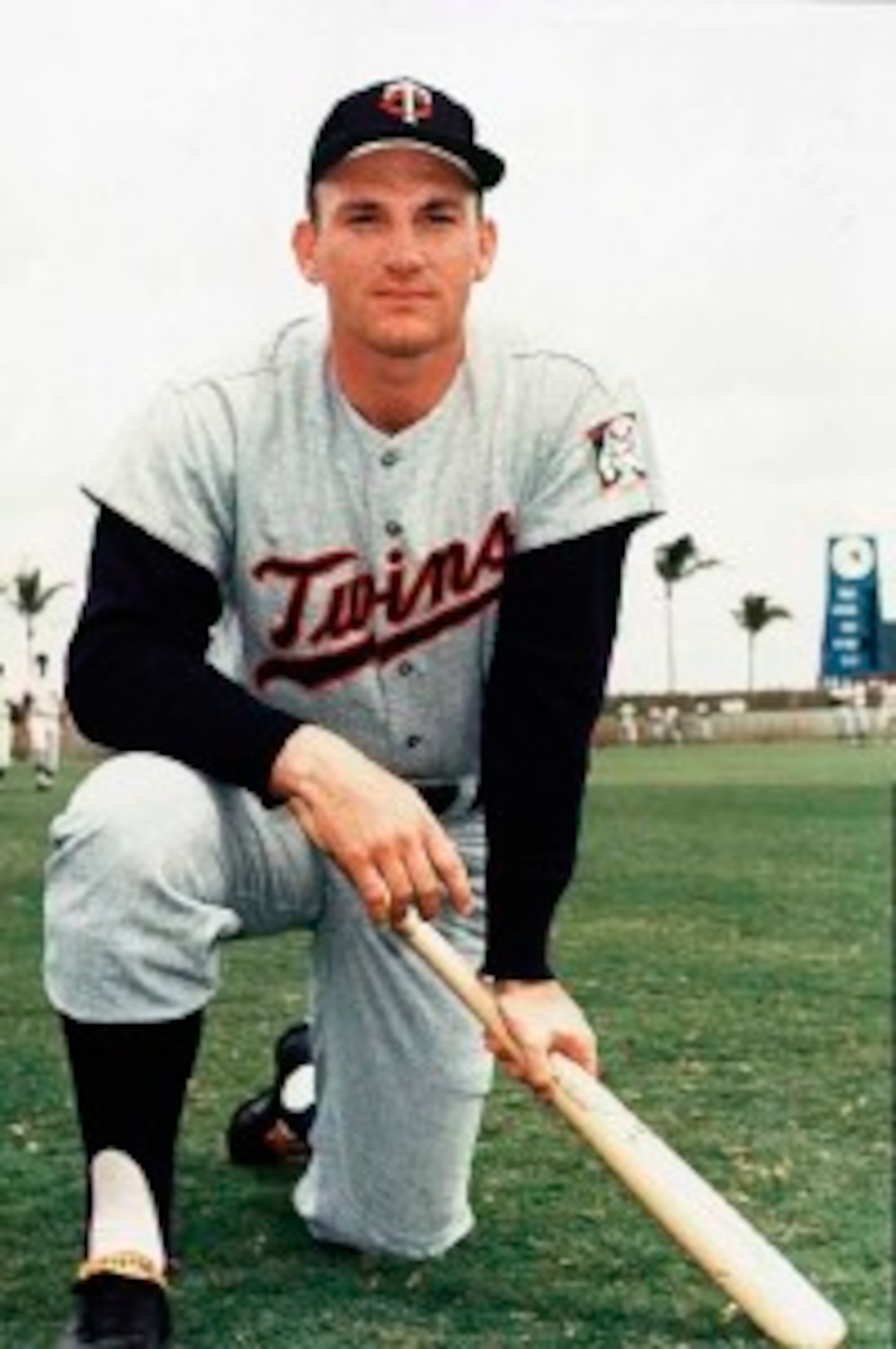
Harmon Killebrew's career is difficult to perceive, because he was the elite home-run hitter of the 1960s, but he played for a team that wasn't terribly visible, and he did it in an era that favored pitchers.
I've said that Killebrew, McGwire, Thome and McCovey are essentially tied. Frankly, I don't see putting either Thome or McGwire ahead of Killebrew.
Harmon Killebrew Fun Fact: Killebrew's silhouette was used for the official Major League Baseball logo.
55. Willie McCovey, 1B, San Francisco Giants
53 of 114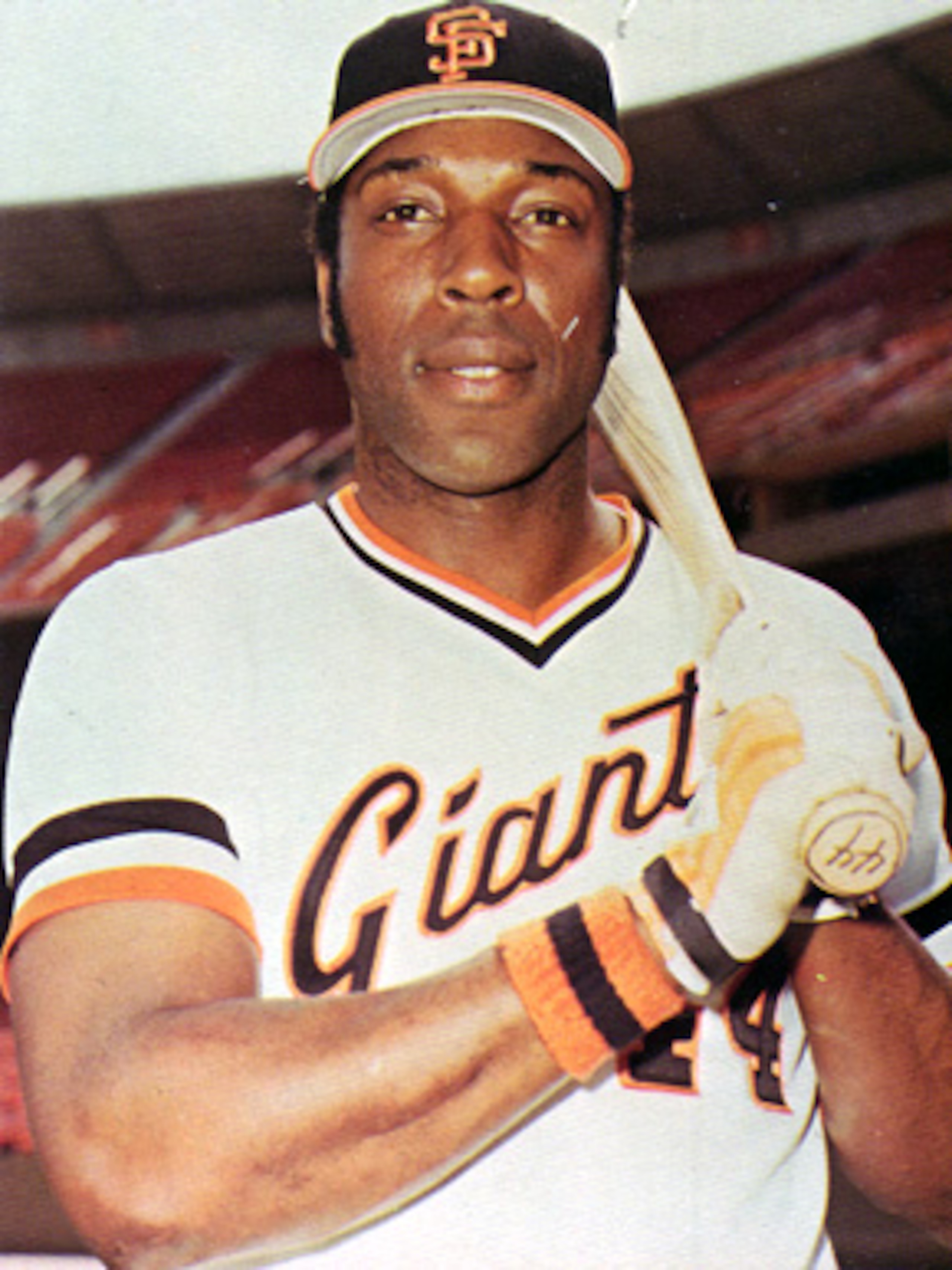
Ranking baseball players is all about trying to adjust for various eras.
Today's players don't have to take trains across the country, play through injuries or work blue-collar jobs in the offseason.
Yesterday, players didn't have to face the split-finger fastball, 98 mile-per-hour fastballs from at least one pitcher on every team, the designated hitter or steroid-bound sluggers.
Looking at pictures, game film and statistics for Willie McCovey, it becomes rather clear that he is one of the few players in baseball history whom you could pick up in a time machine and take him to any era in baseball, and he would flat-out bash.
54. Mickey Cochrane, C, Philadelphia Athletics/Detroit Tigers
54 of 114
One of the few catchers in history that you could call a great hitter without saying "...for a catcher."
Mickey Cochrane had a career .320 average and a .419 on-base percentage.
Cochrane also had a great eye, walking four times as many times as he struck out for his career. In 1932 and 1933, he walked over 100 times and struck out 22 times both years. In 1929, he struck out eight times in 606 plate appearances.
What's more, Cochrane's career ended before its time when, in 1937, at the age of 34, he was beaned by Bump Hadley and nearly died. He was batting .306 with a .941 OPS at the time of the injury, and he never played again.
53. Reggie Jackson, RF, Oakland Athletics/New York Yankees
55 of 114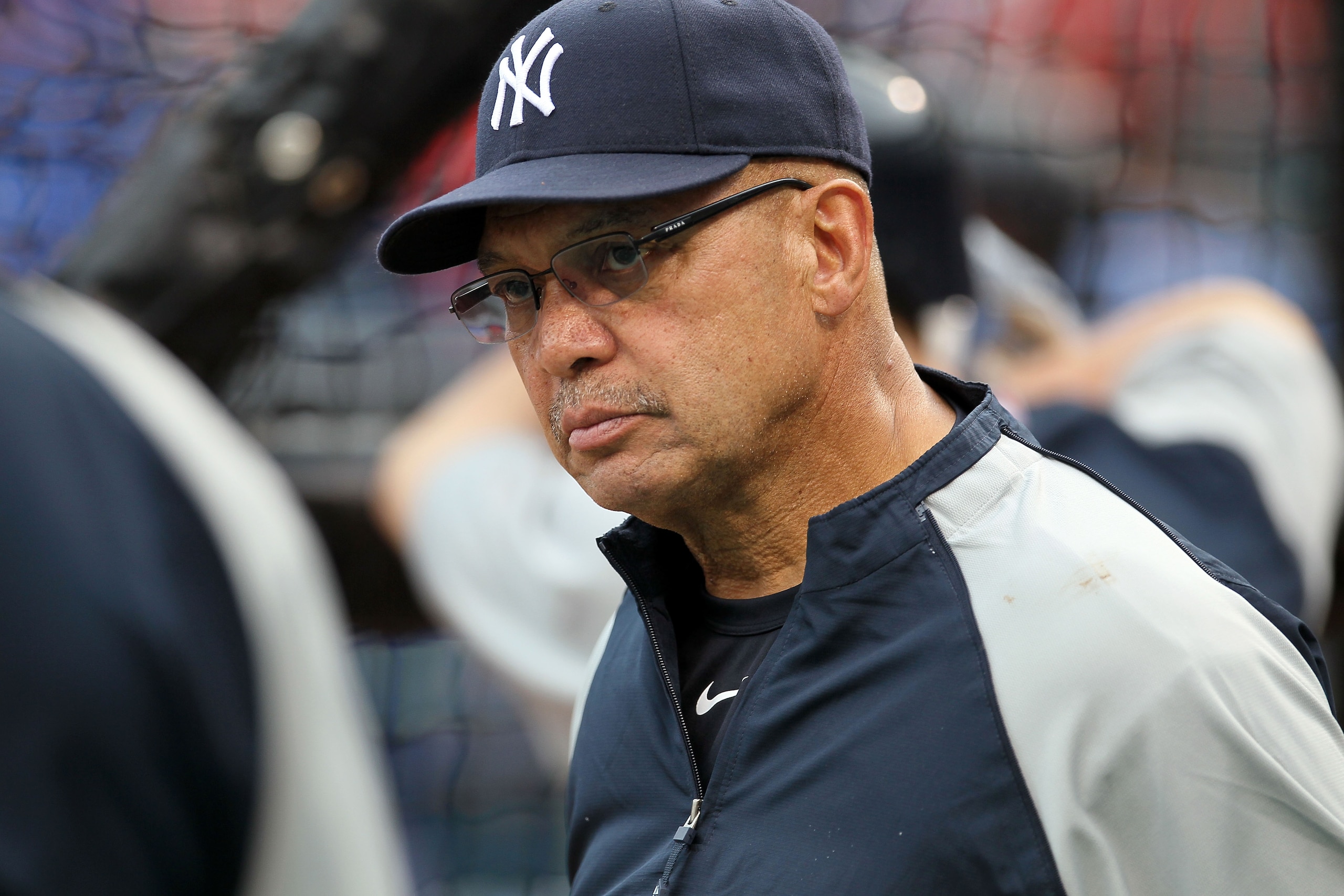
One of history's greatest strikeout artists but also one of the game's greatest power hitters.
Reggie led the league in home runs four times with totals of 32, 36, 41 and 39 home runs and finished with 563 career home runs. If he had played in the 1990s and 2000s instead of the 1970s and 1980s, he would have finished his career with well over 600 home runs and perhaps even closed in on 700.
As a testament to his longevity, Jackson scored over 1,500 runs despite only scoring over 100 runs in a season once.
52. Whitey Ford, SP, New York Yankees
56 of 114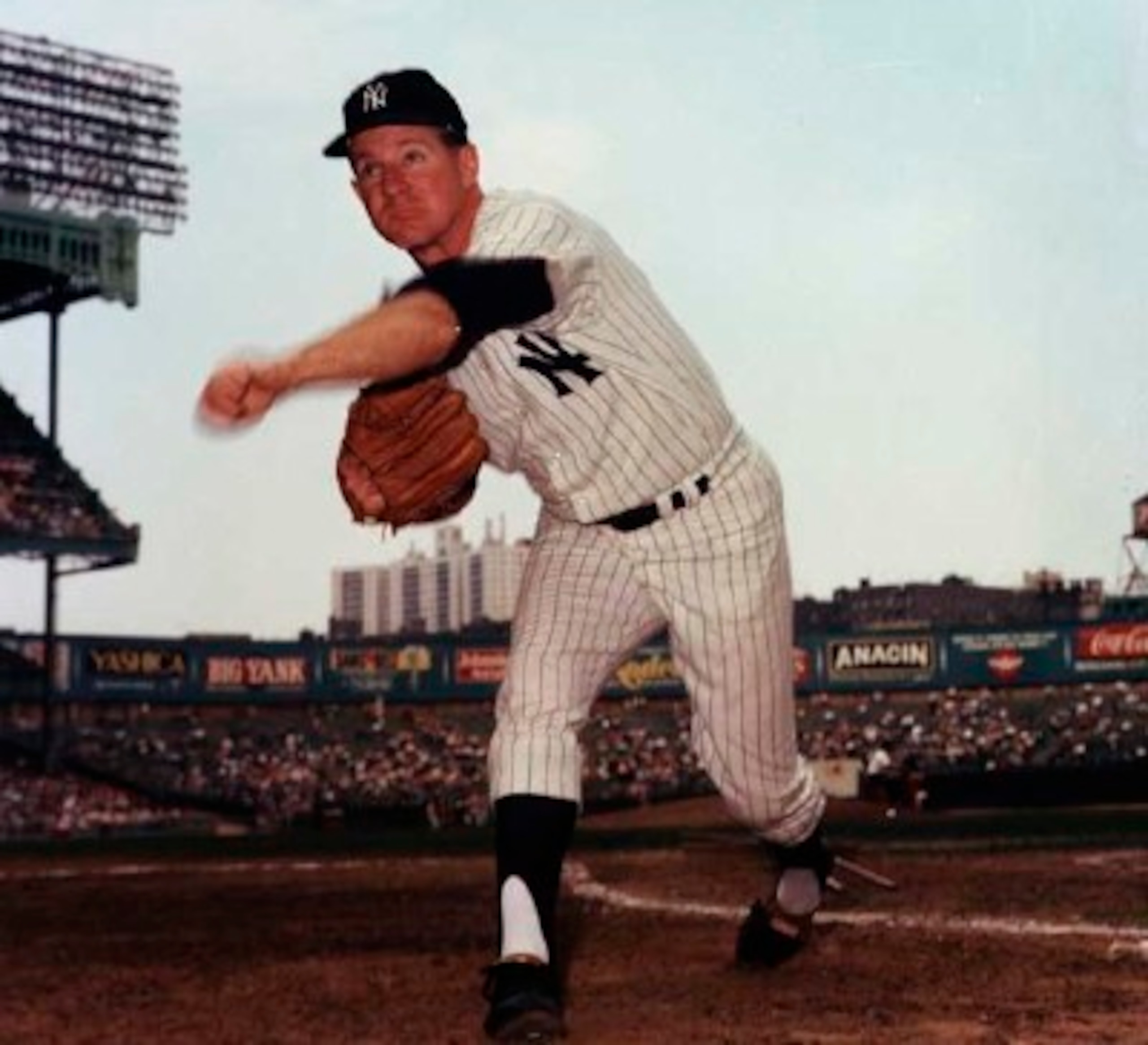
Ford lost two seasons right at the beginning of his career to the Korean War and still went 236-106 with an astonishing 2.75 ERA (133 ERA+) while matching up against the toughest pitchers in baseball at the time.
Ford and his teams went to 11 World Series, winning six of them.
For his efforts, he was rewarded with eight All-Star appearances, the 1961 AL Cy Young Award and a spot in the Hall of Fame.
51. Harry Heilmann, RF, Detroit Tigers
57 of 114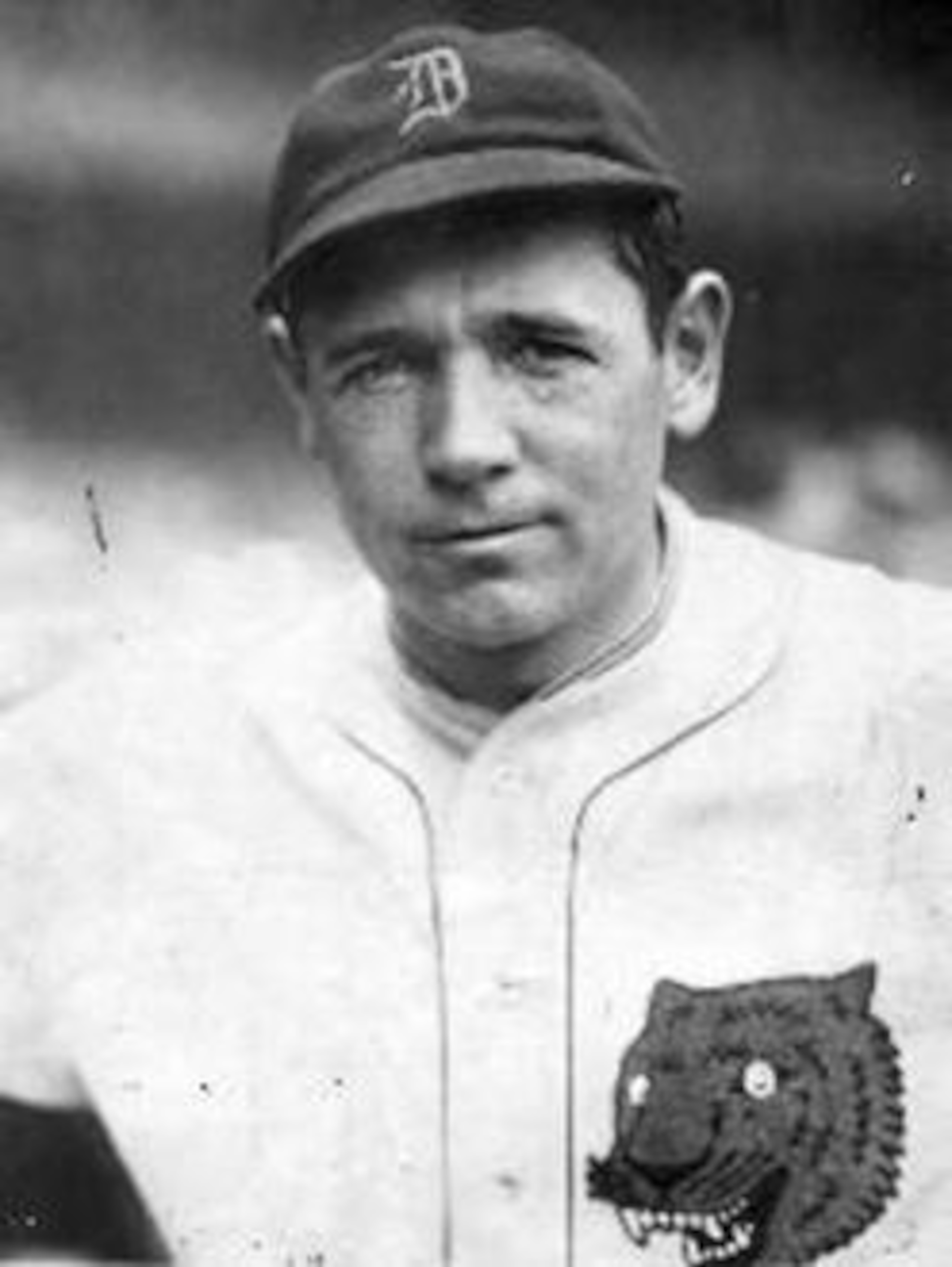
Both Harry Heilmann and Sam Crawford played right field for the Detroit Tigers with Ty Cobb.
Both very good players in their own rights but not particularly good fielders. Crawford played in the deadball era, while Heilmann played in the live-ball era. I could argue for days about who was better with respect to his league.
Coming Soon: Current Players Ready to Make the List
58 of 114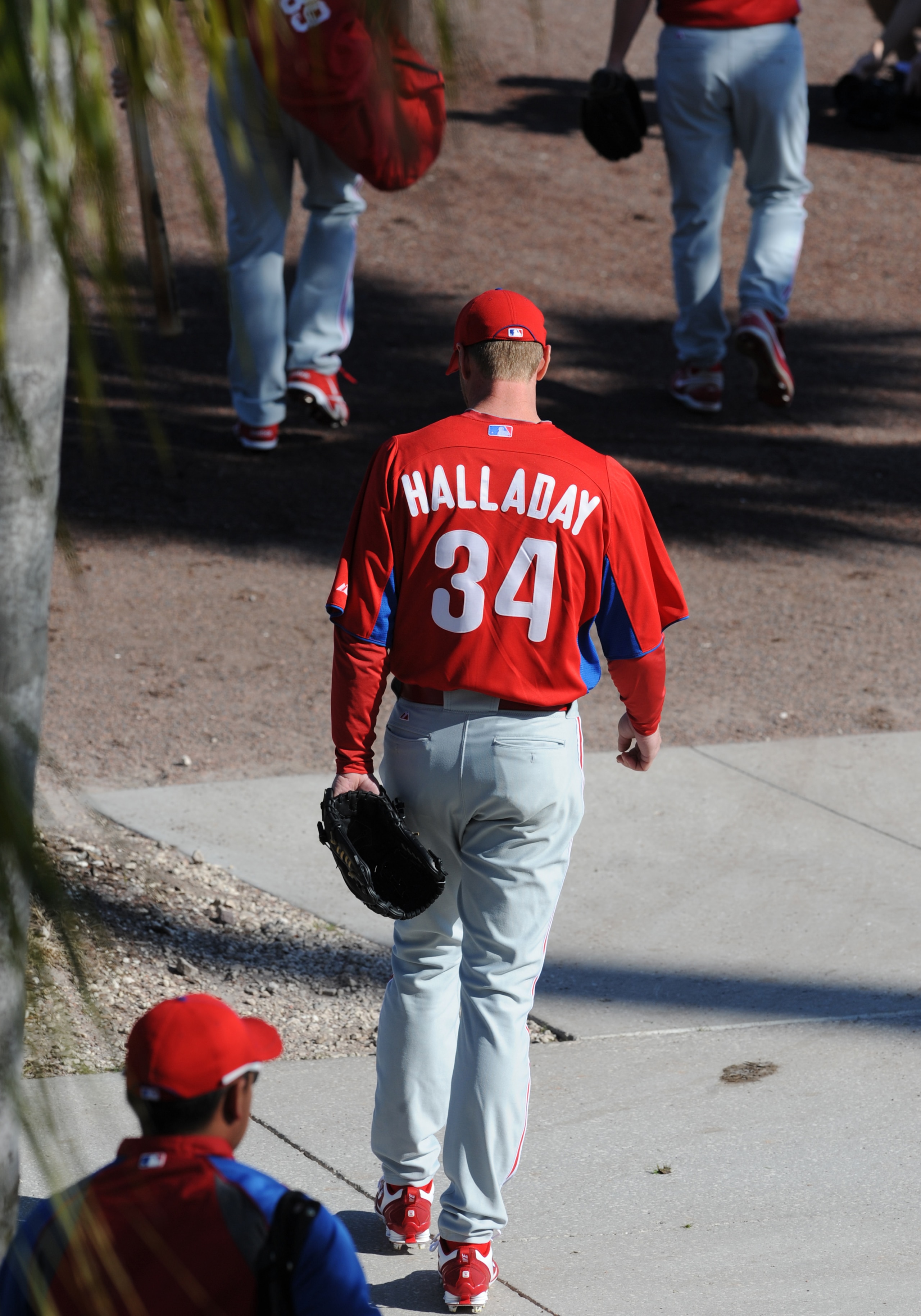
We've reached the half-way point, and we've already seen a couple of current players. And there are more to come.
Here's a look at some current players who will be looking to make the list in years to come:
Joe Mauer: An uber-talented player who should not be too far off. If he can do what he has already done for four more years, he'll be climbing the all-time catcher list in a hurry.
Brian McCann: The Ted Simmons to Joe Mauer's Carlton Fisk.
Johan Santana: Santana is not all that far from making the list, but his career is tailing off.
Vladimir Guerrero: The problem with Vlad is that right field is just really crowded. You'll note that Roberto Clemente doesn't make this list, barely. Andre Dawson doesn't sniff this list, and Larry Walker isn't really that close either. And now Vlad does not play the field any more.
Miguel Cabrera: His recent weight and DUI troubles, combined with the fact that he simply cannot play defense, have clouded his greatness as a hitter. Assuming he gets back on track, he is a no-brainer for this list at the end of his career.
Andruw Jones: Five years ago, I would have said he was a lock. Classic Dale Murphy Syndrome—he just fell off the face of the earth.
Scott Rolen: Rolen has always been talented enough to be one of the greatest third basemen of all time, and he is certain on our top 200 list. But time is running out on his career.
Ichiro Suzuki: Right now, we view Suzuki in the same class as a Roberto Clemente, George Sisler, Sam Rice or even Lloyd Waner. If Ichiro has a few more years, he should be climbing the charts with a bullet.
Roy Halladay: The best pitcher of the post-Clemens/Randy/Maddux/Pedro Era, Halladay should make this list before all is said and done.
50. Bill Dickey, C, New York Yankees
59 of 114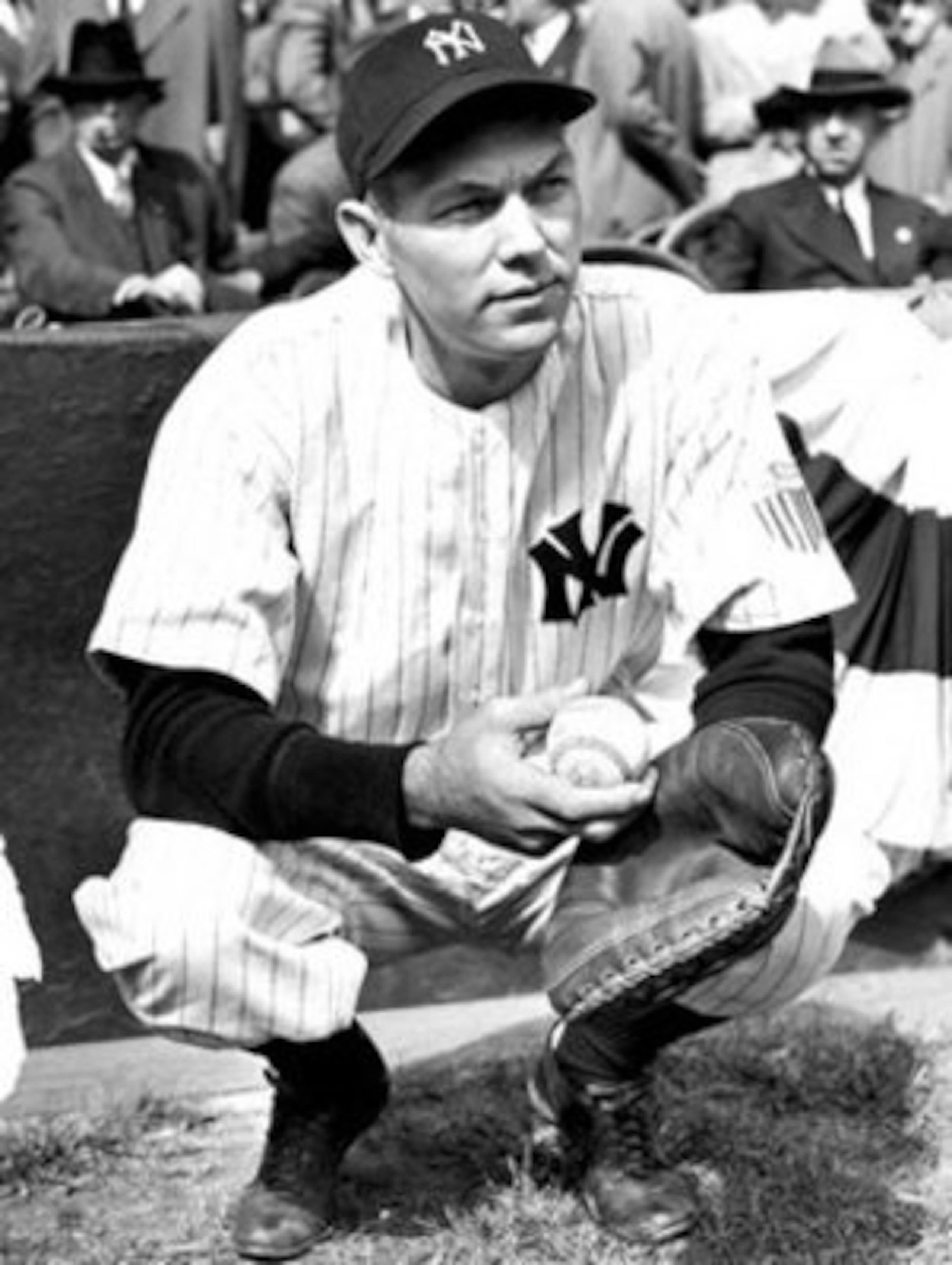
I feel as awkward about having my top two catchers of all-time be Yankees and the guy he replaced on the Yankees as I do about having Yankees teammates in my top 10. But such is the nature of the Yankees, I suppose.
While it is easy for me to dismiss the accomplishments of a Catfish Hunter or an Andy Pettitte because pitching for the Yankees is naturally more likely to create more wins for a pitcher than pitching for another team, playing catcher is playing catcher regardless of the team, and Berra and Dickey managed to be fantastic hitters at the catcher position—better than anybody.
49. Sam Crawford, RF, Detroit Tigers
60 of 114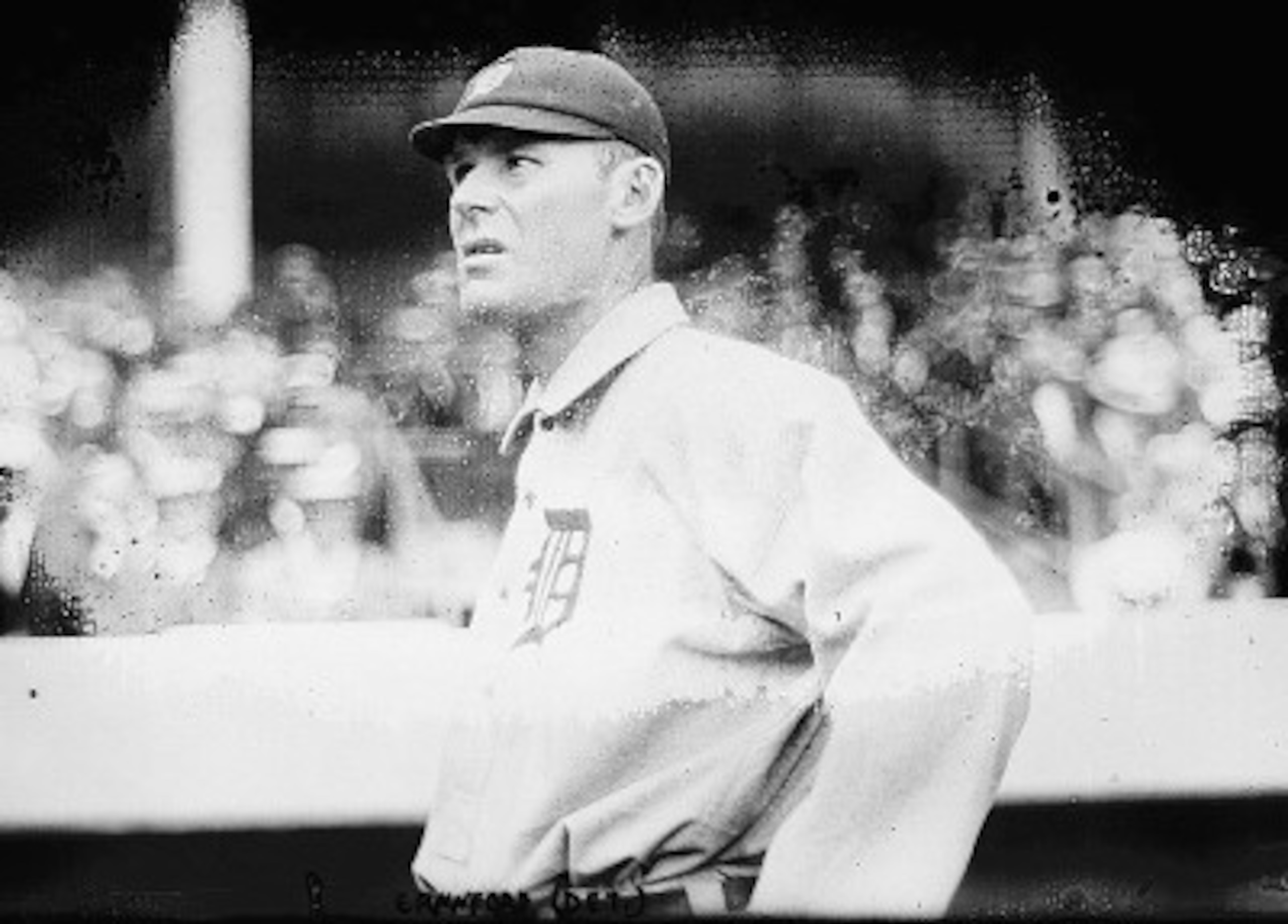
Sam Crawford is the all-time leader in triples, with 309 and retired in 1917 at the age of 37 with 2,961 hits. In the modern era, he would have crawled along until he got the last 39 hits to get to 3,000. Already batting .173 on the season, Crawford bowed out after 61 games.
After his days with the Tigers ended, he went to play in the Pacific Coast League and picked up over 780 more hits in four seasons with the Los Angeles Angels of the PCL.
Heilmann and Crawford Fun Fact: Even though both Harry Heilmann and Sam Crawford repeatedly finished in the top five in on-base percentage, slugging percentage and OPS, neither player ever managed to lead the league in any of those categories.
48. Jackie Robinson, 2B/1B, Brooklyn Dodgers
61 of 114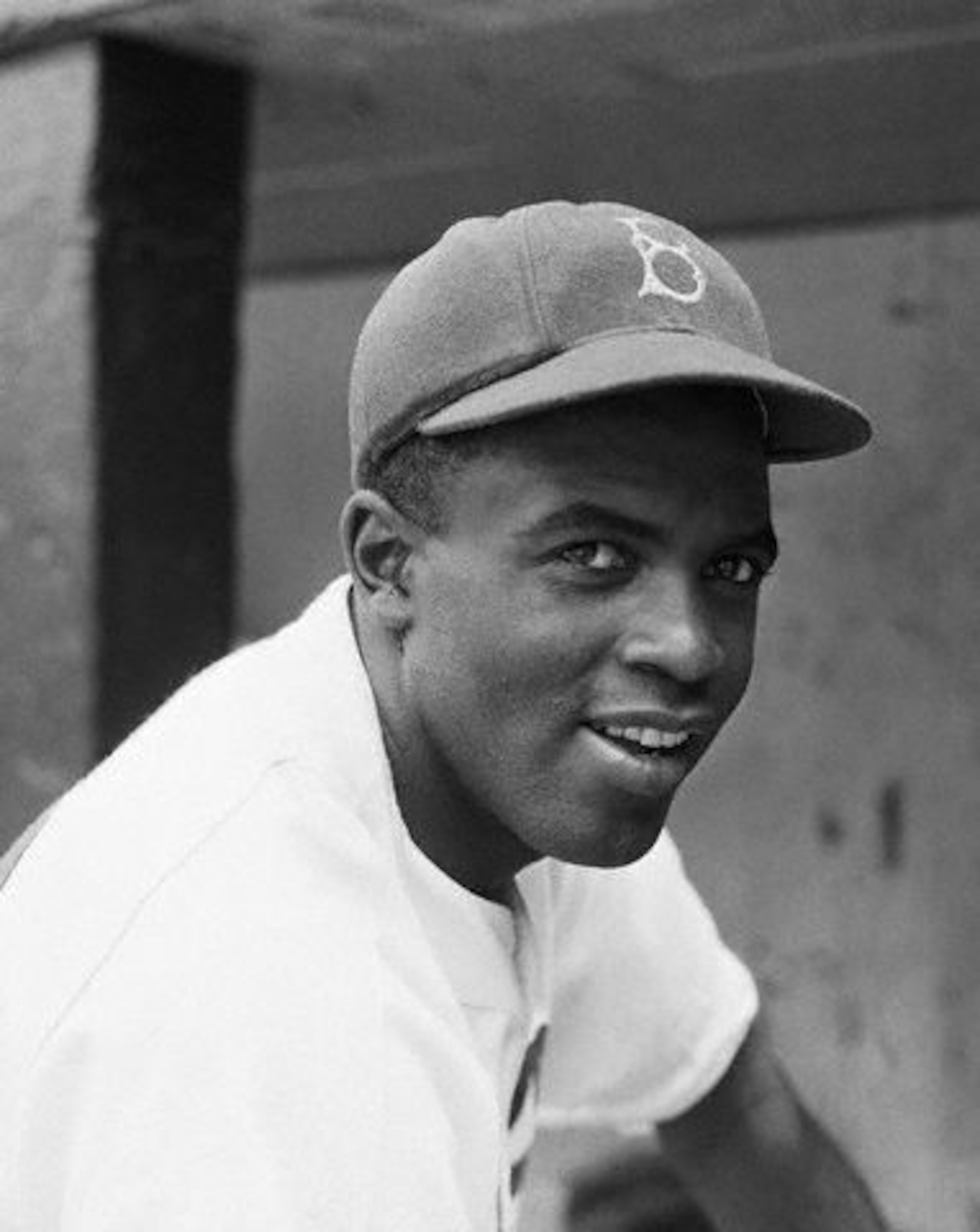
A hard player to rate and the player whose rating is most influenced by external factors. The thing that bothers me most about Jackie Robinson is the perception that if he had failed as a player, baseball would not have been integrated for another decade.
Fact is, Larry Doby was with the Indians later in 1947, and Roy Campanella and Satchel Paige made the majors by 1948. The mind's tendency towards revisionist history seems to view the fall of Communism as inevitable while viewing integration of Major League Baseball as a tenuous, delicate matter whose future was always in doubt.
That said, Jackie Robinson was an amazing athlete who did things at second base that fewer other second basemen have ever done while enduring trials that few others players have ever known. His career was shortened by segregation on one end and by diabetes on the other, but his six full seasons in the majors gave us all the indication of the type of player that he was.
Although Jackie's place on this list is informed, as I have stated, by the external factors, it is safe to say that if the color barrier had not existed, and Jackie's career had been able to take its natural course after his time at UCLA, his credentials would land him a spot on this list higher than this one, rather than lower.
47. Tony Gwynn, RF, San Diego Padres
62 of 114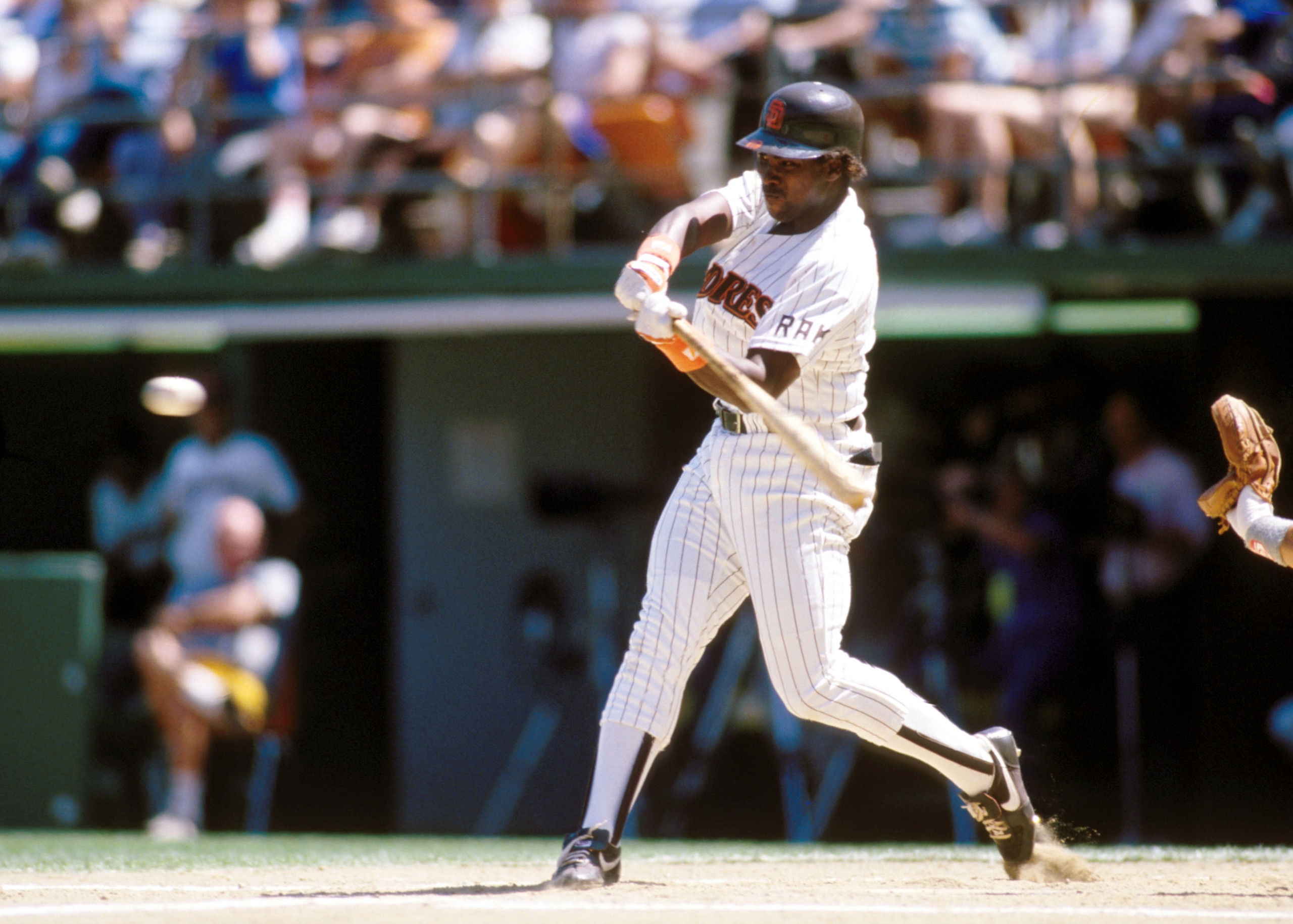
Tony Gwynn was no empty average hitter; his career 132 OPS+ would tend to make you think he hit more than 135 career home runs in 2,440 games.
Maybe the greatest pure contact hitter of all-time, Gwynn led the league in hits seven times and won eight batting titles.
George Will's book "Men at Work" makes it clear that Gwynn's success was no coincidence. Gwynn would sneak off to the batting cages in the middle of the night the way most human beings sneak down to the refrigerator.
Gwynn played the game the way ordinary fans would like to think they would play it if given the opportunity—constantly and ceaselessly, eternally grateful for the opportunity and desperate to keep it from ever ending.
46. Chipper Jones, 3B, Atlanta Braves
63 of 114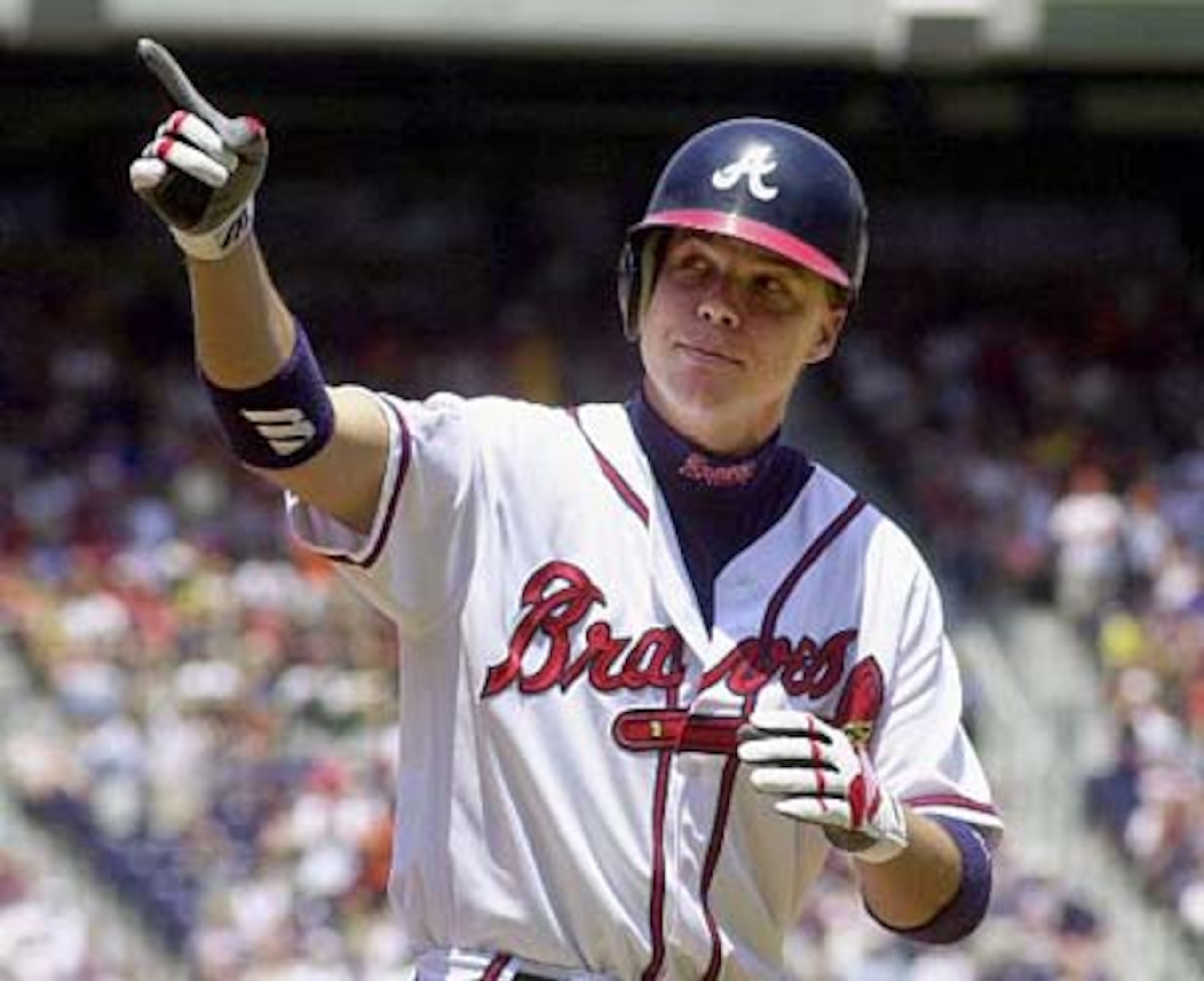
Chipper Jones has very quietly put up some of the finest third base numbers of all-time while playing on one of the great teams of the last 50 years.
45. Bob Gibson, SP, St. Louis Cardinals
64 of 114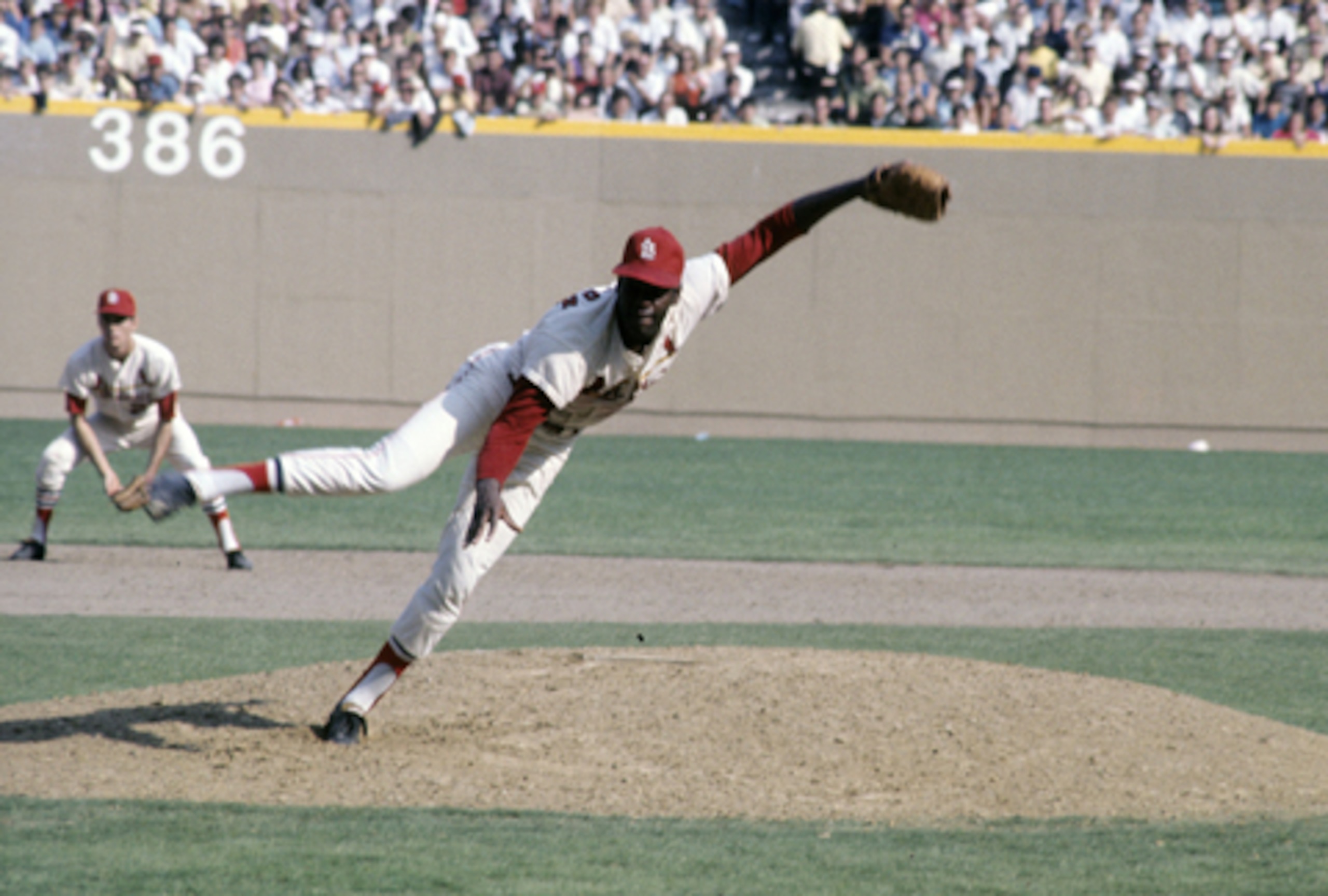
We need about 100 more pitchers like Bob Gibson in the world. He always worked quick, always finished his games, pitched on a broken leg, buzzed batters and was lights out in three World Series.
And the number 1.12 remains the standard by which all pitchers are judged to this day.
44. Mike Piazza, C, Los Angeles Dodgers/New York Mets
65 of 114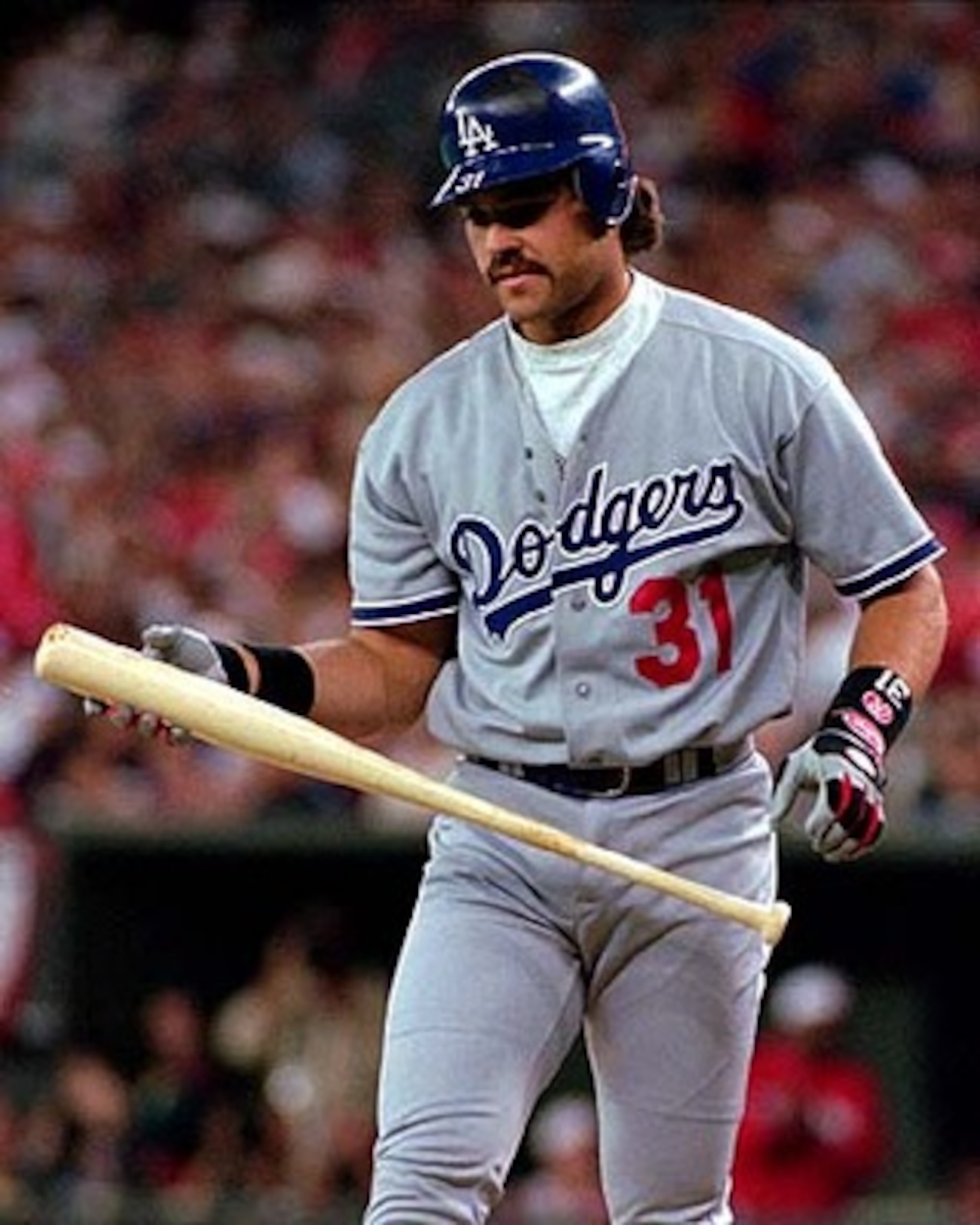
Mike Piazza is generally considered the greatest hitting catcher of all-time, and he will one day be in the Hall of Fame.
What most people don't realize is that he may have been one of the top three or four hitters of the last 20 years.
Piazza spent his career playing in two of the most severe pitchers' parks in the National League. For his career, he hit 37 more home runs on the road, hit .320 on the road compared to .294 at home and had a .960 OPS on the road compared to .880 at home.
If he'd spent his career playing for the Cubs, Red Sox, Rockies or Rangers, he'd look like one of the greatest hitters of all-time.
At the same time, Piazza may have been the worst defensive catcher in the history of the universe.
Read here for a great comparison of Mike Piazza and Ivan Rodriguez.
43. Ivan Rodriguez, C, Rangers/Marlins/Tigers/Nationals
66 of 114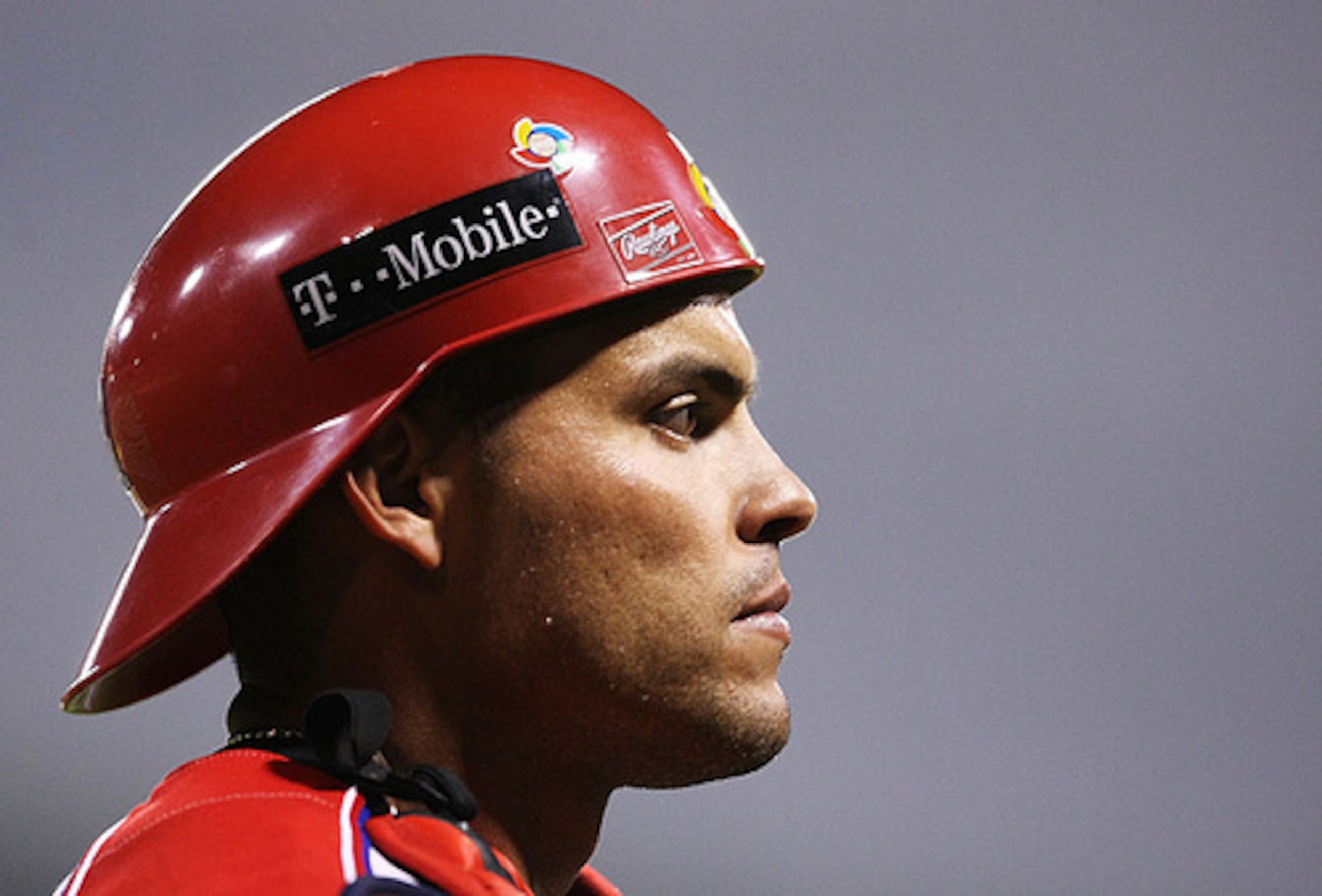
In 2004, when Ivan Rodriguez left the world champion Marlins to go to Detroit, a friend suggested that if Detroit, fresh off of their 43-119 season, went to the World Series, I-Rod would have to be considered the greatest catcher ever. I conceded the point.
He didn't do it overnight, but the Tigers ended up in the World Series three years later.
Florida's team ERA dropped from 4.36 to 4.04 the year they acquired I-Rod from the Texas Rangers, while Texas's team ERA ballooned from 5.15 to 5.67. Detroit's team ERA dropped in each of Rodriguez's first three seasons there, and their pitching spurred them to the World Series with their mediocre hitting.
I think he strikes out too much and doesn't walk nearly enough. I think his home runs are often outweighed by his double plays, and I think he is an overrated offensive player overall. As a person, I think he is arrogant, selfish and immature. But the Rangers enjoyed the most successful period in their franchise with him as catcher, the Marlins won the World Series with him as catcher, and Detroit has gone from the worst team in baseball to one of the best with him as catcher.
As we watch Rodriguez limp towards becoming the first catcher ever to accumulate 3,000 hits, it is easy to lose sight of how historically great he has been.
42. Ken Griffey, Jr., CF, Seattle Mariners/Cincinnati Reds
67 of 114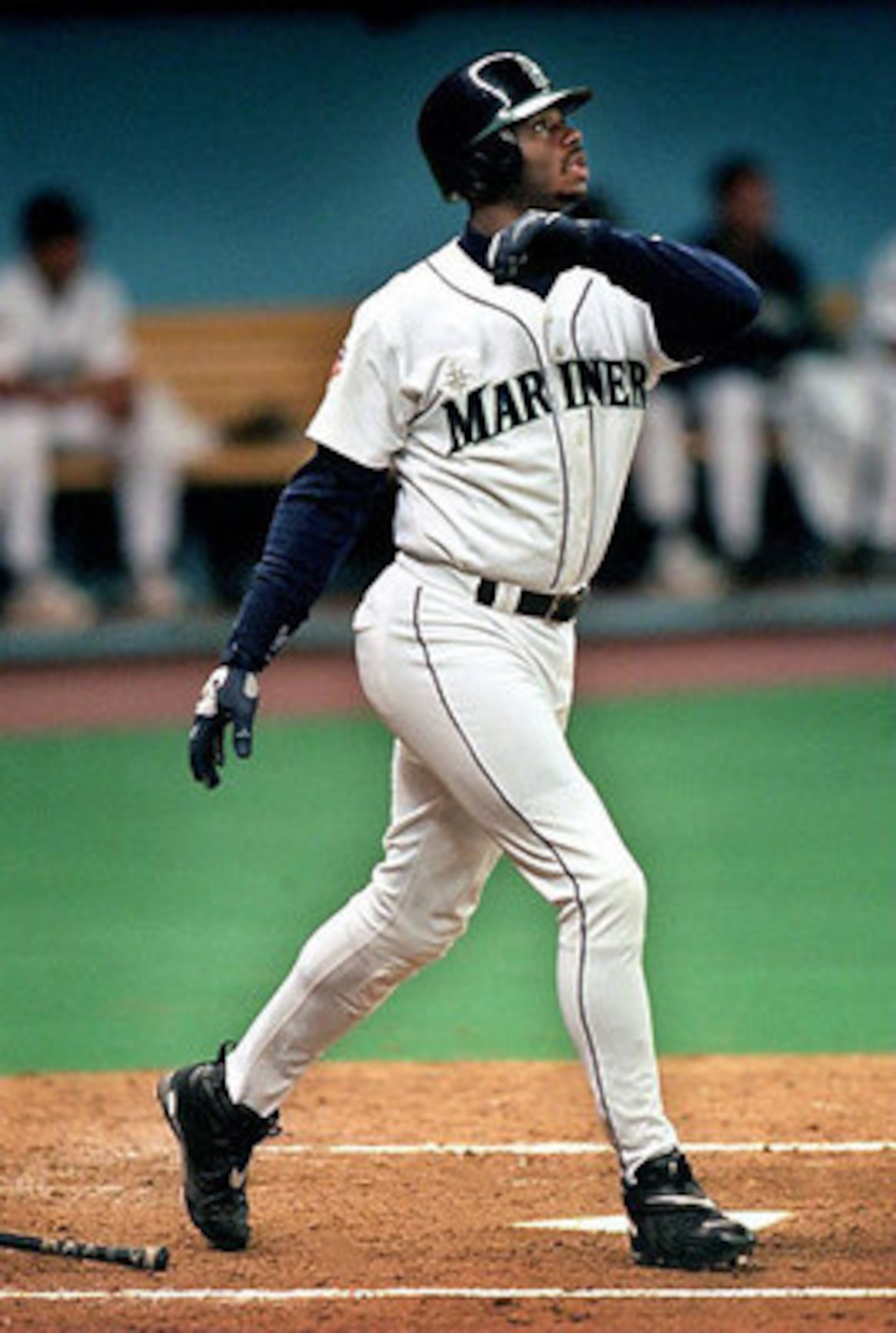
Ken Griffey Jr.'s career was semi-tragic.
The Kid ranks 42nd on this list, a position he basically earned 10 years into his career and did nothing to improve upon during the next 10 years of his career.
41. George Brett, 3B/1B, Kansas City Royals
68 of 114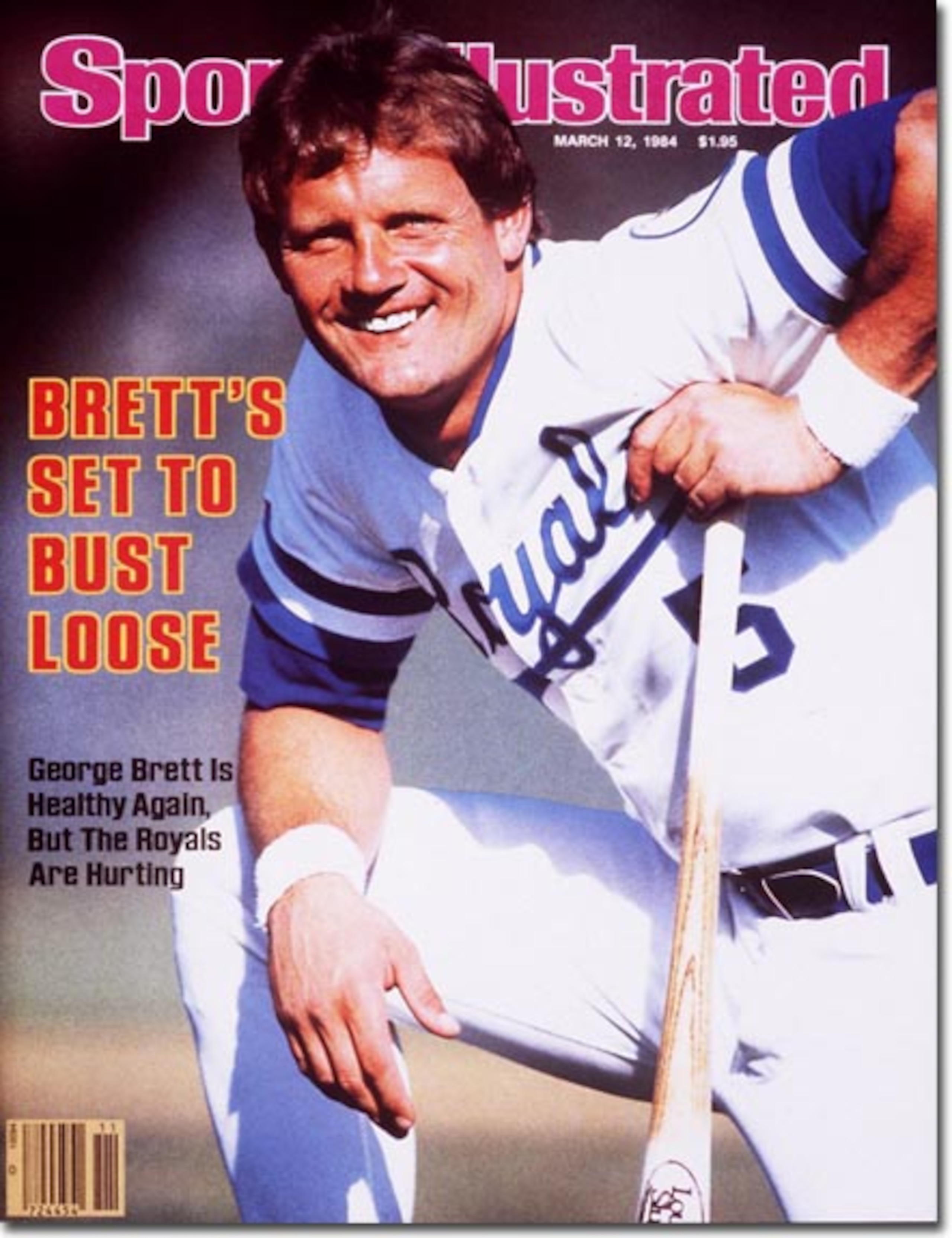
I was lucky enough to make a trip to Arizona for spring training a couple of weeks ago. One night, not ready to go to bed and with two complimentary drink tickets burning a hole in my pocket, I made my way down to the hotel bar at the Talking Stick Casino Resort near Phoenix. I was at the bar ordering an 18-year-old single malt scotch before I realized that, standing right next to me, was George Brett.
A few things:
a) Somehow, at the age of 57, Brett is significantly better looking now than he is in this picture;
b) Harassed by some adult-sized child holding an oversized poster and asking for an autograph, Brett got more-than-a-little stern with the man-child, and frankly everyone in the bar had Brett's back;
and
c) George Brett doesn't wear socks when he hangs out in the bar for a nightcap. And for the rest of my trip, neither did I.
40. Bob Feller, SP, Cleveland Indians
69 of 114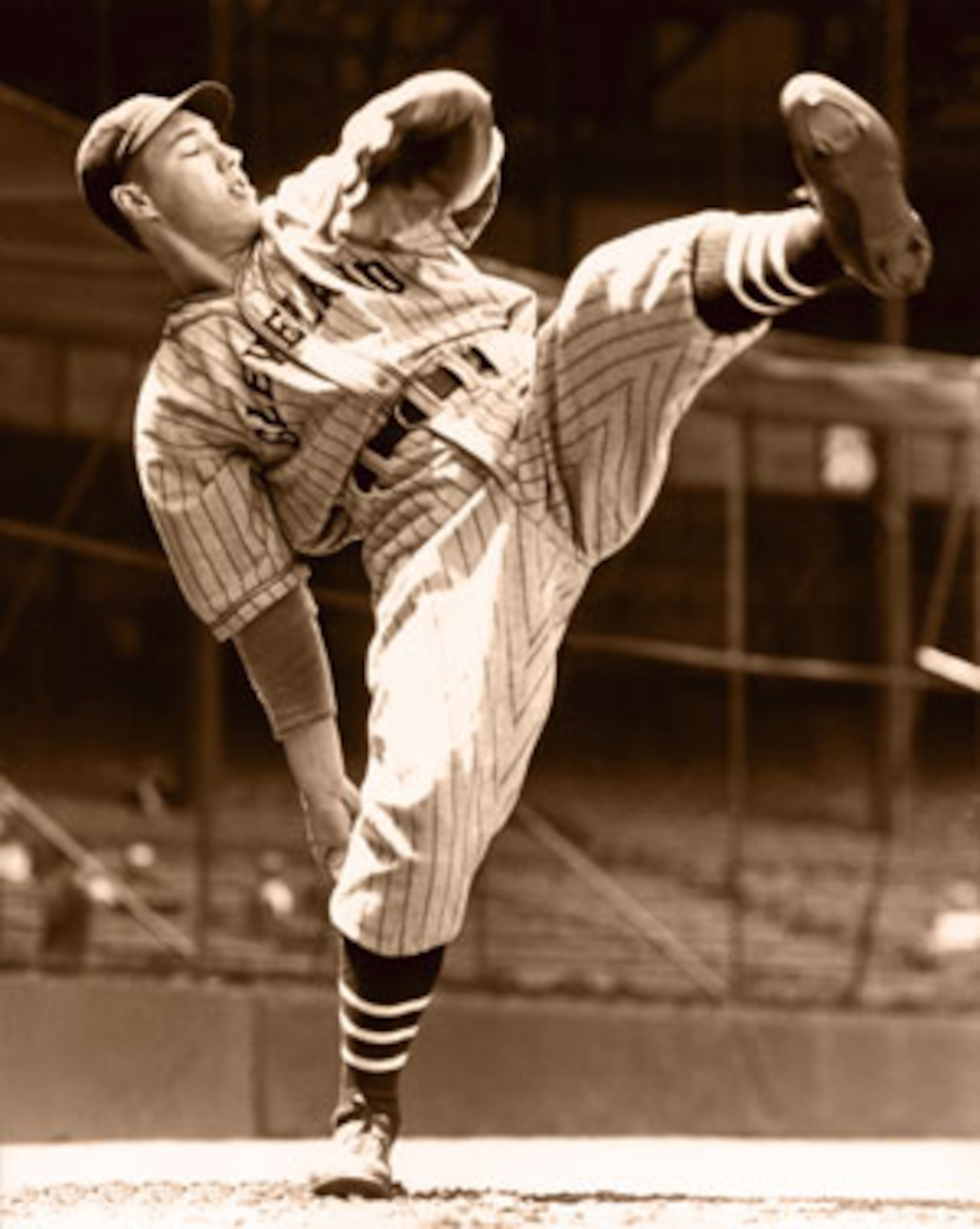
Bob Feller was pitching in the majors at the age of 17, led the league in strikeouts at the age of 19 and then led the AL in wins, innings pitched and strikeouts three years in a row from the age of 20 to 22.
Then he went to fight in World War II for nearly four years, and after he got back from fighting, he led the AL in wins, innings and strikeouts for two more years at the age of 26 and 27.
Even with four years right smack in the middle of his dominant prime, Feller finished with 266 wins, a winning percentage of .621, and a 3.25 ERA (122 ERA+). If he had not missed those four years, who knows.
I found myself on the street face-to-face with Bob Feller in Cooperstown last summer. He looked at me, I looked at him and I scurried away like a mouse, somehow scared to talk to Rapid Robert.
Feller died this winter, and I missed a once in a lifetime chance.
Lesson learned?
39. Johnny Bench, C, Cincinnati Reds
70 of 114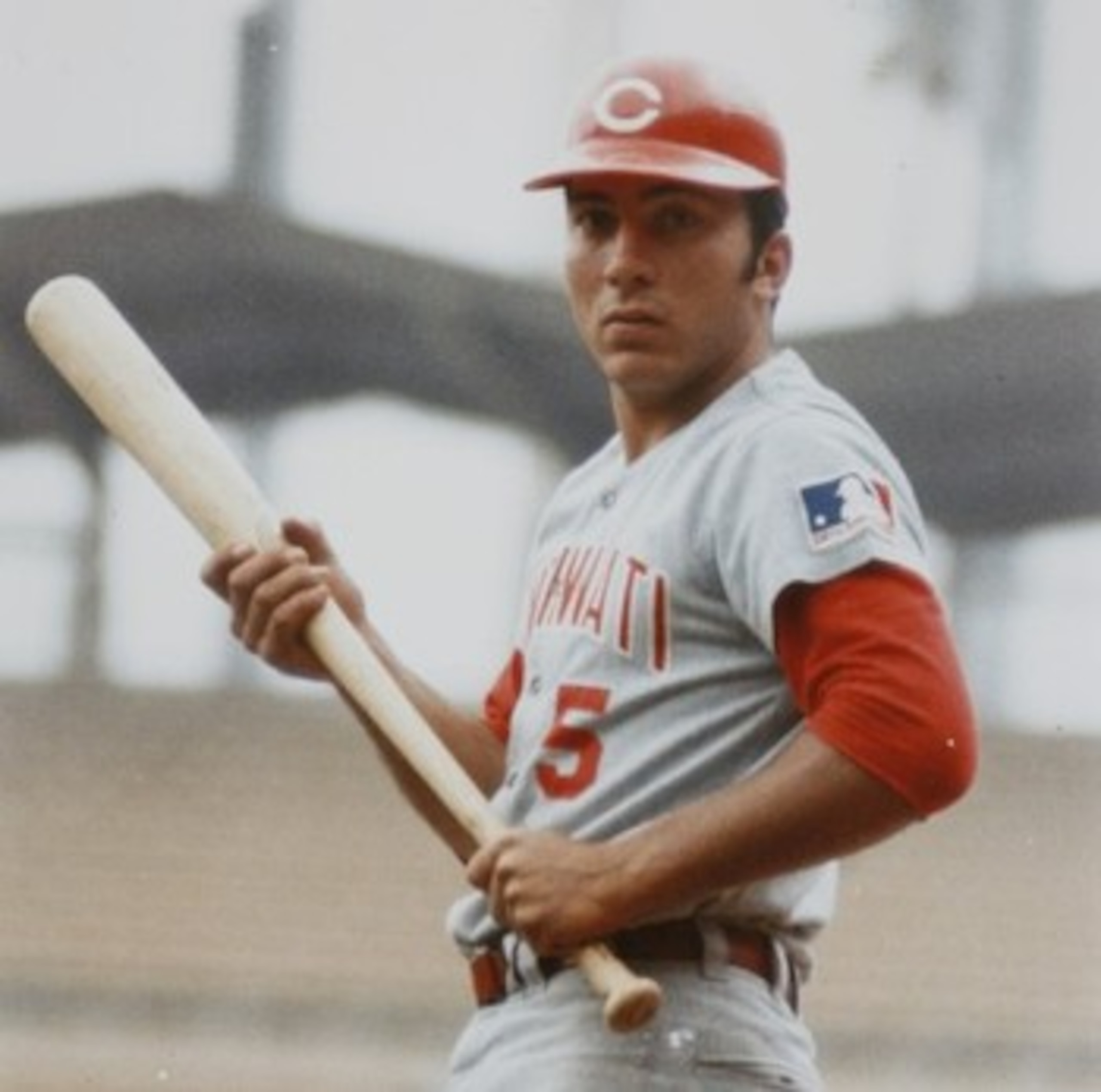
It would not be unreasonable to rate Bench as the greatest catcher of all-time.
We choose Berra, but it is really six of one and a half dozen of the other.
38. Jeff Bagwell, 1B, Houston Astros
71 of 114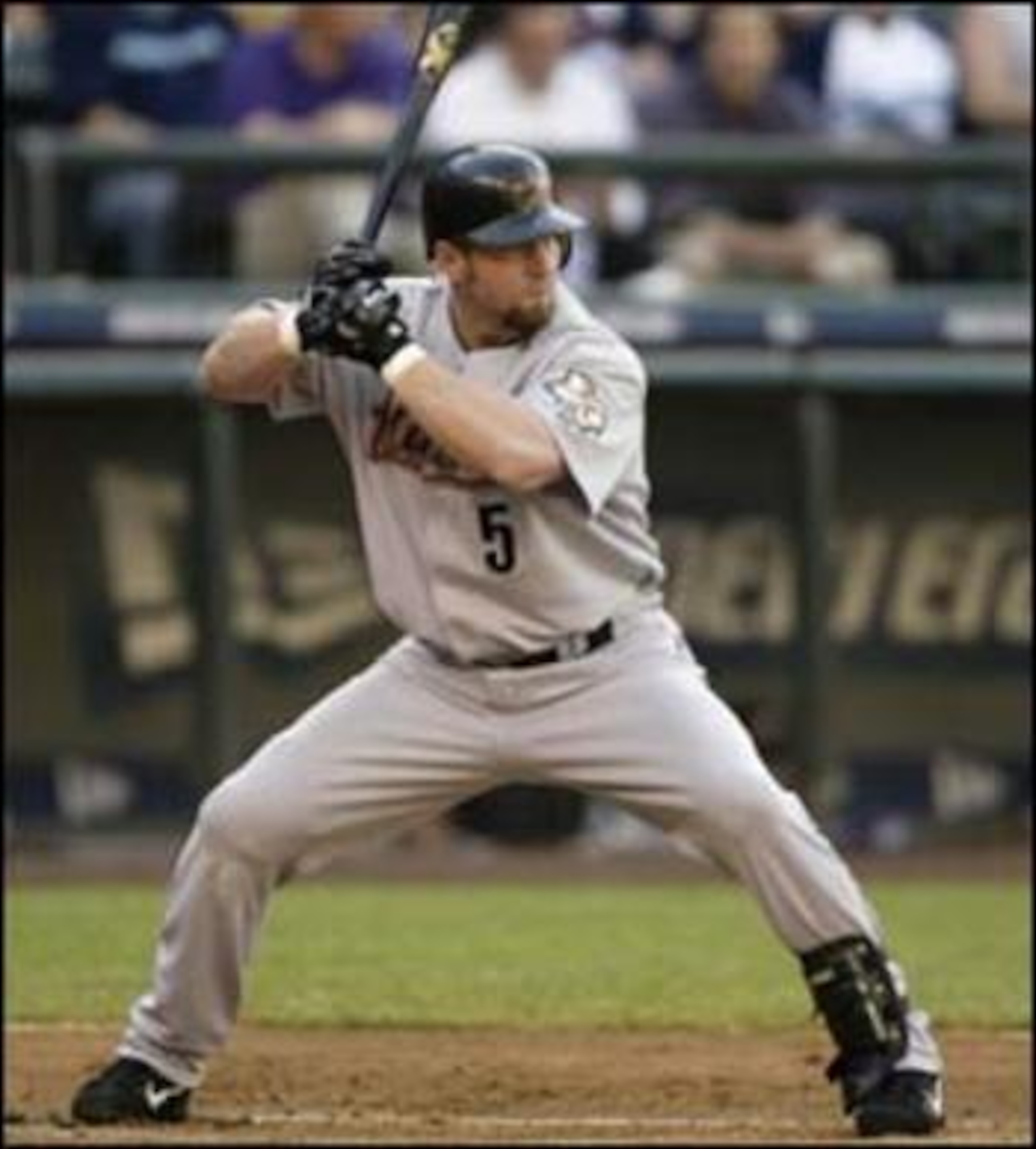
For some odd reason, whether Jeff Bagwell will be a first-ballot Hall of Famer seems to be in some doubt.
We are not being sarcastic—we really don't know why.
This is a guy who has just had an incredible career as the Houston Astros' first baseman. Up until the last couple of years of his career, he was a career 3-4-5er. His OPS stands at 948, which is good for 25th all-time, and his on-base percentage and slugging percentage are both in the top 50 all-time. He has 449 home runs and 1,529 RBI—400 homers and 1,500 RBI are essentially Hall of Fame lock stats, even in this era. He also has scored 1,517 runs, which is pretty good for a first baseman.
What's more, Bagwell did almost all of this by the age of 36. He did in just 14 full seasons what most players take 18-20 years to do. But forget career accomplishments—let's look at single-season accomplishments. In 2000, he scored 152 runs, which is more than anyone had scored since 1936—64 years! He went 30-30 twice, and he is a first baseman. He hit 30 or more homers nine times and 40 or more three times. His best year was the year the league went on strike, and he only played 110 games, yet managed to hit 39 dingers with 116 RBI and 104 runs.
Jeff Bagwell was a run-producing machine during his time in Houston, and he was also a fantastic defensive first baseman despite his shoulder problems which set in later in his career. Amongst first basemen, Bagwell was inarguably better than McGwire, Murray, Palmeiro, McCovey, Killebrew and Thome, to name a few. Bagwell is a no brainer first ballot Hall of Famer, and anyone who doesn't see that is silly.
37. Hank Greenberg, 1B, Detroit Tigers
72 of 114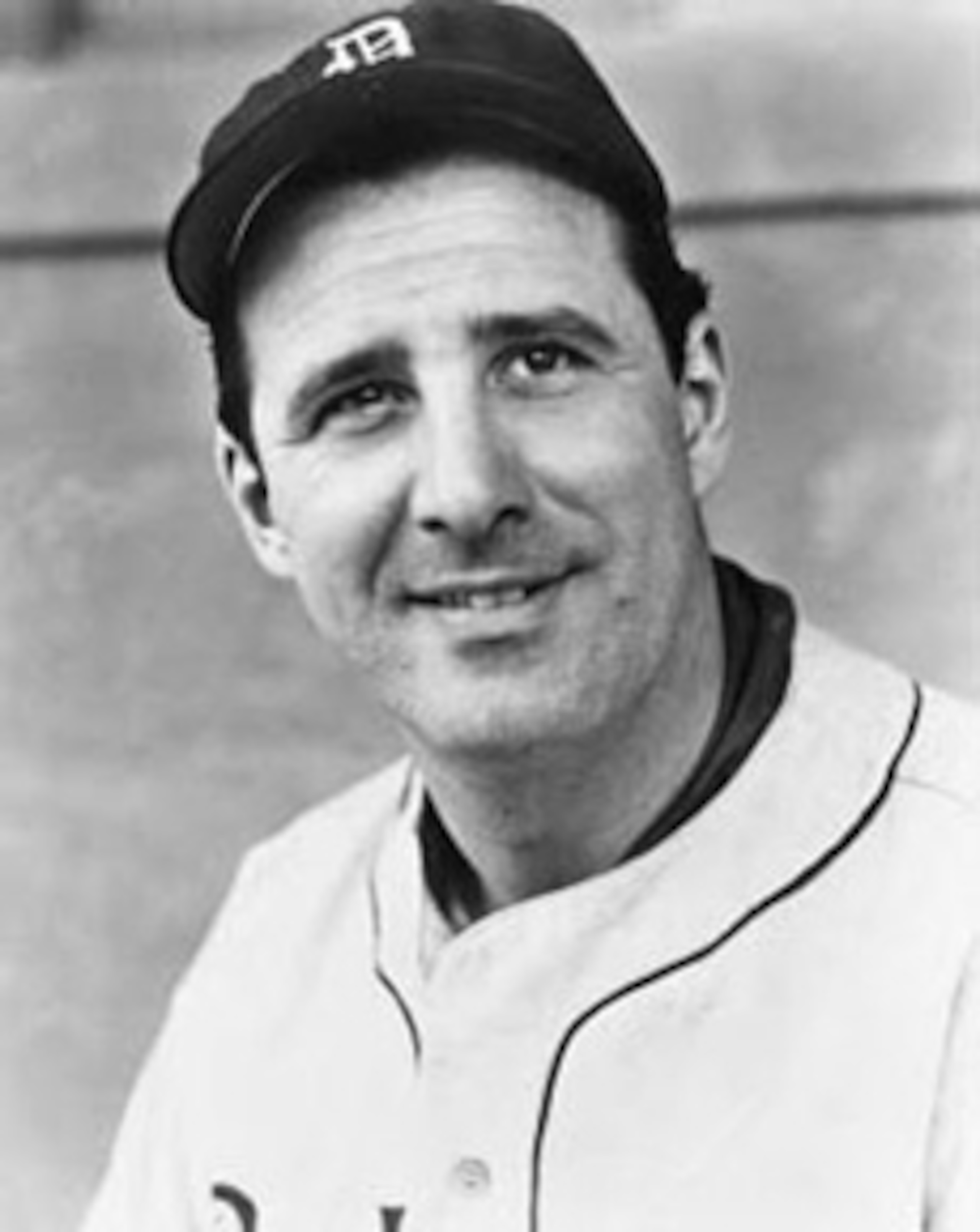
Hank Greenberg is one of the more complicated players in baseball history to get a handle on (Frank Baker and Arky Vaughan also fall into this category).
Greenberg debuted in 1930, the greatest offensive season in major league history, and played one game, batted once, didn't get a hit and did not return to the majors for three years. In 1933, he was a rookie with the Tigers, playing 117 games and hitting .301.
For the remainder of the 1930s, except 1936 when he was limited to 12 games, Greenberg was a dominant player in the American League. In 1935, he had 203 hits and 170 RBI. In 1937, he had 200 hits, 137 runs, 183 RBI and 14 triples. In 1938, he hit 58 home runs, 146 RBI and scored 144 runs, though his days of 200 hits were over. He continued to dominate the league through 1940, when he won his second MVP.
Then 1941 came, and Hank went to war. He was 30 years old, and he missed all but 19 games while in service. Where most players who went to war missed two or three years to service, Greenberg missed three complete seasons, 1942-1944, in addition to most of 1941 and over half of 1945. Greenberg left as a 30-year-old who dominated the league; he returned as a 35-year-old who hadn't played ball in almost five years.
In his first year back, Greenberg was not his old self, though he managed 44 home runs and 127 RBI. His average slumped to .277, and his on-base percentage fell below .400 for the first time since he was a rookie, but his slugging percentage was over .600. Greenberg played one more season, hitting .249 in 125 games but walking 104 times before hanging it up. Greenberg finished as a 3-4-6er, with 331 HR, 1,276 RBI and 1,051 runs in basically nine seasons.
36. Arky Vaughan, SS, Pittsburgh Pirates
73 of 114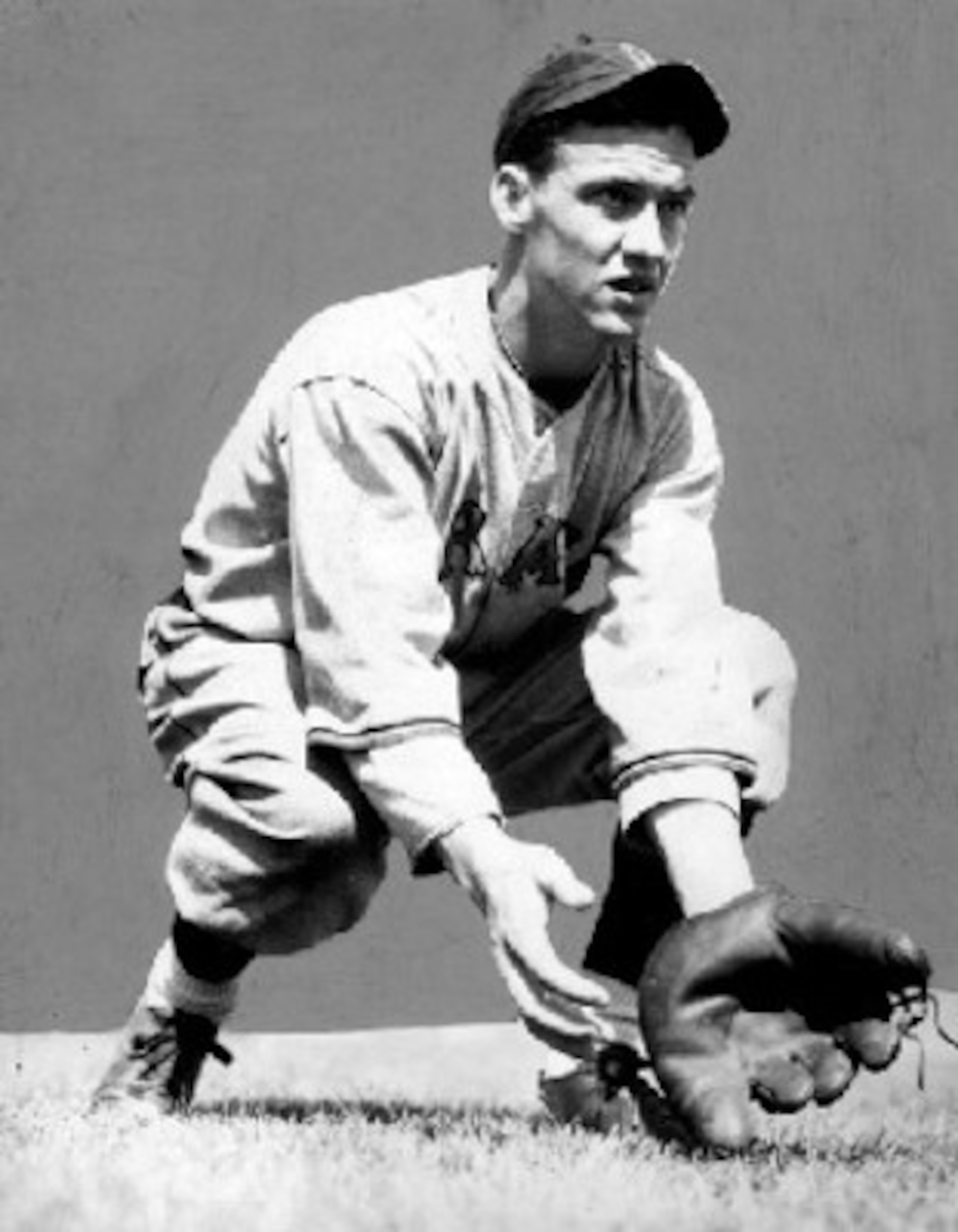
Arky Vaughan is often the forgotten man on most people's shortstop list.
On the other hand, Bill James ranks him as the second best shortstop of all-time.
Vaughan was, no doubt, a hitter without peer; from Honus Wagner in the nineteen-teens to Ernie Banks in the 1950s, no other National League shortstop put up even above-average offensive numbers, yet Vaughan was an elite hitter.
His career high for strikeouts was 38, his career batting average was .318, and in 1935, he led the NL in batting average, on-base percentage, slugging percentage and OPS while walking a National League high 97 times and striking out only 18 times.
35. Pedro Martinez, SP, Montreal Expos/Boston Red Sox
74 of 114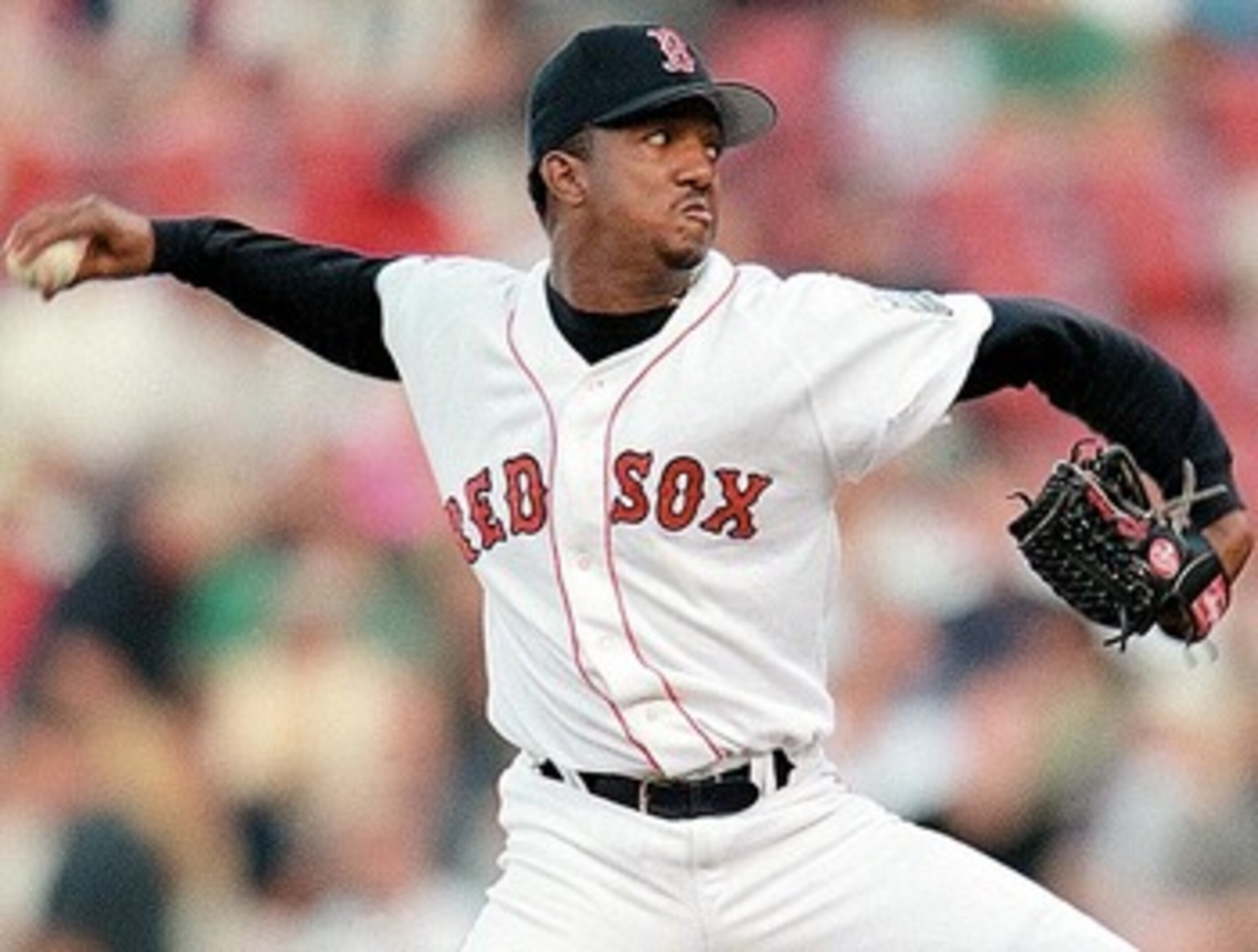
When the most dominant pitcher of our lifetime is under 6'0" tall, one must wonder whether 5'11" is the new 6'5".
Not likely.
To survive at Pedro's height during the peak of the Steroid Era, he had to throw with both power and control along with both speed and finesse.
He did just that, like some mad scientist's combination of Greg Maddux and Roger Clemens.
With his high-90s fastball and wide variety of devastating changeups, curves, sliders and cutters, Pedro may have been the most complete pitcher of all-time.
Not bad for a guy who couldn't even get to 6'0" tall with his 1980s jheri curl (not pictured).
34. Charlie Gehringer, 2B, Detroit Tigers
75 of 114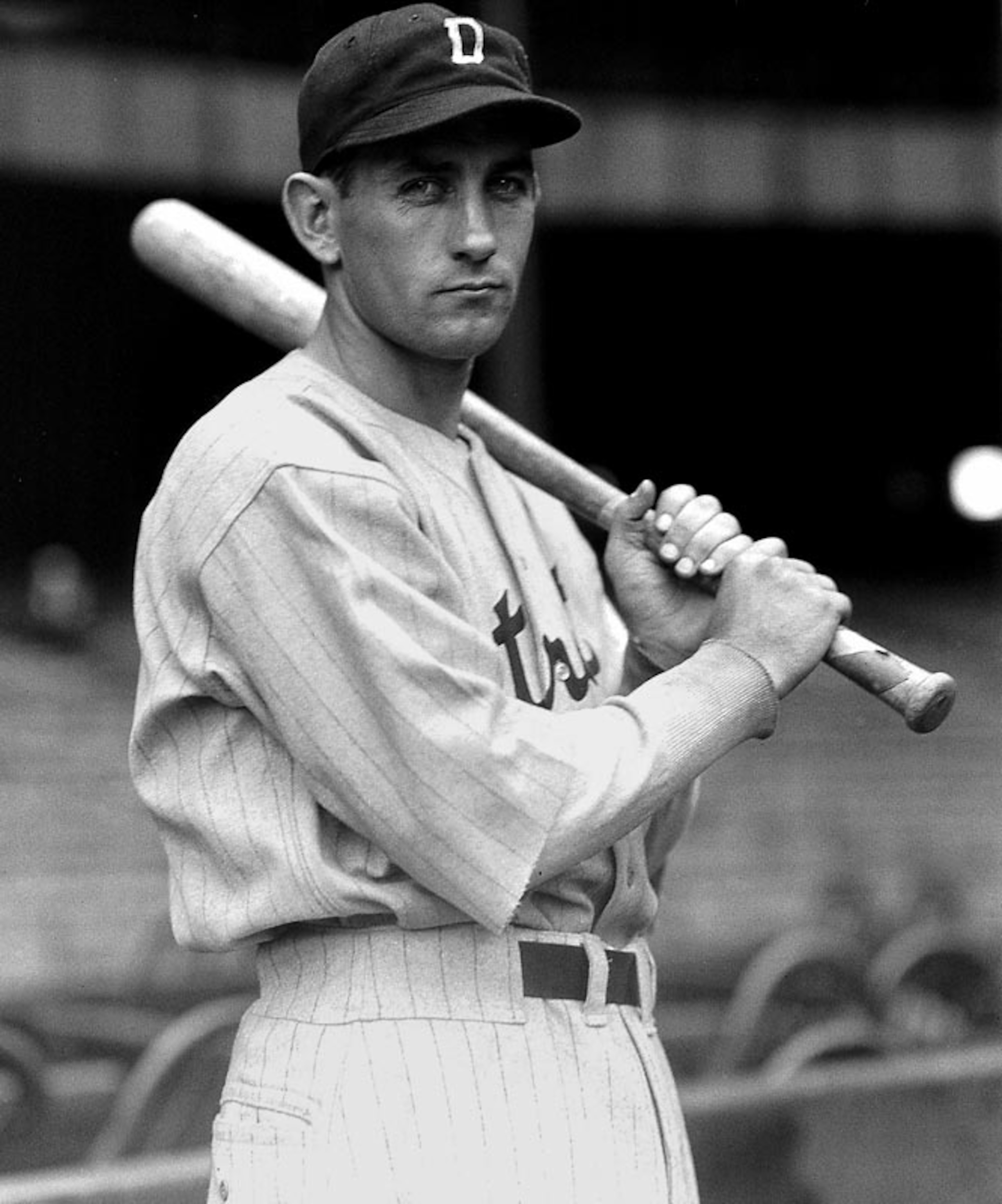
Bill James commented that Charlie Gerhinger and Ryne Sandberg were essentially the same player in different eras. We think the only thing they had in common was the position they played.
Gehringer was not a power hitter, he walked three times more than he walked, he batted .320 with an on-base percentage over .400 and accumulated over 1,700 runs and 1,400 RBI during his career.
Gehringer had over 200 hits seven times and once hit 60 doubles in a single season.
33. Johnny Mize, 1B, St. Louis Cardinals/New York Giants/New York Yankees
76 of 114
Another World War II era guy, Mize led the league in home runs and RBI twice each in the four years before he went to war, where he served for three full years, then led the league in home runs in each of his first two full years back from war, with 51 in 1947 and 40 in 1948.
Mize's ranking here is a product of the years he missed due to War, but it is not unjustfied. He was one of the finest hitters in the NL for six years before the War and would have had far more historically impressive career totals if not for the time missed.
32. Frank Thomas, 1B/DH, Chicago White Sox
77 of 114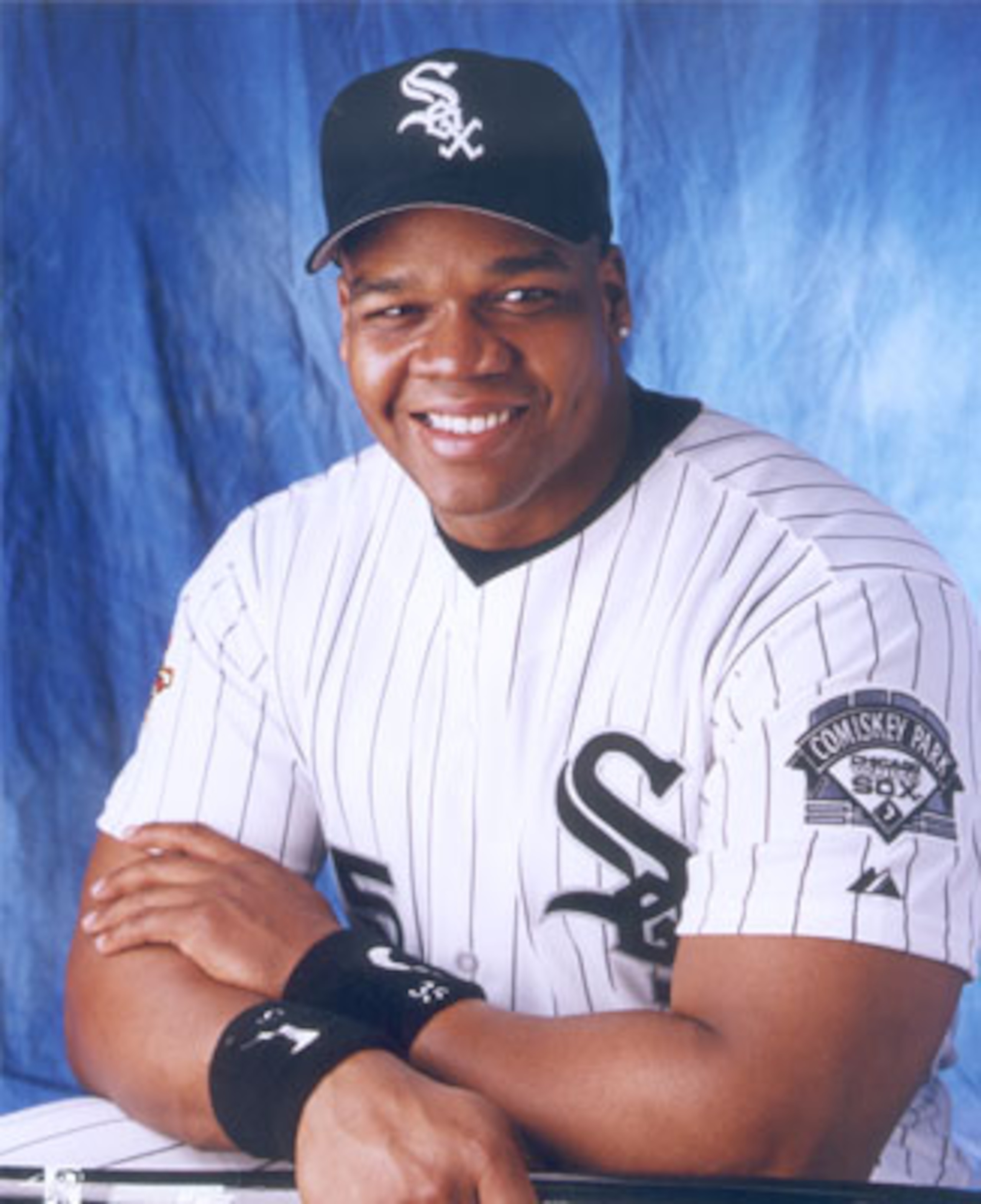
Frank Thomas' years of having played most of his games as a first baseman were well behind him before his prime ended.
Interestingly, Thomas was one of the best hitters in baseball history from 1991 to 1997, during which time he was almost exclusively a first baseman. He endured his first "bad" season in 1998, his first as a primary designated hitter since he rookie year.
His numbers as a first baseman dominate his numbers as a DH.
And, oh by the way, Frank Thomas was one of baseball elite hitters of all-time until he started getting hurt regularly.
31. Albert Pujols, 1B, St. Louis Cardinals
78 of 114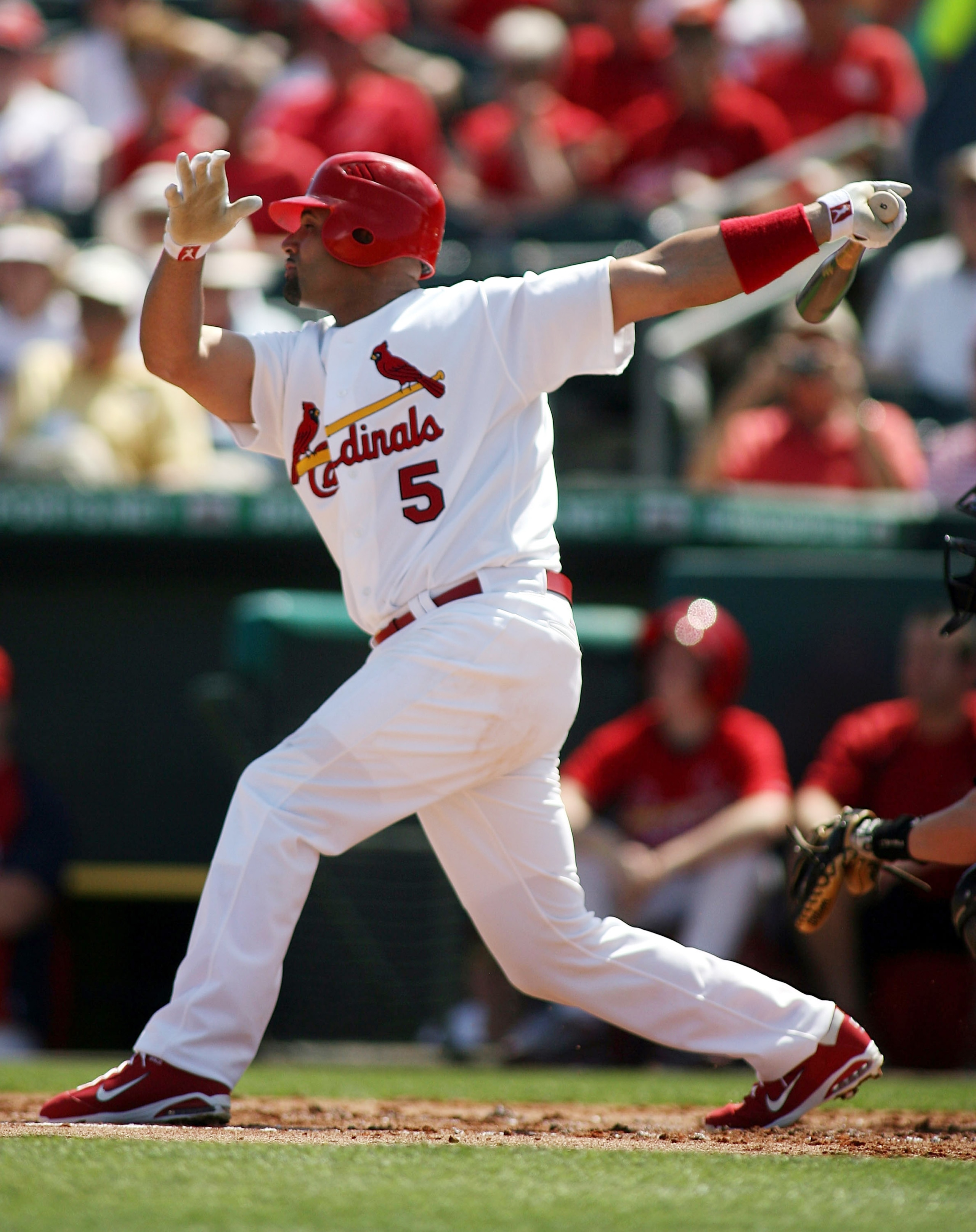
An elite defender, an elite contact hitter, an elite power hitter and an elite run producer.
I have Pujols ranked conservatively here because when you are sure that a guy will one day be the best of all-time, you should take all precaution to make sure you don't jump the gun.
But at this point, Pujols looks like the right-handed Lou Gehrig.
Right now, he is essentially where Frank Thomas was at the age of 30. Assuming Pujols can stay healthy where Thomas spent the second half of his career battling injuries, Pujols should be in the top 25 in another two years, and then will begin his assault on Jimmie Foxx and then, ultimately Lou Gehrig.
30. Tom Seaver, SP, New York Mets/Cincinnati Reds
79 of 114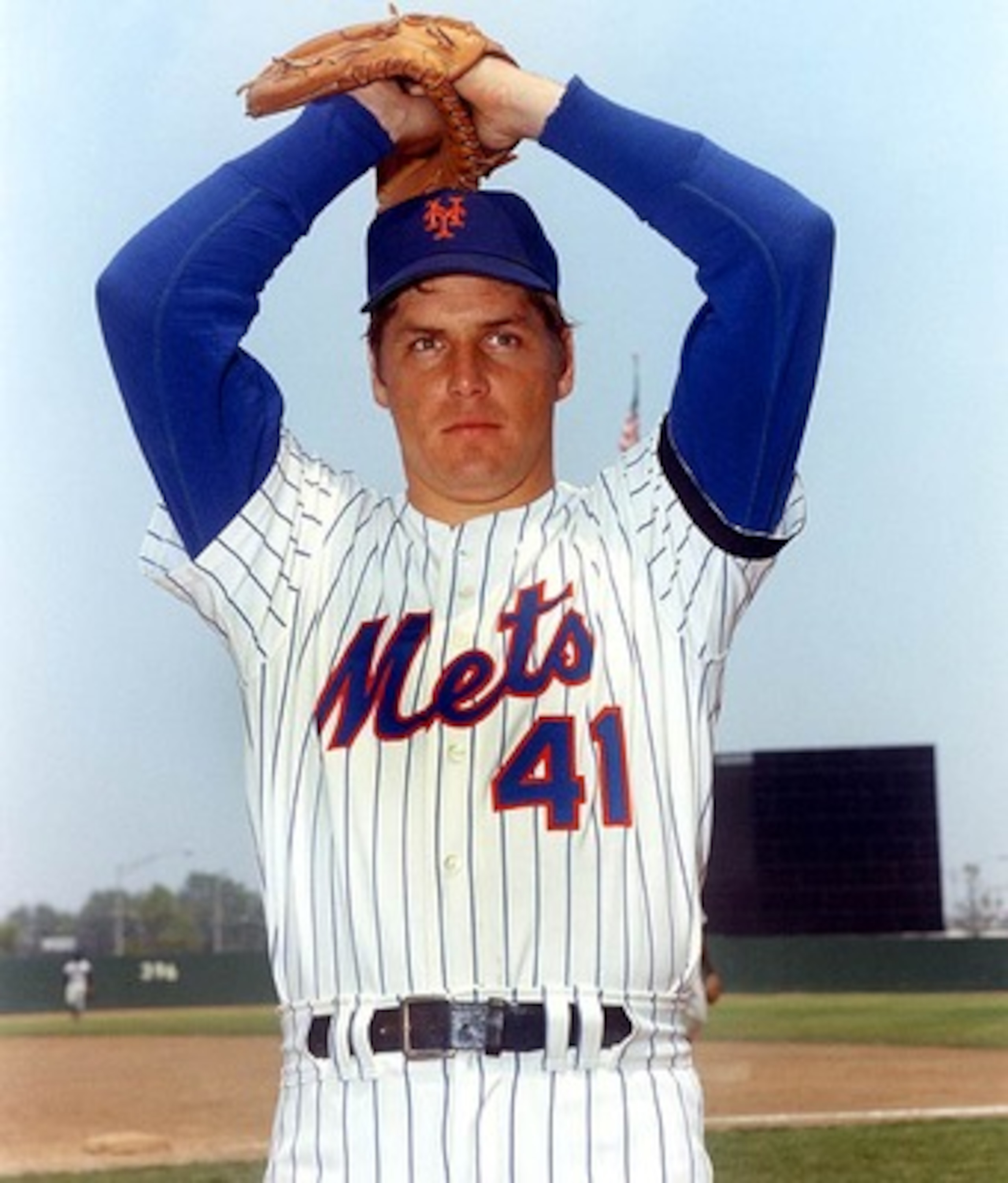
Before 1990, one would have to have been crazy to call Tom Seaver underrated, and yet, that is where we find ourselves today. Check out this list of 20th century pitchers with 4,500 innings pitched and an ERA+ of 125 or higher:
Cy Young, Walter Johnson, Grover Alexander, Roger Clemens, Tom Seaver, Christy Mathewson and Greg Maddux.
The interesting thing about that group is that Seaver is the only one who played between the years 1930, when Alexander retired, and 1984, when Roger Clemens made his debut. For over 50 years, Seaver was unmatched in terms of combining greatness and longevity.
29. Yogi Berra, C, New York Yankees
80 of 114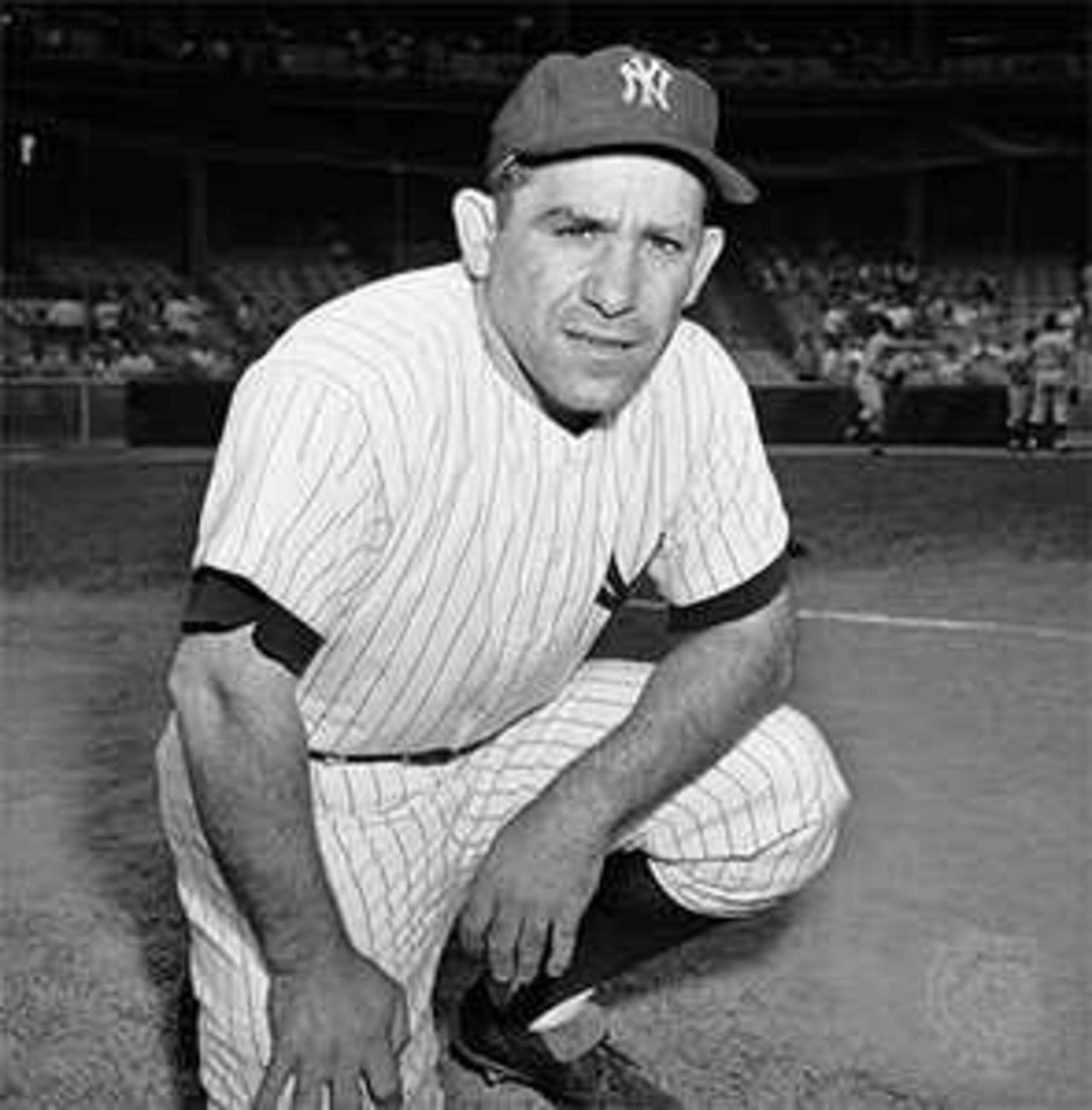
We haven't simply made a mythological hero out of Yogi Berra because of his cartoonish persona and charm. Berra was actually a fantastic player.
Berra won three AL Most Valuable Player awards, had over 350 home runs and 1,400 RBI, which is amazing for a catcher, and he struck out so rarely that he had more home runs than strikeouts in six different seasons.
28. Eddie Mathews, 3B, Milwaukee Braves
81 of 114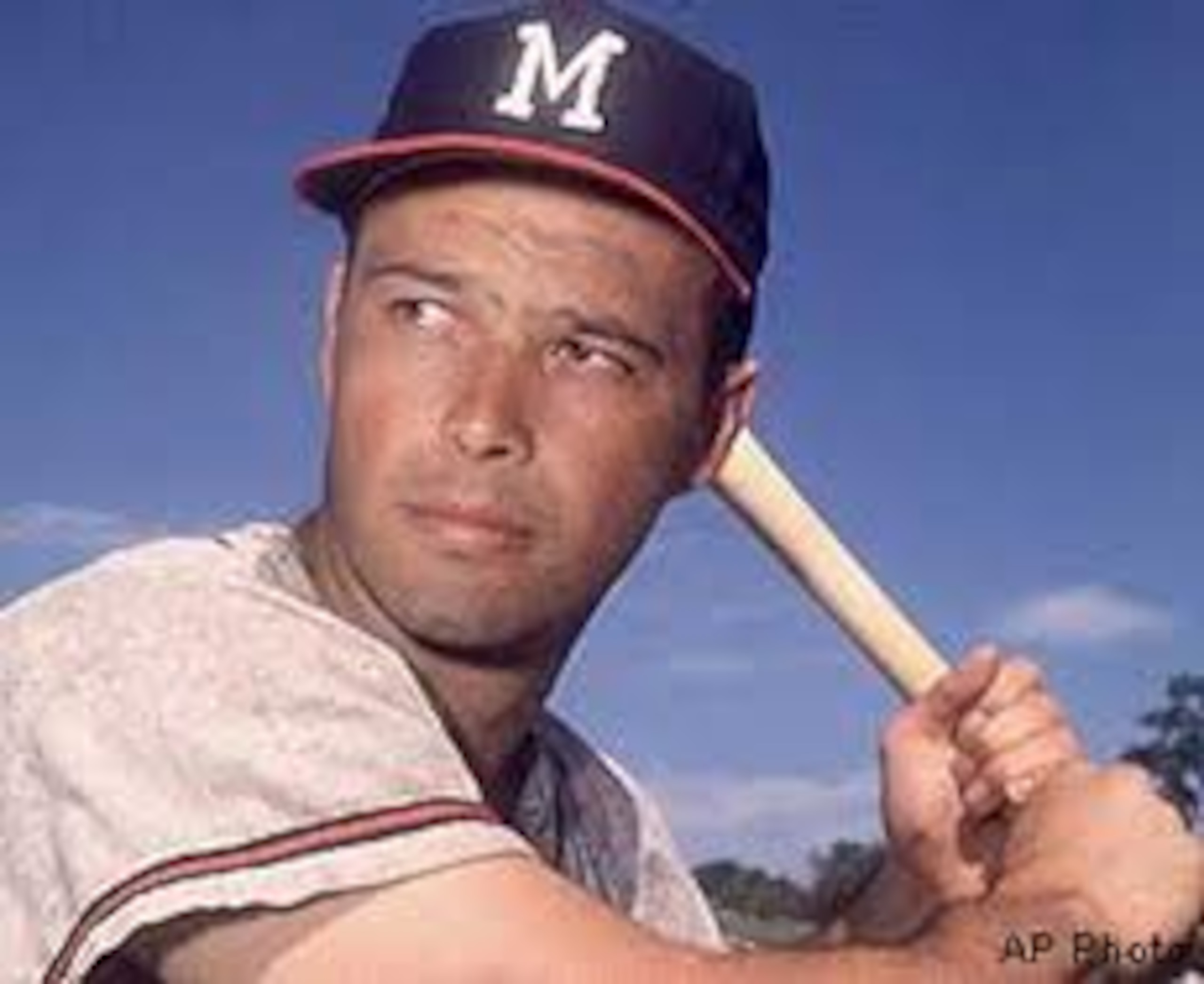
As a 20-year-old rookie, Eddie Matthews played in 145 games and led the NL in strikeouts. The following season, he led the NL in home runs and one of the greatest third basemen of all time was born. Matthews and Hank Aaron would form one of the top three dynamic duos of all-time, along with Ruth and Gehrig and Mays and McCovey.
As impressive as Matthews' 512 career home runs is, he hit 274 of them on the road and only 238 at home, which makes you think he might have had a few more home runs in that bat.
Honorable Mention: Manny Ramirez, LF, Indians/Red Sox/Dodgers
82 of 114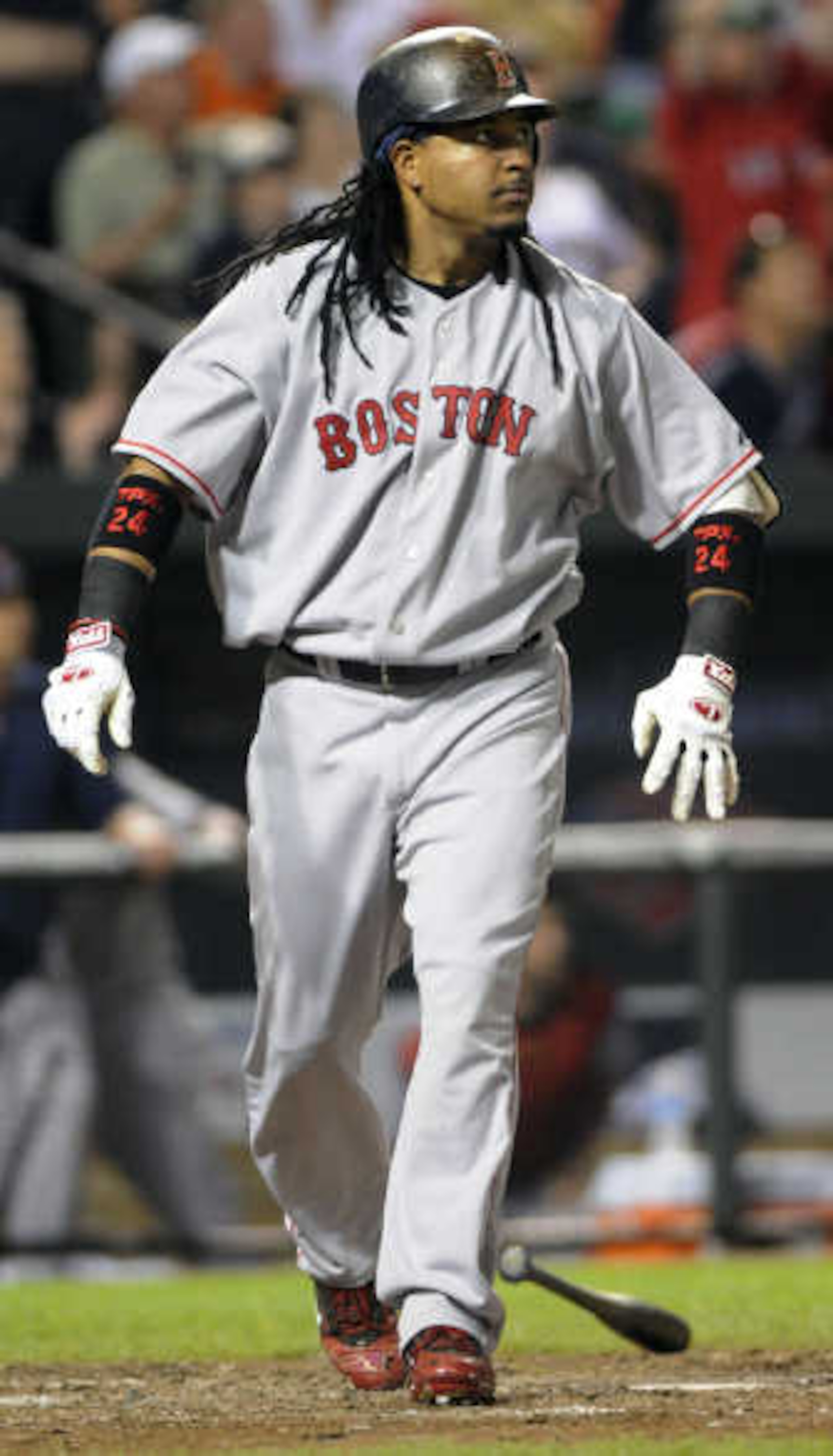
One of the greatest right-handed hitters of all-time, numbers taken on their face.
Also a terrible defender, a quack in the clubhouse and a sullier of goodwill who would take the rest of the season off after about 140 games from time to time.
At the same time, the teams he played for went to the playoffs virtually every year, he broke the curse in Boston and then won another World Series, and took the Dodgers to the NLCS twice.
On raw numbers, this is actually a pretty conservative ranking.
27. Randy Johnson, SP, Seattle Mariners/Arizona Diamondbacks
83 of 114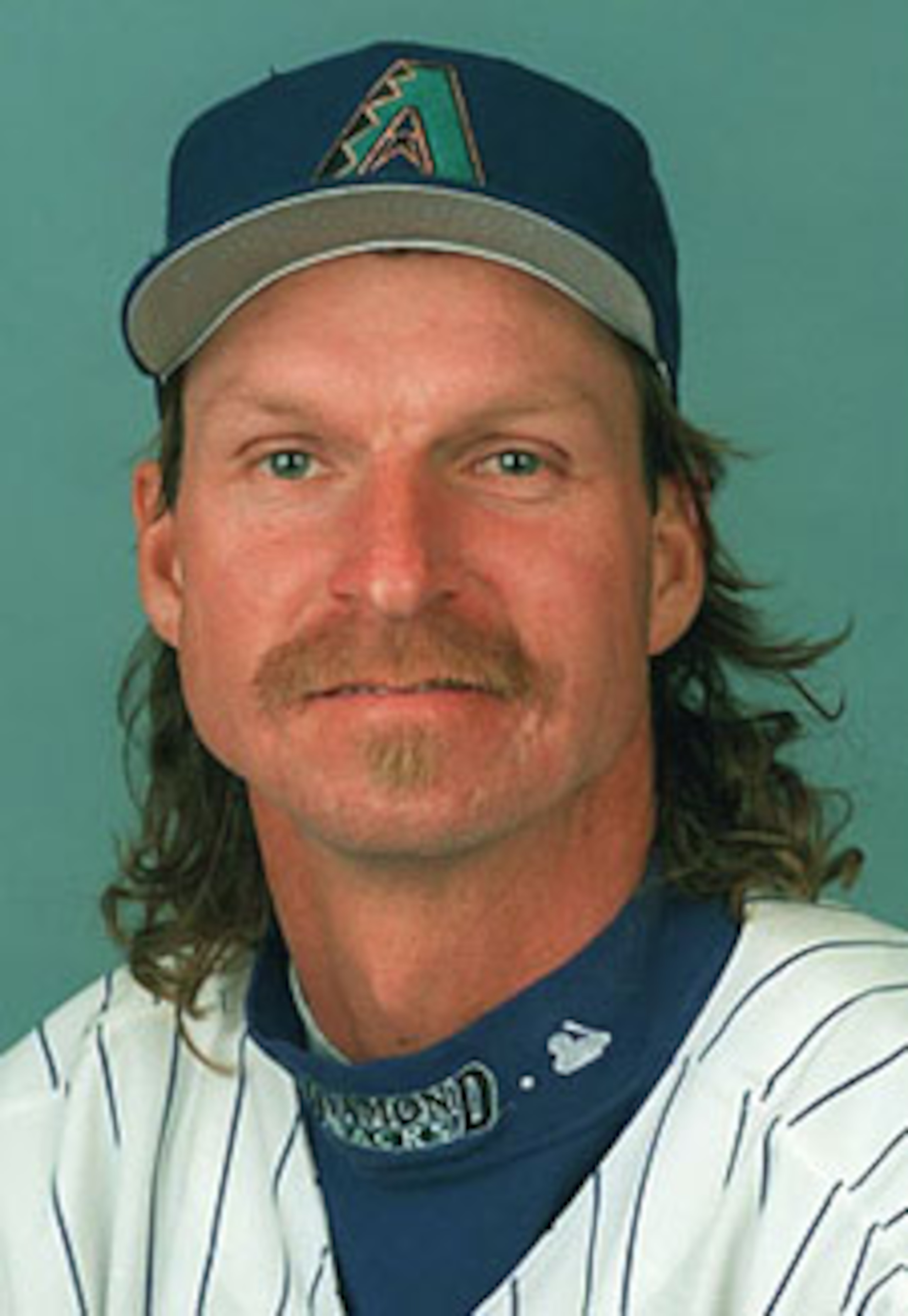
The tallest pitcher of all-time and one of the hardest throwers in the history of the game, Randy Johnson began his windup with a menacing, over-the-glove stare from what appeared to be 10 feet off the ground, then delivered with laser-like execution.
One obliterated bird and a freaked-out John Kruk are just two parts of the Randy Johnson legend.
26. Greg Maddux, SP, Chicago Cubs/Atlanta Braves
84 of 114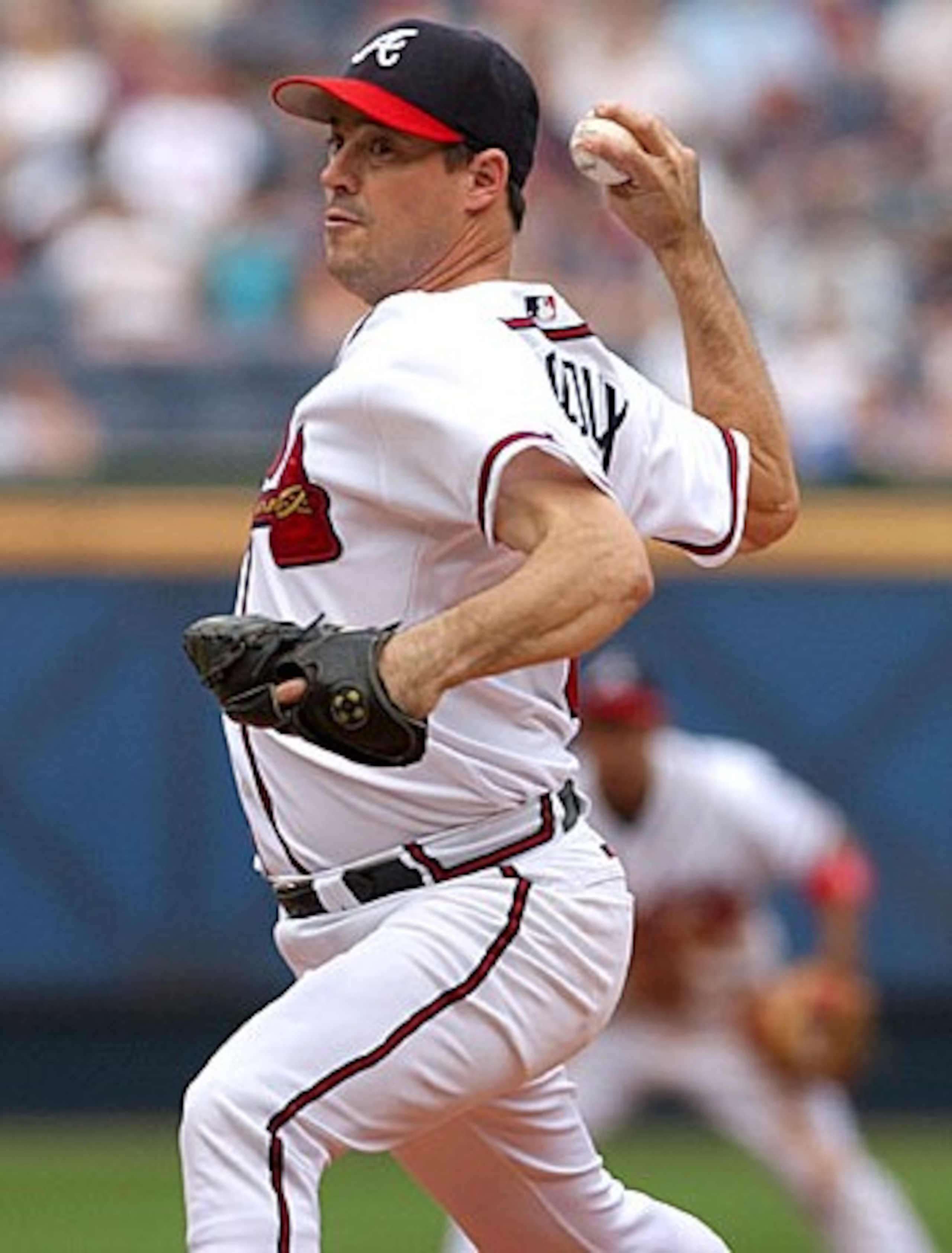
One of the smartest and craftiest pitchers of all-time, Maddux made great pitching look boring.
His credentials—four Cy Young Awards, 18 Gold Gloves, four ERA titles, 355 wins and a 3.16 ERA (132 ERA+)—are anything but boring.
Success of Maddux's caliber is not unheard of in baseball history, but to succeed the way Maddux did in this era of sluggers and power pitchers is really pretty amazing.
25. Joe Morgan, 2B, Cincinnati Reds/Houston Astros
85 of 114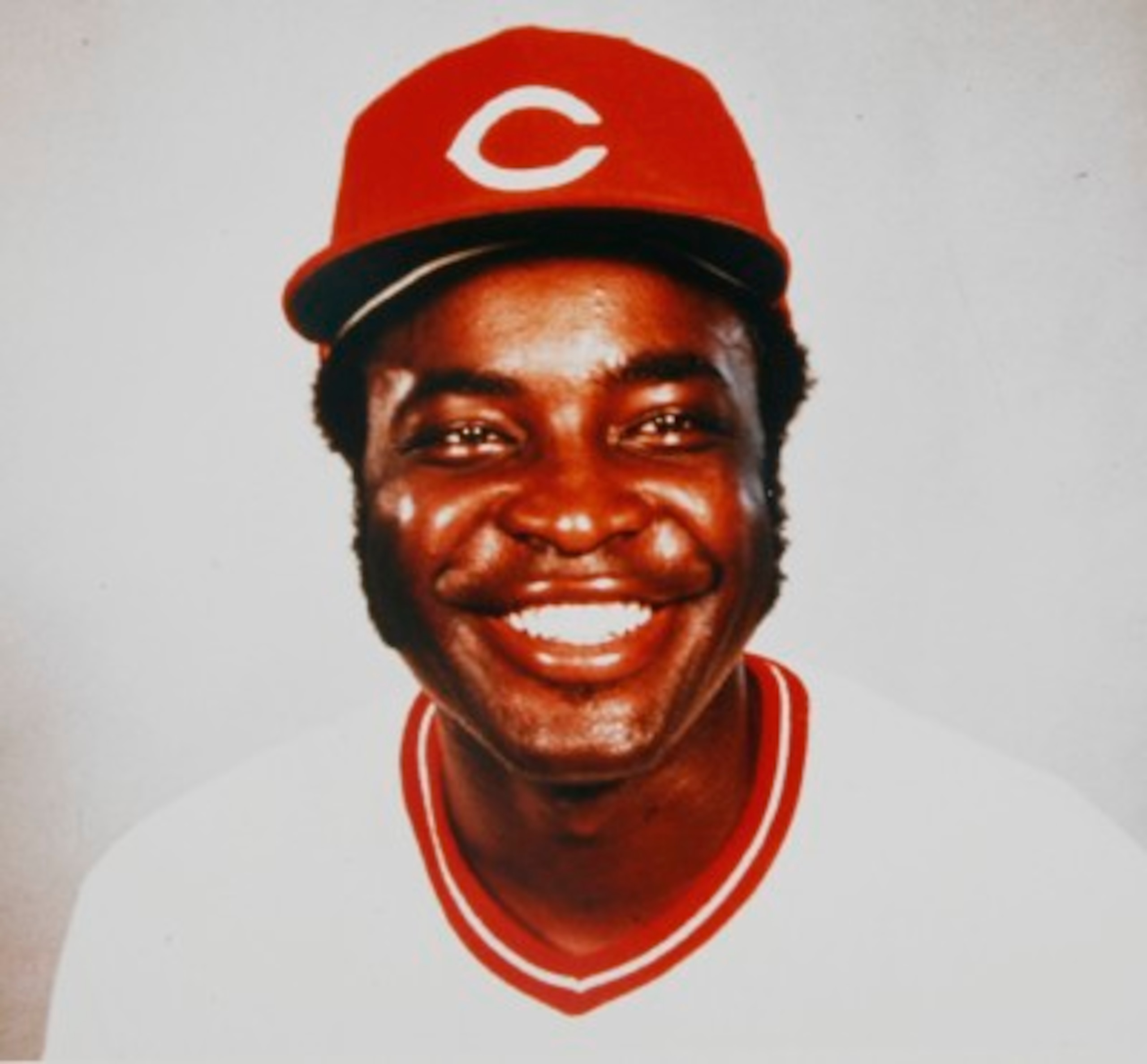
One of the great ironies in life:
Joe Morgan, as a player, was a wonderful second baseman whose contributions have become more easily understood as we have developed advanced statistics to better evaluate a player's abilities by referring to things other than traditional triple crown-style analysis.
Joe Morgan, as an announcer, belittles such statistical advancement and chooses to rely instead upon more conventional analysis.
Thus, Joe Morgan the announcer is Joe Morgan the player's worst critic.
24. Joe DiMaggio, CF, New York Yankees
86 of 114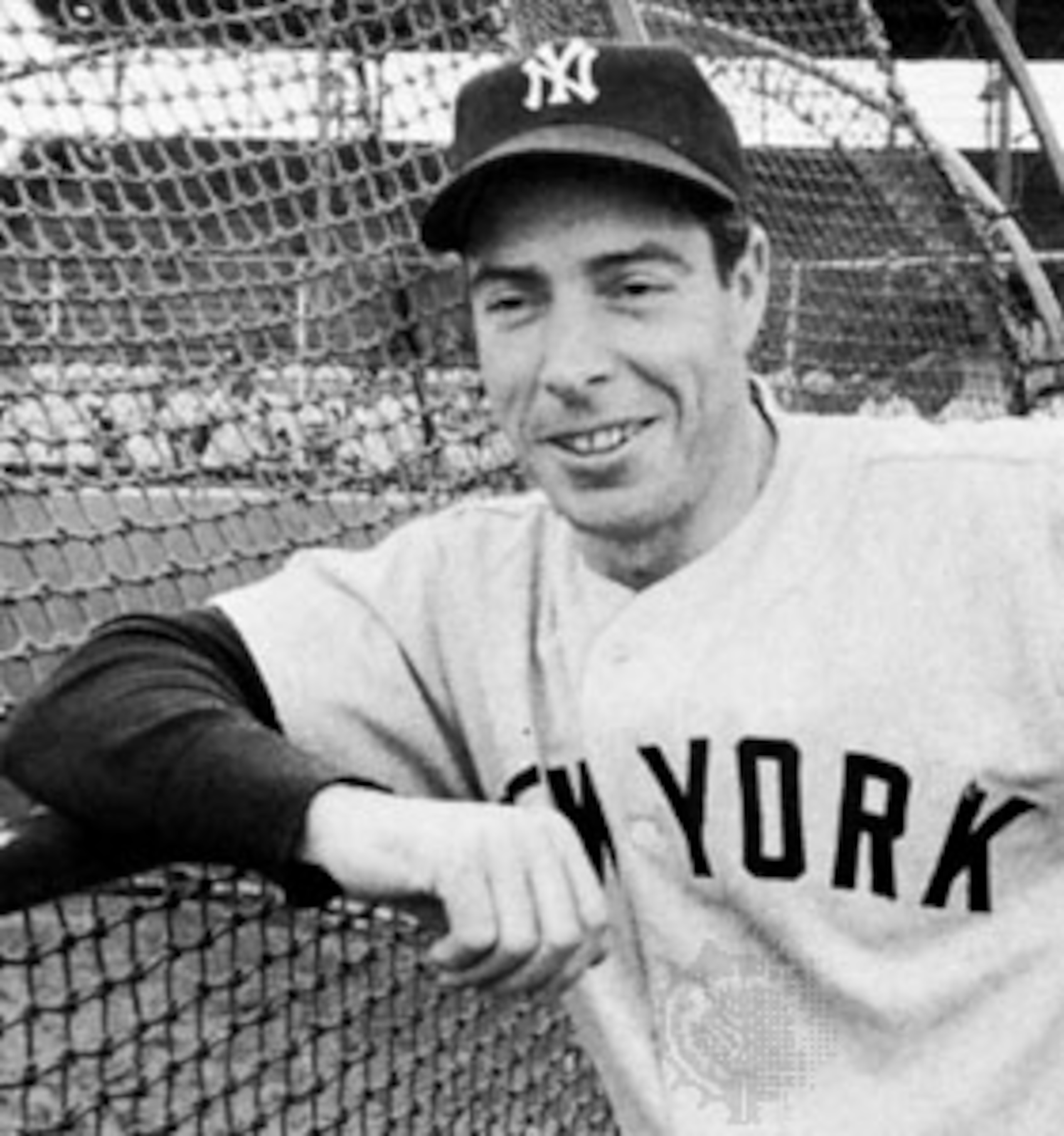
Joe DiMaggio is the one player whose name regularly comes up in "greatest player" talk who never dominated his league. Williams, Bonds, Ruth, Cobb, Mays, Mantle, Gehrig, Musial, Hornsby—they all dominated their leagues for significant stretches. DiMaggio was the dominant player in his league once, in 1939. Joe Medwick, Reggie Jackson, Albert Pujols and ARod have all had more seasons of dominance than DiMaggio.
DiMaggio was a great player in his prime and, unfortunately, missed three prime seasons to World War II, an excruciating reality that has deprived baseball fans of some brilliant individual performances—Greenberg, Feller, Williams, DiMaggio and others in their prime years. Nevertheless, while we give DiMaggio credit for the war, we also note that DiMaggio had a hard time playing full seasons after the war.
He played his last full season in 1948 at the age of 33. He played his last season in 1951, at the age of 36, his skills having significantly waned as he played mediocre ball for 116 games. In the end, DiMaggio played 13 seasons which, including the war, brings his career up to 16 seasons. Among the all-time greats, this is a short career.
Joe DiMaggio was a no-doubt great player and Hall of Famer. Nonetheless, some people consider him to be one of the top 10 or so players of all time, and this just isn't the case.
Honorable Mention: Alex Rodriguez, 3B/SS, Mariners/Rangers/Yankees
87 of 114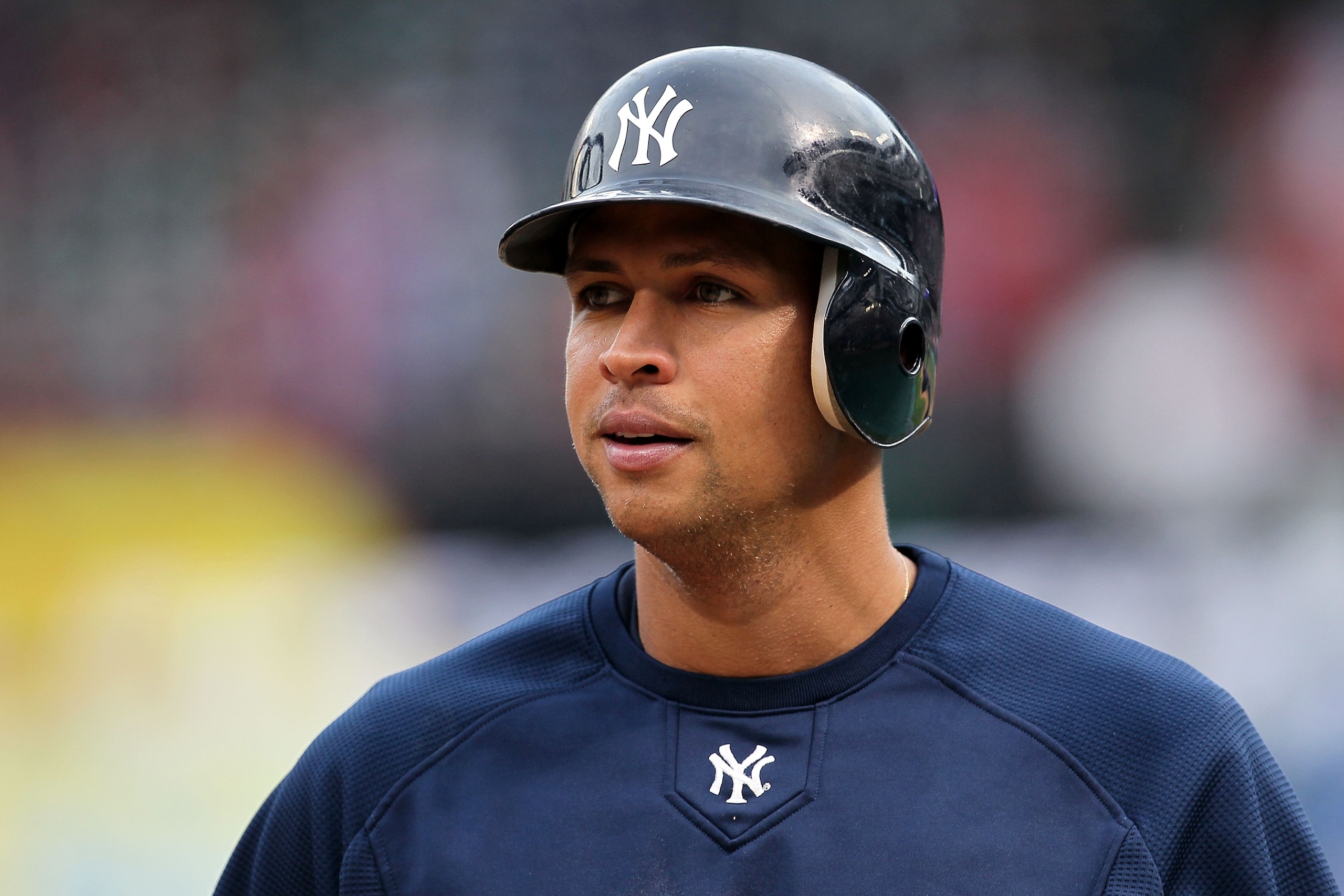
There will come a day—in roughly two more seasons—when A-Rod will have played more games at third base than at shortstop, but for now, he must be considered a shortstop first.
During his eight full seasons at shortstop, he was arguably the best hitter in the American League, he won two Gold Gloves in an era in which Omar Vizquel was almost impossible to steal a Gold Glove from and he won an AL MVP.
He also led the AL in home runs for three straight years, which very few players have ever done, let alone shortstops.
At the end of his career, A-Rod's numbers will flummox those of Mike Schmidt, and he will have played more games at third base than any other position.
23. Christy Mathewson, SP, New York Giants
88 of 114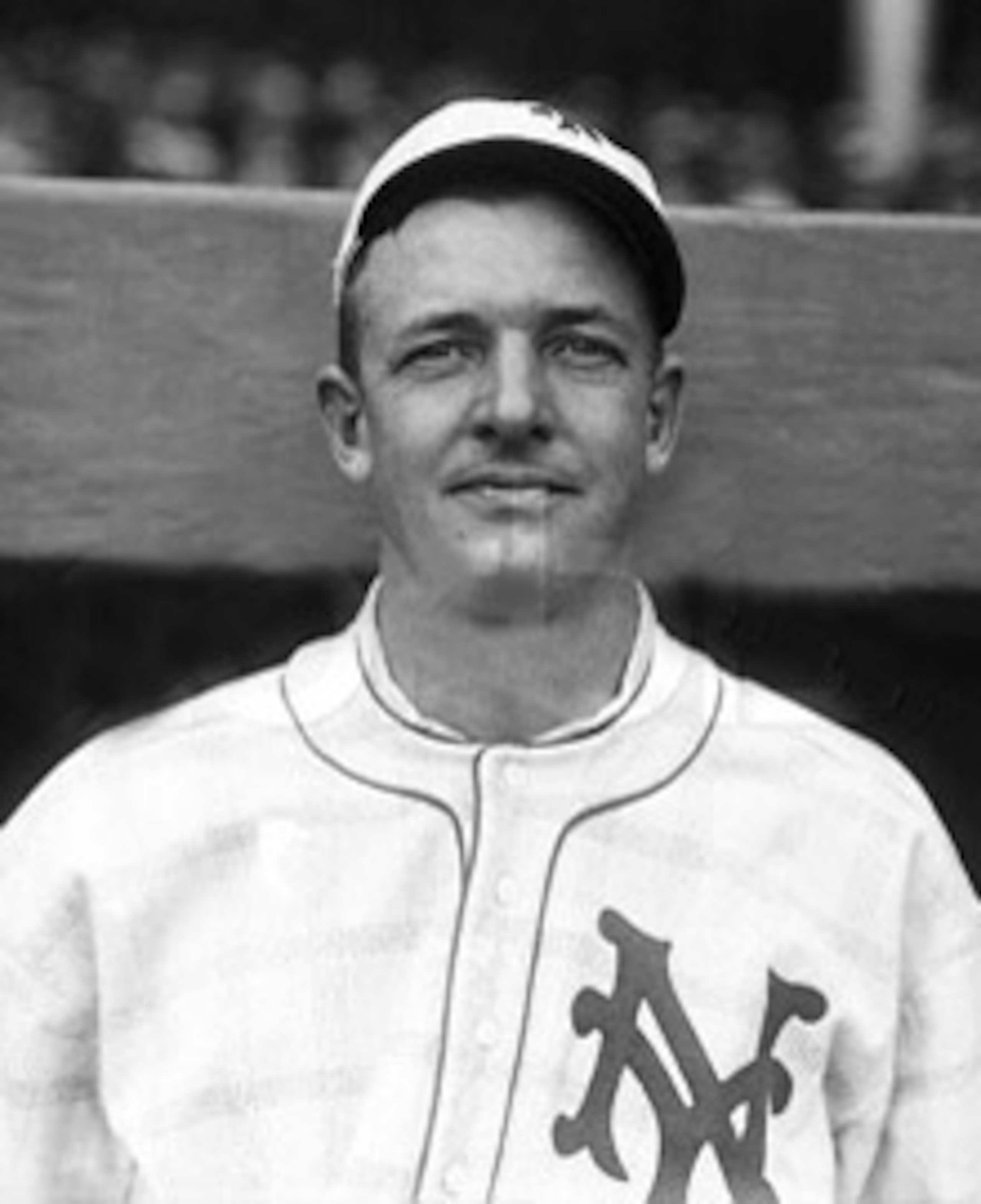
Christy Mathewson played in 1900 for a minor league team in Norfolk, Virginia. The New York Giants were enamored with Mathewson, so they bought him from the team, but he performed so poorly with the Giants that they sent him back.
The Reds then quickly signed Mathewson away from the Norfolk team and the Giants, who still coveted Mathewson, traded Amos Rusie to the Reds to get Mathewson back.
Rusie played exactly three games for the Reds, going 0-1 with an 8.59 ERA, while Mathewson spent the next 16 seasons putting together one of the top 10 pitching careers of all-time. He won 20 games in 13 out of 14 seasons, and 30 games four times, leading the NL in ERA and strikeouts five times each and shutouts four times.
At the end of his career, Mathewson was traded back to Cincinnati, where he played in one game, pitching all nine innings while allowing 15 hits and eight earned runs.
It would be the last game of his career.
22. Nap LaJoie, 2B, Philadelphia Phillies/Cleveland Naps
89 of 114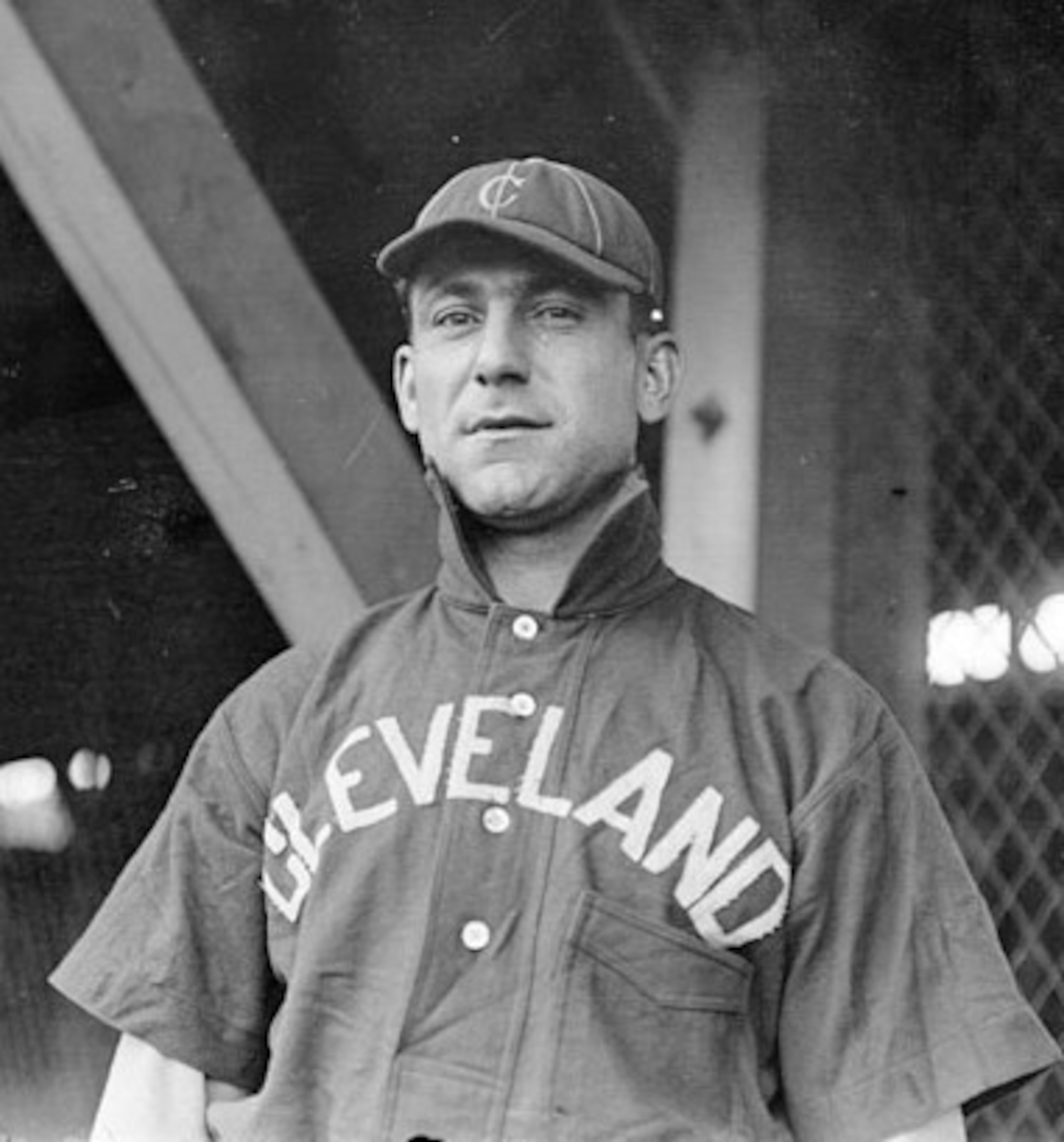
Five batting titles and a .338 career batting average for a guy who hit right-handed and played second base. In 1901, LaJoie hit .426 with 232 hits, 14 home runs, 125 RBI and 143 runs—all of which led the league—in 131 games.
It would be tempting to consider Nap LaJoie a right-handed Tony Gwynn because of his average, his 3,242 hits and his meager 82 home runs, but this was the deadball era. LaJoie's OPS+ was actually a sluggerific 150, and he led the league in OPS three different times
LaJoie was one of baseball's greatest hitters in the early days of the 20th century. His 1901 season was one of the greatest hitting seasons of all-time—he hit .426 with a league-leading 14 home runs and 125 RBI. He also led the AL in hits, doubles, runs, on-base percentage, slugging percentage, OPS, total bases and batting runs.
21. Lefty Grove, SP, Philadelphia Athletics/Boston Red Sox
90 of 114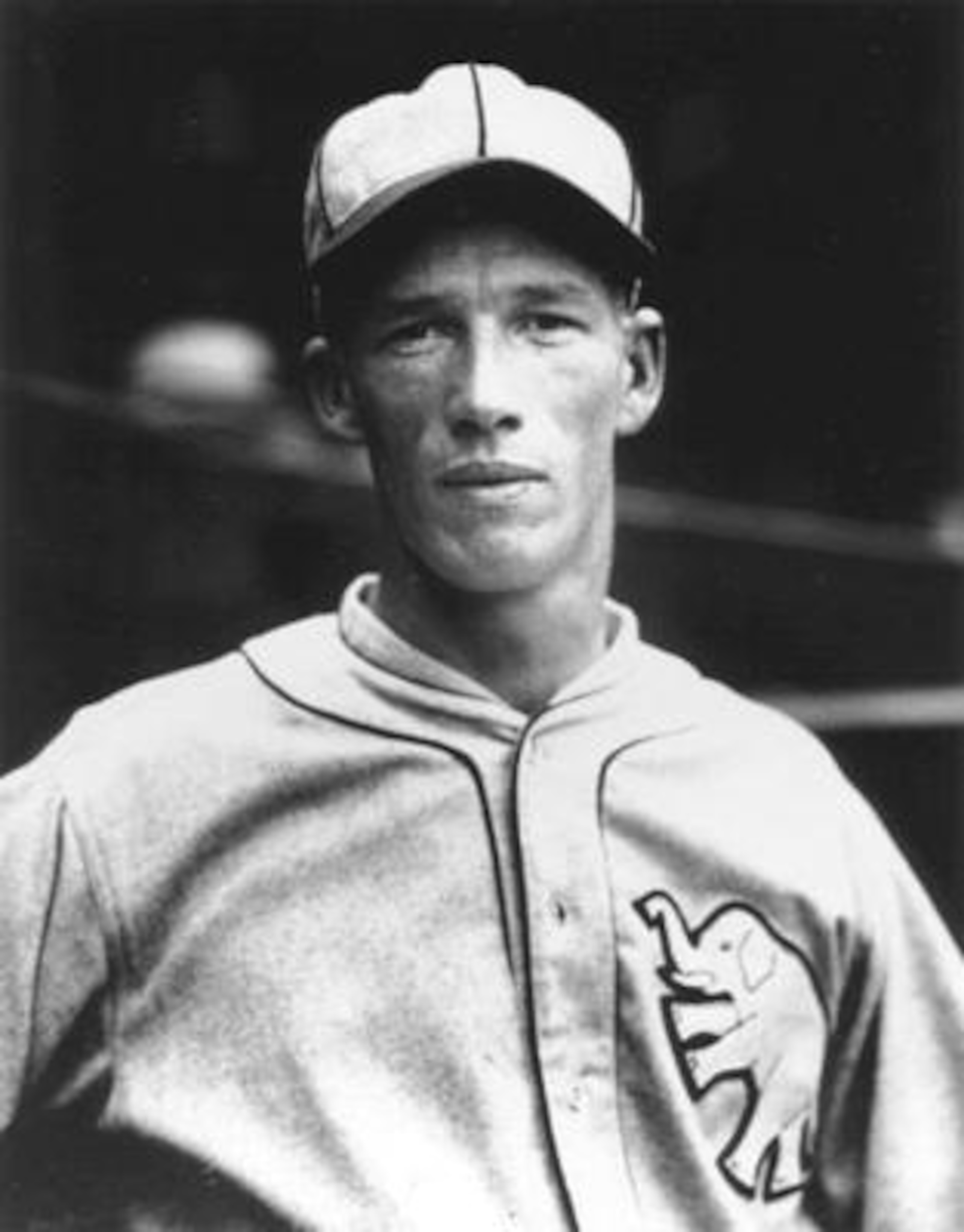
For some reason, there are still people out there who aren't giving Grove his due. There are two reasons for this:
First: He debuted with the A's very late because his minor league team's owner wouldn't let him go. Grove was 96-34 from the age of 21 to 24 with Baltimore of the International League.
Second: He had a 3.06 ERA in the most hitter-friendly era in baseball history, which masks the fact that he was one of the most dominant pitchers of all-time. He led the league ERA nine times, and his 148 ERA+ is the third best all-time.
Grove led the league in ERA nine times in 17 seasons, strikeouts seven times in 17 seasons, and wins, ERA+, shutouts and complete games multiple times each.
He also won over twice as many games (300) as he lost (141), which is unheard of.
20. Rickey Henderson, LF, Oakland Athletics/New York Yankees
91 of 114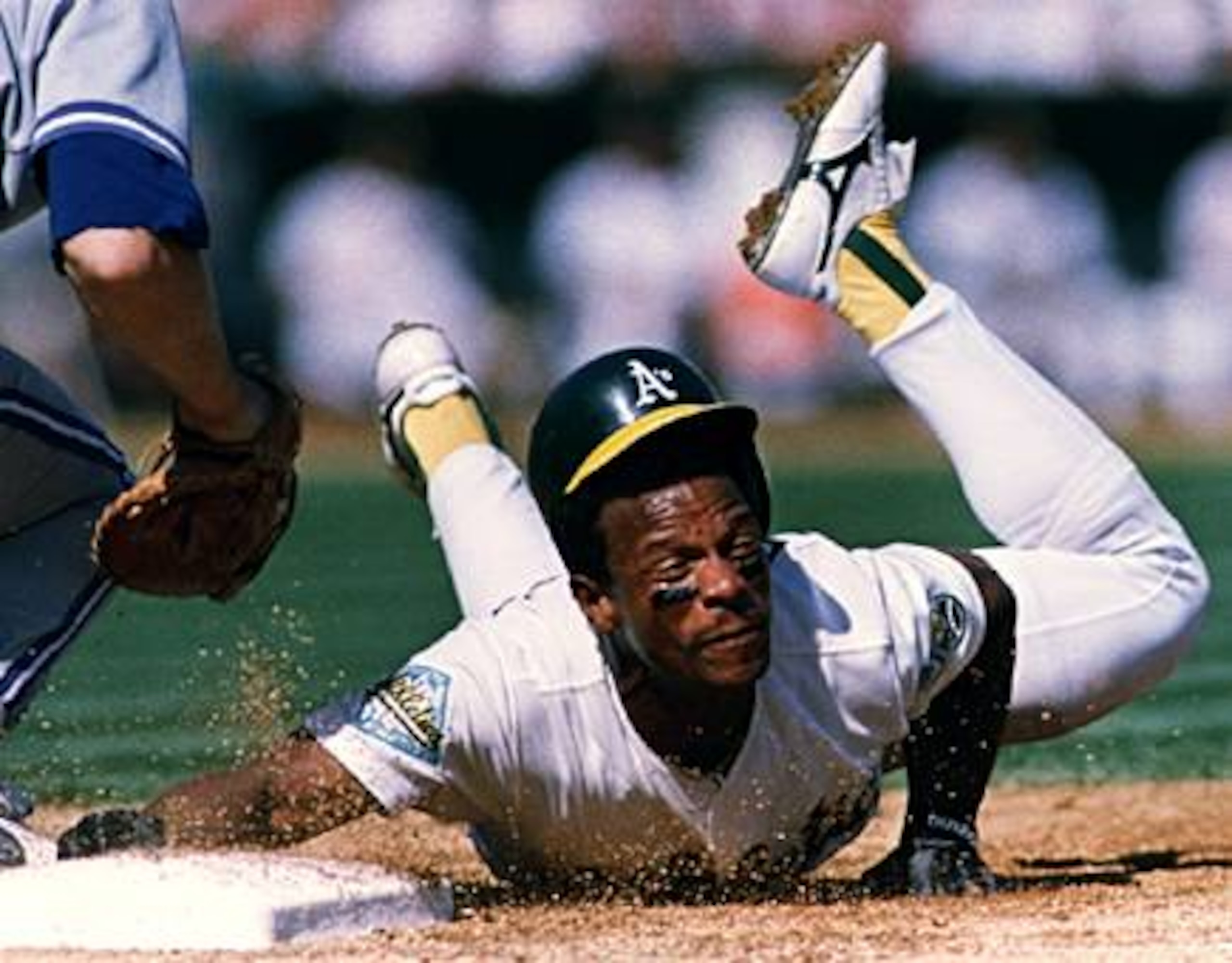
Rickey Henderson had among the greatest batting eyes of all-time. Ever wonder why Henderson has so many more stolen bases than anyone else in baseball history? It is because he had what so few great modern speedsters have had—an ability to get on base.
Henderson lives right smack in the middle of the talent-value spectrum. Henderson was both incredibly talented and incredibly valuable.
His through-the-roof value is demonstrated by his 2,200 career runs scored, 3,000 career hits, 500 career doubles, 1,400 career stolen bases and .401 career on-base percentage.
Not bad for a guy who batted righty despite being left-handed.
19. Frank Robinson, LF, Cincinnati Reds/Baltimore Orioles
92 of 114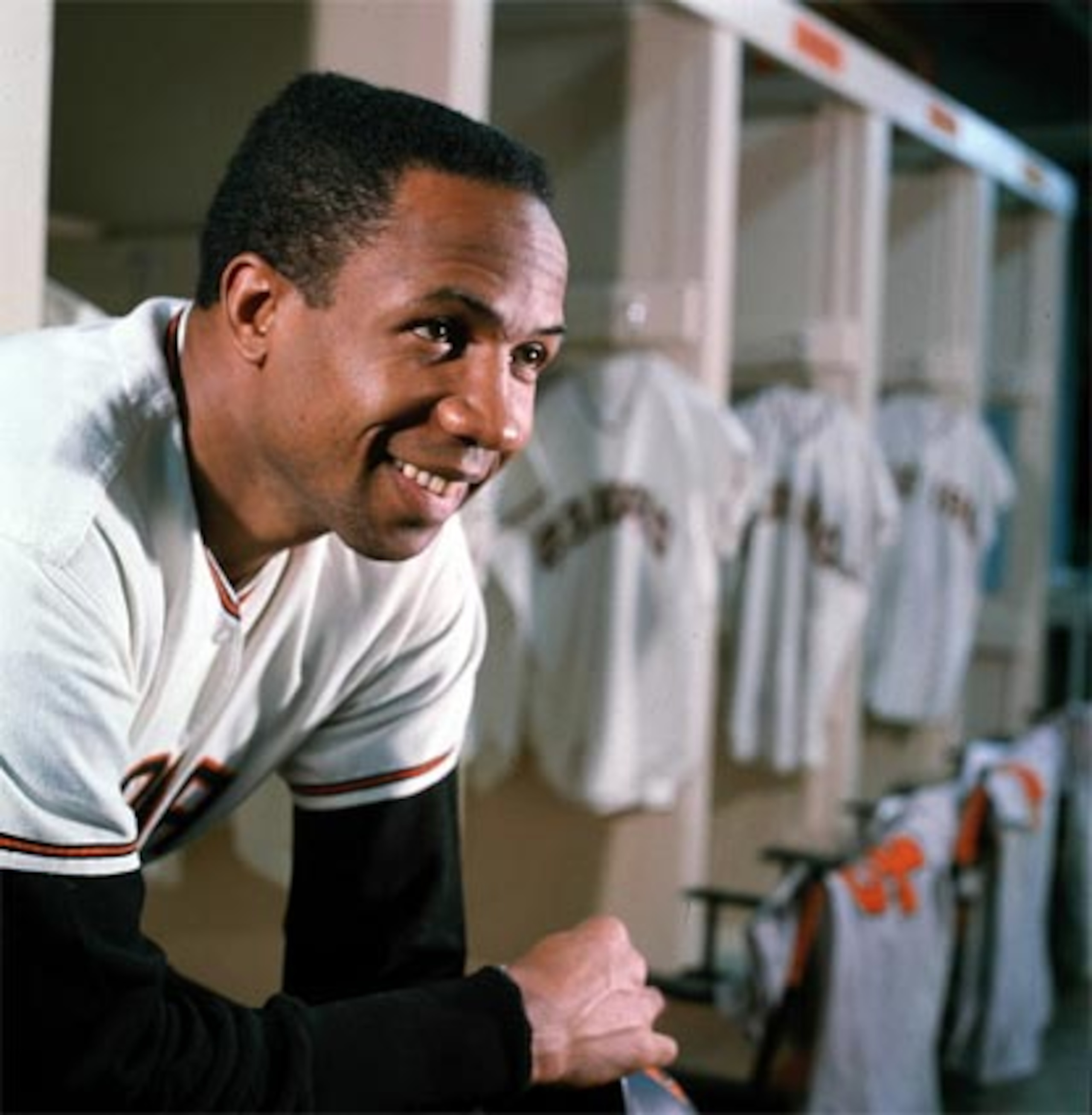
My father-in-law once made the point that Frank Robinson may have had the greatest Major League Baseball career of all-time, considering his entire career in the MLB.
Robinson started as a 20-year-old Rookie of the Year in 1956. He won an NL MVP in 1961, then won an AL MVP in 1967, when he won the Triple Crown after being traded to the Orioles, becoming the first player to ever win an MVP in each league.
He became the first black manager in major league history in 1975, when the Indians made him their player-manager. He would go on to manage the Indians, Giants, Orioles and Expos, winning the Manager of the Year Award with the Orioles in 1989. In 2005, Robinson became the 53rd major-league manager to win 1,000 games.
And in between managerial stints, Robinson worked for Major League Baseball as the so-called Director of Discipline.
So there may be some merit to this notion.
18. Mel Ott, RF, New York Giants
93 of 114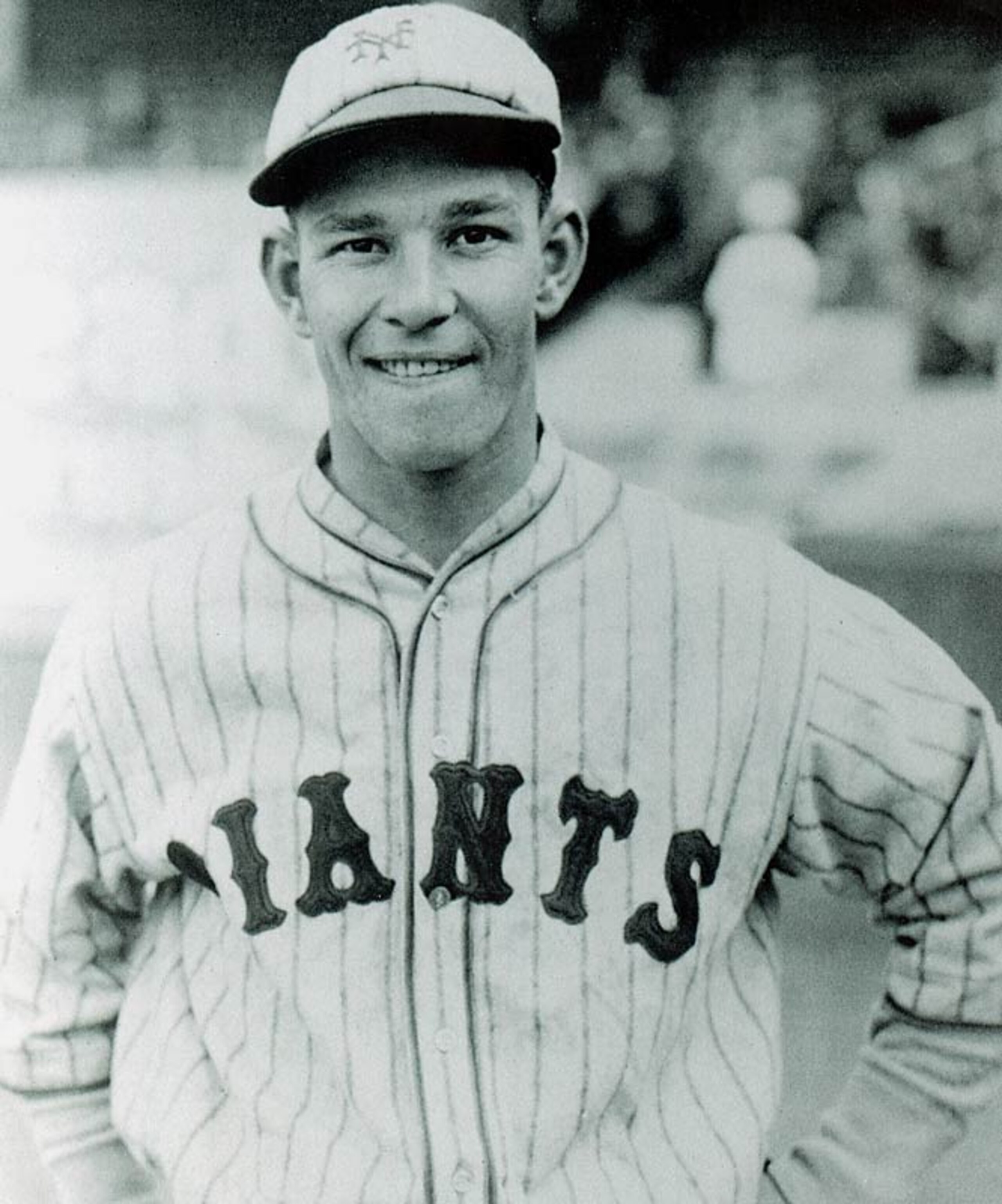
Mel Ott was not just a great home-run hitter (511 career dongs; led the league six times) but also a good contact hitter who struck out approximately half as often as he walked and batted .304 lifetime.
Good thing, too. A dead pull hitter playing in the Polo Grounds, Ott hit 328 of his 511 career home runs at home, which would severely undercut his credentials if hitting home runs was all he could do.
17. Jimmie Foxx, 1B, Philadelphia Athletics/Boston Red Sox
94 of 114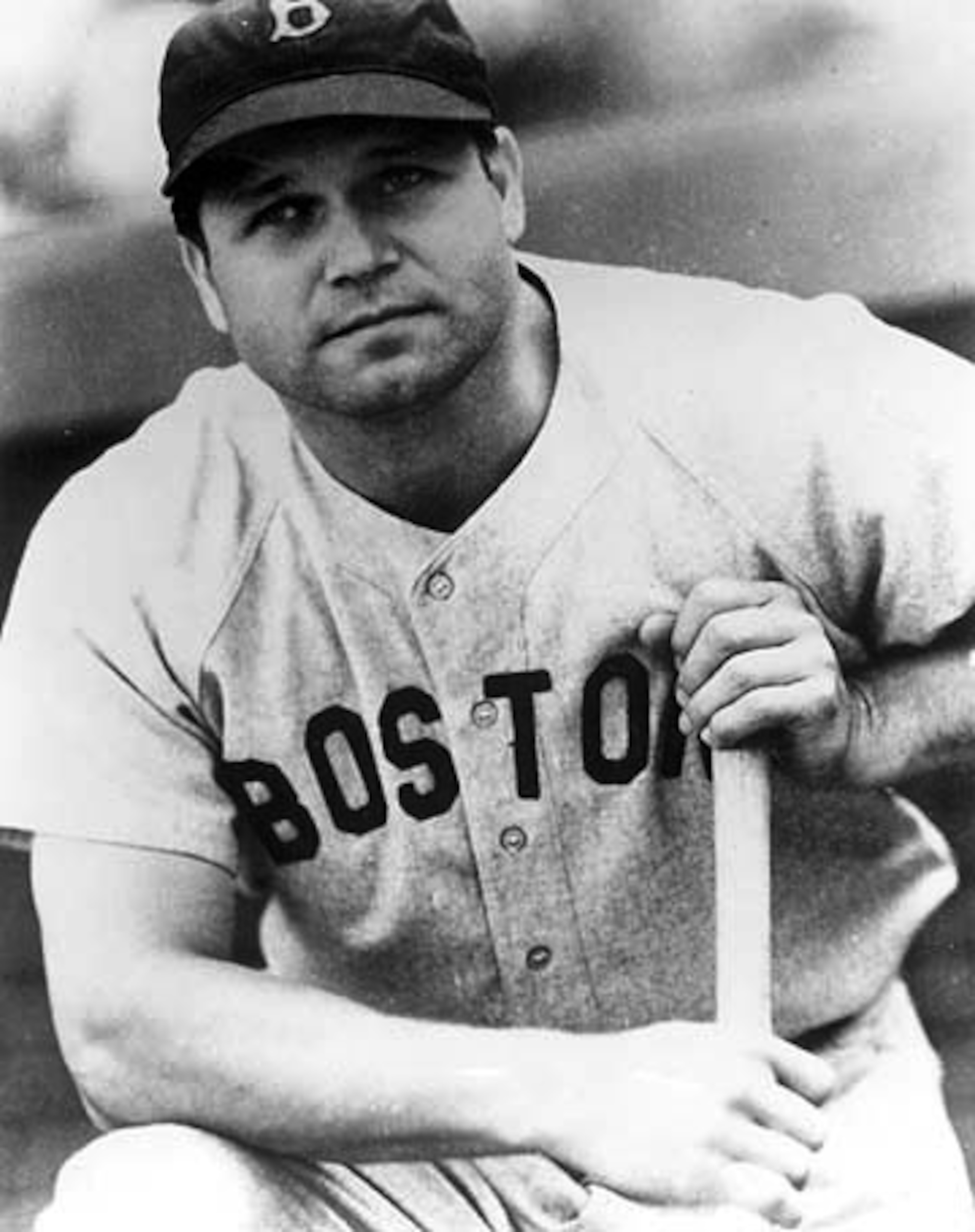
It is time for a little game I like to call "set-up and pay-off."
The set-up: Jimmie Foxx was one of the greatest sluggers of all-time, hitting 534 homeruns with 1,922 RBI, in addition to 1,751 runs scored, 1,452 walks, a .325 average and a 1.038 OPS (163 OPS+). He fell just 44 total bases shy of 5,000, won two batting titles, led the league in home runs four times and registered more than 150 RBI four times.
The pay-off: Foxx's last full season came in 1941, at the age of 33, and he played only 204 games over the last three seasons of his career and he was out of baseball in 1945, at the age of 37.
Foxx was a self-destructive character (the basis for Tom Hanks' Jimmy Dugan character in A League of the Their Own) and an alcoholic whose career was curtailed well before his time. If Foxx's career could have run its full course, he may have hit 700 home runs.
16. Mike Schmidt, 3B, Philadelphia Phillies
95 of 114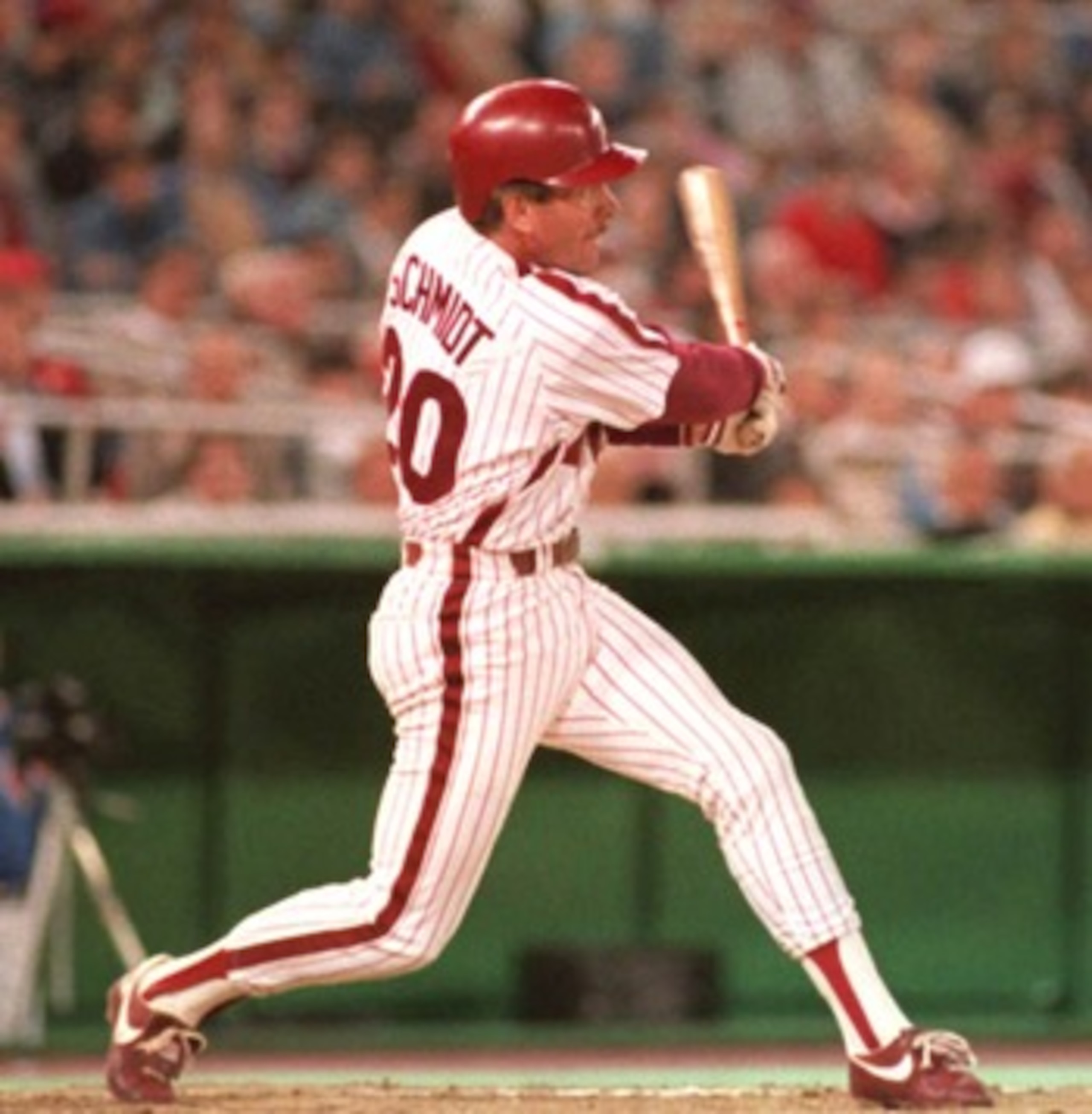
One way to do a top 100, not a particularly valid or even remotely justifiable way, would be to do it in sets of 10, with each set of 10 having a person at each position. The inadequacy is immediately obvious, as it means Barry Bonds would be no better than 11th because of Ted Williams, Tris Speaker would be in the 30s because of Cobb, Mays, and Mantle, etc.
If we did it this way, though, the eighth-best player of all-time would be Mike Schmidt. In a way, this whole process is unfair to Schmidt, who is easily the best third baseman of all-time, because he is ranked very low, relatively speaking. Two years I had him at 19th, this year he moves up two spots to 17th.
Schmidt was, hands down, the best offensive third baseman ever. He led the National League in home runs eight times in 16 full seasons. Using my decade transposition method (where you take a player's rank in a stat, like home runs, for a given year and transpose it to the same year of a different decade), if Mike Schmidt's career began in 1992 instead of 1972, Schmidt projects to over 700 dingers.
More than that, Schmidt won three MVPs, tying the record for players other than Bonds, and won 10 Gold Gloves. He probably is the second-best defensive third baseman behind Brooks Robinson, but that is like saying someone is the second-best strikeout pitcher behind Nolan Ryan—very impressive.
Schmidt is also the highest ranked 1970s and 1980s player on the list, the next one being George Brett at 30, also a third baseman. Schmidt doesn't get his due, in my opinion, because he played in that era, kind of an underachieving, low-visibility era in baseball. But Schmidt was one of the few players who managed to dominate a league at his position throughout his career.
Like Bonds, Mays and Mantle, Ted Williams and Stan Musial, Babe Ruth and Lou Gehrig and Jimmie Foxx, Schmidt was the best his league had to offer as long as he was on the field.
15. Eddie Collins, 2B, Chicago White Sox/Philadelphia Athletics
96 of 114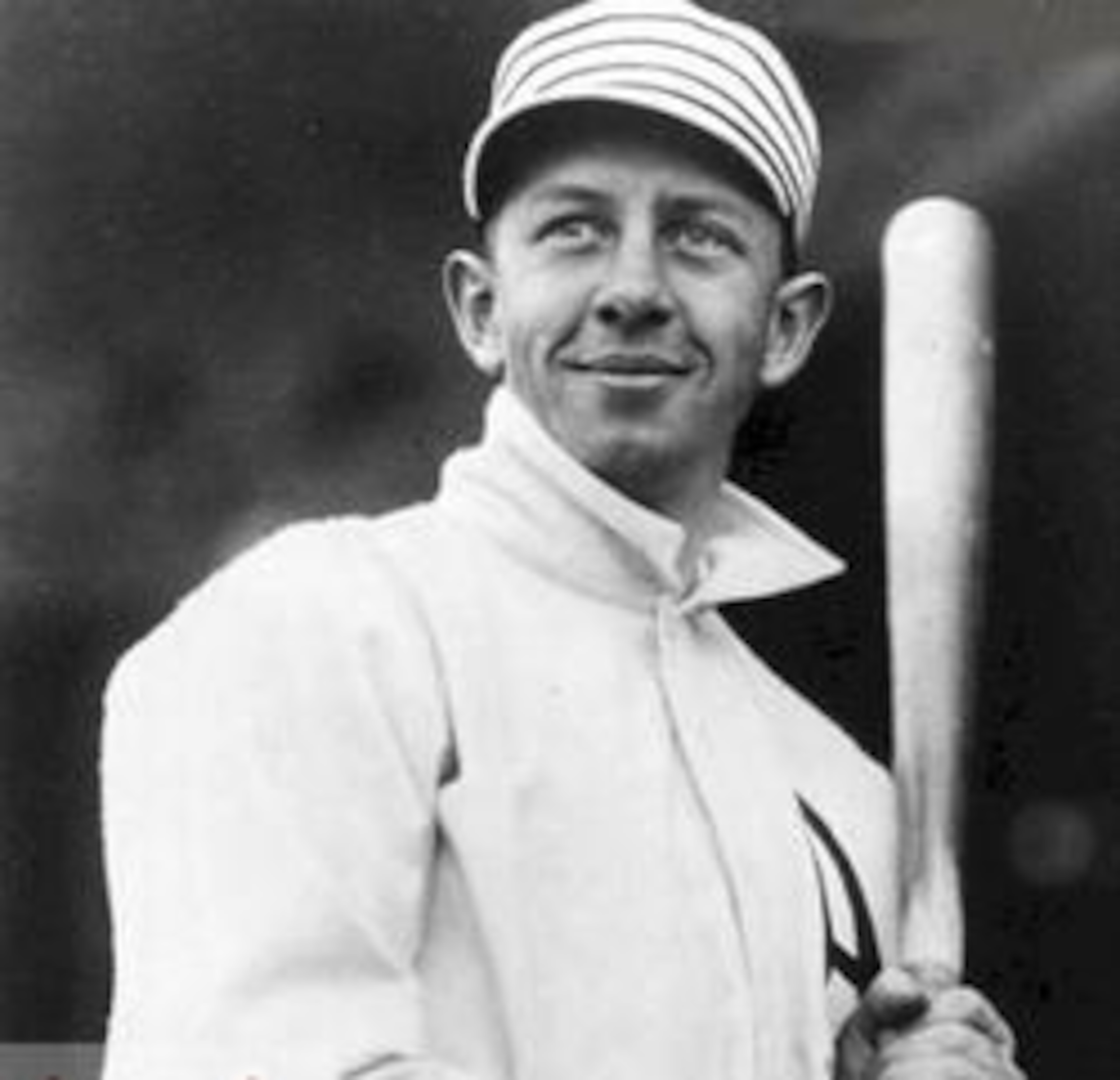
One simply must stare at Eddie Collins' numbers for no less than a day to absorb them fully.
Collins played from the age of 19 to the age of 43. He debuted in 1906 and finished his career with three games in 1930, making him a four-decade player.
Collins hit only 47 home runs in 25 seasons, but he also had 1,300 RBI, which is a shocking number given his low home-run total. He also had 1,499 walks, 3,315 hits and 1,821 runs, all of which are elite totals.
Collins OPS+, which measures OPS adjusted for ballpark and era, was 142, which essentially makes him the Alex Rodriguez of his era.
And, as a cherry on top, he stole 741 bases, which still ranks eighth all-time.
Collins went to the World Series six times, winning three and losing three. He hit .400 in three different World Series, which must be some sort of record.
Something that has always bothered me about Collins: In the infamous 1919 World Series, Collins hit .226 with a .265 on-base percentage and a .258 slugging percentage, and yet, he was not thrown out of baseball, while Joe Jackson dominated the series and was banned.
Greatest Team of All Time?
97 of 114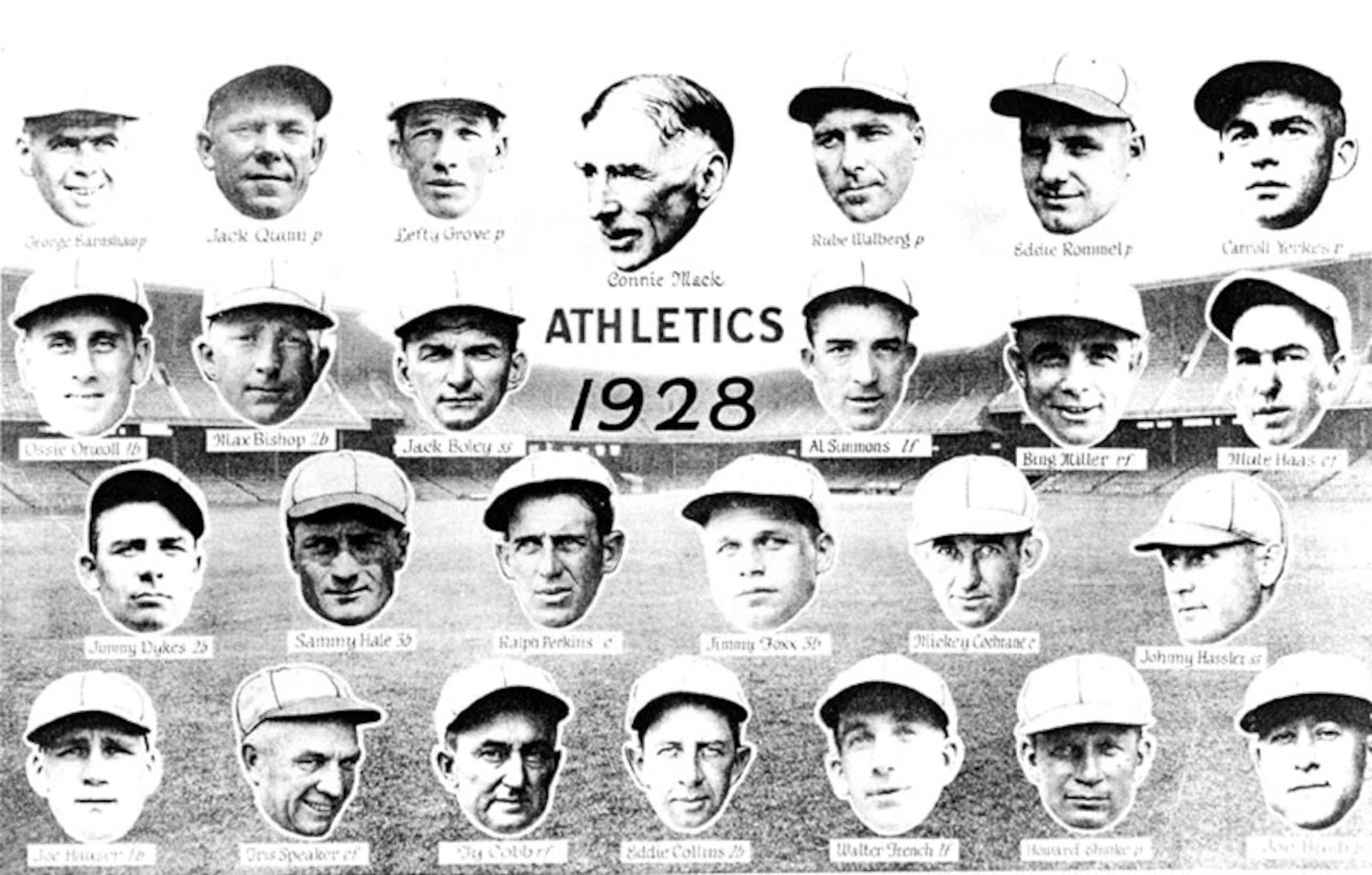
We know all the usual suspects in the greatest team of all-time debate: the 1927 New York Yankees, the 1906 Chicago Cubs, the 1905 New York Giants, the 1998 Yankees, the 2001 Seattle Mariners (based on wins only).
But here's a team that never makes the list: the 1928 Philadelphia Athletics.
In truth, the team didn't accomplish much. They went 98-55 and finished second behind the Yankees in the American League. The team was really on the precipice of greatness, as they would make the next three World Series and win two of them.
So why do we bring it up here?
The 1928 Philadelphia Athletics featured, at one point or another, the following players: Mickey Cochrane, Al Simmons, Ty Cobb, Tris Speaker, Jimmie Foxx, Eddie Collins and Lefty Grove.
In other words, according to this list, in one season the A's saw seven of the top 100 players of all-time take the field, including four of the top 20 players of all-time.
Amazing.
14. Grover Cleveland Alexander, SP, Philadelphia Phillies/Chicago Cubs
98 of 114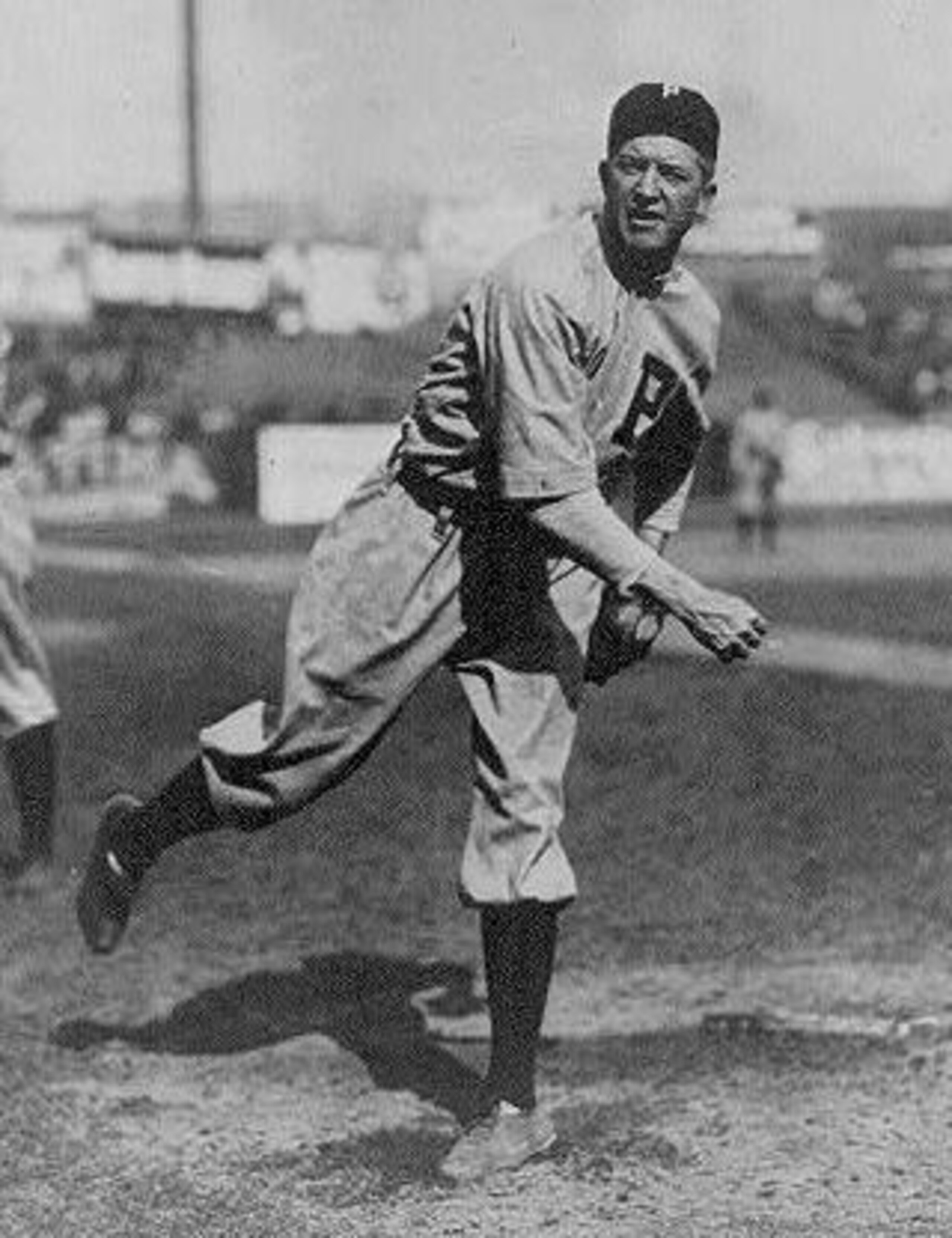
My son's name is Alexander Wrigley Chancey. Obviously, I didn't name him after chewing gum; his middle name comes from Wrigley Field.
As a lifelong Chicago Cubs fan now living in Philadelphia, I intend to tell people that my son's first name comes from Grover Cleveland "Pete" Alexander, who starred in the early part of the 20th century for the Cubs and the Phillies.
Ol' Pete dominated the National League from the age of 24 to the age of 30, leading the league in innings pitched six times in seven years, wins five times in seven years and ERA twice. He also led the NL in complete games, shutouts and strikeouts five times each.
At the age of 32, Pete missed all but three games in 1918 due to World War I, then came back and led the NL in ERA in each of his first two years back.
He finished with 373 wins, which could very well have been 400 if not for the year missed due to war. He also dominated the league in a way few others have.
13. Tris Speaker, CF, Boston Red Sox/Cleveland Indians
99 of 114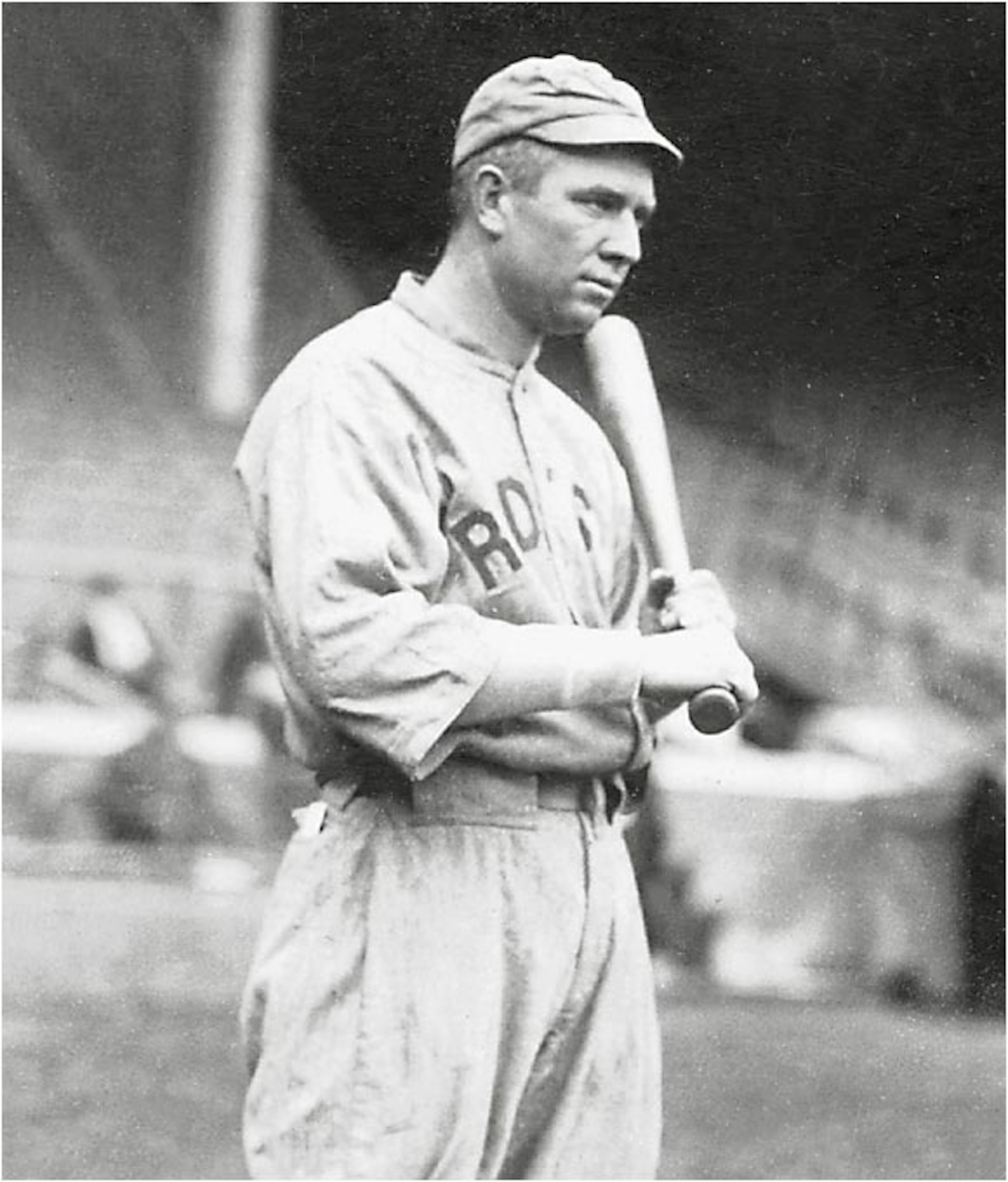
Overshadowed by Cobb during his career, Speaker was generally reputed as an Oscar Charleston-caliber center fielder and was a 3-4-5 offensive player.
The all-time leader in doubles, we have incomplete stats regarding stolen bases and strikeouts that reveal two things—he got caught stealing almost as often as he successfully stole a base, but he almost never ever ever struck out. In the 15 seasons that we have his strikeout totals, Speaker's career high was 25.
When recalling the greatest outfielders of all-time, many people seem to skip right over him when listing chronologically Cobb, Ruth, Williams, Mantle, Mays, Aaron, Bonds and Ramirez.
Speaker is generally considered one of the greatest defensive center fielders of all-time, but he was an incredible hitter, too.
He is the all-time leader in doubles, and he finished with 1,882 runs scored, 3,514 hits and 1,529 RBI. Plus, his .345 lifetime batting average is better than Williams, Ruth, Sisler, Gwynn, Career and Boggs.
12. Mickey Mantle, CF, New York Yankees
100 of 114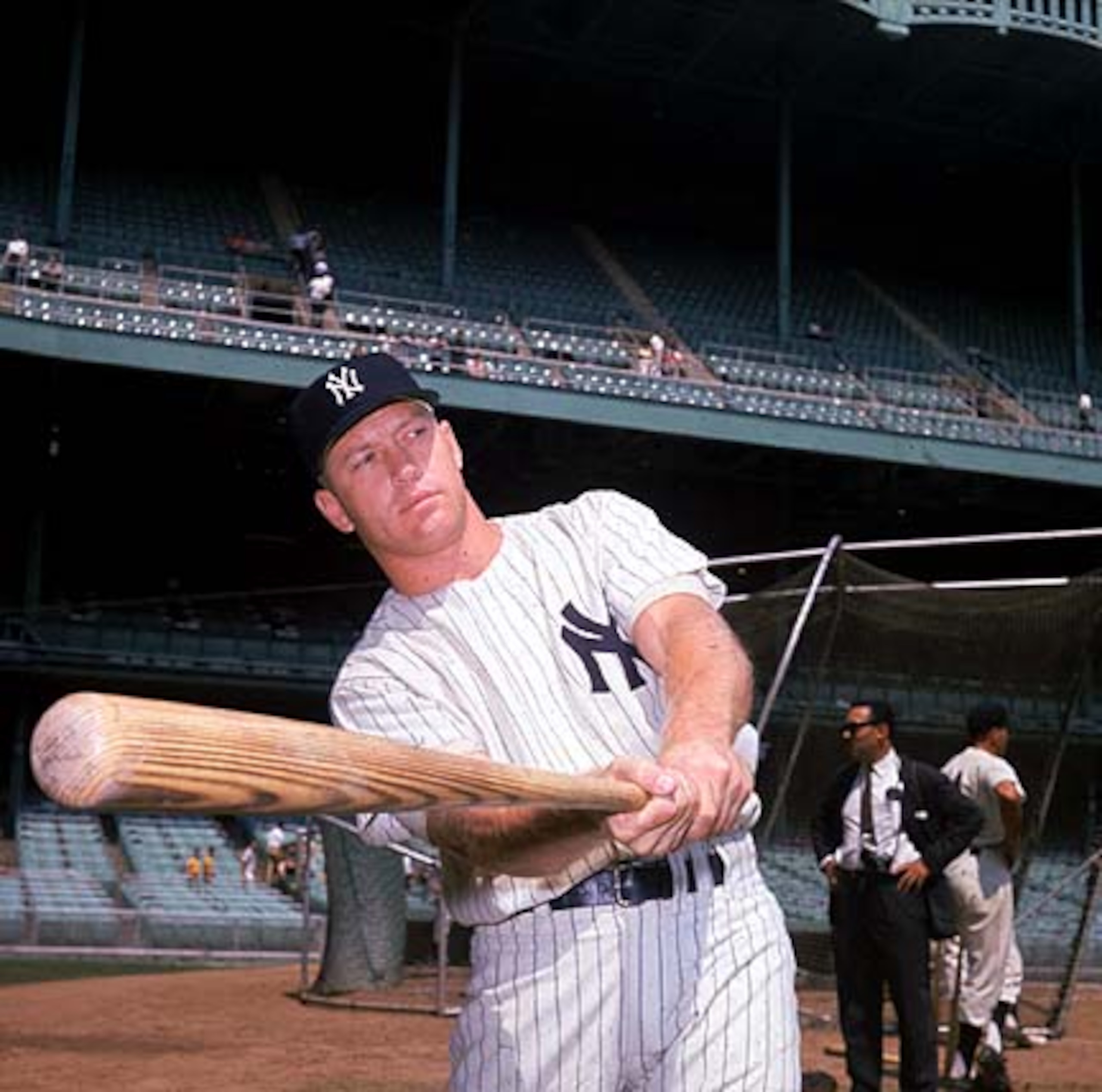
On the surface, it appears as though Mickey Mantle was a more valuable player than Willie Mays, ignoring for the moment issues of longevity. Right across the line, Mantle's average, on-base percentage, slugging and OPS were all better than Mays when compared to the league they played in. On a per-game basis, Mantle took far more walks and hit far more home runs than Mays.
So, instinctively, one might take Mantle ahead of Mays. But I think this is not correct.
For all the grief Roger Maris has received for never replicating his heroics of 1961 after the 1961 season, it has been largely ignored that Mantle was never really the same player ever again either. The 1961 season was the last time Mantle ever hit more than 35 home runs, ever scored more than 100 runs, ever got more than 141 hits, or ever had more than 150 games played. Mantle won the 1962 AL MVP despite the fact that he played only 123 games.
The thing is, Mantle was only 29 in 1961. Before the age of 30, Mantle had played his last full season. Optimistically speaking, Mantle had 12 great seasons for the Yankees, and it was probably more like 10. Mays had 15 great seasons for the Giants.
After 1964, Mantle played four more seasons, and his rate stats were very high, but his rate stats are misleading. Mantle could still take a walk and could still hit roughly 20 home runs per year in roughly 350-to-450 at-bats, but he was doing little else—his average plummeted, his slugging percentage slumped, he stopped scoring or driving in runs and he certainly was not playing everyday.
First, the Gold Glove issue. Generally, I would never, ever, conduct a fielding analysis based on Gold Gloves. However, in this case, it does bear mentioning because of one simple fact—popular players with reputations as great fielders have never had trouble winning Gold Gloves.
Mantle was generally accepted as the greatest player in the American League during his career and, yet, he won only one Gold Glove. If he was such a great fielder, it seems that his reputation alone—since Gold Glove voting is so often based on reputation—would have netted him a gaggle of Gold Gloves. It seems as though Gold Glove voters would have been begging to heap Gold Gloves on him. But he won only one, and that is suspicious, especially considering the fact that the NL voters were giving the glove to Mays 12 times during the same era.
But I hate basing fielding analysis on Gold Gloves, so I won't dwell on that.
The other issue is of more importance, and that is the range-factor system. Mantle had a 2.26 career range factor, against a league average of 2.00, while Mays had an astonishing range factor of 2.57 compared to a league average of 1.91. This data—in the absence of more informative stats—shows Mays to be all sorts of better than Mantle in center field. Combine that with the fact that Mays played almost 1,100 more games in center field than Mantle, and there is no contest...
11. Willie Mays, CF, New York/San Francisco Giants
101 of 114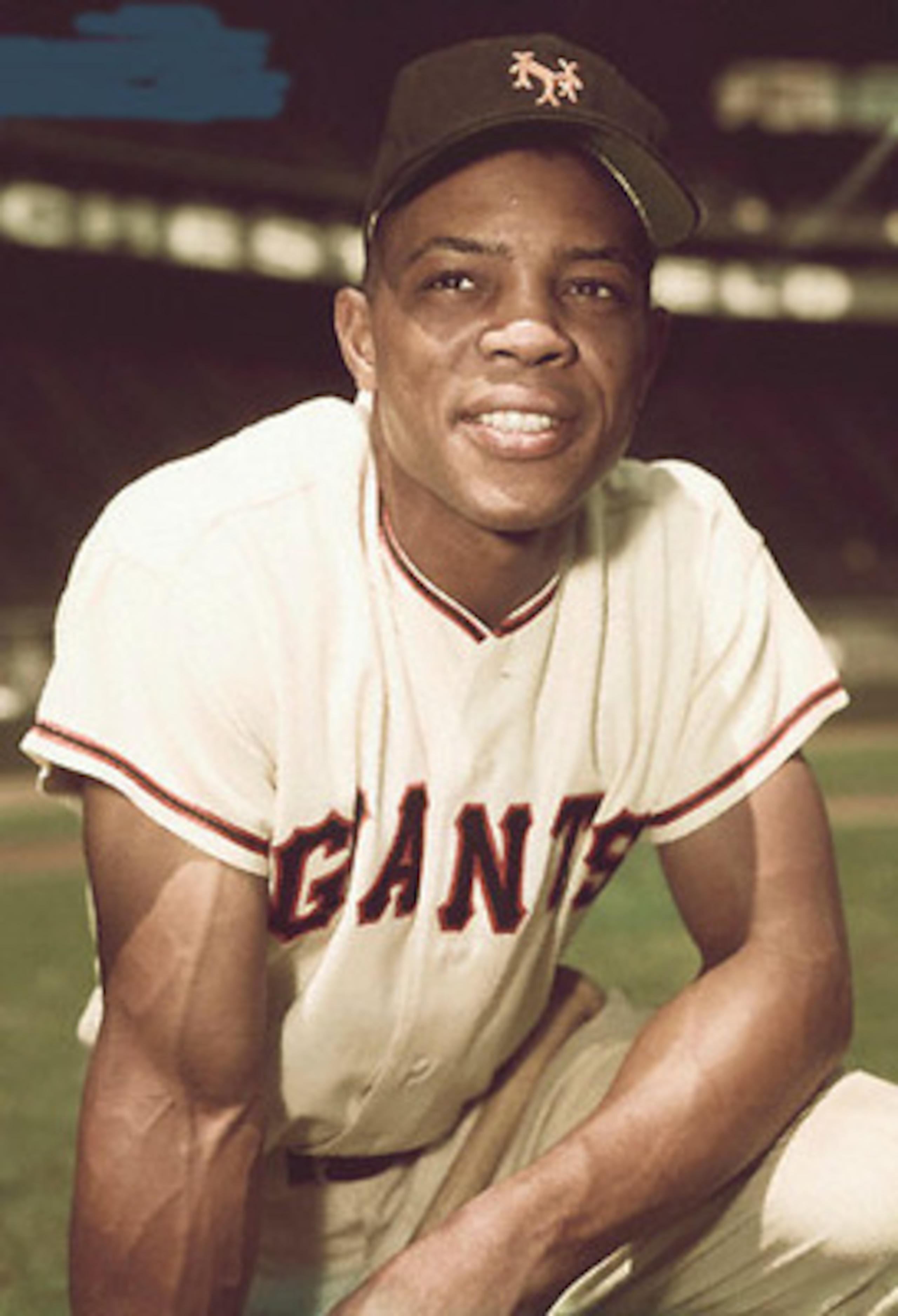
I hate to go all retro here and judge Mantle and Mays on conventional stats, but I am really beginning to think that bases on balls, and all the stats derived from bases on balls, can really distort a player's value.
And really, the only advantage Mantle seems to have over Mays is in fact the bases on balls.
So, retro we go: Mantle took 1,700 walks during his career, a hugely impressive number. But he also struck out 1,700 times which, I was surprised to learn, made him the all-time leader when he retired. Mays walked far fewer times, but Mays also struck out less. Mays struck out over 1,500 times, which also placed him high on the career leader-board when he retired. But while Mantle led the league in Ks five times and finished in the top five in Ks five other times, Mays managed to finish in the top 10 in Ks only once in his entire career.
In 1952, at the age of 20, Mickey Mantle hit 37 doubles. It would be the last time he would hit over 30, and he would hit 20 or more only seven times. Mays hit 20 or more doubles 16 times, including five times over 30, and once over 40.
Mantle finished his career with 72 triples. Mays nearly doubled him with 140.
One area in which you can't take anything from Mantle is run scoring—he finished in the top three in runs scored nine times, leading the league in that category six times. But Mays was no slouch, finishing in the top three 11 times and leading the league twice. Plus, Mays finished in the top three in RBI five times, while Mantle did it twice.
When I look at Willie Mays and Mickey Mantle, I see two similar center fielders from the same era. I see one player who was very good at taking walks and hitting home runs and another player who was very good at hitting home runs and doing lots of other things.
I know that the new wisdom of the modern era of baseball statistics tells us that hitting home runs and taking walks is incredibly valuable, but I don't think that this is always the case. I think that Mickey Mantle is one of the examples of a player whose value has been overstated by his bases on balls, and when he and Willie Mays are put side-by-side, Mantle doesn't measure up.
In the first half of his career, up to age 29, I think Mantle's career compares favorably with Babe Ruth's, which is the highest compliment one can receive. However, I think that Mantle compares more favorably with Mark McGwire—a powerful hitter whose value is distorted by walks that do not create runs for his team.
Honorable Mention: Roger Clemens, SP, Red Sox/Blue Jays/Yankees/Astros
102 of 114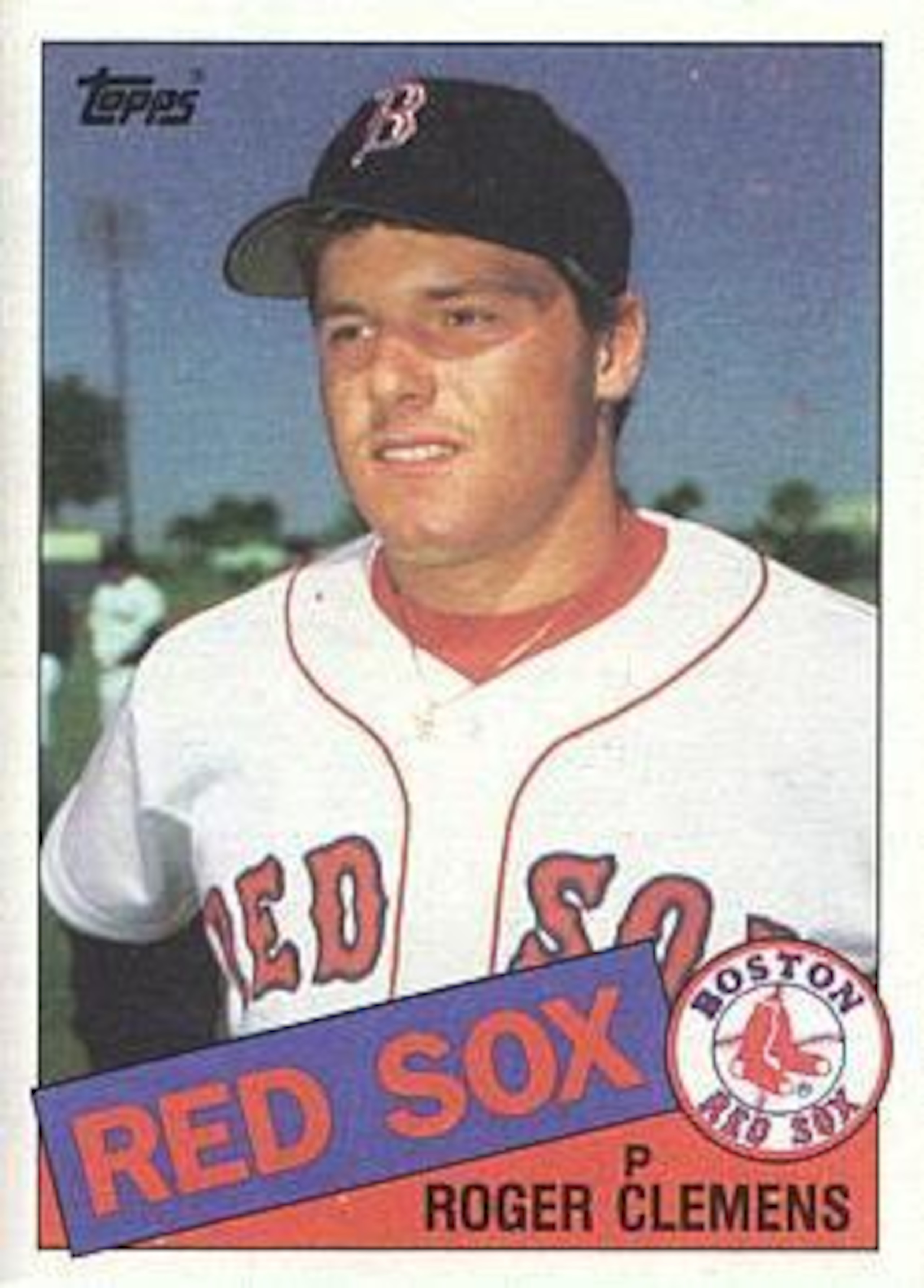
In 2007, I wrote but never published this comment about Roger Clemens:
No way around it, Clemens has been dominant like few other pitchers ever. He has won an unprecedented seven Cy Young Awards and was robbed of at least one other in 1990; he has won the award for every team he has played for, indicating that his success has had little to do with the team behind him.
He is eighth on the career list in wins behind six dinosaurs from baseball's pre-history and Warren Spahn, an ageless wonder who was half the player Clemens was but had a rubber arm an a team that won a lot of games for him.
He is second in career strikeouts behind Nolan Ryan, another guy who was half the pitcher Clemens is.
He has led his league in ERA more than all but one pitcher, and in a time when his contemporaries—Greg Maddux, Randy Johnson, and Pedro Martinez—have either faded or succombed to injuries, Clemens has remained healthy and dominant.
Clemens is great in ways that pitchers of the modern era seem to no longer be capable of being.
Let us all make a mental note: when you find yourself making these types of comments about a player, chances are something is not right.
10. Stan Musial, LF, St. Louis Cardinals
103 of 114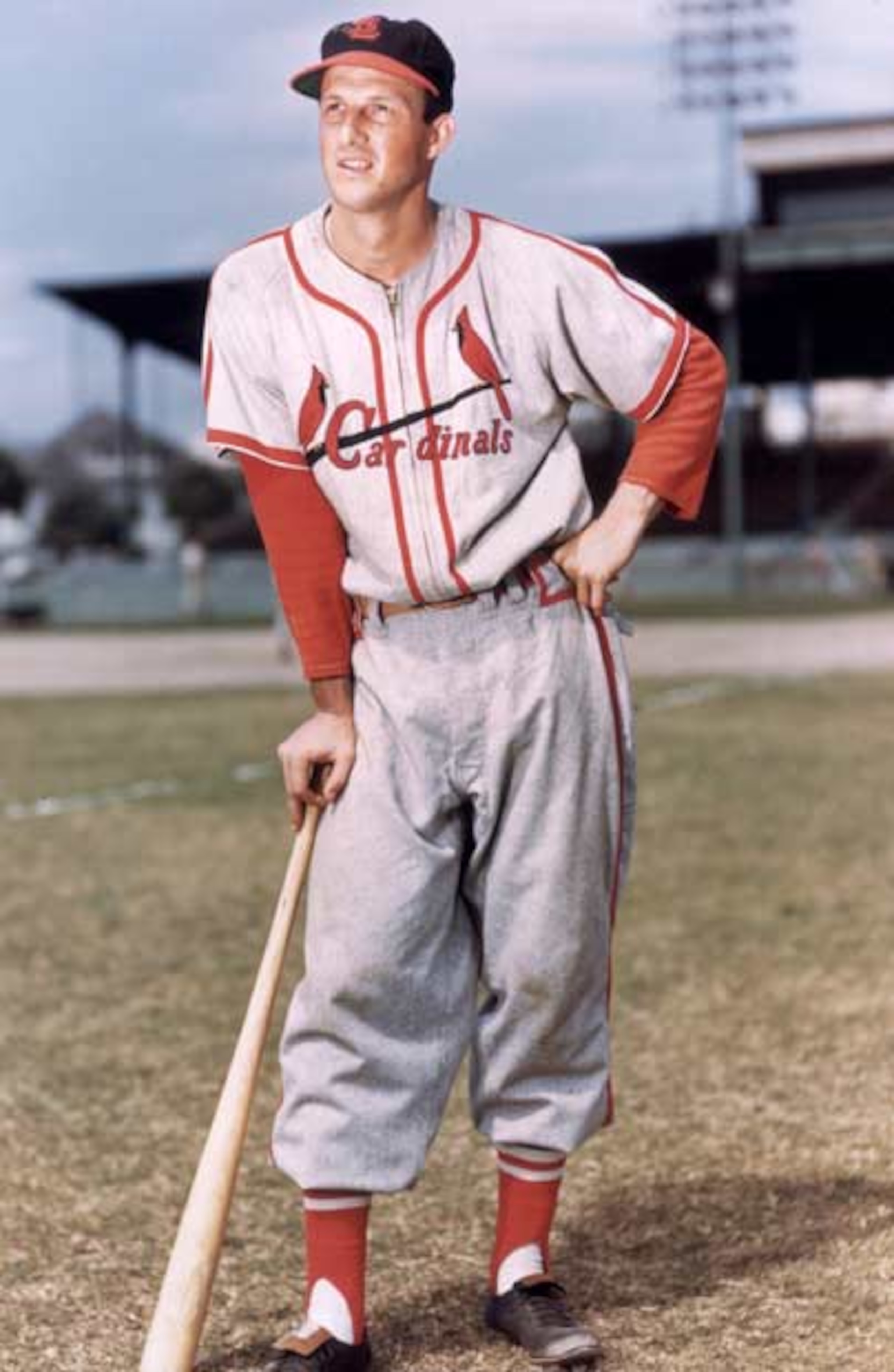
If Musial's career had ended in 1958, his rate stats would have been far more impressive, and his rate stats still managed to be unbelievable.
As it is, he retired with an AVG/OBP/SLG/OPS of .331/.417/.559/.976, which is all-world.
Through the end of the 1958 season, he was at .340/.426/.578/.1.004, which would have been more amazing.
He lost only one season to World War II, but that one season would have put him over 3,800 hits, 2,000 runs and 2,000 RBI.
Stan Musial Fun Fact: He has the third most home runs by a player who never led his league in home runs, behind Rafael Palmeiro and Frank Thomas.
9. Cy Young, SP, Cleveland Spiders/Boston Red Sox
104 of 114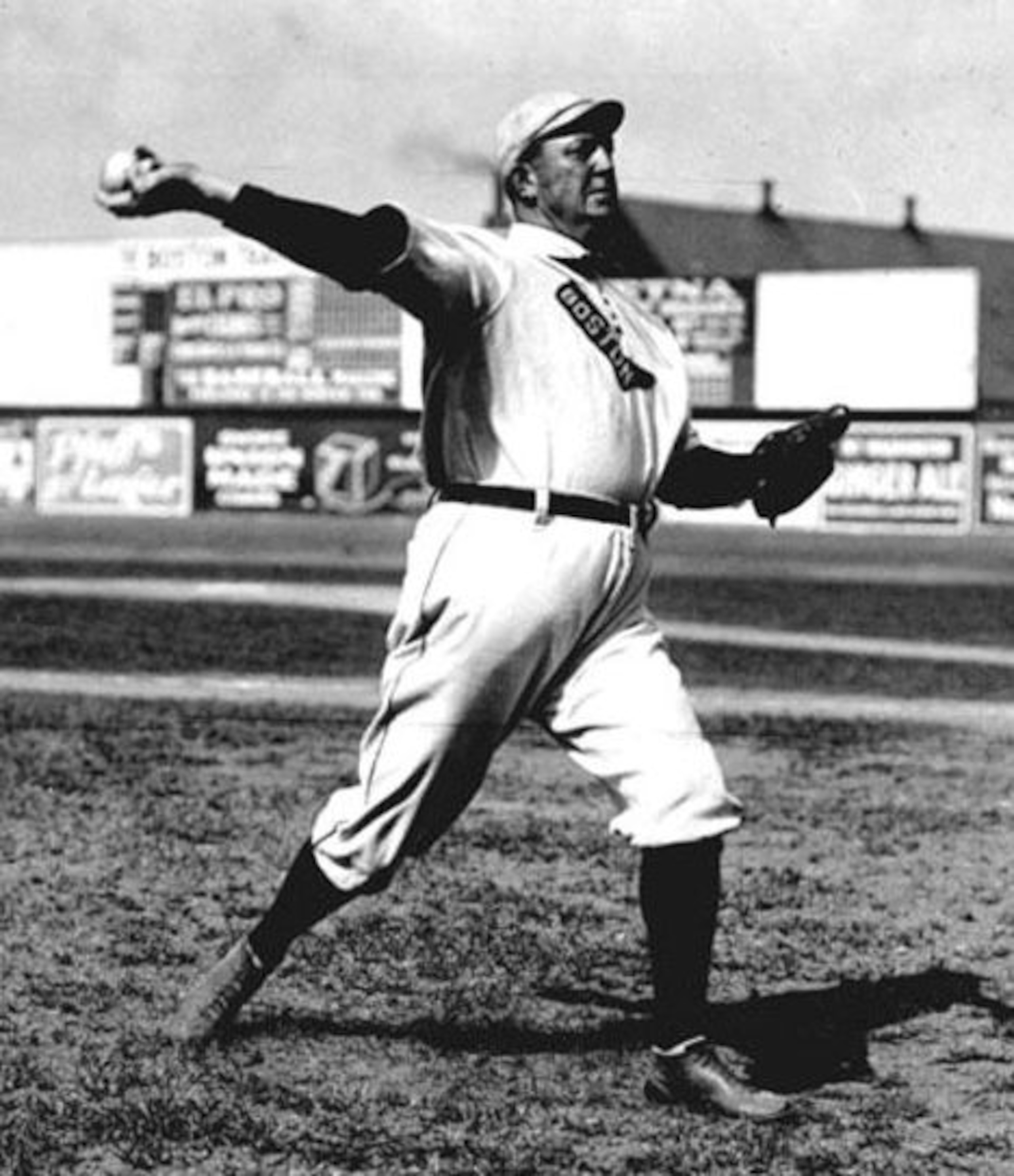
Inning-for-inning, Walter Johnson was a better pitcher than Cy Young. But no one else was.
When you look at pitchers from Young's era, which is 1890-1911, it is virtually impossible to find guys who pitched more than 10 seasons. And yet, Young pitched for over 20 seasons.
We also rarely see guys from the 19th century who performed well in the 20th century, but Young's career perfectly straddles the turn of the century.
To perform as well as he did, for as long as he did, over the period of time in which he did, is truly unique, and amazing.
8. Lou Gehrig, 1B, New York Yankees
105 of 114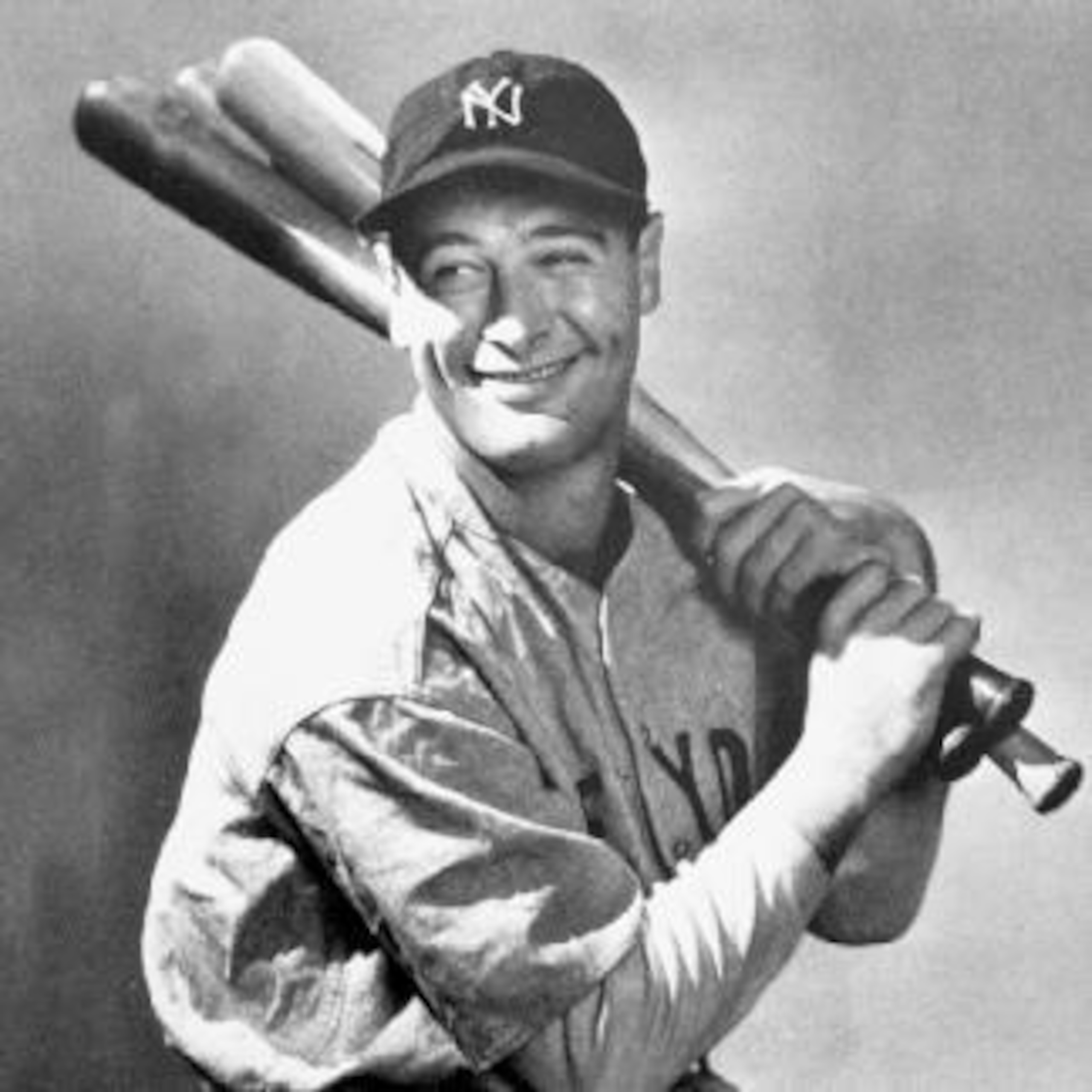
Like Ted Williams with World War II, if Lou Gehrig had not missed the last few years of his career because of ALS, he might today be considered the greatest player of all-time.
Albert Pujols may one day surpass Gehrig as our greatest first baseman of all-time, but it won't be for at least eight more seasons.
7. Rogers Hornsby, 2B, St. Louis Cardinals
106 of 114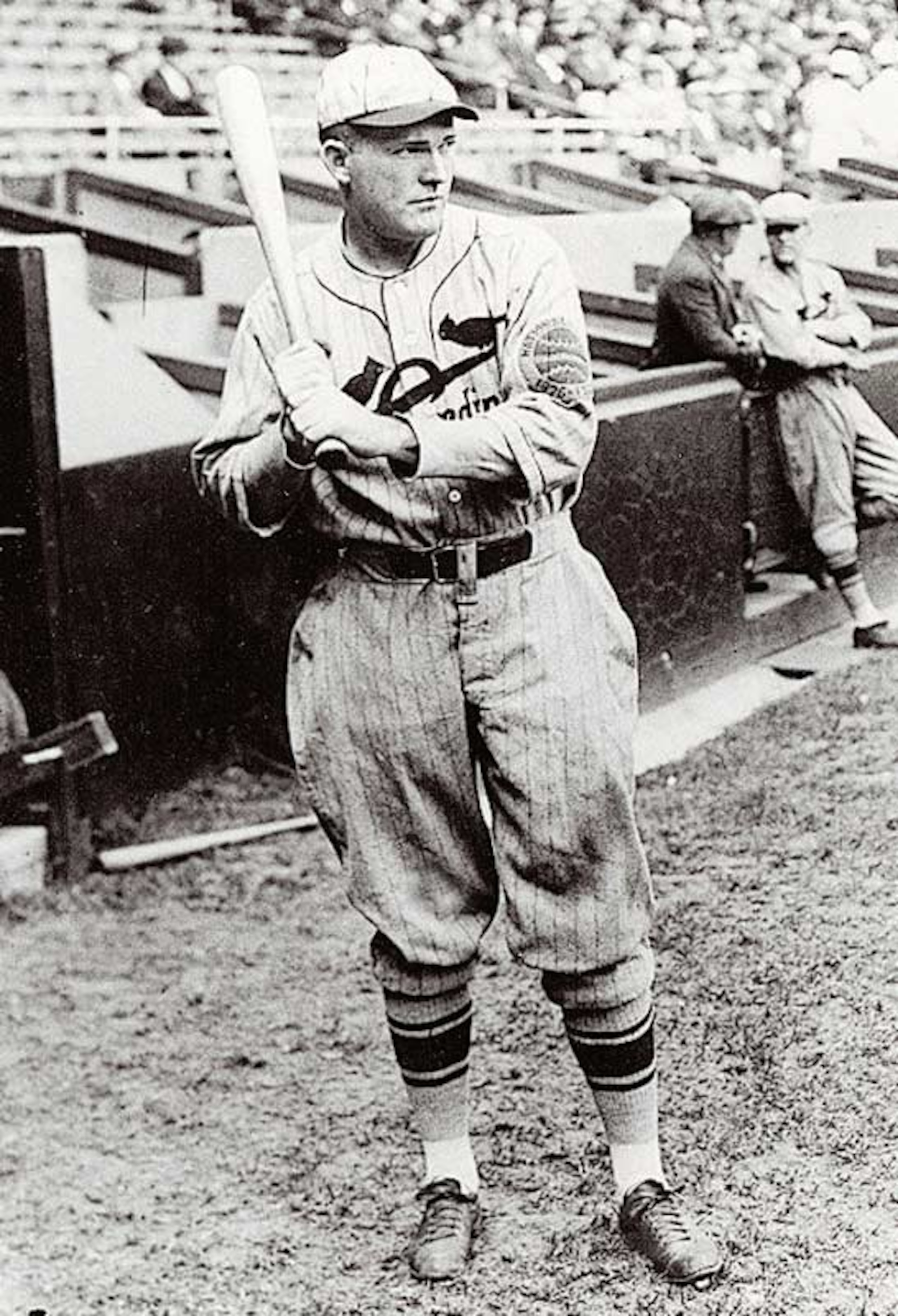
Hornsby's stretch of black-letter dominance in the 1920s is remarkable and somewhat unprecedented in the National League. I wish Hornsby's career were longer.
Bill James has taken a lot of heat for his simply indefensible position on Rogers Hornsby, so I will mention it here and not elaborate.
From 1920 to 1925, Rogers Hornsby had possibly the greatest six-year stretch in baseball history.
For six straight years, Hornsby led the National League in batting average, on-base percentage, slugging percentage, OPS and OPS+.
He led the league in hits four times, runs three times, doubles four times, triples once, home runs twice, RBI four times and total bases five times.
He had 200 hits five out of the six years, including seasons with 227, 235 and 250.
In 1922, he had 450 total bases in 154 games, a number exceeded only by Babe Ruth.
From 1922 to 1925, he hit .400 combined, finishing with batting averages of .401, .384, .424, and .403.
In an offense-oriented league and an offense-oriented era, he was the best power hitter, the best average hitter and the best at getting on base in the league. He was the best run scorer and the best run producer and he was the best doubles hitter.
In short, Rogers Hornsby was the right-handed Babe Ruth and Ty Cobb, rolled into one.
6. Hank Aaron, RF, Braves
107 of 114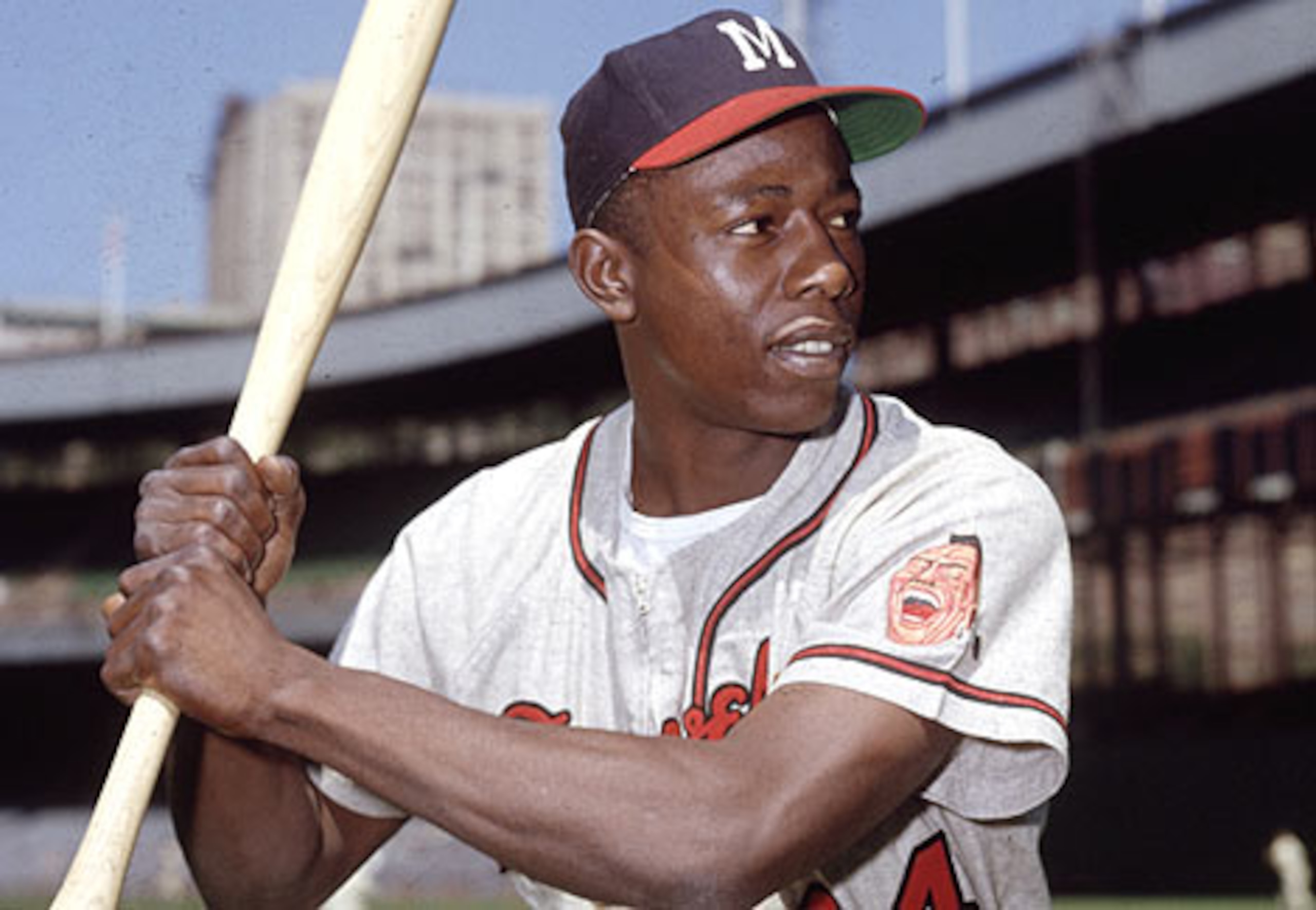
Easy to let his incredibly high career totals lead you to believe he was not dominant on an individual season's basis. He was very rarely the best player in his league, but he was usually in the top three or four.
While bumming around the Arizona Diamondbacks spring training home, Salt River Fields at Talking Stick in the Phoenix area, I bumped into an old dude catching a nap on an outdoor party couch. The old dude happened to be none other than former Orioles and White Sox general manager Roland Hemond.
Mr. Hemond and I had a moment to chat, and the subject of Hank Aaron versus Willie Mays came up. Hemond didn't hesitate to tell me which player he thought was better.
"Mays was more prolific, and did things in a more showy way," Hemond said. "But Henry could do everything Mays could do, plus more."
So often in baseball, true talent often displays itself in ways that do not capture the attention. A diving catch or leaping throw will captivate the audience, but the average fan does not realize that the player who has positioned himself so that he doesn't have to make the diving catch or leaping throw is often doing a better job on the field.
Hank Aaron personified the player doing all the right things when nobody notices.
5. Honus Wagner, SS, Pittsburgh Pirates
108 of 114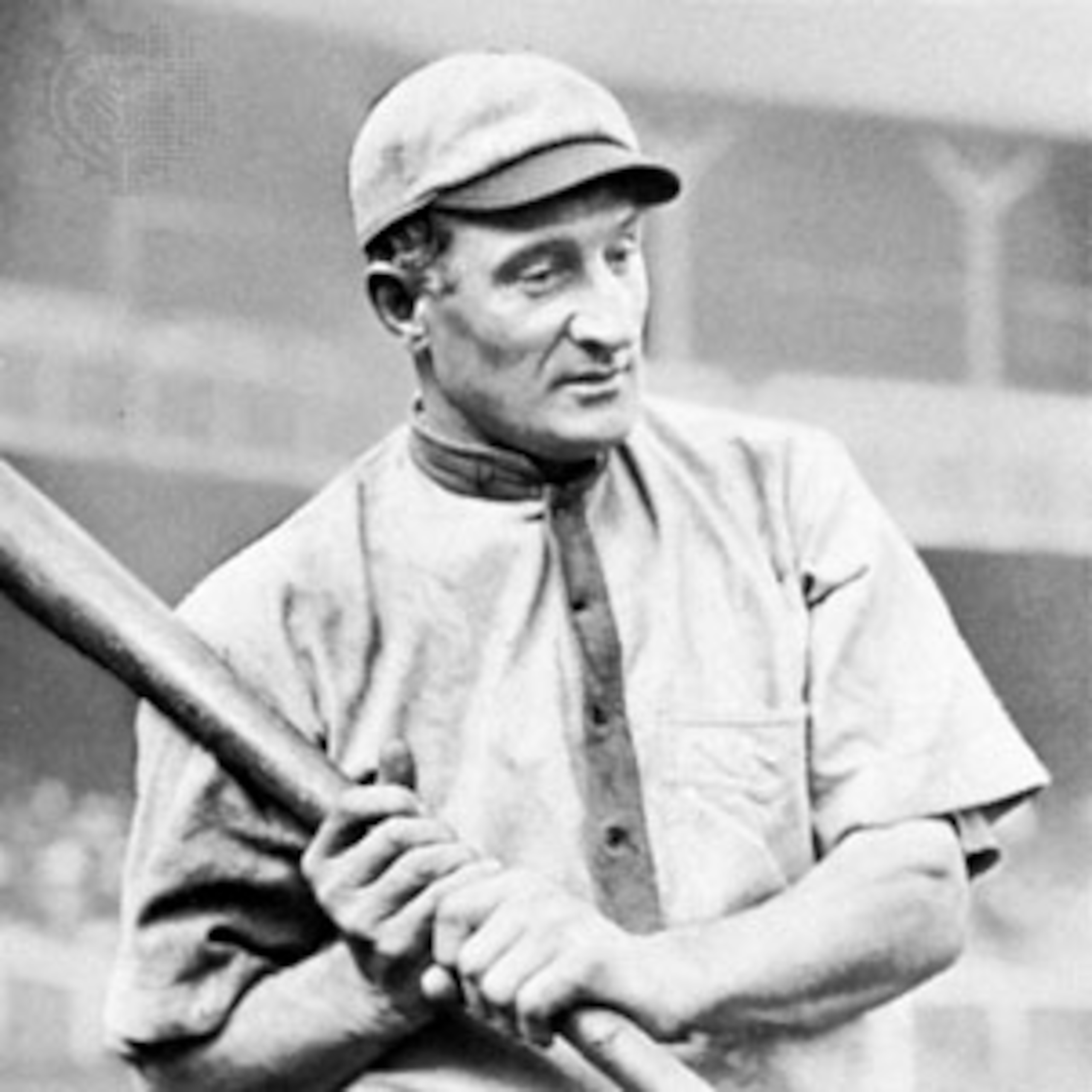
Rogers Hornsby may have been a better offensive player than Wagner, but Eddie Collins, Joe Morgan and Nap LaJoie were all outstanding players at second base.
Ted Williams may have been a better offensive player than Wagner, but Babe Ruth, Ty Cobb, Mickey Mantle and Barry Bonds were all outstanding players in the outfield.
But no one—no one, no one, no one—has ever been half as good as Wagner at shortstop.
Alex Rodriguez comes the closest, and he has the longest way to go (not to mention the fact that he no longer plays shortstop).
Arky Vaughan was fantastic for a brief time, as was Ernie Banks, who spent most of his career at first base.
Cal Ripken, Jr., Luke Appling and Joe Cronin would not be in the top 100 if they had not been shortstops.
When you look at the worst offensive seasons of all-time, nine out of every 10 are shortstop seasons. Honus Wagner was the best player in the National League for a significant period of time, and no other shortstop has ever come close to that. In fact, not too many players have been as dominant as Wagner period.
Honorable Mention: Barry Bonds, LF, Pirates/Giants
109 of 114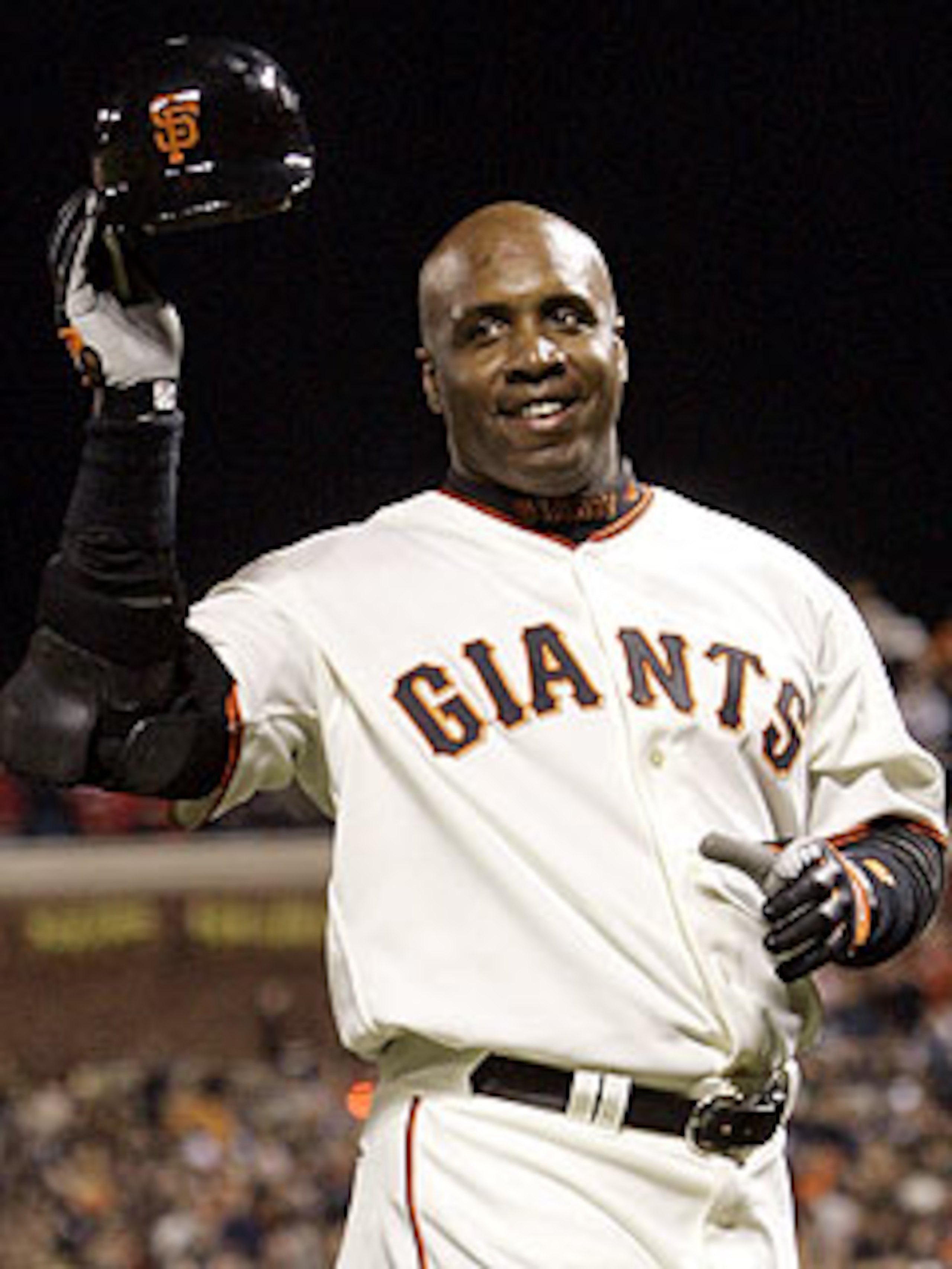
I have thrown around the idea of doing some sort of adjustment for Bonds to make up for his years of alleged performance enhancement. The best idea was to take his numbers through 1999, and then project them at that pace from that point forward. But such a projection would probably only prove that Bonds belongs right where I have him anyway. It is funny that so many people who castigate Bonds because of performance-enhancing drugs conveniently ignore the fact that he was already probably a top 10 player in 1999, when his alleged doping began.
What Barry Bonds did or did not put into his body may not ever be known. But does it really matter? We are living in the Steroid Era, and Barry Bonds is the king of the world. There are two possible explanations for what has happened in this era—one, that the players who have been busted for using performance-enhancing drugs are the only people who have used them; and two, that many many players are using performance-enhancing drugs.
If the former is the case, then what Bonds has done is incredible and cannot be ascribed to steroids, because steroids certainly did not make Rafael Palmeiro, Jose Canseco, Alex Sanchez, Jason Grimsley, Ken Caminiti, Jason Giambi, Matt Lawton, Neifi Perez or Ryan Franklin into a Barry Bonds-caliber player. And if the latter is true, then Bonds' numbers are even more legit, because he did it against a level playing field.
For his part, Bonds has been dominant in his league in a way that very few others ever have been. If that has to be taken away from him because of his role in the performance-enhancing drug scandal, then we may eventually have a hard time finding any current players to put on this list.
4. Ted Williams, LF, Boston Red Sox
110 of 114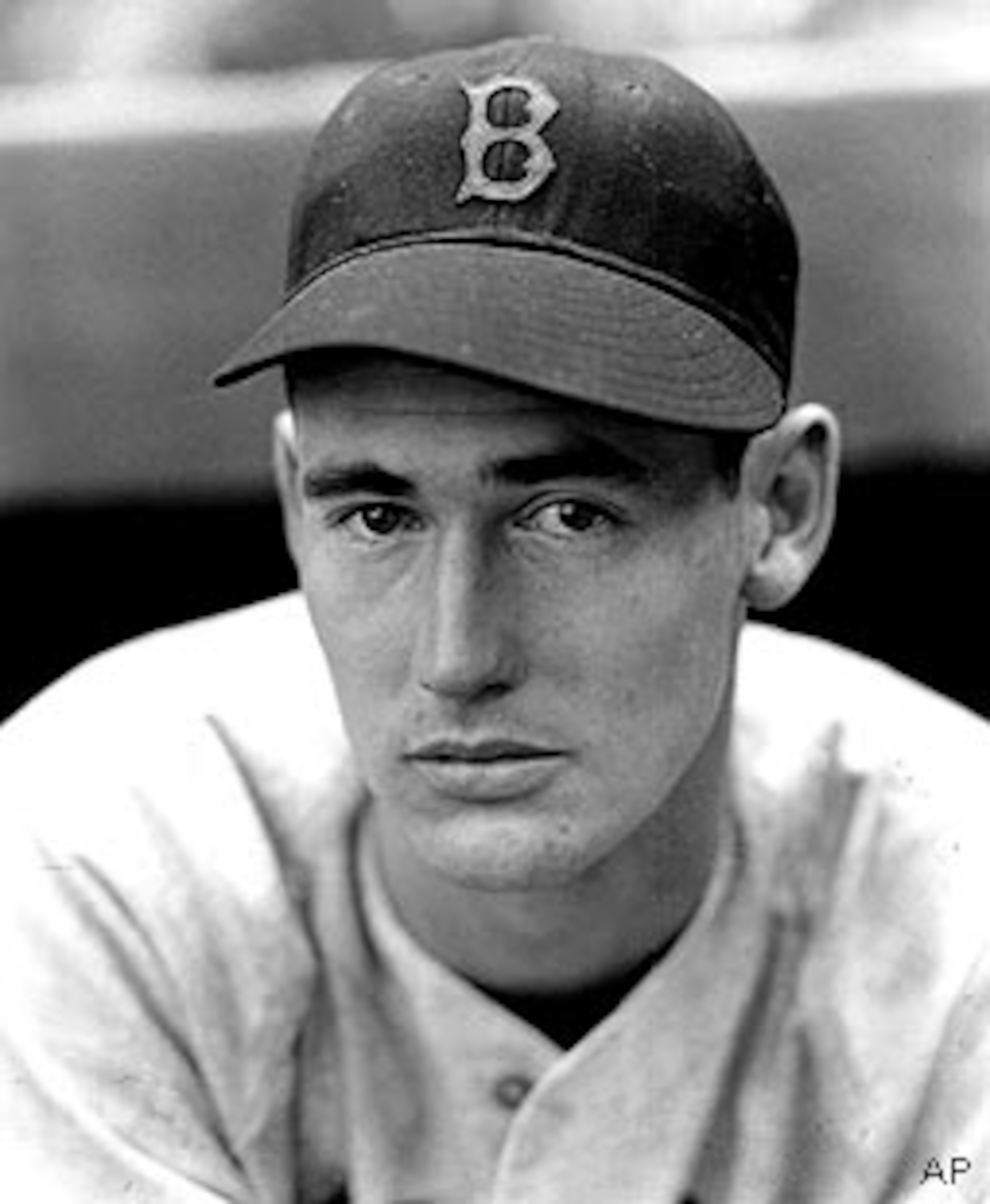
Here's the thing about Ted Williams—if not for missing almost five whole seasons due to war, he would probably be ahead of Babe Ruth.
The funny thing about all of the Ruth versus Bonds talk—which used to be a big deal but has all but vanished in light of Bonds' steroid allegations—is that it ignores the fact that Williams was clearly a better hitter than Barry Bonds.
There is simply no way around the fact that Ted Williams was the second best hitter of all-time after Babe Ruth. In fact, if you ranked the top five hitters of all-time—Ruth, Williams, Cobb, Bonds, Hornsby—Williams would be far closer to Ruth than he would be to Cobb.
Let's do a quick Ted Williams versus Barry Bonds comparison, shall we? Where appropriate, I will include the league averages in parentheses:
Career AVG: .344 (.277) vs. .298 (.263)
Career OBP: .482 (.356) vs. .444 (.332)
Career SLG: .634 (.409) vs. .607 (.409)
Career OPS: 1.116 (.756) vs. 1.051 (.741)
Career HR/PA: 18.79 vs. 16.56
Career OPS+: 190 vs. 182
Career RC/27: 12.04 vs. 9.91
Career Batting Titles: six vs. two
Career OPS Titles: nine (out of 17) vs. 10 (out of 20)
Career Stolen Base: 24 vs. 514
Career Range Factor: 2.00 (2.21) vs. 1.84 (1.48)
I could go on and on. I could mention Barry's Gold Gloves, Williams' Triple Crowns, Barry's 500-500 club, Williams' war years, etc.
Fact is, Barry has a slight advantage in home-run hitting which does not account for his significantly lower slugging percentage.
I realize it bothers people to hear that Barry Bonds, a perennial Gold Glove outfielder whose combination of power and speed has been unrivaled in baseball history, who has set every record under the sun for bases on balls and who owns both the single season and career home run records, is not better than two slow white guys who did not steal bases, were not very good fielders and have seen their career marks eclipsed multiple times by multiple players.
Even considering Bonds' sizable advantages over Ruth and Williams in speed and fielding, Ruth and Williams' overall offensive advantages are enormous.
3. Ty Cobb, CF, Detroit Tigers
111 of 114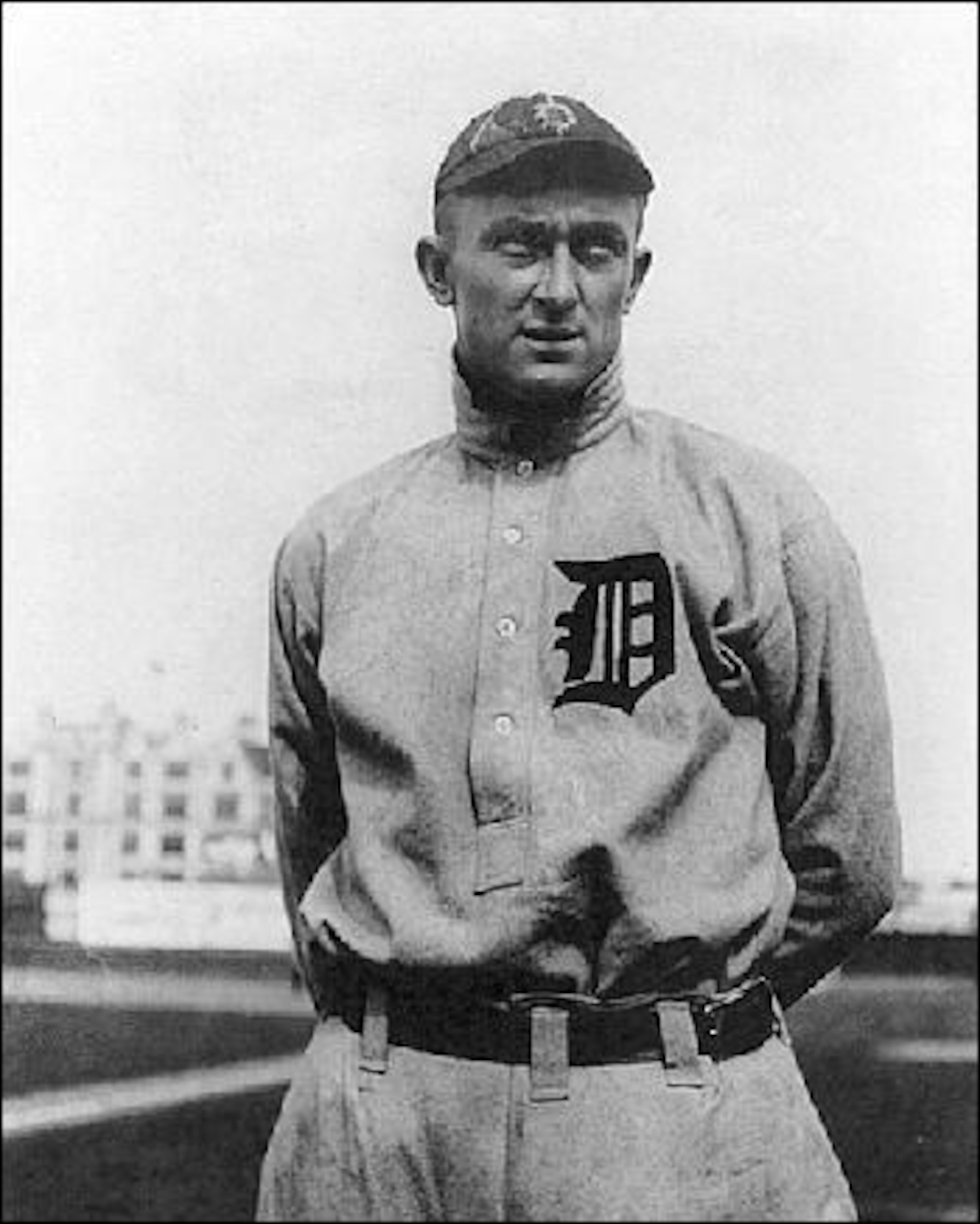
Ty Cobb was the best player in baseball until Babe Ruth, and if not for the Babe, Cobb would still be the best player in baseball history.
Cobb was obviously an elite hitter, the all-time leader in career batting average, but by deadball era standards Cobb was also an elite "slugger." Cobb led the league in slugging percentage eight times and OPS 10 times. He finished in the top 10 in home runs 11 times, and he is the second all-time leader in triples and fourth all-time in doubles.
Despite hitting only 117 home runs, Cobb ranks 10th all-time in adjusted OPS and 29th all-time actual OPS. Of the 28 players ahead of Cobb on the all-time OPS list, Cobb has, far and away, the lowest home run/at-bat ratio of all-time.
2. Walter Johnson, SP, Washington Senators
112 of 114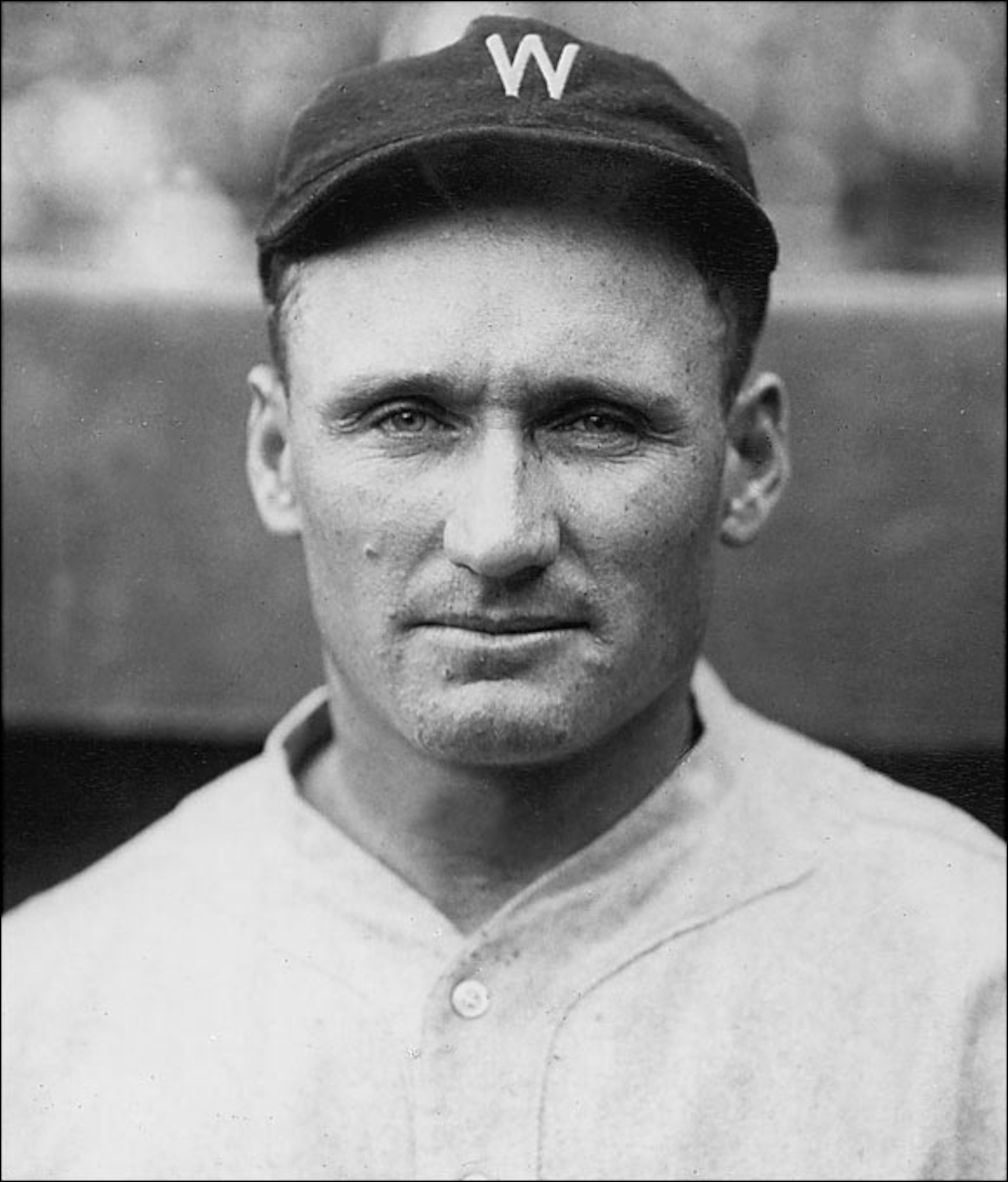
If you look at the careers of Walter Johnson and Roger Clemens, what they did with respect to their leagues is pretty similar, and Clemens did it against a lot more players for a longer period of time.
Walter Johnson, though, was a lot more of an anomaly than Clemens. Clemens pitched in an era with plenty of strikeout pitchers, and in an era in which four of the top 10 pitchers of all-time were also pitching.
Johnson's uniqueness against his league sets him apart from Clemens.
Honorable Mention: Satchel Paige, Pitcher
113 of 114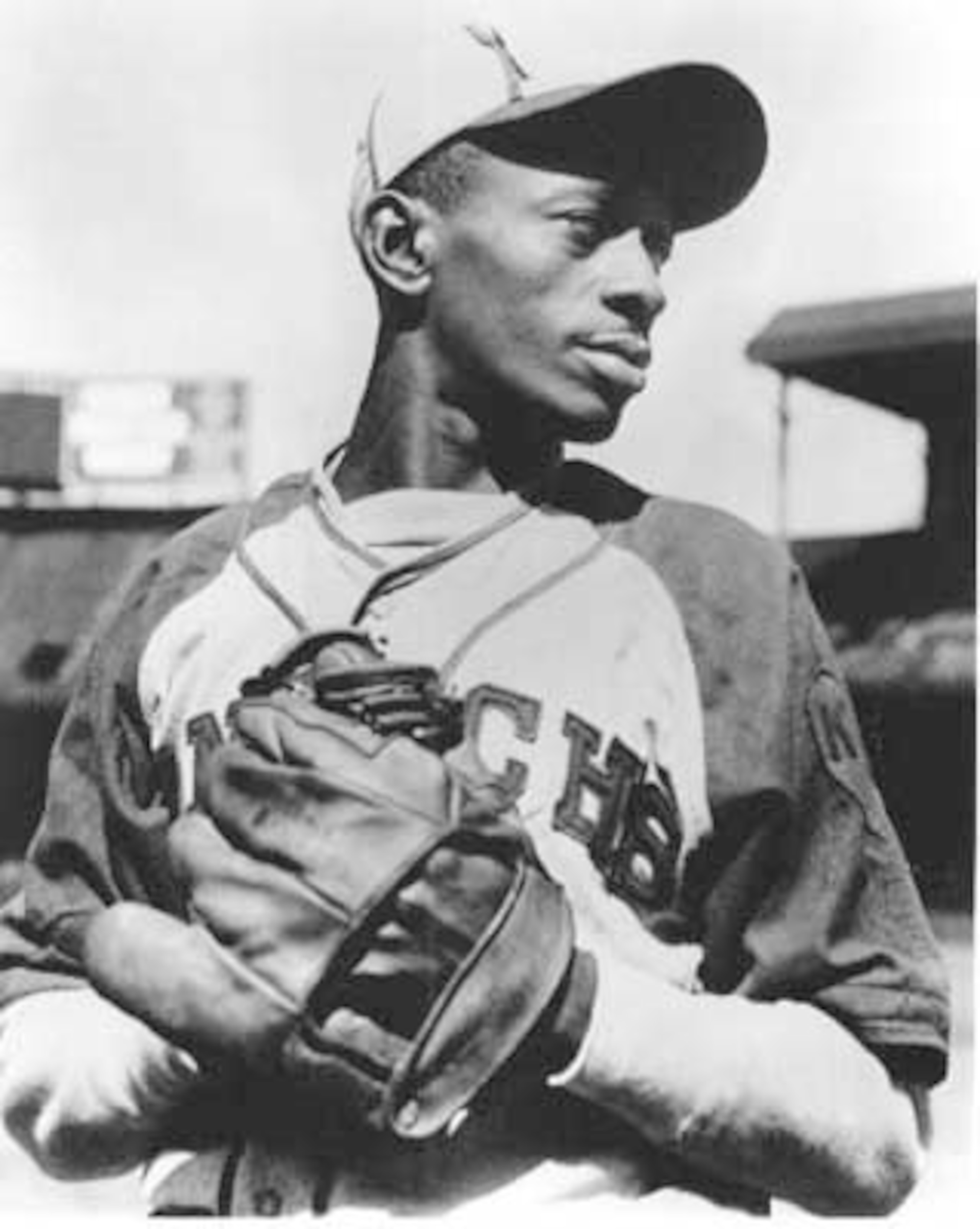
This is a list of the top 100 greatest baseball players of all-time, but there are certainly some understood parameters. We are talking post-1900, for the most part, and we are talking Major League Baseball.
Ask the question: Who was the greatest pitcher in major league history?. You will get a debate between Cy Young, Walter Johnson, Roger Clemens, Nolan Ryan, Sandy Koufax and some others.
Then ask the question: Who was the greatest pitcher in the history of organized baseball? There really is not much debate at all. The answer is Satchel Paige.
The list of anecdotes regarding Paige's greatness is too long to include here, and the list of players who saw him pitch and said he was the greatest of all-time is equally long.
To us, the best indicator of Paige's dominance may be his actual major league numbers: Paige debuted in 1948, as a 41-year-old pitcher. At an age where most players are out of the game, Paige pitched 72.1 innings, starting seven games, finishing five and appearing in nine others. He pitched three complete games and two shutouts and put together a 6-1 record with a 2.48 ERA.
Paige went on to pitch five seasons, not including a single three-inning appearance at the age of 58, pitching until the age of 46 and compiling 3.29 ERA (125 ERA+) in 476 career innings.
Imagine what we missed in his first 25 seasons.
1. Babe Ruth, Outfield, New York Yankees
114 of 114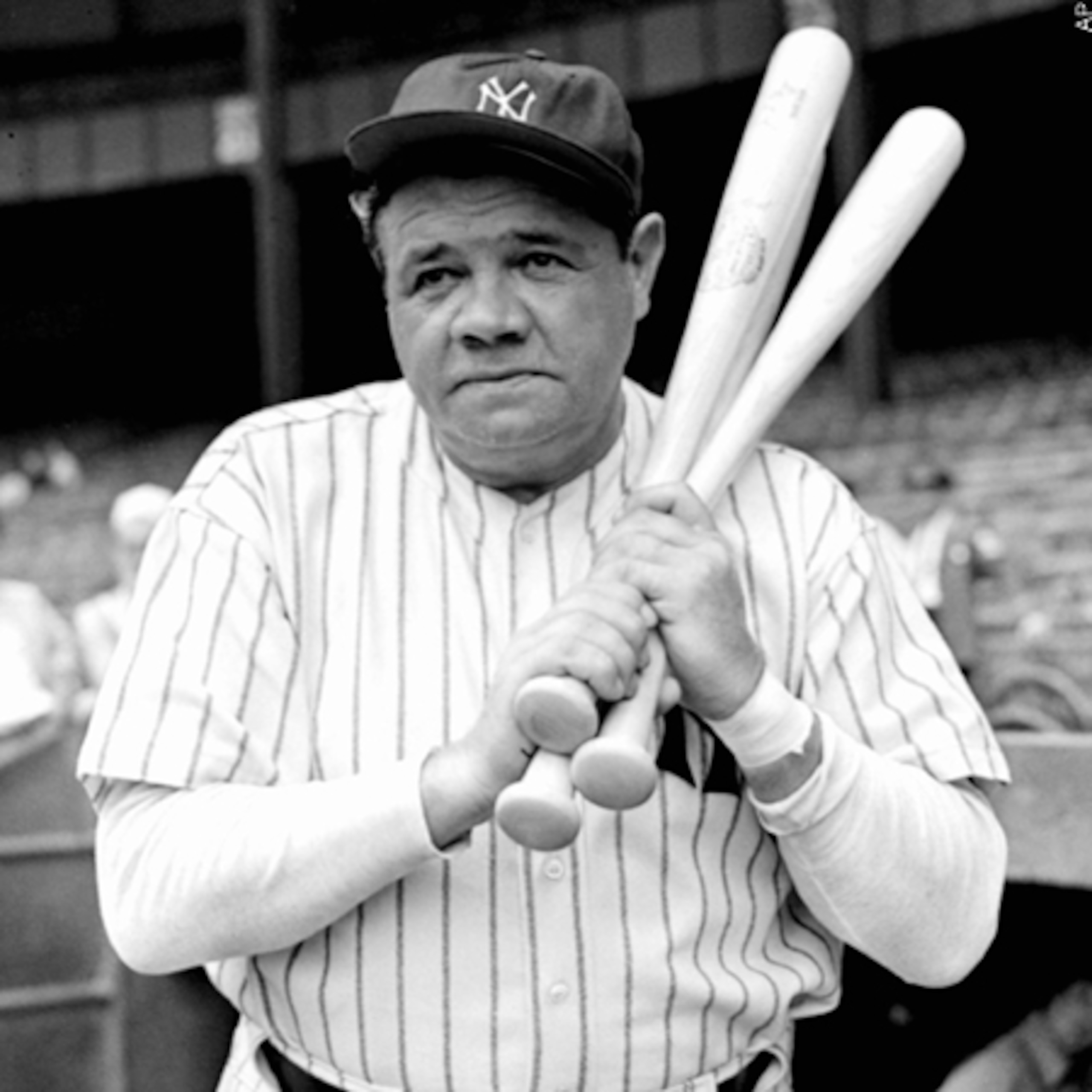
There is nothing we can say here about Babe Ruth that hasn't been said before. We think the single greatest point to be made regarding Ruth is this:
America came to revere Babe Ruth at a time when his home runs and his batting average were the only basis for measuring his overall value.
Over the years, with the statistical revolution, the standard for greatness has continued to evolve, from RBI to slugging percentage to OPS to OPS+ to linear weights to batting runs to adjusted batting runs and now to Wins Above Replacement (or WAR).
And in all these years, there has not been a single metric designed to measure overall value, not a single one, that does not see Babe Ruth as the greatest player of all-time.


.jpg?w=2560 "CJGJ Shares Cryptic Post 🤔")
.jpg?w=2560 "Terrell Owens Being Sued for Defamation")
.jpg?w=2560 "Buyers or Sellers for NFL's Most Surprising Teams 🏈")
.jpg?w=2560 "Report: Seahawks Not Signing Mixon 😯")