Tim Lincecum: Can San Francisco Giants Pitcher's Body Hold Up Moving Forward?
No pitcher in the history of baseball has won two Cy Young awards in his first two full major league seasons. Tim Lincecum is a truly special pitcher and athlete.
This gifted pitcher leads, arguably, the best pitching staff in baseball and has a World Series championship on his resume.
The real question now is: How long can he continue to pitch at such a high level?
I will review several pro's and con's pertaining to the outlook for Tim Lincecum's continued success.
Pro Fact No. 5: Tim Lincecum Is a Smarter Pitcher and Will Pitch to Contact
1 of 11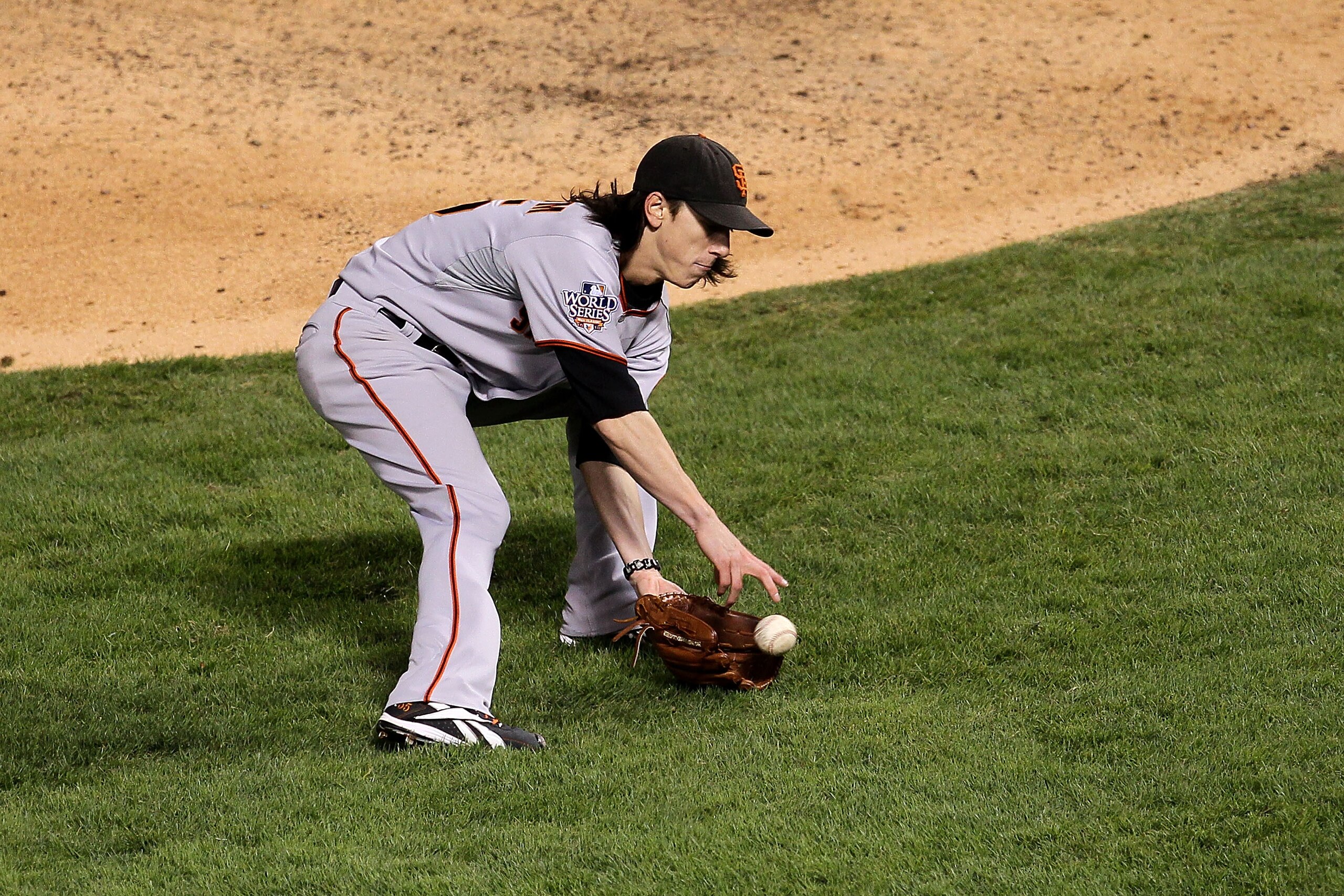
Tim Lincecum is entering his fifth season with the San Francisco Giants. He is a much smarter and more savvy pitcher than when he first emerged on the scene with a 95-96 mph fastball back in 2007.
Tim Lincecum has realized that in order to win more decisions, he needs to keep his pitch count down early in games, which means pitching to contact more frequently. As he does this, he should be able to get outs more quickly and save some of the wear and tear on his body.
Con Fact No. 5: Tim Lincecum Is a Power Pitcher and Won't Be Able to Sustain It
2 of 11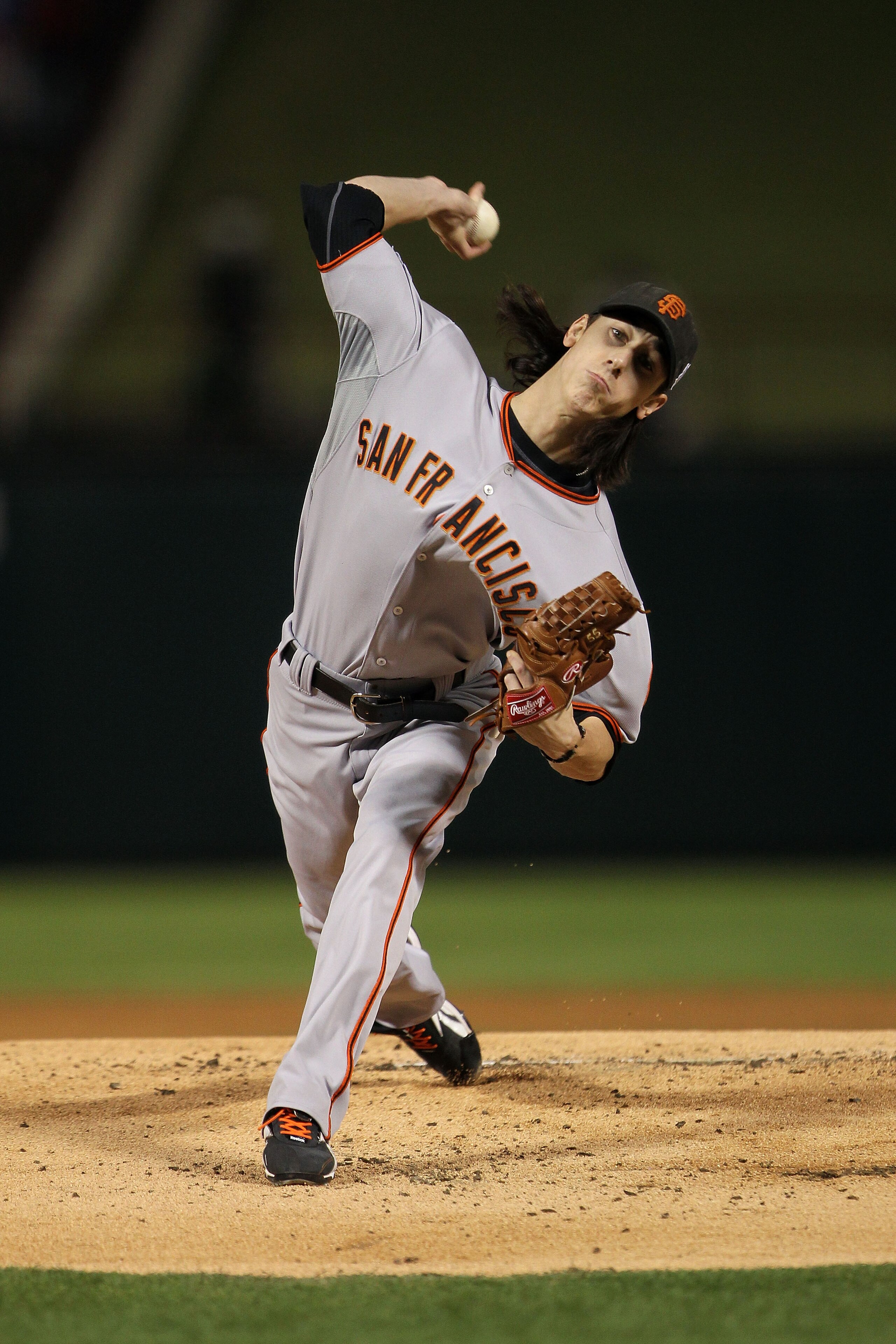
Most power pitchers cannot last at their top effectiveness for more than a few years. Tim Lincecum will be entering his fifth season with the Giants and his days as a power pitcher could be numbered.
Power pitchers like Nolan Ryan, who have longevity, are the exception. Most power pitchers need to reinvent themselves when their stuff starts to decline, or they soon find themselves out of the majors.
Lincecum has led the league in strikeouts in each of the last three years. With that comes the need to put everything into every pitch, and that puts great stress on your arm. He could be due to break down very soon.
Pro Fact No. 4: Tim Lincecum Uses His Legs to Generate Power, Not Just His Arm
3 of 11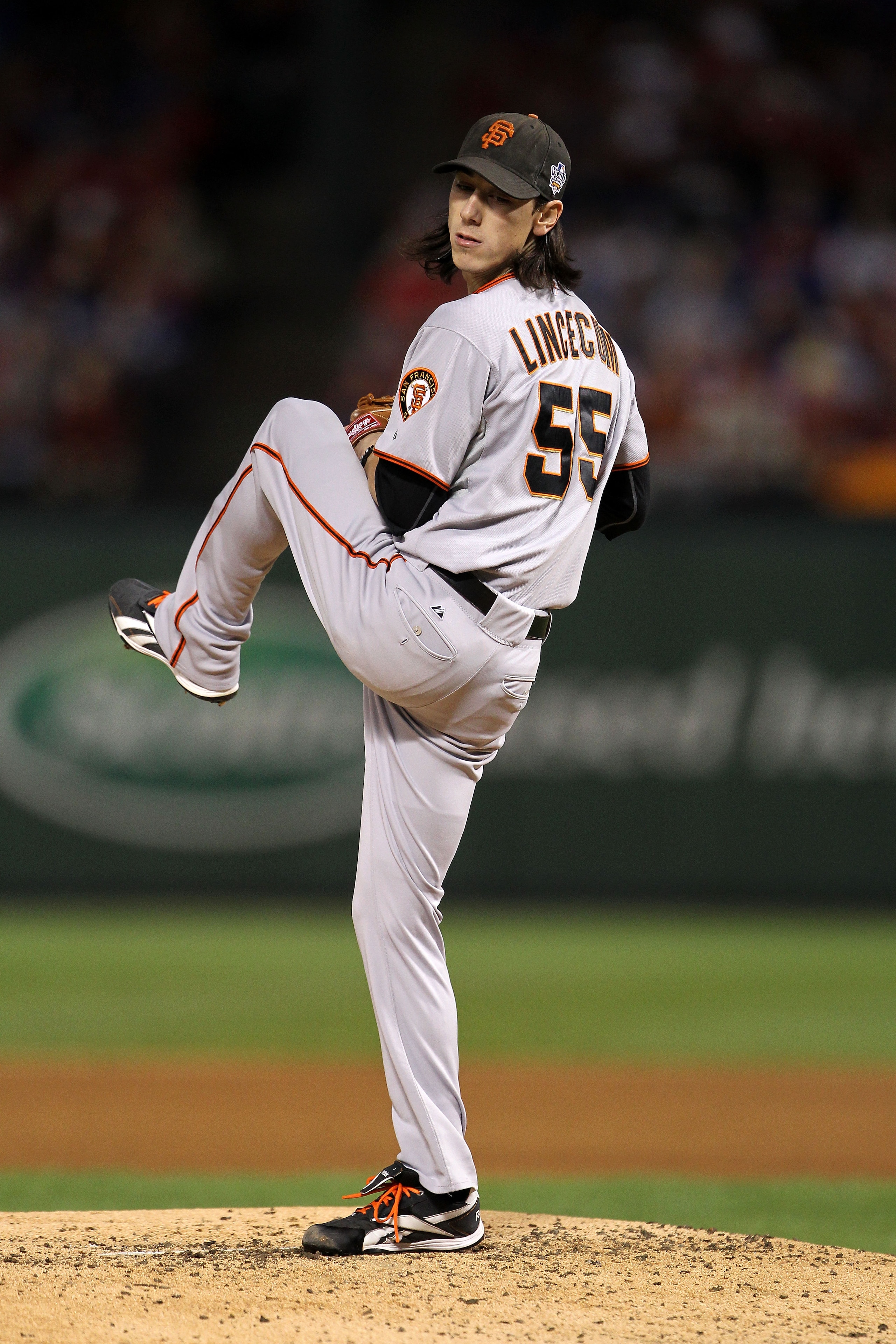
Tim Lincecum generates his power with his legs. Strikeout pitchers who utilize their legs often can sustain their power far longer than pitchers who sling the ball primarily with their arm.
Nolan Ryan, Roger Clemens and even Matt Cain utilize their lower body extremely well, in order to generate their velocity. Tim Lincecum does just that. In fact, with each pitch, he drives himself off the mound with tremendous force generated from his lower body.
The use of his legs to generate power will serve Lincecum well, as that alleviates stress on his arm.


Con Fact No. 4: Tim Lincecum Threw More Breaking Pitches This Past Season
4 of 11
Early in his career, Tim Lincecum was able to get people out with his fastball-changeup combination. He would throw in an occasional curveball, but that was not a featured pitch of his.
As his velocity has declined, Lincecum has resorted to throwing many more breaking pitches. He still throws the curve just sporadically, but has incorporated a slider into his repertoire.
Breaking pitches, especially the slider, take a toll on one's arm. The slider requires a lot of torque from the pitching arm, as it's thrown much harder than a curveball. The hard slider is the pitch that ruined Robb Nen's arm, and there have been several others.
In order to compete and excel at this level, Tim Lincecum has been forced to throw the slider a lot more. That will come back to haunt him at some point.
Pro Fact No. 3: Buster Posey Will Help Guide Tim Lincecum Through Games
5 of 11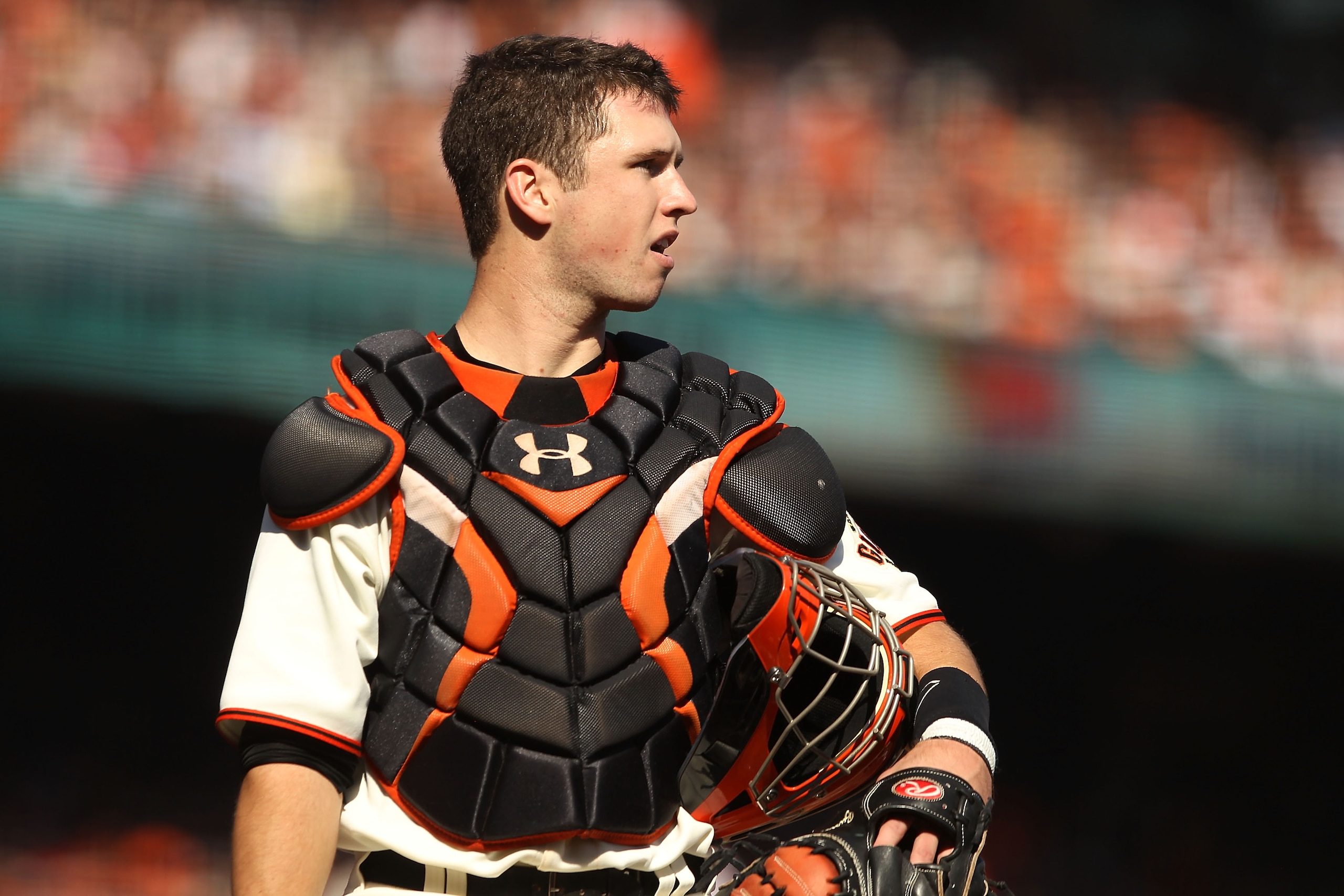
Buster Posey came up to San Francisco in late May and split time between catching and playing first base. Then, about a month later, the Giants traded Bengie Molina, opening the way for Buster Posey to play every day.
In August, Tim Lincecum did not win a game. He struggled with his confidence and his trust in his new catcher. Then, Lincecum turned it around in September and into the postseason. Lincecum was back, and a key factor in his turnaround was the trust he developed with Buster Posey.
Buster Posey is a student of the game and does a great job studying opposing hitters. Once he and Tim Lincecum got in sync, Lincecum got back to his winning ways.
I also believe that Posey will be able to help guide Lincecum through any rough patches, so Lincecum should not endure any extended periods of failure, like he did last August. The relationship between these two will continue to grow and the two stars should work together successfully for many years to come.
Con Fact No. 3: Tim Lincecum Is Too Small to Keep This Up
6 of 11
Tim Lincecum is not a big guy and the wear and tear on his body and arm could do him in sooner than later. Lincecum is only 5'11" and 170 lbs. soaking wet.
He is often compared to Pedro Martinez, another dynamic pitcher who is small in stature. Martinez had several excellent seasons, but then his arm started to give out. The same thing could happen to Tim Lincecum.
When a pitcher the size of Tim Lincecum expends so much energy on every pitch, longevity cannot be expected.
Pro Fact No. 2: Tim Lincecum Has No History of Injury
7 of 11
Tim Lincecum has been remarkably durable thus far in his career. In his past three seasons, Lincecum has made 33, 32 and 33 regular season starts. In 2010, he also made an additional five postseason starts.
Through all of this, Tim Lincecum's arm has remained healthy. He has no history of injury and there's no reason to expect that he will break down at only 26 years of age.
Lincecum also does not ice his arm after starts, a practice he has kept from when he was a young kid. His dad Chris, who taught him the mechanics of pitching and leg drive, has always said that ice is for injuries and Tim has always shunned the use of ice on his arm.
Whatever he's doing has served him very well, as Tim Lincecum has been extremely durable.
Con Fact No. 2: Lincecum Has Thrown Too Many Innings Too Early in His Career
8 of 11
Tim Lincecum has simply thrown too many innings too early in his career. He is due to break down and this could be the year it happens.
In 2008 and 2009, Tim Lincecum threw 227 and 225 innings, respectively. Then, in 2010, with the Giants winning the World Series, Tim Lincecum threw a total of 249.1 innings. He also tends to have high pitch counts because of his strikeout totals.
As a pitcher who is small in stature, yet has thrown this many innings, he is due to face injury and have a down year.
Pro Fact No. 1: Tim Lincecum Is in Great Shape
9 of 11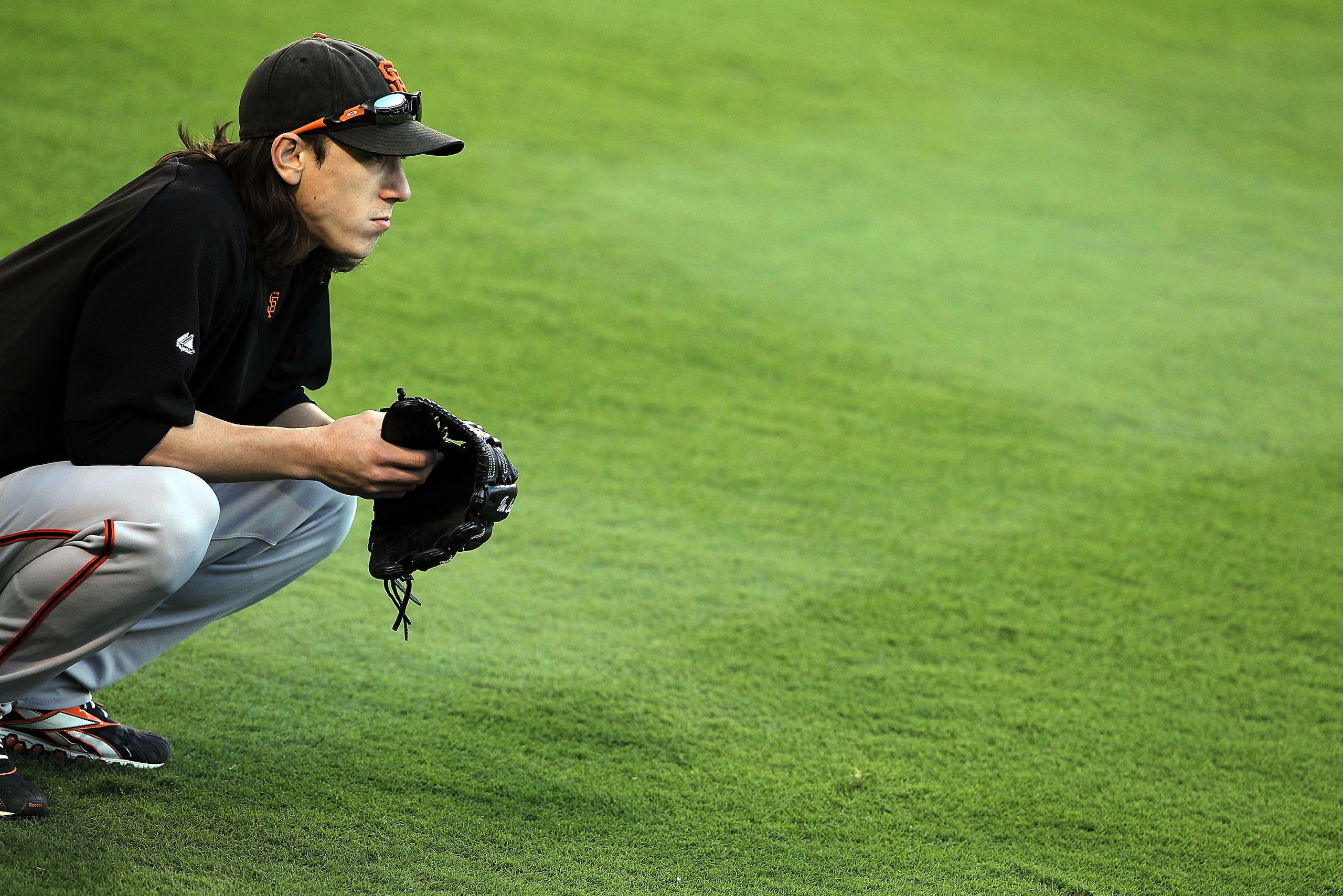
Tim Lincecum learned a valuable lesson from August of last season. He quit playing long toss between starts, and that precipitated his troubles.
Once he got back on a stronger conditioning program and also included long toss back into his work between starts, his arm strength improved, and he got back to his winning ways.
Tim Lincecum has reported to training camp in excellent shape. He is very limber and flexible, which helps him avoid injury. Lincecum also has kept his weight down and is not carrying any excess poundage. This enables him to create the drive he displays on his pitches.
Con Fact No. 1: Tim Lincecum's Velocity Is Way Down
10 of 11
The most alarming trend has been the drop in velocity from year to year for Tim Lincecum. When he first came to the major leagues, Lincecum threw between 94-96 mph consistently.
In 2010, he often struggled to even hit 91 or 92 on the radar gun consistently. He even had some games where his velocity topped out in the high 80's.
The reduced velocity could spell impending doom. Lincecum has to work so much harder to get his outs and is relying more on his changeup as his strikeout pitch.
If Lincecum's velocity falls below 90 mph, it becomes hard for him to throw the fastball by hitters. They will then sit on the changeup because it will be coming sooner or later.
The reduced velocity means Lincecum's arm is simply not as strong as it used to be. This is a key factor the Giants will be watching closely, as they monitor "The Franchise."
Conclusion: Will Tim Lincecum's Body Continue to Hold Up?
11 of 11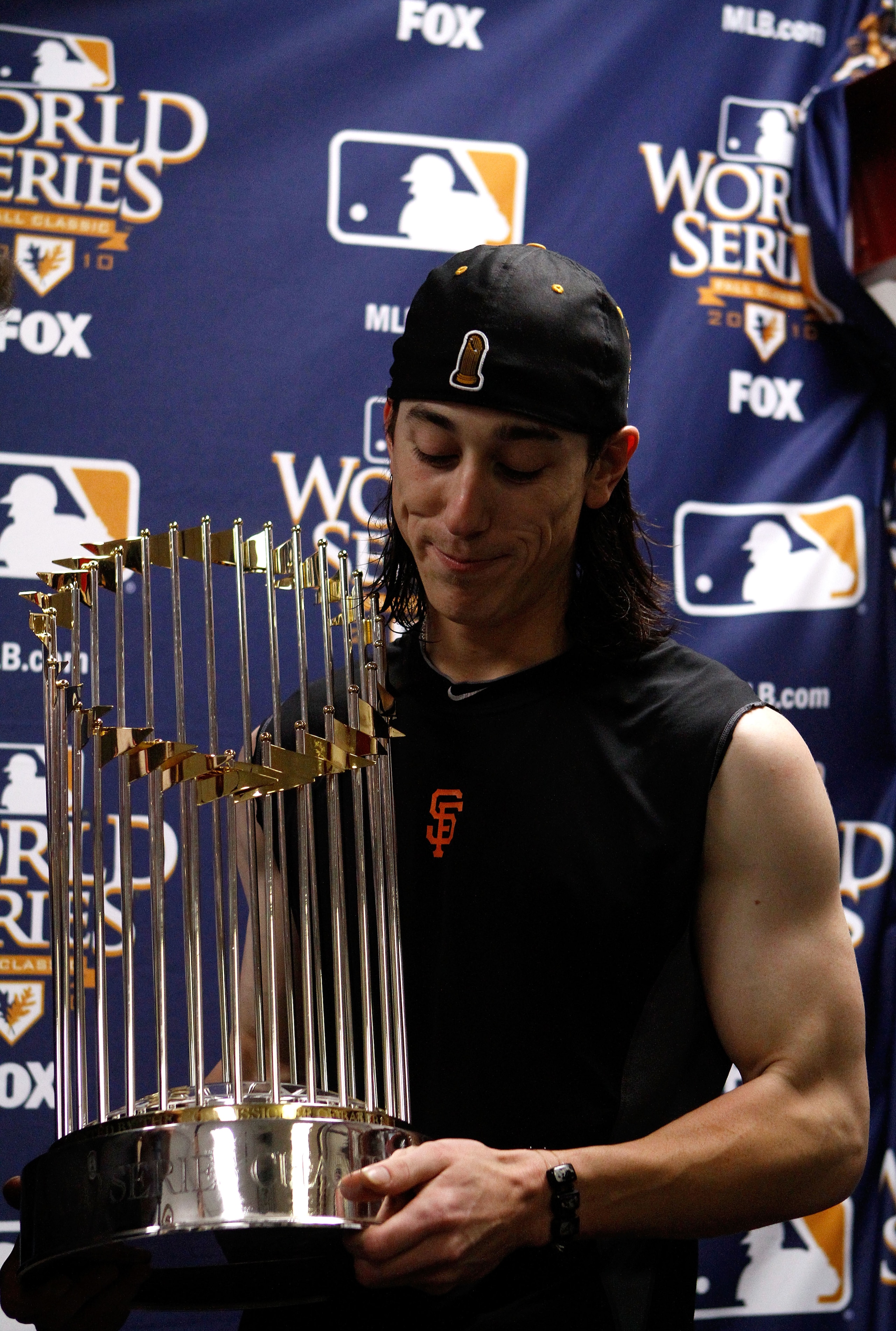
Will Tim Lincecum's body hold up in 2011?
After looking at the pro's and con's, my answer is a resounding yes. I believe Lincecum will have another excellent season and lead the Giants' outstanding pitching staff.
Tim Lincecum is in great shape and has no injury history, so I believe he will continue to excel. He has been durable throughout his career and at only age 26, Tim Lincecum has several great years ahead of him.



.jpg?w=2560 "Raiders Could Start Mendoza")

.jpg?w=2560 "Rodgers Iced Out on Plane 💎")

.jpg?w=2560 "Packers Safety Slams Refs 🤬")
.jpg?w=2560 "🚨 Week 8 AP Top 25 Poll")