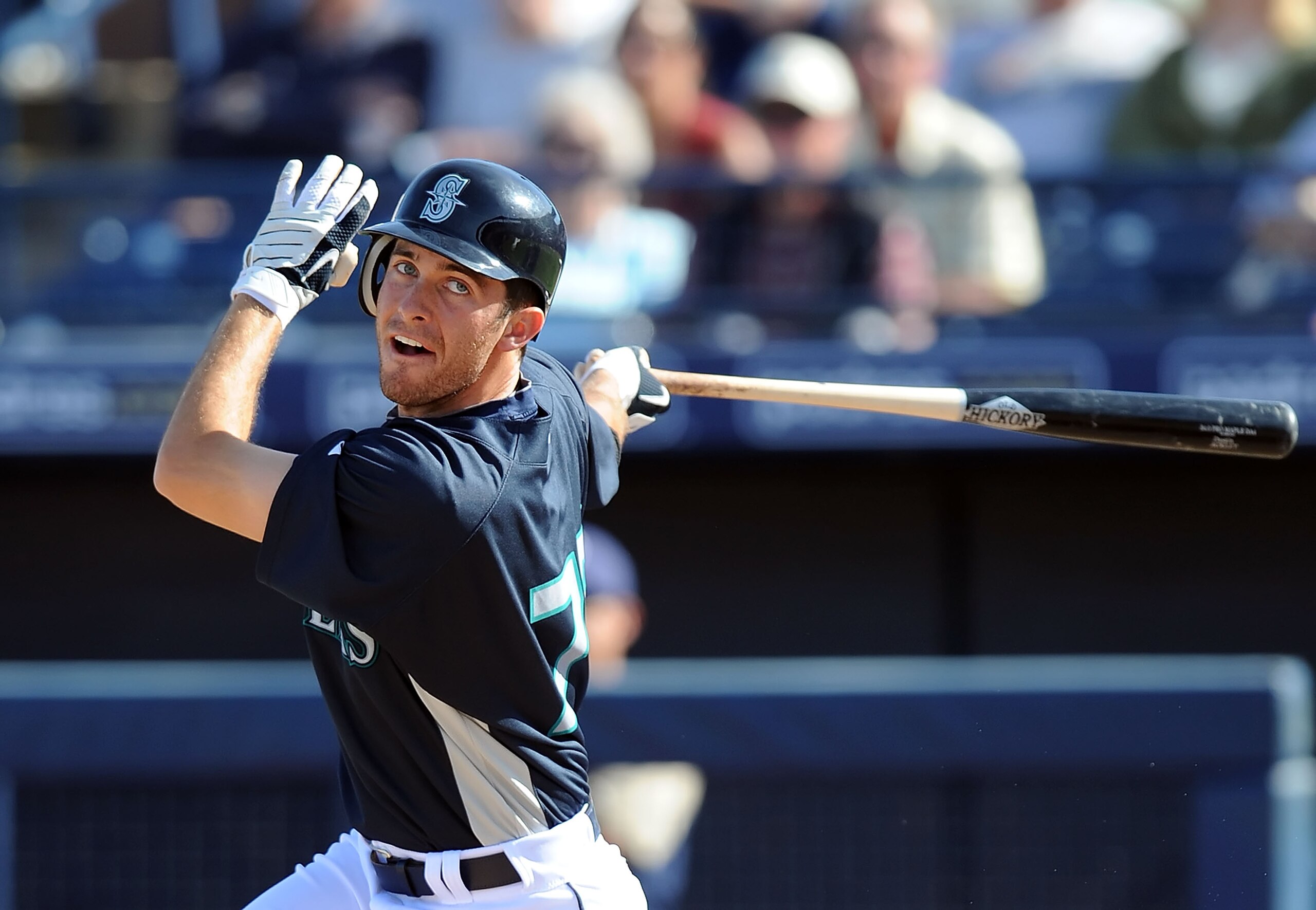

Michael Pineda vs. Dustin Ackley: Who’ll Have Better Seattle Mariners Career?
Outside of the Seattle Mariners farm system, both of these players are virtually unknown.
Also, both have taken different routes prior to being put on the Mariners' active roster list.
Ackley went the college route and played three years for the University of North Carolina.
He finished runner-up to Stephen Strasburg for the 2009 Golden Spikes Award (nation's top amateur baseball player).
As for Pineda, he bounced around through six different minor leagues from 2006 through 2010.
However, currently he ranks as the Mariners' second-best prospect.
The Seattle Mariners look to be on the rise, and 2011 has higher expectations.
Both players have a great amount of potential, but who will be the better Mariner?
There's only one way to to stir up a discussion.
Experience
1 of 10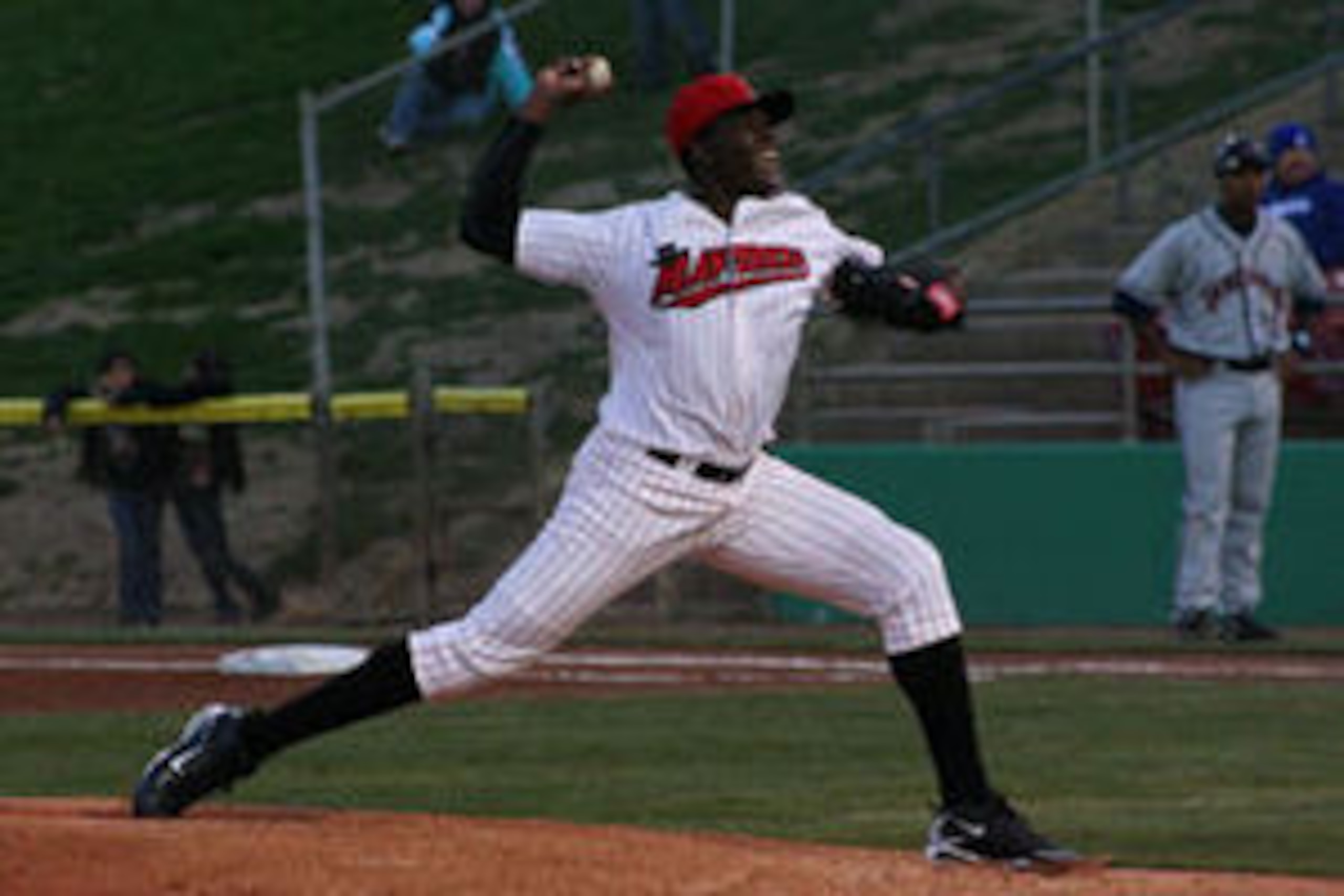
Right now the edge in experience goes to Michael Pineda since he has been in the Mariners farm system dating back to 2006.
Mind you, he was only 17 years old at the time.
Dustin Ackley, however, was 18 in 2006 and was just a senior in high school but took college baseball by storm in 2007.
The difference here, though, is Pineda has six years of minor league experience to Ackley's one.
SCORE: Michael Pineda leads 1-0
Versatility
2 of 10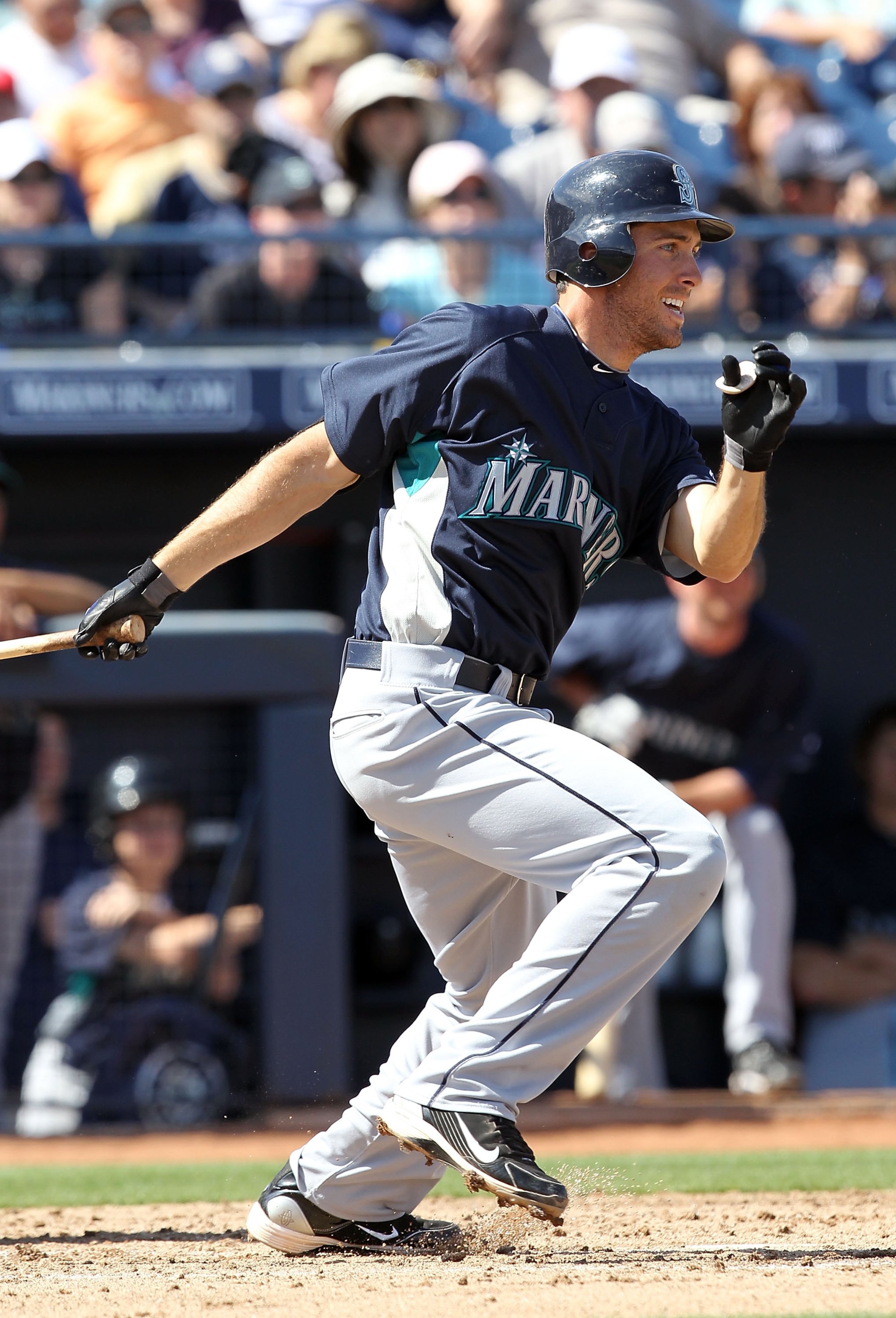
During his six years in the minors, Michael Pineda dominated from the start and has posted a record of 31-14 with an ERA of 2.49.
However, that is solely based on pitching.
As important as that is, being the "jack of all trades" like Dustin Ackley may be even more crucial.
While in high school, Ackley played third base and pitched.
Move on to college, and Dustin became even more versatile by playing first base and left field.
At the plate, Ackley became the first-ever player at North Carolina to bat over .400 twice in a career.
While on base, he's a serious threat to score. Why? Because he set UNC's freshman record, crossing the plate 74 times.
SCORE: Dustin Ackley hits a homer to tie the game at one!
Size
3 of 10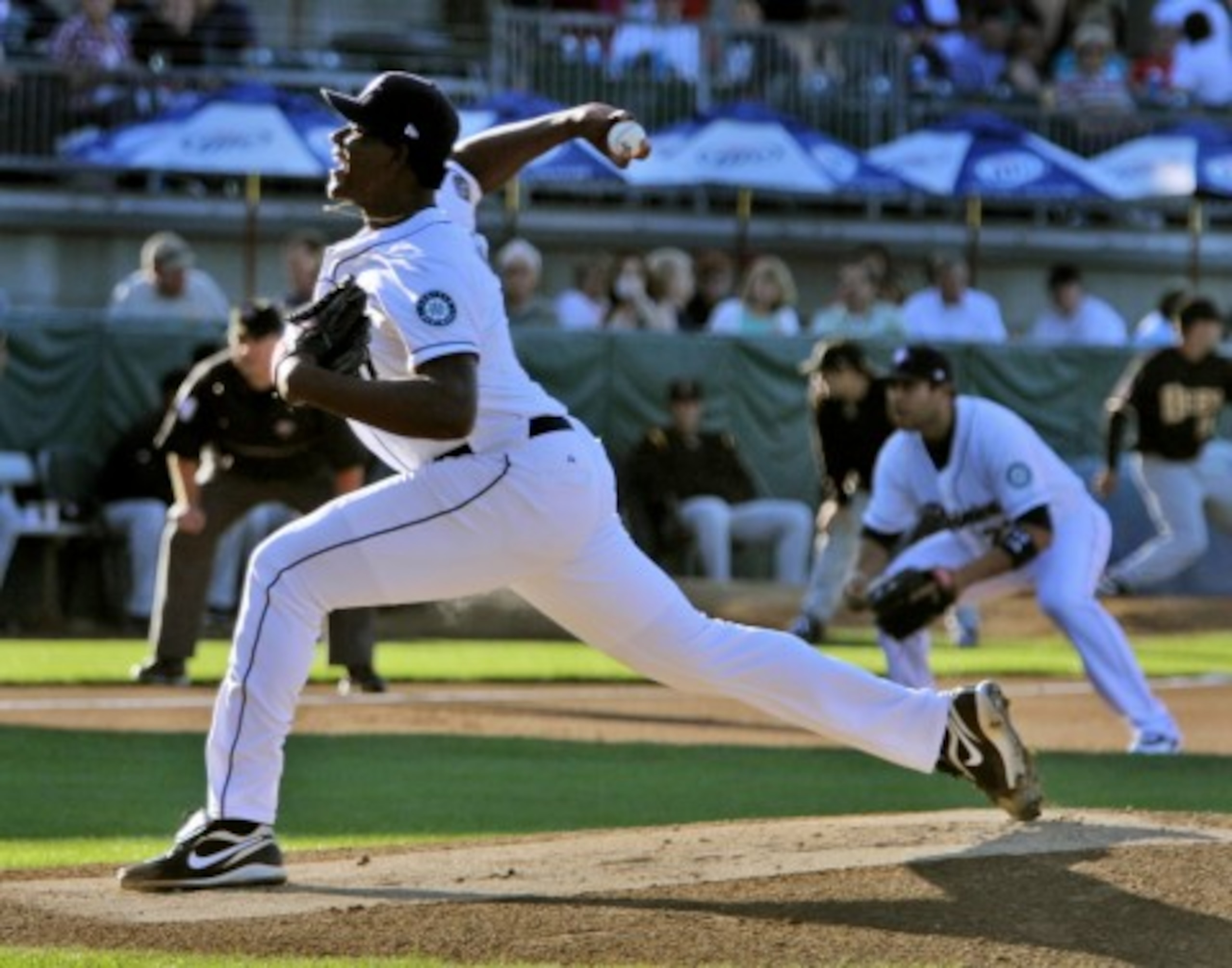
Michael Pineda: Height: 6'5"; Weight: 180 lbs.
Being a pitcher, his height is great, but he needs to gain some weight.
In order for him to manipulate the ball on command, it will only become that much easier with more weight.
Remember your physics equations: Force = Mass x Acceleration and/or Speed = Distance / Time.
Dustin Ackley: Height: 6'1"; Weight: 185 lbs.
Playing multiple positions, you don't want to become too light or too heavy.
While playing around the bags, more quickness and acceleration is needed. But the outfield needs more top speed/catch-up speed.
Ackley has proven to play either and may continue to do so.
SCORE: Ackley takes the lead 2-1 after stealing home. (Benny "the Jet" stole home! The Sandlot, anyone?)

Dominance
4 of 10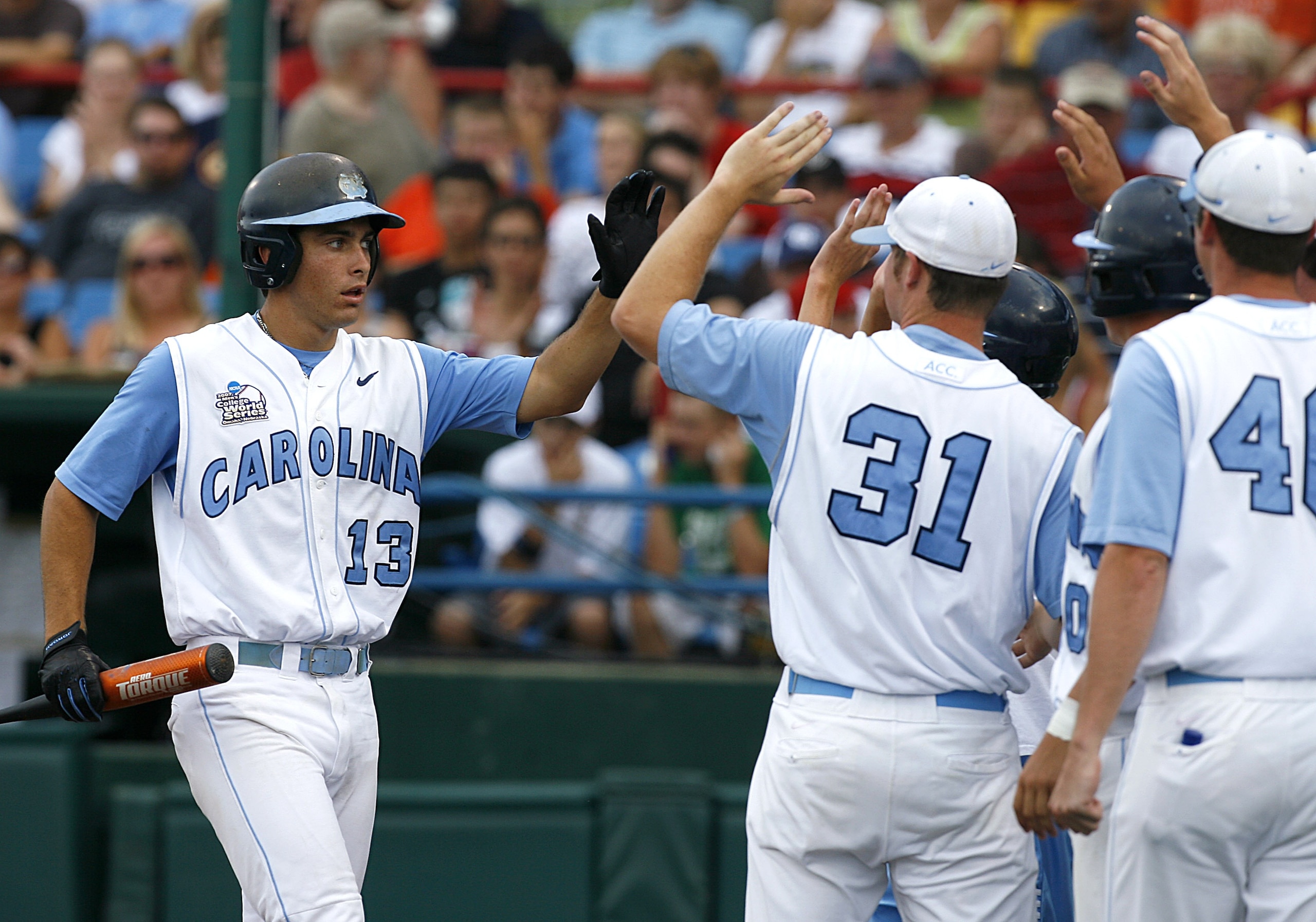
Pineda started a total of 25 games in 2010 (13 AA and 12 AAA) and finished with an 11-4 record.
However, eight of those wins came in Double-A, and his ERA jumped 2.54 points from 2.22 when he got the call up to Triple-A.
Nonetheless, Pineda still compiled a minor record of 31-14 and dominated all the way to his current opportunity.
Ackley, on the other hand, batted .263 in Double-A and increased to .274 in Triple-A.
The only problem here, though, is that he played in 30 fewer games in Triple-A than Double-A.
Did he get the call-up to the majors too soon? Only the 2011 season will justify Dustin's advancement.
SCORE: Pineda ties it back up at two apiece.
Fielding
5 of 10
I know pitchers don't get much credit for their fielding ability, but having a pitcher that can field is undoubtedly helpful.
For starters, it takes a bit of pressure off the infielders and makes it that much more difficult for the batter to find the weakness in the defense.
So having that uncanny ability to glove anything coming up the middle (not to mention it's coming at like 100-plus miles per hour), and virtually prevent any bunt from being safe just gives your team that much better of a chance at winning.
Thus, given Pineda's 100 percent fielding percentage, even though he only had 17 chances in 2010, he made the most of them.
As for Ackley, you're expected to field with excellence in being a versatile athlete. Errors are inexcusable, and although they do occur from time to time, there's still no room for them.
Yes, I know I'm being more harsh on Ackley, but pitchers aren't expected to field, whereas everyone is held to a much higher standard once the ball is in play.
However, Ackley still gets the nod because he had 510 chances in 2010 (with a fielding percentage of 96.5) to Pineda's 17.
SCORE: Ackley regains the lead 3-2.
Immediate Impact
6 of 10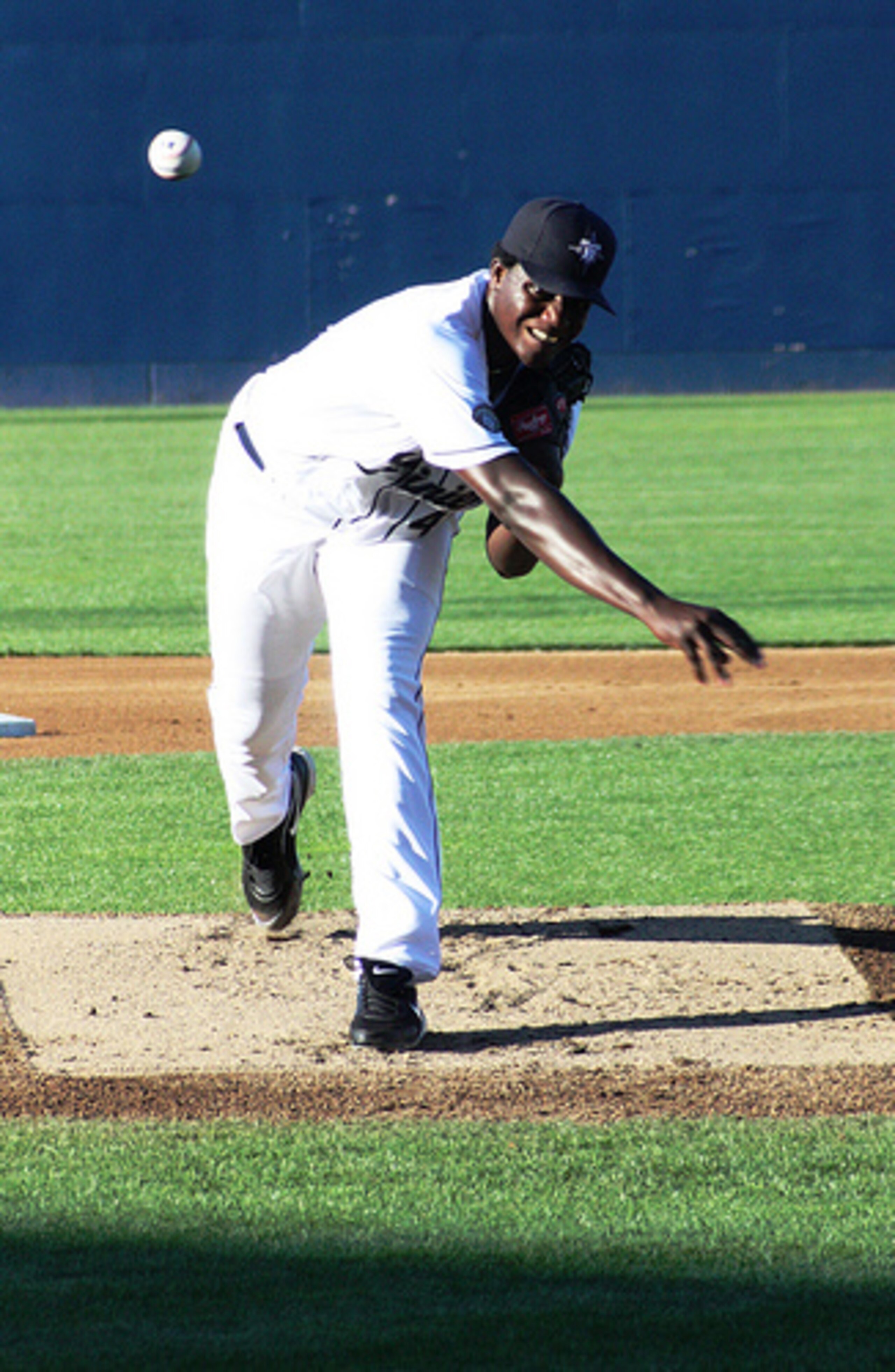
Currently, Dustin Ackley is listed as the No. 4 second baseman on the Mariners' ESPN.com depth chart.
Which although it is not high, Pineda has yet to break the five-man starting rotation.
However, there is no need to worry because time is still on their side.
As it's only February, both players have yet to go through spring training and then show what they can do as the regular season progresses.
Also, since it's only February, this makes it difficult to project who will get more playing time and/or crack the starting lineup first.
Thus, we must use what is available; therefore, with his edge in minor league experience and the lack of talent in the starting pitcher rotation (other than Felix Hernandez), Michael Pineda sees the field first.
But don't be surprised if and when Dustin Ackley receives an ample amount of playing time as well.
SCORE: Pineda ties the game at three apiece.
Team Competition
7 of 10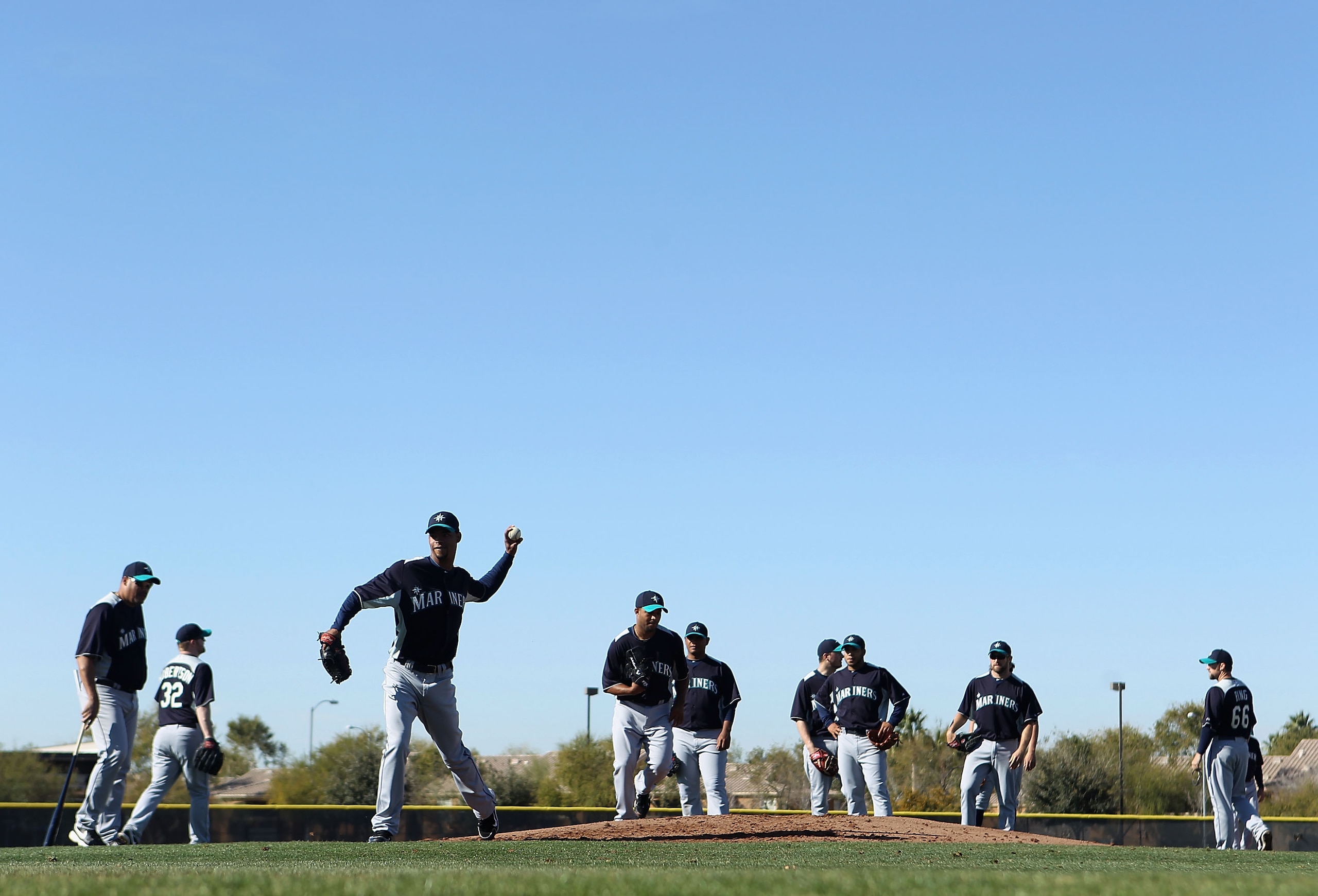
Okay, so the Mariners' starting pitchers (as a whole unit) are pretty weak.
With that being said, Michael Pineda has proven himself through the minors, and if he can continue to be consistent, then his team competition will be a breeze (with the exception of Felix Hernandez, of course).
As for Ackley, he's listed as a second baseman, but we all know he can play multiple positions, which is to his advantage.
However, whether it's the infield or outfield, he must compete against seasoned vets such Chone Figgins, Ichiro Suzuki, Franklin Gutierrez and (once he gets his head back on straight) Milton Bradley.
Ackley definitely has more potential than some of the other starters, but the only way he will become a regular on the diamond is if he produces.
SCORE: Pineda takes the lead 4-3 heading into the real competition.
AL West Competition
8 of 10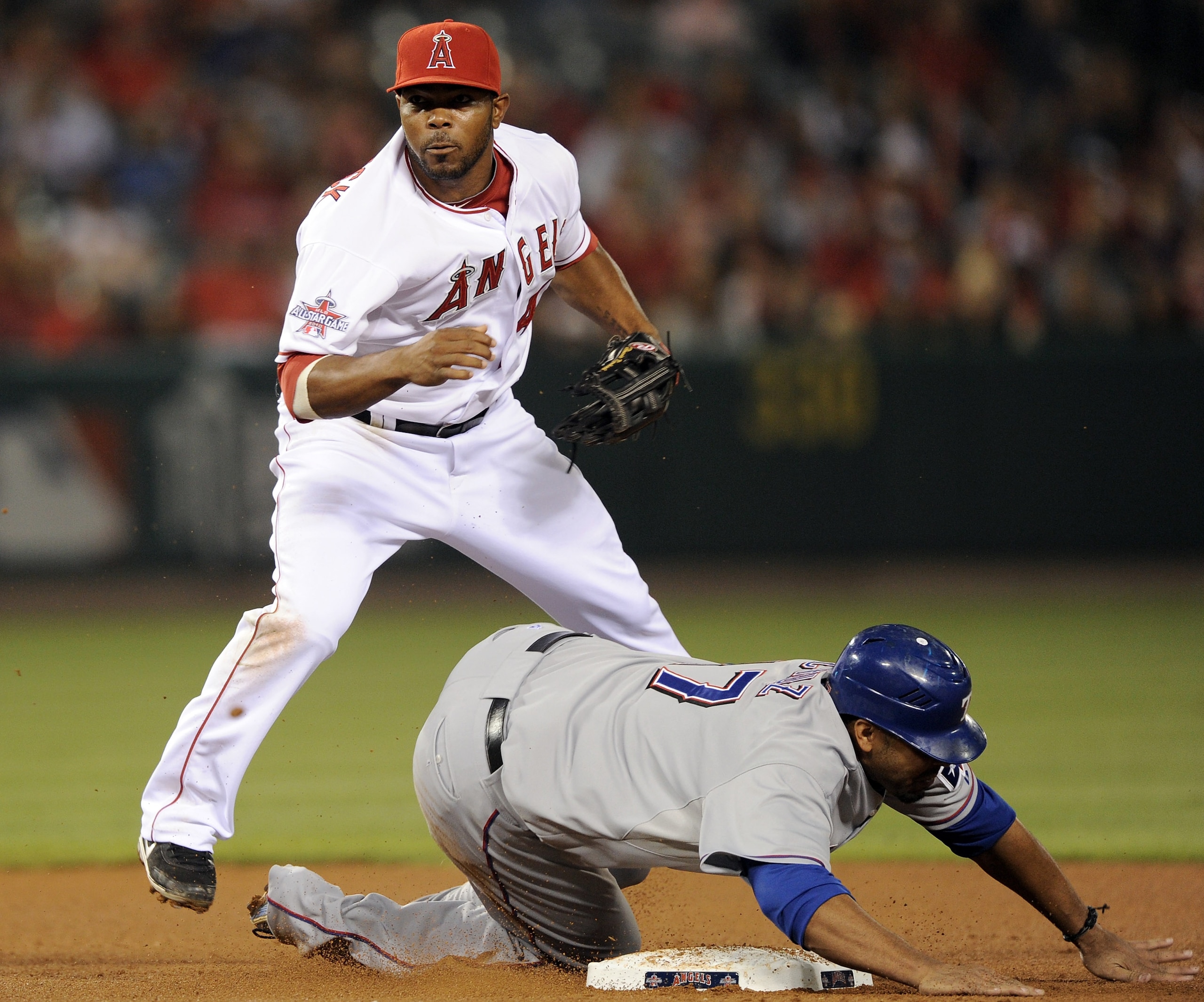
Now on to the real reason why both these prospects were brought into the Mariners organization.
After the Mariners' dismal AL West record of 17-40, there's really nowhere else to go except up.
Yes, the Texas Rangers did make their first ever World Series last season, but we're not talking postseason until Seattle actually gets there.
As for the regular season, the AL West was arguably the worst division in all of the bigs but was definitely the cake in the AL.
Also, since Cliff Lee signed back with Philadelphia, everyone not the Texas Rangers can breathe a sign of relief.
The loss of Vladimir Guerrero to the Baltimore Orioles doesn't help, but significant sluggers such as Josh Hamilton and Ichiro Suzuki still remain.
With all this being said, both players should overachieve if and when called upon.
SCORE: Pineda still leads 4-3-1.
Leadership
9 of 10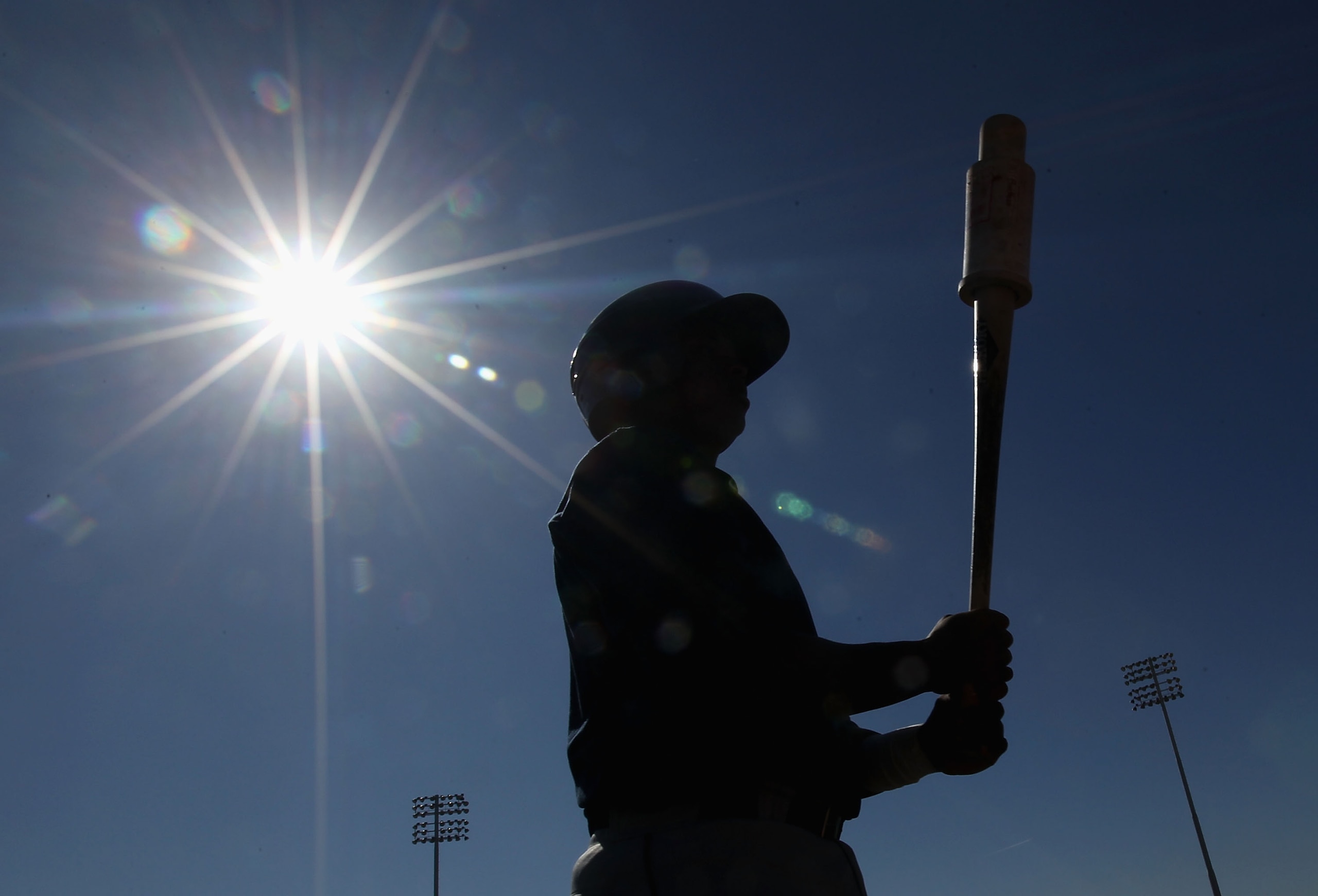
Okay, here's the difference in their leadership capabilities.
Pineda has been on six different minor league teams through five years in the Mariners farm system.
In addition to that, since he's a pitcher, the only teammate he needs true chemistry needs with on the field is his catcher.
Not to say that he doesn't have leadership qualities, but for as much as he's jumped around, it's not going to be easy building synergy with your teammates.
As for Ackley, he played three years in college along with multiple positions. Not to mention he had to have a decent bat as well.
Thus, playing in college for North Carolina from 2007-2009, he had to have made an impact amongst his teammates.
Otherwise, they most likely would not have qualified for the College World Series in 2008 and 2009.
SCORE: Ackley ties it up at 4-4-1 going into extra innings.
Long-Term Potential
10 of 10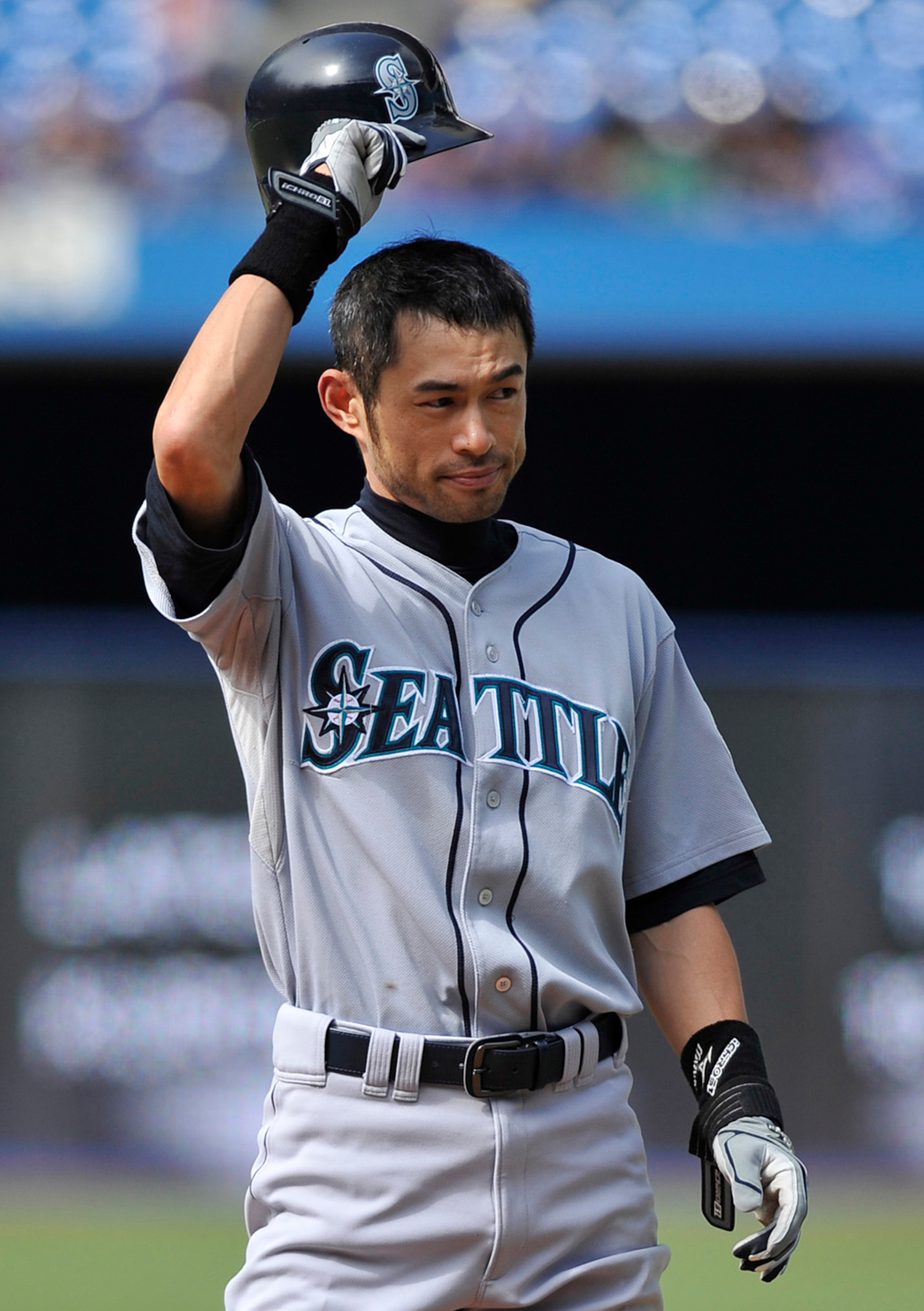
Regardless of their position, approaching the game like future Hall of Famer Ichiro Suzuki is what will make their careers.
To this point, there's no question that both Pineda and Ackley have a lot of potential.
With that being said, it comes down to who controls the game.
Seattle can virtually put Dustin Ackley anywhere in the field, and his bat will definitely help the offense.
Michael Pineda obviously specializes in pitching, and having a dominant pitcher is what can win the close games in the long run.
Adding both to the team will be extremely beneficial, but pitching is what everything in baseball comes down to.
FINAL SCORE: Michael Pineda wins by a score of 5-4-1 (talk about a nail-biter) and has the better career as a Seattle Mariner.



.jpg?w=2560 "Raiders Could Start Mendoza")

.jpg?w=2560 "Rodgers Iced Out on Plane 💎")

.jpg?w=2560 "Packers Safety Slams Refs 🤬")

.jpg?w=2560 "🚨 Week 8 AP Top 25 Poll")
